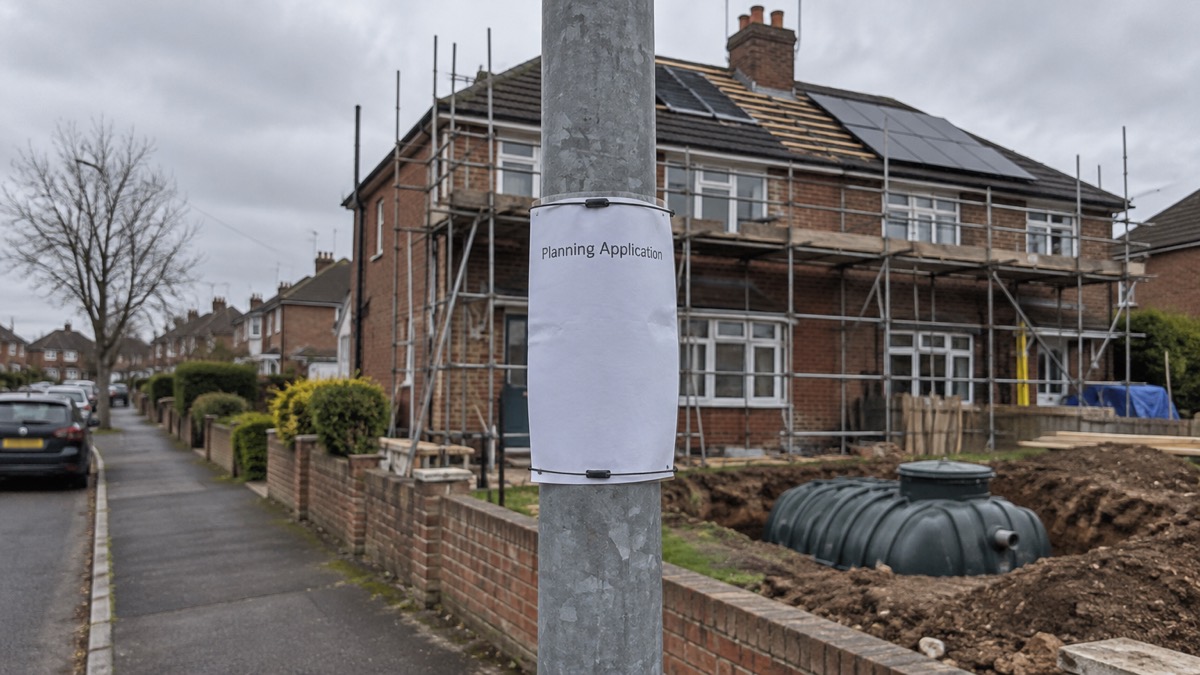
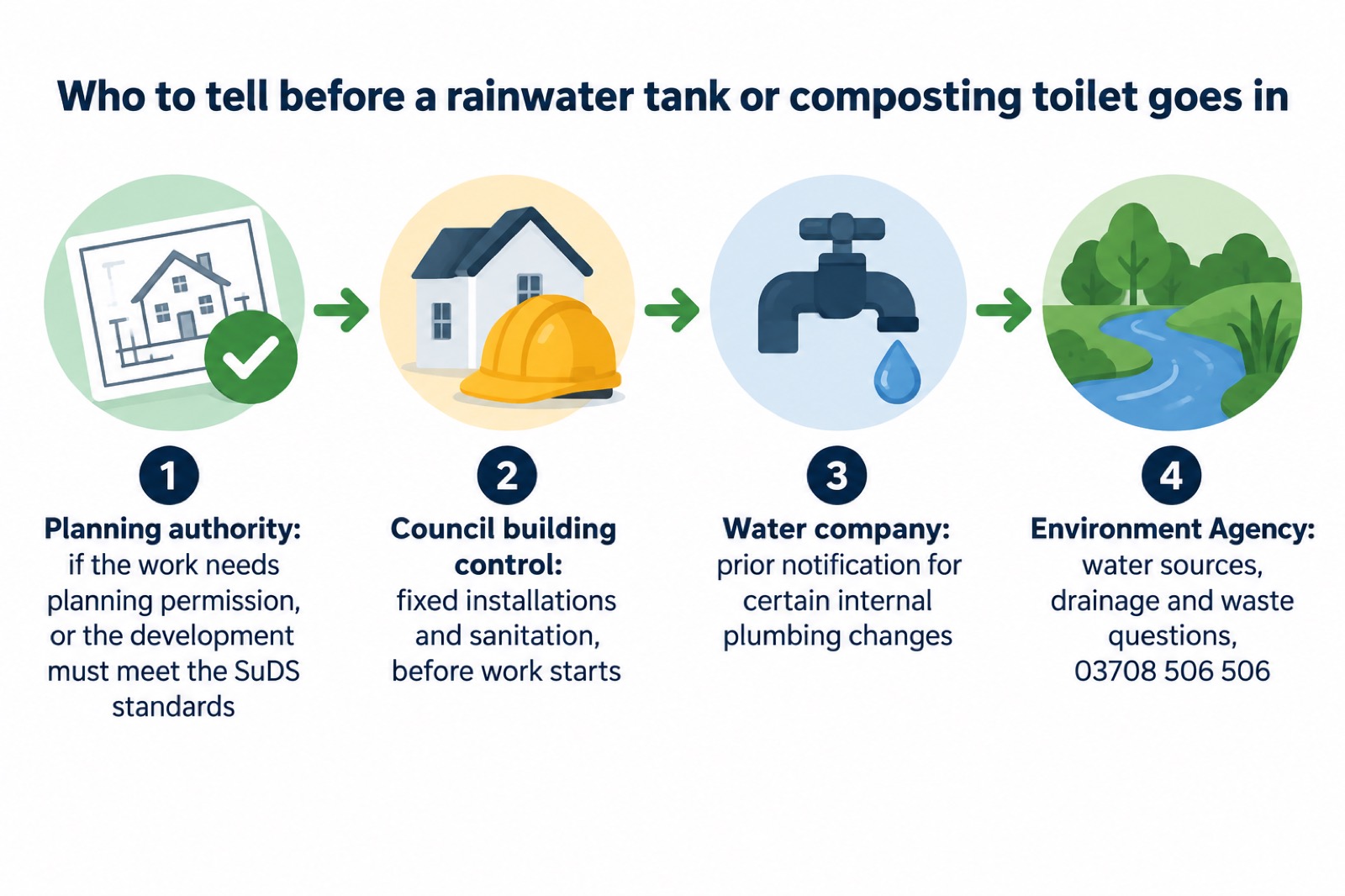
Fitting off-grid kit at home, whether a rainwater tank, a composting toilet, solar panels or a small wind turbine, is one of those jobs where a short conversation before you start matters more than anything you do afterwards. In the UK, three bodies can each have a say: your local council's building control department for the structure and its services, your water company for anything connected to the plumbing, and the Environment Agency for anything affecting water sources or drainage. None of these checks is optional where the rules apply, and most take minutes by phone.
The biggest recent change is in drainage. Government standards released in June 2025 make rainwater harvesting a requirement for virtually all developments in England, giving it Priority 1 status under the national sustainable drainage system (SuDS) standards1. If you are building, extending or substantially redeveloping, rainwater harvesting is now part of the conversation with your planning authority from day one. For an ordinary existing home adding a water butt or a garden tank, the position is simpler, but the moment a tank connects to the house plumbing, the Drinking Water Inspectorate advises that certain changes to internal plumbing systems require prior notification to the local water company2.
This page sets out who to check with and when, what the 2025 SuDS standards mean for rainwater harvesting in England, how to keep a tank installation compliant, what to do with composting toilet waste, and how the rules differ across the four nations.
Who to check with before you install anything
Start with your local council's building control department. The same principle governs other fixed kit. A composting toilet inside a building, a buried rainwater tank, a solar array on the roof and a wind turbine on a mast all touch the building or its services in ways that building control may need to inspect.
The installer you choose changes what you have to do. If you use someone registered with a competent person scheme, their registration covers the notification. If you do not, official guidance on oil storage installations sets out the consequence that applies generally: "If you do not use someone registered with a competent person scheme, you'll have to get a Building Control Notice from your local council and arrange and pay for an inspection yourself"4. For a household doing the work themselves, that is the route to expect.
Who to contact, and when:
| Body | When they matter | How to reach them |
|---|---|---|
| Council building control | Fixed installations, structural work, sanitation, heating | Your local council, before work starts3 |
| Your water company | Changes to internal plumbing, tank and cistern connections | Prior notification before the work2 |
| Environment Agency | Water sources, drainage, flooding, waste disposal questions | 03708 506 5065 |
| Electricity network operator | Solar panels, batteries, anything generating or storing power | See telling your network operator about solar panels or a battery |
Two specific points deserve a flag. First, if your project involves work near overhead power lines, for example a turbine mast or panels on a tall outbuilding, the Health and Safety Executive says: "Speak to the line owner, eg the electricity company, railway company or tram operator, before any work begins"7. Second, if your question is about flooding or drainage on your land, contact the Environment Agency, which handles these matters. Written requests, for example for copies of area drought plans, go to the Agency's customer contact team at enquiries@environment-agency.gov.uk8.
Rainwater harvesting and the June 2025 SuDS standards
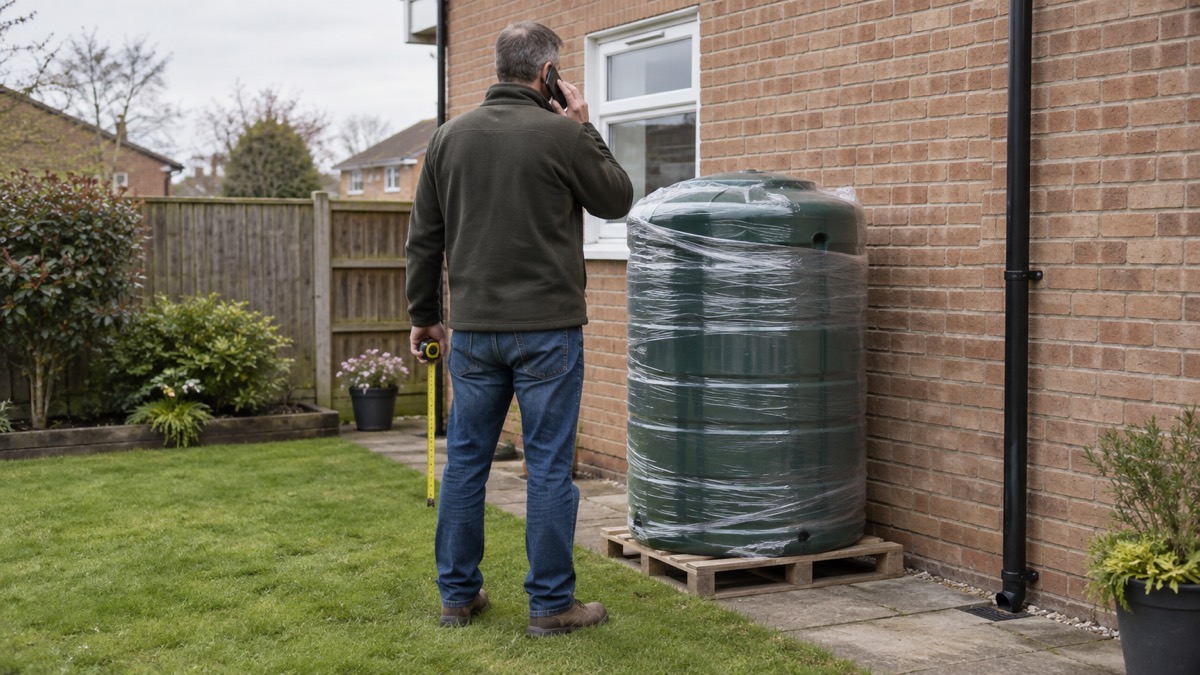
Sustainable drainage systems, usually shortened to SuDS, "manage surface water runoff by capturing, using, absorbing, storing and transporting rainfall in a way that mimics nature", in the words of the Greater London Authority's climate adaptation guidance9. Rainwater harvesting is one of the tools SuDS use, because a tank captures rainfall that would otherwise run off into drains.
The change that matters is dated and recent. Government standards released in June 2025 make rainwater harvesting a requirement for virtually all developments in England, giving it Priority 1 status1. In practice, that means a planning application for new development in England should expect drainage to be designed around capturing and using rainfall rather than simply piping it away, and rainwater harvesting sits at the front of that queue.
What this means for different households:
- Building, extending or redeveloping in England: raise rainwater harvesting with your planning authority early. Since June 2025 it has Priority 1 status for virtually all developments1.
- Adding a tank to an existing, unchanged home: the SuDS standards are aimed at development, not retrofits, but retrofit projects do happen. The Greater London Authority notes five SuDS retrofit projects across London, funded with help from the Drain London Partnership9.
- Outside England: the standards are England's. See the section on nation differences below.
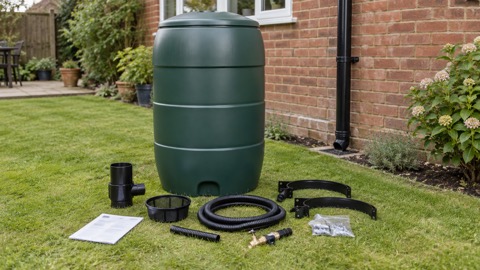
If you are planning a system, our pages on how a rainwater system works, sizing a rainwater tank and underground tank types cover the practical side, and rainwater systems and the law covers the standards that apply to the fittings themselves.
Fitting a rainwater tank on an existing home
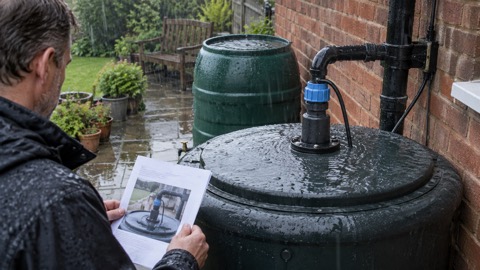
For most existing homes, a water butt in the garden raises no permission question at all. The rules tighten as the system gets closer to your drinking water. The Drinking Water Inspectorate, the regulator for water quality, advises that "certain changes to internal plumbing systems require prior notification to the local water company"2. A tank that feeds a header tank in the loft, or connects to the mains as a top-up, is exactly the kind of change to notify first.
Materials matter too. For rainwater harvesting systems, the Inspectorate's guidance for private supply customers says: "Approved materials (WRAS or permitted under regulation 5) should be used to prevent the contamination of rainwater during runoff and collection"10. WRAS approval is the water fittings approval scheme; using approved materials keeps the collected water from picking up contaminants from pipework, tank linings and fittings on its way into storage.
The collection side has its own rules of thumb, all from the same guidance. For rainwater harvesting systems, "remove or avoid the use of roof-mounted aerials or overhanging trees in the water collection area, discourage birds from perching on roof collection areas, and consider diverting the first flush of rainwater to waste"10. The first flush carries the worst of what has settled on the roof since the last rain, so diverting it improves what ends up in the tank. Our page on rainwater filters covers the kit that does this continuously.
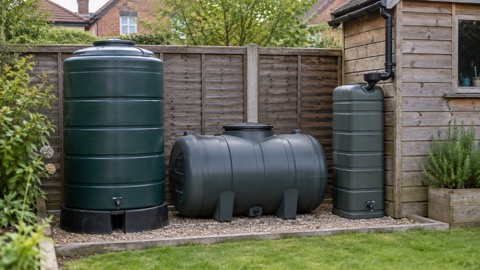
Once water is stored, the tank itself has to keep contamination out. The Inspectorate's advice on storage is that you should "ensure that treated water tanks are designed, installed and maintained to prevent ingress of contaminants through precipitation (rain/snow)"10. For an underground tank that means a proper lid and sealed access; for an above-ground tank it means the same, plus siting it out of the way of flood water.
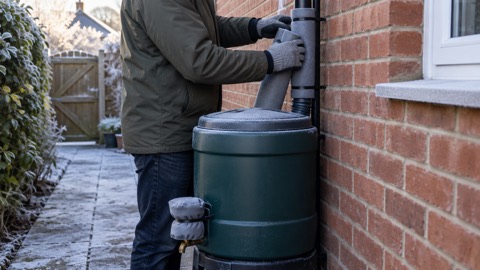
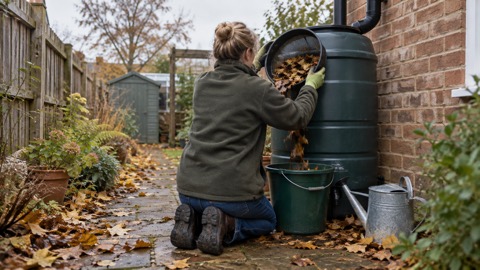
Maintenance obligations depend on who uses the building. The Drinking Water Inspectorate notes that "in public buildings, workplaces, health care premises and social housing all water tanks will be checked and cleaned as part of the arrangements that must be in place for legionella control purposes"2. A domestic tank on your own home is not in that category, but the standard is a useful benchmark for how often a tank should be opened, checked and cleaned. Where silt has built up, the Inspectorate's installation guidance says "any accumulated silt can be flushed or siphoned out and the system disinfected"11. Our rainwater maintenance page walks through the yearly routine.
One further rule affects a small group of tank owners. Official guidance on oil storage at home requires secondary containment, a bund, in the inner zone of groundwater source protection zone 14. That rule is about oil, not rainwater, but it shows how location changes what a tank installation needs: if you are in a sensitive groundwater area, ask the Environment Agency what applies to your project before you dig.
Composting toilets: waste, ventilation and heat
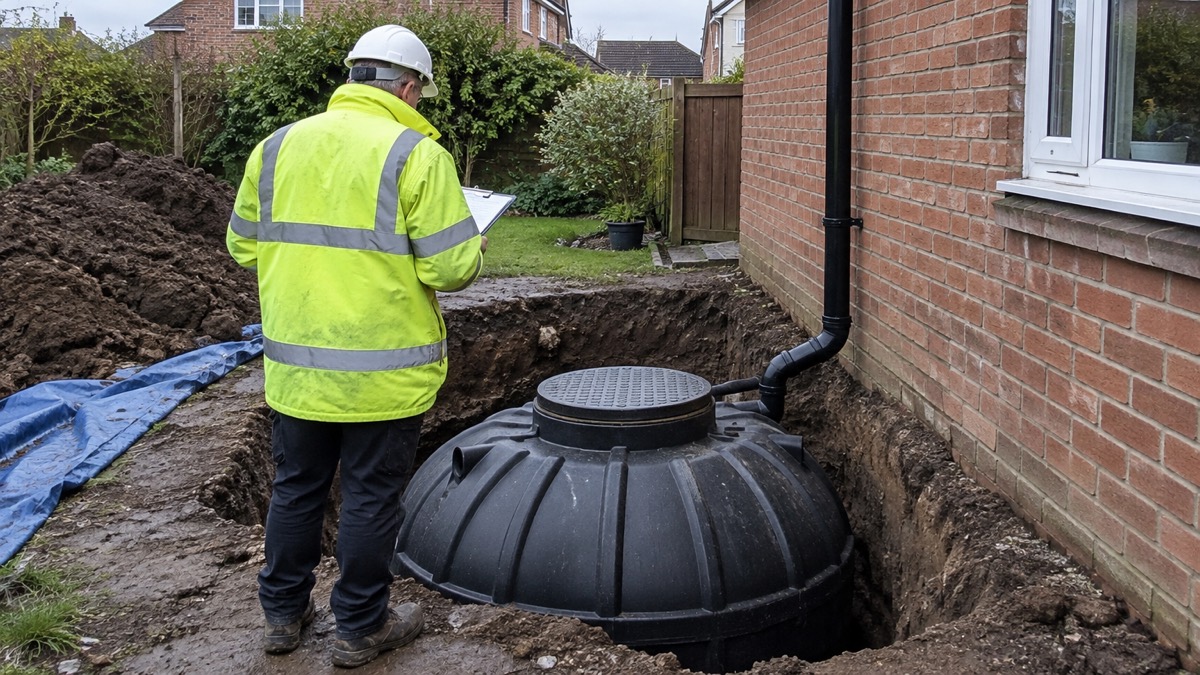
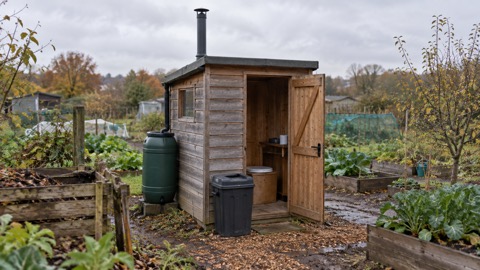
A composting toilet is the piece of off-grid kit most likely to raise a building control question, because it replaces a fixture the Building Regulations cover. Our composting toilets page explains how the different designs work, and the composting toilet kit checklist lists what a household needs.
Ventilation comes first in practice. Composting needs airflow, and the Health and Safety Executive's domestic gas safety advice carries a warning that applies to any vent in the home: "never block ventilation"6. A composting toilet's vent pipe or fan is there to draw air through the chamber and out of the building; blocking it, or letting it become blocked, stops the process working and pushes odours indoors. Keep the vent clear, and follow the maker's instructions for the fan if your model has one.
Heated models need a safety check. Fire and rescue guidance for Northern Ireland on electric space heaters says they should be used "only in enclosed, supervised spaces" and are "not for outdoor or unsupervised use (like garages or sheds) unless the heater is rated for that environment"12. An outbuilding toilet with a heater running for hours unattended fails that test unless the heater is designed and rated for exactly that use. If you are installing a heated composting toilet in a shed or outhouse, check the heater's rating and the maker's instructions before leaving it to run.
Getting rid of the waste
Finished compost from a composting toilet can be handled like other garden waste, and the consistent message from fire and rescue services and councils across the UK is to compost it or take it to a recycling centre rather than burn it:
- Cheshire Fire and Rescue Service notes you "may be able to access discounted compost bins and advice from your local council"13.
- London Fire Brigade lists composting or the council's garden waste collection as alternatives to a bonfire14.
- Oxfordshire's fire and community safety advice says to use "a local recycling centre or composting instead of burning it"15.
- Lincolnshire's guidance is that "most garden waste, like grass cuttings and leaves, can be recycled by composting or by being taken to a Household Waste Recycling Centre"16.
- Somerset Council adds that when garden waste collections are delayed, options include home composting, taking waste to any open recycling site, or storing materials until collections resume17.
Wherever the compost heap sits, keep it away from the building. London Fire Brigade's wildfire advice is to "keep compost heaps, as well as any flammable material, away from buildings and other structures"18. That is fire spread advice, and it applies with extra force to a heap that receives composting toilet waste over months. If your system produces waste that is not fully composted, or you are unsure about disposing of it on your land, ask the Environment Agency on 03708 506 506 how it should be handled in your area5. The distance a composting toilet should sit from wells and water supplies is covered in our page on composting toilet distance.
Generators, heaters and off-grid power: the safety rules that come with the kit
Off-grid power installations bring their own safety rules, and they are firm. If your backup for the composting toilet fan or the rainwater pump is a generator, fire and rescue guidance for Northern Ireland is explicit: "Only operate generators outdoors at least 6 metres/20 feet away from windows/doors/vents. Partially open spaces, garages and sheds are unsuitable"12. Six metres is the distance to hold, and a garage with the door open does not count as outdoors.
The same guidance covers heaters: use them only in enclosed, supervised spaces, and not outdoors or unsupervised in garages or sheds unless the heater is rated for that environment12. For a household running an off-grid system, that means planning where each piece of kit lives before winter, not after.
For the electrical side, the Health and Safety Executive's general advice on work near electricity is to speak to the line owner, the electricity company, railway company or tram operator, before any work begins7. If you are installing solar panels or a battery, the notification your network operator needs is explained in G98 and telling your network operator. Our off-grid solar and small wind turbines pages cover the kit itself.
"Only operate generators outdoors at least 6 metres/20 feet away from windows/doors/vents. Partially open spaces, garages and sheds are unsuitable."
The rules differ across the four nations
The June 2025 SuDS standards, and the Priority 1 status they give rainwater harvesting, apply to developments in England1. England-only status is a pattern worth knowing: the government's Adverse Weather and Health Plan, for example, states plainly that it "applies to England"20. If you are building or renovating in Scotland, Wales or Northern Ireland, do not assume an English rule carries over.
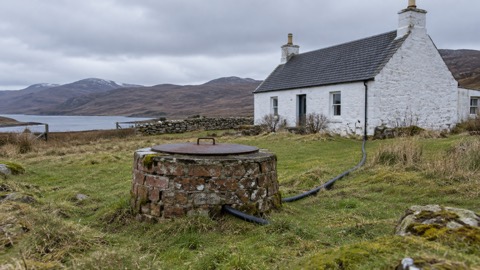
Scotland runs its own system. Statutory guidance on housing standards there is "issued under sections 13(1)(g) and 13(6) of the Housing (Scotland) Act 2006 (which were inserted by section 22 of the Housing (Scotland) Act 2014)"21. Scottish councils also regulate private water supplies directly: Argyll and Bute Council's guidance covers supplies to self-catering premises, hotels, schools, food businesses, factories, sports centres, B&Bs, campsites, village halls and domestic let property, including private landlords and social landlords such as housing associations22. Scottish Borders Council lists a similar range: self-catering properties, food businesses, factories, sports centres, hotels, B&Bs, schools and campsites23. If your off-grid project includes a private water supply in Scotland, start with your council, and see our pages on private water supplies in Scotland and the private water supply grant.
For landlords anywhere in the UK, the standards for water systems are set by British Standards. The Drinking Water Inspectorate notes that "the requirements for landlords are set out in BSEN 806-5 'Specification for installations inside buildings conveying water for human consumption - operation and maintenance' and BS 8558, the associated guidance document"2. A landlord adding a rainwater tank or a composting toilet to a let property is working to those standards, not just to domestic practice.
| Nation | What differs | What to do |
|---|---|---|
| England | June 2025 SuDS standards give rainwater harvesting Priority 1 for virtually all developments1 | Raise drainage early with the planning authority |
| Scotland | Own statutory guidance under the Housing (Scotland) Act 200621; councils regulate private supplies to let and commercial premises22 | Start with your council |
| Wales | English SuDS standards do not apply as such | Ask your planning authority what drainage rules apply |
| Northern Ireland | Own building control arrangements; HSE NI advises contacting building control before fixed appliance work3 | Contact your local council's building control department |
Where to get help
The practical contacts, gathered in one place:
- Building control: your local council, before any fixed installation work starts3. If you are not using a registered installer, expect to get a Building Control Notice and pay for the inspection yourself4.
- Your water company: prior notification for certain internal plumbing changes, including tank and cistern work2.
- Electricity line owner: speak to the electricity company, railway company or tram operator before any work near overhead lines7.
Beyond the regulators, the rest of this site covers the practical side of each system: rainwater harvesting at home, what harvested rainwater can be used for, composting toilets, off-grid solar and small wind turbines, all under the self-reliance section. If a power cut or flood is what set you on this path, the getting started page is the place to begin, with water in an emergency and backup power at home alongside it.
The pattern across everything on this page is the same: the phone call comes before the purchase. Building control, your water company and the Environment Agency would all rather answer a question about a tank or a toilet you have not yet bought than inspect one that has to come out again.
Sources (23)
- New SuDS national standards released in England, June 2025
- Water storage tanks and cisterns, Drinking Water Inspectorate, 2026
- Carbon monoxide: safe use of heaters and generators, Health and Safety Executive for Northern Ireland, 2026
- Oil storage regulations and safety at home, GOV.UK, 2026
- Bassetlaw district flood risk information, Environment Agency, 2026
- Domestic gas safety FAQs, Health and Safety Executive, 2026
- Electricity at work: introduction, Health and Safety Executive, 2026
- Drought management for England, GOV.UK, 2026
- Surface water flooding and climate adaptation, Greater London Authority, 2026
- Protecting your private water supply, Drinking Water Inspectorate, 2026
- Private supply networks: water storage, Drinking Water Inspectorate, 2025
- Safe use of heaters and generators, Armagh City, Banbridge and Craigavon Borough Council, 2026
- Bonfires and burning waste, Cheshire Fire and Rescue Service, 2026
- Bonfires: home safety, London Fire Brigade, 2026
- Help prevent wildfires, Oxfordshire County Council, 2026
- Bonfire safety, Lincolnshire County Council, 2026
- Waste services and weather, Somerset Council, 2025
- Wildfires: protecting your home and garden, London Fire Brigade, 2026
- Garden bonfires: seasonal safety, North Wales Fire and Rescue Service, 2026
- Adverse Weather and Health Plan, GOV.UK, 2024
- Carbon monoxide detectors: governmental guidance, Scottish Borders Council, 2015
- Private water supplies, Argyll and Bute Council, 2026
- Private water supplies: regulated supplies, Scottish Borders Council, 2026
 Composting Toilet Kit Checklist
 Garden Harvesting Kit Checklist
 Rainwater Winter Checklist
 Above-Ground Rainwater Tanks
 Composting Toilets
 Direct vs Gravity Feed Systems
 Private Water Supply Running Low
 Private Water Supply Regulations
 Private Water Supplies Scotland
 Treating a Private Water Supply
 Rainwater Filter Types
 How Rainwater Harvesting Works
 Rainwater System Maintenance
 Pumps for Rainwater Tanks
 Rainwater Systems and the Law