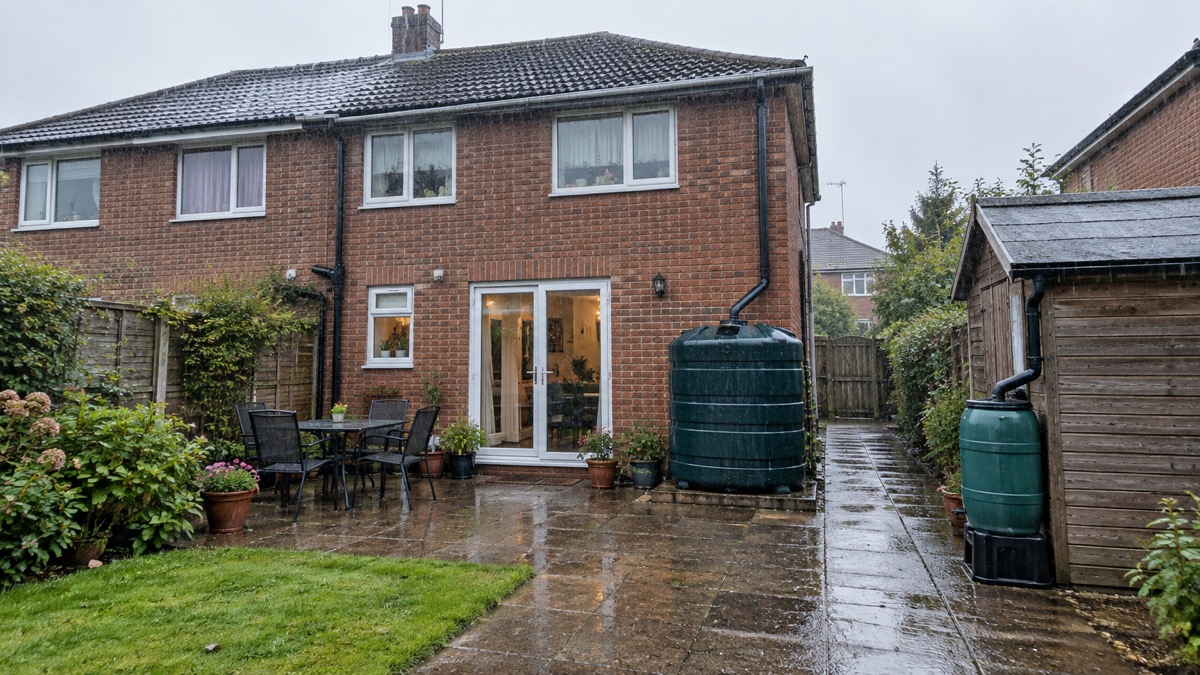
Rainwater harvesting takes the water that already falls on your roof and puts it to work in your home instead of letting it run down the drain. Water resources are under pressure in England and Wales as demand rises with population growth, changing lifestyles and a changing climate1, and a domestic system answers that pressure at household level. A domestic rainwater harvesting system can be used for laundry, watering gardens, toilet flushing and cleaning2.
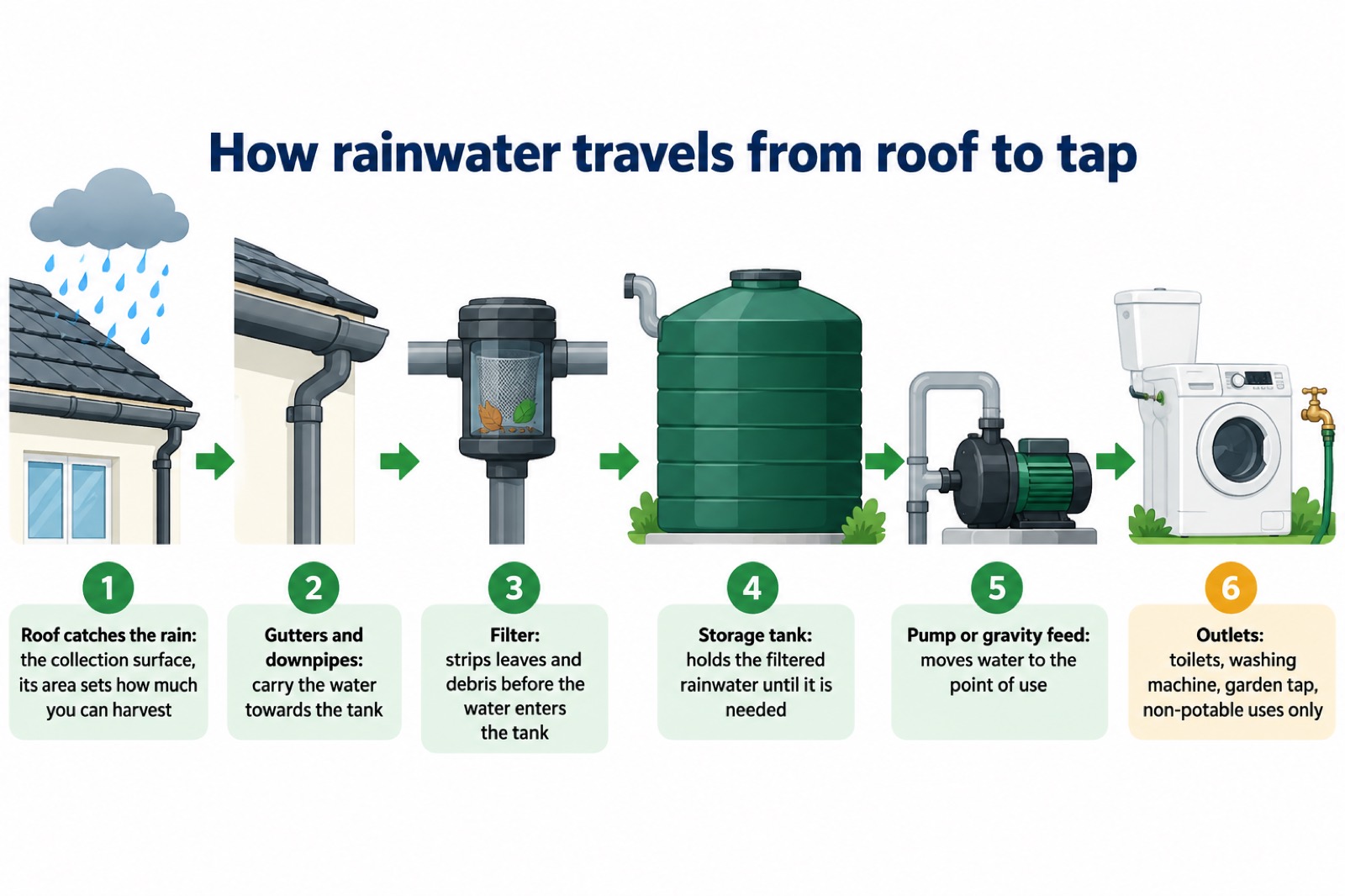
The basic idea is simple: your roof catches the rain, gutters and downpipes carry it, a filter strips out leaves and debris, a tank stores it, and a pump or gravity feed delivers it to wherever you need it. What the water is used for matters more than anything else, because harvested rainwater is not drinking water. Official guidance is blunt on this point: it can be used for flushing toilets or watering plants, but do not drink it, as it could contain bacteria or disease3.
This page walks through how a system works piece by piece, what each part does, what rainwater can safely be used for, how to size a tank, how to keep rainwater and mains water apart, and what a store of rainwater is worth in a hosepipe ban, a dry spell or a flood. It sits alongside our wider guides on self-reliance at home, and each part of the system has its own page if you want to go deeper.
How a rainwater harvesting system works: roof, filter, tank, pump
Every domestic system, from a single water butt to a buried tank serving the whole house, follows the same four stages. Rain falls on a collection surface, almost always your roof. The guttering and downpipes channel it. A filter removes debris from the rainwater as it flows from the collection roof before it enters the storage tank1. The tank stores the filtered water until you need it, and a pump or a gravity arrangement moves it to the point of use.
The roof is the catchment, and its area and material set how much water you can collect and how clean it arrives. Water butts collect rainfall from roofs adjacent to the property and any outbuildings8, so a shed or garage roof is a perfectly good collection point, and one flood resilience case study from Hull describes exactly that: guttering fixed to a large shed harvests rainwater into two water butts, with the excess piped onto the garden9. If you are planning a bigger system, the roof area is the first number to work out, and our guide to sizing a rainwater tank takes you through it.
The filter sits between the downpipe and the tank, and its job is exactly what it sounds like: it is used to filter debris from the rainwater as it flows from the collection roof before it enters the storage tank1. Leaves, moss and grit from gutters are the main offenders, and keeping them out of the tank in the first place is far easier than cleaning them out later. Filters come in downpipe, inline and in-tank types, each suited to a different set-up, and our page on rainwater filters compares them.
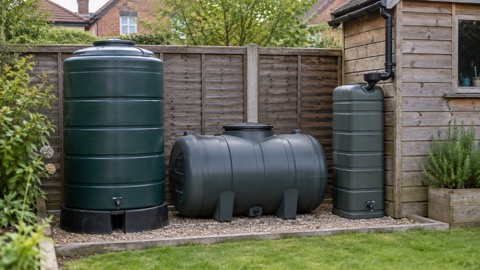
The tank is the heart of the system. Rainwater is collected from the roof, filtered, stored in a tank and then re-used within the home and garden1. For a household, the choice is between an above-ground tank and an underground one, and each has its own page: above-ground tanks and underground tanks.
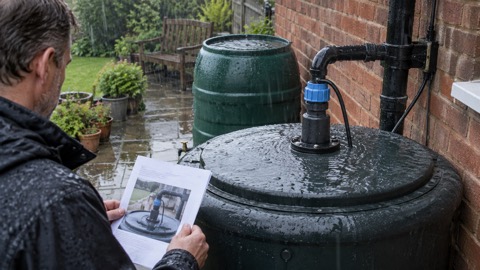
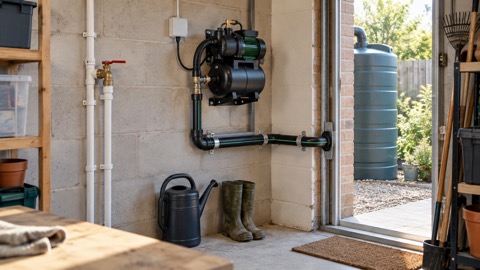
The delivery side is either a pump or gravity. A pump, usually submersible inside the tank or a surface unit beside it, pushes water on demand to toilets, a washing machine or an outside tap; our page on rainwater pumps covers the types. A gravity system instead feeds a header tank, which we come to below. Whichever you choose, the system ends at the outlets, and the water arriving at them is non-potable: suitable for toilet flushing, garden watering and washing clothes using a washing machine1.
Rainwater is for toilets, laundry and the garden, not for drinking
The single most important rule on this page is that harvested rainwater is not drinking water. The government's preparedness guidance for water supply interruptions states it plainly:
"Do not drink this water as it could contain bacteria or disease. This water can be used for flushing toilets or watering plants."
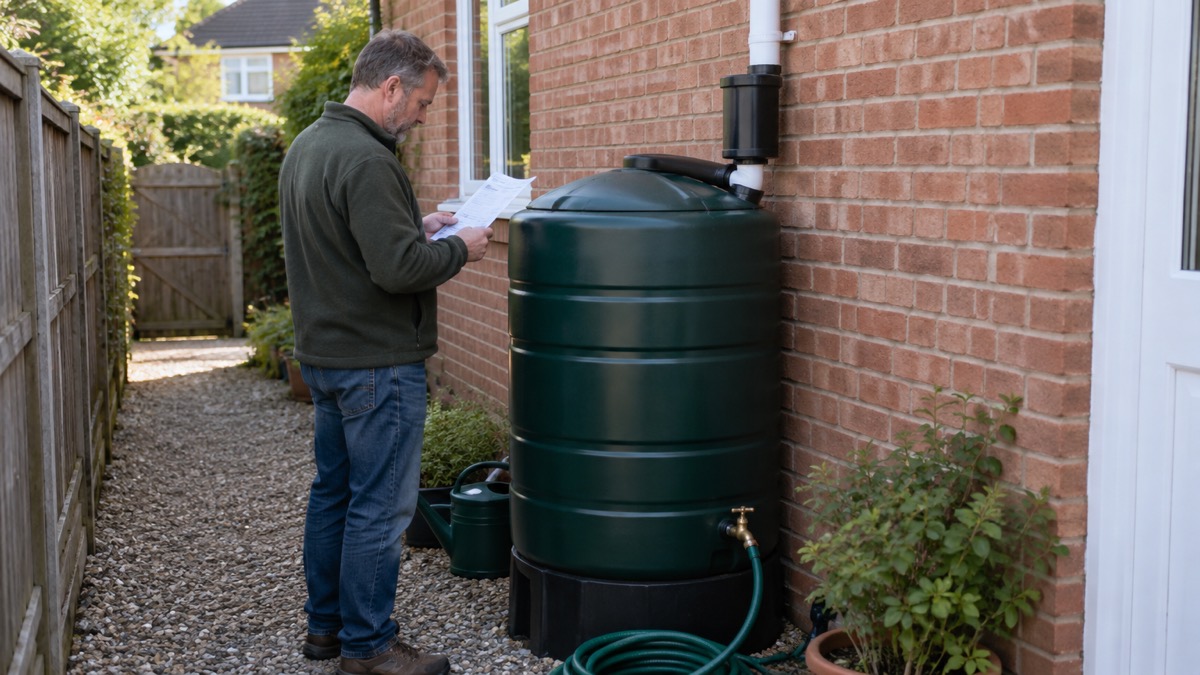
The same message appears across official sources: water collected in a rain butt or harvesting tank can be used for flushing toilets or watering plants11, and a domestic system can also serve laundry and cleaning2. Makers of harvesting equipment describe the same boundary from their side, listing non-potable applications such as toilet flushing, garden watering and washing clothes using a washing machine1.
The reason is what the water picks up on the way in. Rain itself is clean, but by the time it has run across a roof it has collected whatever was sitting there: bird droppings, grit, moss and residues from air pollution. The advice on collected rainwater is blunt: do not drink this water, as it could contain bacteria or disease12. Filtering and tank design reduce the load, but they do not make the water potable.
Within those limits, the list of permitted uses is genuinely useful, because toilets and laundry are two of the biggest water users in a typical home. Our page on what harvested rainwater can be used for goes through each use and what it demands of the system.
| Use | Suitable? | Notes |
|---|---|---|
| Flushing toilets | Yes | A core use of domestic systems2 |
| Watering the garden | Yes | Better for plants than tap water1 |
| Washing clothes | Yes | Via a washing machine, non-potable supply1 |
| Cleaning and wash-down | Yes | Listed among domestic uses2 |
| Drinking and cooking | No | Could contain bacteria or disease3 |
| Bathing and showering | No | Not a listed non-potable use1 |
What a system can save you
What a rainwater system saves depends on three things, according to makers of harvesting equipment: the demand for non-potable water in the property, the amount of rainwater that can be collected, and whether the property is charged by volume of water used1. In other words, a big roof, a thirsty garden and a water meter together make the sums work; a small roof and an unmetered supply do not.
The meter point matters more than people expect. If you pay a fixed charge regardless of use, replacing mains water with rainwater saves no money at all, only resilience. If you are metered, every litre of rainwater flushed through a toilet or run through a washing machine is a litre you did not buy. Savings are highest where roof area and non-potable demand are both large, which is why makers note that savings will be higher in commercial and industrial buildings and schools, with their larger roof areas and greater demand for non-potable water1. The same logic applies in miniature to a household with several toilets and a large garden.
Savings also depend on rainfall, and the UK's is not evenly spread across the year: the dry spells when a garden needs water most are exactly when the tank refills least. A tank sized to bridge a dry spell, rather than one sized to the annual total, is what actually keeps the garden alive; our tank sizing page works through the arithmetic.
It is worth putting rainwater harvesting in the context of general water saving, because the water you do not use at all needs no tank, filter or pump. Cambridge Water's saving water advice includes simple habits such as using a washing up bowl instead of letting the tap run, which it says can reduce wasted water by up to 50%14. Rainwater harvesting sits alongside habits like that, not instead of them: reduce what you waste, then substitute rainwater for what remains.
For households not on mains water at all, the Centre for Alternative Technology offers a sober perspective: collecting and treating rainwater is an option, but in the UK groundwater or a stream will usually be more reliable and need less treatment15. Rainwater is abundant but intermittent, and a drinking supply needs consistency.
Inside the tank: filters, calmed inlets and the overflow
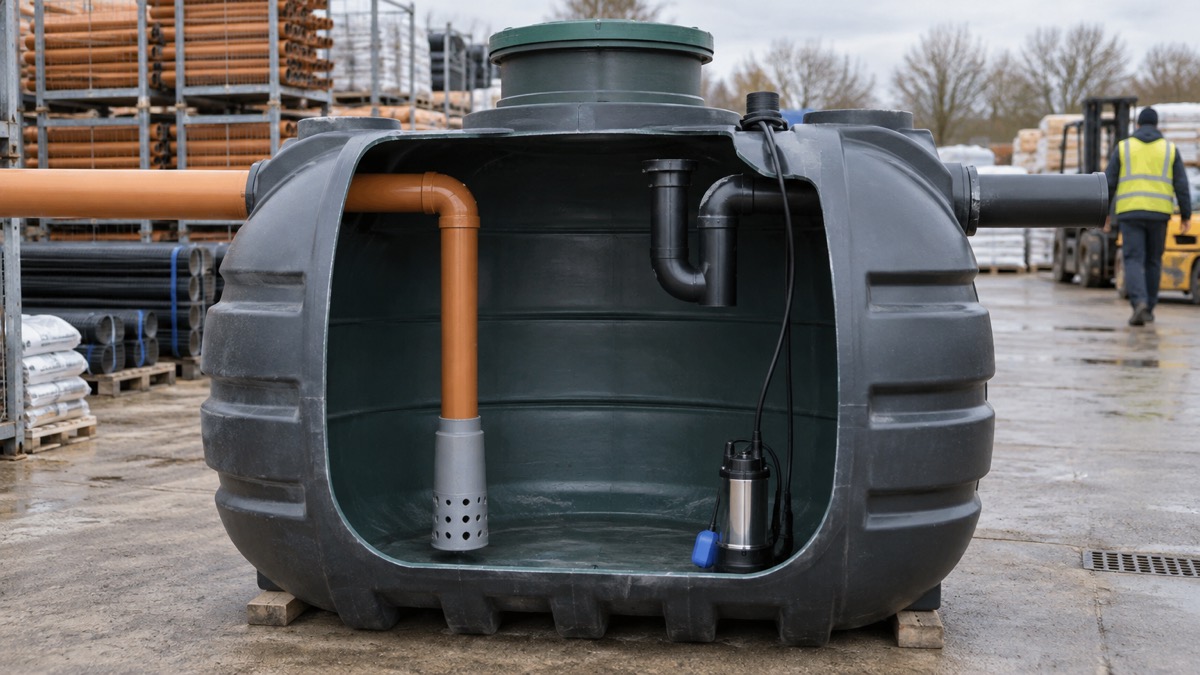
What happens inside the tank does most of the quiet work of keeping the water usable, and three features matter.
First, the incoming water should arrive calmly. A calmed inlet brings water into the tank below the surface rather than splashing in from the top, and this oxygenates the water in the tanks and helps prevent it from stagnating1. Stagnation is what turns a store of rainwater sour: still, oxygen-poor water goes off, so the inlet design is not a luxury but the difference between water that sits well for weeks and water that does not. Our page on whether stored rainwater goes off covers this in detail.
Second, the tank needs an overflow that works. When the tank is full, the overflow siphon diverts the excess water to a drain or soakaway1. This matters more than it sounds: the overflow is what allows the system to keep running through a wet winter without backing up, and a well-designed overflow siphon also skims off the fine floating layer that collects at the top of a tank, taking the lightest debris out with the surplus water.
Third, many systems need a header tank on the delivery side. Water recycling systems often require a header tank to provide a steady supply of water2. The header tank, usually in the loft, holds a small reserve that feeds the toilets or appliances by gravity, smoothing out the flow and giving you a short buffer if the pump stops. The alternative is a direct-feed system where the pump supplies the outlets on demand; our page on direct feed and gravity feed systems explains the trade-offs.
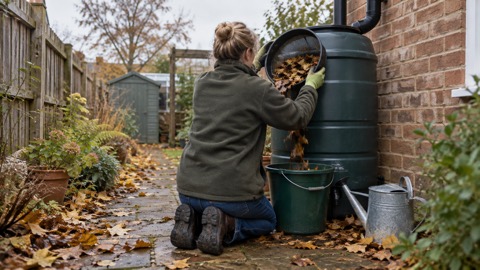
Keeping the inside of the tank in good order is a maintenance job rather than a design job: checking the filter, watching for sediment and keeping the collection area clean. Our rainwater maintenance page sets out the year's routine, and the winter checklist covers the frost-side risks.
Sizing a tank to your roof and your water use
Tank sizing comes down to matching two numbers: how much rain your roof can deliver, and how much non-potable water your household actually uses. Get the first from your roof area and local rainfall, the second from your toilets, laundry and garden. The tank that suits you is the one that bridges the gap between supply and demand through the dry weeks, and our dedicated page on how to size a rainwater tank works through the method step by step.
The two ends of the scale look very different. At the small end, a water butt on a downpipe serves a garden: water butts collect rainfall from roofs adjacent to the property and any outbuildings, and the water can be used in the garden or appropriately filtered and stored for reuse within the home8. Westminster City Council advises residents to install a water butt for rainwater storage from their downpipes, which can be connected to greywater systems such as toilet flushing and garden watering16. At the large end, makers supply dedicated rainwater tanks in sizes from a few thousand litres for a household up to 50,000 litres for commercial, agricultural and civic use, where listed applications include landscape watering for parks, toilet flushing in industrial, commercial, hospital or school environments, and irrigation and wash-down facilities1.
| Water butt | Underground tank system | |
|---|---|---|
| Collection | Roof and outbuilding downpipes8 | Whole roof, via filter1 |
| Typical use | Garden watering8 | Toilets, laundry, garden, cleaning2 |
| Installation | Fit to a downpipe16 | Excavation, plumbing, pump5 |
| Best suited to | Existing homes, garden demand16 | New-builds, whole-house use5 |
| Cost of plumbing in | Minimal | Negligible in a new-build, expensive to retrofit5 |
The retrofit point is the one that decides most projects. Rainwater harvesting systems are typically more suited to new-build properties, where the cost of plumbing them in is negligible; retrofitting into an existing property can be expensive5. If you are building or extensively renovating, the marginal cost of adding the pipework is small. If you are not, a water butt or an above-ground tank serving the garden is usually the realistic first step, and our water butt or underground tank comparison weighs them up.
Keeping rainwater separate from mains water
Because harvested rainwater is not drinking water, the plumbing must make it impossible for the two supplies to mix. This is a safety-critical part of the design, not a detail, and it is governed by rules on water fittings and backflow prevention that our page on rainwater systems and the law explains, including the British Standard for rainwater harvesting, BS 8515, which provides criteria for rainwater harvesting equipment manufactured in the UK5.
The separation works in two directions. Rainwater must not siphon or backflow into the mains, which is why a mains top-up connection, if your system has one, must include an air gap or other approved break. And the mains must not be contaminated by anything the rainwater has picked up, which is where materials come in: the Drinking Water Inspectorate advises that approved materials, WRAS-approved or permitted under regulation 5, should be used to prevent contamination of rainwater during runoff and collection12.
The same regulator gives practical advice on protecting the quality of what you collect, and it is worth quoting because it applies to every system from a butt upwards:
"For rainwater harvesting systems, remove or avoid the use of roof-mounted aerials or overhanging trees in the water collection area, discourage birds from perching on roof collection areas, and consider diverting the first flush of rainwater to waste."
Each of those addresses a contamination route. Overhanging trees drop leaves and bird activity drops droppings, both of which wash straight into the tank. The first flush of rain off a dry roof carries the heaviest load of debris and residue, so diverting it to waste means the tank receives the cleaner water that follows. Labelling the pipework correctly matters too, so that no one in the household, or a plumber years from now, mistakes a rainwater pipe for a mains one; our page on pipe choice and labelling rules covers it.
Rainwater in a hosepipe ban or a dry spell
This is where a store of rainwater earns its keep. Water companies can bring in hosepipe bans when water is in short supply, usually after a long dry or hot spell6. When one is in place, you cannot use a hosepipe connected to your mains water supply for things like watering your garden, filling a paddling pool or washing your car7. Water companies may choose to enforce these Temporary Usage Bans to help conserve water7, and Cambridge Water's hosepipe ban rules list watering a garden using a hosepipe or sprinkler system among the prohibited activities14.
A rainwater store sits outside those restrictions, because the ban applies to the mains supply. Suffolk Fire and Rescue Service advises keeping your garden maintained and watered in dry spells, and suggests using water from water butts or wastewater from the home if hosepipe bans are in place17. Hampshire Fire and Rescue Service makes the same point for a different reason: during hot, dry spells consider using grey water for watering plants and lawns, so that even if there are limits on the use of hosepipes, the ground can be kept damp, which also reduces wildfire risk to your property18.
The official drought guidance adds the everyday habits around it: in the garden, use a watering can instead of a hosepipe and install a water butt if you can to capture rain7. Wessex Water's advice, reported through a local resilience forum, is to use watering cans rather than hosepipes because they use much less and are more efficient at targeting the roots of plants, and to be sure to use rainwater rather than tap water if you have a water butt installed19. Reducing your water use in the first place also reduces the chances of restrictions such as hosepipe bans during a drought5.
The practical sequence in a dry spell is straightforward:
- Check whether a Temporary Usage Ban is in force in your area, and what it prohibits7.
- Switch to watering cans filled from your water butt or tank, not a hosepipe on the mains7.
- Use stored rainwater or household grey water for plants and lawns to keep the ground damp17.
- Keep reducing mains use indoors as well, since lower demand reduces the pressure for restrictions5.
Our pages on heatwaves and drought and using rain and grey water in the garden go further into both the restrictions and the garden side.
Helping with local flooding
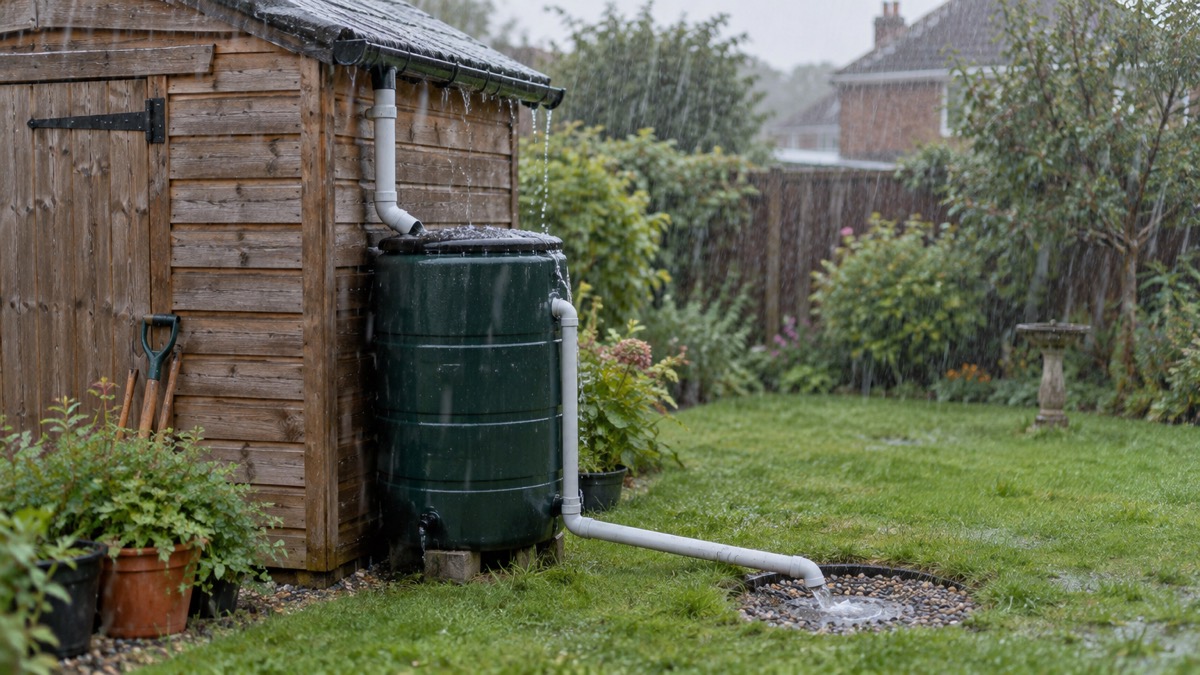
A rainwater tank does a second job that has nothing to do with supply: it slows rainwater's journey from your roof to the drain, and that helps with flooding. Westminster City Council advises residents to consider installing rainwater butts to reduce flood pressure on drainage systems and conserve water20. In a heavy downpour, a tank or butt that is partly empty absorbs the first surge of roof water and releases it later, taking the peak off the drains exactly when they are most likely to overflow.
This is the household end of a wider approach. In London, sustainable drainage features such as rain gardens, tree pits, swales and wetlands all act as a sponge to absorb rainwater21. A household that harvests roof water, keeps planted surfaces rather than hard paving and lets the overflow run to a soakaway rather than a drain is doing, in miniature, what the drainage engineers mean by sustainable drainage.
If flooding is a live risk where you live, the harvesting system is one part of a bigger plan. Our flooding guide covers preparation, what to do when water is rising and the aftermath, including the health warnings: floodwater can be contaminated with sewage, animal waste and other substances, so treat any water that has entered your home or your tank as contaminated. Community-level action matters too, since local flood risk management strategies in England make community preparation a key part of managing flood risk, and flood groups and reporting schemes exist to share information on localised flooding. If your property floods, contact your local council, as there may be assistance available to help you recover and clean up.
Grants and new-build requirements
Two things are changing the landscape for rainwater harvesting in the UK. The first is the building side. As noted above, rainwater harvesting systems are typically more suited to new-build properties, where the cost of plumbing them in is negligible, while retrofitting into an existing property can be expensive5. In many new builds, the council require that a rainwater harvesting system be installed to take pressure from the existing drainage, so new homes are increasingly likely to arrive with a system designed in. Equipment manufactured in the UK is covered by the British Standard for rainwater harvesting, BS8515, which sets criteria for that equipment5. If you are buying a new-build, ask what is installed and how it works.
The second is standards and equipment. The British Standard for rainwater harvesting, BS 8515, provides criteria for rainwater harvesting equipment manufactured in the UK5, and it is the mark to look for when comparing tanks, filters and control gear. Our page on rainwater systems and the law covers the standards, the water fittings rules and what a mains top-up must include.
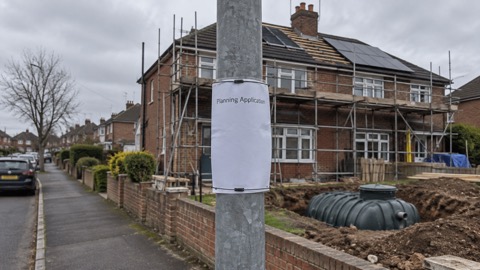
On grants, the position differs across the UK. In Scotland, a private water supply grant exists for households not on the mains, and our page on the private water supply grant in Scotland explains who can apply and what it covers; rainwater collection may fall within its scope where it forms part of a private supply arrangement, but the starting point is the council's environmental health team. For households elsewhere, retrofitting a system into an existing property can be expensive, which is worth weighing before committing to a tank5. Planning permission questions, which can arise with larger tanks, are covered on our planning permission page.
Getting started, whatever your budget
If the whole subject appeals but a buried tank is not on the cards, start at the small end and work up. A water butt fitted to a downpipe is the first step, and our guides on water butts and connecting a butt to a downpipe cover it. From there, the natural progression is a larger above-ground tank, then a filter upgrade, then, if the demand justifies it, an underground system with a pump feeding toilets and laundry. Each stage delivers something on its own, and none of it is wasted if you stop.
The garden is the easiest place to begin, because rainwater is genuinely better for plants than tap water. Makers of harvesting systems note that rainwater, being non-chlorinated, is better for plants and gardens1, and the Consumer Council for Water adds that rainwater collected in a water butt is better for your plants as it has a lower pH13. Our page on how much water a garden and lawn need in summer helps you match a tank to the demand.
And if your interest in rainwater is really about being ready for interruptions to the mains, pair it with the wider picture: our water in an emergency guide covers what to store for drinking, which is the one thing rainwater cannot give you, and the getting started page sets out the whole household picture.
Sources (21)
- 45,000 Litre Vertical Rainwater Harvesting Tank, Enduramaxx, 2026
- Rainwater Tanks, Enduramaxx, 2026
- Loss of Essential Services, Greater Manchester Combined Authority, 2026
- Water Supply Interruptions or Outages, Be Ready campaign, 2026
- Saving Water FAQs, Cambridge Water, 2026
- Stay Safe During Hot Weather, London Borough of Bexley, 2026
- Droughts, Prepare campaign, 2026
- Flood Smart Living, Suffolk County Council, November 2024
- Property Flood Resilience Case Studies, Derbyshire County Council, 2024
- 4,500 Litre Rainwater Harvesting Tank, Enduramaxx, 2026
- Water Supply Interruptions or Outages, Prepare campaign, 2026
- Protecting Your Private Water Supply, Drinking Water Inspectorate, 2026
- Drought, Consumer Council for Water, 2026
- Temporary Hosepipe Ban FAQs, Cambridge Water, 2026
- Reducing Water Use, Centre for Alternative Technology, June 2025
- Drought Advice and Support, Westminster City Council, 2026
- Warm Weather Safety, Suffolk Fire and Rescue Service, 2026
- Reduce the Risk of Wildfire Damage to Your Property, Hampshire Fire and Rescue Service, 2026
- Spotlight on Wessex Water: Saving Every Drop, Wiltshire and Swindon Prepared, 2026
- Plan and Prepare for Floods, Westminster City Council, 2026
- Surface Water Flooding, Greater London Authority, 2026
 Composting Toilet Kit Checklist
 Garden Harvesting Kit Checklist
 Rainwater Winter Checklist
 Above-Ground Rainwater Tanks
 Composting Toilets
 Direct vs Gravity Feed Systems
 Planning Permission for Systems
 Private Water Supply Running Low
 Private Water Supply Regulations
 Private Water Supplies Scotland
 Treating a Private Water Supply
 Rainwater Filter Types
 Rainwater System Maintenance
 Pumps for Rainwater Tanks
 Rainwater Systems and the Law