How the UK Prepares for Emergencies: A Household Guide
The UK prepares for emergencies mainly through local organisations working together: emergency services, councils, the NHS, environmental bodies and utility providers assess risks, write plans, train and coordinate their response. Central government provides wider leadership when needed. For your household, the practical starting points are to call 999 or 112 in an emergency, check your area's Community Risk Register, follow official warnings and keep basic supplies ready.
Preparation does not mean expecting responders to look after every household immediately. Emergency services must prioritise people in greatest need, so your own food, water, lighting, information and arrangements for vulnerable family members matter. The sections below explain who does what, and where official responsibility ends and household preparation begins.

In an emergency, call 999 or 112
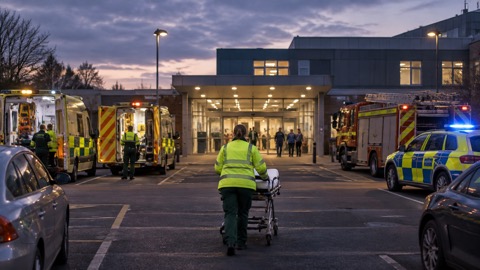
If you are involved in an emergency or witness one, dial 999 and alert the police, fire, ambulance or coastguard service as appropriate. Always call if you or someone else is in immediate danger. The number 112 is also included in the emergency-calling advice for this guide. Do not delay calling while you try to work out which organisation has planning responsibility for the incident.1
Use this order of action:
- Get yourself and others away from immediate danger where you can. Your own safety comes first.
- Call 999 or 112. Ask for the service needed and follow the call handler's instructions.
- Follow warnings and instructions from responders. An Emergency Alert may give specific instructions for your location.
- Help others without putting yourself in danger. Emergency services must prioritise those in greatest need, particularly where life is in danger.6
Different incidents bring different immediate risks. Our guides to home emergencies such as fire, gas leaks and burst pipes, flooding and major incidents deal with those situations in more detail. The national system described on this page supports that immediate response; it does not replace calling the emergency services.
Find the risks where you live
Start with two public documents. The UK National Risk Register describes serious risks at national level, while your local Community Risk Register sets out the risks most likely to cause disruption in your region. Each Local Resilience Forum publishes the local register and information online about risks in its area.2
| Document | What it tells you | What to do with it |
|---|---|---|
| UK National Risk Register | The national assessment of serious emergency risks | Understand the wider risks behind government preparedness advice3 |
| Community Risk Register | The risks considered most relevant to your region | Identify which disruptions are most relevant to your household2 |
| Local resilience information | Local plans, preparedness advice and partner organisations | Find guidance from the organisations that would respond locally2 |
Read the National Risk Register guide for what the national assessment says and how to read it. The companion guide to likelihood and impact explains how emergency risks are scored. Do not treat either register as a prediction of what will happen next: their purpose is to inform planning.
For a practical household response, use Getting Started to turn the risks into a short plan. Consider what you would do if power, water, transport or communications were interrupted, and whether anyone at home would need additional support. Sussex Resilience Forum, for example, also provides a Preparing for an Emergency booklet alongside its risk information.7
Who plans for your area
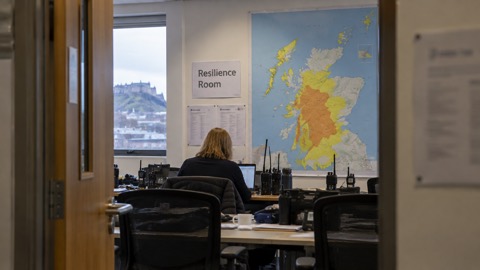
Most emergencies in the UK are handled locally by emergency services, local authorities and other relevant organisations, including utility companies and transport operators. Local Resilience Forums bring these organisations together to identify potential risks and produce plans intended to prevent an incident or lessen its impact on local communities.8
| Nation | Local planning arrangement |
|---|---|
| England | 38 Local Resilience Forums |
| Wales | Four Local Resilience Forums |
| Scotland | Three Regional Resilience Partnerships |
| Northern Ireland | Emergency Preparedness Groups3 |
In England, forum membership includes emergency services, local authorities, the NHS, the Environment Agency and other preparedness organisations such as utility providers. Wales's four forums complement the oversight and leadership of the Wales Resilience Forum and Wales Resilience Partnership.9 Find yours and understand its role in our guide to Local Resilience Forums; separate work on strengthening Local Resilience Forums covers the England pilots.
Above this local structure, the UK Government uses a Lead Government Department model covering risk assessment, planning, response and recovery. Our guides explain how central government responds and the wider Resilience Framework and Action Plan. Local forums may also coordinate with the military where specialised capabilities are needed; see when the armed forces help in a civil emergency.8
Responders and their legal duties
The Civil Contingencies Act 2004 provides the framework for local preparedness. Category 1 responders are public sector organisations providing vital emergency services. They include police, fire and rescue services, ambulance services, NHS bodies, local authorities and the Environment Agency. The guide to Category 1 and Category 2 responders explains the wider membership.8
Category 1 responders have six principal duties:10
- Assess risks and contribute to a Community Risk Register.
- Plan for emergencies, including training and exercising.
- Maintain business continuity arrangements so services can continue.
- Arrange to warn and inform the public before and during emergencies.
- Cooperate with partner agencies.
- Share information with partner agencies.
Local authorities also have a statutory duty to promote business continuity to local businesses and the voluntary sector. Section 2 of the Act requires Category 1 responders to assess emergency risks and use that assessment to inform contingency planning.11 Read more about the Civil Contingencies Act 2004, the duty of warning and informing and how emergency exercises test plans.
Scotland's Category 1 list includes local authorities, Police Scotland, British Transport Police, the Scottish Fire and Rescue Service, the Scottish Ambulance Service, Health Boards, SEPA, the Maritime and Coastguard Agency and Integration Joint Boards.12
Some duties are specific to particular hazards. In Great Britain, the relevant local authority must produce plans for off-site emergencies at nuclear sites. If a radiation emergency is declared, it activates that plan to protect the public within a predetermined Detailed Emergency Planning Zone.13
How you are warned and kept informed
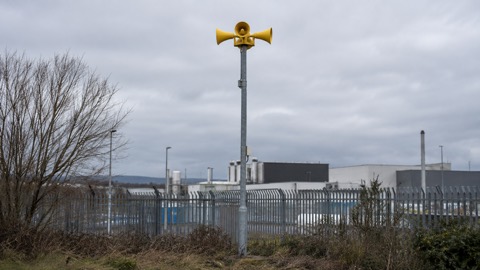
UK Government Emergency Alerts warn people when there is a danger to life. Alerts are sent to mobile phones and tablets according to their current location, rather than requiring you to register a home address. When you receive one, stop what you are doing and follow its instructions. If you are driving, find somewhere safe and legal to stop before reading it.4
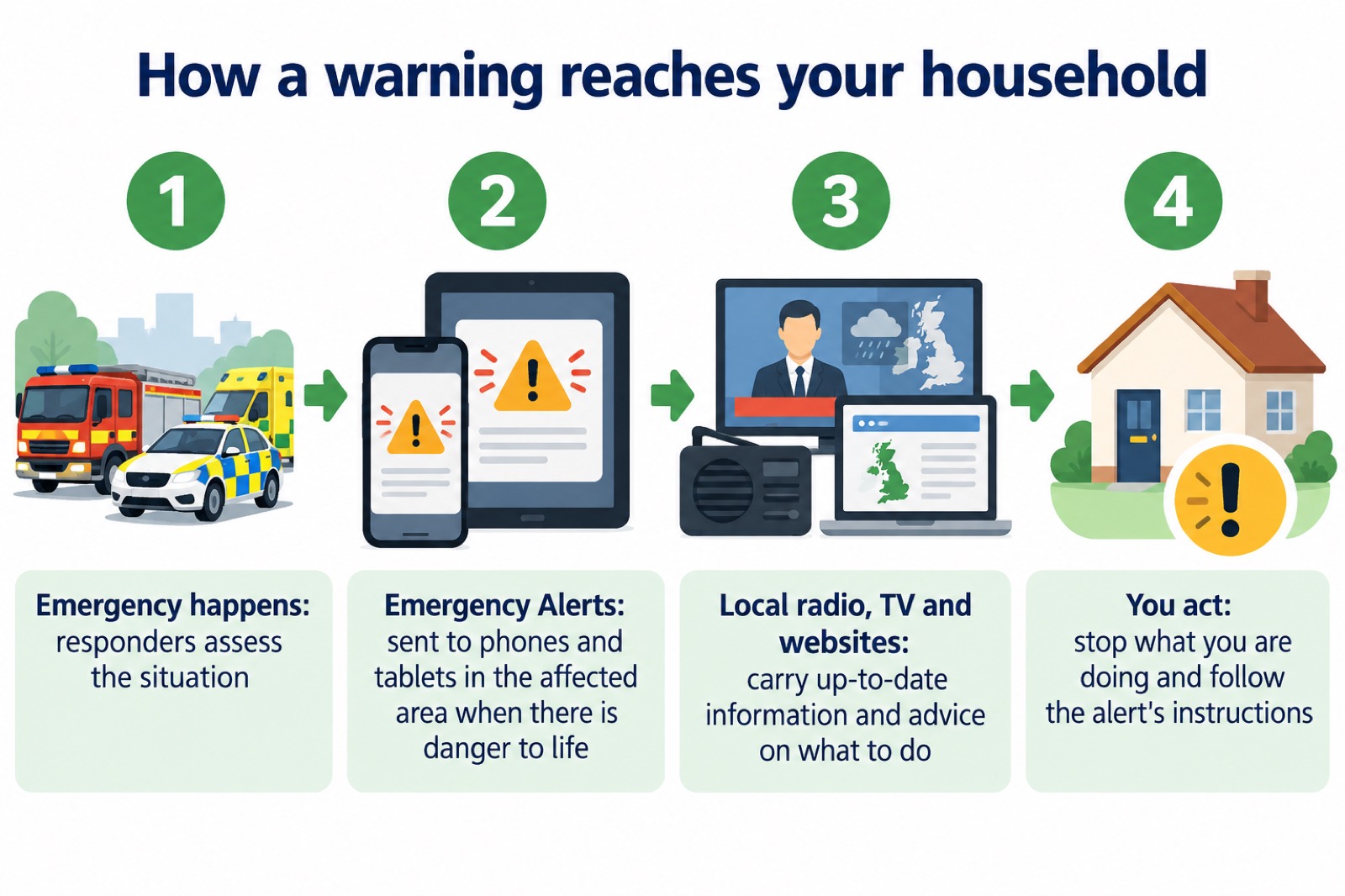
"In an actual emergency, follow the instructions in the alert to keep yourself and others safe."
The system was tested across the UK in 2023 and again during summer 2025, with test messages clearly labelled as tests. The published test wording directs readers to gov.uk/alerts for more information and states that no action is needed for a test. That wording and address provide a reference point when checking a message; our guide to staying informed and in touch covers the household side of receiving warnings.14
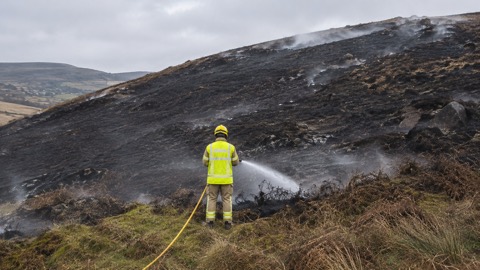
Alerts complement existing warning methods. People without a mobile phone are kept informed through other channels, so check on neighbours who may not have received or seen a message.15 The system can be used at considerable scale: on 14 August 2026, alerts were sent across England and Wales during the wildfire response, which the government described as its most extensive use during an active incident up to that point.16
Threat levels and Run, Hide, Tell
The UK terrorism threat level is set using available intelligence, terrorist capability, terrorist intentions and timescale. Threat levels have been in place since 2006 to warn of the likelihood of terrorist activity. As at 25 October 2026, the published level was SUBSTANTIAL.17
| Level | Published response meaning |
|---|---|
| Severe | A heightened response, additional significant security measures and specific enhanced measures for businesses and vulnerable areas |
| Critical | An exceptional response with maximum security in place17 |
An earlier official review also explained that CRITICAL means an attack is expected imminently. That review reported the international terrorism level as SEVERE in October 2016; it is a historical position, not the current level.18
For a marauding terrorist attack, the National Risk Register points to the Run, Hide and Tell campaign as a way to help people stay safe. Remember those three actions and follow police instructions. Our major incidents guide explains the household response to terror attacks and chemical or radiation emergencies.3
When a major incident is declared
In law, an emergency is an event or situation threatening serious damage to human welfare in a place in the UK, the environment of a place in the UK, or the security of the UK or a place within it. Our guide explains what counts as an emergency in UK law.11
A major incident declaration activates an organisation's emergency arrangements; it is not a signal for households to take one universal action. Follow the instructions issued for your location and situation. The detailed guide to what it means when a major incident is declared covers the declaration itself, while Gold, Silver and Bronze command explains the response structure.
The WannaCry cyber attack provides a documented example. At 4 pm on 12 May 2017, NHS England declared it a major incident and implemented emergency arrangements to maintain health and patient care. At 6:45 pm, NHS England initiated its Emergency Preparedness, Resilience and Response plans to act as the single coordination point, supported by NHS Digital and NHS Improvement.19
Exceptional emergency powers are a separate subject from an individual organisation declaring a major incident.
What your council does, during and after
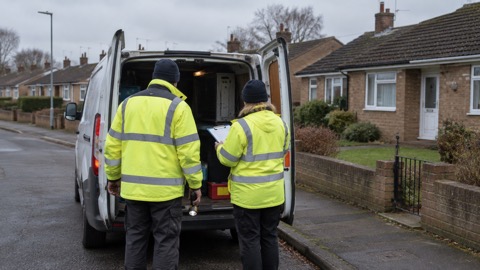
Councils assess risks, prepare contingency plans, coordinate the local authority response and support recovery management. Their work continues beyond the immediate incident. Nottinghamshire County Council, for example, writes and reviews emergency plans and advises parish councils and community groups on preparedness.20 Anglesey Council similarly prepares by working in partnership with other agencies and organisations.21
| Stage | Council role |
|---|---|
| Before | Assess risks, write and review plans, and support community preparedness |
| During | Coordinate the local authority response and work with emergency services |
| After | Support the recovery management process20 |
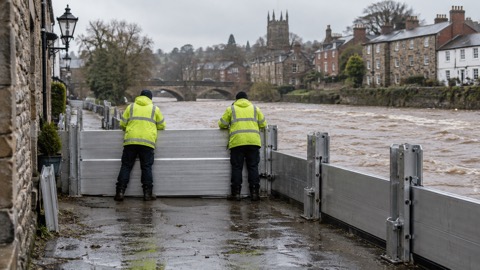
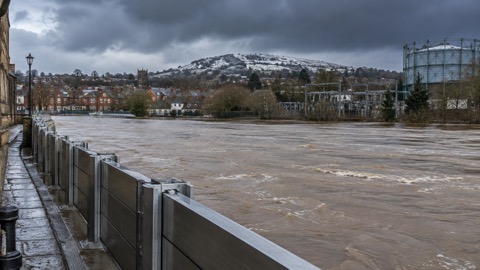
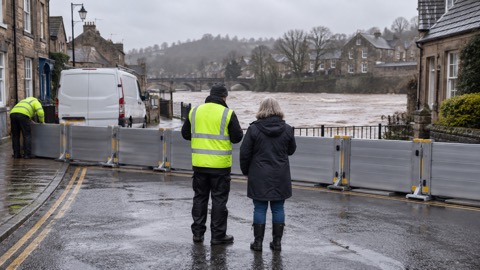
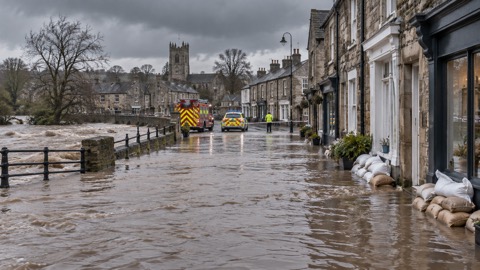
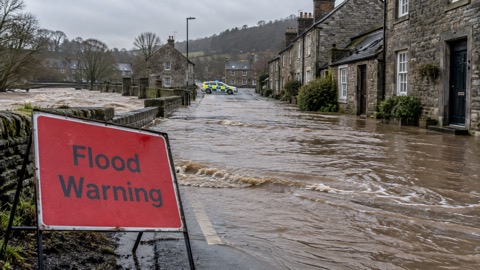
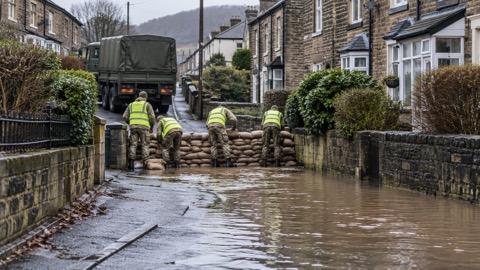
During severe flooding, local authorities work with emergency services and coordinate shelter for people evacuated from their homes. Emergency services provide emergency relief and can coordinate evacuations.22 Read more about what your council does, who houses you if an emergency leaves you homeless and what a Humanitarian Assistance Centre is.
Councils also regulate private water supplies. They must risk-assess supplies, apart from those to single untenanted dwellings, and monitor quality against drinking water standards. Where a supply endangers life or health, specified powers and duties can require an alternative wholesome supply where practicable at reasonable cost.23
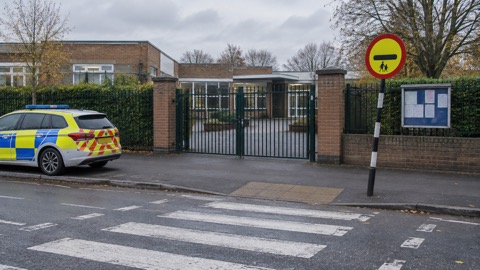
For related arrangements, see sharing personal data in an emergency and what parents should do in an emergency at school.
Where the system stops and you start
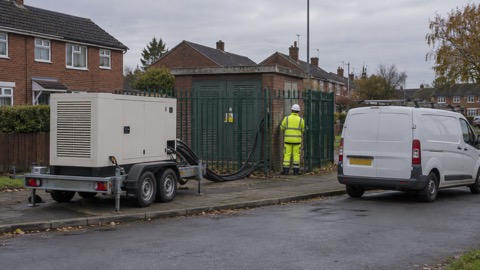
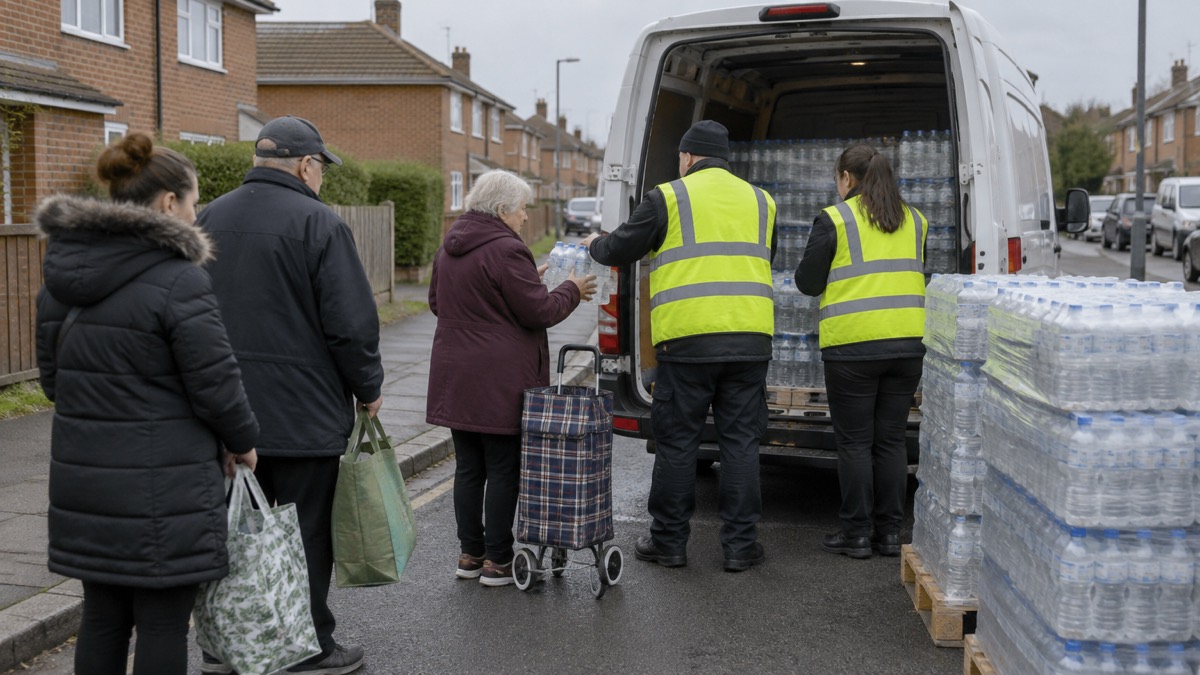
Emergency services always have to prioritise people in greatest need, especially where life is in danger. Individuals and communities may therefore need to rely on their own resources for a period. This is the central reason for household preparedness: not to replace responders, but to help you cope safely until normal services resume or help reaches you.6
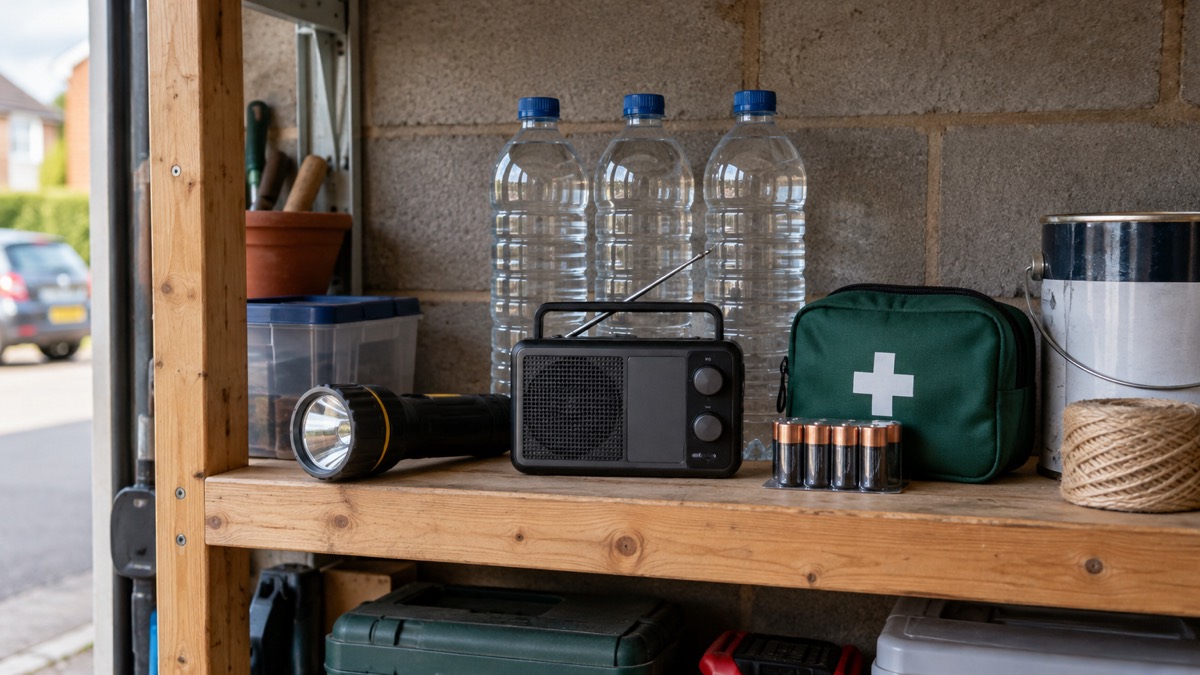
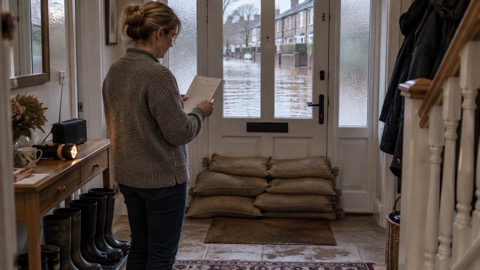
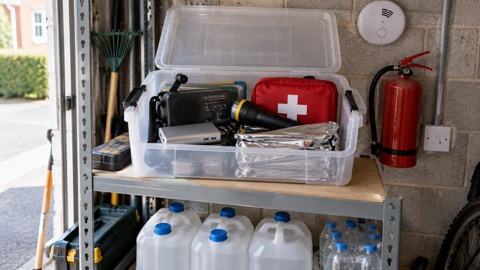
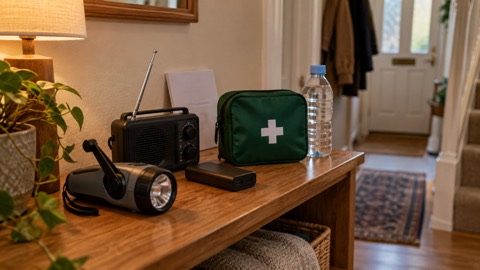
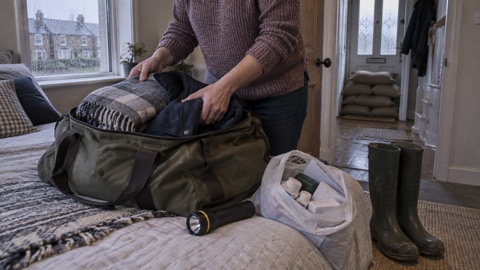
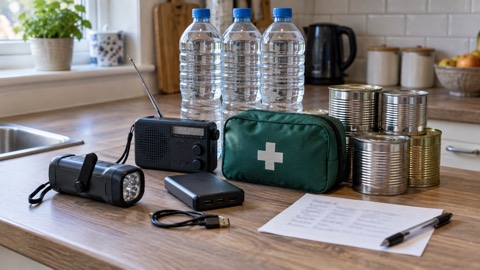
The UK Government Resilience Action Plan describes household preparation as looking out for vulnerable neighbours and stocking basics such as bottled water and a torch. Government advice also refers to keeping a supply of food and water.5 Start with this checklist:
- Water and food: keep supplies suitable for your household; see water and emergency food.
- Lighting and information: have a torch and a way to receive official updates; see emergency lighting and staying informed.
- Essential routines: consider power, heating, health needs and communications; see power cuts and health emergencies.
- People around you: include family members and vulnerable neighbours in your plan.
- A fuller kit: use the household emergency kit checklist to organise what you keep ready.
The official government advice guide explains where this advice comes from, and the Be Ready campaign covers the national public-awareness work. Keep preparations proportionate to the risks in your local register rather than planning for every possible event equally.
If you need extra help
Some households need additional practical, emotional or communications support. Tell responders about anyone in immediate danger, and include neighbours who may miss warnings in your community arrangements. For household planning, including Priority Services Registers, see Extra Help in an Emergency.
The British Red Cross responds to an emergency in the UK approximately every four hours. It supports rest centres and provides safe spaces offering emotional and practical support. It helps around half a million people in the UK each year to prepare for, respond to and recover from crises including house fires, floods and evacuations.6
Useful actions before an emergency include:
- Identify who would need help receiving warnings, leaving home or managing without services.
- Agree how family, neighbours or a community group will make contact.
- Follow the instructions in Emergency Alerts and help pass official information to people who may not have seen it.
- Read the extra help guidance alongside your household plan rather than waiting for an incident.
Community groups and volunteering
Prepared communities understand national and local risks, recognise who may need support, liaise with emergency services and other organisations, and use existing skills, knowledge and resources. A community plan complements the official response rather than replacing it.6
Join or support a group before an emergency, such as a local charity, flood action group or Neighbourhood Watch. Specialist national voluntary organisations include Communities Prepared, British Red Cross, REACT, 4X4 Response UK and RAYNET-UK.24 Our community resilience guide explains how neighbours and local groups can organise.
A useful community emergency plan should record:25
- Who to contact when an emergency happens.
- How the group will support its community.
- How it will support and complement the official response.
- Which local skills, knowledge and resources it can use.
- Which residents may be most in need of support.
In Scotland, Ready Scotland provides resources, templates and online training. Its community planning guidance describes a plan as helping communities prepare, respond and recover using their own strengths.26 Cornwall's Community Resilience Network, supported by Cornwall Council, the Environment Agency and the voluntary sector, covers community plans, warning messages, emergency kits, power or water interruption and help for people needing extra support.27
Sources (30)
- Preparing Your Family, Essex Prepared, 2026-10-29
- Check the Risks Where You Are, UK Government Prepare Campaign, 2026-10-20
- The UK Government National Risk Register 2025, UK Government, 2025
- Alerts and Warnings, UK Government Be Ready Campaign, 2026-10-20
- The UK Government Resilience Action Plan, UK Government, 2025-07
- Community Involvement, Dorset Prepared, 2026-03-25
- Sussex Resilience Forum, Sussex Police, 2026-11-03
- What Is a Local Resilience Forum?, Essex Prepared, 2026-10-29
- Statement on Resilience and Emergency Preparedness, Welsh Government, 2026-10-13
- Civil Contingencies, Argyll and Bute Council, 2026
- Community Resilience Development Framework, UK Government, 2019-06
- Who Responds in Scotland, Ready Scotland, 2026-03
- Local Emergency Arrangements, Office for Nuclear Regulation, 2026-10-29
- The UK Emergency Alerts System, Dorset Prepared, 2025-10-03
- UK Emergency Alerts System National Test Message, Welsh Government, 2023-04-20
- Emergency Alert Sent During Wildfire Response, UK Government, 2026-08-14
- Terrorism Threat Levels, Wiltshire and Swindon Prepared, 2026-10-25
- London's Preparedness to Respond to a Major Terrorist Incident, Greater London Authority, 2016-10
- Investigation: WannaCry Cyber Attack and the NHS, National Audit Office, 2017
- Our Role in Emergency Planning, Nottinghamshire County Council, 2026-10-29
- Civil Emergencies and Emergency Planning, Isle of Anglesey County Council, 2026-10-29
- Responsibilities and Developing Flood Knowledge, Scottish Environment Protection Agency, 2026-10-29
- Managing Insufficiency of Private Water Supplies, Drinking Water Inspectorate, 2025-12-15
- Prepare Your Community, Greater Manchester Combined Authority, 2026-10-29
- Information for Communities and Community Groups, UK Government Prepare Campaign, 2026-10-16
- Why Make a Community Emergency Plan, Ready Scotland, 2026-03
- Cornwall Community Resilience Network, Cornwall Council, 2026-03-11
- Advice for disabled persons and carers, Be Ready campaign, UK Government, 2026-10-20
- Preparing for civil emergencies in Argyll and Bute, Argyll and Bute Council
- Alerts, Prepare campaign, UK Government, 2026-10-20
 National Risk Register
 How Emergency Risks Are Scored
 Civil Contingencies Act 2004
 What Counts as an Emergency
 Category 1 and 2 Responders
 Local Resilience Forums
 Strengthening Local Resilience
 What Your Council Does
 Central Government Response
 Gold, Silver and Bronze Command
 Major Incident Declared
 Emergency Powers
 Warning and Informing the Public
 UK Resilience Framework
 Official Government Advice
 Sharing Data in an Emergency
 Military Support in Emergencies
 Emergency Exercises
 Housing After an Emergency
 Humanitarian Assistance Centre
 School Emergency for Parents
 Be Ready Campaign