Are You Prepared? The Ultimate 50-Step Household Emergency Checklist
Fifty practical checks that take an ordinary UK household from no plan to properly prepared.
UK government guidance on preparing for emergencies asks households to be ready to look after themselves, including having 3 days' worth of supplies1. This checklist turns that into fifty specific checks: the water, food and kit to have ready, the plan to write down, the alarms to fit and test, the weather and security precautions to take, and the arrangements to make for the people and pets who depend on you.
It is written for an ordinary household with no prepping background. Work through it section by section rather than all at once: tick what you already have in place, and use the links to read the detail behind each check. Come back to it as you complete the rest, and review it once a year.
Getting Ready
These first checks build the household's basic readiness: the supplies, plan and equipment that see you through the first hours and days of any emergency, whatever its cause.
Emergencies
These checks cover the emergencies that begin inside the home: fire, carbon monoxide and medical situations, and the equipment and skills that make the difference in the first minutes.
Weather
These checks prepare your household for the weather most likely to disrupt it in the UK: flood, storm, snow and ice, and heat.
Security
These checks make your home harder to break into and your online life harder to compromise, so an emergency does not include a burglary or a hacked account.
People
These checks arrange the extra help and the mutual support that matter most in an emergency: registers and plans for people who need them, and neighbours and pets who rely on you.
Going Further
This section is optional: it is for households that want to go further than the basics, building a little more self-sufficiency into everyday life.
Keeping the Checklist Current
Review this checklist once a year, and again after moving home or any change in the household, such as a new baby, a new pet, or someone moving in or out. Check occasionally that details such as emergency phone numbers for family and medical providers are still up to date, and replace anything in the kit that has expired or been used36. A checklist that matches the household you have now, not the one you had when you wrote it, is the one that will work when you need it.
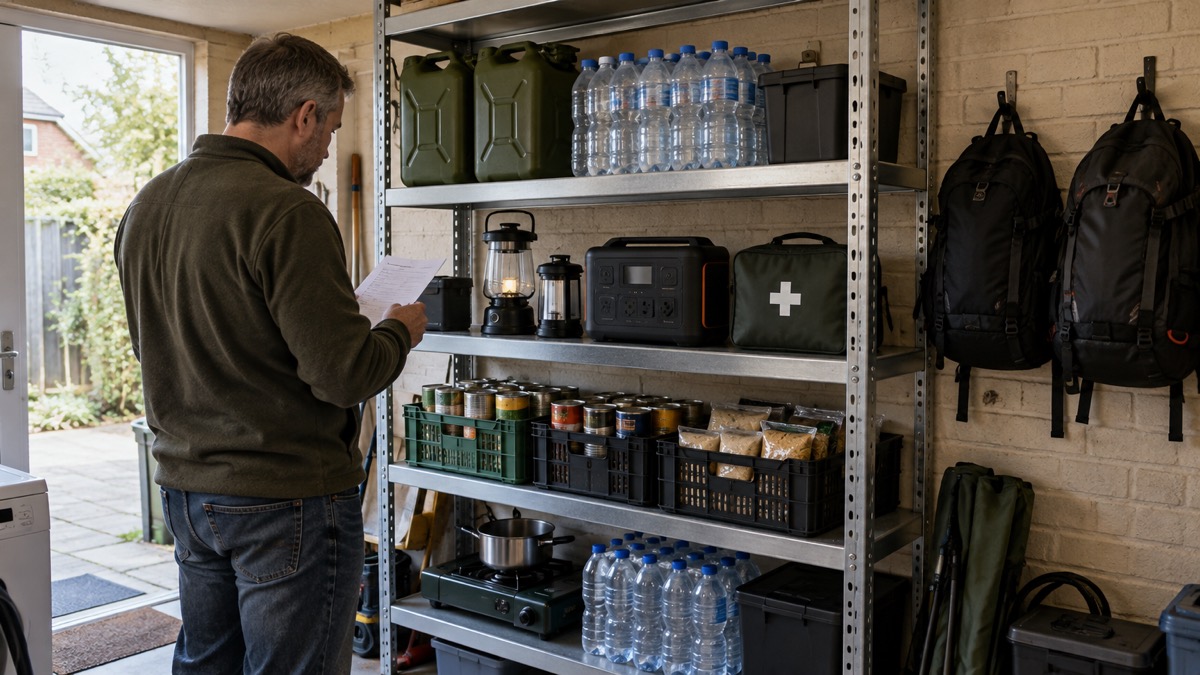
Keep bottled water for 3 days, at 3 litres per person per day for drinking. More would be needed for other tasks such as cooking and washing. One official checklist suggests 10 litres per person per day makes you more comfortable by also covering basic cooking and hygiene needs, so anywhere between these figures is a sensible target.
How often should I test my smoke alarms?
Advice differs between fire and rescue services. Devon and Somerset Fire and Rescue Service and others advise testing once a month, while the Northern Ireland Fire and Rescue Service says every week. Testing at least once a month is the minimum; weekly costs nothing and catches a flat battery sooner.
What is the Priority Services Register and how do I join?
It is a free register run by energy and water suppliers that gives extra advice and support during a power cut or water outage. Check if you can join at thepsr.co.uk. It suits older people, disabled people, households with young children, and anyone who relies on medical equipment or would struggle in an outage.
How many smoke alarms does my home need?
You need at least one smoke alarm on each level of your home, according to fire and rescue service advice. Fit and test them regularly, and add a carbon monoxide alarm if you have any fuel-burning appliances such as a boiler, fire or stove.
What should go in a grab bag?
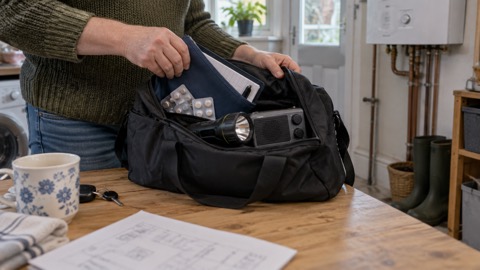
A grab bag holds essential items you might need if you have to leave home at short notice. Useful contents include essential medicines, a mobile phone and charger, cash and cards, spare clothes and blankets, copies of important documents, and things for children or pets such as books, games or a special toy.
How much prescription medicine should I keep at home?
One emergency power guide recommends a minimum seven-day supply of prescription medications, though this is maker advice rather than official guidance. Keep any regularly prescribed medication in your emergency kit, and check expiry dates when you review your kit each year.
Will my personal alarm work in a power cut?
Not necessarily. If you have a personal alarm, diabetes sensor or other connected telecare equipment monitoring your health, speak to your device provider or manufacturer to understand how it will work during a power cut before you need to rely on it.
How often should I review my emergency preparations?
Review your checklist once a year, and again after moving home or any change in your household, such as a new baby, a new pet, or someone moving in or out. Check that details such as emergency phone numbers for family and medical providers are still up to date.
 30-Day Household Checklist
 Emergency Plan Template
 Supply Interruption Checklist