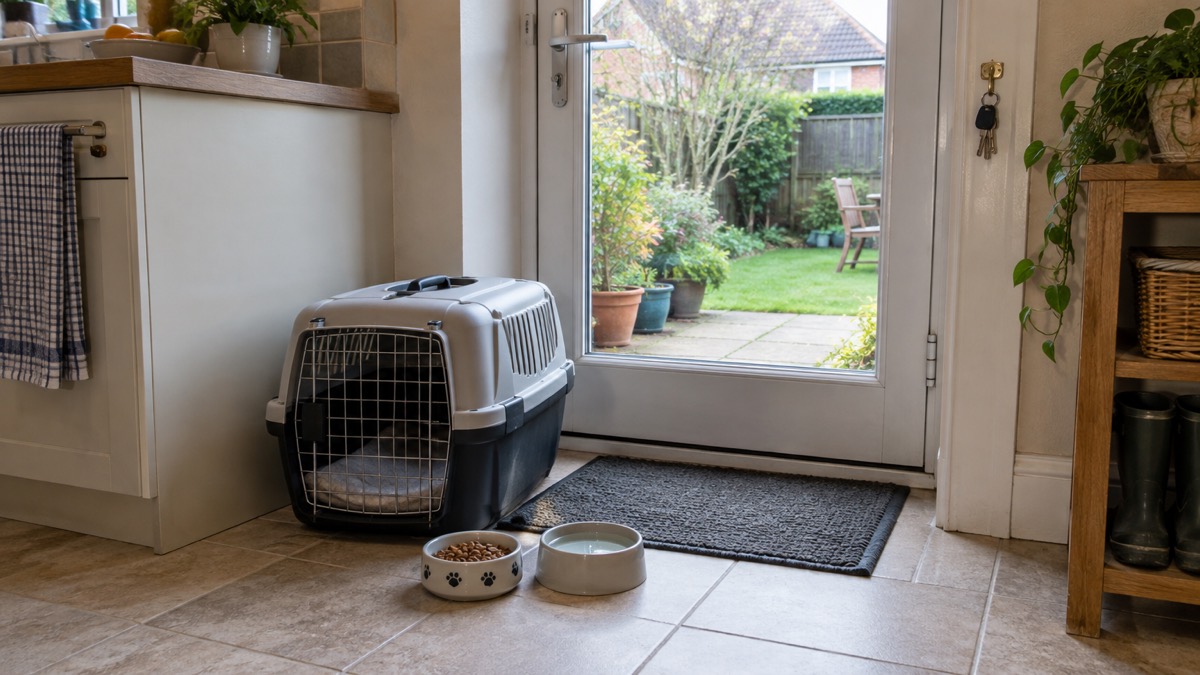
If you are taken into hospital suddenly, the first hours are the ones that matter for your pet. It needs food, water and company that day, and someone needs to know it is there. The answer is to decide now, while you are well, who will take over, and to write down enough that they can step in without asking you anything.
The core of it is a named person. Councils advise you to arrange with a friend or relative to look after your pets in an emergency1, and to ask friends or family whether they would be able to look after your pet in an emergency2. A neighbour can do the same job: consider having a buddy who might be able to take care of your pet in an emergency3. Then tell the people who will meet you at the hospital, because ambulance services ask that pets are put into a separate room before the crew arrives4, and Welsh Ambulance Services ask you to lock away any family pets5.
What you cannot do is leave it to chance. If no one can be contacted, the responsibility for the animal passes to the police or the council, who will care for it in place or move it to a boarding facility6. That is a safety net, not a plan. A short written plan, a named carer and a bag of your pet's things turn a frightening morning into a manageable one.
Arrange a named pet carer before you need one
The single most useful thing you can do is choose a person and ask them directly. Councils across the country give the same advice: arrange with a friend or relative to look after your pets in an emergency1. In West Yorkshire the wording is to ask friends or family if they would be able to look after your pet in an emergency2, and in Wiltshire the suggestion is a neighbour buddy, who might be able to take care of your pet in an emergency3. Any of these works. What matters is that the person knows they are the one, knows where the spare key is, and knows what your animal needs.
Choose more than one. A single carer who is on holiday, ill or unreachable when you are admitted leaves you back where you started. Think about who is close enough to reach your home quickly, who your pet already knows, and who could manage for a week rather than an afternoon. If your pet is difficult with strangers, the person who already walks it is a better choice than a willing neighbour it has never met.
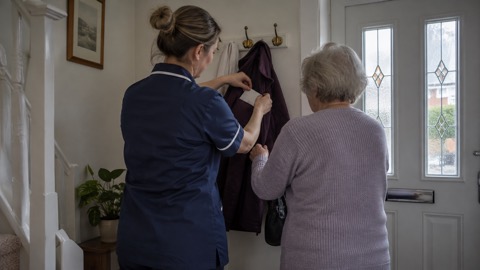
Write the arrangement into your household plan. Official guidance is clear that pets are an important part of family life and your emergency plans should include how you will look after them9. The same applies to a hospital stay, which is simply another way you can be separated from home at short notice. If you are a carer yourself, the plan should record whether the person you care for has pets and who will care for them in an emergency10.
There is a limit worth knowing. If you are evacuated rather than admitted, some emergency shelters may only be able to take assistance animals11, so a carer outside the affected area is the more reliable arrangement12. The same logic holds for hospital: someone who can come to your home, or take the animal into theirs, is better than a plan that depends on you being there.
What to write down for whoever looks after your pet
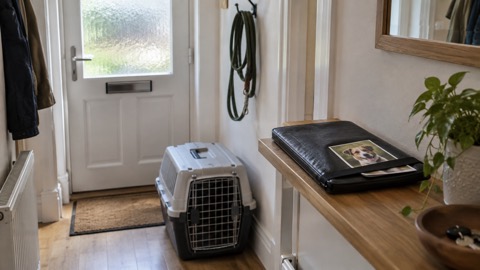
A carer who has never owned your pet needs facts, not affection. Write them down once, keep a copy with the pet's things and give a copy to the carer. The list below covers what official guidance says a pet's records and grab bag should hold.
- Your vet's name and number, and the out-of-hours number. All vet practices provide an out-of-hours service for emergency cases13.
- Vaccination certificates, because most boarding facilities will not accept unvaccinated pets7.
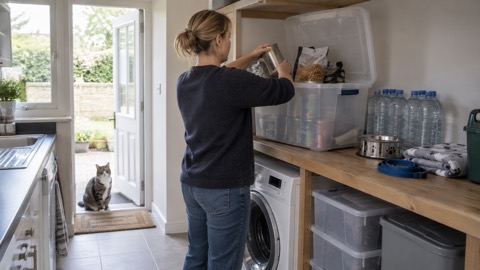
- Medication, with the dose and where it is kept, plus emergency medication and food for pets in your kit14.
- Food, a water bowl and a carrier where needed15, and a lead or carrier for every animal7.
- Current photos of your pet, in case it gets lost16.
- Your own contact details, the ward you are on, and a second contact who can make decisions if you cannot.
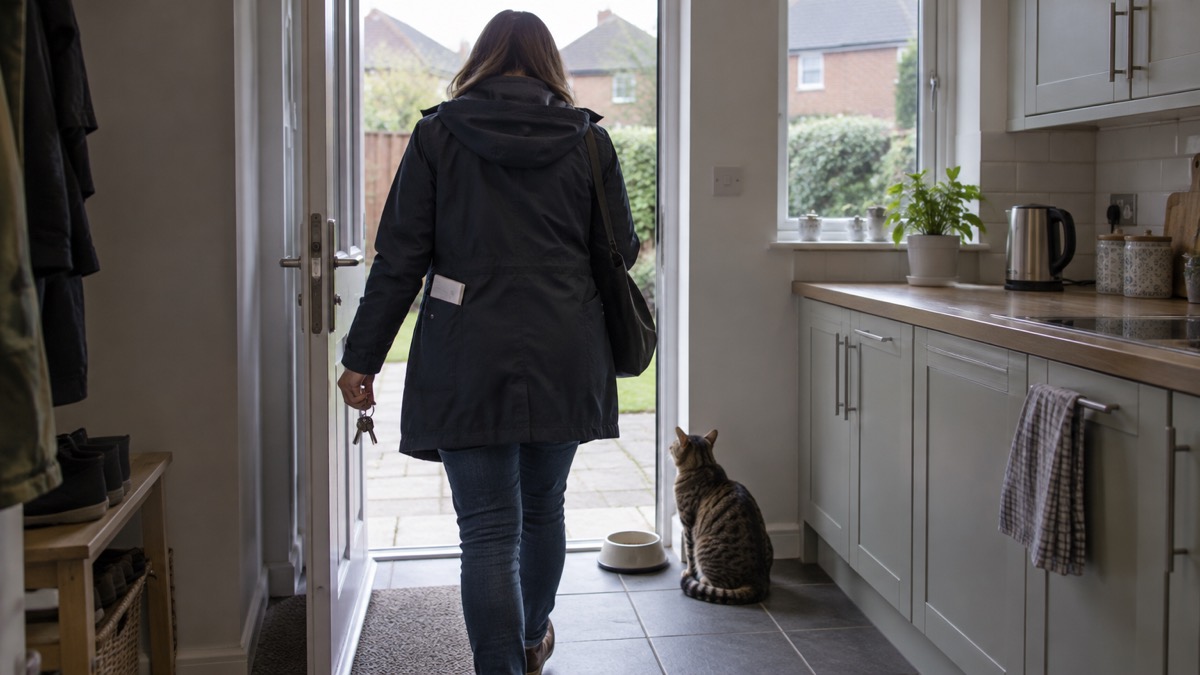
The RSPCA publishes a guide to having someone else look after your pet, covering choosing who will look after your pet while you are away8. The National Animal Welfare Trust provides a summary and information templates for choosing a boarding kennel1, which is useful if the arrangement may last longer than a few days.
Emergency hospital admission: getting your pet looked after quickly
If an ambulance is coming, you have minutes, not hours. The ambulance service's own instruction is to put pets somewhere safe4, and its crews will also request that pets are put into a separate room18. In Wales, the instruction is to lock away any family pets before the crew arrives5. Do that first, then make one phone call to your named carer.
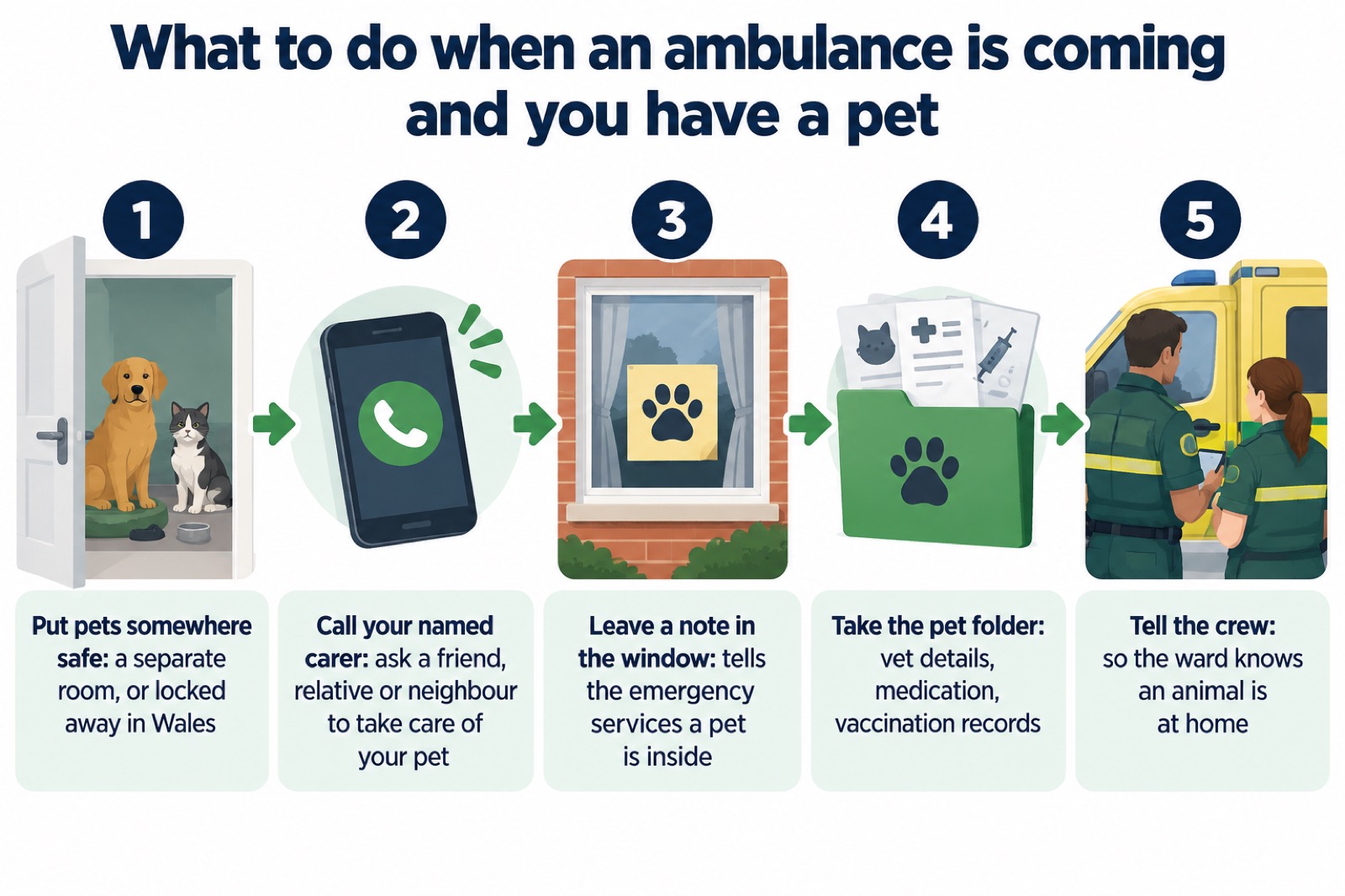
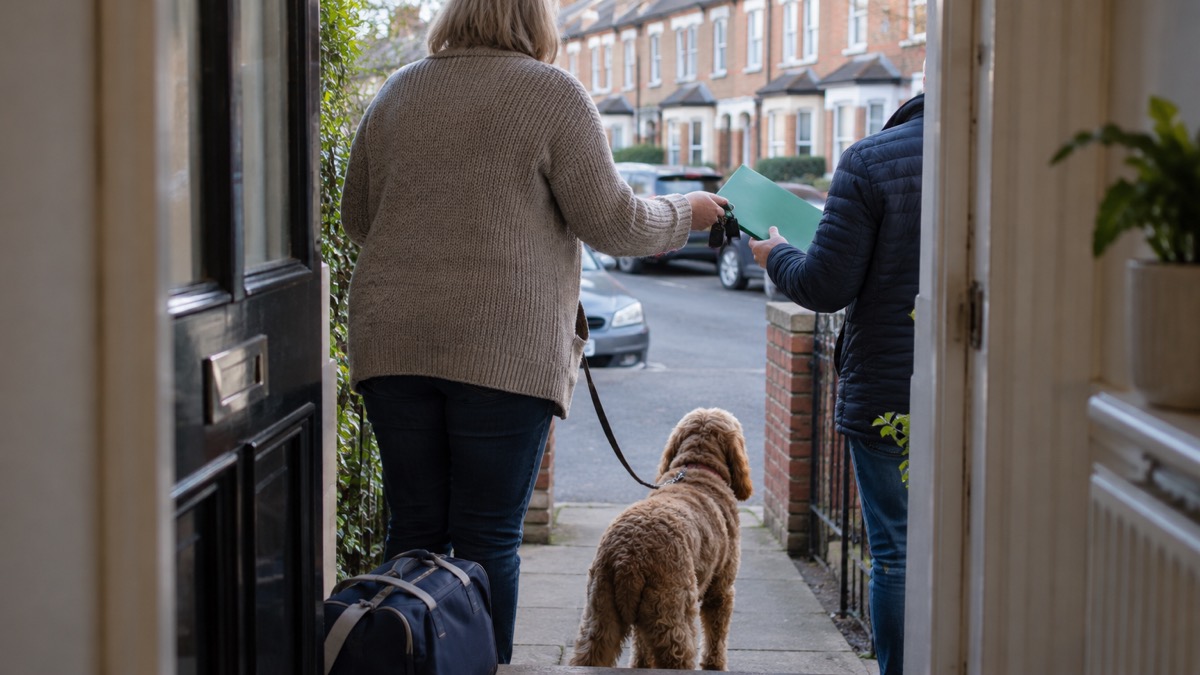
If you cannot reach your carer, work down your list. Call friends, family members, veterinarians, or boarding kennels in a safer area to arrange safe foster care19. Your vet may know of a client or a local scheme, and a kennel can take the animal at short notice if its vaccinations are current.
If you have to leave the animal at home, leave a note in the window to inform the emergency services2. That note is what turns an unknown animal in an empty house into a pet someone can collect. If you are well enough to speak, tell the crew and later the ward staff that you have a pet and who is caring for it.
Boarding, sitters and charity pet fostering: how each one works
There are three routes, and they suit different circumstances. If you and your pet cannot stay together, call friends, family members, veterinarians, or boarding kennels in a safer area to arrange safe foster care1. It helps to make a list of local boarding kennels or other animal shelters that may help in an emergency before you need one2, and the National Animal Welfare Trust provides a summary and information templates for choosing a boarding kennel3. If you go to a rest centre run by your local council, arrangements will be made to keep pets safe2, and where a reception centre is available you may bring your dog or cat to a specific pet area within the centre, though you remain responsible for the animal's welfare and for ensuring it is not a risk to other people and animals4.
| Route | How it works | Best suited to | What to check |
|---|---|---|---|
| Friend, relative or neighbour | Takes the pet into their home or visits yours; you supply food, medication and instructions1 | Most households, especially for short stays | They know the pet and can reach your home; a second name is agreed |
| Boarding kennels or catteries | The pet stays at a licensed establishment; you arrange it in advance or in an emergency19 | Stays of a week or more, or when no one can visit | Vaccinations are current, because most facilities will not accept unvaccinated pets7 |
| Charity or council help | The Cinnamon Trust helps older and terminally ill people care for their pets8; councils make arrangements to keep pets safe at rest centres9 | People with no one to ask, or with long-term needs | Eligibility, and whether the scheme covers your animal and your area |
Boarding has one hard requirement. Most animal boarding facilities will not accept unvaccinated pets7, so keep the certificate where you can find it and check the kennel's own rules before you need them. Vaccination also helps your pet fight off many viruses and diseases7, which matters more when it is in an unfamiliar place.
If you are evacuated rather than admitted, the picture is slightly different. Many centres will allow you to bring your pet, and cats or small animals should go in a carrier or small box20. If a reception centre is available, you may bring your dog or cat to a specific pet area within the centre, and you remain responsible for the animal's welfare and for ensuring it is not a risk to other people and animals1. Some shelters may only be able to take assistance animals11, so confirm before you travel.
Pets left alone at home, and telling hospital staff
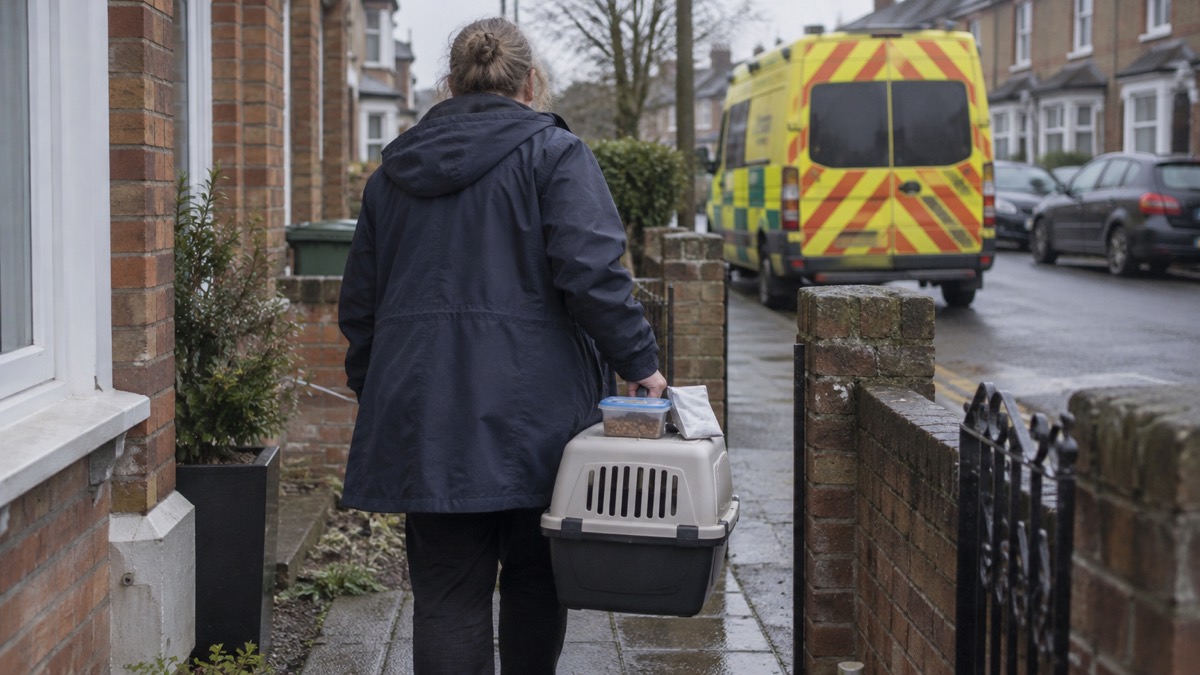
The worst outcome is an animal alone in a house with no one aware of it. The safeguard is a note in the window2 and a carer who has been told to check. If you are advised to stay indoors during an incident, keep your pets indoors with you9. If you must leave and cannot take them, the police or council take responsibility once next of kin cannot be reached6.
Tell the people treating you. Ambulance crews ask for pets to be in a separate room18, and in Wales to be locked away5, so the conversation starts at the door. Once on the ward, say that you have a pet at home and give the name and number of your carer. Hospital staff cannot arrange care themselves, but they can help you make a call, and a discharge team may know what is available locally.
For a long stay, ask about support. In Nottingham and Nottinghamshire, hospital discharge support includes dog walking for people who are unable to get out of the house21. Arrangements differ across England, Scotland, Wales and Northern Ireland, so ask the ward what exists where you live. If you are a carer and become ill with no one to fill in, contact your council or trust straight away and explain the situation22.
Where to get help if you have no one to ask
Start with the people you already know but did not think to ask. Contact family or friends who you do not live with to see if you could stay with them in an emergency or if they could look after your pets if you were unable to7. Distance is less of a barrier than it seems: a relative two hours away can still collect a cat and its paperwork.
Then work through the local options:
- Your vet. Ring ahead so they can prepare for an emergency case13, and ask whether they know of a client or local scheme that helps in your situation.
- Your council. Councils plan for pets in emergencies and can tell you what is available locally9. If you are a carer who has become ill, contact your council or trust straight away22.
- Charities. The Cinnamon Trust helps older and terminally ill people care for their pets8. The National Animal Welfare Trust provides templates for choosing a boarding kennel1.
- Volunteer schemes. The NHS CARE Volunteer Responders scheme may be able to provide help for those who are eligible, including picking up food and medication for people who cannot leave the house24. Check whether you qualify.
If you find an animal rather than lose one, the same networks help. Call local vets and rescue centres and give them your number so they can call if the pet is handed in25. All vets will provide emergency first aid care to a pet or wildlife in need, at no charge to the person that finds them25.
For the wider picture, see Pets and Animals in an Emergency: A Household Guide and Including Your Pets in a Household Emergency Plan. If your concern is what happens during a flood rather than a hospital stay, Keeping Pets Safe Before, During and After a Flood covers evacuation and rest centres in more detail.
Sources (25)
- Pet welfare in an emergency, Westminster City Council, 2025-09-24
- Pets, West Yorkshire Prepared, 2026-10-29
- Your pets, Wiltshire and Swindon Prepared, 2026-10-25
- What to do when the ambulance is coming, South Western Ambulance Service NHS Foundation Trust, 2026-10-29
- How to help the ambulance crew before they arrive, Welsh Ambulance Services University NHS Trust, 2026-10-29
- Managing animals due to sudden death of owner, RSPCA, 2026
- Looking after your pets in an emergency, Medway Council, 2026-10-29
- Pet care in an emergency, Norfolk and Norwich University Hospitals NHS Foundation Trust, 2024-07
- Are you ready, Birmingham City Council, 2026-06-05
- Carer's emergency plan, Norfolk County Council, 2026-10-29
- Preparing yourself for emergencies, London Resilience Partnership, 2026-10-25
- Preparing for a flood with your pet, Blue Cross, 2023-02-03
- Emergency care for pets, PDSA, 2026-10-29
- Emergency kit, Wiltshire Council, 2026-10-29
- Be prepared for emergencies, North Devon Council, 2026-10-29
- Emergency kits and grab bags, Central Bedfordshire Council, 2026
- Planning ahead, Torbay and South Devon NHS Foundation Trust, 2025-10-21
- What to expect when you call 999, South Western Ambulance Service NHS Foundation Trust, 2026-10-29
- You prepare for emergency, Slough Borough Council, 2026-10-29
- Personal flood plan, GOV.UK, 2023-11-15
- Hospital discharge, Nottinghamshire County Council, 2026-10-29
- Your health and wellbeing, Carers UK, 2026-10-25
- Anaphylaxis, NHS, 2023-06-21
- Top tips for keeping warm and well this winter, GOV.UK, 2026-04-28
- Missing pets, PDSA, 2026-10-29
 Pet Emergency Documents
 Storing Pet Food and Water
 Carer's Emergency Plan
 Pet Birds in Cold Weather
 Birds and Chickens in Heat
 Breaking a Car Window for a Dog
 Keeping a Cat Cool in a Heatwave
 Chocolate Poisoning in Dogs
 Christmas Hazards for Pets
 Dog Left Alone on a Hot Day
 Dog in a Hot Car
 Hypothermia in Dogs and Cats
 Dogs in Water or Coast Trouble
 Fireworks and Small Pets
 Fish in a Power Cut