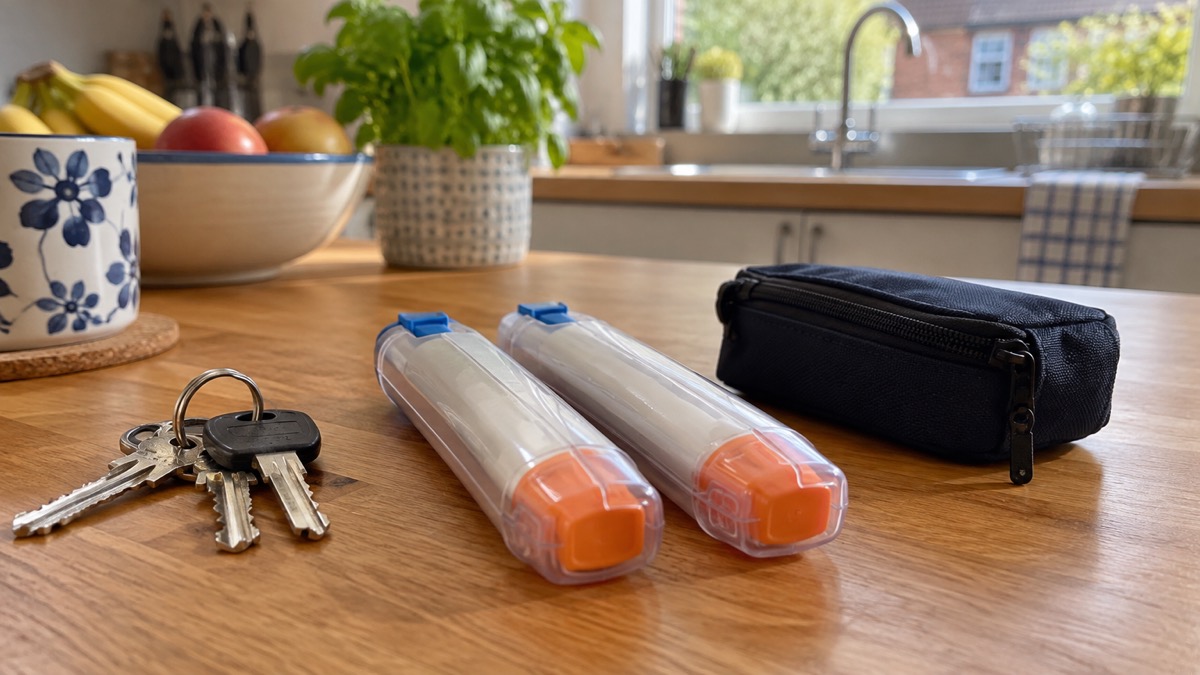
Anaphylaxis is a serious, life-threatening allergic reaction that usually comes on within a few seconds or minutes of contact with the thing you are allergic to1. If you suspect it, in yourself or anyone else, call 999 immediately and say the word "anaphylaxis" to the call handler. The NHS is direct about this: call 999 for an ambulance and say that you think you are having an anaphylactic reaction2. The MHRA, the medicines regulator, says the same after an adrenaline injection is given: call an ambulance on 999 immediately and say this is an emergency case of anaphylaxis3.
Adrenaline is the first-line treatment and should be used without delay as soon as anaphylaxis is suspected4. If the person has an adrenaline auto-injector, help them use it, then call 999. If there is no auto-injector, call 999 anyway and tell the emergency services5. While you wait, help the person sit in the position that makes breathing easiest, and do not let them stand or walk, even if they start to feel better6.
This page covers the signs to look for, what to do step by step, how to brief the call handler, and how to know and avoid your triggers so a reaction is less likely in the first place.
Call 999 and say you think it is anaphylaxis
The single most important thing you can do is make the call and name the condition. NHS Inform's first-aid guidance is explicit: "Phone 999 and tell the call handler that you think someone has anaphylaxis"7. The MHRA's safety notice on auto-injectors uses the same wording: call an ambulance on 999 immediately after giving the injection and say this is an emergency case of anaphylaxis3. The NHS's own page on anaphylaxis says to call 999 for an ambulance and say that you think you are having an anaphylactic reaction2.
Why does the word matter? Because anaphylaxis is a time-critical emergency, and naming it helps the call handler prioritise the response. The East Suffolk and North Essex NHS guidance on auto-injectors puts it plainly: always call 999 for an ambulance after use, telling the call handler it is "anaphylaxis" so they can prioritise the response9. The MHRA notice repeats the same instruction10.
If you are the person affected and you are alone, shout for help as loud as you can and call 99911. If you are with someone else, one person should make the call while another helps with the auto-injector if one is available. Do not wait to see whether symptoms settle before calling.
The call handler will stay on the line and give you instructions. Ambulance services say the call handler will give you simple, effective instructions on how to assist until the crew arrives, which might include CPR, dealing with choking or helping with childbirth11. The NHS adds that if you are unsure about opening the airway and assessing breathing, the call handler will tell you what to do, and the controller will help you push at the right speed if CPR is needed12.
"Phone 999 and tell the call handler that you think someone has anaphylaxis."
Signs of an anaphylactic reaction
Anaphylaxis affects the whole body. During a reaction, blood vessels widen, causing blood pressure to fall, and air passages narrow, leading to breathing difficulties; the tongue and throat can swell and obstruct the airway, and the oxygen reaching organs can fall7. That is why the signs cluster around breathing, circulation and swelling.
The most serious symptoms, according to NHS Inform, are swelling of the throat or tongue; breathing problems like wheezing or shortness of breath; feeling faint, dizzy or lightheaded; collapse or loss of consciousness; and blue, grey or pale skin, lips or tongue7. Any of these should be treated as a medical emergency6.
Other symptoms can include a skin rash which can be itchy, swelling of the face, lips or eyes, and stomach symptoms like abdominal pain, nausea or vomiting. These are unlikely to be a sign of anaphylaxis on their own7, but they matter when they come alongside breathing or circulation problems, or shortly after contact with a known trigger.
| What you may see | What it suggests |
|---|---|
| Swelling of throat or tongue | Airway narrowing: treat as an emergency7 |
| Wheezing, noisy breathing, persistent cough | Breathing difficulty6 |
| Faintness, dizziness, collapse | Falling blood pressure7 |
| Blue, grey or pale skin, lips or tongue | Serious circulation problem7 |
| Rash, facial swelling, vomiting | Possible early signs; watch closely7 |
For children, the signs can be similar. NHS guidance for parents says to call 999 if a child shows signs of anaphylaxis after a bite, with symptoms including swelling of the mouth, tongue and airway that needs to be treated immediately13. Basic first-aid guidance for toddlers lists a rash, itchiness or swelling on the hands, feet or face, breathing that may slow down, and vomiting or diarrhoea as signs to spot14.
What to do when accidental exposure happens
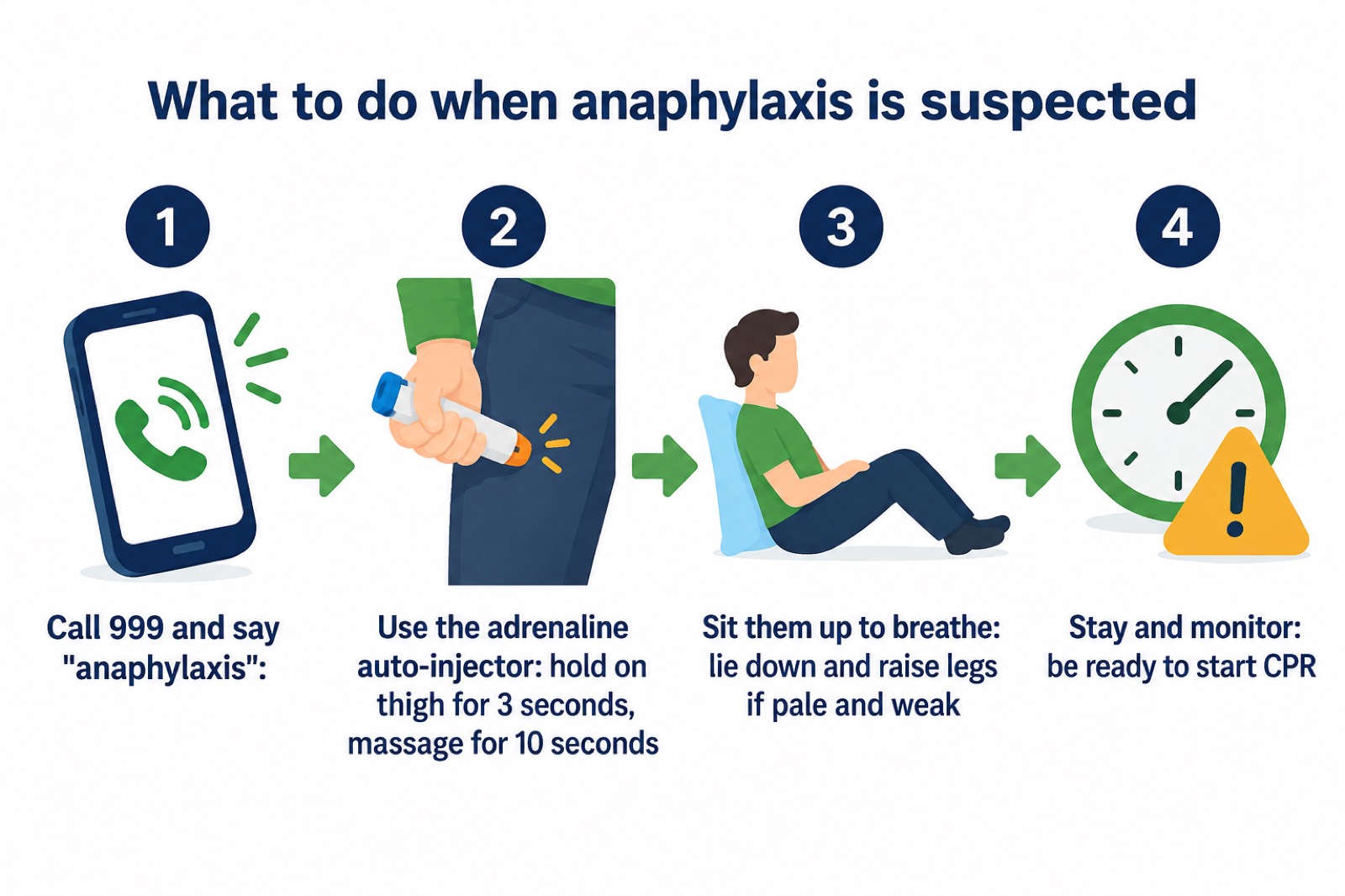
Accidental exposure can happen even with careful avoidance. The response has a clear order: call, inject, position, monitor.
- Call 999 and say "anaphylaxis"2.
- Help the person use their adrenaline auto-injector if they have one. The British Red Cross adult first-aid guidance says to push the tip firmly against their thigh until it clicks, hold in place for 3 seconds or as instructed on the auto-injector, then massage the site for 10 seconds5.
- Help them sit in the position that makes breathing easier. If they become pale with a weak pulse, lie them down and raise their legs to treat them for shock7.
- If they are pregnant and need to lie down, lean them towards their left side and place a cushion or rolled clothing under the right hip to keep it elevated7.
- Monitor until help arrives. If the person becomes unresponsive, check their breathing and be prepared to start CPR7.
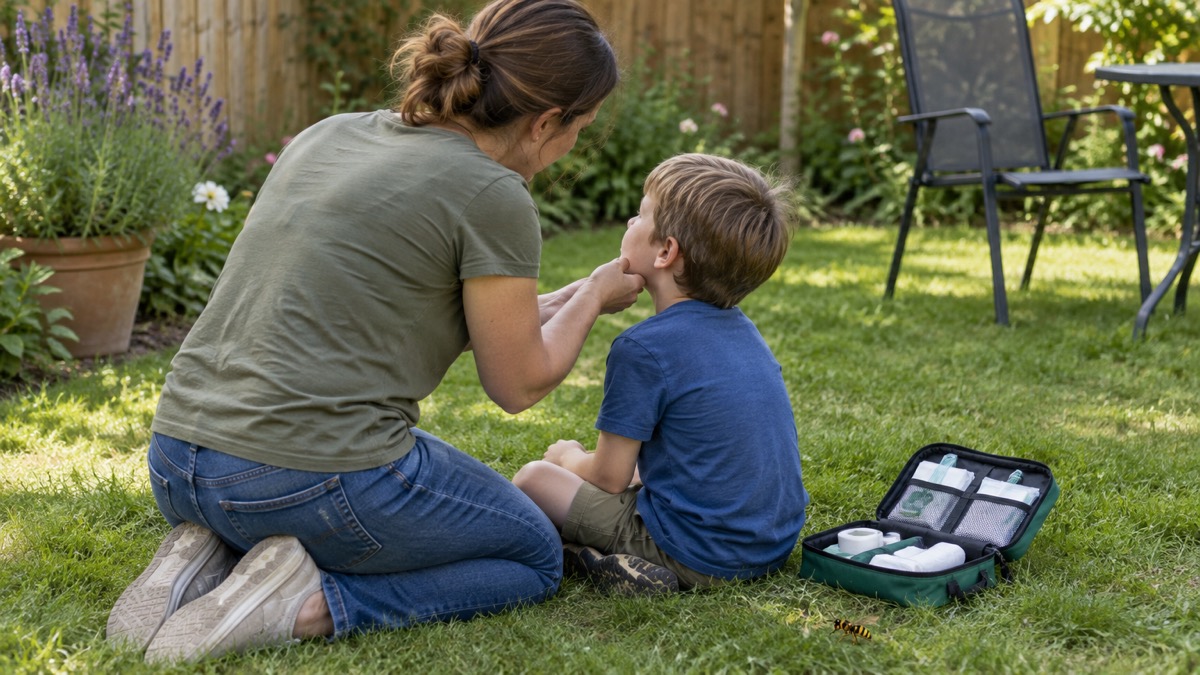
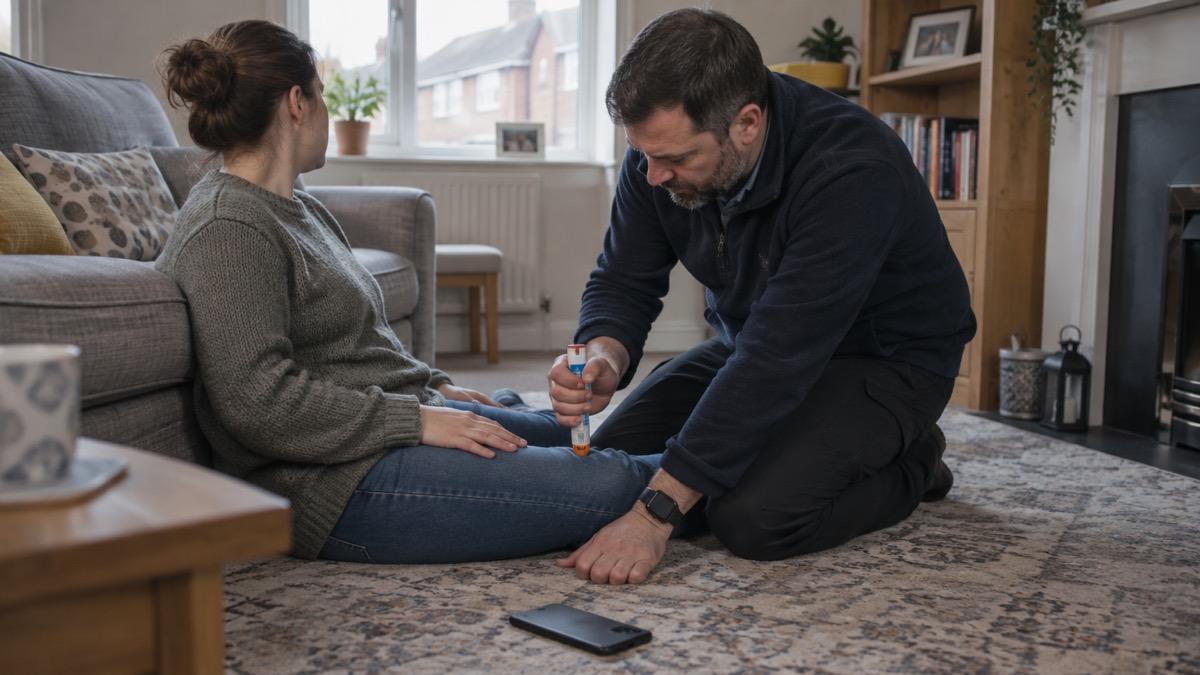
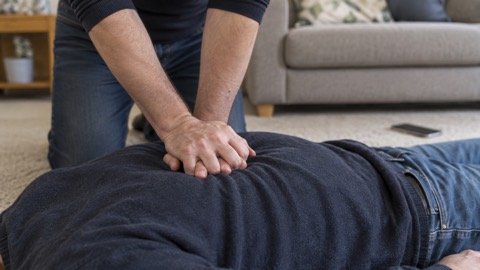
If the person becomes unresponsive and is not breathing normally, start CPR. The call handler will talk you through cardiopulmonary resuscitation if it is needed15. Our guide to hands-only CPR for adults sets out the steps, and how to check if someone is breathing covers the assessment the call handler may ask you to make.
Telling the call handler what they need to know
The call handler needs three things quickly: what you think is happening, where you are, and what the person's condition is. Tell the call handler that you think someone has anaphylaxis1. Then give the address, including any landmark or access detail, and say whether the person is breathing, conscious and whether an auto-injector has been used.
Ambulance services give practical advice for while you wait. If you are at home, work or another building, ask someone to open the doors and signal where the ambulance staff are needed, turn on lights if it is dark, shut pets in another room, write down the patient's GP details, gather their medication, and tell the ambulance service about any allergies16. If you are on the street, stay with the patient until help arrives, call back if their condition changes, and tell the service about any allergies17.
Staying calm helps you follow those instructions. The North West Ambulance Service advises callers to shout for help as loud as they can and call 999, then stay calm and ask for an ambulance11. If you can, have the person's medication and GP details ready, and note the time the auto-injector was used.
Our checklist on information to have ready for the ambulance crew sets out what to gather, and how ambulance services prioritise 999 calls explains what happens after you hang up.
Know your triggers and how to avoid them
Knowing what you are allergic to is the foundation of avoiding a reaction. Common triggers of anaphylaxis include nuts, shellfish, eggs, wasp and bee stings, latex and certain medications7. Allergy UK's list is broader: foods including nuts, milk, fish, shellfish, eggs and some fruits; medicines including some antibiotics and NSAIDs like aspirin; insect stings, particularly wasp and bee stings; general anaesthetic; contrast agents; and latex4.
The pattern differs by age. The most common cause of anaphylaxis in children is food, while medication and insect venom are more common triggers in adults8. Medication triggers include antibiotics such as penicillin, pain medication such as aspirin, and drugs used for operations for sedation and anaesthesia8. Latex triggers include rubber gloves, balloons and condoms8.
Some circumstances raise the risk of a severe reaction. These include poorly controlled asthma, exercise just before or after contact with the allergen, emotional stress, taking an NSAID such as aspirin or ibuprofen, infection, hay fever and drinking alcohol18. If you have asthma, keeping it well controlled and using a spacer with your inhaler is part of the plan8.
| Trigger group | Examples |
|---|---|
| Foods | Nuts, milk, fish, shellfish, eggs, some fruits4 |
| Medicines | Some antibiotics, NSAIDs like aspirin, anaesthetic agents4 |
| Stings | Wasp and bee stings7 |
| Latex | Rubber gloves, balloons, condoms8 |
If you suspect you have an allergy, see your GP as soon as possible; in many cases the GP will need to refer you to an NHS allergy clinic19. A confirmed diagnosis lets you build an action plan and know exactly what to avoid.
Keeping an emergency plan and carrying the right kit
An allergy action plan turns knowledge into a routine. Allergy UK's checklist is a good template: know your trigger or triggers and how to avoid them; know what to do when accidental exposure occurs; be aware of the signs and symptoms; always carry or have available allergy medication; know how to use your adrenaline auto-injector, practising with a trainer device; check expiry dates and set reminders for renewals; ask your doctor to complete an Allergy Action Plan; if you have asthma, ensure it is well controlled and use a spacer with your inhaler; and always have two adrenaline auto-injectors immediately available8.
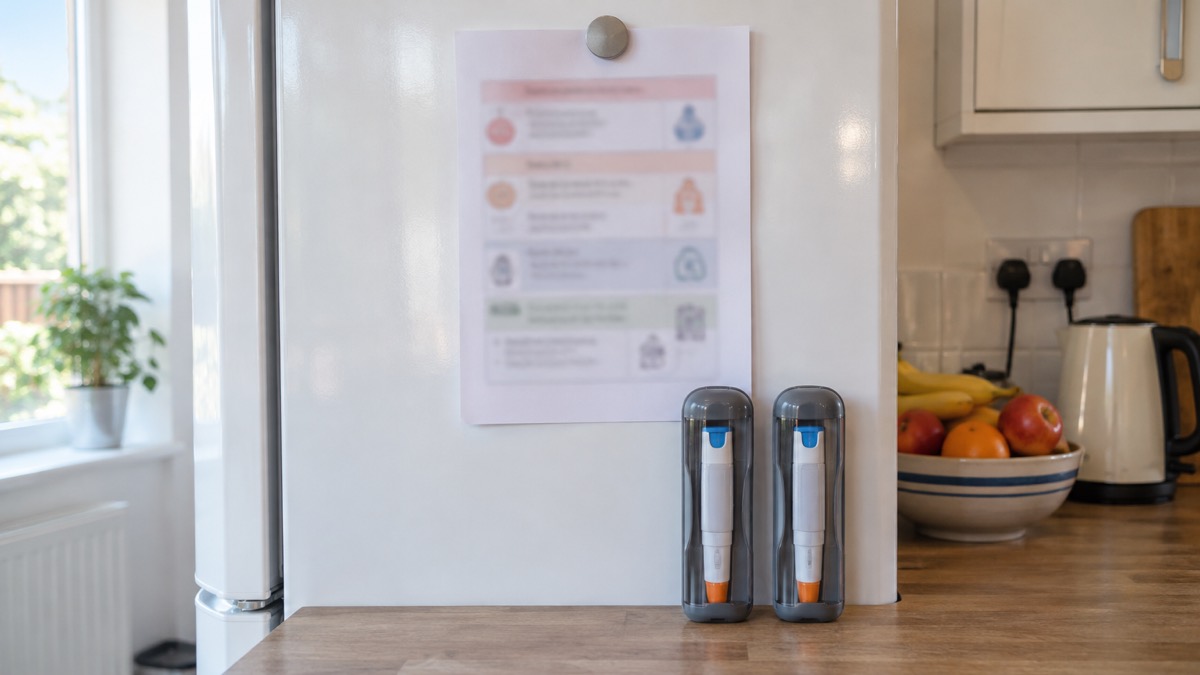
Two auto-injectors matter because a second dose may be needed, and because one can fail. The MHRA has issued a recall notice for certain Emerade auto-injectors due to the potential for device failure10. Check your own device against the notice and speak to your pharmacist if you are unsure.
Keep the plan where you can find it in a hurry. Official household emergency planning advice suggests keeping your plan with important documents such as passports and insurance, and saving a copy to your phone18. The same principle applies to an allergy plan: a copy in the kitchen, a copy in a bag, and a copy on your phone.
Our guides to adrenaline auto-injectors and allergy and asthma action plans go into more detail on storage, training devices and renewals.
Reactions in someone else, and when to get more help
If you are helping someone else, your role is to call, assist with their injector if they have one, position them, and monitor. Do not give someone else's medication to a person it was not prescribed for. If the person is a child, the same steps apply, and the call handler will adapt their instructions.
After the emergency is over, the person should see their GP. If you suspect you have an allergy, see your GP as soon as possible; in many cases the GP will need to refer you to an NHS allergy clinic19. This is how a one-off reaction becomes a managed condition with a plan.
For chemical splashes or exposure, the government's chemical emergencies guidance says to remove yourself from the immediate area, remove outer clothing if affected, remove the substance from skin using dry absorbent material and rinse with water20. That is separate from an allergic reaction, but it matters if a trigger is a chemical rather than a food or sting.
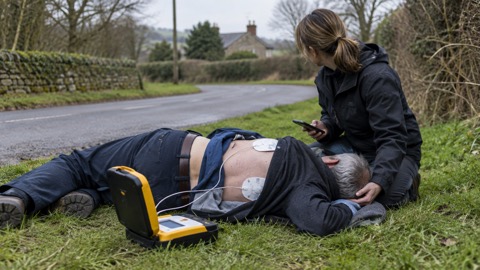
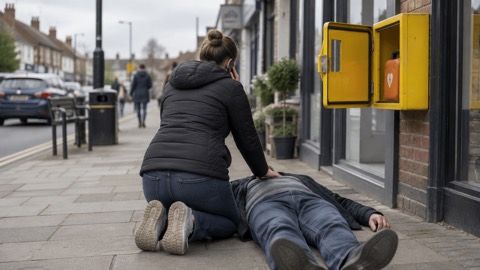
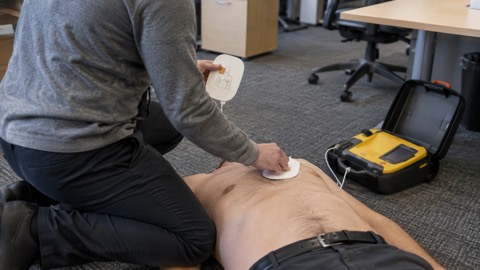
If the person becomes unresponsive and is not breathing normally, start CPR and ask someone to fetch a defibrillator. Our guides to the primary survey, the recovery position and shock cover the supporting skills, and bites and stings covers what to do after an insect sting before a reaction develops.
Sources (20)
- Adrenaline auto-injector safety campaign, GOV.UK, 2023-10-17
- Anaphylaxis, NHS, 2023-06-21
- National Patient Safety Alert: recall of Emerade auto-injectors, MHRA, 2023-05-09
- Anaphylaxis, Allergy UK, 2026
- Adult First Aid Booklet, British Red Cross, 2025-08
- What to do in an emergency, Anaphylaxis UK, 2026
- Anaphylaxis first aid, NHS Inform, 2026-07-24
- Anaphylaxis: the four As, Allergy UK, 2025-03-17
- Your quick guide to adrenaline auto-injectors, East Suffolk and North Essex NHS Foundation Trust, 2022-02
- Recall of Emerade auto-injectors, MHRA, 2023-05-09
- What happens when you call 999, North West Ambulance Service, 2026-10-29
- CPR, NHS, 2026-10-29
- Staying safe over the summer, Healthier Together, 2026-10-29
- Basic first aid, Royal Wolverhampton NHS Trust, 2026-10-29
- Cardiac arrest, NHS Inform, 2026-08-18
- Your service: 999, North East Ambulance Service, 2026-10-29
- When to call, Northern Ireland Ambulance Service, 2026-10-29
- Household emergency plan, Hillingdon Council, 2026-10-29
- Anaphylaxis signs and symptoms, Anaphylaxis UK, 2026
- What to do in a chemical emergency, GOV.UK, 2026-10-29
 Baby and Child Kit Checklist
 Bleeding Control Kit Checklist
 Car Kit Checklist
 CPR on a Baby
 CPR on a Child
 Chest Compression Rate and Depth
 Rescue Breaths or Hands-Only CPR
 Checking Breathing
 Agonal Breathing and CPR
 Breathing During CPR
 Recovery Position and Spine
 Cardiac Arrest vs Heart Attack
 Heart Attack First Aid
 Defibrillator Pad Placement
 Defibrillator on a Child