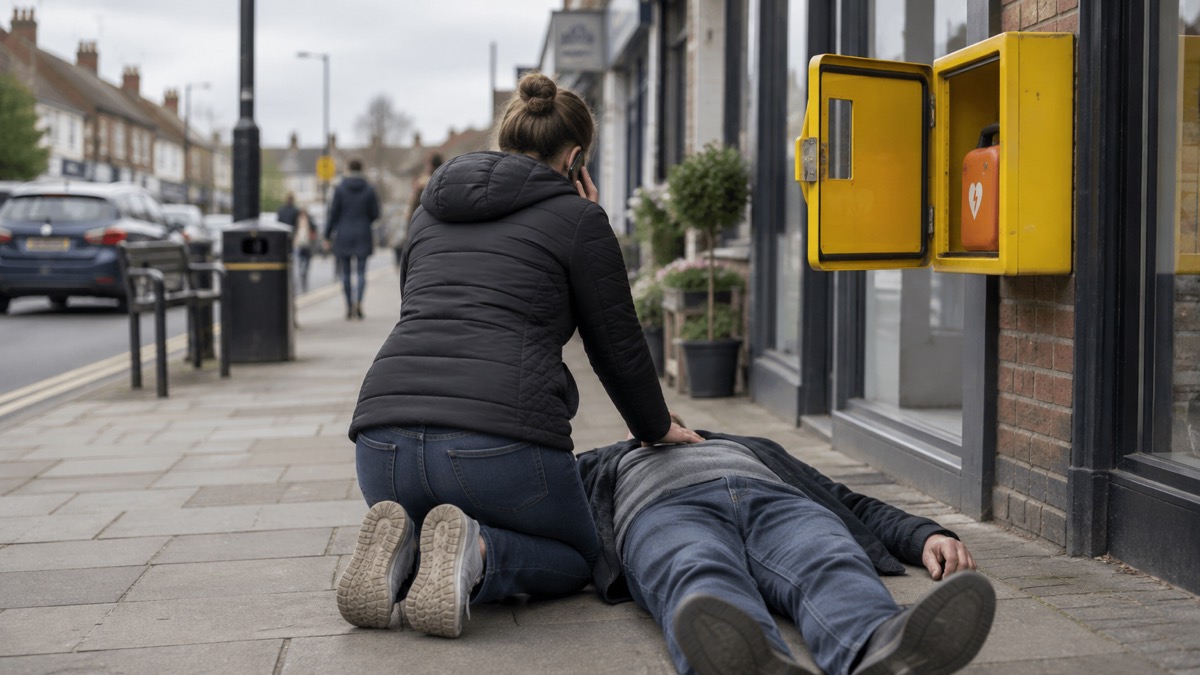
Both a heart attack and a cardiac arrest are medical emergencies, and both need a 999 call straight away. The difference is what is happening inside the body. In a heart attack, the blood supply to part of the heart muscle is blocked, but the heart is still pumping, so the person stays conscious and breathing1. In a cardiac arrest, the heart has stopped pumping blood around the body, the person loses consciousness and stops breathing normally3.
That difference decides what you do. A heart attack needs the person sat down, kept still and kept calm while the ambulance comes5. A cardiac arrest needs chest compressions started immediately, and a defibrillator fetched if there is one nearby4. Every minute that passes without CPR and defibrillation, the chance of survival falls by about 10%6.
Most cardiac arrests happen at home, so the person who needs help is likely to be someone you know8. You do not need training to start. Calling 999, starting chest compressions if it is safe to do so, and sending someone for a defibrillator is the response the ambulance services ask of ordinary bystanders4.
A heart attack is a blocked blood supply to the heart
A heart attack happens when an artery becomes obstructed, restricting the flow of blood to the heart5. NHS inform describes it as a reduction in blood supply to part of the heart muscle14. When a coronary artery is blocked by a blood clot, the muscle beyond the blockage does not get oxygen or nutrients, and there is a risk the heart could stop beating14.
The person is usually conscious and breathing, because the heart is still sending blood around the body1. That is the key fact for a bystander: a heart attack is a heart in trouble, not a heart that has stopped. It is still an emergency. The London Ambulance Service warns that left untreated it can lead to a cardiac arrest, which is when the heart stops beating9.
What to do, in order:
- Call 999 or 112 and tell them you think someone is having a heart attack15.
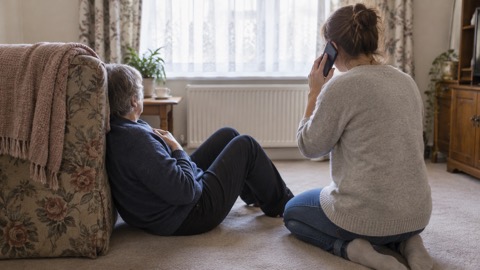
- Sit the person down, keep them at rest and keep them calm5.
- Stay with them and watch for any change: if they become unresponsive and stop breathing normally, it has become a cardiac arrest and you start CPR1.
St John Ambulance and the British Red Cross both stress calling for emergency help straight away rather than waiting to see whether symptoms settle15. The Scottish Ambulance Service lists heart attack among the conditions where you should call 999 immediately, and the South Western Ambulance Service says every second counts with these conditions17.
A cardiac arrest is when the heart stops pumping
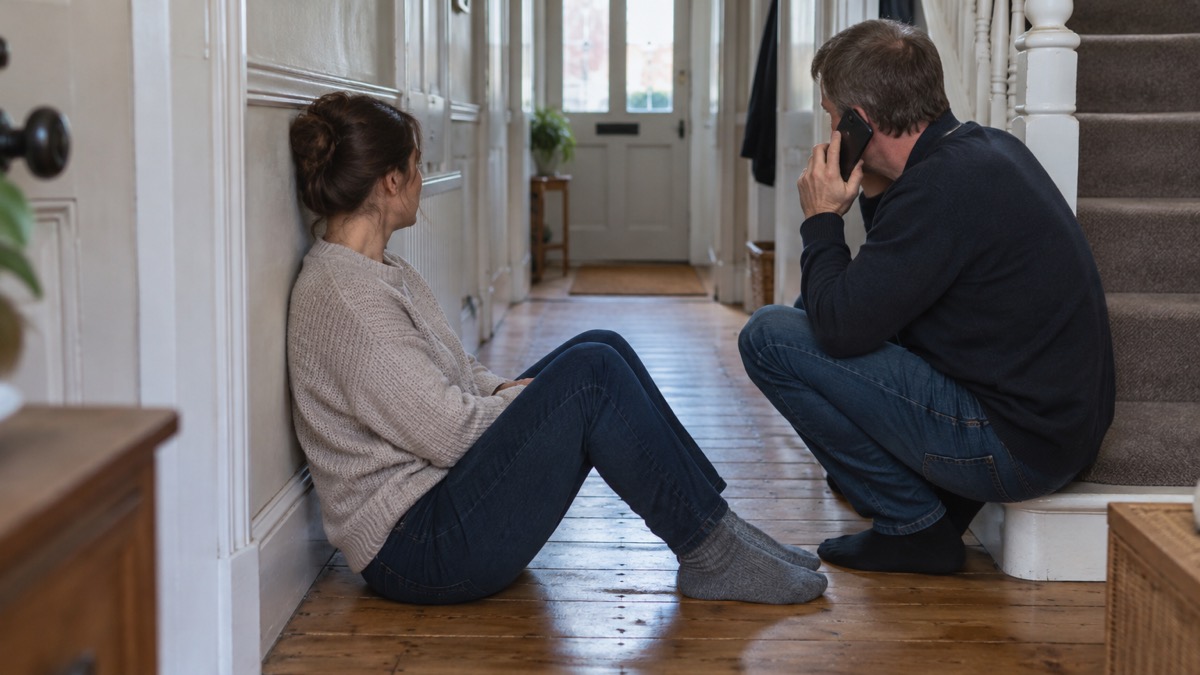
A cardiac arrest is a medical emergency that happens when the heart suddenly stops pumping3. This prevents blood from flowing to the brain and other vital organs, depriving them of oxygen3. The North West Ambulance Service calls it the most extreme emergency, when the heart stops beating in a normal way, preventing blood from pumping around the body19.
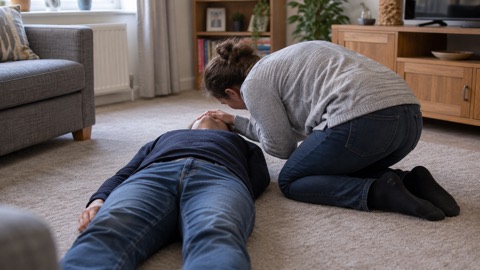
The signs are unmistakable once you know them. If someone has a cardiac arrest, they will stop breathing or will not breathe normally, and they will lose consciousness3. They will not respond to stimulation20. A heart attack is one cause, but not the only one: a cardiac arrest can also follow choking or trauma5, and the British Heart Foundation lists severe bleeding, a sudden drop in oxygen levels, electrocution and drug overdose among other causes21.
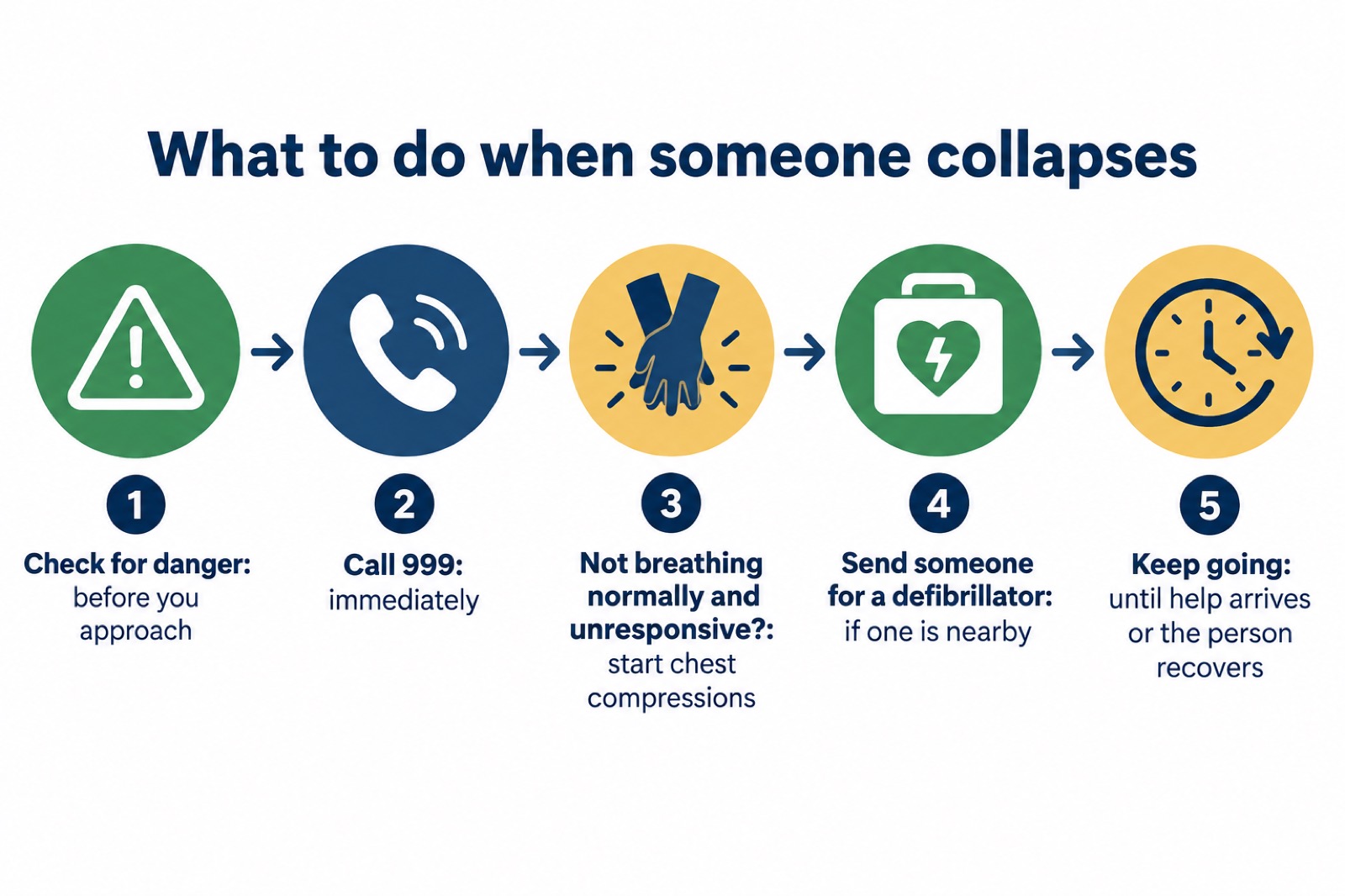
The response is a sequence, and it starts before the ambulance arrives:
- Check for danger before approaching the person1.
- Call 999 immediately1.
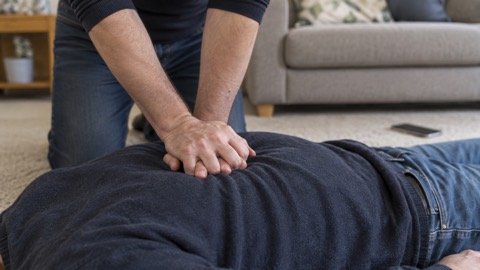
- Start chest compressions, often called CPR, if it is safe to do so1.
- Send someone to get a defibrillator if one is nearby4.
Ambulance service call handlers can guide you through CPR and will direct you to the closest public access defibrillator5. You do not need formal training to begin; the London Ambulance Service describes this intervention as calling 999, starting chest compressions if it is safe to do so, and sending someone for a defibrillator, even without formal training4.
Heart attack or cardiac arrest: how to tell which one is happening
The single question that decides your next move is whether the person is conscious and breathing normally. In a heart attack, the heart is still sending blood around the body and the person remains conscious and is still breathing1. In a cardiac arrest, they lose consciousness and stop breathing or stop breathing normally3.
| What you see | Likely | What to do |
|---|---|---|
| Conscious, breathing, chest pain or discomfort | Heart attack | Call 999, sit them down, keep them at rest and calm5 |
| Unresponsive, not breathing normally | Cardiac arrest | Call 999, start chest compressions, send for a defibrillator4 |
| Unresponsive but you are unsure | Treat as cardiac arrest | Call 999 and follow the call handler5 |
If you are not sure, act as though it is a cardiac arrest. The cost of starting CPR on someone who did not need it is far lower than the cost of waiting. Check for danger before you approach the person5.
A stroke can be just as life-threatening as a heart attack and can have similar causes, so sudden weakness or facial droop is another reason to call 999 immediately22. The South Western Ambulance Service lists chest pain, breathing difficulties, heart attack and cardiac arrest among the reasons to call 99918.
Using a defibrillator: the public used one in only 9% of cardiac arrests
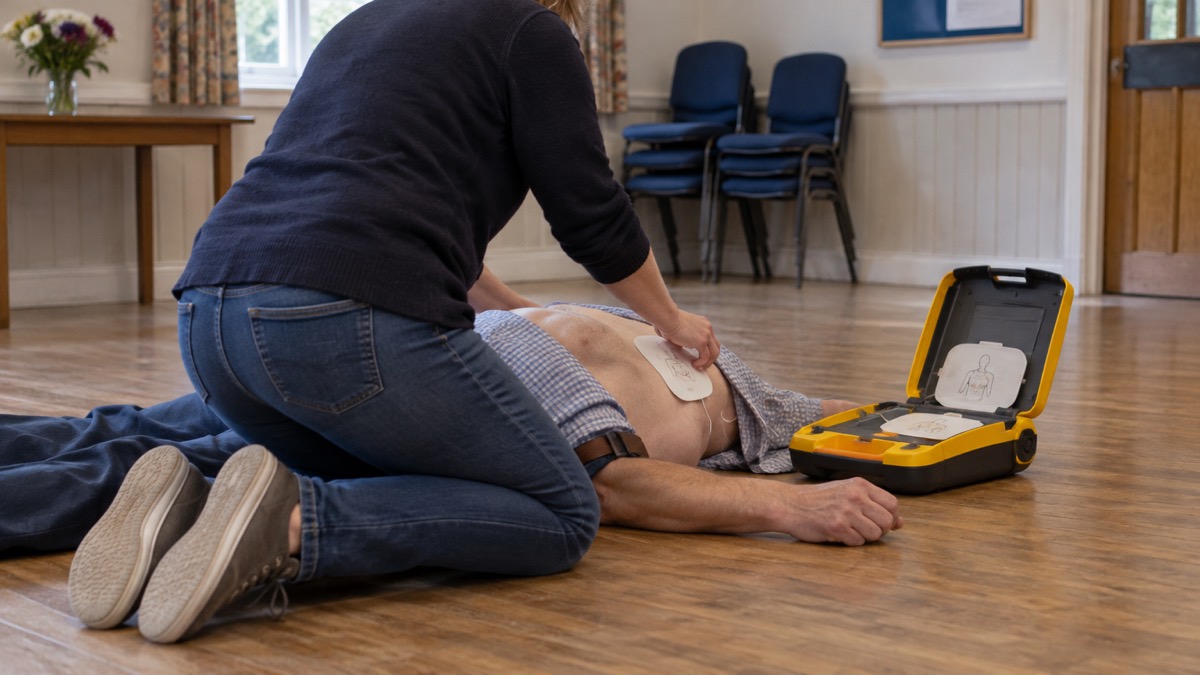
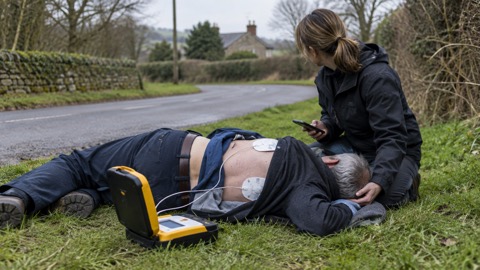
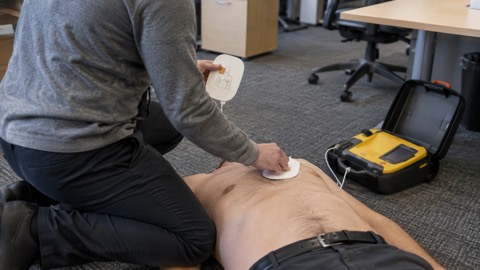
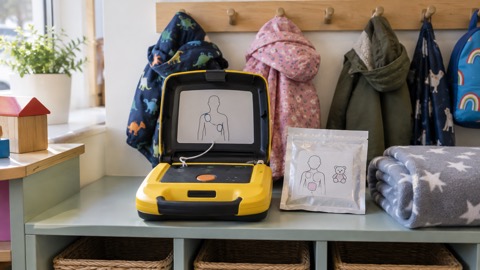
A defibrillator is a device used to give an electric shock to help restart a patient's heart when they are in cardiac arrest6. It is designed to be used by anyone: the machine talks you through each step, and you cannot shock someone who does not need it.
The problem is that they are not used often enough. In 2024, defibrillators were used by members of the public in only 9% of cardiac arrests10. The British Heart Foundation reports that less than 10% of out-of-hospital cardiac arrests see a defibrillator being used23. In the East of England, defibrillators were available within 500 metres of 79% of cardiac arrest cases but were only used in 10% of incidents13. The equipment is often close by; the gap is people knowing to fetch it.
How to get one to the person:
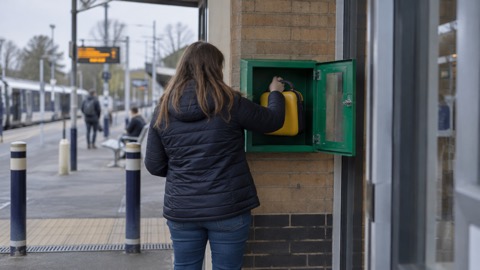
- Call 999 first. The emergency medical dispatcher will guide you to the nearest available defibrillator and provide clear instructions on how to access it13.
- Send a second person to fetch it while you stay and do compressions4.
- If the cabinet is locked, the call handler can give you the code13.
Why speed matters: survival falls about 10% a minute
For every minute that passes once in cardiac arrest, a person loses a further 10% chance of survival6. The South Western Ambulance Service puts it as a 10% decrease per minute without bystander CPR7, and the Resuscitation Council UK gives the same figure for each minute without CPR and defibrillation24. The Scottish Ambulance Service and the Northern Ireland Ambulance Service give the same rate1.
The result is stark. In the UK, only around 1 in 10 people survive an out-of-hospital cardiac arrest12. The Resuscitation Council UK gives the same figure11. In 2015, 1 in 20 people survived a cardiac arrest to hospital discharge in Scotland1, which shows how far survival has moved, and how far it still has to go.
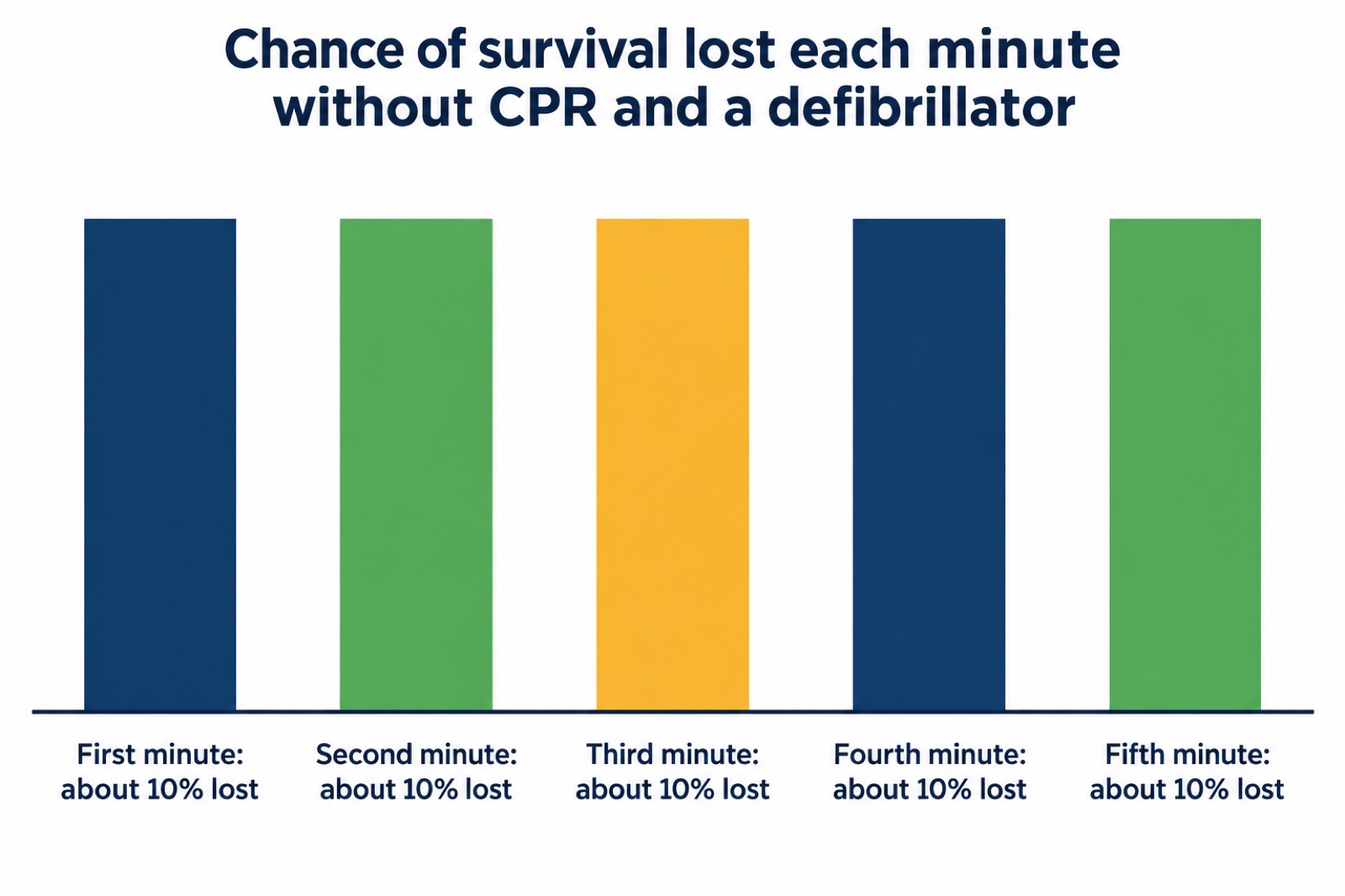
This is why bystander action is the deciding factor. The ambulance service cannot reach everyone in the first few minutes, but a neighbour, a family member or a passer-by can. The British Heart Foundation's Heartsafe programme uses the message that 80% of cardiac arrests happen in the home, which is why it teaches CPR to ordinary households25.
CPR: what it is and how to start
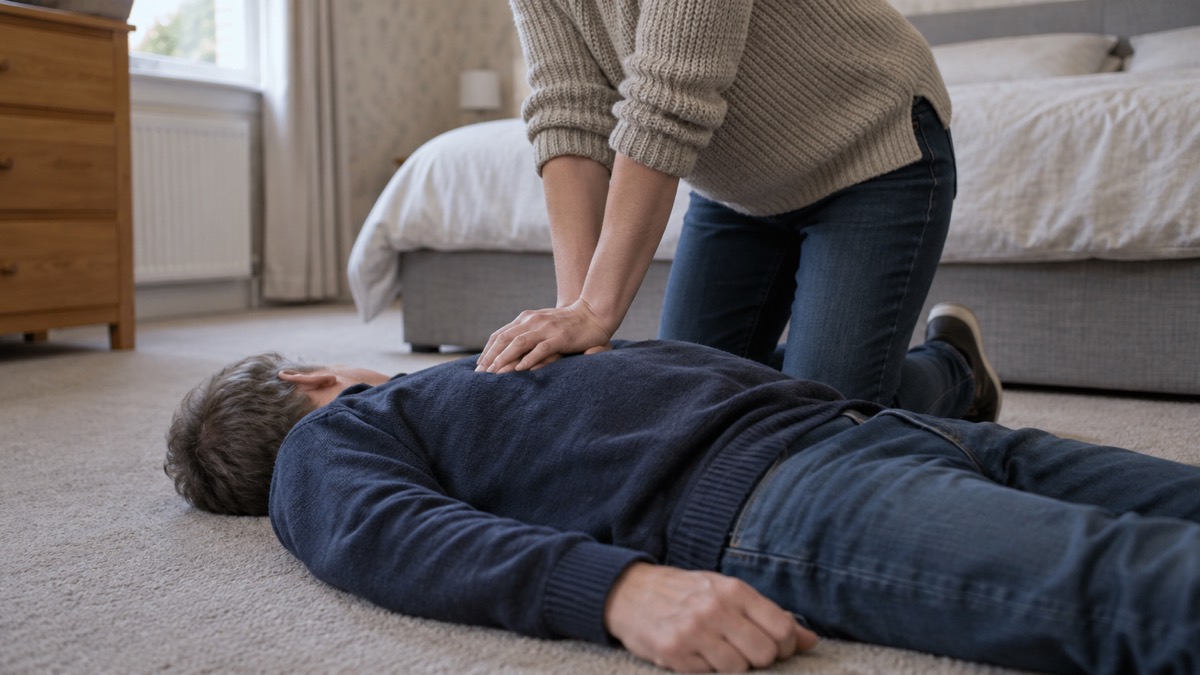
CPR stands for cardiopulmonary resuscitation. It combines chest compressions and rescue breaths to give a person the best chance of survival following a cardiac arrest26. It is an emergency lifesaving procedure, performed when the heart stops beating, often called a cardiac arrest27.
For an ordinary bystander, the simplest version is hands-only CPR: chest compressions without rescue breaths. The Scottish Ambulance Service describes the core action as starting chest compressions, often called CPR1. The Yorkshire Ambulance Service advises calling 999 and starting CPR straight away if you witness a cardiac arrest28.
If you have not been trained, the call handler will talk you through it5. If you have a defibrillator, use it as soon as it arrives and follow its spoken instructions6. If the person is female or has larger breasts, standard compressions on the centre of the chest are still correct; St John Ambulance has specific guidance on CPR on women and other people with breasts26.
The Chain of Survival and how to be a link in it
The Chain of Survival is the sequence of actions that gives someone in cardiac arrest the best chance: recognising the emergency and calling 999, starting CPR straight away, using a defibrillator as soon as one is available, and the advanced care that follows when the ambulance crew arrives. Most cardiac arrests happen at home, so the person who needs help is likely to be someone you know and care about11.
You can be a link in it in several ways:
- Learn CPR. The British Heart Foundation's free RevivR course teaches you to identify a cardiac arrest, make a simulated 999 call, perfect your CPR technique and learn how to use a defibrillator, in four steps27.
- Attend a community session. Ambulance services run free community CPR and defibrillator familiarisation sessions covering how to recognise a cardiac arrest, how to perform effective CPR, how to safely use a public access defibrillator, and what happens when you call 999 and how you fit into the response12.
- Register as a GoodSAM responder. GoodSAM volunteers can receive alerts on their mobile phone when someone nearby suffers a cardiac arrest, enabling them to provide potentially life-saving assistance before emergency services arrive29. The app may alert you when you are in the immediate vicinity of a cardiac arrest, so that you can start CPR in the critical first minutes30.
- Check your local defibrillator. The British Heart Foundation's National Defibrillator Network, known as The Circuit, maps public defibrillators so that ambulance services can direct callers to them23.
In Northern Ireland, the ambulance service has worked in partnership with GoodSAM since July 2019 to improve survival from cardiac arrest by alerting nearby trained responders29. GoodSAM volunteers can receive alerts on their mobile phone when someone nearby suffers a cardiac arrest, enabling them to provide potentially life-saving assistance before emergency services arrive29.
Where to get help and training
Call 999 for either emergency. The Scottish Ambulance Service, the London Ambulance Service, the Welsh Ambulance Service and the South Western Ambulance Service all list heart attack and cardiac arrest among the conditions where you should call 999 immediately1. In Scotland, NHS inform advises phoning 999 immediately and asking for an ambulance if someone stops breathing, loses consciousness or does not respond to stimulation20.
For training, the options are free and local:
- Online: the British Heart Foundation's RevivR course covers CPR and defibrillator use27. The Resuscitation Council UK's Lifesaver training is also free11.
- In person: ambulance services run community CPR and defibrillator sessions12. The South Western Ambulance Service offers CPR and defibrillator training12.
- At home: the Heartsafe programme teaches households, because most cardiac arrests happen at home25.
If you have a defibrillator at home, a club or a village hall, the Resuscitation Council UK publishes guidance on public access defibrillators for communities10. The Scottish Ambulance Service also publishes a public access defibrillator information pack31.
For the wider picture of what to do in a medical emergency at home, see First Aid at Home: A Household Guide. For the step-by-step sequence before CPR, see What to Do First: Danger, Response, Airway and Breathing. For hands-only CPR in detail, see How to Do CPR: Hands-Only Steps for Adults. For defibrillators, see Defibrillators (AEDs): What They Do and How to Use One and Public Access Defibrillators: Finding the Nearest One. For a suspected heart attack specifically, see What to Do if Someone Is Having a Heart Attack.
Sources (31)
- Cardiac arrest, Scottish Ambulance Service, 2026-10-29
- Heart attack, British Heart Foundation, 2026-03-27
- Learning CPR, North East Ambulance Service, 2026-10-29
- Emergency heart care, London Ambulance Service, 2026-09-30
- Some of the reasons people call, Welsh Ambulance Service, 2026-10-29
- Defibrillators, South Western Ambulance Service, 2026-10-29
- Restart a Heart, South Western Ambulance Service, 2026-10-29
- Save a Life Cymru, Welsh Ambulance Service, 2026-10-29
- How to do CPR, British Heart Foundation, 2026-10-29
- Public access defibrillators: a guide for communities, Resuscitation Council UK, 2025-10
- AED guide, Resuscitation Council UK, 2026-01
- CPR and defibrillator training, South Western Ambulance Service, 2026-10-29
- AED, Northern Ireland Ambulance Service, 2026-10-29
- Heart attack first aid, NHS inform, 2026-07-24
- Heart attack, St John Ambulance, 2026-10-28
- Heart attack first aid, British Red Cross, 2026-10-29
- When should you call 999, Scottish Ambulance Service, 2026-10-29
- When to call 999, South Western Ambulance Service, 2026-10-29
- Cardiac arrest, North West Ambulance Service, 2024-06-14
- What to do in a heart emergency, NHS inform, 2026-07-15
- Cardiac arrest, British Heart Foundation, 2026-06-09
- Emergency stroke care, London Ambulance Service, 2026-09-30
- The Circuit, British Heart Foundation, 2026-10-29
- Defibrillation, Resuscitation Council UK, 2026
- Heartsafe, Resuscitation Council UK, 2024
- CPR on women and other people with breasts, St John Ambulance, 2026-10-28
- Learn CPR in 15 minutes, British Heart Foundation, 2026-10-29
- Learning CPR, Scottish Ambulance Service, 2026-10-29
- GoodSAM responders, Northern Ireland Ambulance Service, 2026-10-29
- First responders, Northern Ireland Ambulance Service, 2026-10-29
- PAD information pack, South Central Ambulance Service, 2026-08
 Baby and Child Kit Checklist
 Bleeding Control Kit Checklist
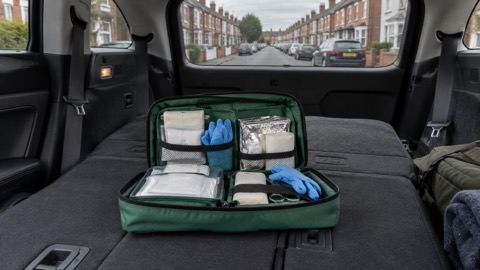 Car Kit Checklist
 CPR on a Baby
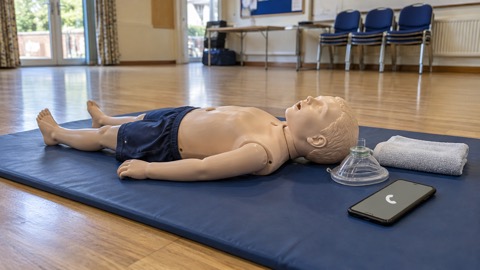 CPR on a Child
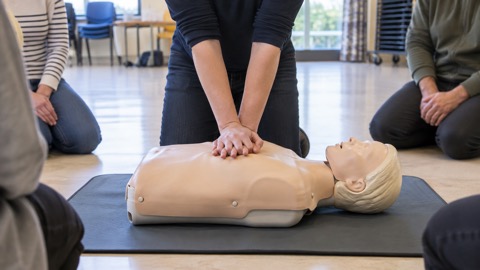 Chest Compression Rate and Depth
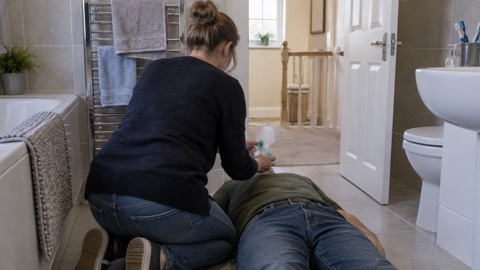 Rescue Breaths or Hands-Only CPR
 Checking Breathing
 Agonal Breathing and CPR
 Breathing During CPR
 Recovery Position and Spine
 Heart Attack First Aid
 Defibrillator Pad Placement
 Defibrillator on a Child
 Defibrillator Without Training