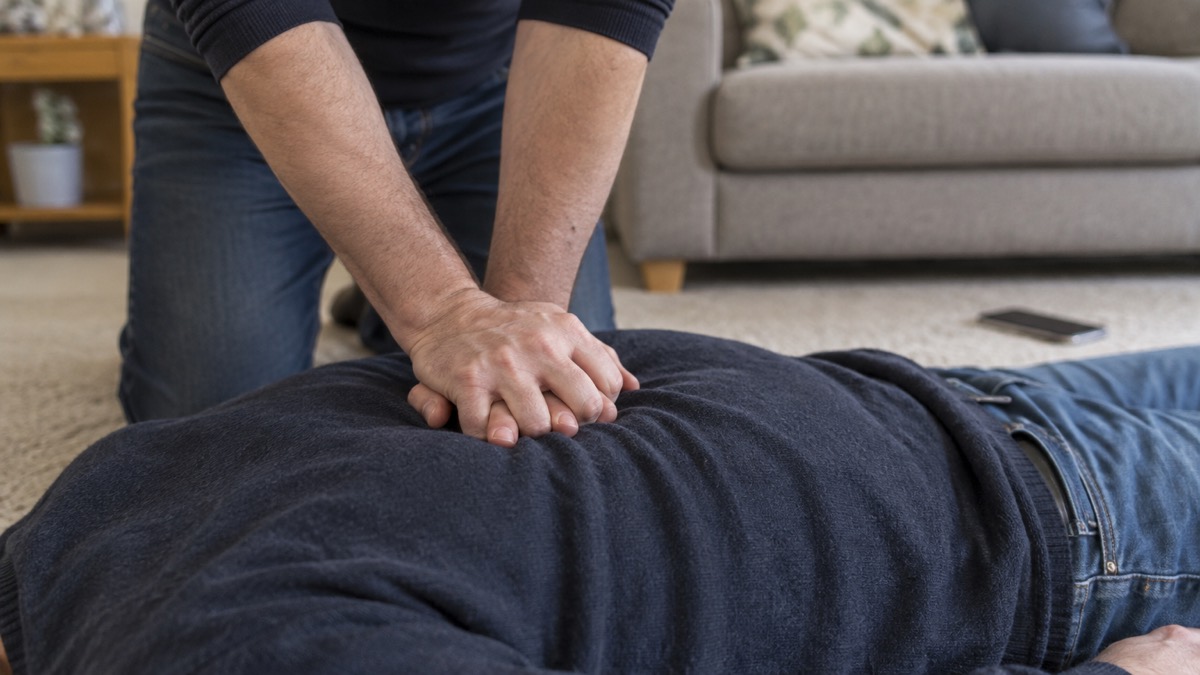
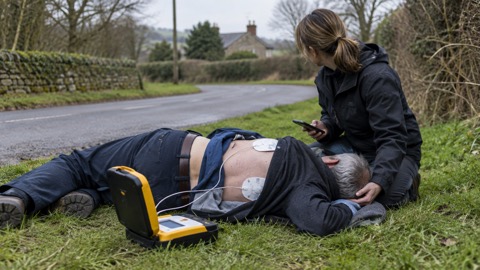
If someone has collapsed and is making gasping, snoring or grunting noises, treat it as a cardiac arrest and start CPR straight away. Sudden, irregular gasps are called agonal breathing, and the NHS is explicit that this is not normal breathing and that CPR must be given straight away1. Call 999 or 112, ask someone nearby to fetch a defibrillator, and begin chest compressions2.
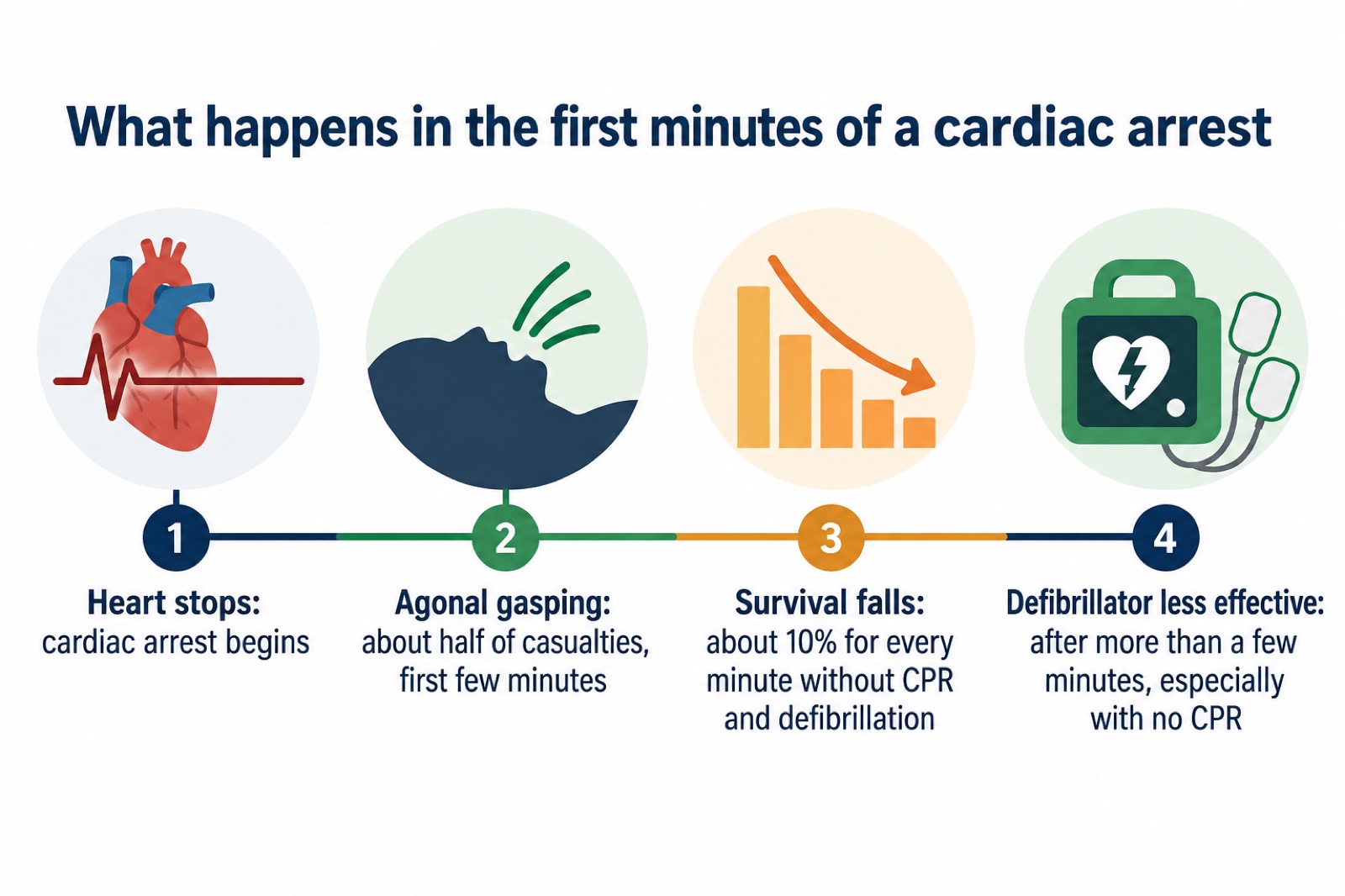
This is the single most common reason bystanders delay CPR. The gasping looks and sounds like breathing, so people wait to see whether it settles. It usually does not. During the first minutes of cardiac arrest, about half of casualties will do agonal gasping: they can open their mouths, extend their neck, and take usually slow, sometimes noisy gasps3. It is a sign that the heart has stopped, not that the person is recovering.
The cost of waiting is measured in minutes. For every minute that someone in cardiac arrest does not receive CPR and have a defibrillator used on them, their chance of survival falls by about 10%4. When early CPR and a defibrillator are used within the first 3 to 5 minutes, survival rates can increase up to 70%5. The decision you make in the first thirty seconds matters more than any technique you get slightly wrong.
Agonal breathing means start CPR straight away
The instruction is not conditional. If a person is unresponsive and making agonal gasps, you are looking at a cardiac arrest and the treatment is chest compressions. The Scottish ambulance service describes patients in cardiac arrest as often taking occasional gasps, and states plainly that this is a sign of cardiac arrest and not them trying to breathe7. The Resuscitation Council UK goes further in its 2025 adult basic life support guidelines: slow, laboured breathing, as well as other abnormal patterns such as agonal gasping or panting, must be recognised as signs of cardiac arrest8.
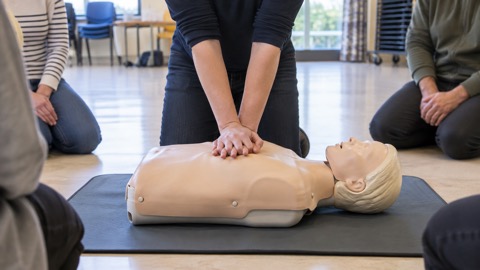
CPR combines chest compressions and rescue breaths to give a person the best chance of survival following a cardiac arrest2. For an adult who has collapsed outside hospital, hands-only compressions, without the breaths, are a perfectly good option and are what most bystanders should do. Push hard and fast in the centre of the chest between the nipples, at the beat of "Staying Alive"9. The rate is 100 to 120 compressions a minute6.
If you are unsure whether the breathing you can see is normal, act as though it is not. The British Red Cross advises that noisy, irregular or gasping breathing is usually a sign that the heart and lungs are not working properly, and that you should treat the person as unresponsive and not breathing10. The risk of starting CPR on someone who did not need it is small; the risk of withholding it from someone who did is very large.
What agonal breathing looks and sounds like
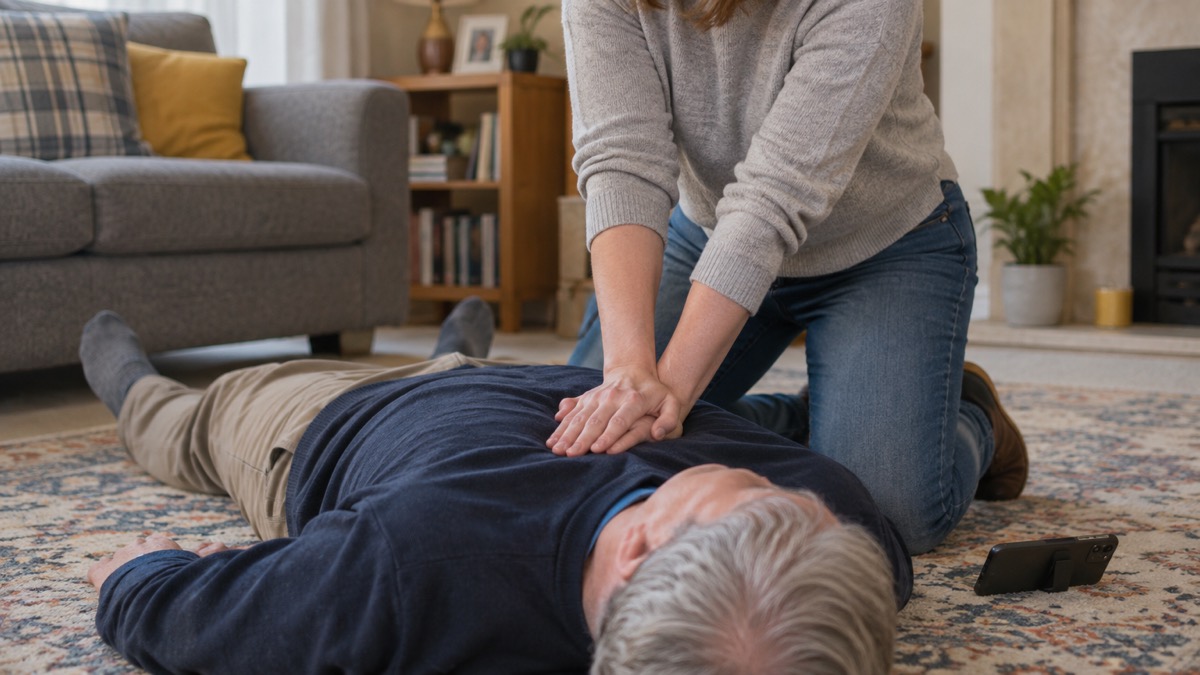
Agonal breathing is not quiet. It is often the loudest thing in the room, which is exactly why it misleads people. The casualty may open their mouth, tilt their neck back and take slow, sometimes noisy gasps3. The sounds are variously described as gasping, snoring, gurgling or grunting. The British Heart Foundation lists "may make gasping noises" among the signs that someone is in cardiac arrest, alongside collapsing suddenly and being unconscious, unresponsive and not breathing or not breathing normally11.
What distinguishes it from real breathing is the pattern, not the volume. Normal breathing is regular and effortless. Agonal gasps are occasional and irregular, with long silences between them, and the chest may barely rise. The Resuscitation Council UK groups agonal gasping with panting and slow, laboured breathing as abnormal patterns that must be recognised as signs of cardiac arrest8.
| What you may see or hear | What it usually means | What to do |
|---|---|---|
| Regular, quiet breathing, chest rising and falling | Normal breathing | Recovery position, call 999, keep checking10 |
| Occasional slow, noisy gasps with pauses | Agonal breathing, a sign of cardiac arrest7 | Call 999 and start CPR1 |
| Snoring, gurgling or grunting in an unresponsive person | Abnormal breathing, heart not working properly10 | Treat as not breathing and start CPR10 |
| No sound and no chest movement | Not breathing | Call 999 and start CPR2 |
One caution: noisy breathing has other causes. Croup in a child produces distressed breathing, a short barking cough, a rasping noise when breathing in and a croaky voice12. The difference is that a child with croup is responsive and distressed, not unconscious. The agonal question only arises in someone who does not respond to you.
Gasping is not normal breathing
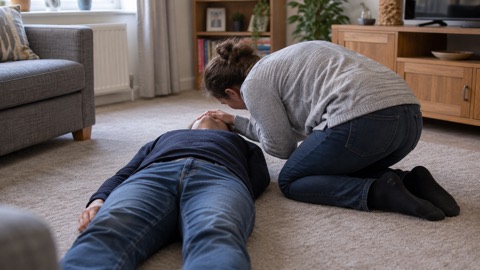
The check for breathing is where the mistake happens, so it is worth doing deliberately. Open the airway by gently tilting the casualty's head back and lifting the chin, then look, listen and feel for up to 10 seconds for normal breathing, ignoring occasional irregular gasps, which are common in the first minutes after cardiac arrest2. The North West Ambulance Service gives the same 5 second chest observation as part of the adult routine13.
The British Red Cross is blunt about what to do with an abnormal result: noisy, irregular breathing or gasping is usually a sign the heart is not working properly, and you should start chest compressions14. If the person is unresponsive and not breathing normally, call 999 or 112 for emergency help and start CPR straight away9.
"Look, listen, and feel for up to 10 seconds for normal breathing. Ignore occasional, irregular gasps - these are common in the first minutes after cardiac arrest."
A useful test is to ask yourself whether you would be happy if a sleeping family member breathed like this. If the answer is no, it is not normal breathing. Do not spend longer than 10 seconds deciding.
How common it is, and why it happens
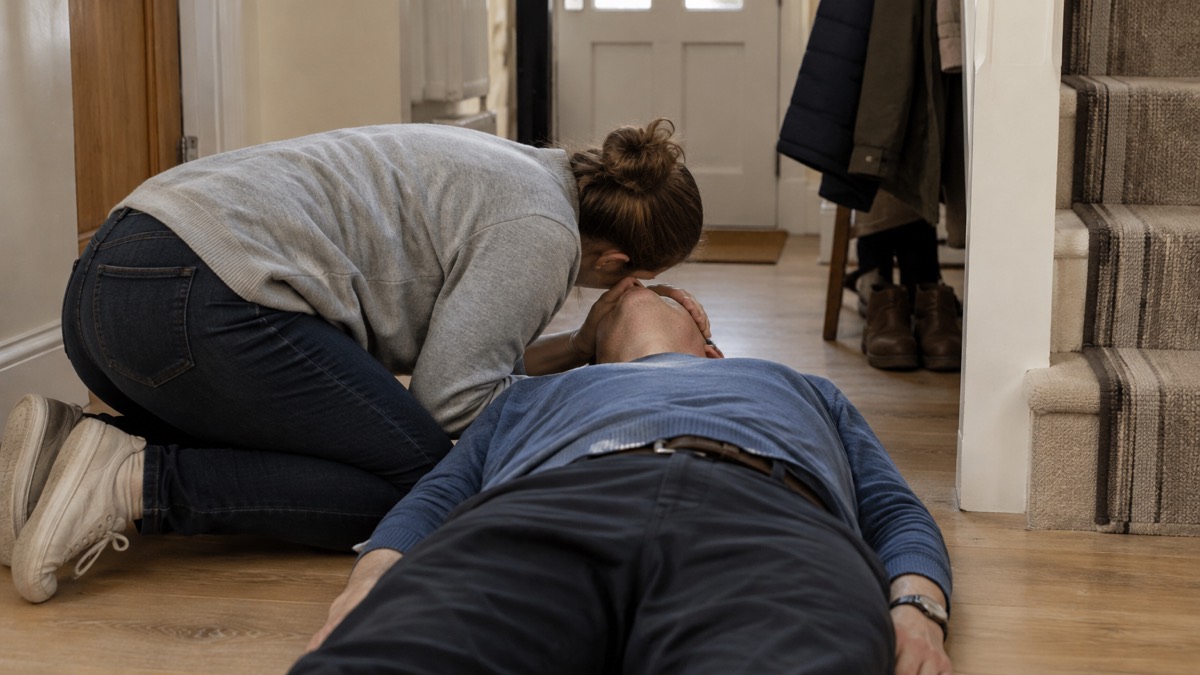
Agonal breathing is not a rare curiosity. During the first minutes of cardiac arrest, about half of casualties will do it3. That means in roughly every other cardiac arrest a bystander witnesses, the person will appear to be breathing in some fashion. If you have been taught to check for breathing and nothing else, the gasping can read as a pass.
It happens because the heart has stopped but the brainstem has not yet given up. A cardiac arrest occurs when the heart stops pumping blood around the body, and it can be the result of a heart attack, choking or trauma15. The Resuscitation Council UK describes cardiac arrest as an electrical problem caused by irregular heart rhythms, in which the heart suddenly stops beating and breathing becomes abnormal or stops; death occurs within minutes after the heart stops16. Agonal breathing is common in the first few minutes after a sudden cardiac arrest, when the heart stops beating1. It fades as oxygen runs out.
That timing is why the defibrillator matters so much. Defibrillation needs to happen within a few minutes of the onset of a shockable rhythm, and automated external defibrillators are less successful when the casualty has been in cardiac arrest for more than a few minutes, especially if no CPR has been given17. Compressions buy the time; the defibrillator resets the heart.
Call 999, then start compressions
The order is simple and it is the same across the UK. If they are not breathing, phone 999 and begin chest compressions18. The NHS gives 999 or 112 as the number for an adult who is unresponsive and not breathing normally, with CPR starting straight away2. The Welsh ambulance service adds that its call handlers can guide you through CPR and will direct you to the closest public access defibrillator15.
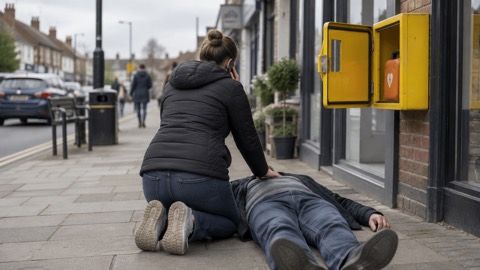
- Call 999 or 112. Put the phone on speaker so your hands stay free2.
- Ask someone nearby to get a defibrillator. Say it out loud to a named person rather than to the room1.
- Start compressions. Centre of the chest, 100 to 120 a minute6.
- Send someone to meet the ambulance if you have people to spare, so they can be directed in.
If you are alone with a phone, call first and start compressions while you speak. If you are alone without a phone, the guidance still puts getting help first where you can, but do not leave a gasping casualty to search for a phone box in another building. Shout for help and gently shake the person to check for a response before you begin16.
Using a defibrillator while someone is gasping
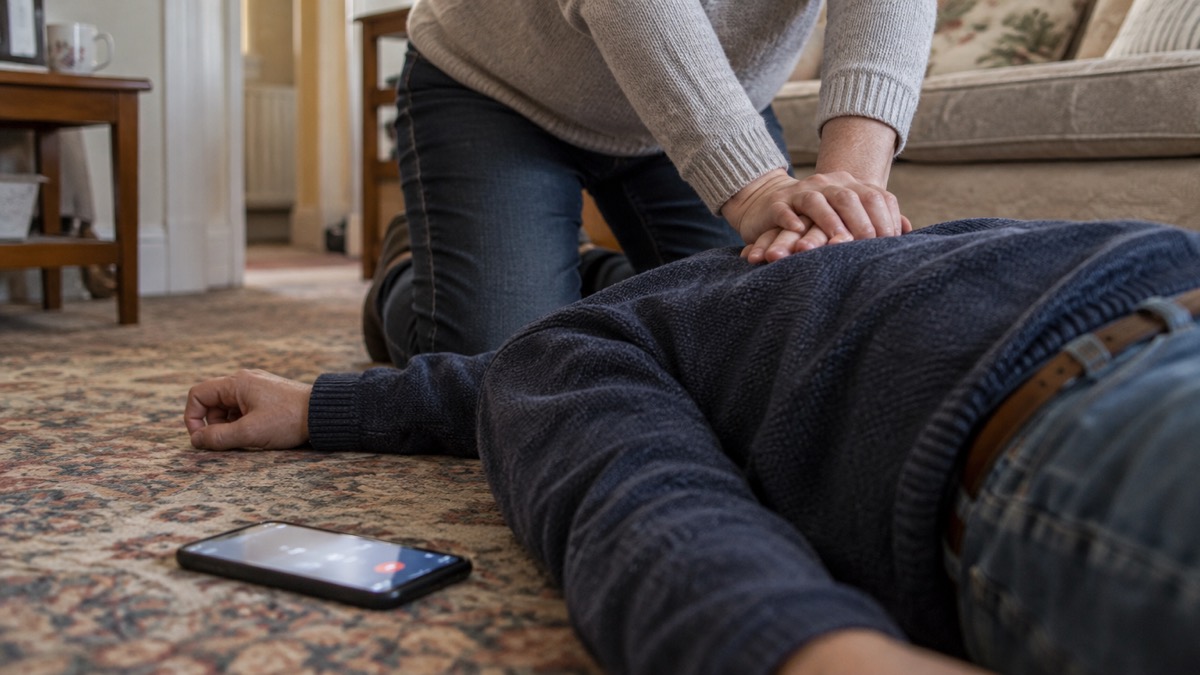
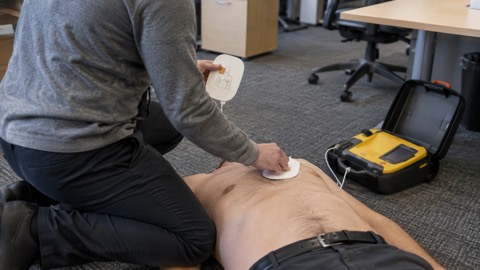
Attach the defibrillator as soon as it arrives. Use a defibrillator as soon as you can19. The machine does the diagnosis: it analyses the heart's rhythm itself, so you do not need to decide whether the gasping means a shock is needed. Stop CPR and make sure no one is touching the casualty while it analyses the heart's rhythm, then follow its visual and verbal prompts20.
The standard behaviour of an automated external defibrillator is to deliver a single shock when a suitable rhythm is detected, give a voice prompt to resume CPR immediately after the shock, and allow a period of 2 minutes of CPR before further rhythm analysis21. That means you will be told when to stop and when to start again. Minimise interruptions in chest compression, and do not stop to check the casualty or discontinue CPR unless they start to show signs of regaining consciousness, such as coughing, opening their eyes, speaking or moving purposefully, and start to breathe normally21.
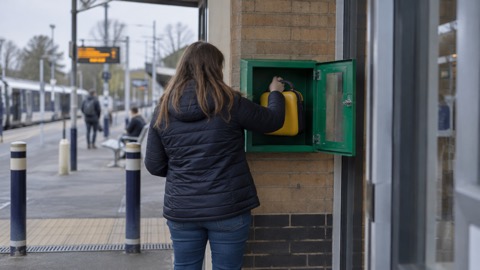
If you have never used one, say so when you call 999. Ambulance service community training covers finding a patient, alerting the emergency services, assessing consciousness, CPR and how to use the defibrillator22, and the call handler can talk you through it. Our guide to defibrillators and how to use one covers pad placement and the prompts in more detail, and finding the nearest public access defibrillator explains how they are registered and located.
When the gasping stops
Gasping usually stops after a few minutes, and when it does the casualty will not begin breathing normally on their own. Keep going. Repeat compressions at a rate of 100 to 120 times a minute until an ambulance arrives, you become exhausted, or the patient starts to show signs of regaining consciousness such as coughing, opening eyes, speaking or breathing6. The NHS lists the same stopping points, adding that you stop when a defibrillator is connected and tells you to pause while it analyses the heart rhythm2.
If you are wrong and the person was breathing after all, the harm is limited. The British Red Cross states that there is no evidence to suggest you will cause any serious damage, and that you should stop giving rescue breaths and chest compressions as soon as you realise they are still breathing14. That is the balance the advice is asking you to strike: a small risk of unnecessary compressions against a very large risk of standing by.
Once normal breathing returns, the person is still critically unwell. Put them in the recovery position and keep checking their level of response until help arrives, and if they stop breathing at any time, call 999 or 112 and prepare to give CPR23. Our page on what to do if someone starts breathing during CPR takes this further.
Children and babies
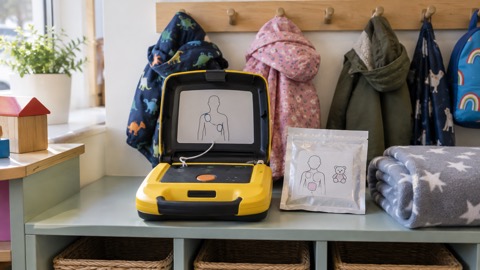
The same principle applies to a child or baby who is unresponsive and gasping: call 999 and start CPR. The difference is the balance between compressions and breaths. In children, cardiac arrest is more often caused by a breathing problem, so rescue breaths are not optional. The British Red Cross states that rescue breaths must be performed on a baby, as cardiac arrest in children is likely to be caused by a respiratory problem24.
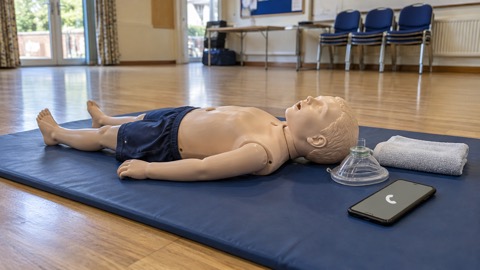
The sequence for a child or baby who is not breathing normally is 5 initial rescue breaths, then cycles of 30 compressions and 2 rescue breaths25. Make up to 5 attempts to achieve effective breaths, enough to make the chest visibly rise, then move on to chest compressions combined with rescue breaths25. Compressions run at 100 to 120 a minute, two per second, and you continue cycles until the infant begins to recover or emergency help arrives13. For a baby under one, place your lips over the baby's mouth and nose and blow gently and steadily until the chest rises, then watch the chest fall26.
If a child is not breathing, tell someone to call 99927. Our pages on CPR for a child and CPR for a baby under one set out the full sequences, and rescue breaths or hands-only CPR explains why the answer differs by age.
Sources (27)
- How to do a primary survey, NHS Inform, 2026-07-24
- How to do CPR, NHS, 2026-10-29
- Primary survey, St John Ambulance, 2026-10-28
- Sudden cardiac arrest, East of England Ambulance Service, 2026-10-29
- Restart a Heart, South Western Ambulance Service, 2026-10-29
- How do I perform CPR, Yorkshire Ambulance Service, 2026-10-29
- Cardiac arrest, Scottish Ambulance Service, 2026-10-29
- Adult basic life support guidelines, Resuscitation Council UK, 2025-10-27
- CPR, St John Ambulance, 2026-10-29
- Unresponsive and breathing, British Red Cross, 2026-10-28
- Cardiac arrest, British Heart Foundation, 2026-06-09
- Croup, St John Ambulance, 2026-10-28
- How to do CPR, North West Ambulance Service, 2026-10-29
- Unresponsive and not breathing, British Red Cross, 2026-10-29
- Some of the reasons people call, Welsh Ambulance Service, 2026-10-29
- How do CPR, Resuscitation Council UK, 2026
- PAD information pack, South Central Ambulance Service, 2026-08
- How to give an adult CPR, NHS Inform, 2026-09-08
- Learning CPR, North East Ambulance Service, 2026-10-29
- CPR on women and other people with breasts, St John Ambulance, 2026-10-28
- Public access defibrillator guidance, Whitstone Parish Council, 2010
- Public access defibrillators, South Central Ambulance Service, 2026-10-29
- Water safety, Devon and Somerset Fire and Rescue Service, 2026-10-29
- How to do CPR on a baby, St John Ambulance, 2026-09-24
- How to resuscitate a child, NHS, 2026-05-21
- How to give a baby CPR, NHS Inform, 2026-07-24
- Unresponsive and not breathing child, British Red Cross, 2026-10-29
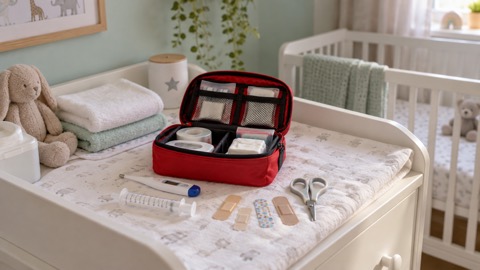 Baby and Child Kit Checklist
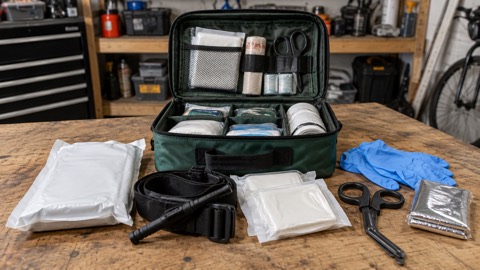 Bleeding Control Kit Checklist
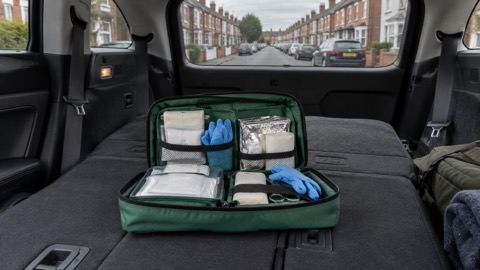 Car Kit Checklist
 CPR on a Baby
 CPR on a Child
 Chest Compression Rate and Depth
 Rescue Breaths or Hands-Only CPR
 Checking Breathing
 Breathing During CPR
 Recovery Position and Spine
 Cardiac Arrest vs Heart Attack
 Heart Attack First Aid
 Defibrillator Pad Placement
 Defibrillator on a Child
 Defibrillator Without Training