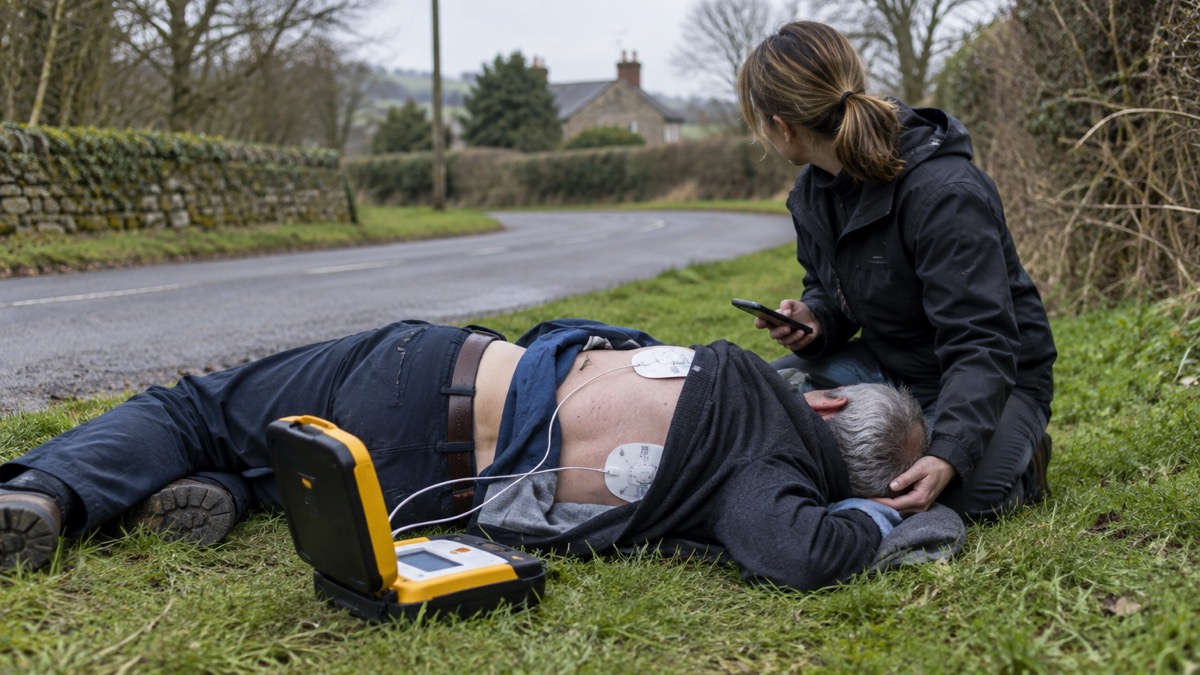
If you are doing CPR on someone and they start coughing, open their eyes, speak or begin to breathe normally, they are showing signs of becoming responsive. Stop chest compressions, put them in the recovery position, leave the defibrillator attached and keep checking their breathing until the ambulance crew takes over1. Do not remove the pads, and do not walk away.
The most important thing is not to assume the emergency is over. Someone who has been in cardiac arrest can stop breathing again, so stay with them, keep watching their chest and be ready to restart CPR straight away if they do1. If you have already called 999, stay on the line; the call handler can talk you through what to do next4.
This page sets out the signs to look for, what to do with the defibrillator, how to keep monitoring them, and what changes when the casualty is a child or a baby. It also covers the situations people ask about most: choking, suspected opioid poisoning, drink spiking, and what to do if you are on your own or too exhausted to carry on.
Signs they are coming round
The signs that someone is becoming responsive are usually obvious once you know what to look for. The Resuscitation Council UK and St John Ambulance describe them as coughing, opening the eyes, speaking, or moving purposefully, together with starting to breathe normally1. The British Heart Foundation adds that a gag or cough response during rescue breaths is a sign of life8.
Breathing normally is the key sign, and it is worth being clear about what that looks like. Look for the rise and fall of the chest9. A person who is gasping or making occasional noisy breaths is not breathing normally, and that is not a reason to stop CPR. If you are unsure, the ambulance call handler can help you check for signs of normal breathing9.
If the person has been pulled from water, the signs are the same: opening their eyes, breathing normally, making a noise or coughing means you should stop compressions11. The Royal Life Saving Society and St John Ambulance both say to continue CPR for a drowning casualty until they show signs of responsiveness or the paramedics take over12.
Stop compressions and put them in the recovery position
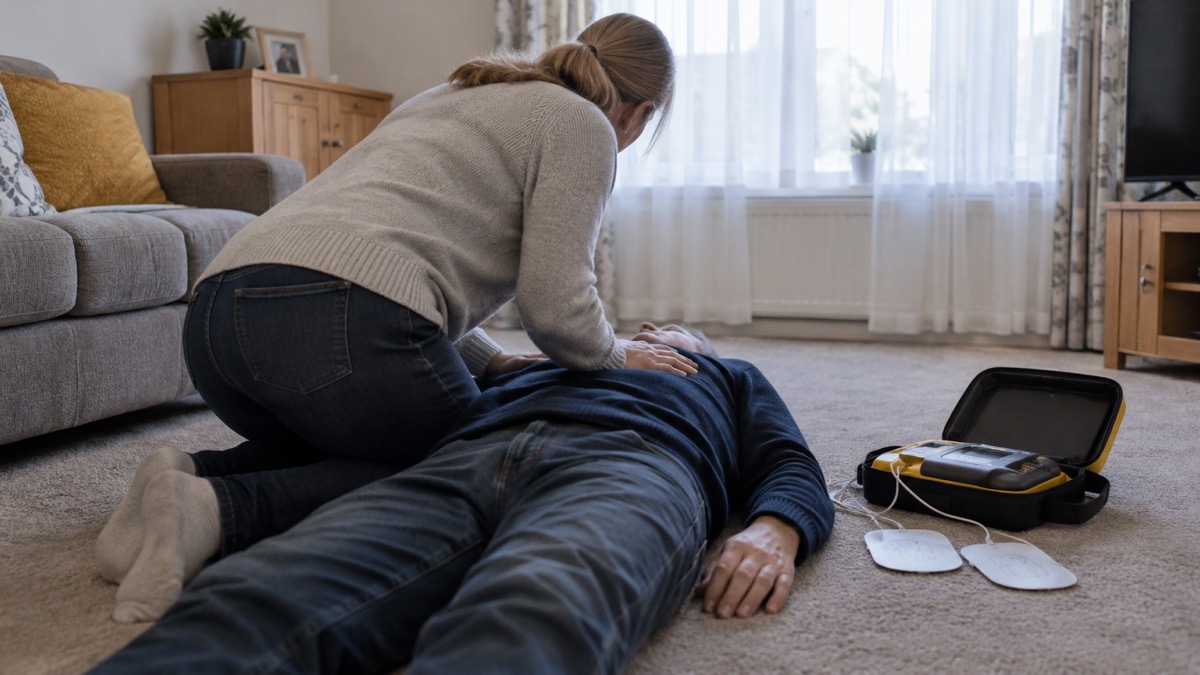
Once they are breathing normally, stop chest compressions. The British Heart Foundation advises stopping compressions but carrying on with rescue breaths until they can breathe normally on their own, then putting them in the recovery position, monitoring their breathing and being ready to restart CPR8. In practice, if they are breathing on their own, you can stop the breaths too and concentrate on the recovery position and monitoring.
The recovery position means lying them on their side, with their head supported so that their airway stays open and any vomit or fluid can drain away. The Resuscitation Council UK says to place adults and children with a decreased level of responsiveness who do not meet the criteria for CPR into a lateral, side-lying recovery position13. Our guide to the recovery position walks through the steps.
A few practical points:
- Do not leave them lying on their back if they are unresponsive but breathing; the recovery position protects the airway13.
- Keep their head, neck and back in line as you turn them.
- Stay with them and keep talking to them; their level of response can change quickly2.
- If they are responsive enough to speak, keep them still and calm until the ambulance arrives.
If you suspect a spinal injury, there is separate guidance on the recovery position when a spinal injury is suspected.
Leave the defibrillator attached
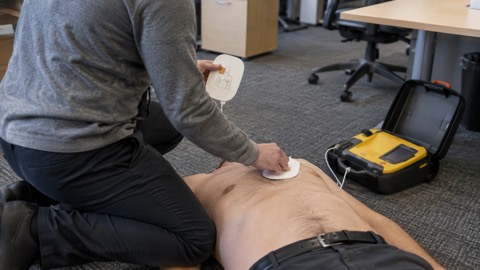
If a defibrillator has been used, leave it attached. Do not remove the pads. St John Ambulance says that if the casualty shows signs of becoming responsive, you should put them in the recovery position, leave the defibrillator attached, monitor their level of response and prepare to give CPR again if necessary1. The Resuscitation Council UK gives the same instruction: leave them in position, do not remove the pads, and monitor them until emergency services arrive3.
This matters because the defibrillator may still be needed. If the heart goes back into a rhythm that needs a shock, the machine will tell you. Leaving the pads on means it can analyse the rhythm again without delay. The same applies to a baby or child: if you have used a defibrillator, leave it attached14.
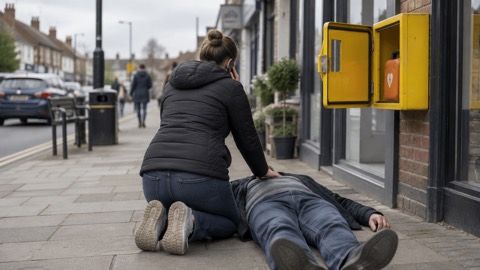
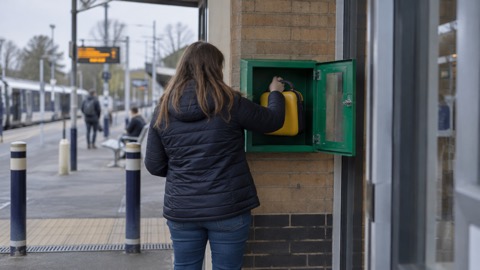
If you have not yet got a defibrillator and someone else is with you, send them to fetch one while you carry on CPR. If you are on your own, do not leave the casualty to look for one yourself; the ambulance controller can tell your helper where the nearest defibrillator is2. Our pages on defibrillators and finding the nearest public access defibrillator explain more.
Keep monitoring their breathing until help takes over
Staying with them and watching their breathing is the job now. The Resuscitation Council UK says to continue CPR until emergency help arrives and takes over, the person starts showing signs of life and starts to breathe normally, you are too exhausted to continue, or a defibrillator is ready to be used7. Once they are breathing, the monitoring continues until the ambulance crew arrives3.
What to watch for:
- Breathing: is it normal, quiet and regular, or noisy, gasping or stopping?9
- Response: do they respond to your voice, open their eyes, squeeze your hand?2
- Colour and position: keep them on their side and comfortable13.
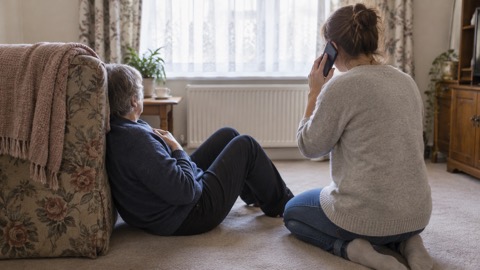
If anything changes, tell the 999 call handler. They are trained to advise you and can pass information to the crew on its way4. Do not give them anything to eat or drink while they are recovering.
If breathing stops again, restart CPR straight away
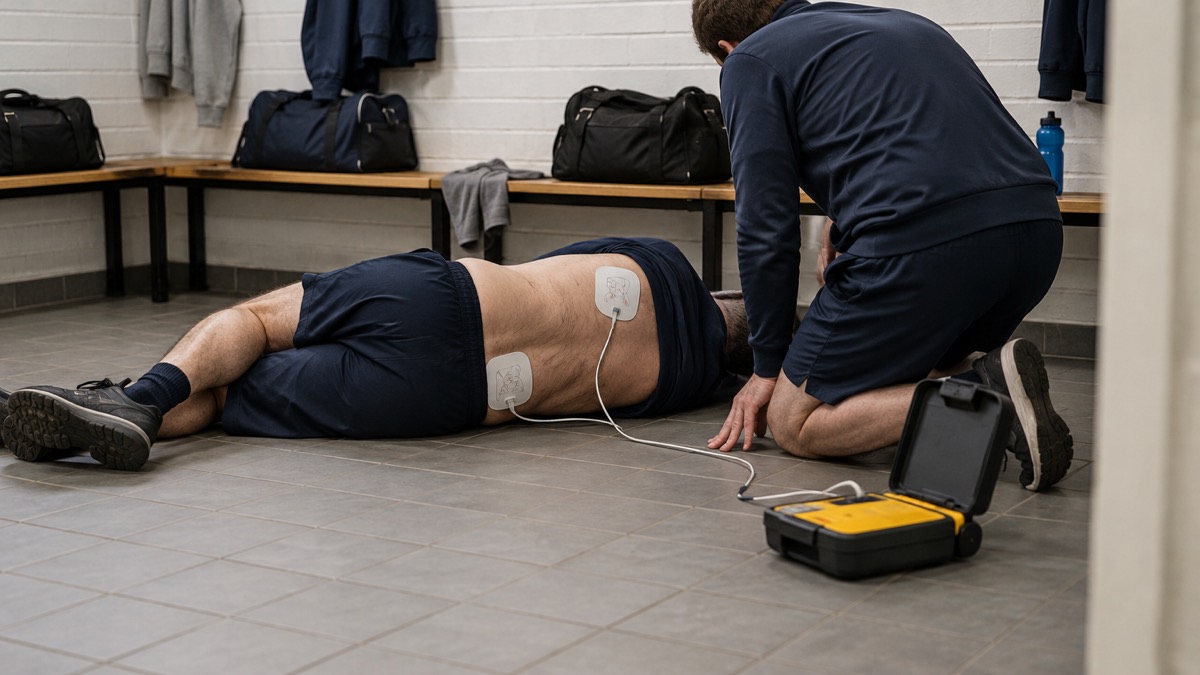
A casualty who has come round can deteriorate again. If they stop breathing normally, restart CPR immediately. The Resuscitation Council UK says to be prepared to start CPR again if needed3, and St John Ambulance says the same1. Do not wait to see whether they improve on their own.
The steps are the ones you already know:
- Check for a response and for normal breathing9.
- If they are not breathing normally, start chest compressions again2.
- If the defibrillator is attached, follow its instructions3.
- Call 999 again if you need to, and tell the handler what has happened16.
If you are doing rescue breaths, stick to two attempts to get the breaths in; if one or both do not work, return to chest compressions2. Compressions are the priority.
When a child starts breathing during CPR
The signs of life in a child or baby are the same as in an adult: normal breathing, coughing, or movement of the arms or legs. The NHS says that if your child shows signs of life, put them in the recovery position, and continue CPR until qualified help arrives8. NHS Inform gives the same list for a child aged one or over and for a baby under one: continue chest compressions until emergency help arrives, the child shows signs of becoming responsive, the child starts breathing normally, or you are too exhausted to continue17.
There are two differences worth knowing:
- Calling for help. If you are alone with a child aged one or over, or a baby under one, do CPR for 1 minute first, then phone 999 and put your phone on speaker17. For an adult, call 999 or 112 and start CPR straight away2.
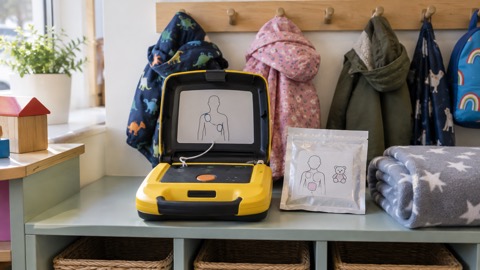
- The defibrillator. If you have used one on a baby or child, leave it attached14. Our page on using a defibrillator on a child or baby covers pad placement.
If the child is unresponsive and not breathing normally, call 999 and start CPR straight away8. Our guides to CPR on a child and CPR on a baby under one give the full sequence.
When you can stop CPR
You can stop CPR when emergency help arrives and takes over, when the person starts showing signs of life and breathing normally, when a defibrillator is connected and tells you to stop while it analyses the heart rhythm, or when you are too exhausted to continue2. St John Ambulance gives the same list, adding that you should stop when the casualty starts to show signs of regaining consciousness, such as coughing, opening their eyes, speaking or breathing19.
| Situation | What to do |
|---|---|
| They are breathing normally and responding | Stop compressions, recovery position, leave the defibrillator attached, monitor1 |
| The defibrillator says "do not touch the casualty" | Stop compressions while it analyses, then follow its instructions2 |
| The ambulance crew arrives | Hand over and follow their instructions2 |
| You are too exhausted to continue | Stop, tell the 999 handler, and restart as soon as you can2 |
If you are on your own and exhausted, say so to the call handler. They may be able to advise you, and if someone else arrives, ask them to take over compressions while you rest. Do not feel you have failed: official guidance recognises exhaustion as a reason to stop2.
If they were choking, drowning or poisoned
The same rules apply whatever caused the emergency, but there are a few specifics worth knowing.
Choking. If someone choking becomes unresponsive, open the airway by lifting the chin and tilting the head back, check their breathing and begin CPR if they are not breathing20. If they lose consciousness and are not breathing, start chest compressions21. Our guide to what to do if someone is choking covers the full sequence.
Drowning. If the person shows signs of responsiveness, stop compressions and treat them for hypothermia; if not, continue breaths and chest compressions11. Our page on what to do after someone nearly drowns explains more.
Suspected opioid poisoning. If the person is unresponsive and not breathing normally, start CPR13. Open the airway by lifting the chin and tilting the head back22. Tell the 999 call handler what you suspect.
Poisoning. Start CPR if someone is unresponsive and not breathing23. Our page on what to do if a child swallows pills or chemicals covers children.
Drink spiking and alcohol. If they are awake, sit them up; if they have passed out, put them in the recovery position and check they are breathing properly24. If they become unresponsive, open their airway, check their breathing and prepare to give CPR24.
Severe bleeding, anaphylaxis and diabetes. If they become unresponsive at any point, open their airway, check their breathing and prepare to start CPR25. Our pages on severe bleeding, anaphylaxis and low blood sugar cover the earlier steps.
Where to get help and learn more
The 999 call handler is your first source of help. Scottish Ambulance Service says its call handlers will provide immediately life-saving instructions such as CPR if required15, and NHS Inform says the same28. Do not hesitate to call because you are unsure whether it is serious enough.
For learning CPR before you need it, the British Heart Foundation's RevivR is a free online course, and our page on learning CPR free online lists the options. A hands-on first aid course gives you practice with a manikin and an instructor.
If you want to be ready for the next emergency, our first aid at home guide covers the basics, and our guide to how to do CPR walks through the steps for adults. For the wider picture, see what to do first: danger, response, airway and breathing.
Sources (28)
- Cardiac arrest, St John Ambulance, 2026-10-28
- How to do CPR, NHS, 2026-10-29
- How to use an AED, NHS Inform, 2026-09-28
- How to use a defibrillator, St John Ambulance, 2026-10-28
- How to give an adult CPR, NHS Inform, 2026-09-08
- How to do CPR on a child or baby, British Heart Foundation, 2026-10-29
- CPR on women and other people with breasts, St John Ambulance, 2026-10-28
- How to resuscitate a child, NHS, 2026-05-21
- How do CPR, Resuscitation Council UK, 2026
- CPR flyer, Resuscitation Council UK, 2023-06
- Drowning, St John Ambulance, 2026-10-28
- Drowning first aid, British Red Cross, 2026-10-29
- CPR and AED guidance, Resuscitation Council UK, 2025-10-27
- How to do CPR on a baby, St John Ambulance, 2026-09-24
- Phoning 999, Scottish Ambulance Service, 2026-10-29
- Water safety, Devon and Somerset Fire and Rescue Service, 2026
- How to give a child CPR, NHS Inform, 2026-07-24
- How to give a baby CPR, NHS Inform, 2026-07-24
- How to do CPR, British Heart Foundation, 2026-10-29
- Adult choking first aid, NHS Inform, 2026-10-22
- First aid guidance, East Sussex Healthcare NHS Trust, 2025-11
- Poisoning first aid, NHS Inform, 2026-07-24
- Poisoning, NHS, 2025-06-12
- What to do in an emergency, Oxfordshire County Council, 2026
- Severe bleeding, St John Ambulance, 2026-09-08
- Anaphylaxis first aid, NHS Inform, 2026-07-24
- Diabetes, St John Ambulance, 2026-10-28
- Cardiac arrest, NHS Inform, 2026-08-18
 Baby and Child Kit Checklist
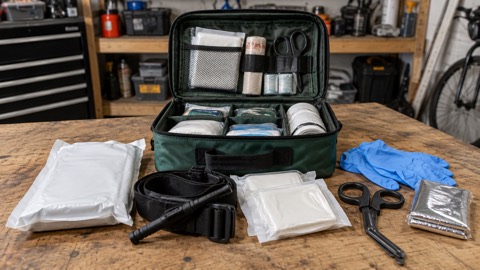 Bleeding Control Kit Checklist
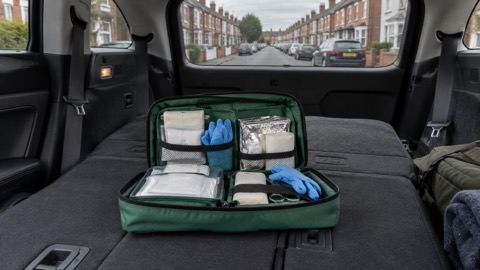 Car Kit Checklist
 CPR on a Baby
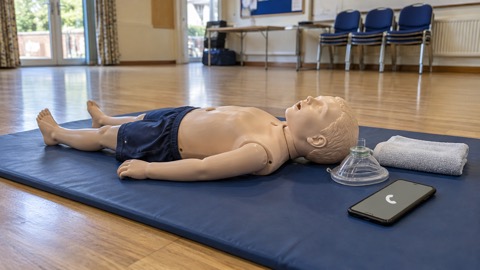 CPR on a Child
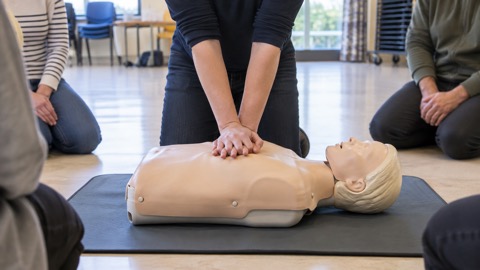 Chest Compression Rate and Depth
 Rescue Breaths or Hands-Only CPR
 Checking Breathing
 Agonal Breathing and CPR
 Recovery Position and Spine
 Cardiac Arrest vs Heart Attack
 Heart Attack First Aid
 Defibrillator Pad Placement
 Defibrillator on a Child
 Defibrillator Without Training