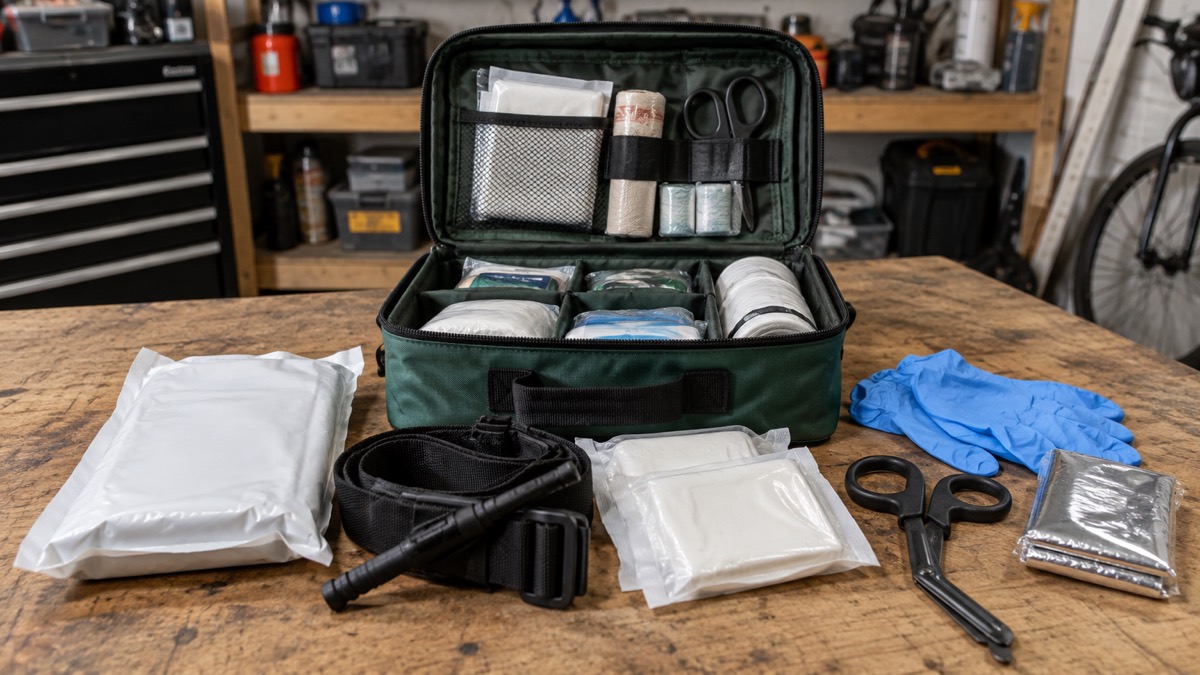
Most household first aid kits are built for small injuries: plasters, a bandage, maybe some antiseptic. That is fine for a graze or a kitchen cut, but it leaves a gap. If someone in your home or on your street is bleeding heavily, the kit needs to do a different job: hold firm pressure on a large wound, keep covering it if blood soaks through, and protect you while you help. The test is simple. Does your kit support the treatment of major bleeding, not just minor cuts?1
The core of a bleeding control kit is not complicated. You need larger sterile dressings, bandages you can wrap firmly, disposable gloves, and something to cut clothing away from a wound2. If you want to go further, a haemostatic dressing and a tourniquet are the specialist additions, and they come with conditions on when they should be used4. What matters most is that you know what to do before you open the kit: call 999, apply pressure, and follow the instructions of the person on the phone3.
This checklist sets out what to add, why each item matters, what to do first while help is coming, and how to keep the kit ready. It is written for an ordinary UK household with no medical training. You do not need to be a clinician to hold a dressing on a wound, but you do need the right items within reach and a clear idea of the order to do things in.
Bleeding control kit checklist: what to add to a household first aid kit
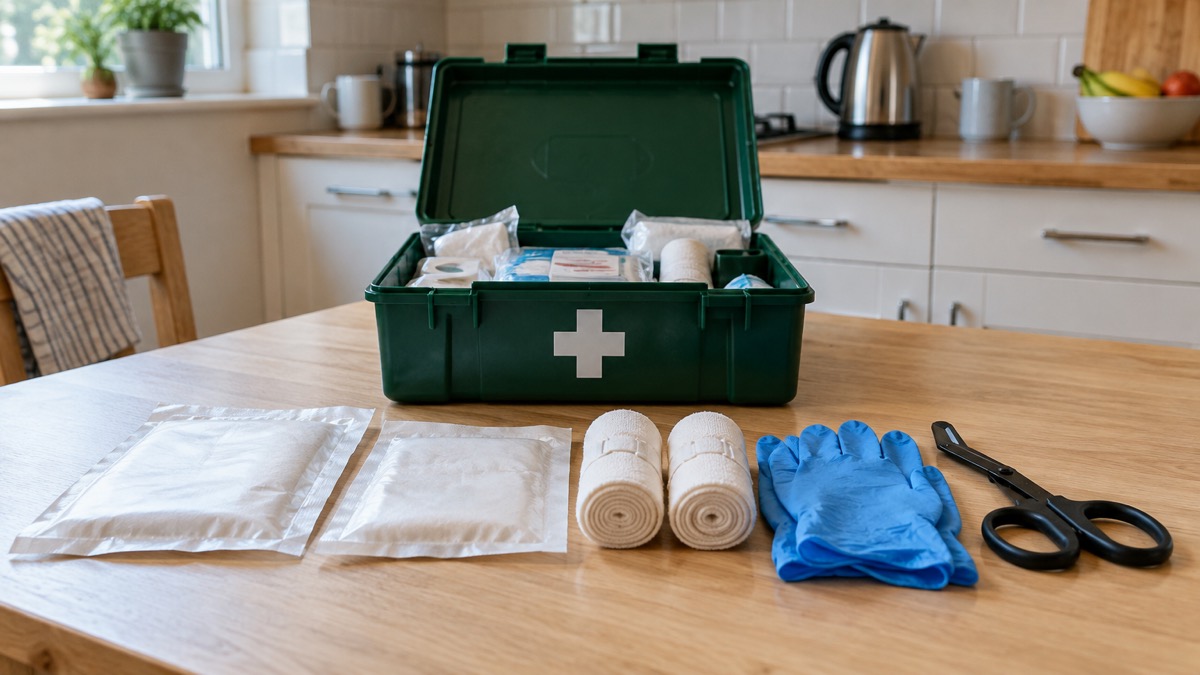
Start with the standard household kit and then add the items that make it capable of handling serious bleeding. The government's Be Ready guidance lists the basics every home should have: waterproof plasters, bandages, a thermometer, antiseptic, eyewash solution, sterile dressings and gloves, medical tape for dressings, and tweezers9. St John Ambulance's guide to what a first aid box should hold adds small, medium and large sterile gauze dressings, triangular bandages, crêpe rolled bandages, safety pins, scissors, alcohol-free cleansing wipes and sticky tape11.
The bleeding-specific additions sit on top of that list. Here is the full checklist, with the reason for each item.
If you would rather not build a kit from scratch, you can buy a ready-made one or put together your own in a clean, waterproof box2. Either way, the box should be big enough to hold large dressings without crushing them, and it should be easy to open in a hurry.
Why each item matters when bleeding is severe
Severe bleeding is different from a cut. The NHS says that if severe bleeding is not controlled, shock can develop and the person may become unresponsive3. That is why the kit is built around pressure and coverage rather than cleaning and plasters. The aim is to stop the blood loss long enough for an ambulance to arrive.
Heavy bleeding can come from any part of the body, so the first job is to find where the wound is13. Once you have found it, remove or cut away any clothing if needed so you can see the wound clearly3. Then apply pressure. If nothing is stuck in the wound, apply pressure using a clean pad or dressing and keep doing it until the bleeding stops7. If something is stuck in the wound, do not remove it. Press firmly on either side of the object and build up padding around it before bandaging, so you avoid pressing on the object itself7.
The size and number of dressings matter because blood can soak through quickly. If blood is still coming through the first bandage, keep covering it with more bandages6. That is why a bleeding control kit needs several large dressings and a roll of bandage, not one of each. It is also why gloves matter: they let you keep working without hesitating.
A haemostatic dressing is the next step up. St John Ambulance says it can be used on a life-threatening wound to the head, neck, chest or abdomen. You place the pad over the wound and hold it tightly in place for a minimum of five minutes, and in some instances the dressing may need to be packed tightly into the wound4. That is a technique to learn properly, not something to improvise.
A tourniquet is for a narrower set of situations. St John Ambulance describes it as being used to stem severe limb bleeding where severe damage has occurred, such as an amputation or blast injury, or for rapid control of bleeding where the patient or clinician is in danger4. For most household bleeding, direct pressure is the first and often sufficient step.
Pressure first: what St John Ambulance says to do
The order of actions matters more than the contents of the kit. St John Ambulance believes that everyone should learn at least the basic first aid techniques14, and its advice pages cover everything from the basics of emergency first aid such as CPR and the recovery position, to advice on treating common conditions at home, plus specialist advice for treating children and babies15. For bleeding, the principle is pressure first.
The steps below draw on NHS and St John Ambulance guidance. They are written for an adult helping another adult; the same principles apply to children, but call 999 early.
- Check the scene is safe before you approach. You cannot help if you become a casualty too.
- Call 999. NHS ambulance service guidance is to ring 999 straight away and do exactly what the person on the other end of the phone says6. Severe bleeding is one of the situations where you should call 99916.
- Find the wound and remove or cut away clothing if needed3.
- Apply pressure with a clean pad or dressing and keep going until the bleeding stops7.
- Add more dressings on top if blood soaks through the first bandage6.
- Keep the person warm and still while you wait, and watch for signs of shock3.
"If you're with someone who is bleeding heavily, ring 999 straight away and makes sure you do exactly what the person on the other end of the phone says."
If a body part, such as a finger, has been severed, place it in a plastic bag or wrap it in cling film and make sure it goes with the patient to hospital7. Do not put it directly on ice.
Keeping the kit ready and where to store it
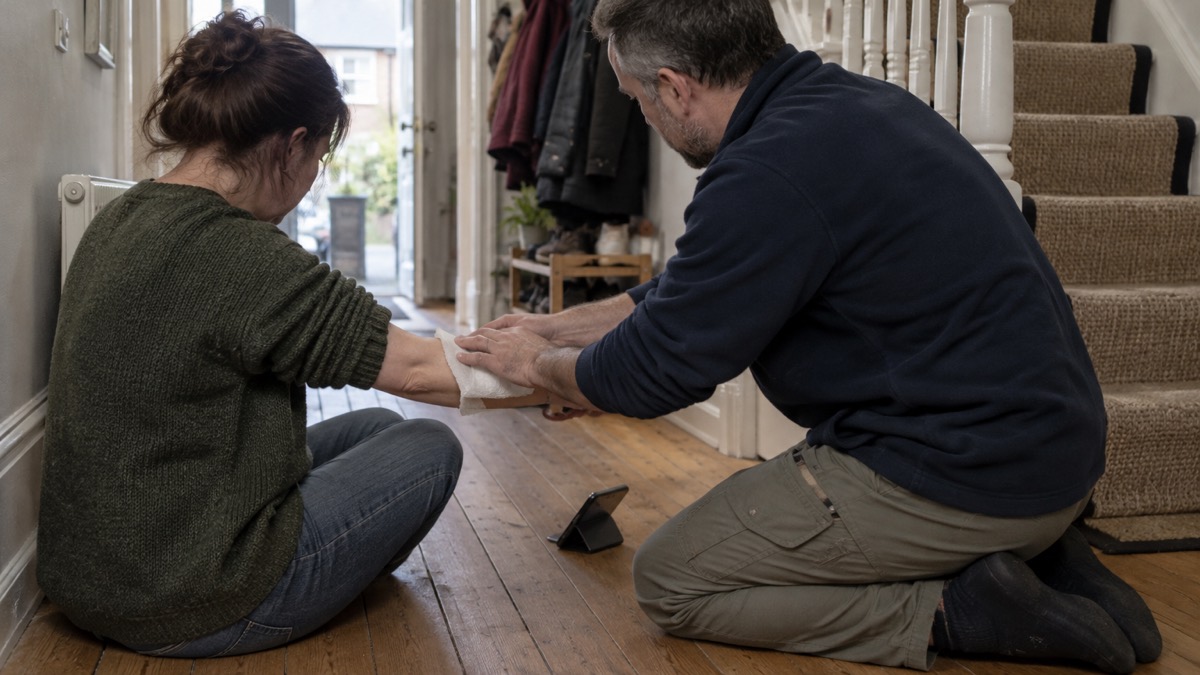
A kit that is out of date, incomplete or at the back of a cupboard is not much use. The Health and Safety Executive advises checking your kit regularly, noting that many items, particularly sterile ones, are marked with expiry dates, and that expired items should be replaced and disposed of safely8. Make a habit of checking the kit once a year, and straight after you use anything from it.
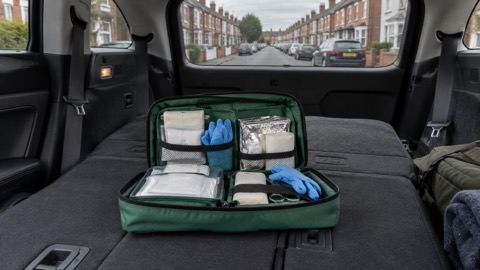
Where you store it matters too. NHS guidance suggests keeping a home first aid kit or car first aid kit handy, either by buying a ready-made one or putting together your own in a clean, waterproof box2. A waterproof box protects sterile dressings from damp, which matters in kitchens, bathrooms and garages. Keep the kit somewhere you can reach quickly and tell everyone in the household where it is.
You may choose to have two kits: a large one that stays at home and a smaller emergency kit for when you go out17. That is a sensible arrangement for a household with a car or with children who play sport. The home kit can hold the larger dressings and the specialist items; the smaller kit covers everyday cuts and grazes.
Several councils and health bodies advise keeping a first aid kit as part of a wider emergency kit. The Be Ready household emergency plan suggests keeping essential medication or medical supplies to last several days alongside your first aid kit18. Your local council may also list a first aid kit as part of an emergency kit for floods or power cuts19. If you have a baby or young child, a separate child kit with child-sized items is worth having alongside the adult kit11.
| Where to keep it | What to include | Why |
|---|---|---|
| Home, main kit | Large dressings, bandages, gloves, scissors, tape, foil blanket, instruction sheet | Handles serious bleeding and everyday cuts2 |
| Home, backup kit | Plasters, small dressings, wipes, gloves | A well-stocked kit at home lets you deal with minor accidents and injuries2 |
| Car | First aid kit, warm clothes, blanket, phone charger | Keep a first aid kit in your car in the event of an emergency21 |
| Bag or rucksack | Small kit for cuts, grazes and blisters | A smaller emergency kit for when you go out22 |
Sources (22)
- First aid provisions, ProtectUK, 2026
- What should I keep in my first aid kit?, NHS, 2026
- Severe bleeding first aid, NHS Inform, 2026
- Life-threatening bleed, St John Ambulance, 2026
- Standards for Public Access Trauma (PAcT) first aid kits and equipment, ProtectUK, 2026
- Heavy bleeding, North West Ambulance Service, 2024
- First aid facts leaflet, North West Ambulance Service, 2019
- What to put in your first aid kit, Health and Safety Executive, 2026
- Get prepared for emergencies, UK Government, 2026
- Be ready for emergencies, UK Government, 2026
- What to keep in your medicine cabinet, NHS Hertfordshire and West Essex, 2026
- Be flood ready: guidance for flood wardens, Harborough District Council, 2026
- Heavy bleeding, North West Ambulance Service, 2019
- First aid, NHS, 2026
- Emergency kit, Ready Scotland, 2026
- When to call 999, South Western Ambulance Service, 2026
- First aid, nidirect, 2025
- Be Ready Household Emergency Plan, UK Government, 2026
- Keep well stocked medicine cabinet at home, NHS Black Country ICB, 2026
- 12 tips to prepare for a power cut, Horsted Keynes Parish Council, 2026
- Emergency kit checklist, Neath Port Talbot Council, 2026
- Summer health, NHS Inform, 2026
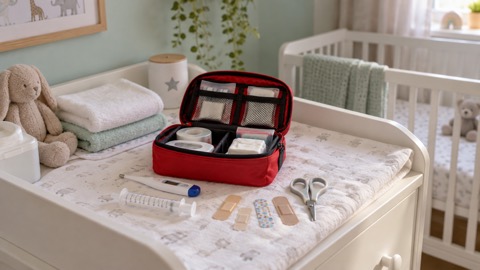 Baby and Child Kit Checklist
 Car Kit Checklist
 Defibrillator Guardian Checklist