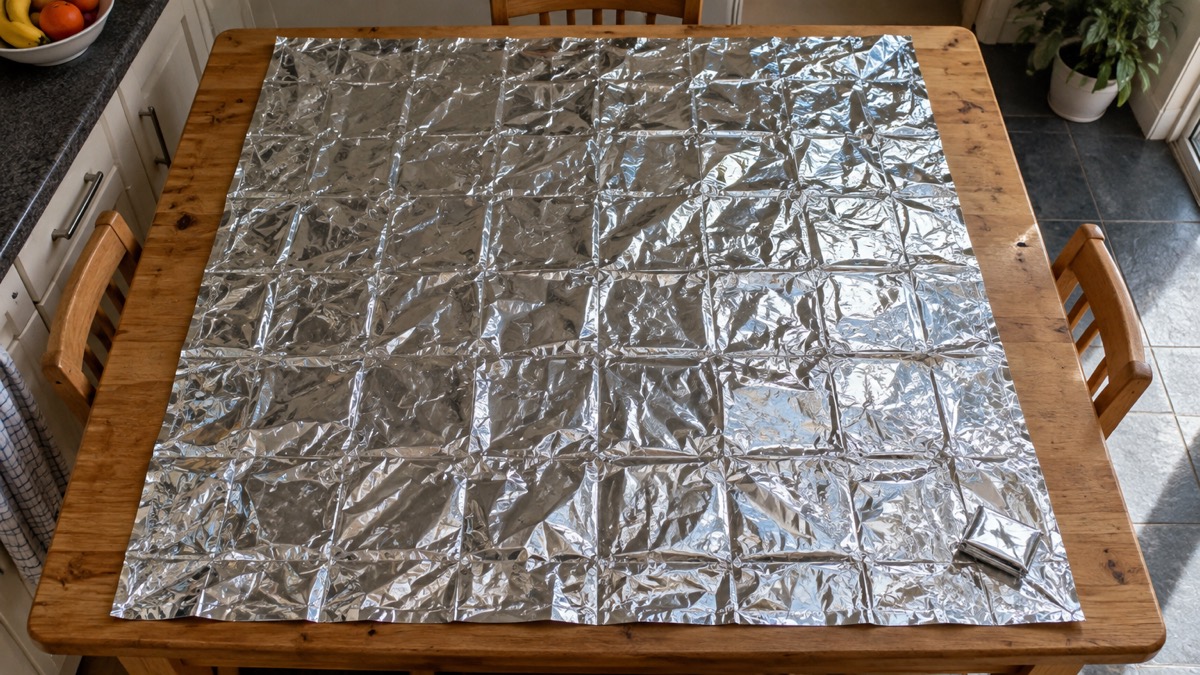
A foil blanket is the thin, silver, crinkly sheet folded into a packet the size of a playing card. The NHS lists an "aluminium blanket" among the contents of a basic first aid kit and describes exactly what it does: it "retains body heat in emergencies, essential for first aid and survival"1. It does not generate any warmth of its own. It takes the heat your body is already producing and reflects it back towards you, slowing the rate at which you cool down when the heating has failed, you are stuck outdoors, or someone is injured and going into shock.
Using one is straightforward, but there are things that matter: wrap the person fully with no gaps, get them off cold ground and out of the wind, and know when a cold person needs 999 rather than a blanket. This page covers how the blanket works, how to wrap someone in it, where to keep them, and what a foil blanket cannot do.
How a foil blanket keeps your heat in
Your body constantly produces heat and constantly loses it, through the air around you, through damp clothing and through anything cold you are touching. A foil blanket works on the first of those losses. The metallic surface reflects the infrared radiation your body gives off back towards your skin, and the sheet also traps a thin layer of still air against you. Still air is a poor conductor of heat, so the rate at which your warmth escapes slows down. The NHS's description of the aluminium blanket, "retains body heat in emergencies, essential for first aid and survival", is the whole principle in one line1.
That is why official guidance treats blankets as a core part of getting through a power cut or a heating failure. Greater Manchester's resilience guidance for loss of essential services says to "keep warm by using blankets and layered clothing, and shut curtains and doors of unused rooms to keep the heat in"4. The government's power cut advice says the same: "Keep warm with blankets and layered clothing. Keep doors of unused rooms closed and close curtains to keep the heat in"5. Anglesey's winter readiness advice adds that you should "keep extra blankets nearby" and close shutters, blinds or curtains6.
Two things follow from how the blanket works. First, it only slows cooling: it returns heat you are still producing, so it works best on someone who is dry, out of the wind and not already deeply cold. Second, it works as part of a system, not on its own. Westminster's household emergency guidance advises that to conserve heat in your home you should "use just one or two adjacent rooms" and isolate them by closing doors or hanging blankets over doorways7. A foil blanket is the portable version of that same idea: reduce the space your body is trying to keep warm.
Wrapping someone in a foil blanket
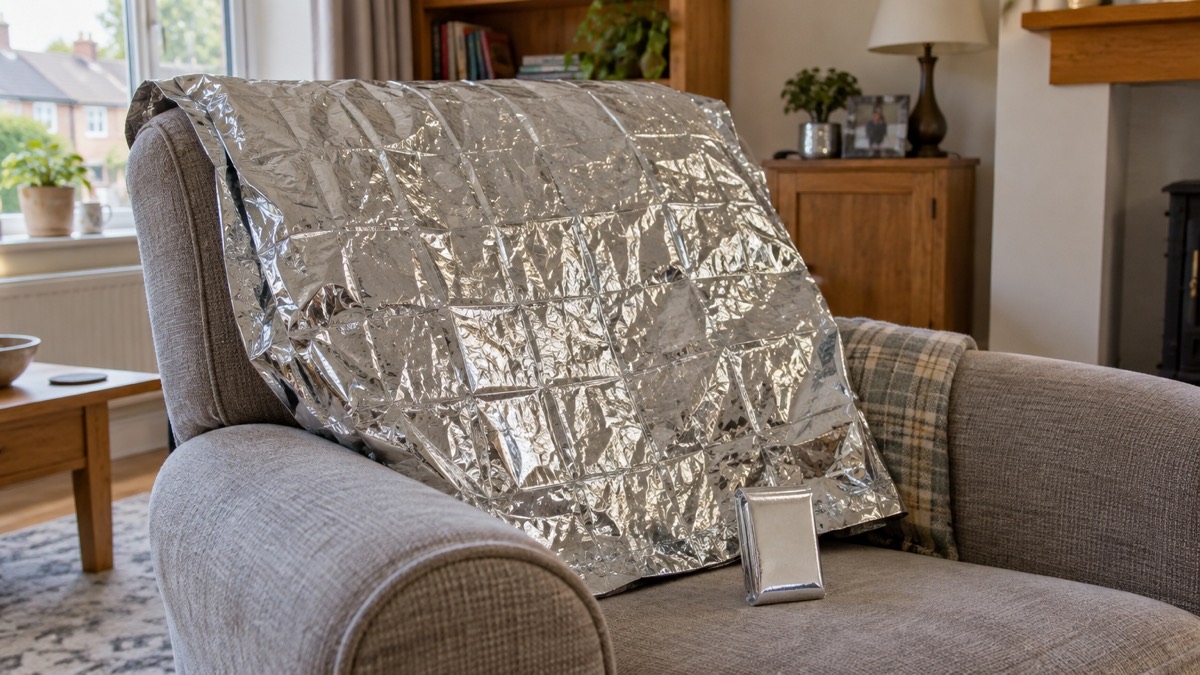
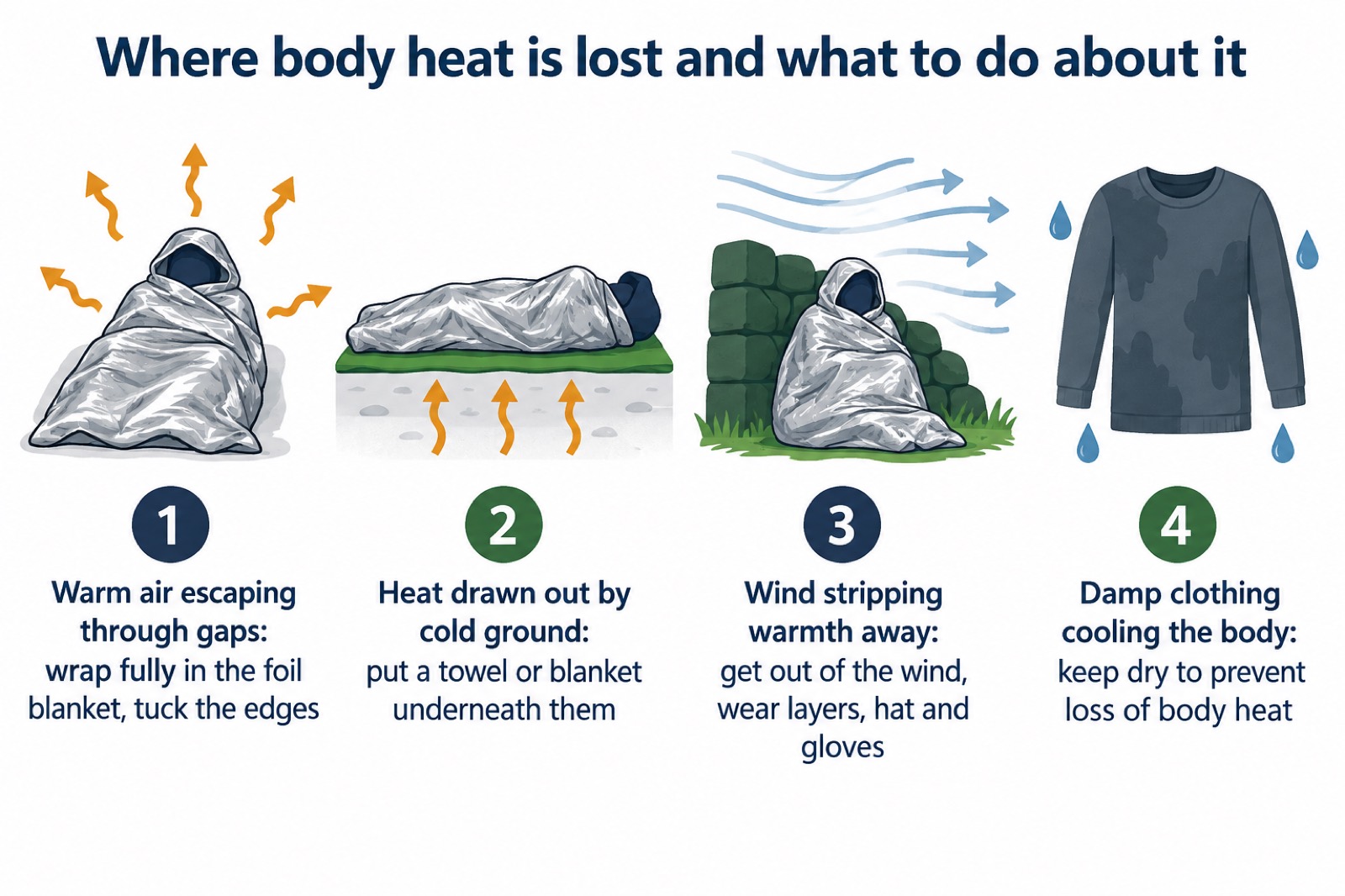
The aim is a sealed envelope around the person with as few gaps as possible, because every gap is a channel where warm air escapes. Lay or seat the person, lay the opened blanket over them, and bring the edges together: over the head if they are cold outdoors, under the body at the sides, and tucked beneath the feet. Keep the face clear so they can breathe freely, and keep them still. The blanket reflects the heat they produce, so moving about, and especially moving about in wind, defeats it.
Official first aid guidance is consistent that a casualty should be kept warm and still. The Northern Burn Care Network's first aid advice for burn injuries says to "keep the person warm by using a blanket or layers of clothing"8. NHS guidance on children's accidents says to "make sure the child does not get too cold. Use a coat or blanket to keep them warm if necessary", and if you are unsure whether to move an injured child, "make sure they're warm and call 999 for an ambulance"3.
On the question people ask most, which side goes where, shiny side in or out: official UK first aid guidance does not give an instruction on which face of the sheet should sit against the person, and it does not need to, because the sheet works by reflecting heat whichever way it is oriented. What the guidance does stress is coverage and stillness. Wrap fully, tuck the edges, and spend your attention on the gaps rather than the sides.
A few practical points that follow from the same principle:
- Put the blanket over clothing, not instead of it.
- If the person is wet, get them out of the wind first; cold-weather guidance stresses keeping dry to prevent loss of body heat9.
- If you are also applying a dressing or bandage, keep the blanket clear of the wound.
Get them off the cold ground and out of the wind
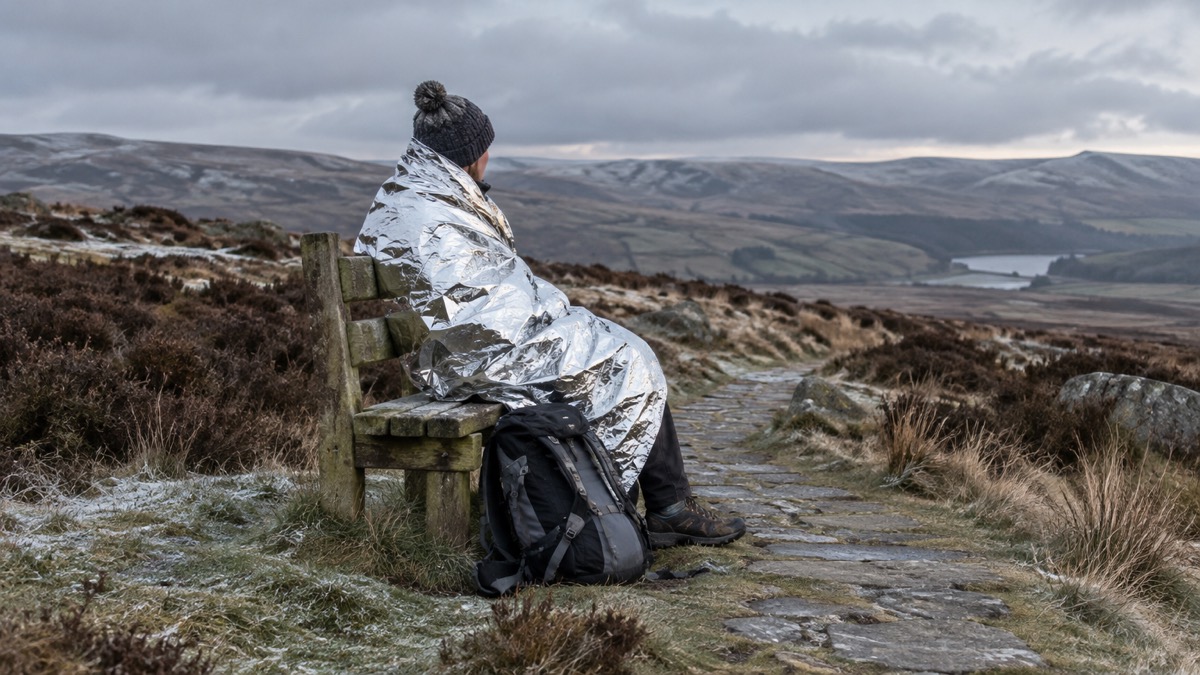
Ground contact and wind are the two fastest ways a wrapped person still loses heat, and official guidance addresses both directly.
On ground contact, the nidirect guidance on hypothermia is explicit: "If the person can't be moved indoors, find something for them to rest on to protect them from the cold ground, like a towel or a blanket"2. The ground in winter is often colder than the air, and it draws heat out of a body pressed against it far faster than air does. A foil blanket underneath someone, folded cardboard, a coat, a rug, anything that separates them from the surface, does more good than a second layer on top. If you have only one foil blanket and the person is lying on cold ground, putting it underneath them may be the better use of it.
NHS Inform's cold weather advice for Scotland says to "wear several layers of thin clothing instead of one thick layer", wear a hat and gloves outside, and try to move around every hour when indoors10. West Midlands Ambulance Service advises that outside you should "wrap up warm by wearing several layers of clothing, a hat, gloves and a scarf and keep dry to prevent loss of body heat"9.
The same logic applies outdoors in an emergency. The Met Office's advice if you are caught in the open in a lightning storm is to "crouch down in a ball-like position with your head tucked and hands over your ears so that you are down low with minimal contact with the ground"11. The principle of minimising contact with the ground and reducing exposed surface runs through all of this guidance, and a foil blanket is one tool for it, not a substitute for shelter, layers and dry clothing.
When someone is very cold: call 999 and give first aid
A foil blanket is first aid, not treatment. There is a point at which a cold person needs an ambulance, and official guidance is clear about where that line sits.
The nidirect guidance on hypothermia says: "Call 999 and give first aid if you think someone has hypothermia"2. The NHS frostbite guidance says to call 999 or go to A&E after exposure to very cold temperatures where there is hard, frozen skin, swelling and loss of feeling, blisters, or those general signs of the whole body being too cold12. While waiting for help, the NHS advises you to "wrap yourself in something warm like a blanket, sleeping bag or dry towel"12, and nidirect advises finding something for the person to rest on off the cold ground2.
Derbyshire's keeping warm in winter guidance adds two points that matter for households. First, "cold weather is especially dangerous for older people or people with serious illnesses", and if you are concerned about anyone, in an emergency telephone 99913. Second, if you see a person or animal fall through ice, do not try to rescue them: telephone 999 immediately and ask for the fire and rescue service13. North Wales Fire and Rescue Service's winter safety advice likewise says to call 999 immediately in an emergency14.
For children, NHS guidance is direct: if you are unsure whether you should move an injured child, "make sure they're warm and call 999 for an ambulance"3. The general rule across all of this guidance is that warmth is part of first aid for any casualty, but it never delays the 999 call. Wrap them, get them off the ground, keep them still, and have the phone call made while you do it.
Where to keep foil blankets: home, car and grab bag
Because they pack down to almost nothing and weigh a few grams, the answer is simply: everywhere you might need one. The NHS describes the foil blanket as essential for first aid and survival1, so keep one wherever you keep emergency supplies, and add spares in each place you might be caught out by cold.
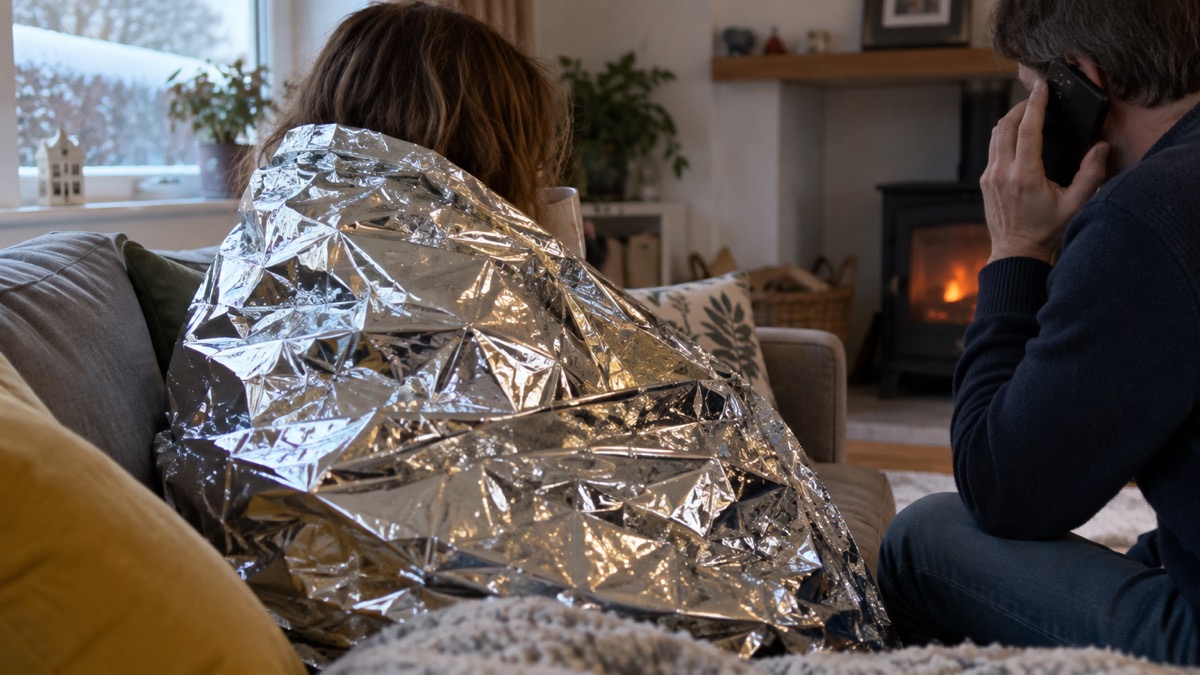
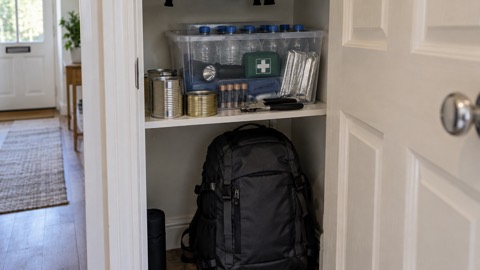
At home, keep blankets where you can reach them in the dark. Emergency supplies guidance says to keep a kit in a designated place that all household members know, and a grab bag in an easy to reach place, upstairs or near your door. Beside beds and in the living room are the spots that matter when the heating fails or the power goes off, because that is where people sit and sleep for long periods, and a foil blanket in each of those places means nobody has to search for one in a cold, dark house.
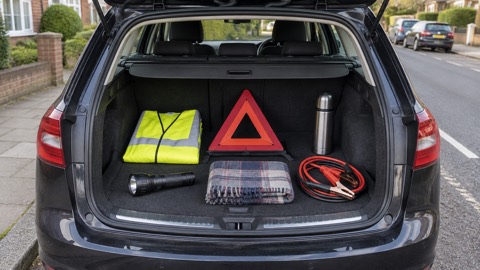
In the car, keep one or two in the glovebox or the pocket behind a seat, not in the boot. If you break down in winter you may be sitting in a cold car for hours, and you want the blanket without getting out to fetch it. Our page on what to keep in your car in case of a breakdown or storm covers the rest of the car kit, and the page on why carry a hi-vis jacket and blanket in the car explains how the two work together at a roadside.
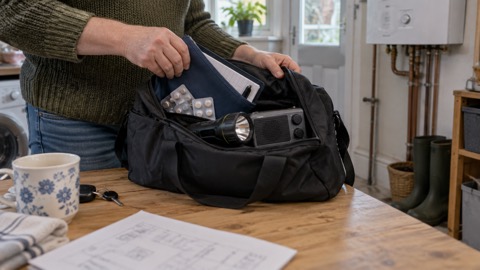
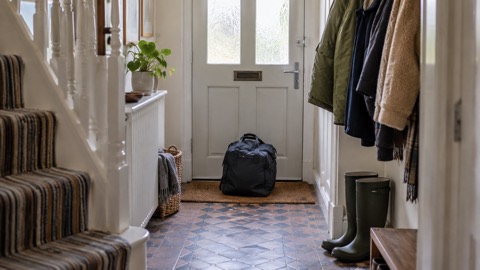
In a grab bag, the foil blanket sits with the first aid items. Our grab bag guide lists what a household should pack if you have to leave home at short notice, and the household emergency pack guide covers the at-home store. If you are deciding between a flat sheet and a bag-style version, our comparison of a survival bag or foil blanket sets out the differences, and there are product pages for the Lifesystems Survival Bag, the Blizzard 3 Layer Survival Bag, the Blizzard EMS Survival Blanket, the Heatshield Thermal Blanket and the Steroplast Emergency Foil Blanket.
| Location | How many | Why |
|---|---|---|
| First aid kit at home | 1 or more | For keeping a casualty warm while you give first aid |
| Beside beds and in the living room | 1 each | Blankets kept nearby for power cuts and heating failures6 |
| Car, within reach of a seat | 2 | A breakdown can mean hours in a cold car; one per person is better |
| Grab bag | 1 per person | Covers each household member if you have to leave home15 |
| Work bag | 1 | See our work bag guide for the rest of the kit |
Storing foil blankets and checking they still work
A foil blanket has no wiring, no batteries and no expiry in the way food or medicine does, so storing and checking it is mostly about physical protection. Keep them dry, keep them folded in their packet or a small pouch, and keep them somewhere you can reach without searching. Our general guide to where and how to store your supplies safely and our page on checking and restocking supplies cover the routine: check the kit on a set date each year, and replace anything damaged.
Check for tears and holes when you check the kit. The sheet works as an unbroken reflective layer, so a puncture is a leak in the envelope, and a blanket that has been unfolded and crumpled back into a pocket never refolds as tightly. Carry more than one, and treat a damaged sheet as spent.
One distinction worth making firmly, because the names cause confusion: a foil blanket is not an electric blanket, and the storage rules for electric blankets do not apply to it but do apply to anything with a lead and a heating element. Mid and West Wales Fire and Rescue Service's electric blanket safety guidance says to store electric blankets loosely folded or rolled in a towel or plastic bag in a cool, dry place, and never to use one while it is folded, rucked or creased16. North Wales Fire and Rescue Service says to store electric blankets flat or rolled up, never folded, and not to use them if the wiring is old or damaged14. If your "thermal blanket" has a plug on it, follow those rules; if it is a plain silver sheet, it needs only dry storage and an annual look-over.
What a foil blanket cannot do
A foil blanket is a single-purpose item, and knowing its limits stops it being relied on for jobs it cannot do.
It is not a fire blanket. Fire and rescue service guidance treats fire blankets as a distinct piece of equipment: Devon and Somerset Fire and Rescue Service says a fire blanket can be used to put out a fire or to wrap a person whose clothes are on fire17, and its home fire safety equipment guidance describes using one to put out fires on clothing by wrapping the blanket around the person18. A thin foil sheet will not smother flames and is not made to. If you keep a fire blanket in the kitchen, as the fire and rescue service suggests17, keep it in addition to your foil blankets, not instead of them.
It is not insulation for a room on its own. Blankets help conserve heat in a room when hung over doorways or covering windows, as Westminster's guidance describes7, but a single foil sheet over one person does nothing for the space around them. The room-level measures, one or two rooms, doors closed, curtains drawn, come first4.
It is not a heater. It returns heat the body produces; it creates none. Someone who is already deeply cold, wet and exhausted produces less heat for it to reflect, which is why the guidance moves quickly from blankets to 9992. And it is not a wrap for a burn: burn first aid guidance says to cover the burn loosely with cling film or a clean, non-fluffy dressing19, and to keep the person warm with a blanket or layers of clothing8.
Babies, children and pets
For children, the guidance is clear that warmth is part of first aid. NHS guidance on children's accidents says to make sure a child does not get too cold and to use a coat or blanket to keep them warm if necessary, and if you are unsure whether to move an injured child, keep them warm and call 999 for an ambulance3. Wrap a child loosely rather than tightly, keep their face uncovered, and check on them regularly, since a small body cools faster and a wrapped child cannot tell you they are too hot. Our page on supplies to pack for babies and young children covers the rest of what a family should have ready.
For pets, the same physics applies: a blanket holds in the heat a cold or shocked animal is losing. One caution from official safety notices: an Ansol Heated Pet Blanket sold via eBay, batch number 2018010719073176, was the subject of an official safety notice20, a reminder that electric pet products carry risks a plain foil sheet does not. Our pets and animals guide covers what to have ready for pets in an emergency.
Sources (20)
- What should I keep in my first aid kit?, NHS
- Hypothermia, nidirect, 2025-06-03
- What to do if your child has an accident, NHS, 2025-12-18
- Loss of essential services, Greater Manchester Combined Authority, 2026-10-29
- Power cuts, beready.campaign.gov.uk, 2026-10-21
- Winter ready, Isle of Anglesey County Council, 2026-10-25
- Prepare your household for emergencies, Westminster City Council, 2014-04
- First aid, Northern Burn Care Network, 2022-03-11
- Cold weather advice, West Midlands Ambulance Service, 2026-05-20
- How to stay safe in cold weather, NHS Inform, 2026-09-21
- Stay safe in lightning, Met Office, 2026-10-25
- Frostbite, NHS, 2025-06-09
- Keeping warm in winter, Derbyshire County Council, 2026-10-29
- Winter safety, North Wales Fire and Rescue Service, 2026-10-29
- 2399-WYP-Household-Emergency-Plan-4pp-A5.pdf, West Yorkshire Prepared
- Electric blanket safety, Mid and West Wales Fire and Rescue Service, 2019-09
- Kitchen fire safety, Devon and Somerset Fire and Rescue Service, 2026
- Fire safety equipment, Devon and Somerset Fire and Rescue Service, 2026
- Burn awareness, Cheshire Fire and Rescue Service, 2026-10-26
- Product safety notice: Ansol Heated Pet Blanket, London Borough of Bromley, 2021-04-19
 30-Day Household Checklist
 Emergency Plan Template
 Supply Interruption Checklist
 Home Emergency Pack
 Grab Bags
 What to Keep in Your Car
 Important Documents
 Cash to Keep at Home
 How Many Days Supplies Last
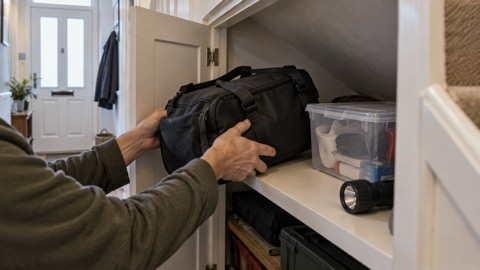 Storing Your Supplies Safely
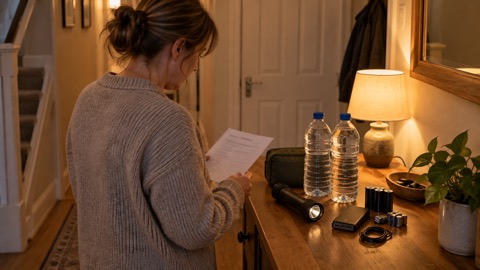 Checking and Restocking Supplies
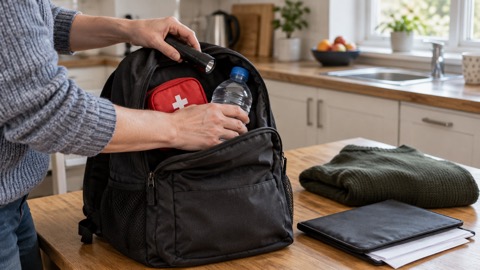 Rucksacks and Holdalls
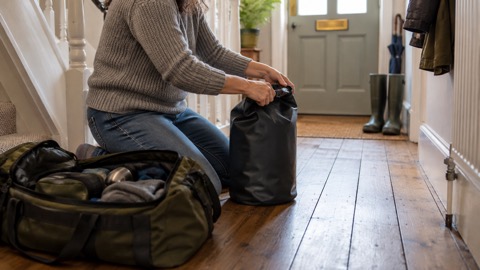 Keeping Supplies Dry
 Portable Jump Starters
 Supplies for Babies and Children