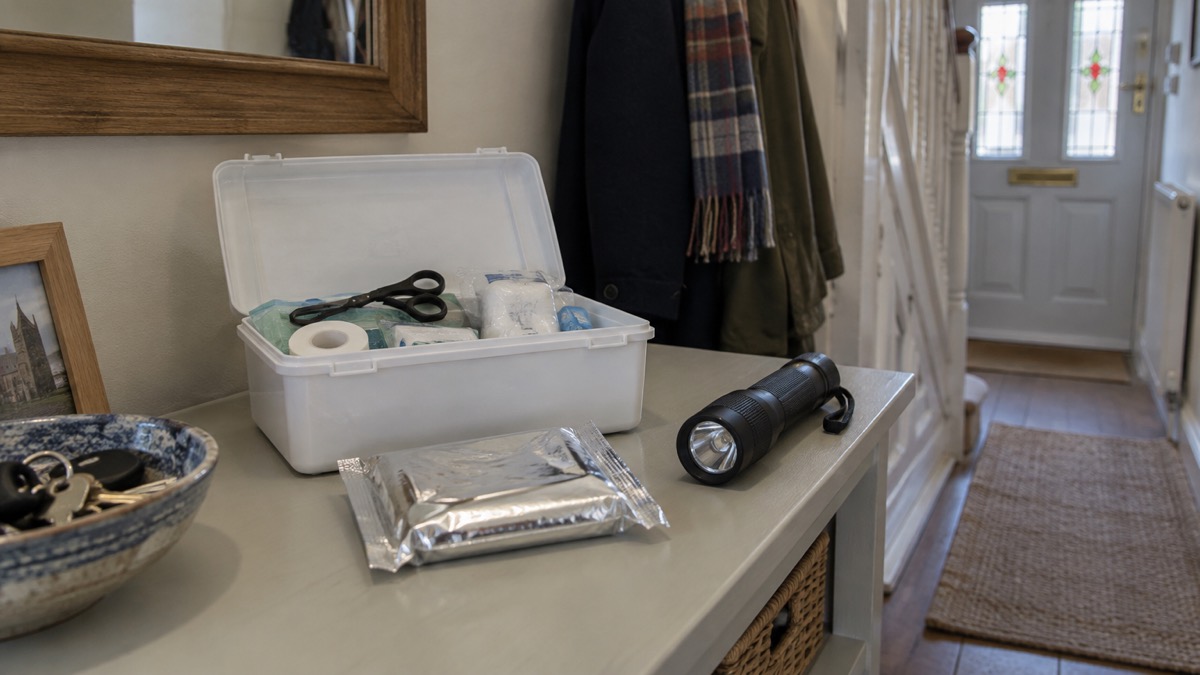
A foil blanket is a thin sheet of plastic with a shiny metal layer that reflects body heat back towards the person wearing it. The Steroplast Emergency Foil Blanket is 130cm by 210cm, made from 12µm PET film with aluminium, and the maker says it reflects up to 90% of body heat while keeping out wind and rain1. It folds into a sealed bag about 7.5cm by 11.5cm, so it fits in a coat pocket, a glovebox or a first aid kit1.
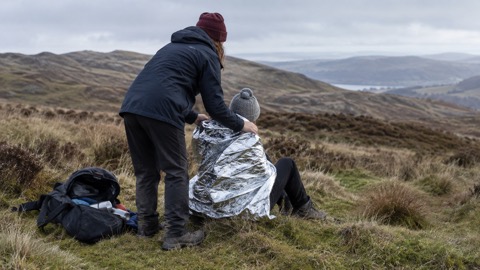
You use it by unfolding it completely and draping it around someone from the shoulders down to their feet, shiny side towards the body, so the reflective layer holds their warmth in1. It is designed for the prevention and treatment of hypothermia, and for evacuations, first aid and rescue1. It is a single-use item: once opened and used, replace it1.
It is not a substitute for medical help. If someone is shivering uncontrollably, numb, confused or drowsy after cold exposure, or has any sign of injury, seek medical assistance promptly, because those can indicate hypothermia or shock1. The sections below cover what the blanket is for, how to wrap someone in it, how to use it on a child, when foil is not enough, and how to store it so it is there when you need it.
What the Steroplast Emergency Foil Blanket is for
The maker describes the blanket as specifically designed for the prevention and treatment of hypothermia, and for emergency evacuations, first aid and rescue scenarios1. In plain terms, it is the item you reach for when someone is cold, wet or shocked and you need to stop them losing heat fast. The NHS lists an aluminium blanket among the things to keep in a first aid kit, because it retains body heat in emergencies, which it calls essential for first aid and survival3.
That makes it a natural fit for several places in a household's kit. The Met Office's winter driving checklist suggests a foil or emergency blanket with 90% heat reflectivity or higher4, and the Scottish Government's emergency kit guidance includes a blanket in the car kit5. At home, official grab bag lists include blankets among the essentials6, and flood guidance suggests packing blankets alongside warm clothing, waterproofs and a first aid kit8.
What the blanket does not do is generate heat. It reflects what the body is already producing and blocks wind and rain, which is why it works best on someone who is dry or being dried, and wrapped closely. It is also not a shelter, a stretcher or a substitute for getting someone out of the cold. Think of it as the layer that buys time while you do the rest.
The 25 pack suits a household that wants blankets in several places at once: one in each grab bag, one in the car, one in the first aid kit, one at work. Both are the same product in different quantities.
Size and material: 130cm by 210cm of 12µm PET and aluminium
The Steroplast blanket is cut to 130cm by 210cm, with a tolerance of 1mm on each dimension, and made from PET film (polyethylene terephthalate) with an aluminium layer1. The film is 12µm thick1. That is thin enough to fold into a pocket but strong enough to be handled: the maker gives a tensile strength of at least 210MPa in both directions and an elongation at break of at least 80%1.
| Specification | Steroplast Emergency Foil Blanket |
|---|---|
| Unfolded size | 130cm by 210cm (± 1mm)1 |
| Material | PET film plus aluminium1 |
| Thickness | 12µm1 |
| Heat reflection | up to 90% of body heat1 |
| Weather protection | waterproof and windproof1 |
| Tensile strength | at least 210MPa, machine and cross direction1 |
| Elongation at break | at least 80%1 |
| Packed size | 7.5cm by 11.5cm ± 0.5cm1 |
| Pack sizes | 25 or 101 |
The maker's own instructions describe the blanket as 1.4m by 2m when opened fully, which is a rounded version of the 130cm by 210cm cutting size1. The 10 pack is listed by the maker as 140cm by 210cm unfolded2. Where the maker's figures differ slightly between pack sizes, treat the cutting size on the 25 pack page as the specification and the other as a rounded description.
Reflects up to 90% of body heat and keeps out wind and rain
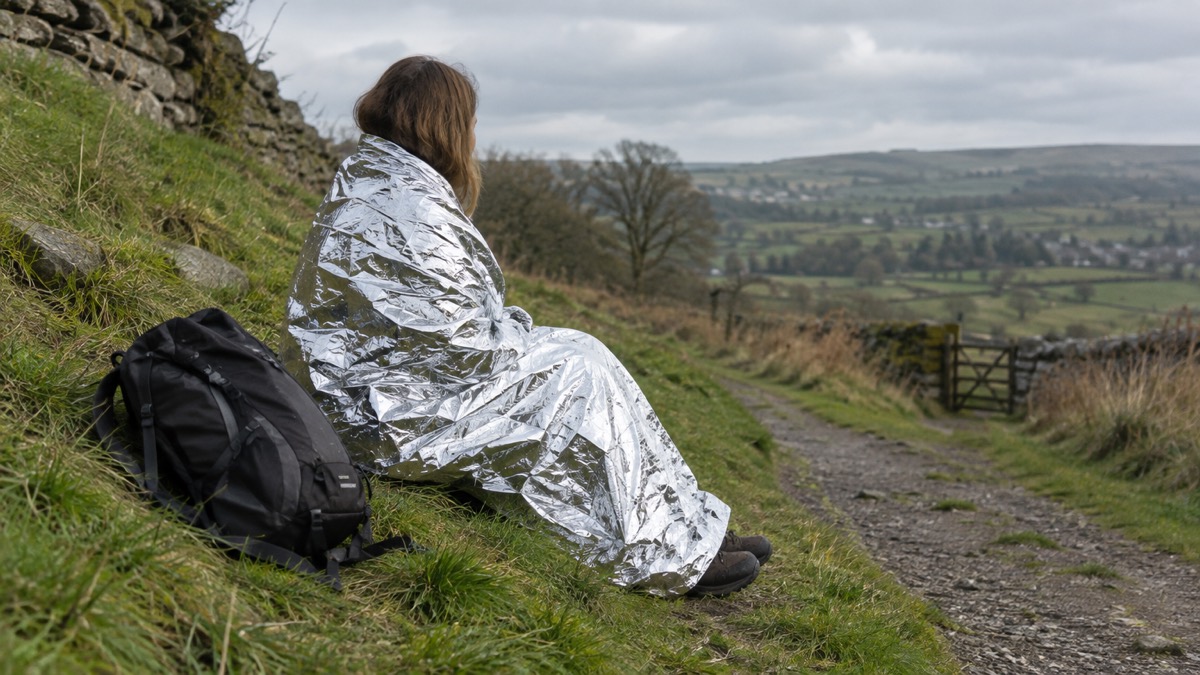
The maker says the blanket is specifically designed to reflect up to 90% of body heat, and that its waterproof and windproof capabilities provide protection from the elements1. The 10 pack page puts it more simply: it protects the user from the wind and helps retain some of their body heat, which is useful for treating or preventing hypothermia in an emergency2.
Those two jobs matter in different conditions. In wind, the blanket's outer layer stops moving air stripping warmth from the skin. In rain, it keeps clothing dry so it can keep insulating. In cold but still conditions, the reflective layer does most of the work by bouncing radiated heat back towards the body. The Met Office's winter driving checklist treats 90% heat reflectivity as the benchmark to look for4, which is the figure Steroplast quotes for this blanket1.
The blanket is not a heat source and does not warm someone who is already deeply cold on its own. Official first aid guidance for hypothermia is to cover the person with dry blankets or clothing to minimise heat loss9, and the NHS advises wrapping yourself in something warm like a blanket, sleeping bag or dry towel if you have frostbite10. A foil blanket does that job when nothing else is to hand, and it does it in a package small enough to carry.
"Foil/emergency blanket (90% heat reflectivity or higher is ideal"
How to wrap someone in a foil blanket
The maker's instruction is to unfold the blanket completely to maximise its size and drape it around the individual from the shoulders down to their feet1. Work in that order: open it fully first, because a half-opened blanket covers less and tears more easily, then place it over the shoulders and let it hang to the feet.
- Move the person out of the wind and rain if you can, and remove or wring out wet outer clothing.
- Unfold the blanket completely1.
- Drape it around them from the shoulders down to their feet.
- Keep the face clear and let them sit or lie down. If they are in shock, help them to lie down on a blanket or rug to protect them from the cold, and raise and support their legs above the level of their heart to improve blood supply to the vital organs11.
- Get medical help if they are not recovering, or if there are signs of hypothermia or injury1.
A foil blanket is not the right cover for a burn. Official burn first aid is to cover the burn with cling film or a clean, non-fluffy dressing12, and NHS guidance for children says to lay cling film over the burn rather than wrap it around, or use a clean plastic bag or something clean and non-fluffy like a cotton pillowcase or linen tea towel, to reduce the risk of infection13. The Red Cross adds that cling film or plastic will not stick to the burn and reduces pain by keeping air from the skin's surface14. Keep foil for warmth, not for wounds.
Using a foil blanket on a child safely
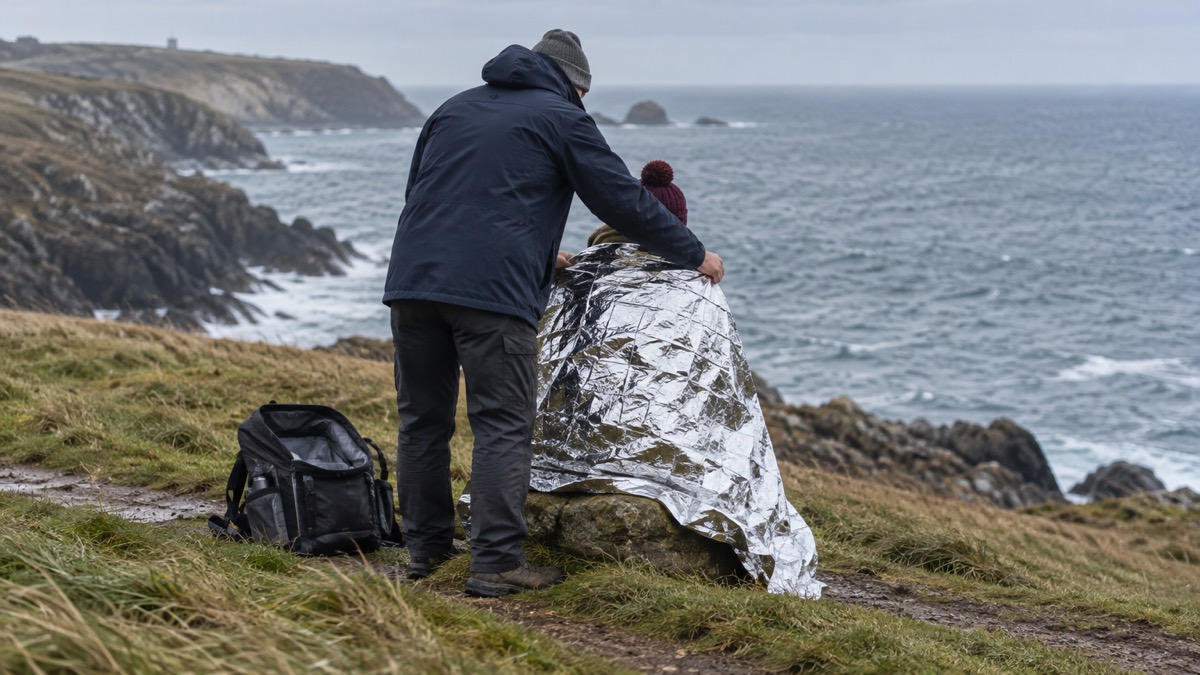
The maker states that the blanket is primarily designed for adults, but can be used for children with caution, ensuring it does not cover their faces or restrict their movement1. That is the whole rule: it is a wrap, not a swaddle, and the child's face and arms should stay free.
In practice, that means draping it over the shoulders and letting it hang, rather than tucking it in tightly or wrapping it round a baby like a shawl. A child who is frightened or struggling will pull at it, and a thin film will tear. If a child is cold and wet, dry them first, then drape the blanket over dry clothing or a towel, and keep them close to an adult for warmth.
For a baby or small child who is unwell, the priority is getting them assessed rather than improvising with kit. The NHS advises that if a child has an accident, you should get medical help if you are worried13. The Child Accident Prevention Trust's advice on burns is not to cover the face when dressing a burn15, and the same principle applies to a foil blanket: never let it cover the face.
When foil is not enough: signs of hypothermia that need medical help
A foil blanket holds heat in, but it cannot reverse hypothermia on its own. The maker's safety warning is to seek medical assistance promptly if there is uncontrollable shivering, numbness, confusion or drowsiness after exposure to cold, or any signs of injury, as these can indicate hypothermia or shock1. The NHS adds that typical signs of hypothermia include shivering, slow breathing, tiredness or confusion, and pale, cold skin16.
The Resuscitation Council's first aid guidelines describe the principle behind the blanket: insulation means covering the person with dry blankets or clothing to minimise heat loss9. A foil blanket is one way to do that when nothing dry is available, but if the person is not warming up, is getting drowsier, or has been in cold water or snow for a while, that is a call for help, not more foil.
| Sign | What it can mean | What to do |
|---|---|---|
| Uncontrollable shivering, numbness, confusion, drowsiness after cold1 | Possible hypothermia or shock | Seek medical assistance promptly1 |
| Shivering, slow breathing, tiredness or confusion, pale cold skin16 | Possible hypothermia | Get the person warm and seek help16 |
| Any sign of injury alongside cold1 | Shock or injury | Seek medical assistance promptly1 |
Heat is the other direction. In hot weather, the NHS advises wrapping a person with heatstroke in a cool, wet sheet, or fanning them or sponging them with cold water while waiting for help17. A foil blanket is the wrong tool there: it reflects heat back, which is the opposite of what you want. Keep it for cold, wind and rain.
Storing the blanket in a grab bag or first aid kit
The blanket comes individually sealed in a pocket-sized poly bag1, which is what makes it easy to store. Official grab bag guidance is consistent about where blankets belong: flood guidance suggests packing blankets with warm clothing, waterproofs, rubber gloves and a first aid kit8, and other official lists include blankets among grab bag essentials6. West Yorkshire Prepared's flooding checklist goes further and suggests foil blankets at one per household member18.
The general rules for storing an emergency kit apply. Keep the kit together in a designated place that all household members know19, and keep it somewhere you can easily get to20. A foil blanket is light and flat, so it can go in the grab bag, the car kit, the first aid kit and a coat pocket without adding bulk.
- Grab bag: foil blankets, 1 per household member18
- Car: one in the glovebox or boot kit, alongside a blanket as the Scottish Government advises5
- First aid kit: one alongside dressings and gloves3
- Home kit: blankets are on official home emergency kit lists21
Store it dry and out of direct sunlight, and check it when you check the rest of your kit. If the sealed bag is torn or damp, replace the blanket. For more on where to keep supplies and how to check them, see Checking and Restocking Supplies and Where and How to Store Your Supplies Safely.
Single use: why each blanket should be replaced after use
Steroplast states that the blanket is designed for single use to ensure effectiveness1. That is not a marketing line: a foil blanket that has been opened, crumpled and wrapped around someone will not fold back as flat, may have picked up dirt or damp, and may have small tears that let wind through. A fresh sealed blanket is the one you can rely on.
The practical rule is to replace it as soon as you have used it, and to check the sealed bag when you check your kit. The same habit applies to other blankets in the home: guidance on electric blankets says to stop using the blanket immediately and replace it if you spot danger signs22, and to replace them every 10 years23. Those rules are for electric blankets, not foil, but the habit is the same: inspect, replace, do not stretch a blanket past its job.
For a household, that means buying in a pack size that leaves you spares, so a used blanket can be replaced and one kept in each place. Note the date you put them in the kit and check them at the same time each year.
Where the blanket fits in a wider kit
A foil blanket is one item in a household kit, not the whole of it. The NHS first aid kit list includes plasters, bandages, dressings, gloves and a resuscitation mask3, and official grab bag lists add a battery radio, wind-up torch, spare clothes, toiletries, bottled water and tinned food6. The blanket's job is warmth, and it does that best alongside dry clothing, a torch and a way to call for help.
If you are building a kit from scratch, start with the Emergency Kit section and the Household Preparedness Checklist. For the car, see What to Keep in Your Car; for leaving home in a hurry, see Grab Bags. If you want to understand how foil blankets work more generally, see Foil Blankets: How They Keep You Warm, and for choosing between a foil blanket and a survival bag, see Survival Bag or Foil Blanket.
Steroplast is a UK maker of first aid and medical supplies, and its public access trauma kit work with Manchester City Council, CityCo and Steroplast Healthcare distributed 180 PAcT kits across venues in Manchester's hospitality and entertainment sectors, featured on BBC's The One Show in September 2024. You can read more on the Steroplast brand page.
Sources (23)
- Steroplast Emergency Foil Blanket, Steroplast, 2026-10-28
- Emergency Foil Blanket Silver 10 Pack, Lomo, 2026
- What should I keep in my first aid kit?, NHS, 2026-10-25
- Winter Driving Checklist, West Yorkshire Prepared, 2020-09
- Emergency kit, Scottish Government, 2026-10-22
- Community Risk Register, Walsall Healthcare NHS Trust, 2023-12
- Protecting yourself, West Northamptonshire Council, 2024-05-31
- Flood evacuation checklist, Croydon Council, 2025
- First aid guidelines, Resuscitation Council UK, 2025-10-27
- Frostbite, NHS, 2025-06-09
- Shock first aid, NHS Inform, 2026-07-24
- Burn awareness, Cheshire Fire and Rescue Service, 2026-05-20
- What to do if your child has an accident, NHS, 2025-12-18
- First aid for burns in babies and children, British Red Cross, 2026-10-25
- Should I go straight to hospital if my child has a bad burn?, Child Accident Prevention Trust, 2025-12-16
- Keeping warm and well in cold weather, UK Government, 2026-04-28
- Heat exhaustion and heatstroke, NHS, 2026-05-28
- Flooding Checklist, West Yorkshire Prepared, 2026
- Emergency Supplies Kit, Denbighshire County Council, 2020
- Flooding: be informed about hazards, Prepare campaign, 2026-10-12
- Emergency advice, Lincolnshire County Council, 2026-10-29
- Electric blanket safety, North Wales Fire and Rescue Service, 2026-10-29
- Electric blankets and portable heaters, Warwickshire County Council, 2026-10-29
 Blizzard EMS Survival Blanket
 Heatshield Thermal Blanket