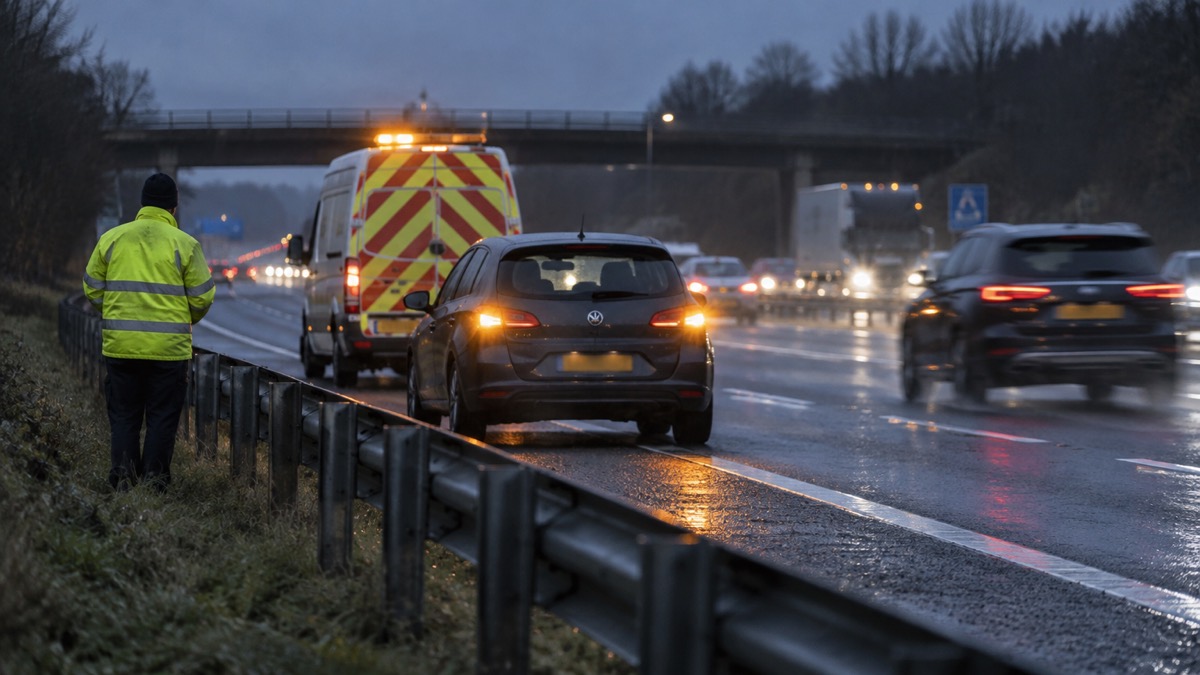
A high-visibility jacket is one of the most useful things you can keep in a car, and official advice across the UK says to carry one. Traffic Scotland puts it plainly: a high visibility jacket is useful so other road users can see you when you are out of your vehicle1. The Met Office goes further, saying that if you need to leave the vehicle in the dark, being seen by other motorists is crucial and could even save your life2.
The jacket works alongside a blanket. Traffic Scotland's winter car checklist includes a blanket alongside the high-visibility jacket, spare warm clothes, a torch and spare batteries1. The Met Office winter car kit lists a blanket with warm clothes, boots, a fully charged mobile phone, a hot drink in a flask, energy boosting food, a pen or pencil, a first aid kit, a torch, an ice-scraper, a map and a shovel for snow2. National Highways says to keep warm clothes in the car if you can3. Neither item takes up much space, and both are things you will be glad of on the one journey where they matter.
The practical points are simple. Keep the jacket where you can reach it without getting out of the car, put it on before you step onto the roadside, and keep a blanket in the boot or on the back seat. The rest of this page explains when to wear it, how to choose between a jacket and a tabard, and what else official advice says belongs in the kit.
A hi-vis jacket lets other road users see you when you are out of the car
The case for the jacket is not about you seeing the road. It is about other drivers seeing you. Traffic Scotland's vehicle emergency kit page says a high visibility jacket is useful so other road users can see you when you are out of your vehicle1. The Met Office winter car kit advice is stronger still: high-visibility clothing is crucial if you need to leave the vehicle in the dark so you can be seen by other motorists, and it could even save your life2.
That matters because the roadside is a hostile place for a pedestrian. Argyll and Bute Council's winter advice says that if you have to leave your vehicle to get help, you should make sure other drivers can see your car and that you are visible at the side of the road7. The government's Prepare campaign makes the same point for anyone travelling on foot or wheeling: ensure you are visible to other road users by wearing bright and light reflective clothing, day or night8. A jacket in the car means you are never caught out in dark clothing on an unlit verge.
Fire and rescue services repeat the advice. Warwickshire Fire and Rescue says to carry a high-visibility vest in case of vehicle breakdowns or emergencies9. Carmarthenshire's winter checklist lists a high-visibility vest or jacket among the items to keep in your vehicle10. Wiltshire and Swindon's preparedness pages put it as a slogan: warm clothes in the winter and bright high visibility clothing in the dark, "Be Warm, Be Seen, Be Sensible"11.
When to put the jacket on
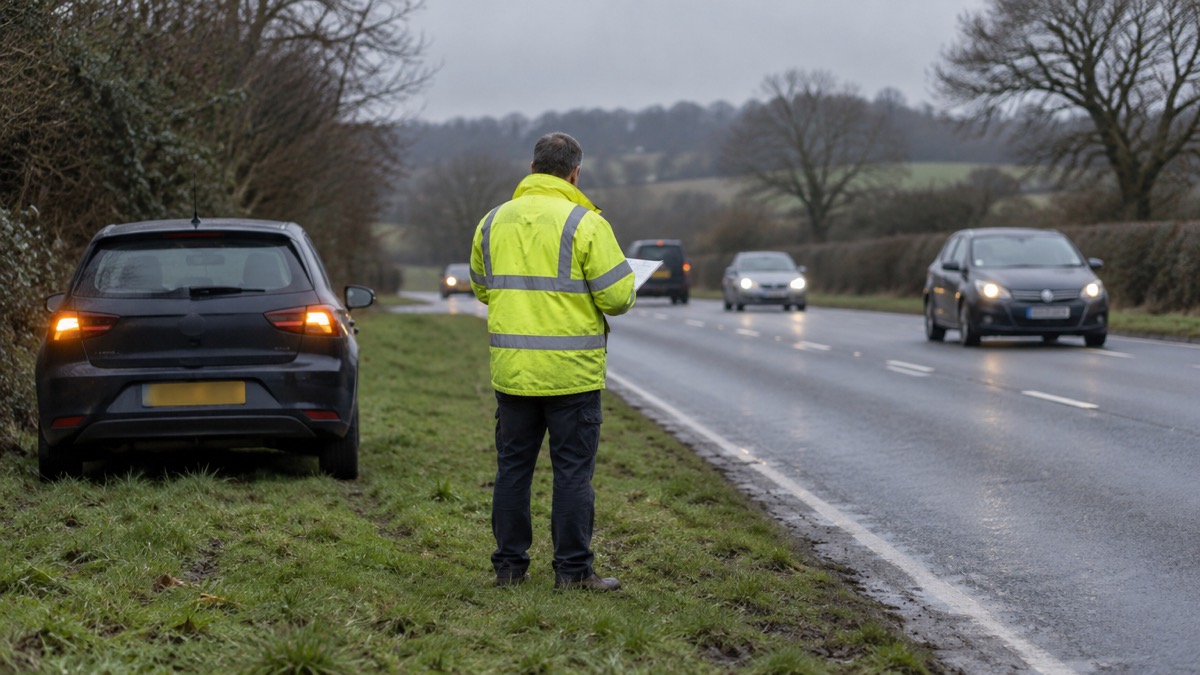
Put the jacket on before you get out, not after. National Highways' motorway breakdown steps say to exit your vehicle on the side furthest from the traffic, and ensure passengers do the same, then put on high-visibility clothing if you have it and it is within easy reach, get behind a safety barrier where there is one, and keep passengers away from the carriageway and children under control4. The order matters: the jacket is part of getting safe, not an afterthought once you are standing in the road.
The same logic applies whenever visibility is poor. The Highway Code says you must use headlights when visibility is seriously reduced, generally when you cannot see for more than 100 metres (328 feet)12. National Highways gives the same 100 metres (328 feet) figure for fog5. If conditions are bad enough that you need headlights to see, they are bad enough that other drivers may struggle to see a person on foot, so the jacket earns its place.
There are times when you should not leave the car at all. Flintshire Council's extreme weather advice says that if you are stuck in a winter storm in a remote area, you should remain in your vehicle where rescuers are most likely to find you, and only leave the car if buildings are nearby13. In that situation the jacket stays on over your clothes inside the car, and the blanket does its job.
Where to keep the jacket so you can reach it
The jacket is only useful if you can put it on without stepping into traffic. National Highways says to keep warm clothes, a hi-vis jacket, a torch and breakdown cover details in the car if you can4. Culham Parish Council's emergency booklet repeats the same list and adds any medication you need, a charged mobile phone, and food and water14. The point of "in the car" rather than "in the boot" is that you can reach it from the driver's seat.
A simple rule is to keep the jacket in the door pocket, under the seat or on the back seat, and to keep the blanket somewhere dry and easy to grab. National Highways says to keep warm clothes and a hi-vis jacket in the car if you can1. Everyone who drives the car should know where the jacket lives.
| Where you keep it | What it suits | What to watch |
|---|---|---|
| Door pocket or under the seat | The driver's own jacket, reached without opening the door | Check it does not foul the pedals or the seat mechanism |
| Back seat or parcel shelf | Jackets for passengers, including children | Keep it clear of the rear window line of sight |
| Boot, in a kit bag | Spare jackets, the blanket, the rest of the kit | You may have to get out to reach it, so keep one jacket up front |
If someone in the car has a condition that is not obvious, National Highways suggests displaying a Hidden Disabilities Sunflower on your vehicle if you feel you may need additional support if you break down or need assistance on a motorway or major A-road in England15. Display it on the rear of the vehicle where it can easily be seen, in a position where it will not obscure your view15. The jacket and the Sunflower do different jobs: one makes you visible, the other signals that you may need more time or help.
A blanket in the car emergency kit
A blanket is on almost every official car kit list, and for good reason. Traffic Scotland's winter checklist includes a blanket alongside the high-visibility jacket, spare warm clothes, a torch and spare batteries1. The Met Office winter car kit lists a blanket with warm clothes, boots, a fully charged mobile phone, a hot drink in a flask, energy boosting food, a pen or pencil, a first aid kit, a torch, an ice-scraper, a map and a shovel for snow2. National Highways says to keep warm clothes in the car if you can3.
Different councils phrase it differently, but the item is the same. Northamptonshire's emergency kit checklist says to keep a blanket and warm clothes in your car in the event of an emergency16. Milton Keynes Council's breakdown advice says a car survival kit should include a thick coat or blanket in winter, cool drinks in summer, a torch, change for a public phone, a reflective vest for when you are out of the vehicle, an orange warning triangle, and drink and non-perishable food17. Warwickshire Council's winter warmth advice says that if you have to go out in your car, carry a spade, a flask of hot drink, a mobile phone, a torch and a blanket18.
The blanket has a second use that matters for families. NHS advice on child safety says that in the car you should avoid thick coats or snowsuits, as these can make seatbelts unsafe, and use layers and a light blanket instead6. Warwickshire Fire and Rescue's child car seat guidance is firmer: coats, hoods and thick clothing should not be worn in the seat, because thick clothing can seriously affect the restraint system and could lead to the child being ejected19. A light blanket over the harness, once the child is strapped in, keeps them warm without compromising the seat.
Jacket, tabard or vest: what to choose
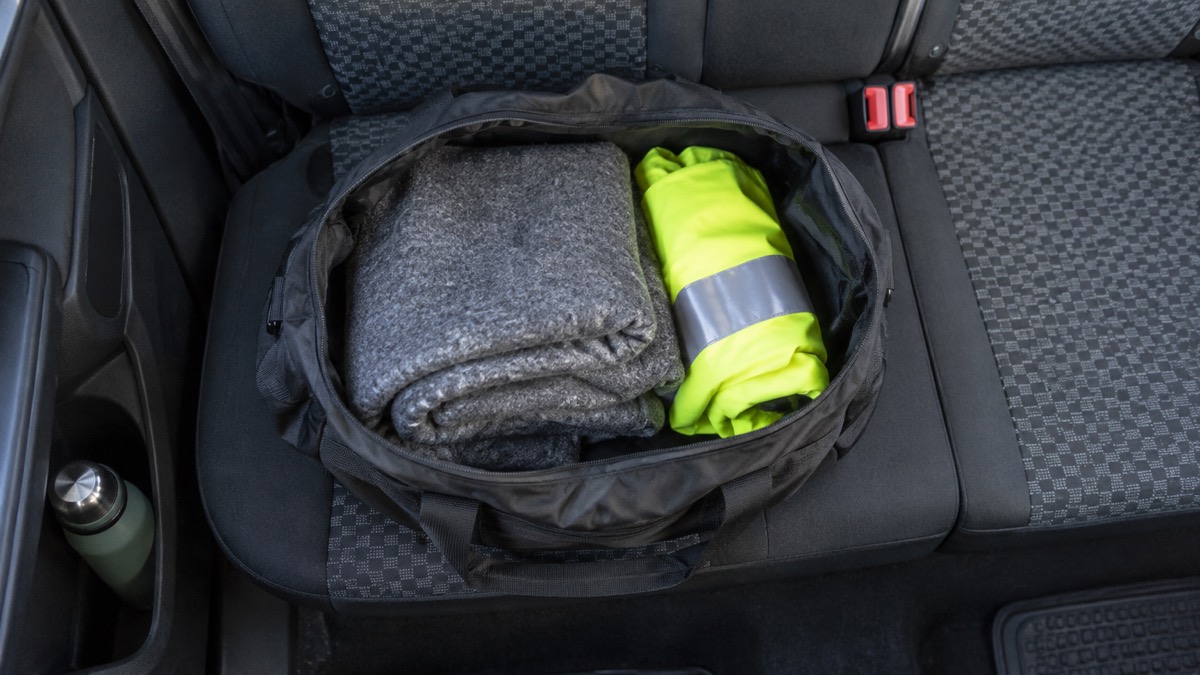
Official sources use several words for the same idea. Traffic Scotland and the Met Office say high-visibility jacket1. Warwickshire Fire and Rescue and Carmarthenshire say high-visibility vest9. Wiltshire and Swindon say bright high visibility clothing11. What the advice is asking for is a garment that is bright and reflective and that you can put on quickly at the roadside.
| Option | What it does | Who it suits |
|---|---|---|
| Full jacket | Covers the torso and arms, easy to pull on over a coat, more visible area | Drivers who wear bulky winter coats, anyone who stops on fast roads |
| Tabard or vest | Covers the torso, packs smaller, cheaper to kit out several seats | Families wanting one for each passenger, occasional drivers |
| Hi-vis trousers or overtrousers | Adds visibility below the waist | People who work at the roadside or walk on unlit roads regularly |
Whichever you choose, check it is clean and the reflective strips are intact. A jacket that has faded or torn is not doing the job. Keep one for each regular passenger if you can, and check the fit for children so it goes on over their coat without being a trip hazard.
The rest of the car kit
The jacket and blanket are the core, but official lists add a handful of other items that work with them. Traffic Scotland's winter kit adds de-icer, an ice scraper, a torch, spare batteries and spare warm clothes1. The Met Office adds jump leads, a reflective warning triangle (ideally two), sunglasses, an in-car phone charger and a portable battery charger3. The government's Prepare campaign adds a torch, in-car phone chargers or a power bank, warm clothes and blankets, high-visibility clothing, jump leads, food and drink, a first aid kit and a shovel8.
Flintshire Council's list is fuller still: a warm coat, extra hat and mittens or gloves, suitable winter footwear, a blanket or sleeping bag, a torch and extra batteries or a wind up torch, a shovel, tow chain or rope, windscreen scraper, jump leads, mobile phone and batteries, and a battery-powered radio with extra batteries or a wind-up radio13. Central Bedfordshire's vehicle emergency kit adds spare bottled water and snacks, a head torch, survival blankets and a warm jacket, a paper UK road atlas, a warning triangle, a hi-vis vest, a car fire extinguisher, a first aid kit, sunglasses, spare phone charging cables and a power bank, jump leads, a tyre air pump, a tow rope, duct tape and toilet roll20.
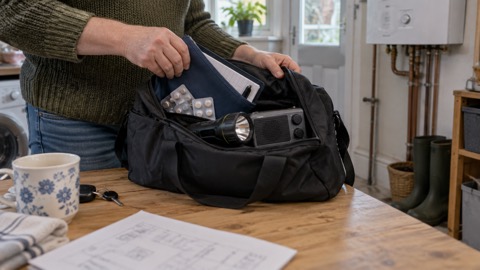
You do not need all of it. Start with the jacket, the blanket, a torch, warm clothes and your breakdown cover details, then add what suits your journeys. Our guide to what to keep in your car in case of a breakdown or storm sets out the full list, and the household preparedness checklist covers the home and grab bag side. If you want a foil blanket as well as a fabric one, our comparison of a survival bag or foil blanket explains the difference.
Sources (20)
- Vehicle emergency kit, Traffic Scotland, 2026
- Winter car kit, Met Office, 2026
- 6 things to do to prepare your vehicle for winter weather, Met Office, 2026
- Driving on motorways, National Highways, 2026
- Travelling in fog, National Highways, 2026
- Child safety, Berkshire Healthcare NHS Foundation Trust, 2026
- Winter weather: ready, be prepared, Argyll and Bute Council, 2026
- Travel advice, Prepare campaign (UK Government), 2026
- Road safety, Warwickshire Fire and Rescue Service, 2026
- Winter checklist, Carmarthenshire County Council, 2024
- Out and about, Wiltshire and Swindon Prepared, 2026
- Driving in adverse weather conditions (rules 226 to 237), GOV.UK, 2026
- Extreme weather, Flintshire Council, 2026
- Are You Ready booklet, Culham Parish Council, 2025
- Hidden Disabilities Sunflower for your vehicle, National Highways, 2026
- Emergency kit checklist, Neath Port Talbot Council, 2026
- Vehicle breakdown advice, Milton Keynes Council, 2026
- Keeping warm in winter, Warwickshire County Council, 2026
- Road safety, Warwickshire Fire and Rescue Service, 2026
- Emergency kits and grab bags, Central Bedfordshire Council, 2026
 30-Day Household Checklist
 Emergency Plan Template
 Supply Interruption Checklist