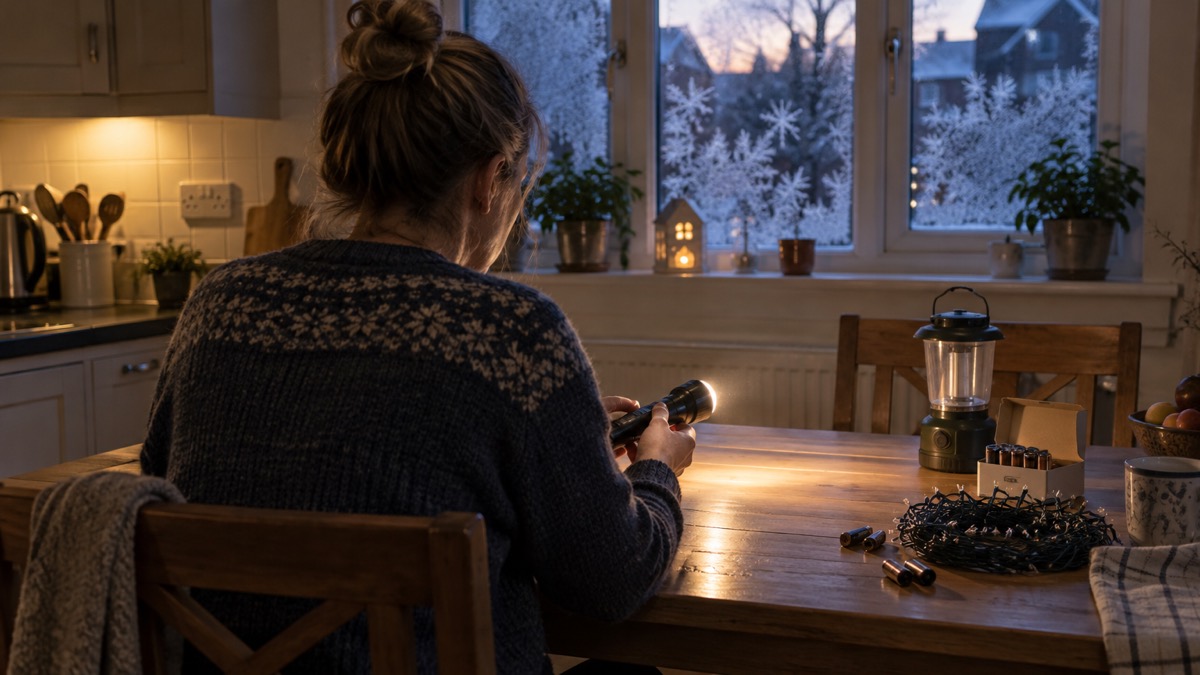
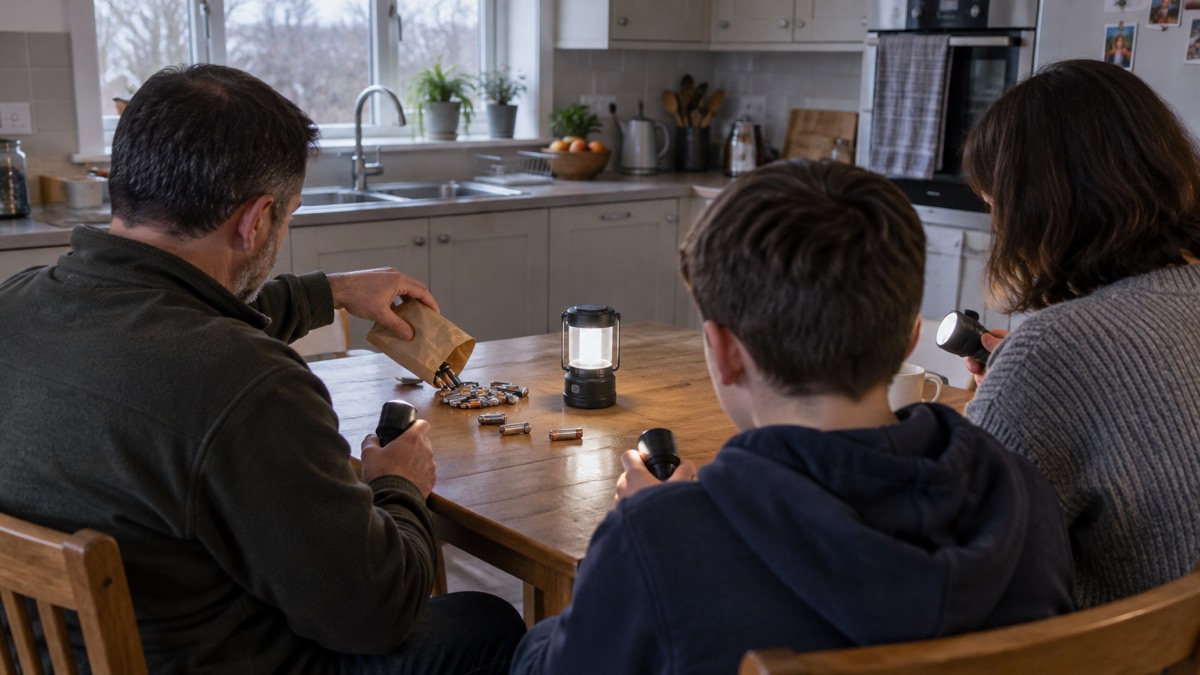
Winter is when the power is most likely to fail and when the failure hurts most: the dark comes early, the house is cold, and the phone is your only line to the outside world. The single most useful thing you can do before winter is check your lighting. Keep a battery or wind-up torch and spare batteries at home, because torches are safer than candles1. Make sure you have more than one torch, along with extra batteries, so a flat battery in one does not leave you in the dark2.
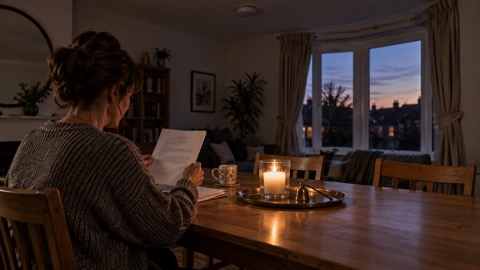
Then deal with the candles. Candles start 850 accidental fires in the home every year in England3, and around 30% of fires started by candles and attended by fire and rescue services result in death or injury4. If you keep candles at all, keep them for the table and the power cut, not for the bedroom, and put them out before you leave the room or go to bed5.
Finally, look at anything electrical that only comes out in winter: the fairy lights, the outdoor Christmas lights, the electric blanket. Lights that are damaged, old, misused, or plugged into overloaded adaptors or extension leads can cause electric shock or fire6. A ten minute check now is easier than a fire in December.
Your winter lighting checklist
Work through this list once, before the clocks change, and again if a warning is issued. Each item takes minutes and each one is there because the guidance says so.
Why a battery or wind-up torch beats a candle
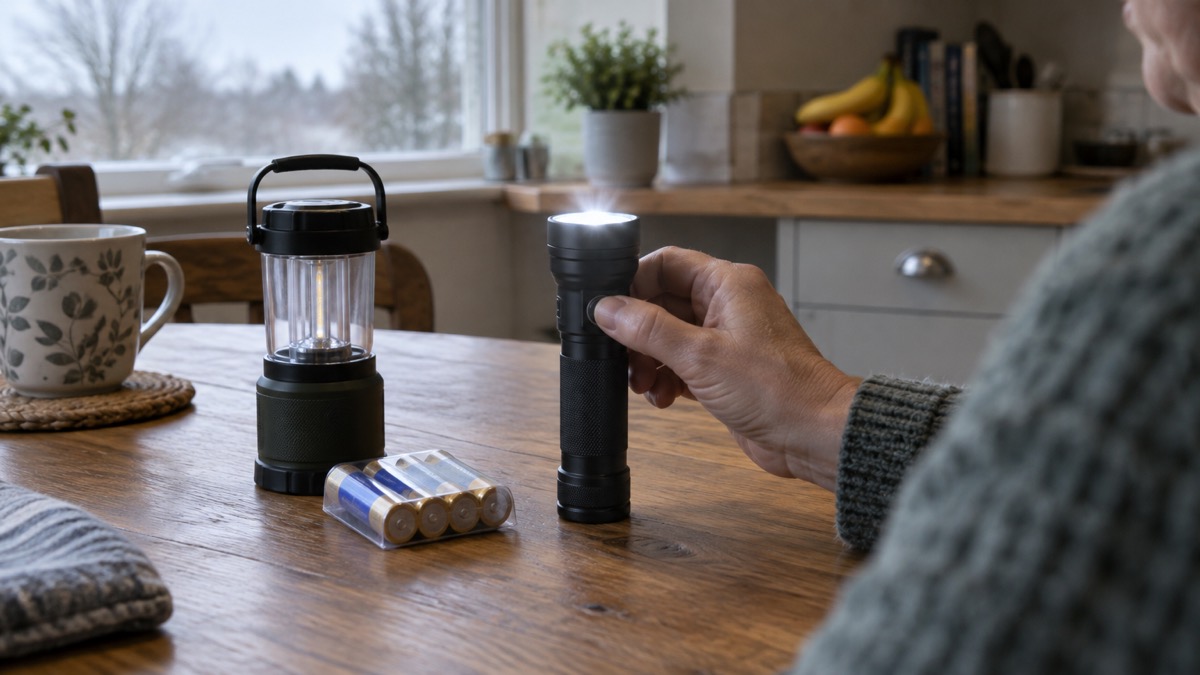
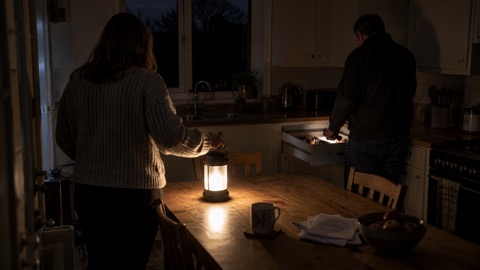
Use battery-operated lights or torches as an alternative light source during a power cut14. Devon and Somerset Fire and Rescue Service put the reason plainly: use a standing electric torch or battery-powered lights, because candles are a fire risk15. The government's own preparedness campaign says the same: keep a battery or wind-up torch and spare batteries at home, and torches are safer than candles1.
The difference is not about how much light you get. It is about what happens when you are tired, distracted or asleep. A torch that falls over goes out. A candle that falls over lands on the carpet, the curtain or the wrapping paper, and it keeps burning. That is why the National Risk Register lists a torch and batteries, which is safer than candles, among the basic supplies a household should keep1.
There is a practical side too. A torch can be stood on its base to light a room, hung from a hook, or worn on your head to leave your hands free. The NHS, writing to families of children who depend on medical equipment, recommends chargeable lamps and headtorches because they allow your hands to be free for care, and suggests getting them early in case of shortages in the shops16. The same logic applies to anyone changing a fuse, lighting a boiler or helping an older relative in the dark.
If you want the look of candlelight without the risk, battery LED candles are the obvious answer. LED candles and lights, battery or wind-up torches are safer products to light your home, and it is much safer to use an LED candle or torch to light your way13. For more on choosing between the two, see LED Candles or Real Candles: Which Is Safer?.
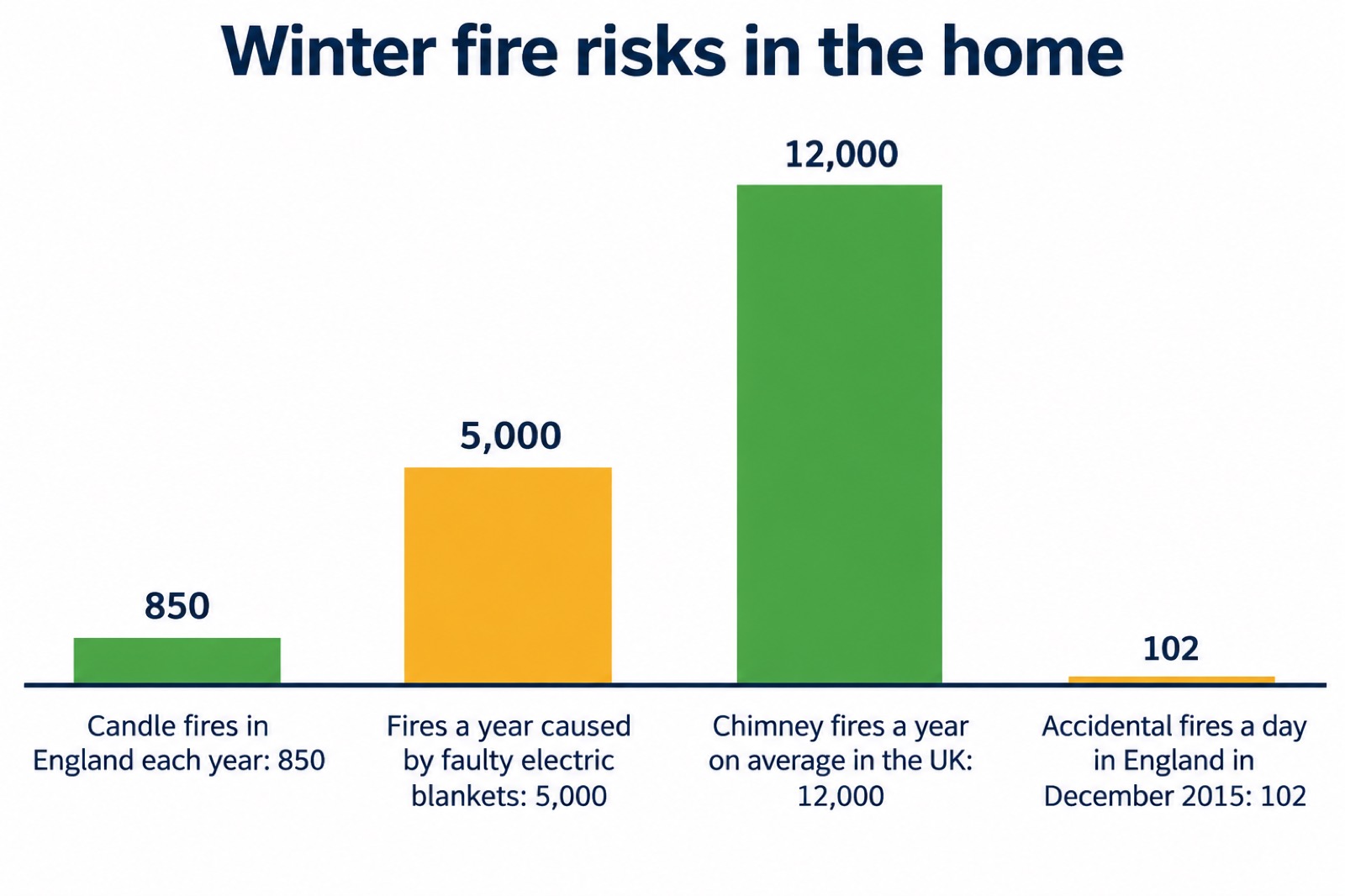
Candles cause around 850 house fires a year in England
The figure is stark and it is official: 850 accidental fires in the home are started every year in England from candles3. Fire services across the country see the same pattern locally. North Yorkshire Fire & Rescue Service says candles cause over 800 fires in UK homes every year17. Devon and Somerset Fire and Rescue Service attends over 20 fires every year caused by candles18, and responds to 20 fires every year caused by candles19.
The consequences are worse than the numbers suggest. Around 30% of fires started by candles and attended by fire and rescue services result in death or injury4. That is roughly one in three candle fires that a fire crew attends ending with someone hurt or killed.
Candles are not the only winter ignition risk, and it helps to see them in context. In England alone, there have been 254,030 accidental dwelling fires over the last ten years20. December is the worst month: the number of accidental fires in the home spiked in December 2015, with an average of 102 fires per day in England, an 11% increase on the average number of fires during other months of the year6. Some of the other causes are worth knowing because they share the same fix, which is to check your electrical kit before winter. Faulty electric blankets cause 5,000 fires a year21, and 12,000 chimney fires occur every year on average in the UK21.
Where candles must never go, and how to burn them safely
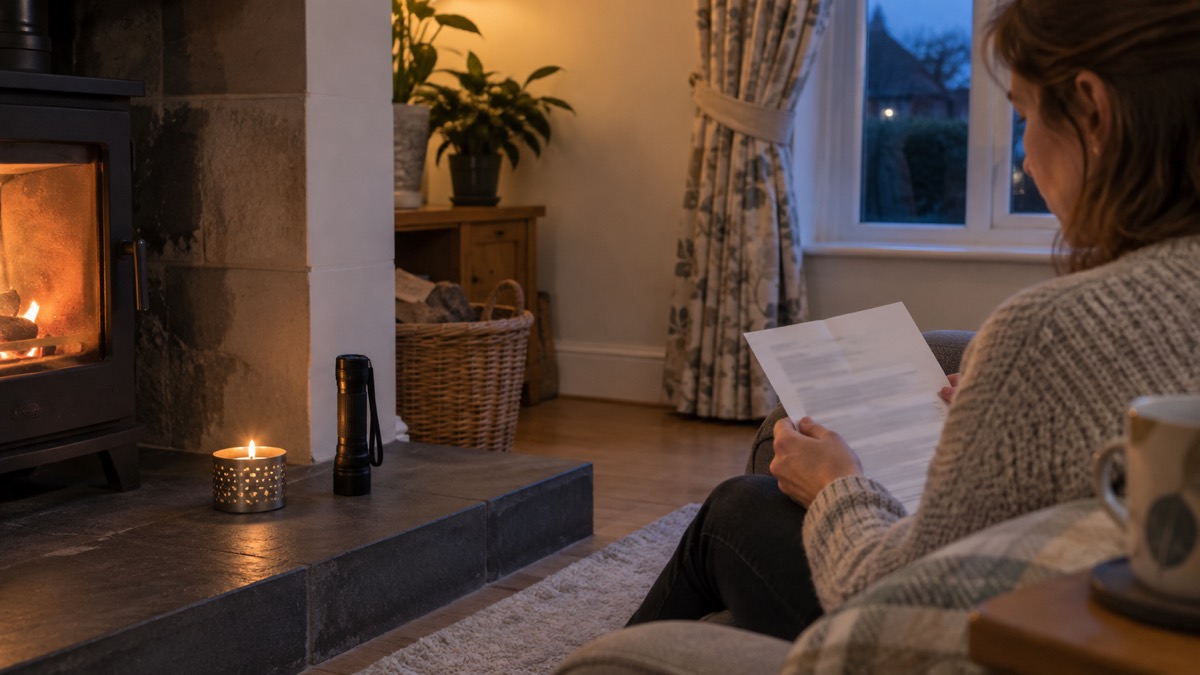
If you are going to keep candles for a power cut, treat them like a small open fire, because that is what they are. The rules below come from UK fire and rescue services and from the government's fire safety guidance, and they are not optional.
Where they must never go:
- Not in bedrooms, and not anywhere you might fall asleep. Don't use candles in bedrooms or anywhere where you might fall asleep4. The London Fire Brigade adds that if you do use candles, take extra care, and always put them out before leaving the room or going to bed5.
- Not near anything that can catch fire. Never burn a candle on or near anything that can catch fire, and never use a candle as a nightlight22.
- Not in a draught. Always burn candles in a well-ventilated room, out of drafts, vents or air currents, which helps prevent rapid or uneven burning, soot and dripping23.
- Not unattended, ever. Never leave a lit candle alone14, and never leave burning candles unattended: always extinguish before going to sleep and be sure the wick ember is no longer glowing22.
How to burn them if you must:
- Put candles in a holder and keep them away from things that may burn, and never leave them burning when you are not in the room24.
- Always make sure candles are in a suitable holder and away from anything flammable22.
- Always burn tea lights in or on a suitable, non-flammable holder on a heat resistant surface7.
- If you must use naked flames, take extra care and make certain that they are put out before you go to bed25.
Candles, children and fancy dress
Children and naked flames do not mix, and the fire services are direct about it: keep children away from any naked flames, including sparklers26. Halloween is the pinch point. The Northern Ireland Fire & Rescue Service advises avoiding a naked flame or candle in pumpkins and using a torch, glow stick or battery-operated candle instead26. Take extra care to keep candles out of reach of small children or pets15.
The same applies at Christmas and at birthdays. If a child is in fancy dress, use battery lights, not candles, and check the costume label. For more on this, see Torches, Candles and Children: Keeping Them Safe and Should You Use Battery Tea Lights in a Pumpkin?.
Check electrical lights and decorations for faults before winter
Winter brings out the electrical kit that sits in a box for eleven months, and that is exactly when faults show. Electrical Safety First warns that lights which are damaged, old, misused, or plugged into overloaded adaptors or extension leads can cause electric shock or fire6. Before you put anything up, check the plug, the cable and every bulb, and replace rather than repair anything that looks worn.
Sockets matter as much as the lights. The Northern Ireland Fire & Rescue Service says never overload sockets and always turn Christmas lights off before going to bed or if you are leaving the house, and reminds households to use one plug per socket7. If your electricity does go off, check that other electrical appliances and machinery are switched off at the wall25, so that nothing surges or restarts unexpectedly when the power returns.
There is a wider point about winter electrical load. Devon and Somerset Fire and Rescue Service attends around 60 fires each year which start from an electrical issue, such as a laptop or desktop PC, wiring or cables19. Charging phones, power banks and torches adds to that load, so charge during the day when you are awake and unplug when done. For more, see Charging and Storing Rechargeable Torches Safely and Should You Unplug Fairy Lights at Night?.
Keeping the kit ready through the winter
A checklist is only worth the state of the kit behind it. Do a five minute pass at the start of winter and again after any long power cut.
- Test every torch. Switch each one on, check the beam and the switch, and note which batteries it takes.
- Check the spares. Make sure you have spare batteries if the torch is battery operated9.
- Keep the power bank charged. A charged power bank, a torch and spare batteries at home can provide reassurance11.
- Write the numbers down. Keep important telephone numbers written down somewhere accessible11, because a phone with a flat battery cannot look them up.
- Tell everyone where the kit lives. Make sure everyone in your home knows where the torches and batteries are kept27.
- Watch for warnings. The Met Office issues weather warnings that flag power cuts in advance, and its advice is to gather torches and batteries, a mobile phone power pack and other essential items before the weather arrives28. Warnings are published for all four nations, and the arrangements for reporting a loss of power differ between England, Scotland, Wales and Northern Ireland, so check your network operator's number before winter rather than during an outage.
For the wider picture, see Emergency Lighting at Home: Torches, Lanterns and Candles and Lighting Your Home Safely When the Power Goes Off. If you would like someone to check your home fire safety, your local fire and rescue service offers free home fire safety visits.
Sources (28)
- Be informed about hazards: power cuts, UK Government, 2026
- What to do in a power cut, Met Office, 2026
- Fire safety when celebrating, UK Government, 2021
- Candles, Mersey Fire and Rescue Service, 2026
- Extreme weather winter guide, London Fire Brigade, 2025
- Fire risk spikes during festive season, Electrical Safety First, 2016
- Other safety, Northern Ireland Fire & Rescue Service, 2026
- Adverse weather events, Llangattock Community Council, 2023
- How to prepare for the loss of electricity, Wiltshire and Swindon Prepared, 2026
- Preventing falls, NHS North Cheshire and Mersey, 2024
- Be prepared for winter emergencies, NHS Norfolk and Suffolk ICB, 2026
- Annex F - NATIONAL_RISK_REGISTER_NRR.pdf, Cabinet Office (hosted by City of York Council democracy site)
- Stay safe in a thunderstorm, Met Office, 2026
- Power cuts, Scottish Fire and Rescue Service, 2025
- Safety in severe weather conditions, Devon and Somerset Fire and Rescue Service, 2026
- Parental letter re power shortages, NHS North West Children's Operational Delivery Network, 2022
- Candle safety, North Yorkshire Fire & Rescue Service, 2026
- Candles, Devon and Somerset Fire and Rescue Service, 2026
- Top ways to reduce your risk of having a fire at home, Devon and Somerset Fire and Rescue Service, 2026
- Home Safety - NFCC, National Fire Chiefs Council (NFCC)
- stay-safe-this-winter-english.pdf, Mid and West Wales Fire and Rescue Service
- Home fire safety, Northern Ireland Fire & Rescue Service, 2026
- Candle safety, Carmarthenshire County Council, 2026
- Cut the risk of fire in your home, Wiltshire and Swindon Prepared, 2026
- Strong winds and heavy rain warning: information and advice, nidirect, 2026
- Don't let fire turn your Halloween into a nightmare, Northern Ireland Fire & Rescue Service, 2026
- 12 tips to prepare for a power cut, Horsted Keynes Parish Council, 2026
- Accessible UK weather warnings, Met Office, 2026
 Spare Batteries for Lights
 Candle Safety Checklist
 Power Cut Lighting Checklist