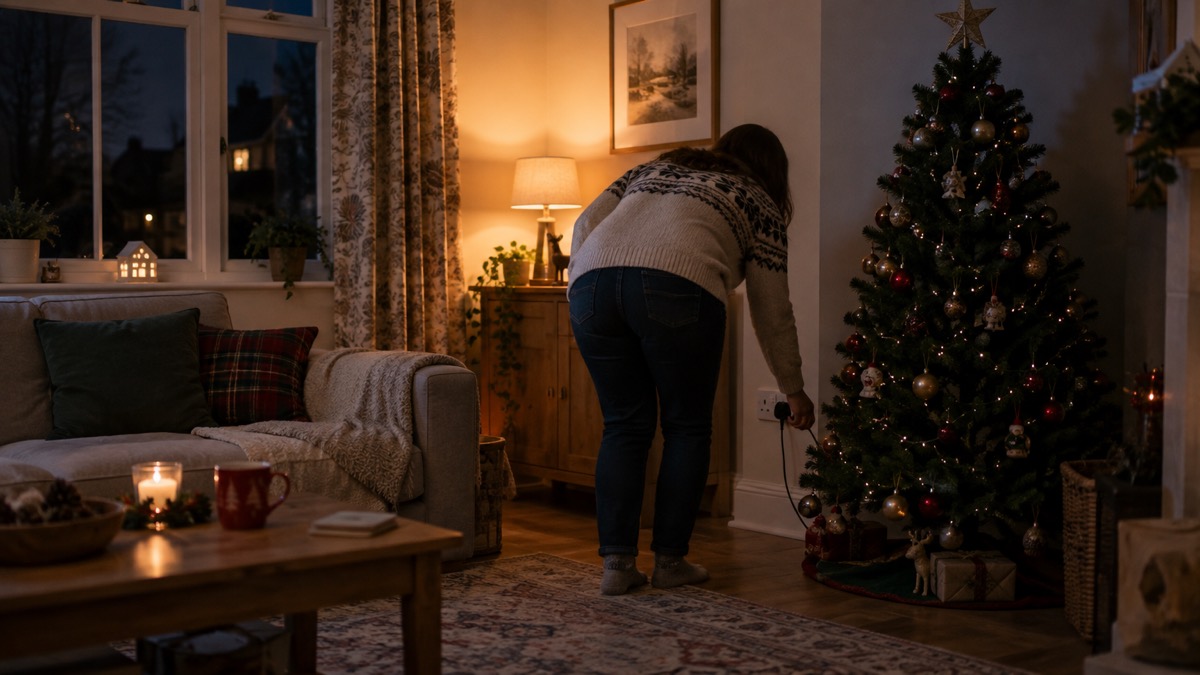
Yes, unplug them. Fire and rescue services across the UK give the same instruction in almost the same words: switch off and unplug fairy lights and other electrical decorations before you go to bed or leave the house1. North Yorkshire Fire and Rescue Service puts it as "switch off lights when you go out or head to bed"2, and Northern Ireland Fire & Rescue Service says to "always turn Christmas lights off before going to bed or if you are leaving the house"3.
The reason is simple. A fire that starts while you are asleep is the one you are least able to escape from, and decorative lights are electrical equipment that runs unattended for hours. The National Fire Chiefs Council says festive lights should always be switched off at night or while properties are empty4. That is the whole answer, and everything below explains how to do it well.
Unplug them before bed, and before you go out
The instruction is consistent across England, Wales, Scotland and Northern Ireland, which is unusual and worth noting. Warwickshire Fire and Rescue Service says to unplug fairy lights or other electrical Christmas decorations when you leave the house or go to bed1. North Yorkshire says to switch lights off when you go out or head to bed2. Northern Ireland Fire & Rescue Service says never to overload sockets and always to turn Christmas lights off before going to bed or leaving the house, with one plug per socket3. The National Fire Chiefs Council, which speaks for fire and rescue services across the UK, says festive lights should always be switched off at night or while properties are empty4.
The same bedtime routine applies to everything else electrical. Northern Ireland Fire & Rescue Service advises a bedtime routine that unplugs all electrical items not required to be left on overnight8. South Wales Fire and Rescue Service's night-time checklist says to turn off and unplug electrical appliances unless they are designed to be left on, like your freezer9. London Fire Brigade's easy-read booklet gives the same exception: switch off and unplug all appliances except the ones that should stay on, like the fridge and freezer10.
So the practical version for a household is:
- Fairy lights and other decorative lights: off at the socket and unplugged1
- Chargers: not left running overnight8
- Everything else electrical: off and unplugged unless it is meant to stay on, such as the fridge and freezer10
- Sockets: one plug per socket, never overloaded3
If you want a single trigger, tie it to the last thing you do before going upstairs. The fire service calls this a bedtime routine, and it works because it is the same every night8.
Why switching off matters more in winter
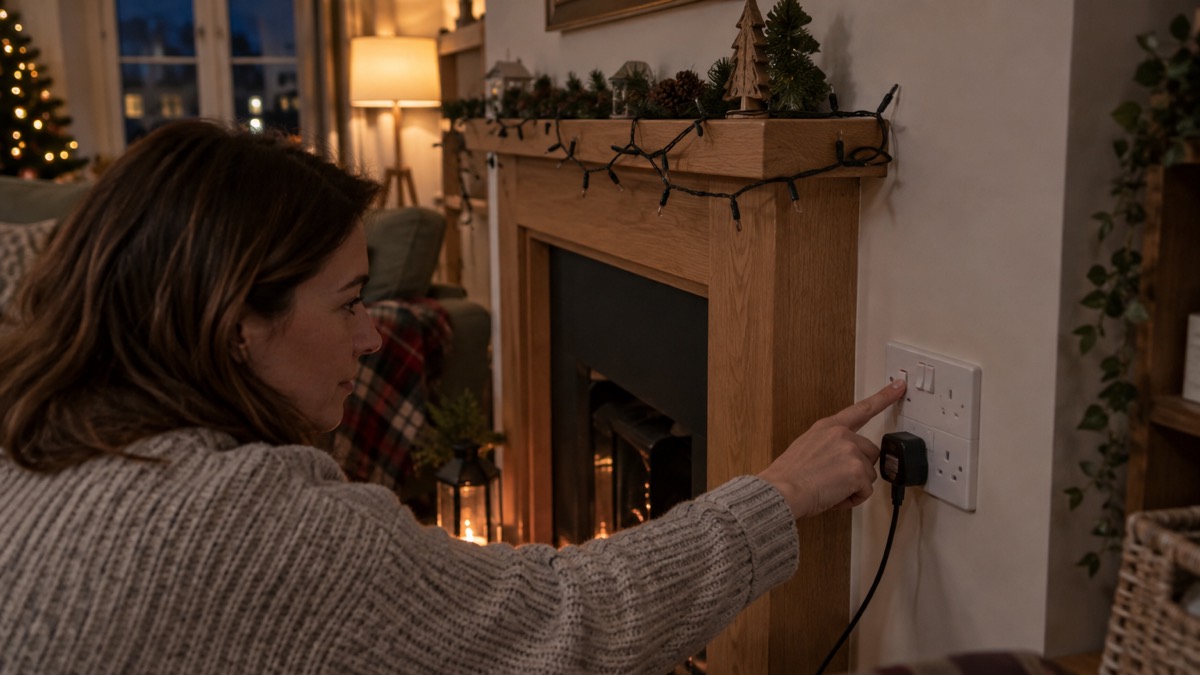
Winter is when decorative lights are up, when the nights are longest, and when the consequences of a fire are worst. The Wiltshire and Swindon preparedness pages note that a loss of electricity affects us differently depending on the time of day and the time of year: in winter the nights are darker, so lighting matters more11. That cuts both ways. You rely on artificial light more, and you leave more of it running.
London Fire Brigade's winter guide is blunt about festive lights: switch them off when you are not at home or overnight12. The National Fire Chiefs Council issued a reminder on home fire safety ahead of the festive season with the same message4. And the message is not only about December. Northern Ireland Fire & Rescue Service issued a safety plea after two house fire fatalities in one day, urging everyone to check their smoke alarms, never remove the batteries, and replace a faulty alarm immediately13. The service has also referenced recent house fire tragedies in December as the reason fire safety should remain a priority throughout the year14.
There is a second winter risk that often sits alongside fairy lights: candles. Fire services repeatedly warn that candles must be put out when you leave a room and made completely sure they are out before bed15. If a power cut has you reaching for candles instead of fairy lights, the same bedtime discipline applies, and the candle fire safety at home page covers it in full.
Check old lights before you plug them in
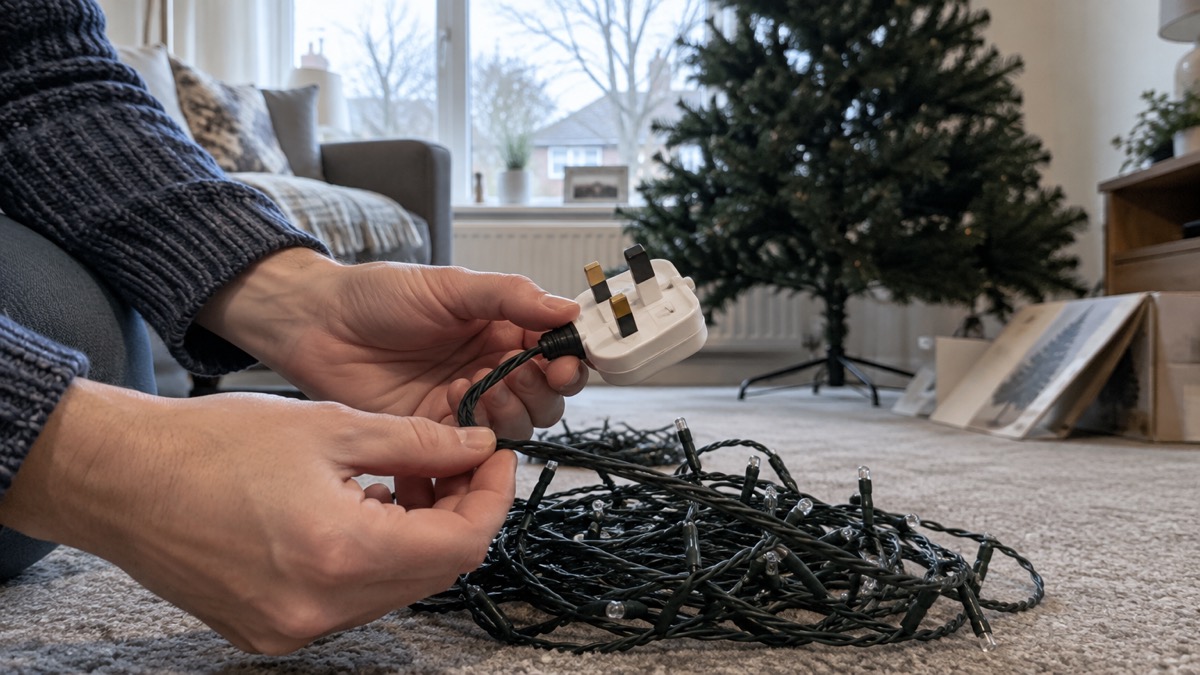
Before a set goes up, check it. The National Fire Chiefs Council advises checking that fairy lights are in good working order and replacing any bulbs that blow16. Dorset and Wiltshire Fire and Rescue Service says not to use them if they show signs of damage, such as frayed wiring5. Northern Ireland Fire & Rescue Service adds two more checks: that the lights comply with British Standards, and that you do not overload plug sockets, sticking to one plug per socket3.
A short check takes a minute:
- Look at the cable: any fraying, exposed wire or crushed insulation means the set should not be used5
- Check the bulbs: replace any that have blown5
- Check the plug and socket: one plug per socket, no adapters stacked up3
- Check the marking: the set should comply with British Standards3
If a set fails any of these, it does not go up. That is cheaper and safer than finding out at 2am.
Timers, batteries and outdoor sets
Can you leave fairy lights on a timer?
A timer is a useful backstop, but it is not a substitute for the bedtime check. The fire services' instruction is that the lights are off before you go to bed1. Set the timer to switch off at bedtime, not in the small hours, and still check the socket and the set. A timer does nothing about an overloaded socket or a damaged cable.
What about battery fairy lights?
Battery sets avoid the mains, but the batteries need the same care. Mid and West Wales Fire and Rescue Service advises unplugging devices once fully charged and avoiding leaving them plugged in overnight6. London Fire Brigade says not to leave items continuously on charge after the charge cycle is complete, for example not leaving your phone plugged in overnight17. Dorset and Wiltshire Fire and Rescue Service goes further: it is never a good idea to charge an electrical product overnight, especially one containing lithium-ion batteries, because fires at night when people are sleeping are particularly dangerous as your reaction time is massively reduced18. Northern Ireland Fire & Rescue Service's student safety advice says to switch off and unplug electrics when not in use and before bed19. For rechargeable sets, that means charging during the day and switching off at night.
Can outdoor fairy lights stay on overnight?
No. The National Fire Chiefs Council's wording covers lights on a property, not just indoor ones: festive lights should always be switched off at night or while properties are empty4. North Yorkshire Fire and Rescue Service says not to leave Christmas lights on when you go out or go to bed20. An outdoor set still runs from a socket or a battery, so the same routine applies.
Smoke alarms: the backup if a fire starts while you sleep
Switching off is the prevention. A working smoke alarm is the backup, and it is the one piece of kit that gives you time to get out. Northern Ireland Fire & Rescue Service advises installing a smoke alarm on all levels of your property, because a working smoke alarm gives you the vital time needed to escape8. The Northern Ireland Executive's fire safety advice says to make sure you have at least one working smoke alarm on every floor, and to think about extra alarms in the most used rooms such as living rooms and bedrooms7. The National Fire Chiefs Council says never to disconnect or take the batteries out of smoke alarms unless you intend to replace them immediately21.
| Where you live | What the alarm rules require |
|---|---|
| Scotland | Interlinked smoke and heat alarms in all homes since February 202222; at least two smoke alarms in a flat or bungalow23; one in the room most used in the day23 |
| England, Wales, Northern Ireland | At least one working smoke alarm on every floor, with extra alarms considered in the most used rooms7 |
In Scotland the standard is more specific. Every Scottish home should have interlinked alarms, a requirement that has applied since February 202222. A flat or bungalow needs at least two smoke alarms23, and one should be in the room most frequently used for general daytime living23. If you have an open plan area, one alarm can cover the whole room provided it can be located no more than 7.5 metres from any point in the room24. If you have a carbon-fuelled appliance such as a boiler, fire, heater or flue in any room, you must also have a carbon monoxide detector in that room, though it does not need to be linked to the fire alarms24. Specialist alarms, for example if you are deaf or have a Telecare system, must be fitted in addition to the smoke, heat and carbon monoxide alarms, and existing Telecare alarms should not be removed24.
For extra protection while you sleep, Fire Scotland advises fitting smoke alarms in the bedrooms too24. The Scottish guidance adds that this is particularly important where there are extra fire risks such as televisions, computers or other electrical appliances in the bedroom23. If you have open fires or a log burner, Dorset and Wiltshire Fire and Rescue Service recommends working smoke alarms and interlinked alarms if you have loft space25.
A bedtime routine that covers the lights
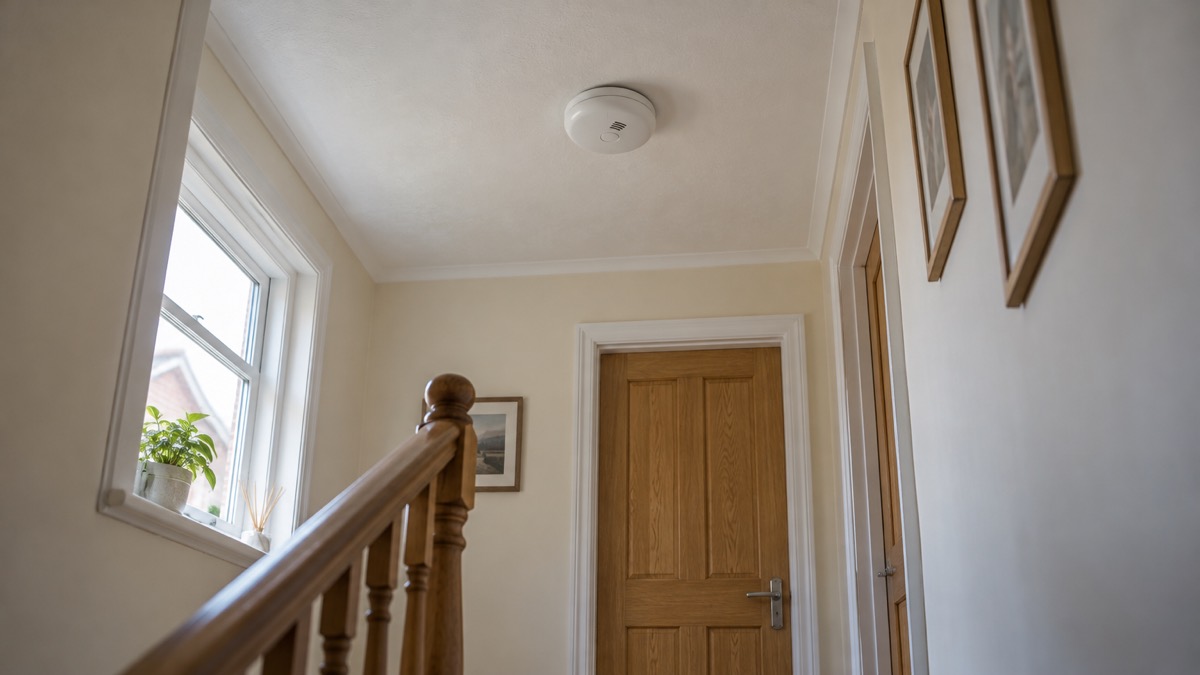
The fire service advice adds up to a short routine, and it is worth writing down until it becomes habit. Northern Ireland Fire & Rescue Service's bedtime advice includes switching off and unplugging all electrical appliances not designed to stay on, avoiding leaving chargers on overnight, extinguishing candles, switching off portable heaters, putting a fire guard around open fires, closing all doors, keeping keys accessible, keeping escape routes clear and keeping a phone in the bedroom8. Dorset and Wiltshire Fire and Rescue Service's version adds closing internal doors at night to stop fire spreading and keep stairs free from smoke, checking the cooker is off, and checking door keys are easily accessible27.
For the lights specifically, the routine is three steps:
- Switch off at the socket and unplug the fairy lights1.
- Check the rest of the electrical items and unplug anything not meant to stay on8.
- Check the smoke alarm is working, and never remove the battery13.
If you are without power and using candles, the Northern Ireland Executive's advice is to take extra care with naked flames and make certain they are put out before you go to bed28. The same warning appears in its severe weather guidance29. For a wider look at lighting a home safely when the power fails, see lighting your home safely when the power goes off, and for the full set of checks before winter, the lighting checks before winter checklist.
Sources (29)
- Christmas safety tips, Warwickshire County Council, 2026-10-26
- Christmas safety advice, North Yorkshire Fire and Rescue Service, 2025-12-15
- Other safety, Northern Ireland Fire & Rescue Service, 2026-10-22
- Councils and fire chiefs issue reminder on home fire safety ahead of festive season, National Fire Chiefs Council, 2024-12-21
- Staying safe this season, Dorset and Wiltshire Fire and Rescue Service, 2025-12-01
- Lithium battery fire safety, Mid and West Wales Fire and Rescue Service, 2026-10-26
- Avoiding accidental fires in the home, Northern Ireland Executive, 2025-10-16
- Home fire safety, Northern Ireland Fire & Rescue Service, 2026-10-14
- Checklists and escape plans, South Wales Fire and Rescue Service, 2026-07-29
- Digital easy read fire safety booklet, London Fire Brigade, 2026
- How to prepare for the loss of electricity, Wiltshire and Swindon Prepared, 2026-10-25
- Extreme weather winter guide, London Fire Brigade, 2025-01
- NIFRS issues safety plea following two house fire fatalities in one day, Northern Ireland Fire & Rescue Service, 2025-12-12
- NIFRS New Year's resolutions, Northern Ireland Fire & Rescue Service, 2025-12
- Stay safe this Halloween, Dorset and Wiltshire Fire and Rescue Service, 2026-10-25
- Fire Kills Lets Prevent It: Fire Safety When Celebrating, Home Office
- Batteries and chargers, London Fire Brigade, 2026-10-25
- Battery fires, Dorset and Wiltshire Fire and Rescue Service, 2026
- Charge safely for your own safety, Northern Ireland Fire & Rescue Service, 2026-09-21
- Stay safe this Christmas, North Yorkshire Fire and Rescue Service, 2024-12-03
- Smoke and carbon monoxide alarms, North Yorkshire Fire and Rescue Service, 2026-02-20
- Keep-Safe-Keep-Well-Winter-Safety-Campaign-2024-2025-FINAL-DRAFT.pdf, Comhairle nan Eilean Siar
- Your guide to fire safety, Scottish Fire and Rescue Service, 2023-11-03
- Fire and smoke alarms in Scottish homes, Scottish Government, 2024-08-14
- Open fires, Dorset and Wiltshire Fire and Rescue Service, 2026
- Escape plan for houses and converted flats, London Fire Brigade, 2026-10-25
- Advice for parents and guardians, Dorset and Wiltshire Fire and Rescue Service, 2026
- Strong winds and heavy rain warning information and advice, Northern Ireland Executive, 2026-01-27
- Strong winds weather warning information and advice, Northern Ireland Executive, 2026-10-24
 Spare Batteries for Lights
 Candle Safety Checklist
 Lighting Checks Before Winter
 Can Jar Candles Shatter
 Battery Tea Lights in a Pumpkin
 Keeping Pets Away from Candles
 Finding Torches in the Dark
 Red Light Mode on a Head Torch
 SOS and Strobe Modes
 IPX Ratings for Torches
 Torch Battery Runtime
 Camping Lantern Run Time
 Using a Torch While Charging
 Looking Into a Bright Torch
 Storing Spare Coin Cells