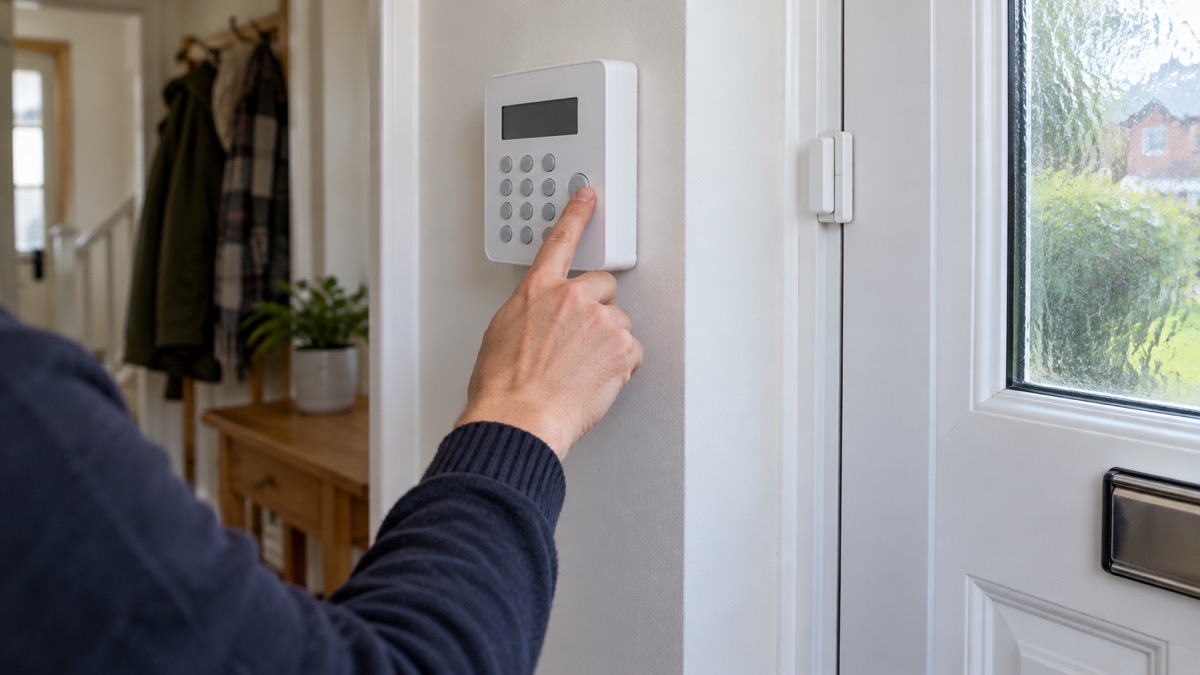
Burglar Alarms: Types and How to Choose One
Start by deciding who needs to know when the alarm activates. Police guidance divides intruder alarms into four types: monitored, speech dialler, audible only and smart home security.1 An audible-only, or bells-only, alarm sounds a siren to deter the burglar and alert people nearby. A monitored alarm goes to an Alarm Receiving Centre, which checks the signal, alerts a keyholder and, if the installation is compliant, contacts police.2
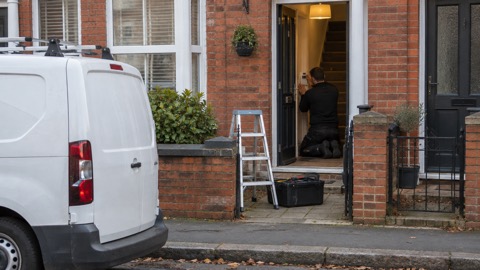
For the installation, Police Scotland advises that alarms meet British Standards PD 6662.3 Police Service of Northern Ireland guidance recommends a contractor affiliated with a recognised alarm inspectorate such as NSI or SSAIB.1 Also make sure the alarm is installed properly and works, and set it before going away.4
When your alarm goes off
What happens next depends on the signalling arrangement. With an unmonitored alarm, Police Scotland says nobody is automatically told: you or a neighbour will have to establish what happened and call the police. With a monitored alarm, the company tells you that it has triggered before calling police.3
Secured by Design gives more detail on the monitored route. The Alarm Receiving Centre immediately checks the signal to verify that it is a genuine alarm, alerts a keyholder and, if the system is compliant, alerts police.2 Our guides to how police respond to burglaries and intruder alarms and monitored alarms and receiving centres explain those routes separately.
Keep routine checks distinct from an actual activation. PSNI tells householders to ensure their burglar alarm is installed properly and works.4 For smoke alarms, Greater Manchester Fire and Rescue Service advises testing at least monthly by pressing the test button until the alarm sounds; that is a fire-alarm instruction, not a test schedule for every intruder alarm.6
Before a holiday, Avon and Somerset Police gives a simple instruction: “If you have a burglar alarm, ensure it is set before you leave.”5 The page on setting your burglar alarm before going away deals with that routine.
Four types of alarm and who is told
The four categories in PSNI guidance are a useful starting point because they focus attention on the response, not just the equipment in the box.1
| Type | What the official guidance establishes | Who is told |
|---|---|---|
| Monitored | Signals are handled by an alarm company and Alarm Receiving Centre | You, a keyholder and, if compliant, police2 |
| Audible only | Sounds a loud siren or bell intended to scare the burglar | Neighbours and passers-by; no automatic notification2 |
| Speech dialler | Listed by PSNI as a separate intruder-alarm type | The PSNI overview does not specify its call sequence1 |
| Smart Home Security | Listed by PSNI as a separate intruder-alarm type | The PSNI overview does not specify its notification arrangements1 |
An audible system therefore should not be mistaken for a monitored one. Its siren has a deterrent and local-warning role, while monitoring adds a defined checking and escalation process.2
Smart systems need the same basic question answered: who receives an activation, and what happens afterwards? Our pages on Home Assistant for home security and Hive HomeShield cover those particular approaches. Product-specific pages also cover the Abode Starter Kit, Ring Alarm, SimpliSafe Starter, Verisure Alarm System and Yale Sync Smart Home Alarm.
Monitored or self-monitored
The practical distinction is whether a defined organisation receives and checks the activation. Police Scotland describes an unmonitored alarm as one where no one is automatically told. Devon and Somerset Fire and Rescue Service suggests considering a monitored system that notifies a call centre when activated.3
| Household consideration | Monitored arrangement | Unmonitored arrangement |
|---|---|---|
| Initial notification | Alarm company or receiving centre | No automatic notification3 |
| Checking | Receiving centre verifies the signal | You or a neighbour must establish what happened2 |
| Next contact | Keyholder, then police if compliant | Police must be called by you or a neighbour2 |
| Additional support | Some monitored systems are linked to care assistance | No such link is implied by an audible alarm8 |
Monitoring can also form part of wider support at home. Devon and Somerset Fire and Rescue Service identifies monitored alarm systems linked to care assistance.8 Devon County Council lists providers that can automatically raise an alarm for situations including smoke and carbon monoxide detection, extreme temperatures, flooding, falls and epilepsy; some also support panic alarms and medication dispensers. These are additional provider functions, not features every burglar alarm includes.9
Use monitored or self-monitored alarm to compare the arrangements for your household. The important questions are who receives the alert, who can act as keyholder and whether care assistance is needed, rather than assuming that more technology automatically means a response.
Wired or wireless
The official material does not support a universal winner between wired and wireless burglar alarms. It does support checking the installation, signalling and maintenance arrangements, and using an appropriately approved contractor.1
For interlinked fire alarms, Scottish guidance is more specific. Alarms can be interlinked through wires or wirelessly by radio communication. Both sealed-battery and mains-wired versions can be interlinked by radio frequency and do not need WiFi. Mains-wired alarms must be fitted by a qualified electrician.10
- Hardwired interlinking: alarms communicate through wires.11
- Wireless interlinking: alarms communicate by radio, not necessarily through household WiFi.10
- Mains-wired installation: use a qualified electrician.10
- Buying fire alarms: both types are available online and in shops, and a qualified electrician can fit the mains-wired type.10
Do not transfer those fire-alarm statements directly to a smart intruder alarm. For security systems, examine the particular connection and signalling arrangements instead. The separate guides to alarms after the digital switchover and alarms on weak mobile signal or slow broadband address those questions.
Choosing an alarm for your household
Begin with response and compliance. Decide whether an audible warning is sufficient or whether you need a receiving centre and keyholder arrangement. Check PD 6662 where Police Scotland's advice applies, and look for an installer affiliated with NSI or SSAIB.1 Secured by Design says inspectorate approval helps ensure a reliable, well-maintained system meeting relevant British and European standards.2
Be cautious about treating a DIY kit as fit-and-forget. Secured by Design warns that problems with installation, maintenance and reliability may not become clear until a burglary has occurred.2
Household circumstances also matter. If animals live in the property, read which alarm sensors are safe to use with pets before settling the detector layout.
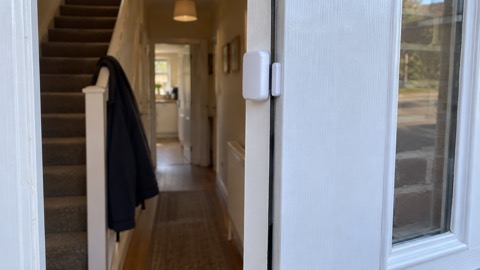
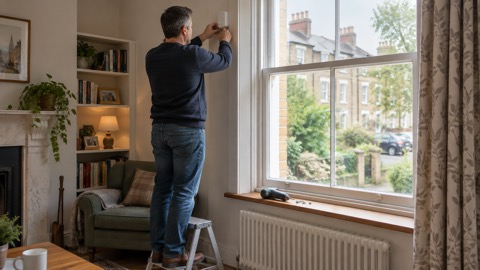
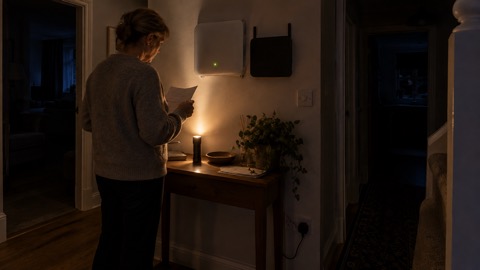
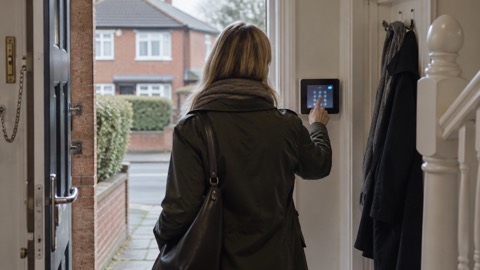
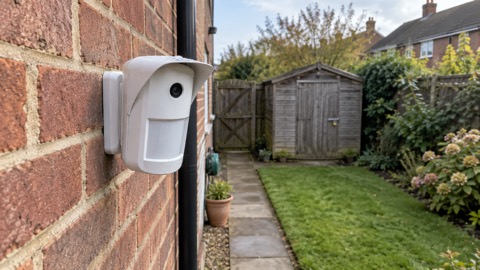
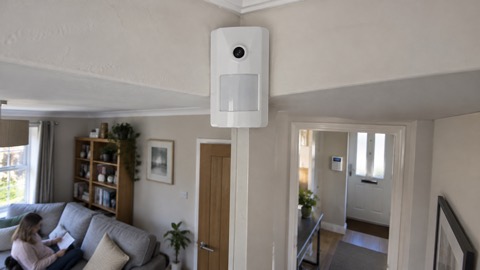
For component-level information, our Ajax pages cover the CombiProtect, DoorProtect Plus, GlassProtect, MotionProtect, MotionCam and MotionCam Outdoor. Control and connection pages cover the Hub 2 Plus, Hub 4G Jeweller, Superior Hub Hybrid, ReX Jeweller, KeyPad Outdoor, KeyPad Plus and KeyPad TouchScreen. These pages describe the individual products; they do not make one system a universal choice.
Where sensors and sirens go
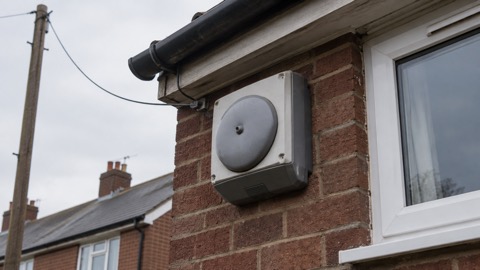
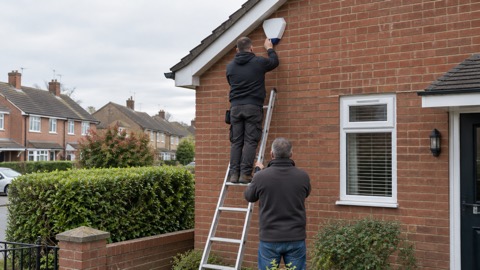
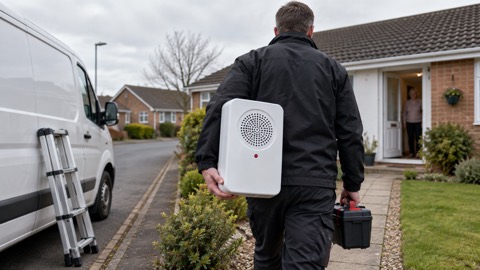
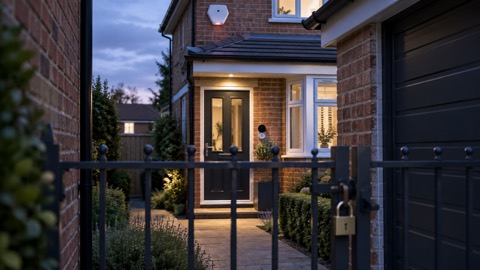
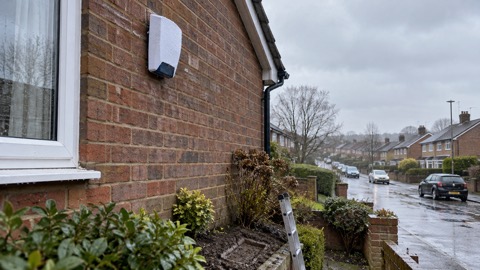
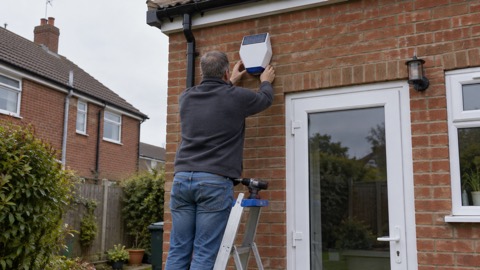
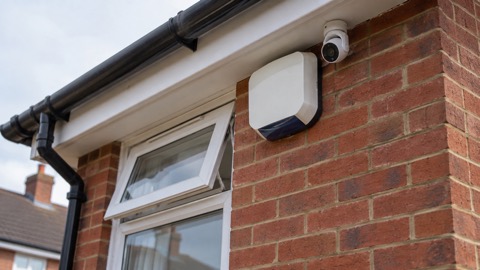
An audible alarm's siren or bell is designed to scare a burglar and alert neighbours and passers-by.2 That purpose explains why the external sounder and its position deserve specific attention. See whether a burglar alarm bell box should be visible and where to fit an outdoor alarm siren for those dedicated questions.
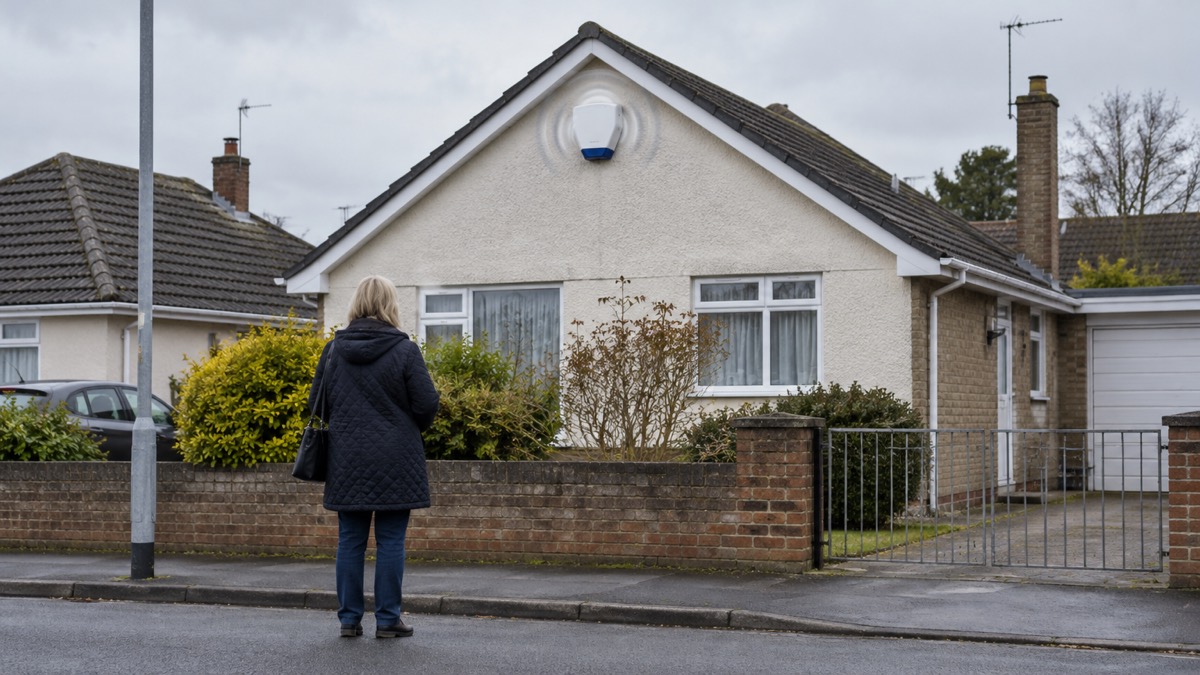
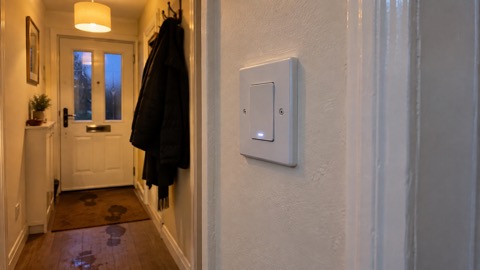
Detector choice should follow the household and the individual product's purpose. Our product pages cover the Ajax HomeSiren, Ajax StreetSiren and Bosch Smart Home Outdoor Siren. Pages on Ajax LightSwitch, Ajax Relay and Ajax Socket cover other system components.
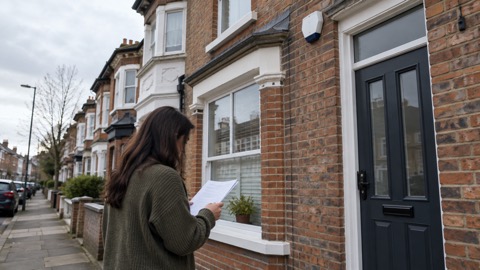
Do not treat a visible bell box as evidence of monitoring. The visible equipment and the response arrangement are separate questions: an audible system alerts people nearby, while a monitored system also follows the receiving-centre process.2
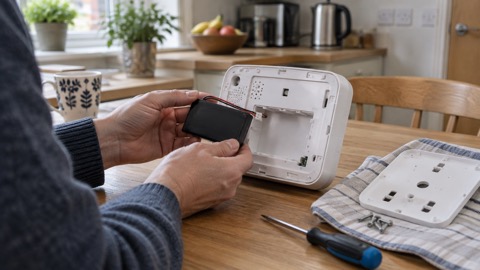
Power cuts and backup batteries
Official fire-alarm guidance illustrates why backup must be checked rather than assumed. Lincolnshire County Council says mains-powered alarms use the home power supply and have a backup battery in case of a power cut. They must be installed by a qualified electrician and require testing like battery alarms.12 Scotland's Tolerable Standard guidance likewise allows mains-wired units to have a backup supply and says replaceable batteries in that additional supply do not take alarms below the standard.11
These facts concern fire alarms; they do not establish a backup duration for an intruder alarm. Our page on keeping your home protected in a power cut deals specifically with security arrangements.
For smoke alarms, Dorset and Wiltshire Fire and Rescue Service gives a firm low-battery instruction:
"Replace your alarm or its battery immediately, and certainly within seven days, as your alarm may not have enough power to warn you of a real fire after this time."
If a hardwired smoke alarm develops a fault, Mid and West Wales Fire and Rescue Service says to contact an electrician, or your landlord in a rented property.14 Do not remove a fire alarm's batteries to silence a nuisance activation.
When the broadband or signal fails
A radio connection and an internet connection are not interchangeable terms. Scottish Fire and Rescue Service says its sealed-battery and mains-wired interlinked fire alarms use radio frequency and do not need WiFi.15 That statement applies to those interlinked fire alarms; it is not a guarantee that every smart burglar alarm will retain all its functions without broadband.
Check three separate parts of a security setup:
- Detection and sounding: whether the alarm activates and sounds locally.
- Communication: how notifications or monitoring signals leave the property.
- Support and maintenance: whether installation or reliability problems could remain hidden until a burglary, the risk Secured by Design identifies with DIY kits.2
The guides to weak mobile signal and slow broadband and the digital telephone-line switchover cover the communication questions. For system-specific approaches, see Home Assistant security and Hive HomeShield.
False alarms and police response
A monitored activation is not simply passed straight through without assessment. The Alarm Receiving Centre checks the signal to verify a genuine alarm, alerts a keyholder and contacts police if the system is compliant.2 Read how police respond to intruder alarms alongside how many false alarms affect police response.
Reliability matters before police response becomes an issue. Secured by Design warns that DIY installation, maintenance and reliability problems may remain undiscovered until a burglary.2 Inspectorate-approved installation is intended to provide a reliable, well-maintained system meeting relevant standards.2
Fire-alarm guidance also gives useful instructions that must not be confused with silencing an intruder alarm:
- If a smoke alarm in a flat sounds by mistake, Greater Manchester Fire and Rescue Service says not to remove the batteries; wait for it to stop.16
- If cooking repeatedly activates a smoke alarm, Mid and West Wales Fire and Rescue Service says to move the alarm or change it for one with a silencer button, not remove its batteries.17
These measures preserve fire protection. They are not instructions to disable a security sensor or ignore repeated intruder-alarm activations.
Panic buttons and personal alarms
An emergency button and a personal attack alarm should be understood by who receives the alert. Devon County Council says some monitoring providers offer emergency alarms alongside functions such as fall detectors, flood detectors and extreme-temperature sensors. It notes referral from the Devon Domestic Abuse Coordination Team for these alarms in that service context.9 Our guide to emergency buttons on home alarms covers their operation and notification arrangements.
For personal safety outdoors, PSNI advises:
"Scream and set off your personal attack alarm. Personal alarms are a good deterrent."
That advice concerns a personal attack alarm carried by a person, not a promise that a household intruder alarm will summon assistance. Where someone needs wider support, monitored systems linked to care assistance may be relevant.8 The household guide to extra help for older, disabled and medically dependent people provides the broader preparedness context.
Approved installers and who to contact
Use the approval and standards checks together rather than relying on a company's description of itself.
- Check inspectorate affiliation. PSNI recommends a contractor affiliated with a recognised alarm inspectorate body such as NSI or SSAIB.1
- Check the system standard. Police Scotland identifies British Standards PD 6662 for alarms and CCTV.3
- Check installation and maintenance. Secured by Design says inspectorate approval helps ensure a reliable, well-maintained system meeting relevant British and European standards.2
- Use the right electrical competence. Scottish fire-alarm guidance requires mains-wired alarms to be fitted by a qualified electrician.10
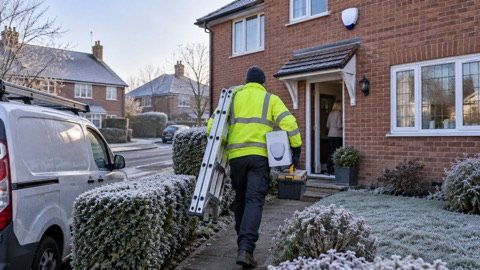
Our step-by-step page explains how to check an alarm installer is approved. For general home security, PSNI advises ensuring the burglar alarm is properly installed and works, and considering one if you do not have it.4
For smoke-alarm selection or positioning in Oxfordshire, the county council gives a dedicated contact route: call 08000 325999 or email fire-cfsteam@oxfordshire.gov.uk.19 That service concerns fire alarms, not approval of burglar-alarm companies. For an intruder alarm, return to the NSI or SSAIB affiliation and PD 6662 checks above.
Sources (19)
- Protect Yourself Booklet, Police Service of Northern Ireland, 2024
- Alarms Advice for Domestic Properties, Secured by Design, 2023
- Break-in and Housebreaking Advice, Police Scotland, 2026-11-02
- House Security, Police Service of Northern Ireland, 2026-11-02
- Pre-Holiday Home Protection Routine, Avon and Somerset Police, 2026-11-02
- Celebrating Safely: Alarm Testing, Greater Manchester Fire and Rescue Service, 2026-10-29
- Fire Safety for Carers, Devon and Somerset Fire and Rescue Service, 2026
- Smoke Alarms for Vulnerable People, Devon and Somerset Fire and Rescue Service, 2026
- Support at Home: Home Safety, Devon County Council, 2025-02-21
- Fire and Smoke Alarms: Where and What to Buy, Scottish Government, 2024-08-14
- Tolerable Standard: Fire and Carbon Monoxide Detection, Scottish Government, 2023-06-20
- Fire Alarms and Carbon Monoxide Detectors, Lincolnshire County Council, 2026-10-29
- Smoke Alarms, Dorset and Wiltshire Fire and Rescue Service, 2026-02-17
- Smoke Alarm Maintenance and Problems, Mid and West Wales Fire and Rescue Service, 2026-10-29
- Smoke and Heat Alarms at Home, Scottish Fire and Rescue Service, 2025-04-14
- Fire Safety Advice in Your Flat, Greater Manchester Fire and Rescue Service, 2026-10-29
- Older Person Safety, Mid and West Wales Fire and Rescue Service, 2026-10-29
- Protect Yourself Outdoors, Police Service of Northern Ireland, 2026-11-02
- Smoke Alarm Guidance, Oxfordshire County Council, 2026
 Home Assistant for Security
 Monitored Alarms and Response
 Panic Buttons on Home Alarms
 Police Response to Burglaries
 Home Protection in a Power Cut
 Alarms on a Weak Mobile Signal
 Alarm Before Going Away
 False Alarms and Police Response
 Checking an Alarm Installer
 Should a Burglar Alarm Bell Box Be Visible?
 Alarms After Digital Switchover
 Outdoor Siren Fitting Height
 Alarm Sensors and Pets
 Monitored vs Self-Monitored
 Abode Security Kit
 Ajax CombiProtect
 Ajax DoorProtect Plus
 Ajax GlassProtect
 Ajax HomeSiren
 Ajax Hub 2 Plus
 Ajax Hub 2G Jeweller
 Ajax Hub 4G Jeweller
 Ajax KeyPad Outdoor
 Ajax KeyPad Plus
 Ajax KeyPad TouchScreen
 Ajax LightSwitch
 Ajax MotionCam Outdoor
 Ajax MotionCam
 Ajax MotionProtect
 Ajax Relay
 Ajax ReX Jeweller
 Ajax Socket
 Ajax StreetSiren
 Ajax Superior Hub Hybrid
 Bosch Smart Home Outdoor Siren
 Hive HomeShield End of Support
 Ring Alarm 2nd Gen
 SimpliSafe Starter Kit
 Verisure Alarm System
 Yale Sync Smart Home Alarm