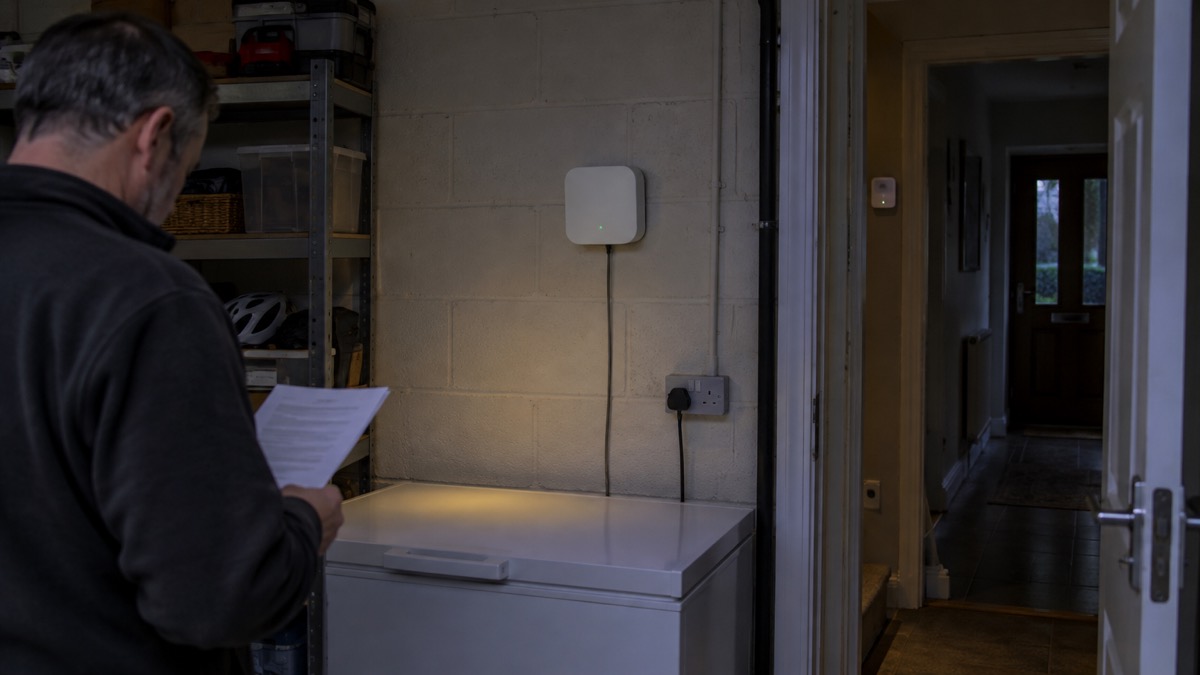
If your Ajax alarm hub cannot hear a sensor at the far end of the house, a ReX Jeweller is the piece of kit that carries the signal the rest of the way. It is a wireless radio signal range extender: it boosts the range of all Ajax devices and manages their communication with the hub via Jeweller, the radio protocol Ajax uses to send alarms and events1. The maker gives a radio communication range of up to 5,900 ft between the extender and a hub in open space, and up to 249 devices can connect to it1.
For a household preparing for emergencies, the useful part is what happens when the mains fails. The ReX Jeweller runs on mains power and switches automatically to its built-in backup battery if the external supply fails, giving up to 24 hours of backup battery life when Ethernet is disabled1. That keeps the far end of your alarm network alive through a power cut, which is exactly when a working alarm matters most.
This page sets out what the ReX Jeweller does, how far it reaches, how to keep its battery ready, where to fit it, and what its certifications mean for a UK buyer. It is one part of a wider picture: for the alarm system as a whole, see Burglar Alarms: Types and How to Choose One, and for keeping protection going when the power goes, see Keeping Your Home Protected in a Power Cut.
What the ReX Jeweller does for an Ajax system
An Ajax system is a network of wireless sensors talking to a hub over the Jeweller radio protocol. Jeweller uses encryption and authentication to protect against sabotage, and it regularly pings the system devices to confirm they are still there3. The protocol is used to transmit alarms and events, and it uses polling to show real-time device status and send alarms, events and readings into the Ajax apps4. When a sensor is too far from the hub, or separated by thick walls, floors or metal, the signal weakens and the hub may lose contact.
The ReX Jeweller sits between them. The maker describes it as a range extender that boosts the range of all Ajax devices and manages their communication with the hub via Jeweller6. It is not a sensor and it does not detect anything itself: it is a relay, and its job is to keep the devices at the edge of your property in touch with the hub.
That matters most in the kinds of building where signal struggles. The maker says up to five range extenders can operate within one Ajax system to expand the network twice as big, covering underground parking, basements and metal hangars4. For a UK household, the same logic applies to a cellar, a detached garage, a garden office or an outbuilding at the end of a long garden. If you are weighing up whether your home needs an alarm at all, or what type suits it, the section on Home Security: A Household Guide sets out the wider choices.
The extender also carries the system's supervision. The datasheet gives a communication loss detection time of 36 s, though the maker notes this depends on the Jeweller or Jeweller/Fibra settings1. In plain terms, if the link between a device and the extender drops, the system can flag it rather than staying silent.
Radio range: up to 5,900 ft, and what that means indoors
The headline figure is up to 5,900 ft between the range extender and a hub in an open space1. Treat that as a best case. Open space means no walls, doors or floors in the way, and almost no UK home offers that. The maker's own manual for the Jeweller protocol describes a communication range of up to 6,550 ft without obstacles such as walls, doors or inter-floor constructions3, and elsewhere up to 2,000 m without obstacles7. Those documents disagree on the exact open-space figure, so plan on the principle rather than the number: solid walls, floors and metal cut range substantially.
The extender's own radio figures give a sense of how it works:
| Specification | Maker's figure |
|---|---|
| Radio communication range to hub | up to 5,900 ft in open space1 |
| Maximum effective radiated power | up to 25 mW1 |
| Radio signal modulation | GFSK1 |
| Alarm delivery time to the hub | 0.3 s1 |
| Frequency bands | 866.0 to 866.5 MHz, 868.0 to 868.6 MHz, 868.7 to 869.2 MHz, 905.0 to 926.5 MHz, 915.85 to 926.5 MHz, 921.0 to 922.0 MHz, depending on sales region1 |
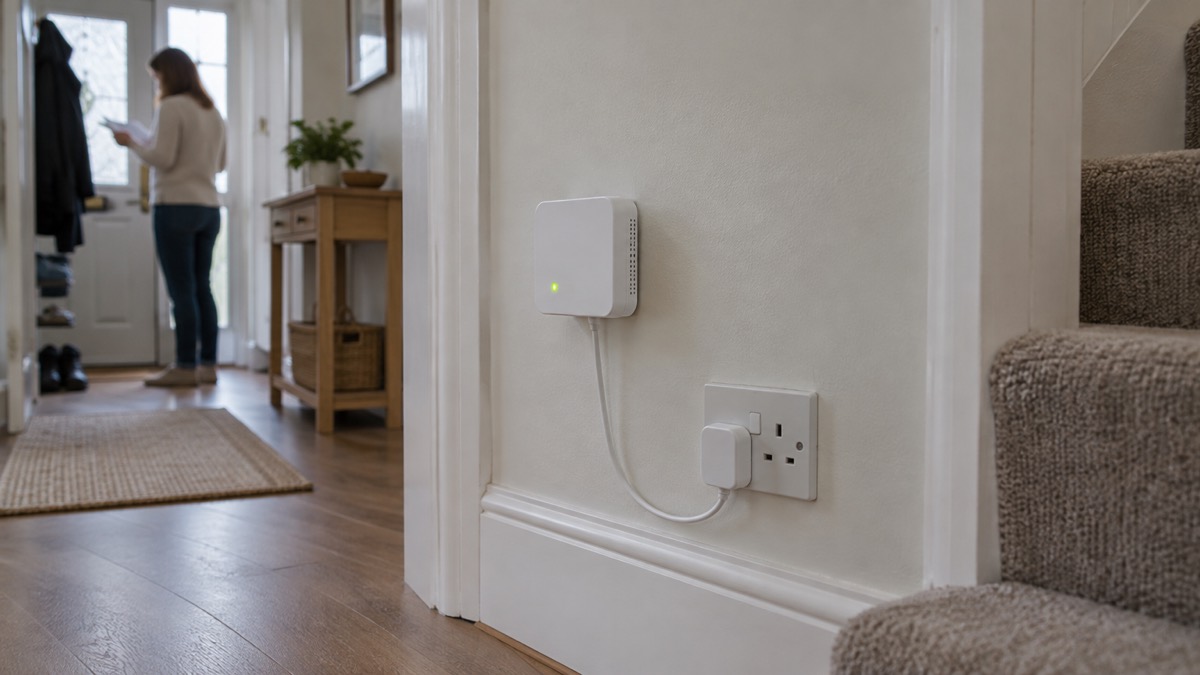
The frequency hopping feature is there to prevent radio interference and jamming1. In a home, that means the extender shifts within its band rather than sitting on one frequency, which helps when neighbouring wireless kit, baby monitors or broadband routers are crowding the airwaves.
In practice, fit the extender roughly halfway between the hub and the devices that are struggling, indoors, and then test. The Ajax apps show device status, so you can confirm each sensor is reporting through the extender before you rely on it. If your problem is a weak mobile signal rather than radio range, a different set of fixes applies: see Alarms and Cameras on a Weak Mobile Signal or Slow Broadband.
Keeping the alarm alive in a power cut
A power cut is the moment a household most wants its alarm to keep working, and the ReX Jeweller is built for it. It runs from the mains and switches automatically to its built-in backup battery if the external power supply fails2. The maker gives up to 24 hours of backup battery life when Ethernet is disabled1.
That figure sits alongside what the rest of the system does. Ajax hubs, except Superior Hub Hybrid, have a built-in backup battery that provides system operation during a power outage, and Superior Hub Hybrid instead requires a third-party 12 V⎓ battery installed in the casing2. Third-party wired devices connected through Ajax integration modules are powered during a power loss by the module's backup battery, pre-installed batteries, or the hub's or Superior LineSupply Fibra backup battery, depending on the module2. The ReX Jeweller is one link in that chain, not the whole of it.
For context on how long alarm backup batteries generally last, the National Security Inspectorate notes that an alarm system's backup battery ensures it remains operational for at least 12 hours in the event of a power outage8. The ReX Jeweller's 24 hours is the maker's figure for this device alone, with Ethernet disabled, and it should be read as the extender's contribution rather than a promise for every part of the system.
If you want to extend the whole system's endurance, the maker offers a Battery Power Saver feature on Hub Plus Jeweller with OS Malevich 2.19 or higher, which extends the hub's backup battery life up to 70 hours depending on system configuration and the number of devices added9. That is a hub feature, not a ReX Jeweller one, but it is worth knowing when you plan for a long outage. For the household view of an outage, see Power Cuts: A Household Guide.
The backup battery and the 3-pin connector change
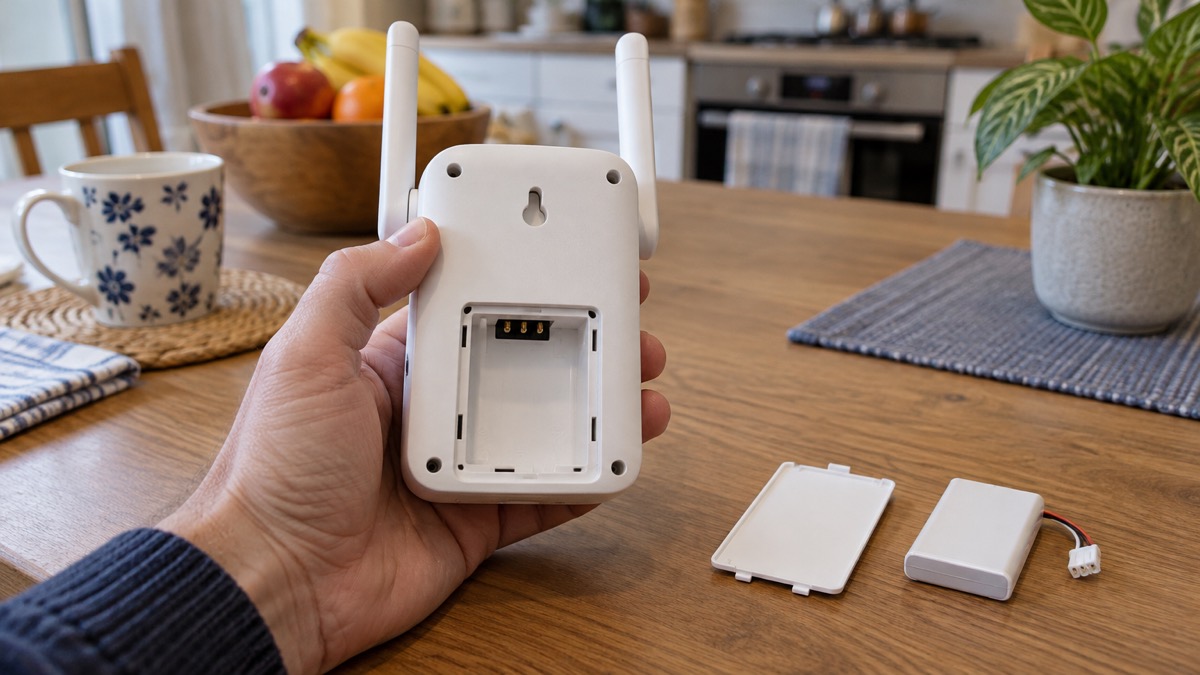
The ReX Jeweller's backup battery is a rechargeable lithium ion polymer pack, type XK 953562T, rated 3.7 V⎓, 2 Ah, made by Dongguan Lean Power and UL listed1. The datasheet gives the low battery voltage as 3.7 V⎓, the low battery recovery voltage as 4.1 V⎓, and the end-of-life battery voltage as 3.6 V⎓, at which point the device switches off1. The minimum energy level for a backup battery in the charged state is 100%1.
There is one detail that matters if you ever replace the battery yourself. The maker states that a range extender manufactured after 7 October 2022 has a 3-pin battery, and if it was manufactured earlier the battery can be a 2-pin or 3-pin one1. Check the date and the connector before ordering a replacement, because the wrong one will not fit.
The maker's own battery instructions for its related products are worth following as a habit: the Superior Internal Battery manual notes that the battery requires a compatible Ajax hub or range extender to operate3. In other words, the battery is not a standalone power source; it works as part of the system.
Where to fit it: indoors, 14 °F to 104 °F, IP20
The maker is clear that the ReX Jeweller is designed for indoor use only1. Its protection class is IP20, which means it is not protected against water, so it should not go in a bathroom, a shed, a garage exposed to damp, or anywhere it might get wet1. The operating temperature range is from 14 °F to 104 °F, and the operating humidity is up to 75%1.
The datasheet also gives a separate temperature range certified according to UL/ULC standards, from 32 °F (0 °C) to 120 °F (+49 °C)1. That is a certification detail rather than a second operating range, so fit within the wider operating range and treat the UL figure as the certified band.
Practical fitting points from the maker's figures:
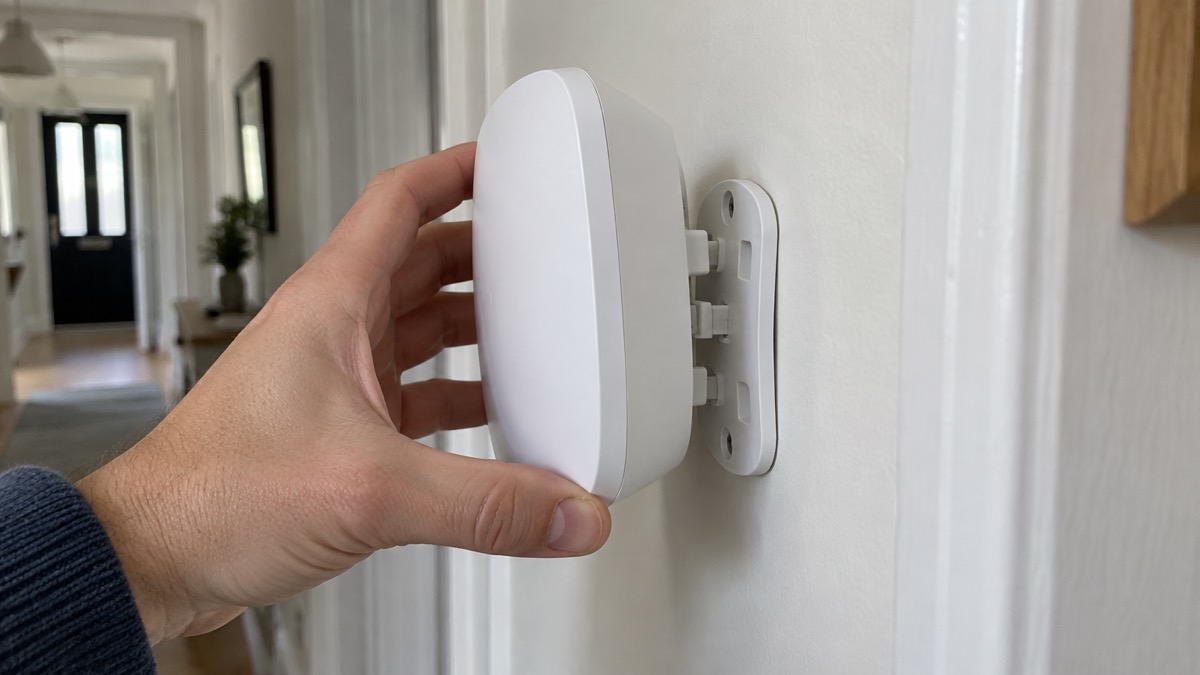
- Mount it with the SmartBracket panel. The complete set includes the SmartBracket mounting panel, a power cable, an installation kit and a quick start guide1.
- Keep it dry and indoors. IP20 and indoor-only mean hallways, landings, cupboards and utility rooms, not outbuildings1.
- Watch the temperature. A loft or conservatory that swings outside 14 °F to 104 °F is not a suitable home for it1.
- Give it mains power. The device operating voltage is 110 to 240 V~, 50/60 Hz, with mains power consumption up to 6 W1.
- Check the size. It measures 6.42″ × 6.42″ × 1.42″ and weighs 11.64 oz, so it needs a flat surface with a little clearance1.
If you are fitting it as part of a wider alarm installation, the section on Monitored Alarms: Receiving Centres and Who Responds explains what happens to an alarm signal once it leaves the house, and How to Check an Alarm Installer Is Approved covers vetting the person who fits it.
Tamper alerts, encryption and protection against jamming
An alarm system is only as good as its resistance to being interfered with, and the ReX Jeweller carries several protections. The maker lists notifications on attempts to detach the device from the surface or remove it from the mounting panel, which is the tamper alarm1. It also lists protection against spoofing through device authentication, and states that all stored and transmitted data are protected by block encryption featuring a dynamic key1.
The Jeweller protocol adds more. The maker describes block encryption and device authentication during each communication session with an Ajax hub or radio signal extender, which prevents sabotage, spoofing and data theft, along with notification of jamming and connection loss and automatic power adjustment10. The system automatically changes frequency within a band and notifies the security company and users about the jamming4. The protocol also provides two-way communication, protection against device spoofing, block encryption featuring a floating key, instant notifications and remote configuration via the Ajax apps11.
For a household, the practical upshot is that interference is reported rather than hidden. If someone tries to jam the signal or prise the extender off the wall, the system is designed to raise an event. That is worth knowing when you plan where to put it: a position that is hard to reach and easy to see is better than one tucked behind furniture.
Specifications and UK certification
The ReX Jeweller is certified to the EN 50131 series of security alarm standards, with a certificate issued by TREZOR TEST s.r.o. covering EN 50131-1:2006 / A1:2009 / A2:2017 / A3:2020, EN 50131-3:2009, EN 50131-6:2017, EN 50131-5-3:2017 / A1:2021 and PD 6662:20171. Its security grade is 21. For comparison, the maker describes its Superior Jeweller protocol, used by Superior devices, as ensuring compliance with EN 50131 Grade 312.
| Specification | Maker's figure |
|---|---|
| Product type | Wireless radio signal range extender1 |
| Security grade | 21 |
| Protection class | IP201 |
| Operating temperature | 14 °F to 104 °F1 |
| Operating humidity | up to 75%1 |
| Main power | 110 to 240 V, 50/60 Hz1 |
| Mains power consumption | up to 6 W1 |
| Backup battery | Rechargeable Li-ion Polymer XK 953562T, 3.7 V⎓, 2 Ah1 |
| Backup battery life | up to 24 hours when Ethernet is disabled1 |
| Devices connected | up to 2491 |
| Units per hub | up to 51 |
| Dimensions | 6.42″ × 6.42″ × 1.42″1 |
| Weight | 11.64 oz1 |
| Colours | black, white1 |
| Warranty | 24 months1 |
On UK certification, the datasheet lists PSTI UK Schedule 11. It also lists a Radio Equipment Directive certificate issued by MiCOM Labs for EN 300 220-1 V3.1.1 and EN 300 220-2 V3.2.1, a RoHS test report issued by Shenzhen NTEK Testing Technology Co. for EN IEC 63000:2018, and EMC and Low Voltage Directive standards1. The maker notes that only Hub 2 Plus Jeweller and Hub 2 (4G) Jeweller are under certification by UL, and that the 905.0 to 926.5 MHz band is the one certified according to UL/ULC standards1.
If you are checking whether a product carries the approvals your insurer or installer expects, How to Tell If a Security Product Is Police Approved explains what the various marks mean.
Support, warranty and keeping it ready
The ReX Jeweller carries a 24 month warranty from the maker1. Keep the quick start guide and your proof of purchase with your household paperwork, and note the manufacture date if you might need a replacement battery, because of the 3-pin change after 7 October 20221.
To keep it ready for an emergency:
- Test it monthly. Use the Ajax apps to confirm each device is reporting through the extender, and check the battery status.
- Check the battery after any long outage. The maker gives a minimum charged state of 100% for the backup battery, so confirm it has recovered after the mains returns1.
- Keep the firmware current. The maker provides remote configuration via the Ajax apps, and updates are part of keeping the system secure11.
- Record the install date. With a 24 month warranty, knowing when it was fitted helps if a fault appears1.
For the wider picture of how an Ajax system behaves without internet, the maker's support article on a hub without internet is a useful reference14. And if your household includes someone who depends on powered medical equipment, plan beyond the alarm: energy network guidance suggests backup systems should be checked and maintained, with a battery lasting at least 3 hours during a power cut for medical equipment15. The section on Extra Help in an Emergency: Older, Disabled and Medically Dependent Households covers this in more detail.
The ReX Jeweller is made by Ajax, and its role in a household plan is narrow but important: it keeps the edges of your alarm network talking to the hub, including through a power cut, so that the protection you have fitted still works when you need it most.
Sources (15)
- ReX Jeweller specifications, Ajax Systems, 2026-11-02
- How an Ajax system operates in case of a power outage, Ajax Systems, 2026-08-19
- Superior Internal Battery manual, Ajax Systems, 2026-01-28
- FireProtect 2 RB CO UL Jeweller, Ajax Systems, 2026-11-02
- DoorProtect Plus manual, Ajax Systems, 2026-08-31
- FireProtect 2 RB Heat Smoke UL Jeweller, Ajax Systems, 2026-11-02
- Superior Hub Hybrid 4G manual, Ajax Systems, 2026-09-25
- My alarm system has a back-up power battery: what is the life of the battery?, National Security Inspectorate, 2019-02-05
- Hub Plus manual, Ajax Systems, 2026-09-25
- FireProtect 2 Smoke Heat, Ajax Systems, 2026-11-02
- FireProtect 2 SB Heat CO specifications, Ajax Systems, 2026-11-02
- Superior MotionCam G3 Jeweller manual, Ajax Systems, 2026-09-04
- StreetSiren manual, Ajax Systems, 2026-10-12
- Hub without internet, Ajax Systems, 2024-10-11
- 41713-SPEN-CustomerLeaflet-EN_AW Online.pdf, SP Energy Networks

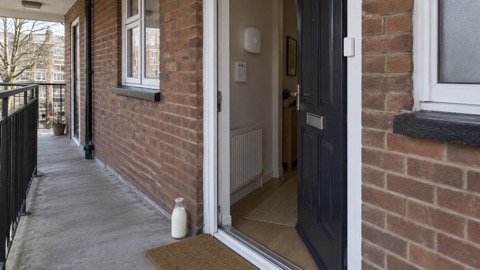 Abode Security Kit
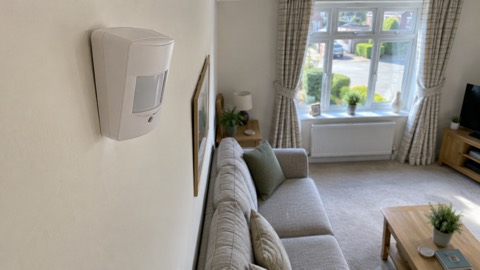 Ajax CombiProtect
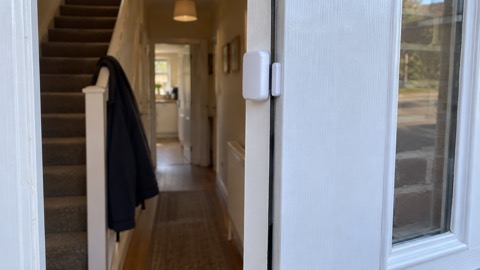 Ajax DoorProtect Plus
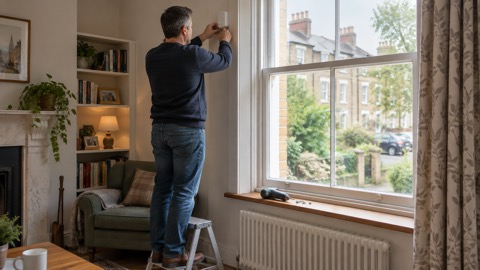 Ajax GlassProtect
 Ajax HomeSiren
 Ajax Hub 2 Plus
 Ajax Hub 2G Jeweller
 Ajax Hub 4G Jeweller
 Ajax KeyPad Outdoor
 Ajax KeyPad Plus
 Ajax KeyPad TouchScreen
 Ajax LightSwitch