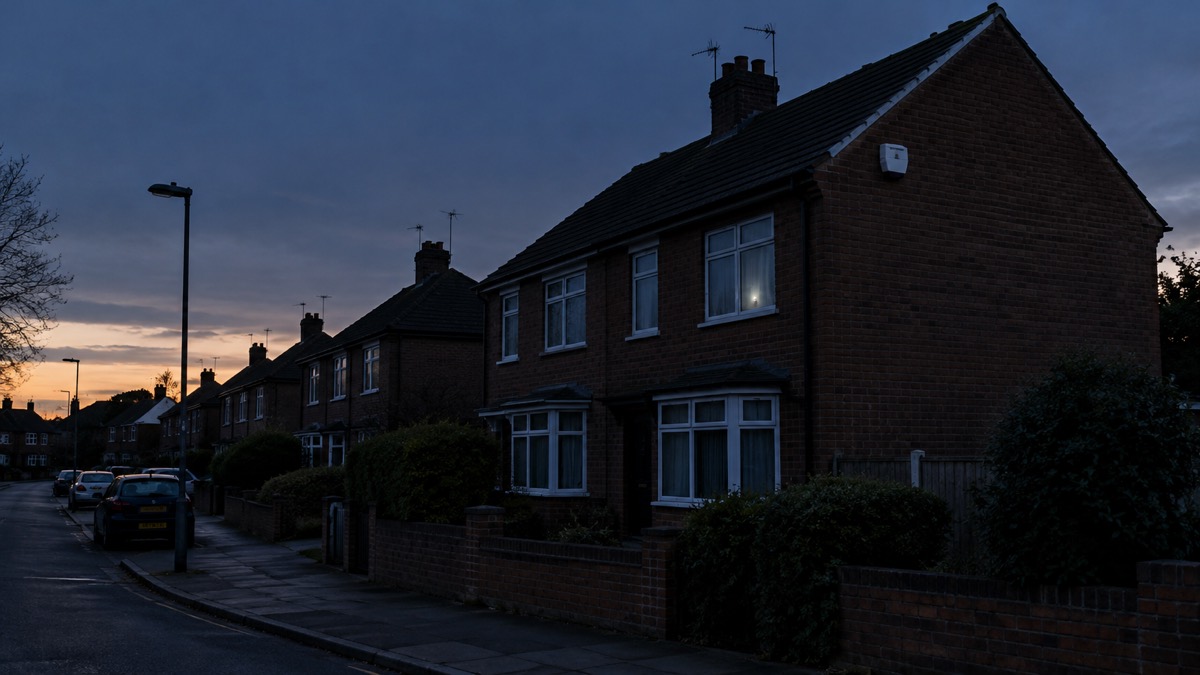
When the power goes off, your home security does not switch off with it, but it changes. A burglar alarm with a healthy backup battery keeps watching the house; a camera that depends on your router goes dark; a smart lock running on its own batteries still opens, while anything that needs mains electricity stops. Knowing which is which, before the lights go out, is what this page is for.
The first minutes matter more than the kit. Switch off appliances that should not be left unattended, leave one light switched on so you know when the power returns, and report the cut by calling 105 free or using the Power Cut 105 website1. Then check whether your neighbours have lost supply too, because that tells you whether it is your wiring or the local network2. If you want the wider picture on outages, food safety and lighting, see our power cuts guide; this page concentrates on what happens to your alarms, locks, gates and lights, and how to keep your household safe until the mains returns.
What to do first when the power goes off
Work through these steps in order. They take a few minutes and they prevent most of the problems a power cut causes afterwards.
- Switch off appliances that should not be left unattended, ready for when the power comes back on7. That means irons, ovens, electric fires and anything else that could pose a hazard if the supply returns while you are asleep or out of the room8.
- Leave one light switched on so you know the moment power is restored2.
- Check whether your neighbours have also lost supply. If they have, it is the network rather than your wiring9.
- Report the cut: call 105 for free, or use the Power Cut 105 website to report it and track updates1. Westminster Council also publishes the electricity loss hotline 0800 028 0247 as an alternative number to call9.
- Check on elderly or vulnerable neighbours, family and friends to make sure they are okay10.
- Keep fridge and freezer doors closed throughout the outage11.
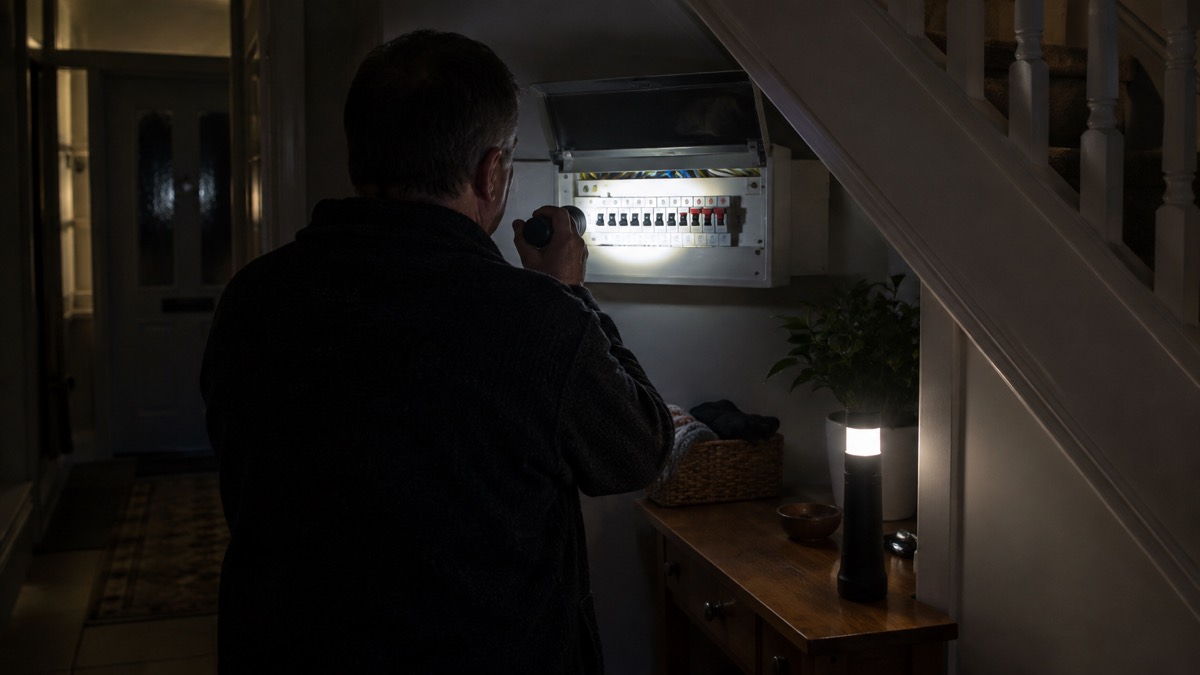
Two safety points sit behind this list. First, switch off any appliances that could pose a hazard if the power comes back on when you are not there, such as irons, ovens and electric fires12. Second, if someone receives an electric shock during the disturbance, NHS guidance in Scotland is to switch off the current at the mains or meter point if possible, and otherwise remove the plug or pull the cable free before helping them13.
If the cut is localised and likely to last, official preparedness advice is to consider staying with friends or relatives until your power is back on14. If you have advance notice, for example from a storm warning, fill a flask with hot water and make up a hot water bottle while the supply is still on14.
Does a burglar alarm still work in a power cut?
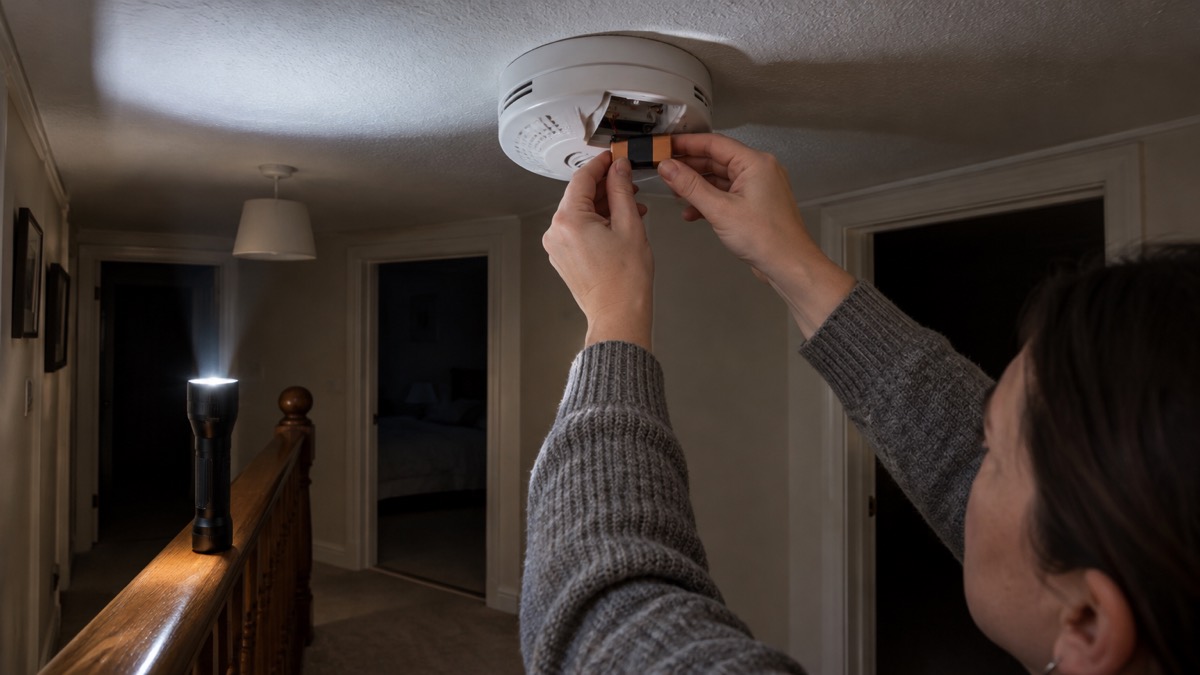
The short answer is yes, if its backup battery is healthy. A burglar alarm is designed with exactly this failure in mind: the panel runs from the mains and drops to an internal backup battery when the supply fails, so the sensors, the siren and the monitoring connection carry on. The same principle runs through the mains-powered devices fire and rescue services ask every household to rely on. Mains-operated smoke alarms, for example, normally have a 9 volt backup battery in them in case you have a power cut4, and mains-powered alarms generally are powered by your home supply with a backup battery for exactly this situation15.
The failure mode is not the cut itself but the battery, and the same neglect that catches out smoke alarms catches out alarm panels. The warning signs are audible: if an alarm beeps every minute or so, that can be a low battery warning, and this can occur with hard-wired, mains-connected alarms because of the backup battery5. Devon and Somerset Fire and Rescue Service describe the sign of a failed backup battery in a hard-wired alarm as "your alarm making frequent little beeps"5. If your burglar alarm panel chirps or reports a battery fault, treat it as the alarm telling you it will not survive the next cut.
After any power cut, if you have mains-powered smoke alarms, check that the battery backup is working6. A long outage is precisely when a tired backup battery gives out, and the alarm that seemed fine before the storm may be dead after it. North Wales Fire and Rescue Service gives this as standing winter safety advice6. For choosing and maintaining an alarm system in the first place, see our guides to burglar alarms and monitored alarms.
Backup batteries: how long they last and how to check
Backup batteries are the quiet heroes of every power cut, and their run times vary by device and provider. The clearest published figures come from the digital landline switchover, where Ofcom has set a floor: a landline backup must last for at least one hour in a power cut, but some providers have backups that last up to seven hours3. Ofcom repeats the same figures in its advice to vulnerable customers: at least one hour, with some providers offering up to seven hours16. If your landline will not work during a power cut, your landline provider might offer you a free solution, such as a backup battery unit, for a minimum of one hour17.
| Device | What happens in a power cut | How long the backup lasts |
|---|---|---|
| Digital landline phone | Stops unless it has a battery backup3 | At least one hour; some providers up to seven hours3 |
| Cordless landline handset | May not work, because the base station needs power and may have no backup18 | Depends on the base station |
| Mains smoke alarm | Drops to its backup battery, typically 9 volt4 | Replace the battery every 12 months19 |
| Burglar alarm panel | Drops to its internal backup battery | Check the panel's battery fault warnings |
| Mobile phone | Still works for calls20 | As long as its own charge lasts |
The practical habits are simple. Keep a mobile phone charged, because a mobile can still be used to call in a power cut20. Keep a separate battery charger ready, and store key information such as the power cut helpline number, 105, on your phone21. If possible, keep an analogue phone that can be connected in your house, because this will still work if a power cut impacts the mobile network14. NHS Scotland's winter safety advice makes the same point: a cordless landline may not work during a power cut because the base station needs power to operate and may not have a backup battery, so a non-mains-powered landline telephone helps you stay in touch18.
Keeping the alarm online when the phone line or internet go down
A power cut often takes the broadband with it, and that matters for any security device that reports over the internet. Cameras, video doorbells and alarm systems that signal through your router lose their connection even if their own batteries are fine. The official advice from the government's preparedness campaign is direct: if you have medical or personal alarm devices that use phone or internet connections, check with the provider or manufacturer how they work if the network is down, for example how your personal alarm or diabetes sensor would function if mobile or broadband service is lost22. Apply the same question to your security kit: ask your alarm company what happens to the monitoring link when the router dies.
The landline part of that question has a known answer. Digital landlines need mains electricity and will not work in a power cut unless there is a battery backup3. If your landline will not work during a power cut, your landline provider might offer you a free solution, such as a back-up battery unit, for a minimum of one hour, so it is worth asking. If you have a telecare device that relies on your landline, contact your telephone service provider, who may offer a battery back-up for free, and speak with your personal alarm company to agree a solution for power cuts, since an alarm phone connected to your wifi will not work if your internet has no power.
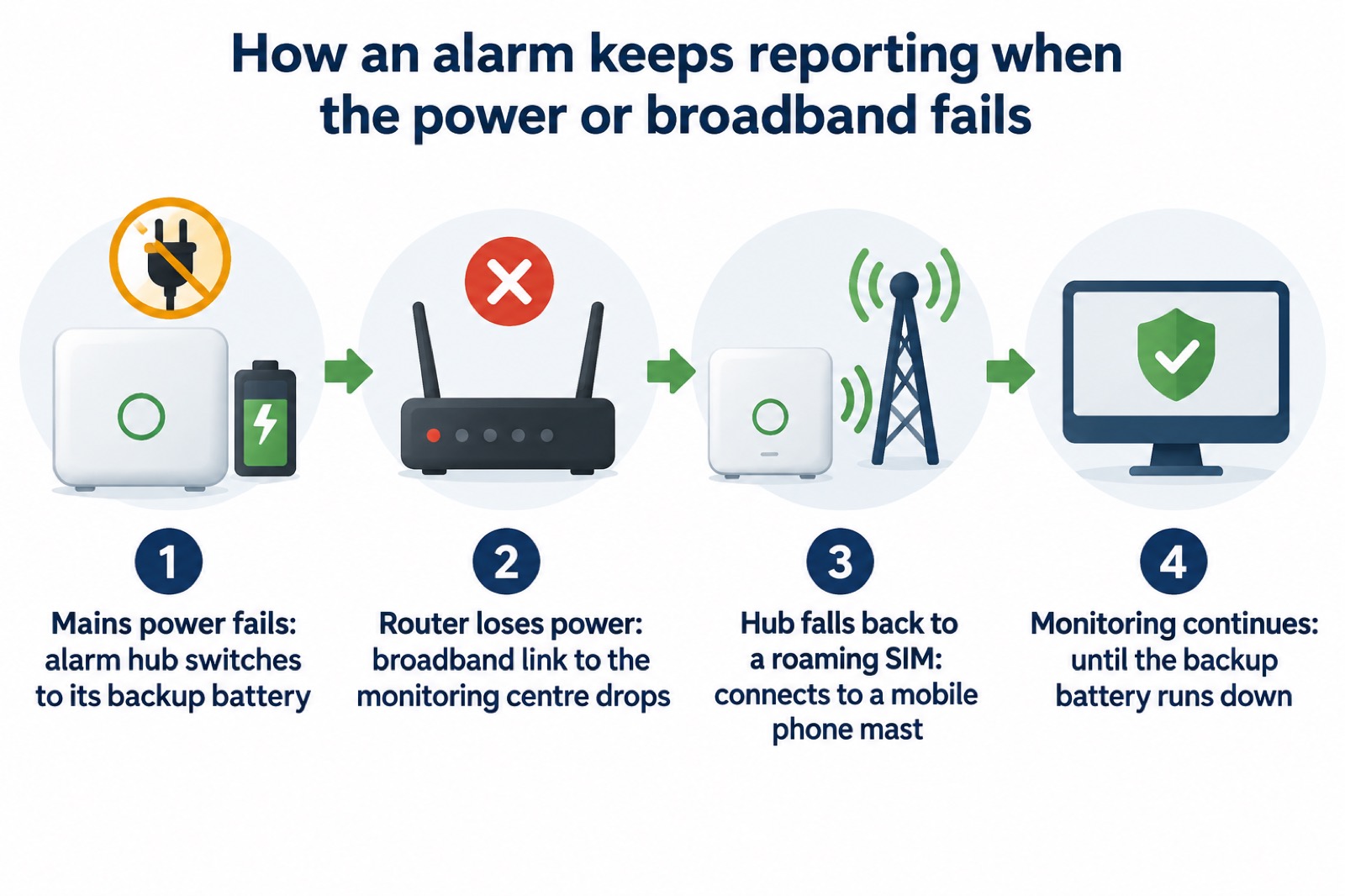
If you depend on a monitored alarm or a personal alarm, contact the provider before an emergency. In Scotland, Ready Scotland advises that the provider will assess your needs and may provide a free battery backup and have engineers test it, so care alarms and other important devices continue to work during a power cut23. For keeping your broadband and devices alive longer, see our guide to staying informed and in touch, and for homes where the signal is weak to begin with, our page on alarms and cameras on a weak mobile signal or slow broadband.
Smart locks, electric gates and battery-powered security
A power cut does not treat all security kit the same way. The dividing line is what each device draws its power from.
- Battery-powered smart locks keep working: a lock running on its own internal batteries does not care that the mains has failed, and the fingerprint reader, keypad or app unlock carries on until the batteries run down. The risk is not the cut but the connections behind it: if Wi-Fi or Bluetooth are down, you might find yourself unable to use some features of your smart lock such as remote access, although that should not affect your ability to lock or unlock it22. Our page on smart locks explains what to check before buying, and will a smart lock lock you out in a power cut? answers this question in detail.
- Electric gates and powered doors stop when the mains fails unless they have their own backup. Gates are the clearest example of a security device that is entirely mains-dependent, so ask the installer or manufacturer whether yours has a backup supply and how it behaves in a cut.
- Cameras and video doorbells survive on their own batteries but lose remote viewing the moment the router goes off. Keep a physical key as a fallback for every electronic entry point, and see our home cameras guide and video doorbells guide.
- Outdoor security lights that are mains-powered go dark; battery and solar models do not. Our page on outdoor lights that deter burglars sets out the types.
Where a smart lock can leave you stuck is the gap between the lock and its support systems. A lock that unlocks by app needs the phone charged and the connection alive; a lock tied to a hub needs the hub powered; a house that relies entirely on electronic entry, with no physical key anywhere, has a single point of failure. The safeguard that covers all of it is simple: keep a physical key as a fallback, held outside the electronic chain so it works whatever fails. If the worst happens, our page on being locked out covers what to do and how to choose a locksmith.
For shared and rented homes, PIN codes avoid the key-copying problem entirely, and codes can be changed when someone moves out. Some devices also offer a child lock: on one widely used storage heater control, you turn it on by pressing and holding both the back button and the dial for five seconds, and a four-digit PIN code lock can be set in the settings menu24. The same pattern, a code set in a settings menu, is how most smart locks handle shared access. Our page on smart locks in rented and shared homes goes further.
Smoke and heat alarms: the security system that matters most
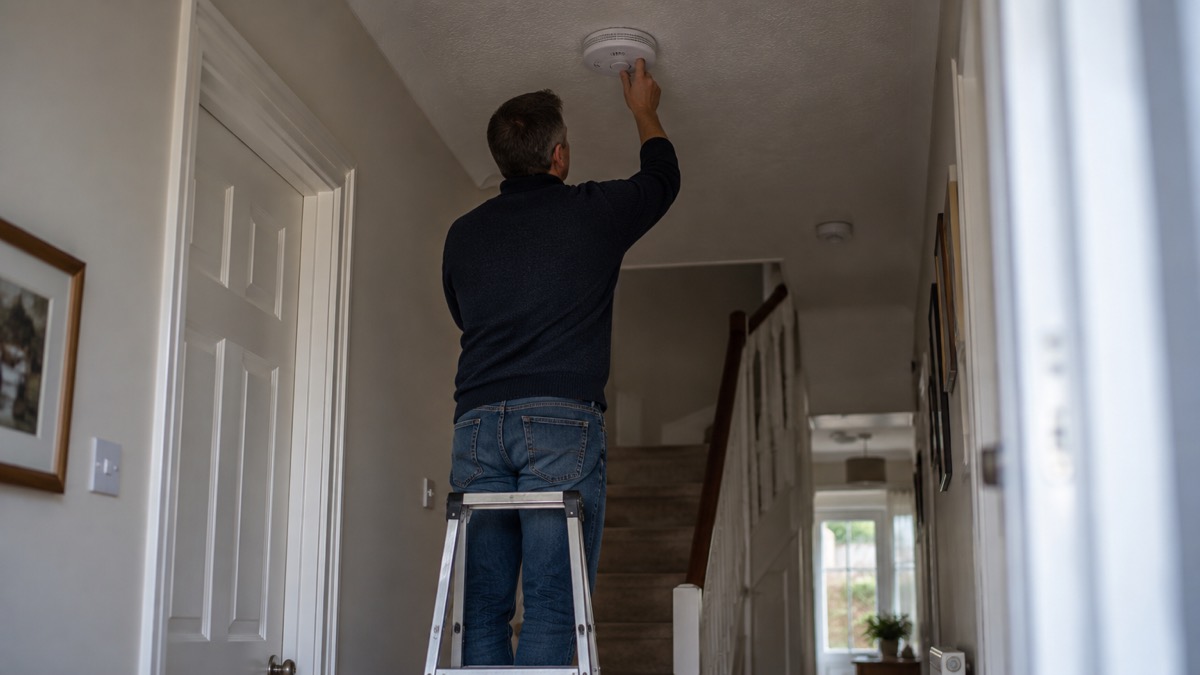
In a power cut your fire detection matters more than usual, because candles and alternative heating come out, and cooking moves to unfamiliar equipment. The good news is that this is the best-prepared corner of home security.
Mains-powered alarms are powered by your home supply and have a backup battery in case of a power cut; they need to be installed by a qualified electrician and require testing like battery alarms15. Some battery or mains alarms can be interlinked, so that when one alarm detects a fire they all go off together, giving everyone in the house the warning wherever the fire starts25. If you are fitting linked alarms, Devon and Somerset Fire and Rescue Service advise asking a qualified electrician to fit them26.
Check the certification before you buy: the NHS advises checking your smoke alarm has either a British Standard (BS) kitemark or the Loss Prevention Certification Board (LPCB) symbol27. The arrangements differ slightly across the UK. In England, Cherwell District Council recommends that all rented homes are equipped with smoke alarms and heat detectors which are mains-powered with integral battery backup, wirelessly interlinked and installed by a competent electrician to British Standard BS 5839-6:2019 Grade D LD2, with carbon monoxide alarms similarly mains-powered with integral battery backup to BS EN 50292:201328. In Scotland, the Tolerable Standard guidance notes that mains-wired units may have a backup supply in case of a power cut, and alarms will not be below the Tolerable Standard if these additional supplies use replaceable batteries29.
The maintenance rhythm is the same everywhere: test smoke alarms regularly10, replace standard alarm batteries every 12 months19, and after every power cut check that the backup battery on mains-powered alarms is working6.
Keeping your household warm and safe until power returns
A power cut in winter is a heating problem as much as a security one, and the official advice is about steady habits rather than dramatic measures.
Keep your thermostat set to the same temperature day and night, and turn off electrical heaters and fires before bed to avoid fire risk2. That advice from the Met Office applies with extra force during an outage, when heaters may be moved to unusual rooms and left running near bedding. Switch off any appliances that could pose a hazard if the power comes back on when you are not there, such as irons, ovens and electric fires8. Keep fridge and freezer doors closed11. Leave a light on so you know when your power comes back on14.
If the cut is localised, stay with friends or relatives until your power is back on14. If you have advance notice, fill a flask with hot water and make up a hot water bottle14, back up work and important files, and keep a mobile phone charged with important phone numbers written down14. For the full picture on heat, light and cooking without mains power, see our guides to heating and cooking without mains power, emergency lighting and backup power at home.
Checking on neighbours and getting help
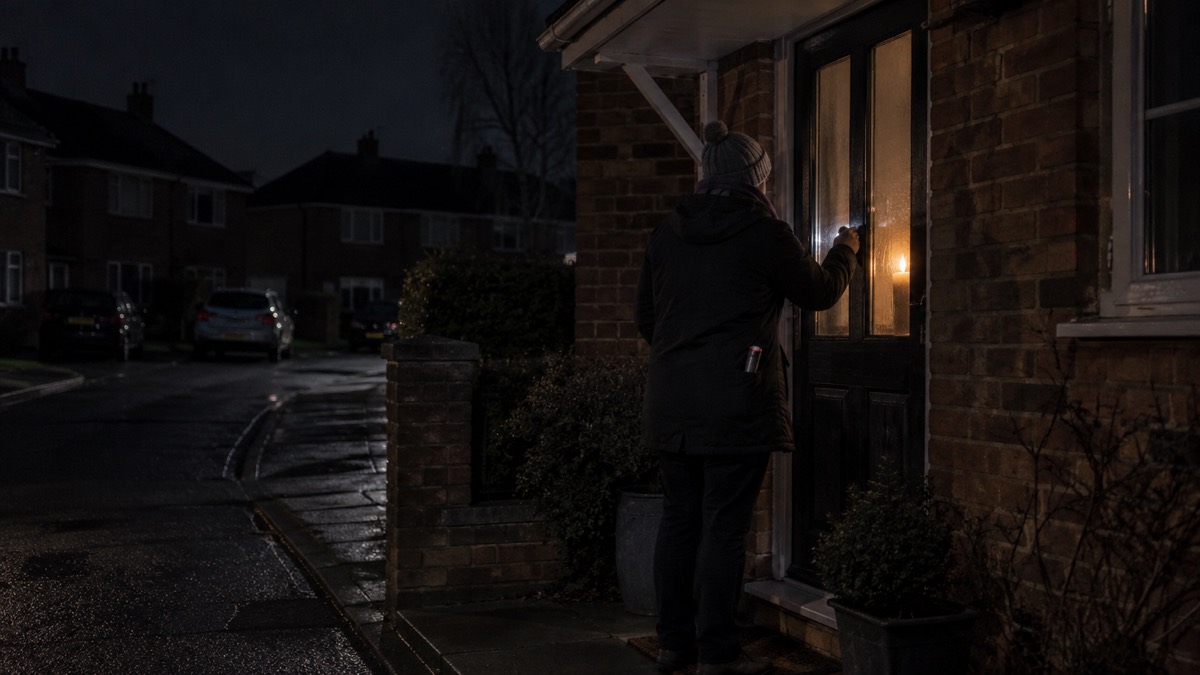
The community side of a power cut is official advice, not just good manners. nidirect, the Northern Ireland government service, advises in its severe weather guidance: "check on elderly or vulnerable family, neighbours and friends to make sure they're okay"10. The same advice appears in its wind and rain warnings30. A cut that inconveniences you can be genuinely dangerous for a neighbour who relies on telecare, powered medical equipment or electric heating, which is why checking on them early matters as much as reporting the fault.
If you or someone you know depends on a personal or medical alarm, the steps are set out above: check with the provider or manufacturer how it works when the network is down22, and in Scotland ask the provider to assess needs and provide a tested battery backup23. Our guide to extra help in an emergency covers the Priority Services Register and other support for older, disabled and medically dependent households.
For reporting and tracking the cut itself:
- Call 105 free, or visit the Power Cut 105 website to report a power cut and track updates1.
- Save the number now. Greater Manchester Resilience advises writing down the phone number to report a power cut, 105, or saving it in your mobile phone1, and the Met Office suggests storing key information such as the power cut helpline number on your phone21.
- Check your neighbours first. If they have also lost supply, it is the network; Westminster Council's household emergency guidance then gives the electricity loss hotline 0800 028 0247 to call9.
- Keep a way to call. A mobile phone can still be used to call in a power cut20, and an analogue phone connected in the house will still work if the power cut impacts the mobile network14.
*A knock on the door with a torch in hand: official advice is to check on elderly or vulnerable neighbours when the power goes.
For the broader picture of preparing your household before anything happens, start with getting started: preparing your household and our emergency kit guide.
Sources (30)
- Loss of essential services, Greater Manchester Combined Authority
- Met Office Weather Ready tips for snow and ice, Met Office, 2025-11-19
- Future of landline calls, Ofcom, 2026-08-26
- Smoke alarms, South Wales Fire and Rescue Service, 2026-08-20
- Problems with smoke alarms, Devon and Somerset Fire and Rescue Service, 2026
- Winter safety, North Wales Fire and Rescue Service, 2026-10-29
- Stay safe in snow, Met Office, 2026-10-25
- Community Risk Register, West Yorkshire Prepared, 2025
- Prepare your household for emergencies, Westminster City Council, 2014-04
- Strong winds weather warning information and advice, nidirect, 2026-10-24
- How you can prepare for a power cut, Lancashire Prepared, 2026-10-29
- Home safety, Dorset and Wiltshire Fire and Rescue Service, 2024-06-07
- Electric shock first aid, NHS inform Scotland, 2026-07-24
- Power cuts, West Yorkshire Prepared, 2026-10-29
- Fire alarms and carbon monoxide detectors, Lincolnshire County Council, 2026-10-29
- Stay connected in severe weather, Ofcom, 2026-10-13
- Advice for disabled persons and carers, Prepare (UK government), 2026-10-20
- Keep Safe Keep Well Winter Safety Campaign 2024-2025, NHS Western Isles, 2024-10
- Smoke alarms, Staffordshire Fire and Rescue Service, 2026-10-29
- The digital phone switchover, Cheshire Fire and Rescue Service, 2026-10-28
- Top tips to be WeatherReady, Met Office, 2026-10-25
- Phone and broadband outages, Prepare (UK government), 2026-10-12
- Disabled people and carers, Ready Scotland, 2026-10-25
- Dimplex Quantum night storage heaters, Centre for Sustainable Energy, 2026-06
- Smoke alarms and heat alarms, London Fire Brigade, 2026-10-25
- Fire safety for people with hearing difficulties, Devon and Somerset Fire and Rescue Service, 2026
- Baby and toddler safety, NHS, 2026-02-19
- Housing standards, Cherwell District Council, 2026-10-29
- Tolerable Standard guidance: satisfactory fire and carbon monoxide detection, Scottish Government, 2023-06-20
- Strong winds and heavy rain warning information and advice, nidirect, 2026-01-27
 Moving Home Locks Checklist
 After a Break-In Checklist
 Holiday Security Checklist
 Home Assistant for Security
 Monitored Alarms and Response
 Panic Buttons on Home Alarms
 Police Response to Burglaries
 Alarms on a Weak Mobile Signal