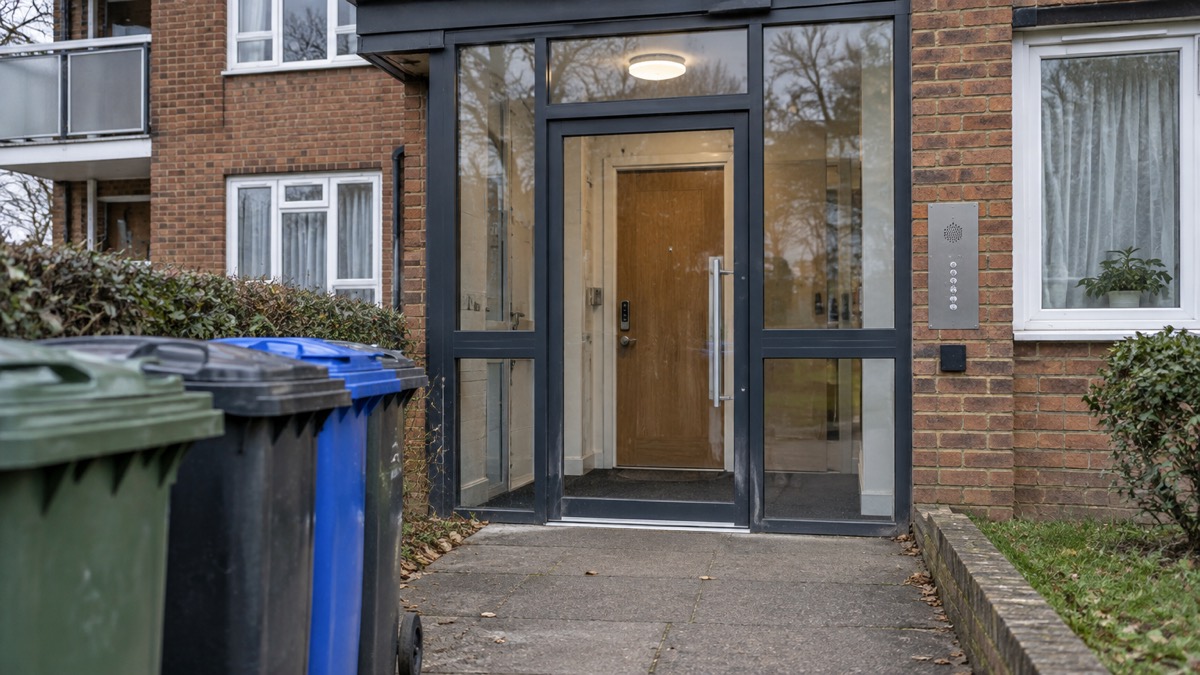
If you rent, you can still have a smart lock, but the order of work is different from owning your home. First read your tenancy agreement and get your landlord's permission in writing, because the door is not yours to alter. Then make sure there is always a way in that does not depend on a phone, a battery or your broadband, and a way out that does not depend on finding a key in the dark.
The practical case for one is modest. Which? notes that smart door locks are more expensive than traditional locks, that their batteries last from six months to a couple of years before they need replacing or recharging, and that features such as remote unlocking need an internet connection1. What you get in return is convenience and a record of who came in, not a magic shield.
What decides whether a smart lock suits your household is not the brand but three questions. Can you get the landlord's agreement? Can you keep a physical key or manual thumb-turn as a backup? And can everyone who lives there, including anyone who needs extra time or help to leave, still get out quickly in a fire? This page takes those in turn.
Check your tenancy agreement before you fit anything
The tenancy agreement is the first document, not the lock's manual. If you are a renter and want to install a smart lock, check with your landlord or property manager first2. The same principle appears across official guidance for rented homes, from mobility scooters to fire doors: residents should check their tenancy agreement with respect to allowing mobility scooters at their premises3, and leaseholders should examine the details of their lease contract and consult the landlord, because they may have responsibility to ensure that a suitable fire rated door with all of its compatible components is fitted5.
That matters more for a smart lock than for a piece of furniture, because you are changing the thing that keeps the flat secure and, in a flat, the thing that may be a fire door. A smart lock that replaces the existing cylinder or outside handle can affect the door's fire performance and its insurance status. A retrofit lock that clamps over the existing thumb-turn on the inside leaves the door's fire-rated components alone, which is why it is often the easier conversation with a landlord.
Read the agreement for three things in particular:
- Alterations and fixtures: whether you may change or add to the door, and whether anything fitted becomes the landlord's property.
- Keys and access: whether the landlord or agent must hold a key, and how they may enter.
- Safety responsibilities: what the landlord must maintain, since landlords of privately rented homes must follow safety regulations including fire safety6.
If you are in Wales, check that your landlord is listed on Rent Smart Wales, as they should be complying with the law on fire safety7. If anything in the agreement is unclear, ask the landlord or agent in writing before you buy anything, and keep the reply.
Asking your landlord for permission: what to put in writing
Official guidance across rented housing is that work to the property needs the landlord's agreement first. Northern Gas Networks, for example, says that if the property is rented you will need to seek the permission of the landlord to have the work done8. Surrey County Council's fire safety advice says to seek permission from your landlord, freeholder or managing agent where required9. The same pattern holds after a flood: if you are in social housing or renting privately, let your landlord know so they can take the remedial action needed to keep you safe10.
Put your request in a short letter or email that answers the questions a landlord will actually have. Cover:
- What you want to fit, in plain terms: a lock that fits over the existing inside thumb-turn, or a replacement of the cylinder and handles.
- What it does not change: whether the outside door furniture, the cylinder and the fire-rated components stay as they are.
- Who holds a key: confirm the landlord or agent will still have a physical key or a code, and how they get in.
- Who pays for removal: state that you will remove it and refit the original at the end of the tenancy, at your cost.
- Insurance: say you have checked with your insurer, or ask the landlord to confirm with theirs.
Keep a copy of everything. Thames Water's advice on reporting problems to a landlord is a good model for any request: let your landlord or letting agent know as soon as possible, ideally in writing, and keep a copy for reference5. If the answer is no, ask what would make it a yes, and accept that the door is the landlord's to decide.
Keeping access for landlords, agents and emergency services
A smart lock that only you can open is a problem the first time a pipe bursts while you are away. Landlords of privately rented homes must follow safety regulations, including fire safety6, and they cannot do that if they cannot get in. If you rent your home, your landlord, letting agent, local council or housing association should be able to help you make it safe6. Plan access before you need it.
The simplest arrangement is a physical key held by the landlord or agent, exactly as now, plus your smart entry for the household. If you would rather not hand over a key, a key lock box gives controlled access. The Master Lock No. 5441EURD is a Bluetooth key lock box designed to be wall mounted, and its maker describes it as a way to share access to your keys with others, temporary or permanent12. For more on choosing and siting one, see Key Safes: Letting Carers and Responders In.
For the household itself, treat the lock like any other connected device. Which? advises creating a long, unique password, keeping the software updated, and, where possible, connecting it to other security devices such as outdoor cameras and smart security systems1. If you use a shared code for a shared house, change it whenever someone leaves.
In a flat, access also has a communal dimension. Fire services work with local authorities, developers, managing agents, housing providers and tenants to make sure fire safety arrangements in high-rise accommodation and other flats are safe and appropriate13. If your building has a secure information box, a personal emergency evacuation plan may be recorded by the landlord, managing agent or building owner and stored securely in that box on the outside of the building14. Tell your landlord if your entry arrangements change, so that record stays right.
When the battery runs flat or the power goes off
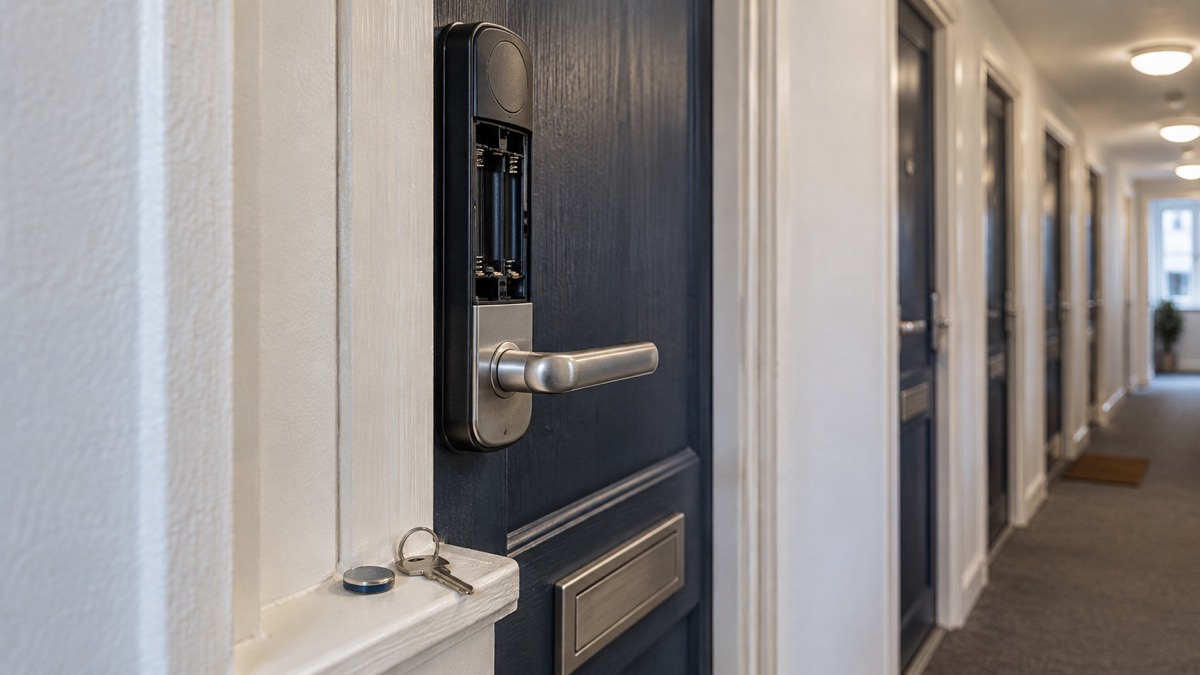
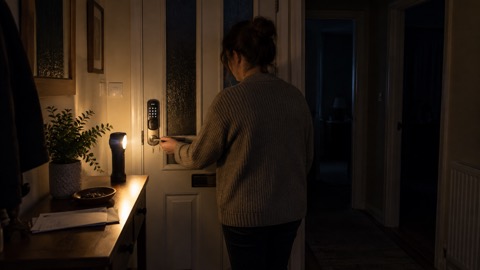
A smart lock is a battery device, and that is the fact that decides most of its behaviour in an emergency. Which? explains that because it is battery-powered, in a power cut the door stays locked and the motor still works, and you can enter with a keypad, fob, fingerprint scanner or a nearby phone over Bluetooth1. If your Wi-Fi is down, remote unlocking, access logs and voice control may not work1.
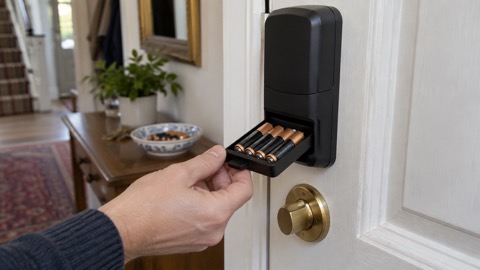
The battery itself will not last forever. Which? puts battery life at six months to a couple of years before replacement or recharging, and notes that firmware updates may be needed1. The lock's app notifies you when the battery is low1. Act on that notification rather than waiting for the lock to stop.
For a landlord-fitted lock, change batteries when needed and report any faults or concerns to your landlord16. If your electricity goes off, leave one light on17, and check the lock's battery before you go. For more on what a lock does and does not do without mains power, see Do Smart Locks Work in a Power Cut? and How Long Do Smart Lock Batteries Last?.
Getting out quickly in a fire: thumb-turns and keyless exits
Getting out matters more than getting in. Fire services recommend thumb-turn locks precisely because of this: they offer increased safety if you need a quick exit from the building, such as in a fire or other emergency, because you do not need to locate the key first to unlock the door7. One fire and rescue service puts it directly: consider installing a thumb lock so keys are not required when exiting the property18.
That is the strongest argument for a smart lock in a rented home, provided it keeps a manual thumb-turn on the inside. The Ultion Nuki, for example, can always be operated manually through the use of a physical high-security key or the manual thumb-turn3. A lock that only opens from an app, with no manual override, works against the fire advice rather than with it.
Plan the exit as a household, not just a device. Fire services advise planning an escape route and making sure everyone in the house knows how to escape in the event of a fire19. Keep exits clear of clutter, including bikes7. Always know where your keys are20. Keep door and window keys accessible, avoid keeping them in the kitchen because that is where most fires in the home start, and keep hallways and doorways free from clutter, including communal areas21.
If you are escaping a flat fire, the advice is specific: where possible and safe to do so, close the door to the room where the fire is, alert the people in the flat, activate any manual alarms, call 999 and stay on the phone while evacuating, stay low if there is smoke, close all doors behind you, use the stairs and keep left, and do not use the lift unless instructed by a firefighter22.
If you live in a flat, check your building's evacuation strategy, whether it is stay put or evacuate, and make sure everyone in the household understands it22. For more, see Flats and Shared Entrances: Door Entry and Communal Doors.
App or Wi-Fi outages, lost phones and old codes
The lock is one system; the app, the phone and the broadband are three more, and any of them can fail. Which? notes that internet access is needed for features such as remote unlocking1. Nuki's Smart Lock Pro and Smart Lock Ultra have a built-in Wi-Fi module that connects the lock directly to your home Wi-Fi24, which removes one link in the chain but not the broadband itself.
So build in redundancy:
- A physical key or manual thumb-turn, kept where you can reach it, not locked inside.
- A keypad code, which works without Wi-Fi or a phone.
- A second phone or a spare fob for anyone who relies on the app.
- A phone you can reach before bed, as fire services advise in winter safety guidance25.
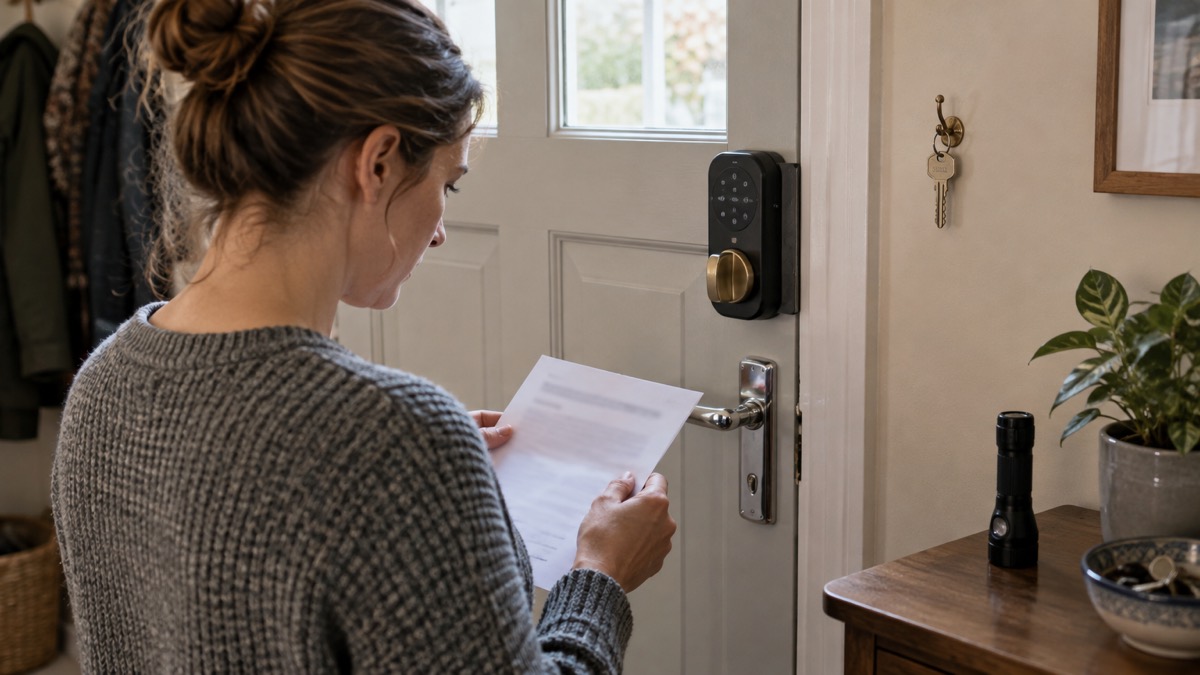
If a phone is lost or stolen, act quickly. Police advice on smartphone theft includes marking the phone as stolen or lost, which can suspend payments, remotely wiping all data from the phone, and remotely locking it if it is an Android device26. Then get home on your spare key or keypad code, and remove the lost phone's access from the lock's app.
Old codes are the quiet risk. When someone leaves a shared house, delete their code or fob the same day, check the entry log, and change any shared code the whole household knew. If you replace the lock, the Nuki app has a data migration feature for moving your settings from a previous Nuki Smart Lock27. For more on the wider picture, see Smart Locks: How They Work and What to Check and Smart Lock or Traditional Key Lock?.
Leaving the property: removing the lock and refitting the original
When the tenancy ends, the door should go back to how you found it, unless your landlord has agreed otherwise in writing. Put the original lock, cylinder and handles back, test them, and hand over every key and fob that came with the property. If you fitted a retrofit lock over the existing thumb-turn, removal is usually the reverse of fitting, but check the maker's instructions for your model.
Two practical points. First, if you are moving into a new home, police advice is that you can change the locks if you want to28, but in a rented home that still needs the landlord's agreement. Second, when you leave, lock up properly on the way out. Police advice for uPVC and multi-locking doors is to lift up the handle, then turn and remove the key to engage the hooks and latches: lift, lock and remove29. Fire services add the simple rule to lock doors when you leave and when you return30.
If the property has been damaged, for example by a storm or flood, check the exterior for cracks before you rely on the door, and if any part of the building looks unstable leave immediately; debris can be dangerous, so wear protective clothing and footwear31. For the full sequence, see Moving Into a New Home: Locks and Keys Checklist and Leaving Your Home Locked When You Have to Evacuate.
Where to get help
If you are renting and something about the door or lock is wrong, tell your landlord or letting agent in writing, say if you consider the issue urgent and why, and give them the chance to put it right2. Keep a copy of every message.
If you are worried about fire safety in your home, your local fire and rescue service is the right first call for advice, and they work with landlords, managing agents and tenants on fire safety in flats and high-rise buildings13. If you need help to leave in an emergency, ask for a personal emergency evacuation plan to be recorded by the landlord, managing agent or building owner and stored in the building's secure information box14.
If a phone that controls your lock is lost or stolen, use your spare key or keypad code, and if you rent your home, your landlord, letting agent, local council or housing association should be able to help you make it safe26. If you are locked out, see Locked Out of Your Home: What to Do and Choosing a Locksmith. For the wider picture on securing a rented home, start with Home Security: A Household Guide and Doors and Locks: Standards, Cylinders and Making Entry Harder.
Sources (31)
- Do I need a smart door lock?, Which?, 2026-04-15
- Fire safety in rented accommodation, Devon and Somerset Fire and Rescue Service, 2026
- Ultion Nuki 2025, Ultion, 2025-11-03
- Equipment, aids and adaptations | Devon and Somerset Fire and Rescue Service, Devon and Somerset Fire and Rescue Service
- Pipe responsibility, Thames Water, 2026-10-29
- Your landlord's safety responsibilities, GOV.UK, 2026-11-03
- Student fire safety, South Wales Fire and Rescue Service, 2026-09-08
- Locking cooker valve, Northern Gas Networks, 2026-10-20
- Fire safety at home, Surrey County Council, 2026-10-15
- After a flood, London Fire Brigade, 2026-10-25
- Students, Electrical Safety First, 2026-10-25
- Master Lock No. 5441EURD, Master Lock, 2026-11-03
- Flats and high-rise buildings, Lincolnshire Fire and Rescue, 2026-10-29
- Residential Personal Emergency Evacuation Plan: a guide, London Fire Brigade, 2026-10-25
- High-rise homes, flats and apartments, Cheshire Fire and Rescue Service, 2026-05-20
- Safe home heating, Warwickshire County Council, 2026-10-29
- Strong winds and heavy rain warning: information and advice, nidirect, 2026-01-27
- Fire safety for carers, Devon and Somerset Fire and Rescue Service, 2026
- Fire safety in rented accommodation, Cornwall Council, 2026-10-29
- Reduce fire risks for older people, Northern Ireland Fire and Rescue Service, 2026
- Fire safety information for residents living in flats operating a stay safe policy, Greater Manchester Fire and Rescue Service, 2026-10-29
- Fire safety information for residents living in flats operating an evacuation strategy, Greater Manchester Fire and Rescue Service, 2026-10-29
- High-rise living, North Wales Fire and Rescue Service, 2026-10-25
- How Nuki works, Nuki, 2026-11-02
- Winter safety, Greater Manchester Fire and Rescue Service, 2026-10-29
- Smartphone theft, Avon and Somerset Police, 2026-11-02
- Nuki Smart Lock Ultra, Nuki, 2026-11-03
- Break-in and housebreaking, Police Scotland, 2026-11-02
- Door and window lock advice, Sussex Police, 2026-11-02
- Christmas safety advice, North Yorkshire Fire and Rescue Service, 2025-12-15
- Returning home after debris damage, London Assembly, 2026-10-26
 Moving Home Locks Checklist
 After a Break-In Checklist
 Holiday Security Checklist
 Fitting an Anti-Snap Cylinder
 British Standard Door Locks
 Double Locking a uPVC Door
 Garage to House Door Safety
 Police Preferred Key Safes
 Where to Fit a Key Safe
 Letterbox Guards
 Measuring a Euro Cylinder
 PAS 24 Doors and Windows
 Securing Patio Doors
 Smart Lock Battery Life
 Smart Locks in a Power Cut