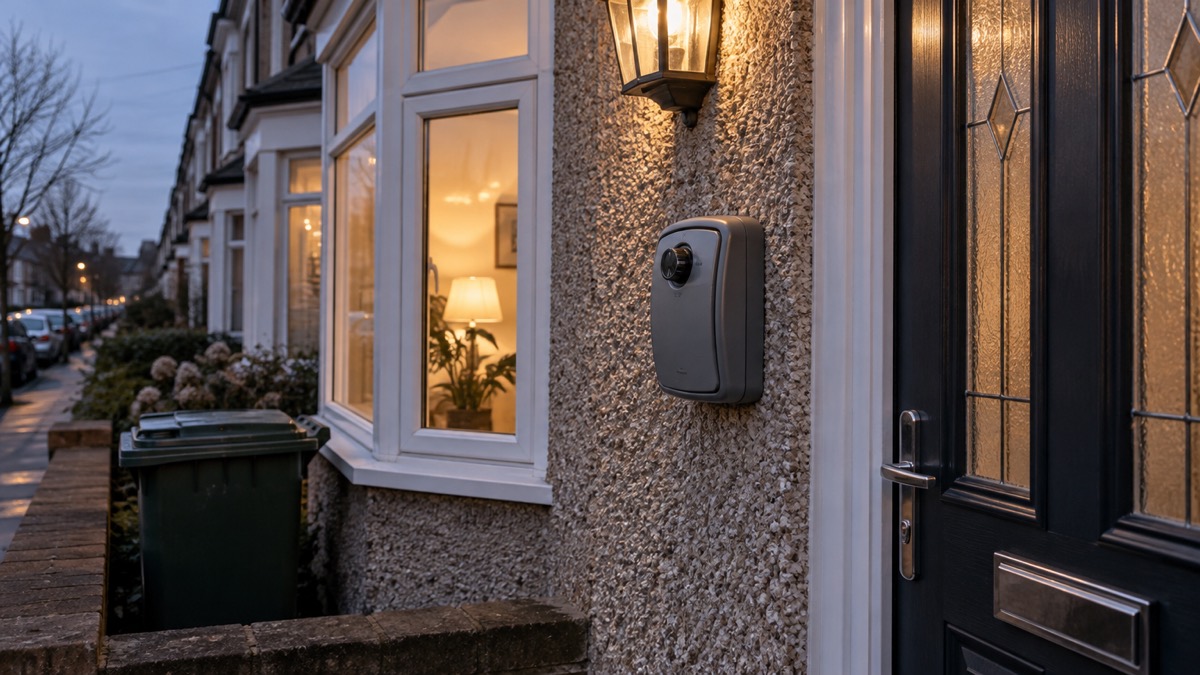
A key safe is a small lockable box, fixed to an outside wall, that holds a spare house key behind a combination code you choose. Devon and Somerset Fire and Rescue Service describe it plainly: "A key safe is a lockable box that holds a key. This means carers, family or emergency services can get into the home if" the householder cannot let them in1. NHS inform in Scotland defines it the same way: a secure box with a combination lock kept outside your home, which anyone you have shared the code with can open2. It is the same idea as leaving a spare key with a neighbour, but the key stays at your address and the people who can reach it are the people you have told the code.
This page explains what a key safe does in an emergency, which ones the police recognise, who should have the code, how a care alarm service can pass it to responders for you, and how to fit and look after the safe. If you are arranging this for someone who is older, disabled or medically dependent, the extra help in an emergency guide covers the wider package of alarms and support a key safe usually sits alongside.
What a key safe is and how it lets help in
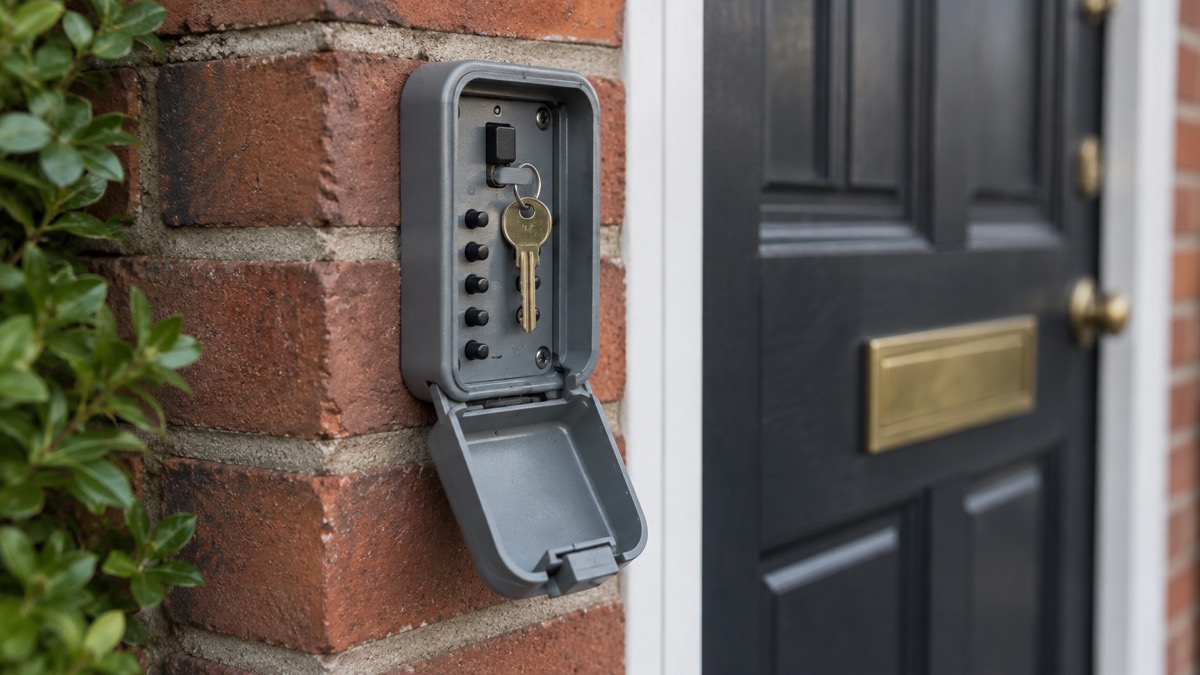
A key safe has three working parts: a weatherproof box, a key hook or compartment inside it, and a combination lock on the front. You set a code of your choosing, fix the box to the wall, and put a spare key inside. Anyone who knows the code can open the box, take the key, let themselves in, and return the key afterwards. NHS inform, describing them for people at risk of falls, calls them police-approved key safes: "a secure box with a combination lock kept outside your home that anyone you have shared the combination code with can access"6.
The people it lets in are the people you choose. That usually means family who arrive before you can get to the door, carers on a rota who would otherwise need a key each, and neighbours who check on you. It can also mean the emergency services, which is the reason fire and rescue services and ambulance services recommend them: a crew that can get in without forcing a door reaches you faster and leaves your door intact.
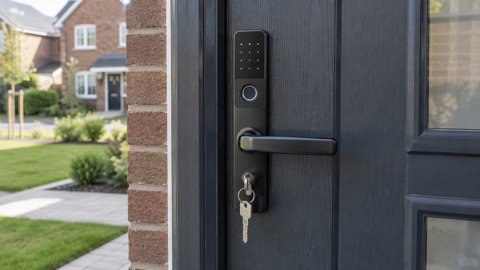
A key safe is not the same as a smart lock, which replaces the lock on your door itself and opens with a code, a fingerprint or an app7. A key safe keeps your existing lock exactly as it is; it just stores a spare key outside. That simplicity is its strength. There is no battery to go flat, no app to update, and nothing to fail in a power cut. It works in exactly the same way whether the electricity, broadband and mobile network are all working or none of them are.
It is also not a substitute for thinking about spare keys more generally. A key safe is one way of making a spare key available at your own address; leaving a key with a trusted neighbour is another, and official advice treats them as alternatives2. The rest of this page is about choosing, fitting and managing the key safe route well, because done badly, a key safe can hand a burglar your front door key.
Why a key safe helps in an emergency
The clearest statement of why comes from Warwickshire County Council's assistive technology service: "You may wish to consider purchasing and installing a key safe to enable fast and easy access to your home in an emergency", with the council's control centre able to store the key safe PIN and pass it to friends, family or a rapid response service when one is needed8. That is the whole case for a key safe in one sentence: when seconds matter, nobody has to break a door or wait for a keyholder to drive over.
The situations where this matters most are the ones where you cannot answer the door. A fall is the classic example, and NHS inform's falls advice is built around it: make sure someone trusted has a key, or a key safe outside, and make sure the emergency services know the code6. The same logic applies to a fire. Devon and Somerset Fire and Rescue Service note that thumb-turn locks on the inside help you get out quickly because you do not need to find a key first1; a key safe covers the other direction, helping responders get in to you.
Emergency planning advice across the UK treats spare keys as part of the basic household kit. The Scottish Government's Ready Scotland kit includes spare keys to your home and car9; Wiltshire Council's list includes spare keys for your windows, car and house10; and Neath Port Talbot's emergency kit checklist includes spare keys to your home and car11. The Police Service of Northern Ireland adds the everyday version of the same point: "Make sure you keep the appropriate keys nearby in case of an emergency"12. A key safe is the outdoor half of that arrangement, making a spare available to people who are not in the house.
The principle extends beyond your own household. The UK government's easy-read advice for disabled people and carers suggests giving somebody you trust a spare key so they can get into your home in an emergency13. West Yorkshire Prepared's "emergency friends" idea formalises it: people you trust who can hold a spare house key, offer a place to stay if you are evacuated, collect medication for vulnerable neighbours, or act as a contact point for separated family14. A key safe lets an emergency friend hold your spare key without carrying it around or keeping it at their house.
Fire escape planning adds one caution that shapes where keys live indoors. Surrey Fire and Rescue Service advises keeping door and window keys where everyone can find them, on hooks behind curtains or in boxes on window sills15. Warwickshire's escape plan advice says keys should be next to the doors and windows they open16, and Mid and West Wales Fire and Rescue Service tells older people in Wales to keep window and door keys in an accessible place everyone can find17. Humberside Fire and Rescue Service makes the same point for caravans and motor homes: everyone should know how to operate emergency exits and keys should be kept in a consistent, reachable place18. None of this conflicts with a key safe: the safe holds the spare for people coming in, while the day-to-day keys stay reachable for people getting out.
Police-approved key safes: the ratings that matter
Not every box sold as a key safe will resist an attack, and the police advice is to buy on certification rather than on price or looks. An NHS information sheet from Torbay and South Devon advises people to "purchase a key safe that is police approved and meets the British Loss Prevention Standard LPS 1175", naming the C500, P500 and Keyguard Digital XL as examples3. LPS 1175 is a test standard: the safe has been attacked with a defined set of tools for a defined time and held. Police approval in this context means the product has been recognised under the police-backed scheme, and our page on how to tell if a security product is police approved explains what that involves and how to check a specific model.
Police Scotland gives a second route to the same assurance: "consider getting a key safe that meets the Sold Secure gold standard (and keep it out of sight)"4. Sold Secure is an independent testing body, and its gold standard is the top of its three-tier rating. Some safes carry both recognitions; the Keyguard Digital XL is one of the models named in the NHS guidance above3. If a safe you are looking at carries neither LPS 1175 nor a Sold Secure rating, treat it as a convenience box for low-risk situations, not as security.
The makers themselves describe the market in the same terms: one range of secure key storage devices runs from entry level to Police approved, Secured by Design product, some with independent certified assurance19. That maker framing matches the official advice: within one brand, some models are tested against attack and some are not, so the certification on the specific model, not the name on the box, is what decides it. Our page on which key safes are police preferred goes through the current models in detail.
One practical note on the Bluetooth models: a smart or app-based key safe depends on a battery and on software in a way a mechanical combination safe does not. For most households wanting emergency access, a mechanical combination safe with a recognised rating is the simpler and more dependable choice, because it has nothing to update and nothing to go flat.
Who to share the code with
The rule is short: share the code only with people you would trust with a spare key, because that is exactly what you are giving them. NHS inform's falls plan frames the choice as leaving a spare key with a friend, neighbour or relative you trust who lives nearby, or leaving a spare key in a key safe2. The Northern Ireland direct.gov advice is the same: "If you need to leave a spare key handy then give one to a trusted neighbour"20. The government's easy-read preparedness advice says simply, "You could give somebody you trust a spare key so that they can get into your home in an emergency"13.
In practice the list for most households is some combination of:
- Family members who visit or check in, especially any who could arrive in an emergency
- Regular carers, through their agency, so visits do not depend on a key chase
- One or two trusted neighbours, who are closest and can be there fastest
- A care alarm or telecare service, which can hold the code and pass it to responders, covered in the next section
Keep the list short and keep it current. Every person who has the code can enter your home at any time, and every person who once had it still remembers it unless you change the code. When a carer leaves, a relationship changes, or a neighbour moves away, that is the moment to reset the combination.
The code itself deserves the same care as a password. The National Cyber Security Centre's guidance on smart devices is blunt that criminals know the obvious ones: "Criminals know all the obvious passwords (like '1234'), so consumers should create a secure password, for example by combining three random words"21. A mechanical key safe usually takes digits rather than words, but the principle holds: avoid repeated digits, years of birth, house numbers and anything a stranger could guess from your door. Sussex Resilience Forum's wider advice makes the same point for any code or password: use a strong and different one, so that if one is compromised the others stay safe22.
Giving the code to emergency services through a care alarm service
Telling each individual responder your code is one option, but the arrangement most official guidance points to is a care alarm, or telecare, service that holds the code for you. London Fire Brigade describes these systems as "an alarm system that can help people to continue to live independently by allowing someone else, typically a call centre or a relative who lives elsewhere, to make sure a person is safe"23. When the alarm is raised, the call centre can send someone round, and if they hold your key safe PIN they can let themselves in. Warwickshire's assistive technology service describes exactly this: the control centre can store the key safe PIN and pass it on to friends, family or the rapid response service in an emergency8.
This matters most for people who might be unable to raise or answer the door themselves. Manchester Fire and Rescue Service's guidance for carers of people who use emollient creams, who are at raised fire risk, advises identifying a solution for raising the alarm, for example smoke detection linked to a telecare system24. Surrey Fire and Rescue Service lists linked alarms among its home safety measures25. A key safe plus a telecare alarm is the standard combination: the alarm detects the problem or lets you call for help, and the key safe lets the responder through the door.
If you call 999 yourself, tell the call handler about the key safe. The Welsh Ambulance Service's advice on falls is explicit: "Make sure someone trusted has a key or you have a key safe outside, make sure emergency services are aware of the code"26.
There is a working example of the same mechanism elsewhere in the emergency services. The Northern Ireland Ambulance Service's community defibrillator scheme registers the access codes for locked AED cabinets, and its Emergency Operations Centre staff can direct 999 callers to the nearest registered defibrillator and provide the cabinet code if required27. The principle is identical: a code held on record by the service that needs it, given out only when it is needed. A care alarm service does the same for your front door.
If you do not have a care alarm, ask your council's adult social care or assistive technology team whether they run one, and whether they will register your key safe code with it. Council-run services across England, Scotland and Wales operate these schemes; in Northern Ireland, ask your local Health and Social Care trust.
Fitting a key safe: tools and fixings
Fitting a mechanical key safe to a masonry wall is a short job, but it needs the right fixings done properly, because the safe is only as strong as what holds it to the wall. The maker's instructions supplied with your specific model are the ones to follow, and they differ between models in the details.
The maker's instructions vary by model, so treat the sheet in the box as authoritative for your unit. One set of maker instructions calls for a power drill and a 5mm drill bit suitable for masonry; another, for safes fixed with thunderbolts, calls for an 8mm socket attachment to tighten them28. Check which fixing your model uses before you start: ordinary bolts with wall plugs need the drilled-hole route, while thunderbolts cut their own thread into masonry and are tightened with the socket.
The general sequence is the same either way:
- Choose the position, out of sight from the street, and check for pipes or cables behind the wall before drilling
- Hold the safe's back plate or template against the wall and mark the holes
- Drill the holes at the size the instructions state, into solid masonry rather than mortar joints where possible
- Fix the safe with the supplied bolts, tightening them fully
- Set your code with the box open, then close it and test the code before you rely on it
Two cautions from the official side of the pack. First, Police Scotland advises having a safe installed by a vetted professional and getting an installation certificate, because your insurance might need it if you make a claim4. If you are not confident with a drill, or your wall is awkward, a professional fitting is the safer route and gives you the paperwork. Second, if you rent, ask your landlord before drilling into the wall; the alternatives in the next paragraph need no drilling at all.
If drilling is not an option, the maker's instructions for your model are the place to check before giving up on the safe: fixings and suitable surfaces vary between models, and some substrates are not recommended for key safe installation at all.
Where to fix it on the outside wall
Position is a security decision as much as a convenience one. Police Scotland's advice pairs the two: get a Sold Secure gold standard safe, "and keep it out of sight"4. A key safe in plain view from the street tells every passer-by exactly where your spare key lives, and gives anyone with the patience a fixed target to work on. Behind a downpipe, around a corner from the front door, or on a side wall the street cannot see all work, provided the people who need it can still find it in the dark and in the rain.
Balance that against the user. The safe should be at a height the householder and their carers can comfortably reach, close enough to the door that someone with limited mobility is not making a long trip in bad weather to open it, and lit well enough to enter a code at night. Our page on where to fit a key safe for emergency access goes into placement in more detail, and the wider principles of what makes a home a harder target are in how burglars choose a home.
Think about the wall itself. Fix into solid brick or block, not into mortar joints, render that could crumble, or a hollow or timber-framed section that the bolts cannot grip. A safe fixed weakly is worse than no safe, because it can be pulled off the wall with the key inside. If no solid, discreet masonry surface exists near the door, that is a reason to have the fitting done professionally or to use the neighbour arrangement instead.
One thing not to do: do not fix the safe where someone can work on it screened from the street, such as deep in a porch or passageway, unless that space is itself secure. Out of sight from casual passers-by is the aim; hidden from everyone while an attacker works is the failure mode. A position visible from a neighbour's window, but not from the public street, is often the best of both.
Keeping the code safe over time
A key safe is a long-term arrangement, and the code is the whole of its security, so it needs the same habits as any other secret you rely on. The National Cyber Security Centre's password guidance applies directly: "If your smart device comes with a default password (like 0000), change it immediately"29. Mechanical safes do not ship with a default, but the equivalent rule is to change the code from whatever the installer or a previous householder set, and to change it again whenever the circle of people who know it changes.
The habits that keep it safe are simple:
- Change the code when a carer leaves, a relationship ends, a neighbour moves, or anyone who knew it no longer should
- Pick your code from the full range available: some safes offer 9.7m possible code combinations, so there is plenty of choice beyond the obvious sequences21
- Use a code you do not use anywhere else, so a compromise elsewhere does not open your door22
- Keep the safe out of sight from the street30
- Tell the emergency services the code when you call 99931
- Keep your list of who knows it short, and review it now and then
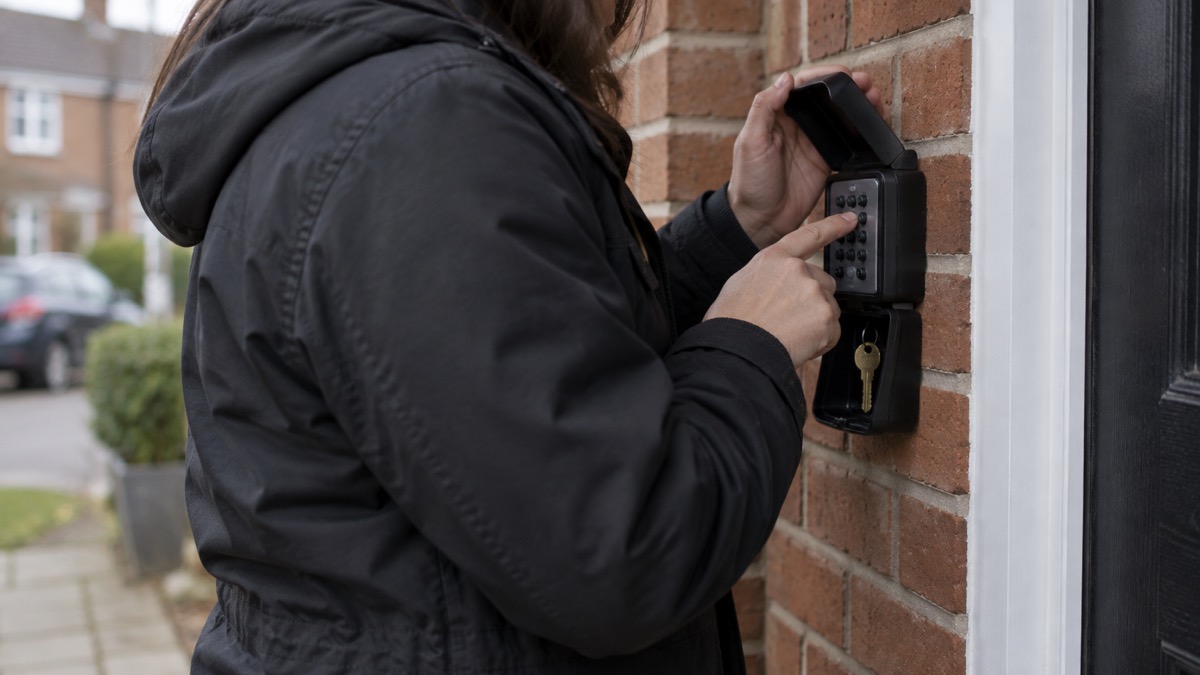
For smart or Bluetooth key safes, Which?'s advice on smart locks carries over: create a long, unique password, keep the software updated, and where possible connect it to other security devices such as outdoor cameras7. Our page on camera and doorbell accounts covers the account side of that in more detail.
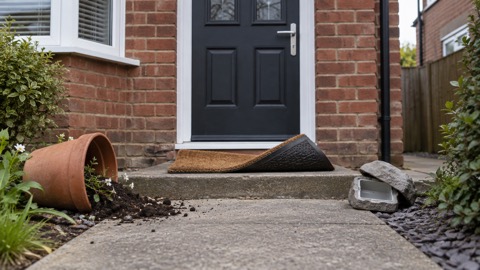
Finally, think about what is inside the safe, because the key you store matters as much as the box. The Northern Ireland direct.gov advice is firm: never leave keys, including car keys and spares, near the door or where they could be reached from outside, and never leave keys in a garage or under a flowerpot20. Sussex Police adds the mechanism: keep car keys out of view and away from the front door, because it is not uncommon for car keys to be stolen by fishing for them through the letterbox32. So the key safe should hold the house key for the entry door, and not the car keys. The Northern Ireland Fire and Rescue Service's advice for older people completes the picture from the other direction: "Always know where your keys are"33. A key safe makes that easy: the spare always lives in one place, and the people who need it always know where that is.
Sources (33)
- Carers equipment: key safes and thumb turn locks, Devon and Somerset Fire and Rescue Service
- Creating a falls plan, NHS inform, 2024-06-18
- Keeping safe and warm at home, Torbay and South Devon NHS Foundation Trust, 2023-11
- Break-in and housebreaking advice, Police Scotland, 2026-11-02
- Fire safety for people with mobility difficulties, Devon and Somerset Fire and Rescue Service, 2026
- What to do if you fall, NHS inform, 2026-04-30
- Do I need a smart door lock?, Which?, 2026-04-15
- Assistive technology, Warwickshire County Council, 2026-10-29
- Emergency kit, Ready Scotland, 2026-10-22
- Planning for an emergency kit, Wiltshire Council, 2026-10-29
- Emergency kit checklist, Neath Port Talbot Council, 2026-10-29
- House security, Police Service of Northern Ireland, 2026-11-02
- Easy read: disabled persons and carers, UK Government Prepare campaign, 2024-07
- Advice for communities: emergency friends, West Yorkshire Prepared, 2026-10-29
- Home fire action plan - Surrey County Council, Surrey County Council
- Making a home escape plan, Warwickshire County Council, 2026-10-29
- Fire safety for older people (Welsh), Mid and West Wales Fire and Rescue Service, 2026-10-29
- Caravan, motor home and campervan safety, Humberside Fire and Rescue Service, 2026-10-29
- Master Lock key safes, Master Lock, 2026-11-03
- Securing your home, nidirect, 2024-01-23
- Smart devices and the law: password advice, National Cyber Security Centre, 2024-04-29
- Community risk register: cyber security advice, Sussex Resilience Forum, 2026
- Carers and support workers: alarms, London Fire Brigade, 2026-10-25
- Caring for an emollient user, Manchester Fire and Rescue Service, 2026-10-29
- Fire safety at home: tips, Surrey County Council Fire and Rescue Service, 2026-08-24
- Some of the reasons people call 999: falls, Welsh Ambulance Service, 2026-10-29
- Community AED scheme, Northern Ireland Ambulance Service, 2026-10-29
- How To Fit Your Key Safe | Taking Care, Taking Care
- Using passwords: infographic guidance, National Cyber Security Centre, 2026
- Frequently Asked Questions about Key Safes | Taking Care, Taking Care
- Fire safety for people with hearing difficulties, Devon and Somerset Fire and Rescue Service, 2026
- Preventing car and vehicle theft, Sussex Police, 2026-11-02
- Reduce fire risks for older people, Northern Ireland Fire and Rescue Service, 2021-02
 Moving Home Locks Checklist
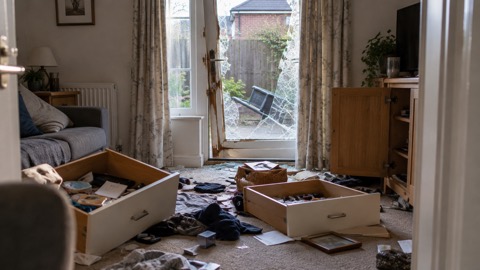 After a Break-In Checklist
 Holiday Security Checklist
 Locking Up When Evacuating
 Flats and Shared Entrances
 Keys and Spare Sets
 Terraced Houses and Rear Alleys
 Smart Locks
 Windows and Ground-Floor Risks