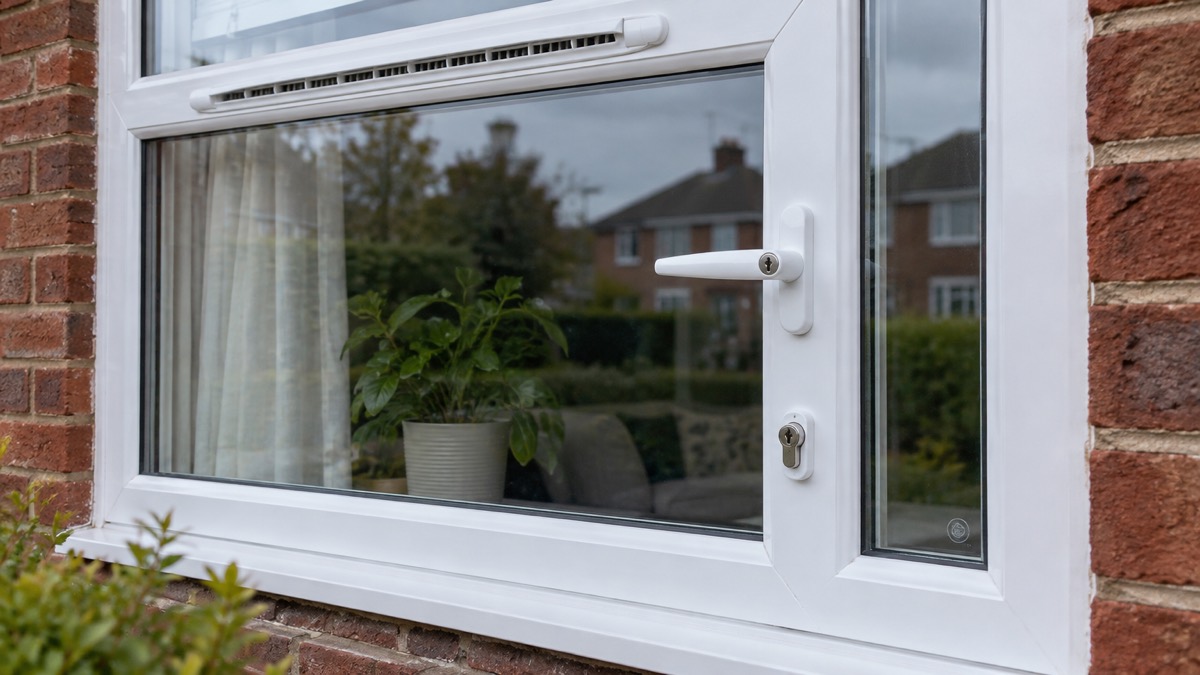
Windows are the way in for many burglars, and they are also the way out when a fire blocks your stairs. Getting both right at the same time is what this page is about: locks that slow an intruder, glazing that is harder to break through, and keys you can still reach in smoke.
The starting point is simple. Fit locks to all downstairs windows, or any window that is easy to reach, as the PSNI advises1, and keep every window locked and in good condition, as nidirect puts it2. Fitting window locks to your accessible windows will reduce the chances of being burgled: it will slow down the intruder and make it much more difficult if they target your home, according to Avon and Somerset Police3. When you replace windows, choose ones tested to a standard: BS7950 for windows and PAS 24 for doors are the standards nidirect names2.
The windows a burglar can actually reach
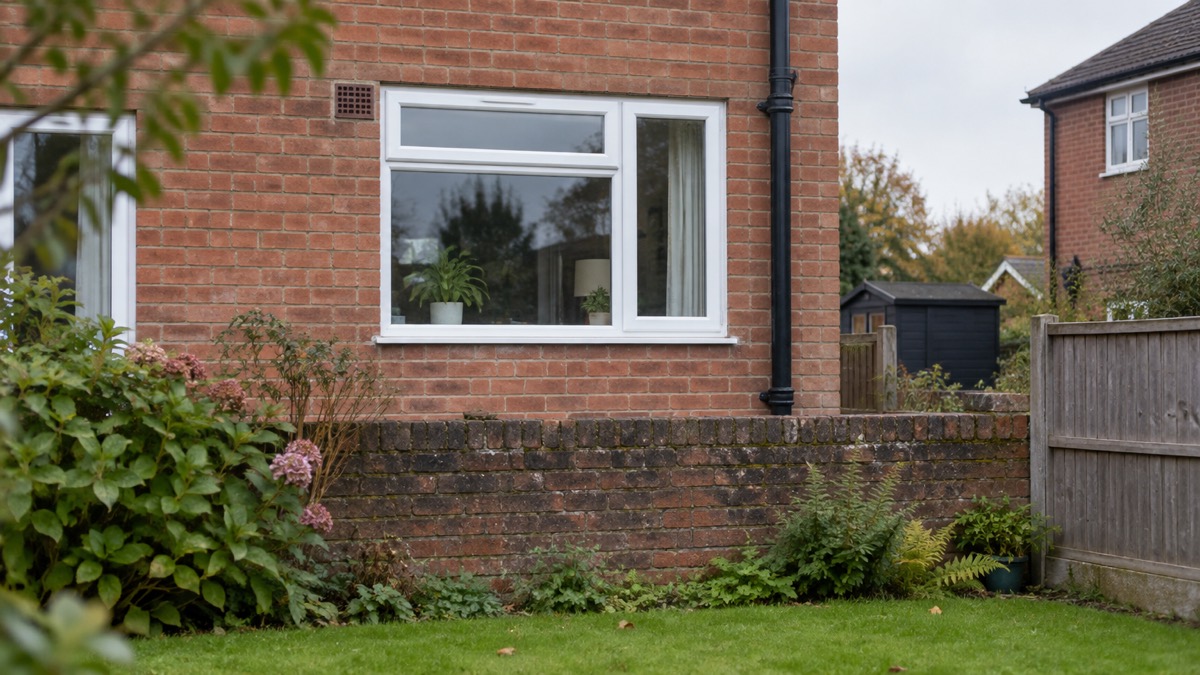
Not every window carries the same risk. The PSNI's house security advice is to fit locks to all downstairs windows, or windows which are easy to reach1. West Yorkshire Police widen that slightly in their home security checklist: fit adequate locks on accessible ground and upper floor windows, because a flat roof, a porch, a garage roof or a drainpipe can put a first-floor window within reach of someone who is determined7.
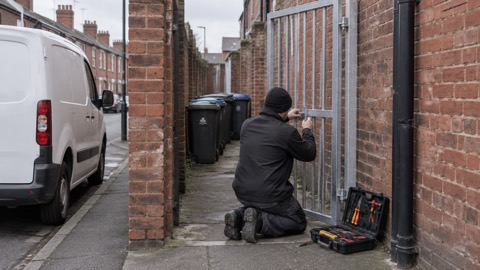
Walk around the outside of your house and look at it the way a stranger would. Which windows can be reached without a ladder? Which are hidden from the street or from neighbours, behind a hedge, in a side return, or facing a rear alley? Those are the ones to lock first, and the ones worth upgrading when you replace them. If you live in a terraced house with a rear alley, the gates and back doors that control access to that alley matter as much as the windows above it.
Windows you want to leave open at night need a different treatment. NHS climate adaptation guidance for households recommends lockable window restrictors, or ground-floor security shutters, for windows that may need to be left open at night8. A restrictor lets air in but stops the window opening far enough for someone to climb through, and a lockable one stops a child or an intruder releasing it from outside. The same logic applies in hot weather, which has its own page on leaving windows open safely.
Outbuildings are part of the picture too. PSNI garden security advice is to fit grilles or mesh to the windows of sheds and outbuildings9, because tools stolen from a shed are often used to break into the house itself.
Window locks: what they do for the household
A window lock does not make a window impenetrable. What it does is buy time. Avon and Somerset Police's window security advice is blunt about the effect: fitting window locks to your accessible windows will reduce the chances of being burgled, because it will slow down the intruder and make it much more difficult if they target your home3. A burglar who is delayed is a burglar who may give up, or who may be seen.
How many locks a window needs depends on its size and where you live. Avon and Somerset Police advise two locks opposite each hinge on a casement window if you live in a high-crime area, or if the opening casement is bigger than one metre3. A single lock on a large casement can allow the corner furthest from the lock to be prised open; two locks spread the resistance along the frame. There is more detail on this in how many locks a window needs.
Locks are only as good as the frame they sit in. nidirect's securing doors and windows advice says that if your door or window frames are damaged or coming away from the wall, get them fixed and securely fitted using strong screws or bolts, because good locks are useless otherwise2. West Yorkshire Police's checklist makes the same point from the other direction: keep doors, windows and the frames they are fitted within in good condition, check the glass is undamaged, and if you are replacing anything, make sure the replacements meet the latest standards7.
Then use the locks, every time. Sussex Police's door and window lock advice makes the point about doors, and it carries over to windows: simply shutting a door will not prevent burglaries, so double-lock every single time you leave the house10. Avon and Somerset Police's doorstep crime advice goes further for people who may be targeted by bogus callers: keep doors locked and windows secure at all times11. Before a storm, Essex Prepared advises locking doors and windows, especially large doors such as garage doors, so the wind cannot tear them open12.
If you want a professional view, a member of the Master Locksmiths Association can check your windows and doors, reinforce frames, and confirm whether locks and hinges are British Standard approved13. Our page on doors and locks covers the equivalent work for the doors themselves.
Glazing that is harder to break through
Glass is often the weakest part of a window, and there are two ways to strengthen it. Avon and Somerset Police's door security advice, which applies to glazed doors and by extension to glazed openings generally, is that glazing can be reinforced by using special film or by installing laminated glass panels13. Laminated glass holds together when it breaks, because a layer between the panes keeps the fragments in place, so an intruder who smashes it still has to push a sheet of broken-but-intact glass out of the frame. That takes time and makes noise, which is the whole point.
Safety glass matters for people as well as for intruders. NHS child safety advice says to use safety glass at a low level, such as in doors and windows, because it shatters less easily than normal glass, and to look for the British Standards (BS) kitemark6. If your windows are older and you cannot replace the glass, the same NHS advice is to make existing glass safer by applying a shatter-resistant film6, which holds the fragments together if the pane is broken, whether by a burglar, a storm or a child falling against it.
If you are in a flood-prone area, glazing and frames have a third job. Surrey County Council's advice on getting back into your home after a flood is to choose water resistant door and window frames, and to use silicone sealant14. This is about keeping water out rather than people out, but it is worth doing at the same time as any window replacement, since the labour is shared.
Films and whitewash you can apply yourself
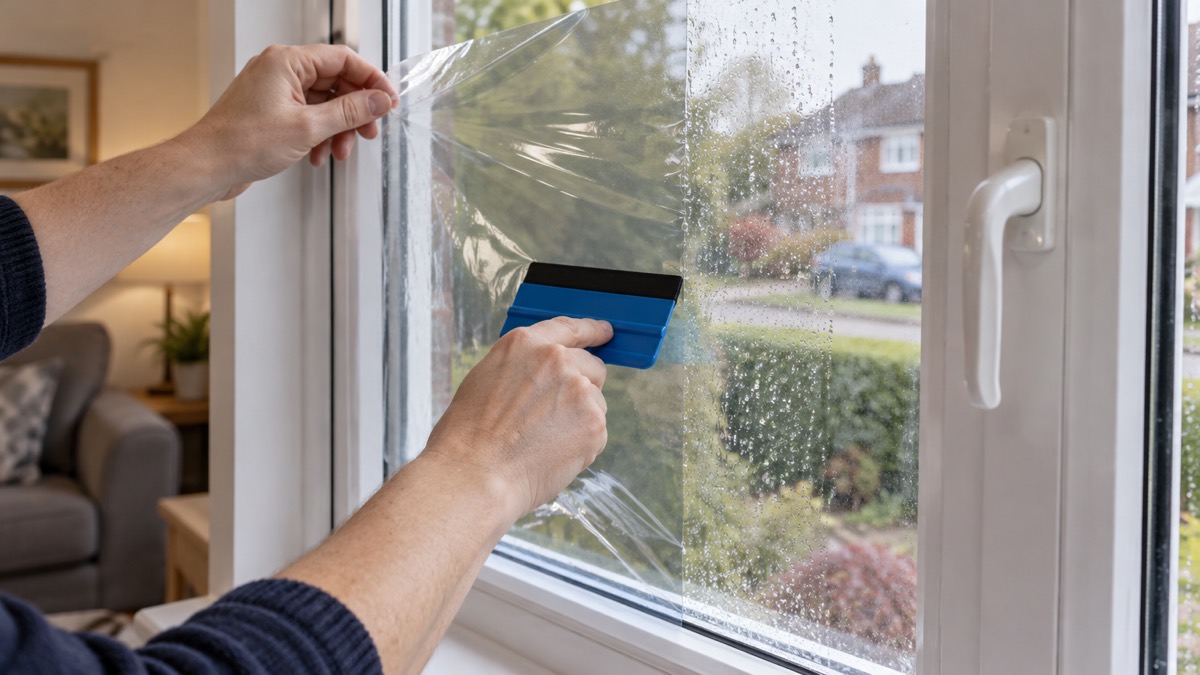
Not every window improvement needs a tradesperson. Oxfordshire's public health heat advice distinguishes clearly between the two: stick up simple, removable window films or whitewash paint yourself, or hire someone to install permanent reflective solar films on the glass15. The do-it-yourself kind is the one to choose if you rent, if you want to try before committing, or if you only need the effect for a season.
Shatter-resistant film, as the NHS describes it, is also a do-it-yourself option for making existing glass safer6. Applied to the inside of the pane, it holds the glass together if it breaks. It is not the same product as reflective solar film, and it does not do the same job, so be clear which one you are buying.
For keeping heat out in summer, the same Oxfordshire guidance suggests a range of measures you can combine: use stick-up or removable blinds, hang thermal curtains, or install mounted external shutters, awnings or fixed blinds15. Nidirect's hot weather advice adds a warning about one combination: take care with metal blinds and dark curtains, because they absorb heat, and consider replacing them or putting reflective material between them and the window16.
Films and seals have a winter use too. The British Red Cross's advice on keeping warm suggests you reduce draughts by lining your windows with rubber seals, and use a homemade draught excluder by doors, which could even be an old towel, tightly rolled17. A removable film applied for the summer can come off in the autumn; a rubber seal is a cheap, reversible fix that suits a rented home.
Permanent reflective film: hiring an installer
Permanent reflective solar film is a different product and a different job. It is installed on the glass rather than stuck up by the householder, and once it is on, it is not designed to come off15. That makes it a decision for an owner-occupier, or for a tenant with written permission, rather than a quick fix.
When any window or glazing work touches the building itself, use someone qualified. Gov.uk guidance on work affecting your home advises choosing someone registered with a competent person scheme, who can self-certify that their work complies with building regulations18. If your installer is not registered, the work may need separate building control approval, which is more hassle and more cost.
The same principle of using vetted, accredited tradespeople runs through official security advice generally. The PSNI's Protect Yourself booklet recommends using a contractor affiliated to a recognised inspectorate body, such as NSI or SSAIB, when having an alarm installed19, and Police Scotland advises having a safe installed by a vetted professional and getting an installation certificate, because your insurance might need it if you make a claim19. Ask a window film installer the same questions: who accredits them, and what paperwork will you get at the end.
PAS 24 and BS7950: what the standards mean
Two standards come up again and again in window and door security, and they mean something specific. nidirect's securing doors and windows advice names them directly: PAS 24 for doors and BS7950 for windows2. Both are test standards. A product carrying them has been put through attack tests at a test house, rather than simply being described by its maker as strong.
Avon and Somerset Police's window security advice is to always use a security-accredited product to a standard such as PAS 24:2022 when you replace windows, and describes windows tested to that standard as tested to British standards and insurance approved3. Police Scotland puts the practical case in plainer words: look for PAS 24 doors and windows because they are harder to break19. There is a fuller explanation on our page about what PAS 24 means for your doors and windows.
The third name to know is Secured by Design, the police initiative that accredits security-tested products. Police Scotland advises buying new windows and doors certified by Secured by Design19, and Avon and Somerset Police note that Secured by Design accredits security-accredited door products13. A product listed by Secured by Design has met the relevant standard, so checking their listings is a quick way to verify a manufacturer's claim. Our page on police-approved products explains how to check.
When you buy, ask for the certificate and keep it. Your insurer may ask for proof that windows and doors meet a standard, and a certificate in a drawer is easier than a phone call to an installer years later. Our page on home insurance conditions covers what policies commonly require.
Keeping an escape window usable in a fire
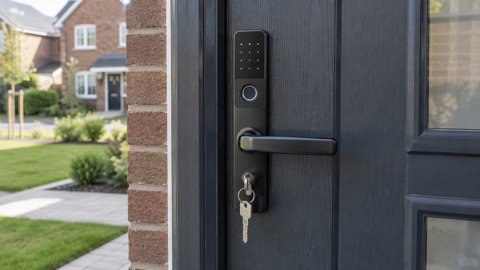
Security and escape pull against each other: the locked window that stops a burglar is the same window you may need to open at speed in smoke. Fire safety guidance resolves this with one rule about keys. The Fire Kills campaign's escape plan advice is to keep door and window keys in a safe but accessible place near the exit they fit, never leave keys in locks, and make sure everyone knows where they are4.
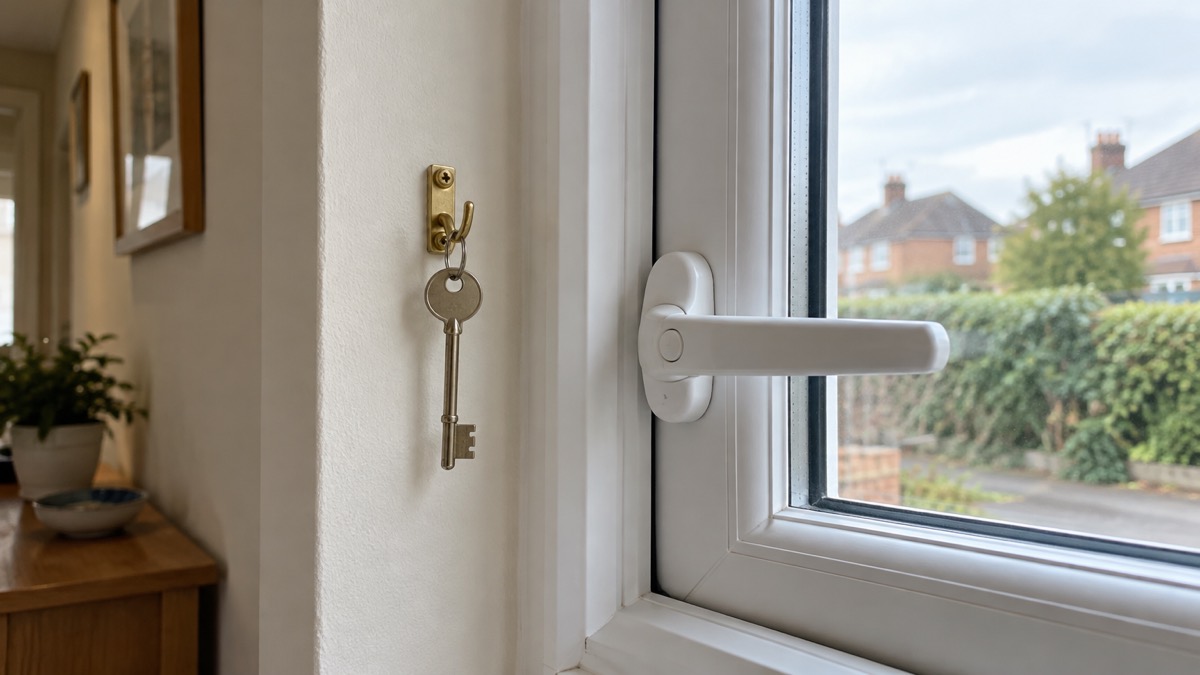
Fire and rescue advice on flat safety adds a rule about where the keys live: keep them accessible, and make sure everyone in the home knows where they are5. The same advice applies in a house. A hook in the hall, or a bowl on a shelf in the living room, next to the window they open, is the arrangement that works.
If your escape route is blocked, the advice is specific about height. Manchester Fire and Rescue Service says you should only try to escape through a window if you are on the ground or first floor, under 3 metres in height, and your escape route is blocked; if you are higher up, wait to be rescued by firefighters5. The Fire Kills campaign describes what to do when you cannot escape: get into a room with a window and close the door, block gaps under the door with bedding or towels, open the window and call for help, and if you are on an upper floor, do not jump, wait for rescue4.
If you do have to go out of a ground-floor window, the Scottish Fire and Rescue Service suggests you might be able to drop some pillows or cushions and then lower yourself from the windowsill20. And the rule that follows every escape plan, from the Scottish Fire and Rescue Service: once you are out, stay out20.
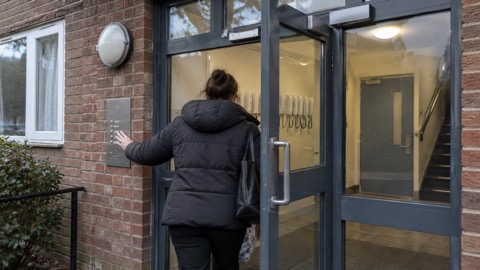
For flat dwellers, the arrangements are different and worth knowing in advance. Manchester Fire and Rescue Service's advice for residents of flats operating a stay safe policy is to keep doors and window keys accessible, and to keep hallways and doorways, including communal areas, free from clutter, reporting discarded rubbish to your landlord or management agency21. Fire doors play their part too: London Fire Brigade explains that fire doors create a barrier from fire and toxic smoke, preventing them travelling around a building and keeping damage to a small area, which allows evacuation, stay put and safe access for the emergency services22. Never prop a communal fire door open, and never lock a fire escape route you might need. Our page on flats and shared entrances covers the security side of communal living.
Flood boards and window protection in severe weather
Windows face weather as well as people, and the preparations overlap less than you might think. Devon and Somerset Fire and Rescue Service describe floodboards in detail: they are fixed to window and door frames, and they can be washed, stored, and used again23. If you live somewhere that floods repeatedly, a set of floodboards fitted to your window frames in advance turns an emergency into a routine.
Flood-resilient windows are also about materials. Surrey County Council's post-flood advice is to choose water resistant door and window frames and use silicone sealant14, so that water that does reach the frame does less damage and the window survives to be reused.
Storms need simpler preparation. Essex Prepared's advice before storms, heavy rain and high winds is to lock doors and windows, especially large doors such as those on garages12. A locked window is a stiffer window: the lock holds the casement against the frame so gusts cannot work it open and crack the glass. If a storm or flood damages your windows and leaves an opening into your home, our page on making a damaged home safe from intruders covers the immediate steps, and the flooding and storms and snow guides cover the weather itself.
Renting, leaseholds and who fits what
If you do not own your home, the security work you can do is limited by your tenancy, but not to nothing. The first step is to read the agreement and talk to the landlord before fitting anything. London Fire Brigade's fire door guidance makes the point for leasehold tenants in particular: examine the details of your lease contract and consult the landlord, because you may find you have responsibility for ensuring a suitable fire rated door with all its compatible components is fitted22. The same principle applies to window locks and restrictors: who pays and who decides is written somewhere, and it is better to know before you drill.
If you rent or own a leasehold, the starting point is to ask before making any permanent change to the windows. What you should not do is replace glazing, fit permanent film or change locks without permission. If you are unsure whether a measure counts as permanent, put the question to your landlord or managing agent in writing before you buy anything.
Report problems in writing. Damaged frames, cracked glass and windows that will not lock are the landlord's to fix in most tenancies, and nidirect's advice that frames must be fixed and securely fitted, because good locks are useless otherwise2, is the argument to make if a repair is refused. West Yorkshire Police's checklist item, checking that doors, windows and frames are in good condition and that glass is undamaged7, is a reasonable thing to ask for in any home.
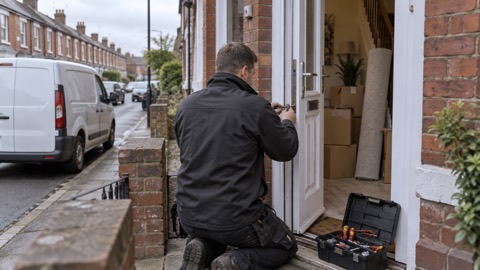
For owners, the position is freer. Police Scotland includes changing your locks in its advice on moving into a new home, if you want to19, and a member of the Master Locksmiths Association can check your existing windows and doors, reinforce frames, and confirm whether locks and hinges are British Standard approved13. If you are locked out or need a locksmith in a hurry, our page on what to do and choosing a locksmith covers it.
Where to get help and advice
Several bodies give free, specific advice on window security, and it is worth using them before you spend money.
- Your local police force's crime prevention pages. Most forces publish free advice on securing windows, doors and gardens. In Scotland and Northern Ireland, reporting and support arrangements differ, and our page on Scotland and Northern Ireland explains them.
- A Crime Prevention Officer. The PSNI notes that your local Crime Prevention Officer can advise on the best areas to install and position security measures for maximum effect9. Contact them through your force's non-emergency number or website.
- A member of the Master Locksmiths Association. A locksmith listed with the association can assess your windows and doors and carry out work on locks and frames.
- Your fire and rescue service. Every service publishes free household guidance on escape plans, keeping keys accessible, and flat safety, and many will visit your home to talk it through.
- Secured by Design listings. To check whether a window or door you are buying is police-accredited, look it up against Secured by Design's certified products19.
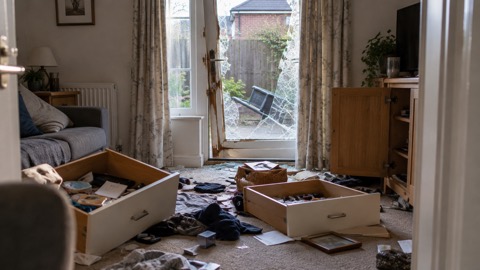
If the worst happens and a window is forced, our pages on coming home to a break-in and after a burglary set out the first steps, the crime number and the insurer. If you want to understand which homes burglars choose in the first place, start with how burglars choose a home, and for the whole picture of household security, see home security: a household guide.
Sources (23)
- House security, Police Service of Northern Ireland, 2026-11-02
- Securing doors and windows, nidirect, 2024-08-27
- Window security advice, Avon and Somerset Police, 2026-11-02
- Make an escape plan, Fire Kills campaign, 2026-03-25
- Know your escape plan, Manchester Fire and Rescue Service, 2026-10-29
- Baby and toddler safety, NHS, 2026-02-19
- Home security advice, West Yorkshire Police, 2026-11-02
- Climate adaptation: keeping safe and well at home, Birmingham and Solihull NHS, 2026-10-29
- Garden security, Police Service of Northern Ireland, 2026-11-02
- Door and window lock advice, Sussex Police, 2026-11-02
- Doorstep crime advice, Avon and Somerset Police, 2026-11-02
- Storms, heavy rain and high winds, Essex Prepared, 2026-10-29
- Door security advice, Avon and Somerset Police, 2026-11-02
- Getting back into your home following flooding, Surrey County Council, 2026-10-28
- Beat the Heat, Oxfordshire County Council, 2026
- Hot weather advice, nidirect, 2026-10-05
- Tips on keeping warm this winter, British Red Cross, 2026-10-25
- Oil storage regulations and safety, Gov.uk, 2026-10-29
- Break-in and housebreaking advice, Police Scotland, 2026-11-02
- What to do in an emergency at home, Scottish Fire and Rescue Service, 2026-10-25
- Fire safety information for residents living in flats operating a stay safe policy, Manchester Fire and Rescue Service, 2026-10-29
- Fire doors, London Fire Brigade, 2026-10-25
- Safety in severe weather conditions, Devon and Somerset Fire and Rescue Service, 2026
 Moving Home Locks Checklist
 After a Break-In Checklist
 Holiday Security Checklist
 Locking Up When Evacuating
 Flats and Shared Entrances
 Key Safes for Carers
 Keys and Spare Sets
 Terraced Houses and Rear Alleys
 Smart Locks