Standing outside your own front door with no key is one of the most stressful small emergencies a household meets. The good news is that it almost always has a safe solution, and the order you do things in matters more than how quickly you do them. Emergency advice from official bodies starts the same way whatever the situation: stay calm, work out what has actually happened, and only then act1. If you do need to ring the emergency services, the same guidance applies: stay calm and tell them exactly where you are2.
Work through this order before you spend any money: check every door and window, think who else holds a key, decide whether anyone or anything inside is in danger, and only then call a locksmith. Most lock-outs end at step one or two. If you do need a locksmith, choose one who belongs to a recognised trade body, agree the cost before they travel, and never accept a door being drilled open as a first resort.
What to do first when you are locked out
Stop and take a minute before you do anything else. NHS guidance on emergencies is blunt about this: the first thing to do is work out what has actually happened, and only then act1. In this case that means answering three questions. Is anyone or anything inside that cannot wait, such as a child, a vulnerable adult, a pet, or a hob left cooking? Is there another key within reach, held by a family member, a neighbour or a landlord? And is there another way in that you have not checked?
If the answer to the first question is yes, go straight to the section on when to call 999 below; that outranks everything else on this page. If the answer is no, you have time to work through the rest calmly.
Do not force anything in the first few minutes. A broken uPVC door, a smashed window or a bent lock will cost far more to repair than a locksmith's call-out, and climbing through a window is how people are injured. NHS guidance on falls is a reminder to check yourself before you act: take a few minutes to work out whether what you are about to do could leave you hurt1. If it is cold, get somewhere sheltered while you think; NHS first aid advice on cold exposure is to go indoors or somewhere sheltered as quickly as possible rather than standing in the open6.
A practical order to follow:
- Check your pockets, bag and car again, including linings and compartments.
- Text or call anyone who might hold a key: family, flatmates, a neighbour.
- Walk around the property and check every door and ground-floor window.
- If you rent or lease, contact the landlord, agent or management company.
- Only then call a locksmith, having agreed the cost on the phone.
Check every way in before you call anyone
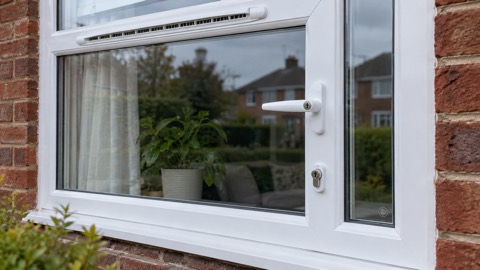
Police house security advice is built on the fact that homes have more than one way in, and that people routinely leave one unsecured. The PSNI's guidance is to go into each room and make sure all the windows are tightly shut and locked, and that all doors leading into the home are secure and locked before you go out7. The reverse of that advice works for you when you are locked out: the door you came out of may be firmly locked, but the window someone left on the latch, the back door, the garage-to-house door or a utility room door may not be.
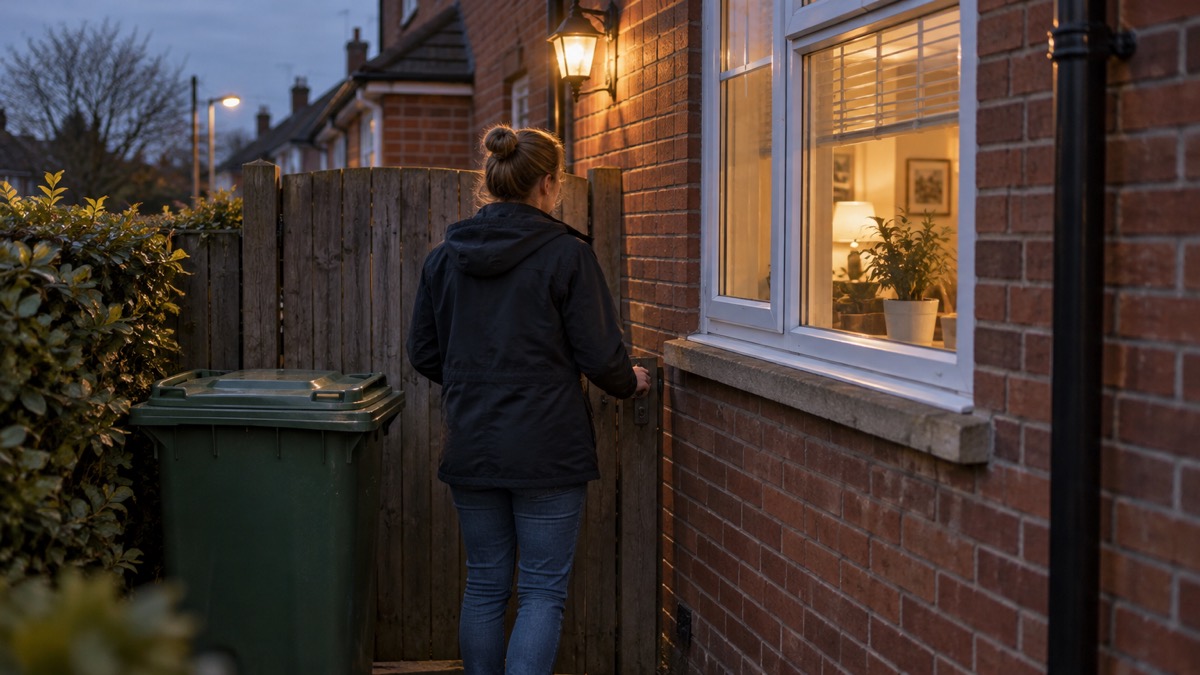
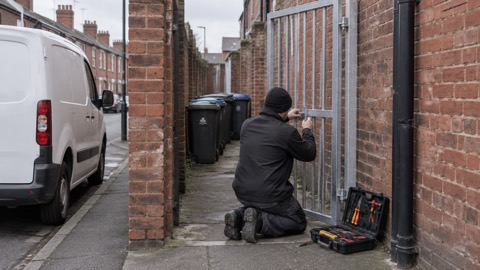
Walk the whole outside of the property, including the back and sides. Check that gates open, since Police Scotland's guidance on garden security is that gates should not be broken and should be lockable8, which also means they can be unlocked and passed through. Look at ground-floor and easily reached first-floor windows, and at any door between a garage and the house. If you live in a flat, check whether a communal door or a rear entrance has been left on the latch.
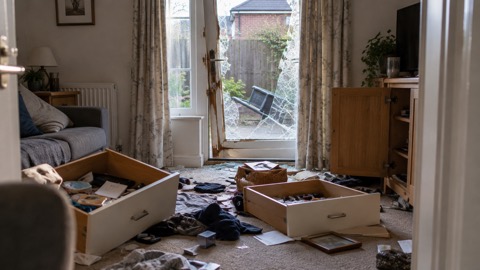
Two cautions from official guidance apply here. First, do not climb. A first-floor window is not worth a broken ankle, and NHS fall guidance is clear that injuries need checking before you try to move1. Second, if anything looks wrong rather than merely locked, a smashed window, a forced door, belongings scattered where they should not be, treat it as a possible break-in. Police Scotland's advice on housebreaking is that you should not go inside in case the intruder is still there, and you should call 999 if you think they may be8. Our page on coming home to a break-in covers that situation in full.
Who to call: landlord, housing association or key holder
If checking every way in draws a blank, the next question is who else can legitimately open the door. Devon and Somerset Fire and Rescue Service guidance for tenants and leaseholders is to contact the building owner, landlord, agent or management company4. For a private tenant that is your letting agent or landlord; for a housing association or council tenant it is the repairs line, which usually runs an out-of-hours service; for a leasehold flat it is the management company. They may hold a master key, or be able to send someone who does, and they are often faster and cheaper than a locksmith because it is their job.
If you have household insurance, Surrey County Council's recovery guidance is to call your insurer or landlord immediately; they will send a loss adjuster as soon as they can3. Some policies include a home emergency line that will arrange and pay for a locksmith, so it is worth checking your documents or calling before you book one yourself. If you rent, the same guidance notes the landlord may claim from the building insurer4, which is one reason to involve them rather than going alone.
Think laterally about key holders too. Official pet emergency guidance from Medway Council suggests households identify a trusted neighbour who holds a house key and keep their contact number to hand9. If you have ever given a spare to a neighbour, a relative who lives nearby, a dog walker or a childminder, now is the moment to ring them. This is also why our page on keys: spares, hiding places and lost sets recommends planning this before you need it.
If you live above or below a commercial premises, Dorset and Wiltshire Fire and Rescue Service guidance is to talk to the landlord or business owner first, and if they do not act, to contact your local authority or the fire and rescue service10. That advice is about blocked escape routes, but the same hierarchy applies to access problems: the owner or manager of the building is your first port of call.
When a child, a vulnerable person or a hob is inside: call 999
This is the one situation where being locked out is a genuine emergency. Call 999 if a child is locked in alone, if an older or disabled person inside cannot reach the door, if a pet is trapped in danger, or if a hob, oven, iron or heater has been left on and no one can get to it. North Wales Fire and Rescue Service guidance is explicit about waiting for the professionals: if there is someone still inside, wait for the fire and rescue service to arrive, tell them about the person, and they will be able to find them quicker than you11. 999 calls are free12.
The Fire Kills campaign's rule matters here too: never go back or break in for possessions, pets or people, and tell the fire service immediately if anyone is missing13. Smashing a window to reach a child, with glass landing where they are, is exactly the kind of well-meant action official guidance is warning against. The fire and rescue service has the tools and training to open a door quickly and safely.
While you wait for help, East of England Ambulance Service guidance on waiting for an ambulance applies just as well to waiting for the fire service: check that your house number or name is clearly visible from the roadside, get someone to open doors or stand outside to signal when help arrives, and lock away any family pets so they do not get underfoot14. Those small steps genuinely speed up a response at night, on an unlit road or in a block of flats.
If the danger is a fire rather than a person, the same call to 999 applies. Fire and rescue guidance for anyone trapped inside is to get everyone into one room, ideally with a window and a phone, put bedding or towels along the bottom of the door to stop smoke, then call 999 and shout for help15. If you are the one outside and someone inside is telling you this through a window, your job is to make the 999 call and to flag the house for the crew, not to attempt a rescue yourself.
Choosing a locksmith you can trust
Locksmithing is unregulated in most of the UK, which is why the trade body matters. Avon and Somerset Police's door security guidance directs householders to a member of the Master Locksmiths Association (MLA)18. An MLA member's business has been vetted, and the police guidance sets out what such a locksmith actually does for you: they can check whether your front door is secure and what material it is made of, reinforce the frame, often with London and Birmingham bars, and check whether the locks and hinges are British Standard approved18. A trader who cannot or will not discuss any of that is the wrong trader.
The same police guidance shows the depth of knowledge a proper locksmith brings. On older aluminium patio, sliding or bi-fold doors, it advises that if the cylinder lock protrudes beyond the frame handle, you should get an MLA member to change it to a shorter, more snap-resistant one18. That is the level of specific, product-level advice a genuine locksmith gives; a rogue trader's only interest is getting the door open by whatever method earns the most.
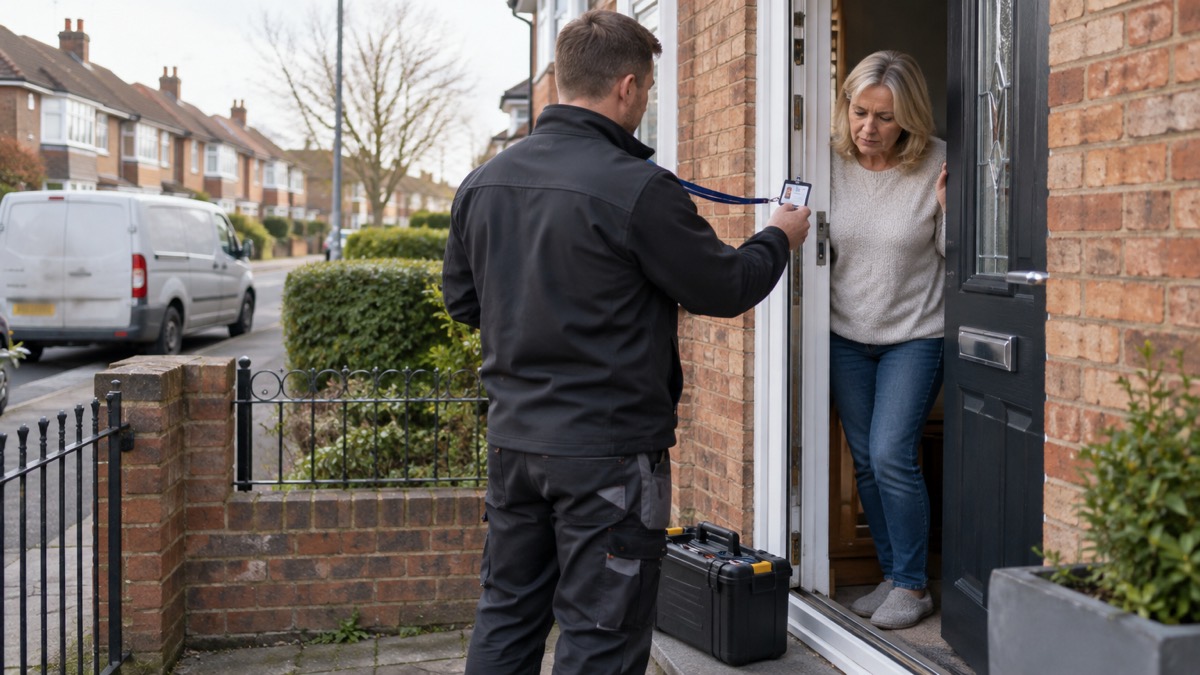
Police Scotland's Shut Out Scammers campaign gives a rule of thumb that protects you on the doorstep as much as on the phone: LOCK, STOP, CHECK. Keep front and back doors locked, check through a viewer or window before opening, and only let callers in when you have an appointment and confirmed ID19. A locksmith you have called should expect to be checked; a genuine one will happily confirm their identity and membership before you let them in. Our pages on spotting and turning away doorstep crime and how to check a doorstep caller is genuine cover this in detail.
Questions to ask before they come out, and what a good locksmith tries first
Agree as much as possible on the phone, before anyone travels. The questions that matter are practical ones: are they a member of the Master Locksmiths Association; what is the call-out charge and the likely cost for your type of lock; and how will they open the door?
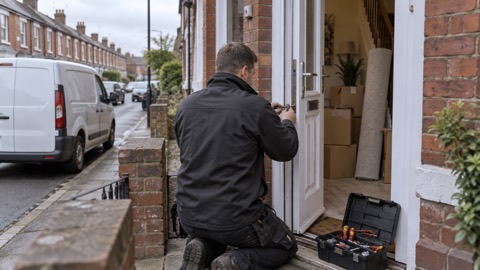
On that last question, a capable locksmith's aim is non-destructive entry: picking or slipping the lock so the door opens and the lock still works afterwards. The police guidance on what an MLA member does supports this expectation, because a genuine locksmith's trade is built around understanding lock mechanisms well enough to open them without destroying them, and then advising on the door's security afterwards, from frame reinforcement with London and Birmingham bars to checking locks and hinges are British Standard approved18. Drilling a lock should be a last resort for a genuinely high-security cylinder, not the opening move. If a caller on the phone says the door will "probably need drilling" before they have even seen it, end the call.
A note on the aftermath. If the lock does have to be replaced, that is also the moment to ask about security, not just about getting in. The police guidance notes an MLA member can check whether your locks and hinges are British Standard approved and reinforce the frame18, and our page on doors and locks: standards and cylinders explains what those standards mean for your home.
Where to complain about a rogue trader
If a locksmith drills a lock that did not need drilling, inflates the bill on the doorstep or behaves in a way that frightens you, there are clear routes to complain. Police Scotland's advice is to call 101 to report any suspicious activity, and if you feel scared or threatened, call 999 and ask for the police19. A trader who becomes aggressive when you query a bill has moved from a consumer matter into a police matter, and the same advice applies: if you feel scared or threatened, call 99919.
For the consumer side, contact the Citizens Advice Consumer Service to log a complaint on 08454 04 05 063. They are the recognised route for complaints about traders in the UK and can pass cases to trading standards. Keep the receipt, the trader's name, vehicle registration and phone number, and any text messages quoting prices; a written quote agreed before work started is the strongest thing you can hold.
If the incident involved a break-in as well, Police Scotland note that you can report a crime online, by phone or in person8. Our pages on rogue traders and doorstep selling and how to report a bogus caller set out the steps in full.
Keep a spare key safe so it does not happen again
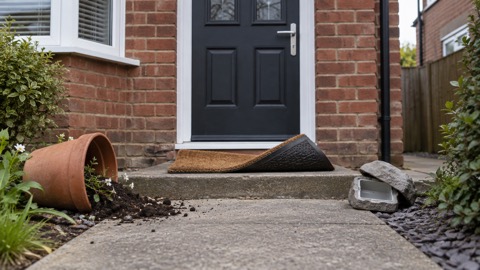
Once you are back inside, spend half an hour making sure this does not happen twice. The starting point is official and firm: nidirect guidance on securing your home says never leave keys, including car keys and spares, near the door or where they could be reached from outside, and never leave keys in a garage or under a flowerpot5. The classic spare-key hiding places are the first places a burglar looks, so a spare key "hidden" at the property is worse than no spare at all.
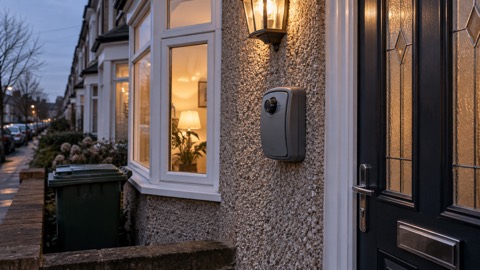
The safe alternatives are a key in the keeping of a person you trust, or a proper key safe. Medway Council's emergency guidance is to identify a neighbour you trust with a house key and keep their contact number9. A neighbour can also help in wider emergencies, not just lock-outs. If carers or family need regular access, a fitted key safe is the recognised answer; our page on key safes: letting carers and responders in covers choosing and fitting one.
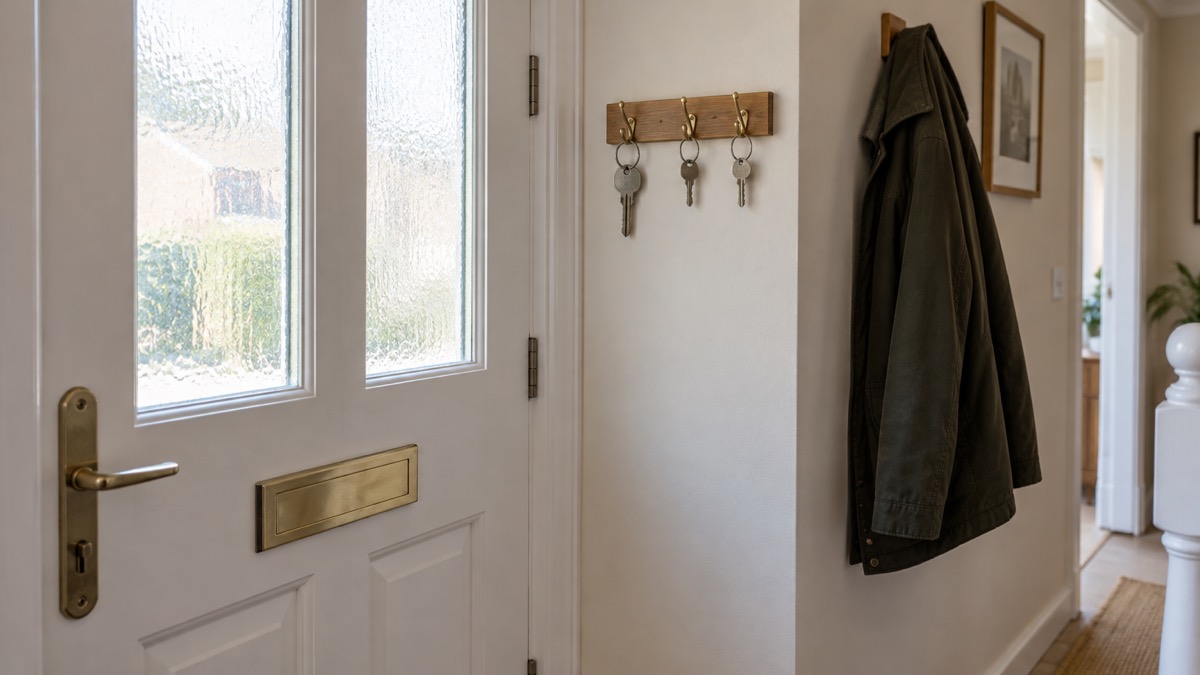
There is a second, less obvious side to key keeping, and the two pieces of official guidance need reading together. Fire safety guidance says keep keys where you can find them in case you need them in a hurry, preferably near to your door20, and flats guidance says keep door and window keys accessible and not in the kitchen21. The security rule is that keys must not be reachable from outside, through a letterbox or a broken window; the fire rule is that they must be reachable from inside, fast, in the dark. Both are satisfied by the same arrangement: keys on a hook or in a bowl in the hallway, away from the letterbox and away from the kitchen.
Two smaller habits finish the job. Staffordshire Fire and Rescue Service guidance on overnight guests is to tell them anything they may not be familiar with, like how to unlock your front door15, and the same goes for babysitters: DW Fire guidance says a babysitter should know the quickest way out, where door and window keys are, emergency contact numbers and the full address including postcode16. A guest who cannot work your door is the next lock-out waiting to happen.
If you rent, or your lock is a smart lock
Two situations change the advice slightly. If you rent, tell your landlord or letting agent before any lock is changed or replaced, and check what your tenancy agreement says about keys and access before you arrange work. See our page on smart locks in rented and shared homes if you are considering one.
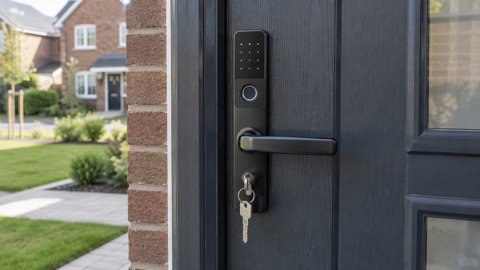
If your door has a smart lock and it fails, work through its power and connection first, and find the physical backup key the maker supplied. Fire safety guidance to keep door and window keys where you can find them in a hurry20 matters even more in a smart-lock home, because the electronic route in can fail when the power or the battery does. Our pages on smart locks and whether a smart lock locks you out in a power cut cover what to check. If a failed lock leaves someone trapped inside and in danger, call 999 and tell the operator exactly what is wrong; guidance for residents unable to leave a flat is to call 999 and tell the control operator the reason you cannot get out21.
Sources (20)
- What to do if you fall, NHS inform, 2026-04-30
- Water safety, Manchester Fire and Rescue Service, 2026-10-29
- Getting back into your home following flooding, Surrey County Council, 2026-10-28
- After an incident: fire, Devon and Somerset Fire and Rescue Service, 2026
- Securing your home, nidirect, 2024-01-23
- House security, Police Service of Northern Ireland, 2026-11-02
- Break-in and housebreaking, Police Scotland, 2026-11-02
- Looking after your pets in an emergency, Medway Council, 2026-10-29
- Advice if you live above or below a commercial premises, Dorset and Wiltshire Fire and Rescue Service, 2024-06-20
- Get out, stay out and call 999, North Wales Fire and Rescue Service, 2026-10-29
- Fire safety in the home, HM Government, 2022-05-25
- Escape, Fire Kills campaign, 2026-03-25
- Using 999, East of England Ambulance Service NHS Trust, 2026-10-28
- Plan your escape, Staffordshire Fire and Rescue Service, 2026-10-29
- Fire safety for parents, child carers and babysitters, Dorset and Wiltshire Fire and Rescue Service, 2021-01-04
- Escape plan, Devon and Somerset Fire and Rescue Service, 2026
- Door security, Avon and Somerset Police, 2026-11-02
- Shut Out Scammers, Police Scotland, 2026-11-02
- Fire safety: people with hearing difficulties, Devon and Somerset Fire and Rescue Service, 2026
- Fire safety information for residents living in flats, Manchester Fire and Rescue Service, 2026-10-29
 Moving Home Locks Checklist
 After a Break-In Checklist
 Holiday Security Checklist
 Locking Up When Evacuating
 Flats and Shared Entrances
 Key Safes for Carers
 Keys and Spare Sets
 Terraced Houses and Rear Alleys
 Smart Locks
 Windows and Ground-Floor Risks