Losing a set of house keys, or finding a spare has gone missing, is one of those small household problems that quickly turns into a bigger question: who else can now get in? The answer depends on where the keys were, what they open and whether anything in the set identifies your home. This page sets out what to do straight away, where spare keys should and should not be kept, and when lost keys mean changing the locks rather than just cutting a new set.
The starting point is simple. Do not hide a spare key outside your home, because burglars know where to look1. Keep spare keys instead with someone you trust, or in a police-approved key safe fitted to an outside wall2. And if a set of keys is lost along with anything that identifies your address, treat the locks as compromised and act on the advice below.
Where not to hide a spare key
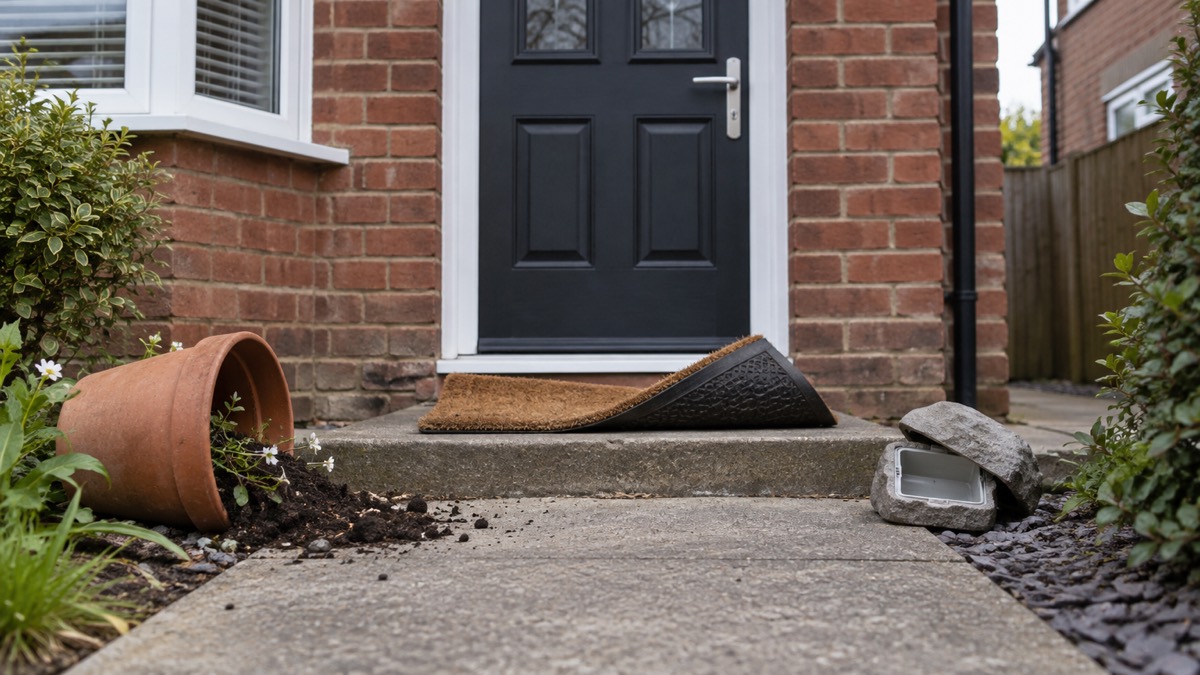
The classic hiding places, under the flowerpot, behind the drainpipe, on a ledge above the door frame, are the first places an experienced burglar checks. Croydon Council's flood evacuation checklist advises householders not to hide a spare key outside the home, because burglars know where to look1.
The same logic applies to keys kept just inside the door. NI Direct's guidance on securing your home says never to leave keys, including car keys and spares, near the door or anywhere they could be reached from outside, and never to leave keys in a garage or under a flowerpot3. A key on a string behind the letterbox, or on a hook an arm's length from it, is as good as outside.
Car keys deserve a mention here too. Sussex Police advise keeping your keys safe, out of view when at home, and away from your front door, because it is not uncommon for car keys to be stolen by fishing for them through the letterbox7. The Police Service of Northern Ireland adds that recent improvements in car security mean the easiest way for a thief to steal a car is to break into the house and take the keys, so car keys should be kept where they will not be easily found9.
There is a second reason not to leave keys near the door, and it cuts the other way. Fire and rescue services want door and window keys accessible for escape, but not in the one room where most house fires start. Manchester Fire and Rescue Service advises keeping door and window keys accessible while avoiding the kitchen, because that is where most fires in the home begin, and making sure everyone in the home knows where the keys are8. Warwickshire County Council's home escape plan advice makes the same point from the other direction: keys should be located next to the doors and windows they open, avoiding any unnecessary security risk10. The balance to strike is close to the door, but not reachable from outside it, and not in the kitchen.
Safer places to keep a spare key inside
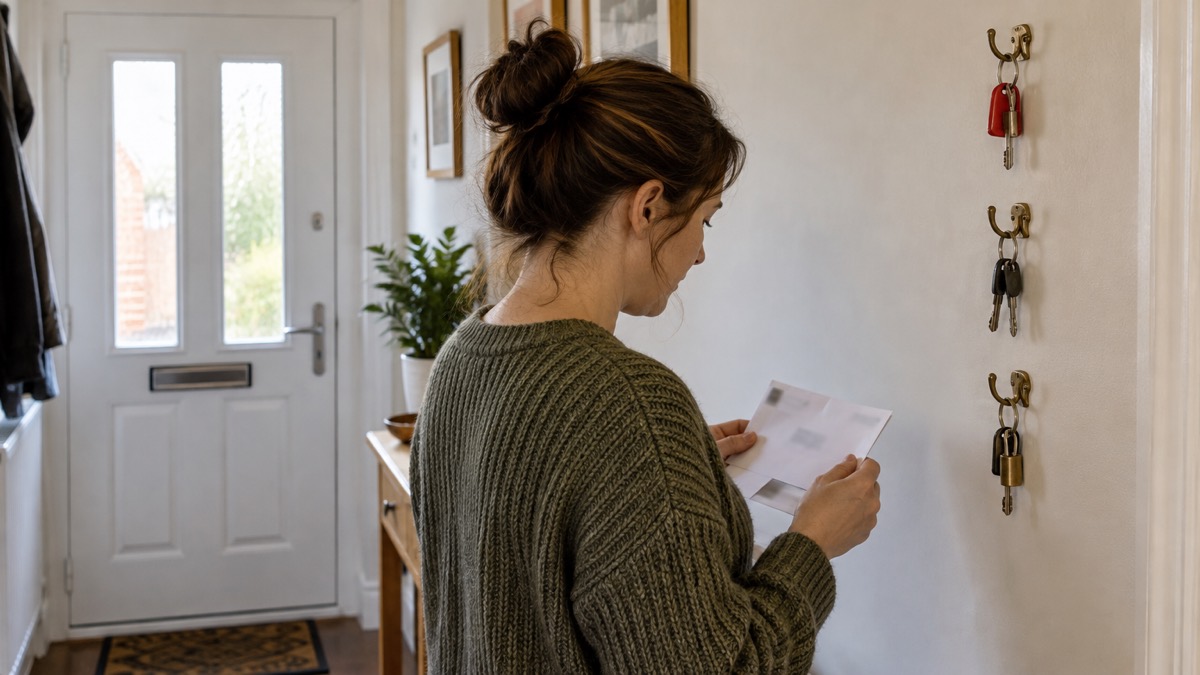
A spare key kept inside the house is not for getting in when you are locked out; it is for getting out, and for grabbing in a hurry. That is how the fire and rescue services frame it, and it is worth following their lead.
Surrey County Council's fire action plan advises keeping door and window keys where everyone you live with can find them, such as on hooks behind curtains or in boxes on window sills, and practising your escape plan regularly11. Devon and Somerset Fire and Rescue Service, in its guidance for people with hearing difficulties, puts it simply: keep keys where you can find them in case you need them in a hurry, preferably near to your door12. The same wording appears in the service's guidance for people who use mobility aids and for partially sighted people13, so it applies whatever your circumstances.
Gloucestershire Fire and Rescue Service suggests going one step further: have a designated place for door keys on your escape route, and always keep the keys there, so everyone can get to them in a fire15. Fire safety guidance for partially sighted people advises keeping keys where you can find them in case you need them in a hurry, preferably near to your door16, and fire escape plan advice is to keep door and window keys where everyone can find them17. The Scottish Fire and Rescue Service's home fire safety guide adds a bedtime routine point: make sure the main door keys are to hand before you go to sleep18.
Two rules make this work. First, the spot must be fixed: a designated place, used every time, so nobody is searching drawers at two in the morning. Second, everyone in the household, including overnight guests, must know where it is. Manchester Fire and Rescue Service's celebrating safely guidance says to tell guests where the door and window keys are kept19, and the government's fire safety advice for celebrations says to tell guests staying overnight where the door keys are kept, in case they need to escape20.
For car keys, the PSNI's house security guidance adds a security dimension: keep them where they will not be easily found, because thieves now break into houses specifically to steal keys9. The PSNI's home safety leaflet says the same, put car keys somewhere they cannot be seen or easily found by a burglar21. Balancing that with fire escape needs is straightforward: house keys near the escape route, car keys further into the house and out of sight.
Leaving a spare with a neighbour, friend or relative
The safest spare key is one that is inside someone else's home. NI Direct's securing your home guidance says that if you need to leave a spare key handy, give one to a trusted neighbour3. This costs nothing, cannot be fished through a letterbox, and puts the key in the hands of someone who can also check on your house when you are away.
For households where someone is older, disabled or medically dependent, a spare key held by someone trusted can be a lifeline rather than a convenience. The government's Be Ready advice for disabled people and carers says to make arrangements with someone you trust to be able to access your home in an emergency, for example by giving a family member, carer or trusted neighbour a spare key4. NHS inform's advice on what to do if you fall says to ensure a family member or neighbour has a spare key so people can get to you quickly2, and its falls plan guidance says the same: leave a spare key with a friend, neighbour or relative you trust who lives nearby, so help can be let in22.
There are practical arrangements worth making alongside the key itself:
- Pets: if you have a neighbour you trust with a house key, Medway Council advises talking to them about rescuing your pets if you are out during an emergency, and keeping a contact number for them23.
- Dementia: North Wales Fire and Rescue Service's dementia fire safety guidance notes that if a person with dementia lives on their own, a friendly neighbour may be prepared to keep an eye out for signs that something is wrong, and you may be able to leave a spare set of keys with them along with a phone number where you can be contacted24.
- Overnight visitors: tell anyone staying where the keys are kept, in case they need to escape in a fire20.
Choose the person with the same care you would choose anyone who can enter your home. A near neighbour is usually better than a relative across town, because the point of the arrangement is that they can reach your door quickly. Agree between you what the key may be used for, and review the arrangement if circumstances change.
Key safes: what to check before fitting one
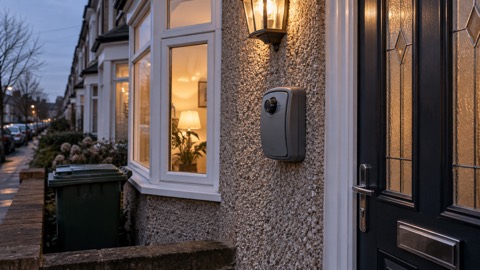
A key safe is a secure box with a combination lock, fitted to an outside wall, that holds a spare key for anyone you have shared the code with. NHS inform describes them as an option alongside leaving a key with a neighbour: leave a spare key in a police-approved key safe, a secure box with a combination lock kept outside your home that anyone you have shared the code with can access2.
Not every box sold as a key safe deserves the name. NHS guidance from Torbay and South Devon says to purchase a key safe that is police approved and meets the British Loss Prevention Standard LPS 1175, naming the C500, P500 and Keyguard Digital XL as examples5. A cheap combination box from a hardware shelf may resist nothing more than a screwdriver. If you are considering one, our page on key safes for carers and responders covers the options in more detail, and our page on which key safes are police preferred explains the approval marks.
Before fitting one, check:
- The standard: police approval and the LPS 1175 loss prevention standard5.
- The fixing: a safe is only as strong as the wall and the bolts holding it.
- The code: share it only with people who need it, and change it if someone you no longer trust has learned it.
- The location: somewhere visible from the street is a deterrent to tampering, but not so hidden that a caller can work at it unobserved.
A key safe suits households that need regular visitors to get in: carers, family members of an older person, or cleaners. Falls-prevention advice puts it plainly: make sure someone trusted has a key, or fit a key safe outside, and make sure the emergency services are aware of the code22.
Keyless and smart locks: what changes for spares
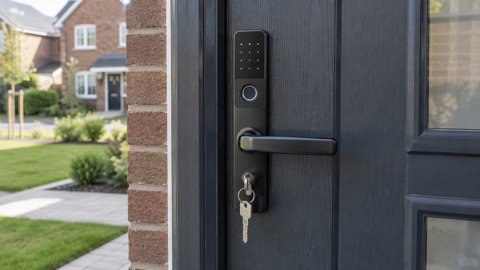
A smart door lock replaces the turning of a key with an entry code, biometric recognition such as a fingerprint, or remote control via an app on your smartphone, sometimes with a fob or keycard as well, according to Which?25. That changes the spare key question in two ways.
First, spares become codes and accounts rather than cut metal. A code can be given to a neighbour and changed the next day; a fingerprint cannot be lent at all. If your household includes carers or regular visitors, a code-based lock removes the need to cut and track physical spares, though it also means the code itself must be treated like a key: shared only with people who need it, and changed when arrangements end.
Second, a lost fob is a different problem from a lost key. Sussex Police's flat security guidance is explicit that if someone loses their fob, they must replace it and get the security system reprogrammed6. A missing fob is not simply an inconvenience: until the system is reprogrammed, the lost fob may still work. The same logic applies to any smart lock that pairs with phones or keycards. If a paired device is lost, remove its access in the app before doing anything else, then arrange a replacement.
Some smart locks keep the mechanical lock underneath. Which? notes that the Ultion Nuki replaces your current cylinder in a way that means the underlying lock remains secure even if the smart motor is removed25. Designs like that keep a physical key as a backstop, so the spare key advice on this page still applies alongside the digital arrangements. Our pages on smart locks, on whether smart locks work in a power cut and on smart locks in rented and shared homes cover these systems in more detail.
Spare keys for emergencies and evacuation
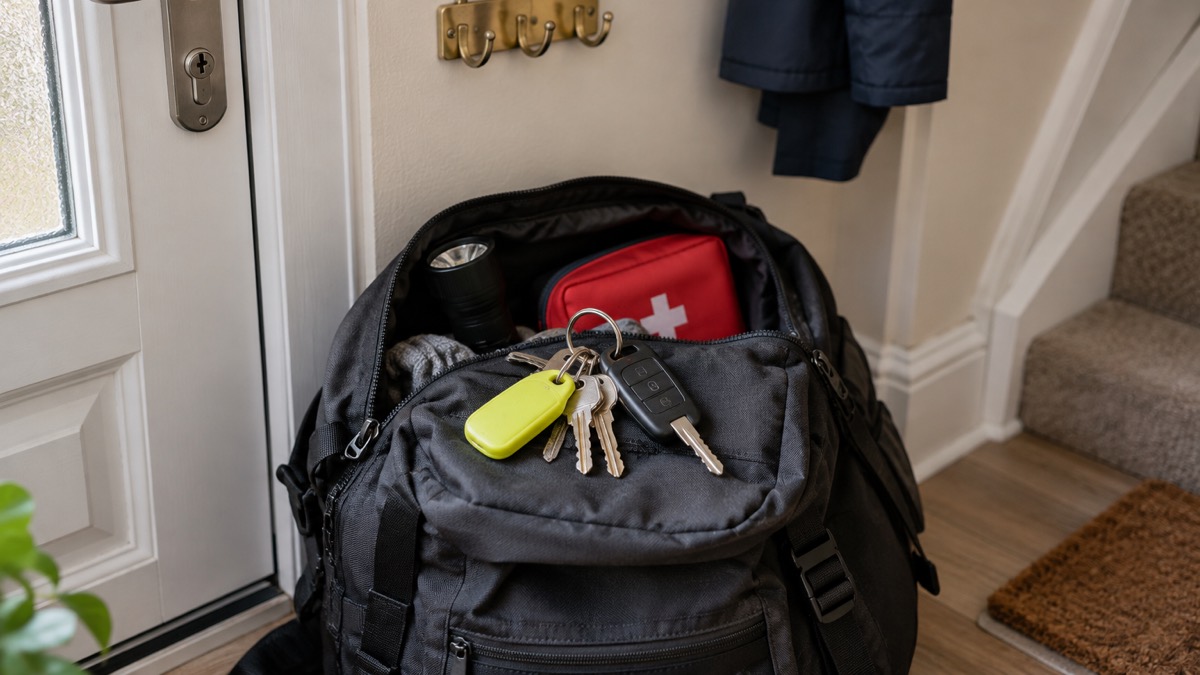
Spare keys also have a role in emergencies that have nothing to do with burglary. Neath Port Talbot Council's emergency kit checklist includes spare keys to your home and car alongside the other items a household should keep ready26. Scottish Borders Council's personal resilience advice makes the same point as a day seven task: keep spare keys for the house and car in an easily accessed place to grab in an emergency27.
The reasoning is straightforward. If you have to leave your home quickly, in a flood, a fire or an evacuation, you need to be able to lock it behind you and get back in later. A spare house key in the grab bag means the household is not dependent on one person's pocket. A spare car key at home means that if the primary set is lost or left behind, you are not stranded.
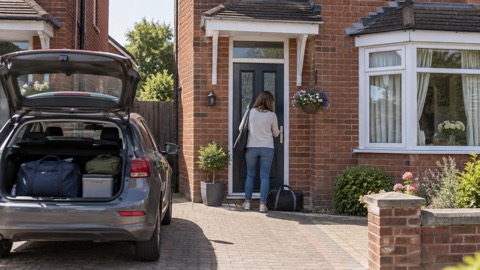
If you are ever told to evacuate, take the keys with the rest of your kit, lock doors and windows behind you, and follow the instructions given. Our page on leaving your home locked when you have to evacuate covers that step by step.
What to do straight away if you lose your keys
Work through these steps in order:
- Retrace, briefly. Check bags, coat pockets, recent rooms and the car. Give it a sensible limit rather than a day of searching.
- Ask whether the keys identify your home. A key on a plain ring is a much smaller risk than one with a fob, a tag or paperwork carrying your address.
- Tell the other key holders. Anyone who holds a spare, a neighbour, a relative, a carer, should know a set is missing so they can watch for anything odd.
- Deal with fobs and smart devices first. A lost alarm or entry fob must be replaced and the security system reprogrammed6. For a smart lock, remove a lost phone's or keycard's access in the app immediately.
- Tell your insurer or landlord. If the loss happens alongside an event such as a flood, Surrey County Council's recovery guidance says to call your insurer or landlord immediately; they will send a loss adjuster as soon as they can28. If you rent, tell your landlord before arranging replacement locks.
- Decide whether the locks need changing, using the next section.
If the keys were stolen rather than lost, report it to the police and get a crime number; insurers normally ask for one. Our page on when to call 999 or 101 explains which number to use.
When to change the locks
Changing locks costs money and hassle, so it should follow a judgement about risk, not panic. The clearest cases:
- Keys lost with identification. If the lost set included anything with your address on it, a fob, a tagged key, post, a diary, treat the locks as compromised.
- A lost fob or smart device. Reprogramming is not optional: the system must be reprogrammed when a fob is replaced6.
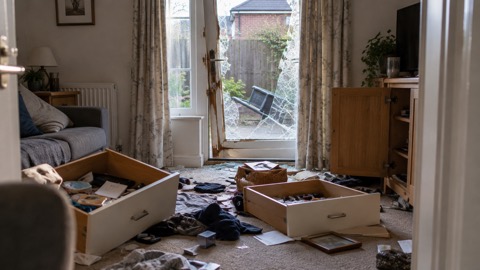
- After a break-in or attempted break-in. If someone has already used force on your door, assume they know the lock and may have your keys. Our page on coming home to a break-in covers the first steps.
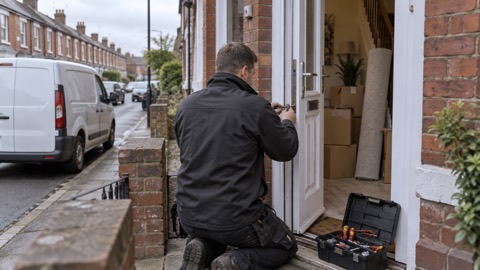
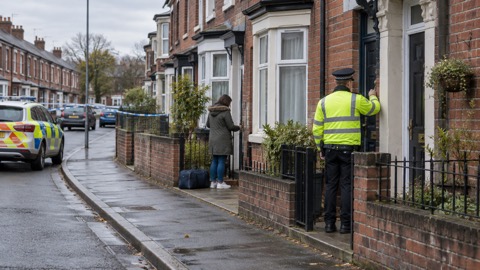
- Moving home. Police Scotland's housebreaking advice includes changing your locks when you move into a new home, if you want to29. You have no way of knowing how many copies of the old keys exist. Our moving house checklist covers this in full.
The weaker cases are a plain key lost somewhere public with nothing to link it to your address, and a key lost inside the home and later found. Even then, if the set included car keys, remember that thieves break into houses to steal keys9, so a lost house and car set with any identifying item should be treated seriously.
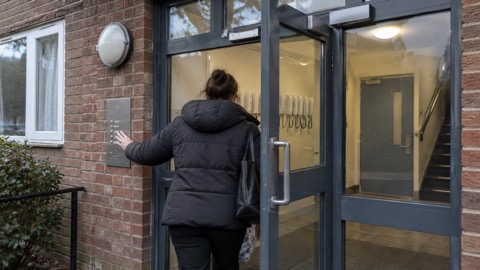
If you live in a flat, communal doors are not yours to change. Sussex Police's flat security guidance says that if a communal door lock does not work properly, report it to your management agent or landlord so it can be repaired quickly6. A faulty communal lock is a building security problem, and the responsibility sits with whoever manages the building.
For the locks themselves, our page on doors and locks explains the standards and cylinder types worth asking a locksmith for.
Getting back in safely if you are locked out
Being locked out is usually an inconvenience, but it can become a safety problem, and the way you get back in matters.
First, try the cheap options before the expensive ones. Check whether a key holder can bring a spare: the neighbour, relative or carer who holds one, or the key safe on the wall. If you have no spare arrangement at all, this is the moment to set one up for next time.
Second, if you need a locksmith, choose one with care. Ask for a fixed price before work starts, prefer a locksmith who is a member of a recognised trade body, and be cautious of anyone whose first answer is to drill a lock that could be opened without damage. Keep a checked locksmith's number in your phone so you are not making the choice on the doorstep in the dark. Our page on being locked out of your home covers this in detail.
Third, never put yourself at risk to get in. Climbing through a window, forcing a door or balancing on a bin is how locked-out householders end up injured. If someone is trapped inside, or a child or pet is alone in the property, or the weather is extreme, treat it as an emergency and call for help rather than attempting entry yourself.
There is one situation where the fire and rescue service's own advice matters, and it is not about being locked out but about being trapped. If fire blocks your way out of the home, the Scottish Fire and Rescue Service's guidance is to try to get everyone into one room, pack clothes, cushions, pillows or towels around the door to keep smoke out, open a window and shout "Fire" until someone phones the Fire and Rescue Service, and keep leaning out of the open window for fresh air until the firefighters arrive18. That is the fire service's own instruction, and it is worth every adult in the household knowing it.
Finally, if you are locked out because your keys were lost rather than misplaced, fold the two problems together: get back in, then work through the lost key steps above, including the decision on changing the locks.
Sources (29)
- Flood evacuation checklist, Croydon Council, 2025
- What to do if you fall, NHS inform, 2026
- Securing your home, NI Direct, 2024
- Be Ready advice for disabled persons and carers, UK Government, 2026
- Keeping safe and warm at home, Torbay and South Devon NHS, 2023
- How safe is your flat?, Sussex Police, 2026
- Preventing car and vehicle theft, Sussex Police, 2026
- Know your escape plan, Manchester Fire and Rescue Service, 2026
- House security, Police Service of Northern Ireland, 2026
- Making a home escape plan, Warwickshire County Council, 2026
- What to do if fire breaks out: action plan, Surrey County Council, 2026
- Fire safety for people with hearing difficulties, Devon and Somerset Fire and Rescue Service, 2026
- Fire safety for people using mobility aids, Devon and Somerset Fire and Rescue Service, 2026
- Fire safety for partially sighted people, Devon and Somerset Fire and Rescue Service, 2026
- Planning your escape route, Gloucestershire Fire and Rescue Service, 2026
- Fire safety at home: escape plan, Cornwall Fire and Rescue Service, 2026
- Plan your escape, Staffordshire Fire and Rescue Service, 2026
- Your guide to fire safety, Scottish Fire and Rescue Service, 2023
- Celebrating safely, Manchester Fire and Rescue Service, 2026
- Fire safety when celebrating, UK Government, 2021
- Advice on home safety leaflet, Police Service of Northern Ireland, 2022
- Creating a falls plan, NHS inform, 2024
- Looking after your pets in an emergency, Medway Council, 2026
- Dementia fire safety, North Wales Fire and Rescue Service, 2026
- Do I need a smart door lock?, Which?, 2026
- Emergency kit checklist, Neath Port Talbot Council, 2026
- Be more resilient in 30 simple ways in 30 days, Scottish Borders Council, 2026
- Getting back into your home following flooding, Surrey County Council, 2026
- Break-in and housebreaking, Police Scotland, 2026
 Moving Home Locks Checklist
 After a Break-In Checklist
 Holiday Security Checklist
 Locking Up When Evacuating
 Flats and Shared Entrances
 Key Safes for Carers
 Terraced Houses and Rear Alleys
 Smart Locks
 Windows and Ground-Floor Risks