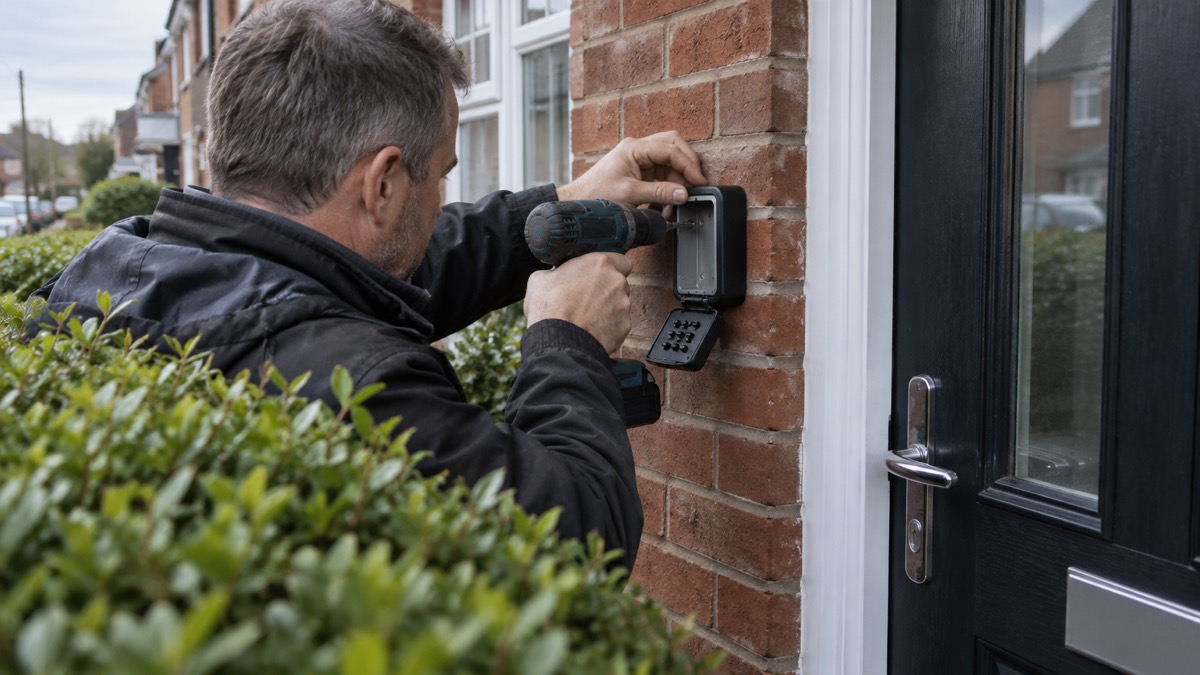
A key safe is a lockable box fixed to an outside wall that holds a key, with a code you choose so that carers, family or the emergency services can get in if you cannot reach the door1. It matters most in the situation nobody plans for: you have fallen at home and cannot get up, and the person coming to help cannot get in. Official falls advice is to make sure a family member or neighbour has a spare key so people can get to you quickly, or to leave a spare key in a police-approved key safe that anyone you have shared the code with can open2.
Where you fit it decides whether it does its job. Keep the safe out of direct view from the street and the path, and choose a wall the fixings will hold on. Set a code you control, and the key safe becomes one of the simplest pieces of household safety equipment you can own.
Fit it near the door, but out of sight
The first rule is reach. Fire and rescue services across the UK tell households to keep keys where they can find them in a hurry, preferably near the door, so that in an emergency nobody is searching for them3. The same logic applies to a key safe: it should be close enough to the entrance that a carer, a relative or a responder can walk up, open it and be inside within moments. If it is round the back, behind a gate or at the far end of a garden, it adds time and obstacles at exactly the wrong moment.
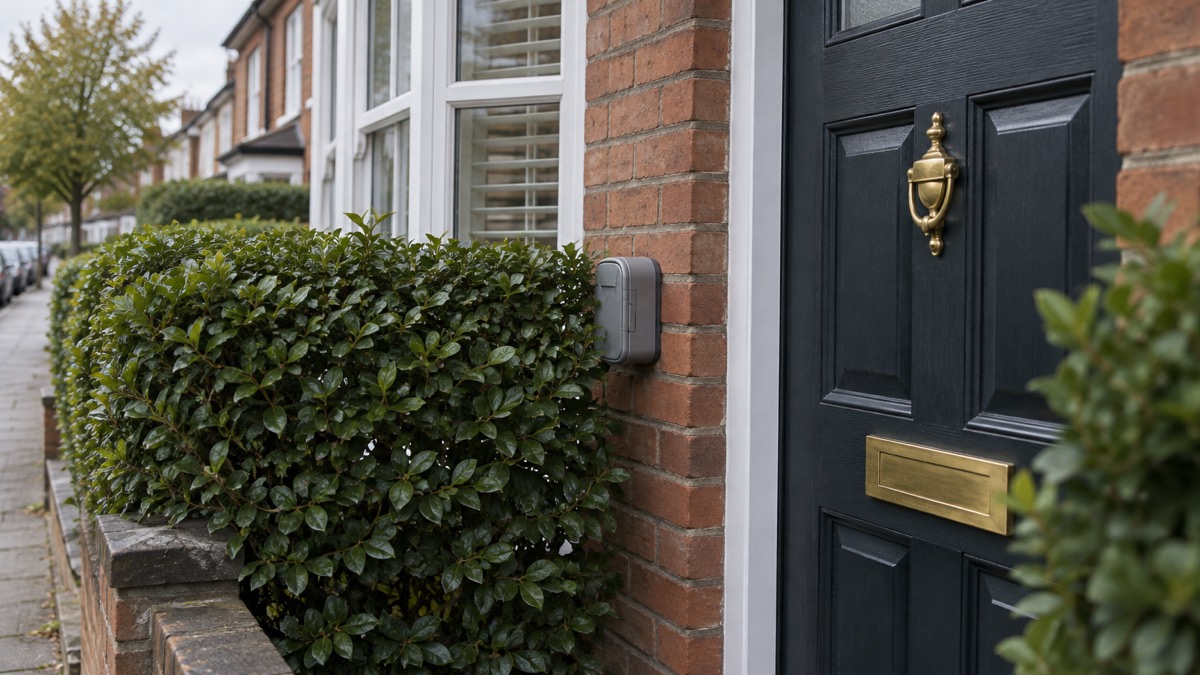
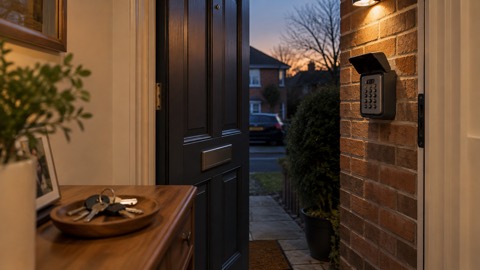
The second rule is concealment. Police advice on keeping valuables safe is to hide them somewhere a thief is less likely to look, because burglars tend to go straight for the obvious places such as bedrooms and wardrobes4. A key safe is a visible object on a wall, so the aim is to keep it out of direct view from the street and the path. A side wall, a recess, or a spot screened by a gatepost or planting all do the same job.
There is a balance to strike. Too hidden and the person coming to help cannot find it in the dark or in a hurry; too exposed and you have advertised that a key is on the premises. The practical answer is a position that is obvious to anyone who has been told where it is, and unremarkable to anyone who has not. Tell the people who need access exactly where it sits, not just the code.
Height and wall: where a key safe holds up best
Height is about reach and about strength. A key safe needs to be at a height an adult can comfortably operate without stretching or climbing, and it needs to be fixed into sound material. The NHS falls checklist advises storing frequently used items between waist and shoulder height where possible, and not climbing on chairs or stools to reach things9. The same band, roughly waist to shoulder, is a sensible guide for a key safe: easy to open standing up, and not so low that it is in the way of feet, prams or a hosepipe.
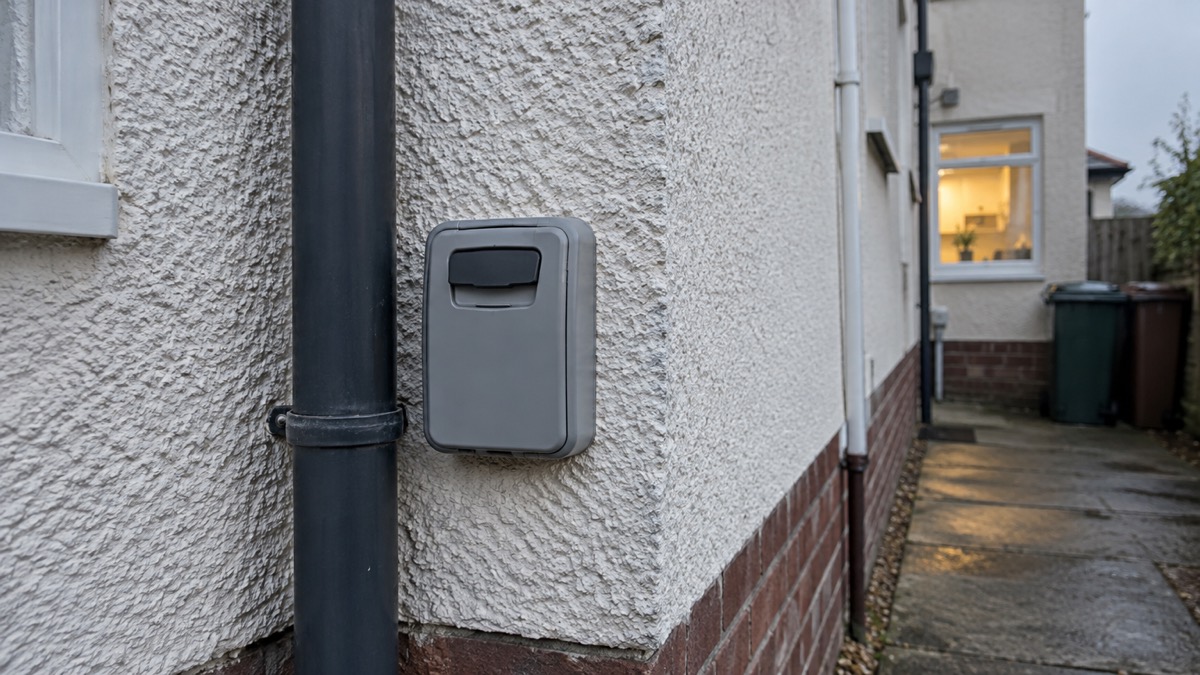
The wall matters more than the height. Police preferred key safes are all suitable for installation onto brick, concrete and flat stone5. Those are solid, load-bearing surfaces that hold masonry screws firmly. The problems start with softer or layered surfaces. The maker of the ark range states that on a single-skin wall the supplied standard security screws are not suitable for rendered walls, and recommends a different model, the ark Tamo Pro Maximum Security Key Safe, for rendered walls, or a separate wall plug fitting kit and rendered-wall fitting pack for the standard ark Tamo5. The ark Tamo Pro itself can be installed onto brick, concrete, stone and rendered walls using the supplied XL security screws and wall plugs5.
If you are unsure whether your wall is suitable, contact the maker before drilling5. Two further points from the same maker: if you move the key safe, use new fixings to ensure it stays firmly on the wall, and the screws in the fitting kits cannot be reused because the thread weakens on every install, making the safe less secure5. A key safe that pulls off the wall is worse than none, because it takes the key with it.
| Surface | What the maker says | What to do |
|---|---|---|
| Brick, concrete, flat stone | Suitable for all police preferred key safes5 | Fit with the supplied masonry fixings |
| Rendered wall | Standard security screws are not suitable5 | Use a model designed for it, or a rendered-wall fitting kit |
| Single-skin wall | Standard screws are not suitable for rendered walls5 | Check with the maker before fitting |
| Moving the safe | Old fixings weaken5 | Use new fixings every time |
Where a key safe should never go
Some positions defeat the purpose or create a risk. The clearest official warnings are about keys left where they can be reached from outside. Northern Ireland's nidirect guidance says never leave keys, including car keys and spares, near the door or where they could be reached from outside, and never leave keys in a garage or under a flowerpot10. The PSNI adds that you should never leave doors unlocked or leave keys in an unsafe place such as under doormats or flower pots11. A key safe is the secure alternative to those hiding places, not a supplement to them.
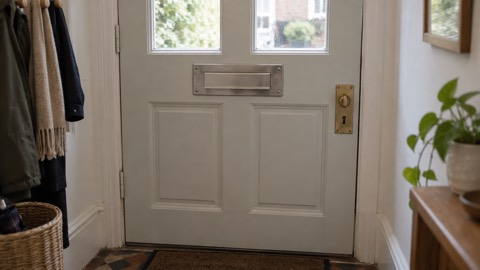
Keep it away from the letterbox. Police vehicle crime advice warns that keys should be kept out of view at home and away from the front door, because thieves can fish for them through the letterbox12. A key safe mounted right beside a letterbox, or on a door itself, hands a thief the same opportunity. Keep it off the door and off the frame, and on a wall that cannot be reached through the opening.
Other places to avoid: inside a porch that is itself unlocked, on a shed or outbuilding that can be broken into, and anywhere the safe can be unscrewed from behind. If a porch or outbuilding is not itself secure, choose a wall on the house instead.
Setting and sharing the code safely
The code is the whole security of the key safe. Official guidance describes a key safe as a secure box with a combination lock kept outside the home that can be accessed by anyone you have shared the combination with13. That is the point and the risk in one sentence: everyone you tell can get in, so tell as few people as possible and change the code when the list changes.
Set a code that is not guessable from the house number, the street or your birthday, and never write it on or near the safe. Share it in person or by a method you trust, not on a note through the door. When a carer, contractor or relative no longer needs access, change the code. The guidance does not set a fixed interval for changing it, but the principle is the same as changing a lock when a key goes missing.
Tell the people who need to know where the keys are kept. Fire services advise telling guests where the door and window keys are kept14, and telling everyone in the home what the escape plan is and where the door key is15. For a key safe, that means everyone in the household knows it exists, where it is and how to open it, and anyone who might need to let help in, such as a neighbour, knows the code. If you have a care alarm, the control centre can store the key safe PIN and pass it to friends, family or the rapid response service in an emergency7.
Who to tell once the key safe is fitted
A key safe only works if the right people know about it. Start with the household: everyone who lives there should know where it is and how to open it, in the same way fire advice says everyone should know where the window and door keys are16. Then tell the people who might need to let help in: a trusted neighbour, a relative who lives nearby, or a carer. Falls guidance suggests leaving a spare key with a friend, neighbour or relative you trust who lives nearby, or leaving a spare key in a key safe13.
If you have a care alarm or telecare service, tell the control centre the code. Official guidance suggests considering a key safe so that carers, family or the emergency services can get in quickly, and notes that the control centre can store the PIN and pass it on7. Key safes are often installed for older or disabled people who have regular home visits by a carer or support worker6, and a carer who knows the code can help after a fall more quickly, without damaging property6.
Finally, keep a spare key in your emergency kit as well. Official emergency kit lists include spare keys for your windows, car and house17, and Scotland's prepare campaign lists spare keys to your home and car18. A key safe is for access from outside; a spare set inside the kit is for when you are the one who needs to get back in.
Sources (18)
- Equipment, Devon and Somerset Fire and Rescue Service, 2026
- What to do if you fall, NHS Inform, 2026
- Fire safety for people with sight difficulties, Devon and Somerset Fire and Rescue Service, 2026
- Break-in and housebreaking, Police Scotland, 2026
- DIY installation, The Key Safe Company, 2026
- Product applications, Sentinel Locks, 2026
- Assistive technology, Warwickshire County Council, 2026
- Some of the reasons people call 999, Welsh Ambulance Service, 2026
- Stay Steady and Safe home safety checklist, NHS Norfolk and Suffolk Integrated Care Board, 2026
- Securing your home, nidirect, 2024
- Bogus callers, Police Service of Northern Ireland, 2026
- Preventing car and vehicle theft, Sussex Police, 2026
- Creating a falls plan, NHS Inform, 2024
- Celebrating safely, Greater Manchester Fire and Rescue Service, 2026
- High-rise homes, flats and apartments, Cheshire Fire and Rescue Service, 2026
- Planning an escape route, Greater Manchester Fire and Rescue Service, 2026
- Planning for an emergency kit, Wiltshire Council, 2026
- Emergency kit, Ready Scotland, 2026
 Moving Home Locks Checklist
 After a Break-In Checklist
 Holiday Security Checklist
 Fitting an Anti-Snap Cylinder
 British Standard Door Locks
 Double Locking a uPVC Door
 Garage to House Door Safety
 Police Preferred Key Safes
 Letterbox Guards
 Measuring a Euro Cylinder
 PAS 24 Doors and Windows
 Securing Patio Doors
 Smart Lock Battery Life
 Smart Locks in a Power Cut
 Smart Locks in Rented Homes