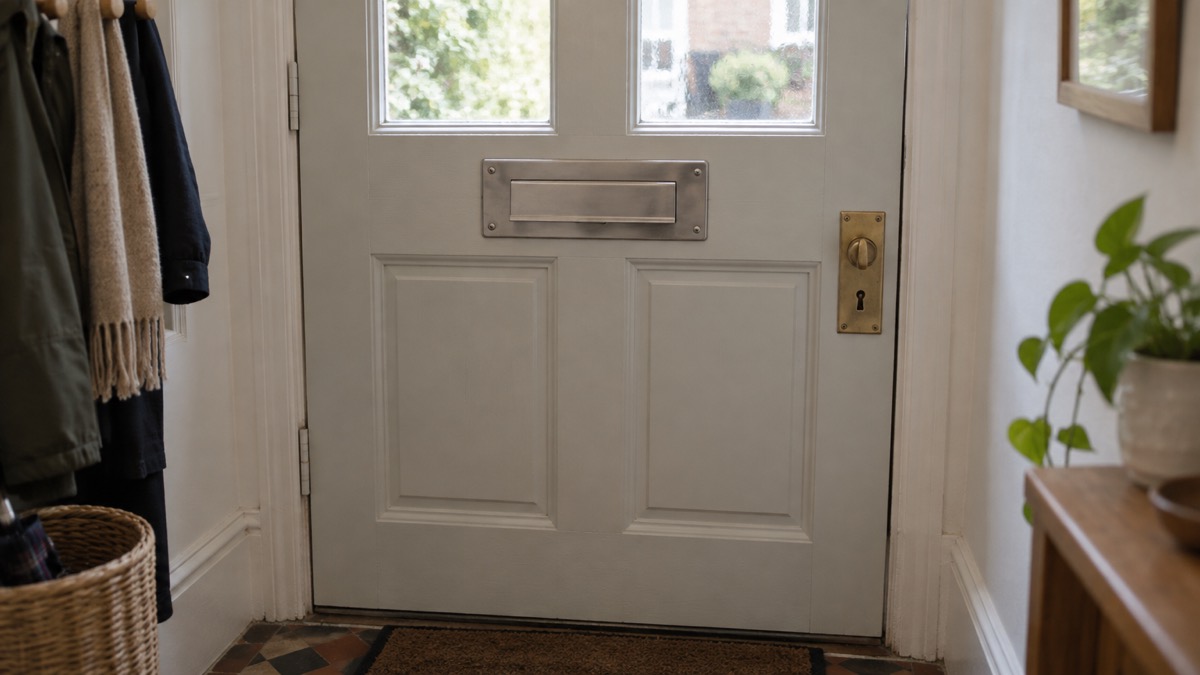
A letterbox guard is a fitting on the inside of your front door that stops anyone reaching through the opening. It does two jobs: it blocks a hand coming in to turn the lock or fish for keys left nearby, and a fire reduction version blocks burning material being pushed through. If your door has a letterbox, police guidance is clear that a guard fitted to the rear of the door will prevent someone reaching in and opening the door or fishing for items nearby1.
Whether you need one depends on your door and your circumstances. Fire services suggest considering a fire reduction letterbox where arson is a risk, and some will install one free where there is a credible threat against your home2. For most households the decision is simpler: does your letterbox sit within reach of the lock, and do you leave keys where a hand could find them?
This page sets out what a guard does and does not do, who should think about one, how guards and cages differ, how to fit one without blocking your post, and where to get free help.
What a letterbox guard does, and what it does not
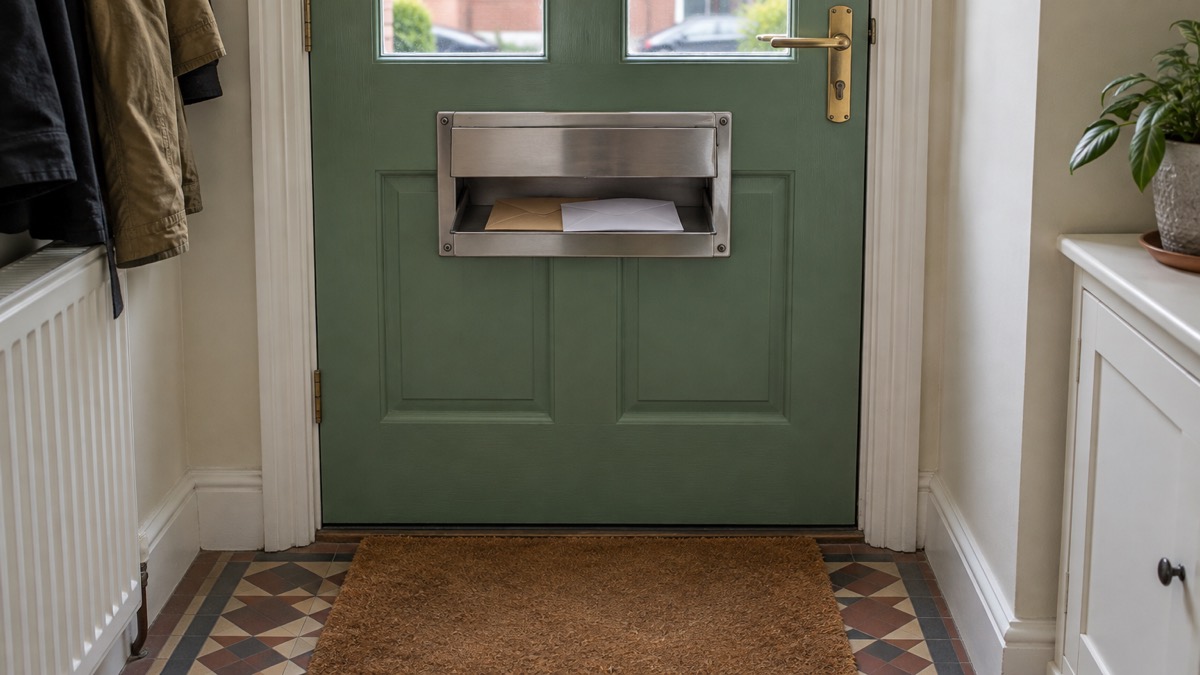
A letterbox guard is a shield fixed to the inside face of the door over the opening. Its purpose is physical: it makes the gap too small, too deep or too obstructed for a hand to pass through and reach the lock, the handle or a bunch of keys on a nearby table. Avon and Somerset Police put it plainly: if your door has a letterbox, a guard fitted to the rear of the door will prevent someone reaching in and opening the door or fishing for items nearby1.
That is a real risk, not a theoretical one. Police in Northern Ireland warn that a burglar could easily slip their hand through a letterbox and unlock the door, and advise making sure the letterbox is not near the lock, especially if you leave keys in the lock8. Sussex Police go further on car keys: keep them out of view when at home and away from your front door, because it is not uncommon for car keys to be stolen by fishing through the letterbox9.
What a guard does not do is just as important. It does not make the door itself stronger, it does not stop the door being forced, and it does not detect smoke or fire. It is one layer, and a modest one, in the same family as window locks on accessible windows, which police say reduce the chances of being burgled by slowing an intruder down10. Treat it as part of a wider approach set out in the home security guide, not as a substitute for good locks.
Who fire services suggest should consider one
Fire and rescue services recommend a fire reduction letterbox in two broad situations. The first is where arson is a realistic risk to the property. Cheshire Fire and Rescue Service advises that burning materials, including fireworks, can be pushed through letterboxes, and that a metal container or lockable flap can be fitted2. London Fire Brigade's arson reduction guidance says simply: consider fitting a fire reduction letterbox3. Devon and Somerset list wheelie bin locks and letterbox locks as available from many DIY retailers and say they may provide additional protection for your home11.
The second is where someone in the household hoards. Fire services advise carers of someone who hoards to book them a Home Fire Safety Visit12. The reason is set out by Devon and Somerset: in a fire at a hoarded property there is a possibility of entrapment and rapid escalation of fire from combustible materials, which increases risk to firefighters13. Where a home is packed with combustible material, anything that keeps a fire from starting at the door matters more than usual.
For most households without an arson risk or a hoarding concern, the case for a guard is a security one rather than a fire one: it closes off the reach-through route described above. If you are unsure which applies to you, a free home fire safety visit is the place to ask (see below).
Letterbox guard or letterbox cage: how each one works
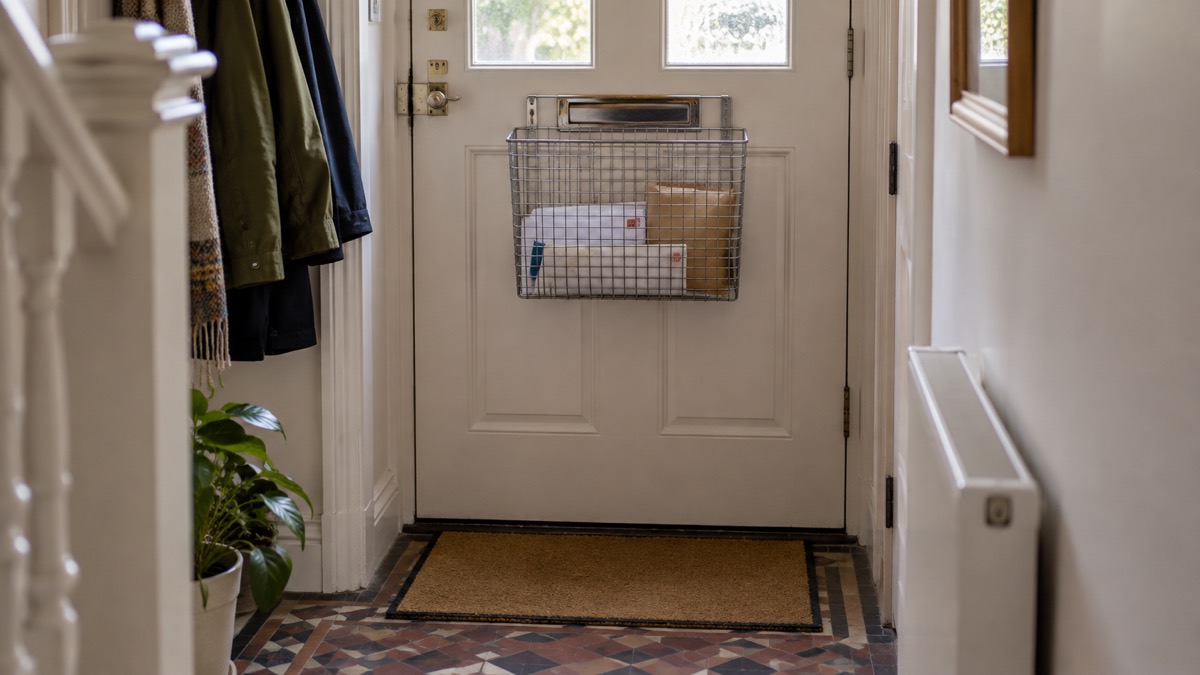
The two terms are often used interchangeably, but they describe different fittings and suit different doors.
A letterbox guard is a plate or shield fixed over the inside of the opening. It usually has a spring flap or a brush seal and a shallow basket to catch post. It blocks the reach-through and, depending on the design, reduces draught. It is the type police describe when they say a guard fitted to the rear of the door prevents someone reaching in1.
A letterbox cage is a deeper basket, usually wire or perforated metal, that encloses the post as it falls. It does not seal the opening, so it does less about draughts, but it holds mail well clear of the door and makes fishing harder because the post drops away from the slot. It is the shape most often used where large volumes of post arrive.
A fire reduction letterbox is a letterbox the fire service can fit where there is a credible threat of arson to a home2. Some households combine this with a fire-retardant bag behind the slot, which catches post and smothers anything alight.
| Type | What it does | Suits |
|---|---|---|
| Guard with flap or brush | Blocks reach-through, reduces draught | Most front doors, especially where the letterbox is near the lock1 |
| Cage or basket | Holds post clear of the opening | Households with lots of post, or where fishing is the concern |
| Fire reduction letterbox | Metal container or lockable flap against burning material2 | Homes with an arson risk, or where the fire service has advised one3 |
| Fire-retardant bag | Catches post and smothers anything alight | Used alongside a guard, not instead of one |
Fitting a guard without blocking your post or your exit
Fit the guard to the inside face of the door, centred on the opening, and check three things before you screw anything down: the door still closes and locks, post still drops through, and nothing fouls the lock or handle.
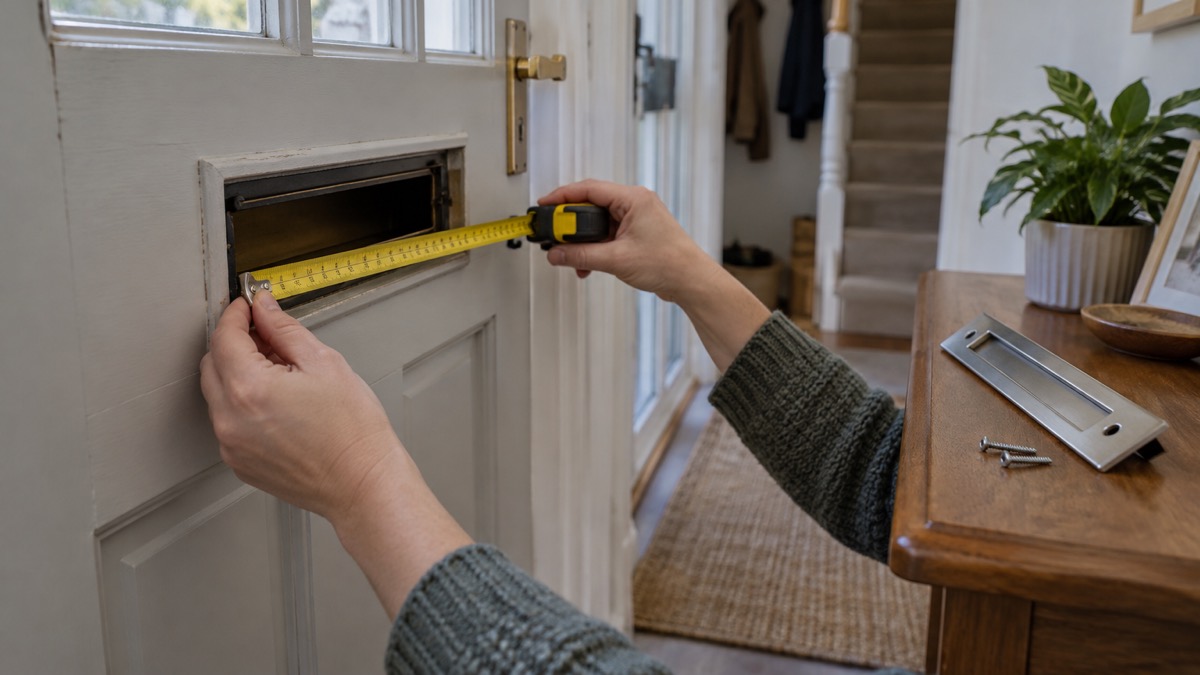
On a uPVC door, work carefully. Police note that tested and certified uPVC doors are more secure because they have a highly secure multi-locking mechanism using hooks and latches1. A guard fixed into the wrong part of the door, or one that obstructs the mechanism, can undermine that. Fix into the door structure, keep clear of the lock case and handle, and follow the door maker's instructions. If you are unsure, ask a qualified fitter. Our page on doors and locks explains how the locking mechanism works.
In a rented home, ask first. Fire service guidance for leasehold tenants says you should examine your lease and consult the landlord, because you may be responsible for ensuring a suitable fire rated door with all of its compatible components is fitted15. Landlords of privately rented homes must follow fire safety regulations16. A guard screwed to a fire door is a change to a certified component, so get written agreement before you fit one.
On draughts, the government's cold weather advice is to try to reduce draughts and fit draught excluders around doors cheaply17. A brush-sealed guard does that job at the slot. It will not stop noise from the street.
Where a guard will not protect your home
A guard covers one opening. It does nothing about the rest of the door, the windows, or a key left in the lock on the outside.
The biggest gap is the lock itself. Police advise that the letterbox should not be near the lock, especially if you leave keys in the lock, because a hand through the slot can turn it8. If your letterbox sits right beside the lock and you keep a key in it, a guard helps but moving the key is the real fix. Our page on keys, spares and hiding places covers where to keep them.
A guard also does nothing for post that arrives elsewhere. Sussex Police advise that post boxes should ideally be in a secure lobby area and be lockable so no one can easily fish out mail18. In a block of flats, the communal entrance and its post boxes are part of the picture, covered in flats and shared entrances.
And a guard is no help at all if someone gets in another way. If you come home and think someone is inside, Police Scotland's advice is that you should not go inside in case the intruder is still there19. Our page on coming home to a break-in sets out what to do instead.
Getting a free home fire safety visit
Every fire and rescue service in the UK offers a free home fire safety visit, and it is the single most useful thing on this page. London Fire Brigade says it can visit you, a loved one, or someone you care for at home to provide personalised advice about fire safety, and that it will fit free smoke alarms if needed5. During a visit, firefighters will identify fire risks in your home, provide tailored fire safety advice, fit smoke alarms free of charge if needed, and create a fire escape plan with you6. Visits can be arranged 24/76.
What happens on a visit varies slightly by service, but the core is consistent. Firefighters identify fire risks in your home, provide tailored fire safety advice, fit smoke alarms free of charge if needed, and create a fire escape plan with you6. If you are not home when the service calls, Cornwall Fire and Rescue Service says a postcard is left detailing the date and time of the call along with a reference number and telephone number you can contact20.
To arrange one, contact your local fire and rescue service. In England, services such as Devon and Somerset take bookings directly14; in Wales, North Wales Fire and Rescue Service runs similar interventions for carers and vulnerable people21; in Scotland and Northern Ireland, contact the Scottish Fire and Rescue Service or the Northern Ireland Fire and Rescue Service. If you are worried about fire safety in your building, London Fire Brigade advises telling your housing provider, managing agent or landlord22.
If you have an arson concern, say so when you book. Suffolk Fire and Rescue Service can install a fire reduction letterbox and carry out a Safer Home Visit where there is a credible threat of arson to a home4. That is the route to a free fire reduction letterbox, and it is worth asking about if you have received a threat or live somewhere arson has been a problem.
Sources (22)
- Door security, Avon and Somerset Police, 2026
- Protect your property from arson, Cheshire Fire and Rescue Service, 2024
- Reducing arson risk, London Fire Brigade, 2026
- Putting a stop to arson, Suffolk Fire and Rescue Service, 2026
- Home fire safety visits, London Fire Brigade, 2026
- Fire prevention, Fire Kills, 2026
- Smoke alarms, Devon and Somerset Fire and Rescue Service, 2026
- Securing doors and windows | nidirect, nidirect
- Preventing car and vehicle theft, Sussex Police, 2026
- Window security, Avon and Somerset Police, 2026
- Reducing arson risk, Devon and Somerset Fire and Rescue Service, 2026
- Hoarding, North Yorkshire Fire and Rescue Service, 2026
- Hoarding | Devon and Somerset Fire and Rescue Service, Devon and Somerset Fire and Rescue Service
- Book a home safety visit, Devon and Somerset Fire and Rescue Service, 2026
- Fire doors, London Fire Brigade, 2026
- Private renting: your landlord's safety responsibilities, GOV.UK, 2026
- Top tips for keeping warm and well this winter, GOV.UK, 2026
- How safe is your flat?, Sussex Police, 2026
- Break-in and housebreaking, Police Scotland, 2026
- Free home fire safety check, Cornwall Fire and Rescue Service, 2026
- Interventions for carers, North Wales Fire and Rescue Service, 2026
- Digital easy read fire safety booklet, London Fire Brigade, 2026
 Moving Home Locks Checklist
 After a Break-In Checklist
 Holiday Security Checklist
 Fitting an Anti-Snap Cylinder
 British Standard Door Locks
 Double Locking a uPVC Door
 Garage to House Door Safety
 Police Preferred Key Safes
 Where to Fit a Key Safe
 Measuring a Euro Cylinder
 PAS 24 Doors and Windows
 Securing Patio Doors
 Smart Lock Battery Life
 Smart Locks in a Power Cut
 Smart Locks in Rented Homes