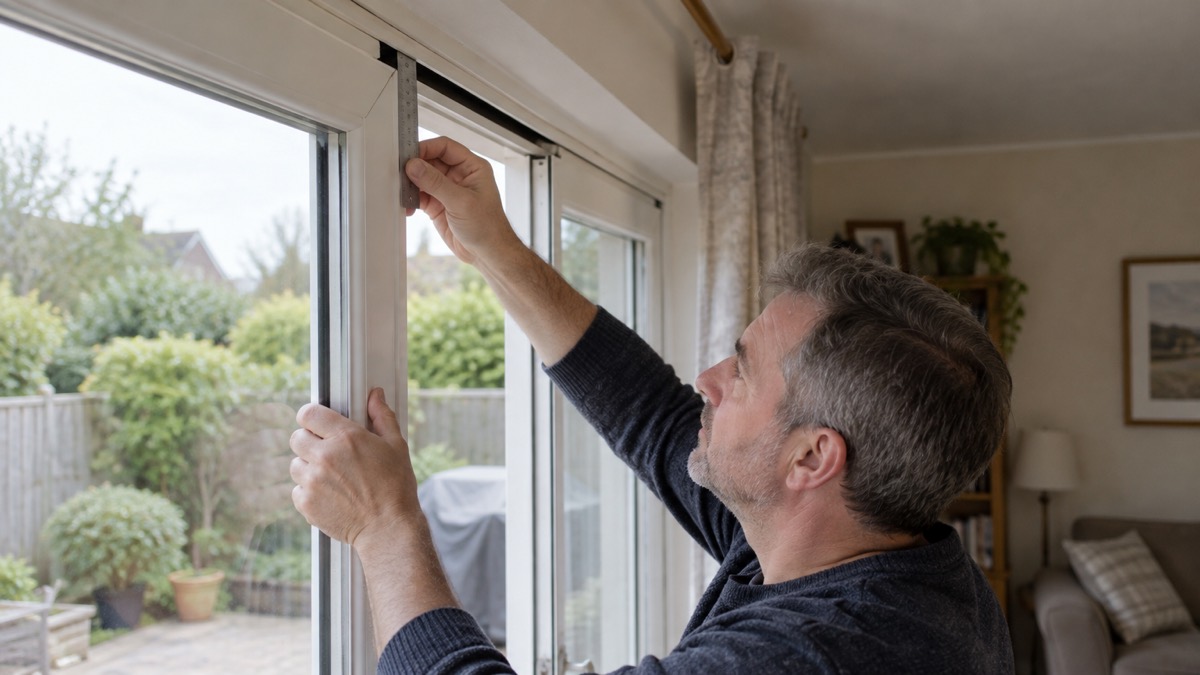
A sliding patio door can be lifted out of its track from outside if there is enough play in it. The test is simple: try to lift the door. If it moves more than six millimetres (1/4 inch), the police advise screwing wood blocks of a suitable depth into the channel above the opening door to stop it rising1. Older aluminium sliding doors should have anti-lift tracks fitted into the top track for the same reason2.
That is the whole job in most homes: check the gap, fit a block if the door lifts, and make sure the door is properly locked every time you leave it. The police are blunt about the last point: simply shutting the door will not prevent burglaries, and you should double-lock it every single time you go out3.
This page takes you through why the door can be lifted, how to check yours, what anti-lift blocks and screws do, how a secondary lock or bar helps, what to do if the door has been forced, and where to get help. It covers sliding patio doors and French doors, and it applies across the UK, with notes where Scotland and Northern Ireland differ.
Why a sliding patio door can be lifted out from outside
A sliding door hangs on runners in a track at the top and runs along a track at the bottom. To lift it out, someone outside needs a gap between the top of the door and the top track big enough to raise the door clear of its runners, then pull the bottom of the door towards them and out. The door does not need to be unlocked for this to work, which is why a lifted door can defeat a good lock.
The police treat this as a known weakness in sliding doors. Their door security guidance says older patio, sliding or bi-fold doors should have anti-lift tracks fitted into the top track to prevent the door being lifted off its runners2. Modern doors are typically made of aluminium, which usually means there is no need for bulky supporting frames2. That does not make every modern door immune; it means the design has moved on, and the check below still applies.
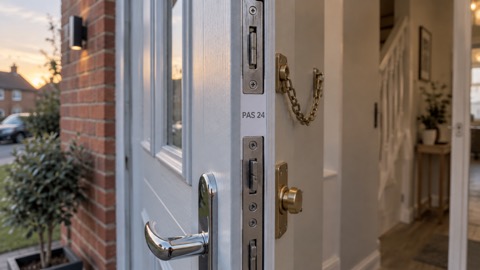
The same principle applies to French doors, which swing rather than slide but can still be forced at the frame and hinges. The police recommend reinforcing the frame, often with London and Birmingham bars, and checking that locks and hinges are British Standard approved2. If you are choosing new doors or windows, look for "PAS24", because they are harder to break4.
Check your door: signs it can be lifted off its track
Do the lift test with the door closed. Grip the door frame at the handle side and try to lift it straight up. If it moves more than six millimetres (1/4 inch), the police say to screw wood blocks of a suitable depth into the channel above the opening door to prevent this1. If it barely moves, the gap is already too small for the door to clear its runners.
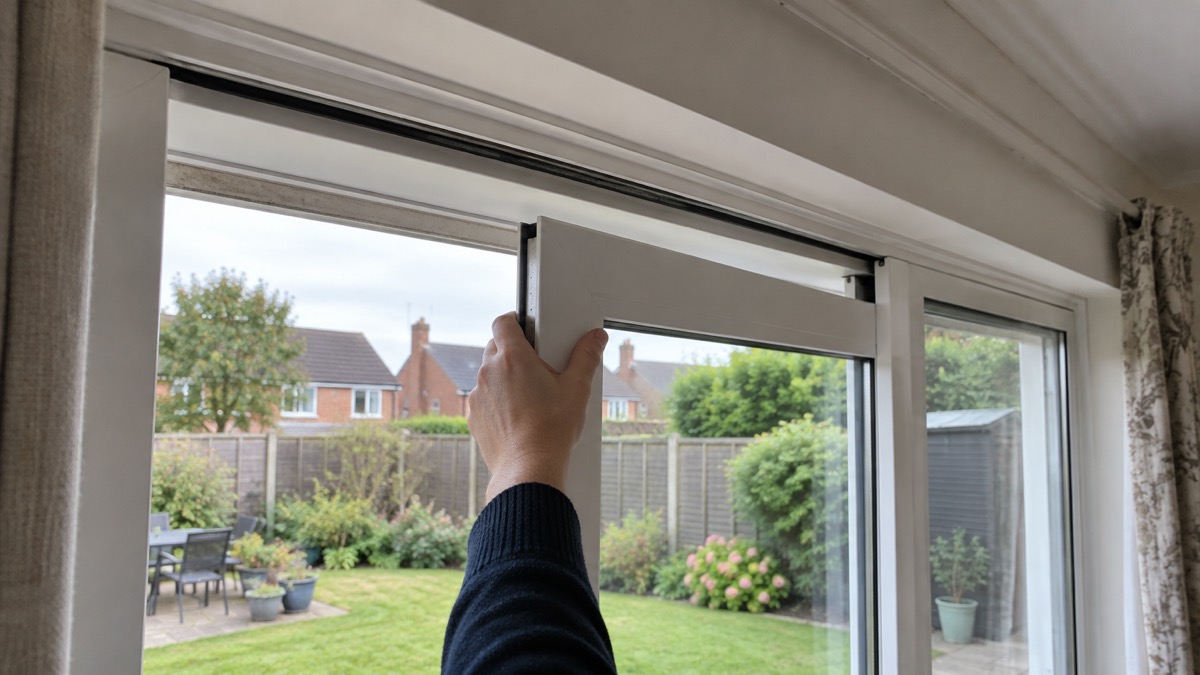
Then look at the top track. On an older aluminium sliding door, check whether an anti-lift track is fitted into the top track; that is the feature designed to stop the door being lifted off its runners2. If you cannot tell, ask a locksmith who is a member of the Master Locksmiths Association to check the door and the material it is made of2.
Check the lock as well. The police say that if you do not have a mortise deadlock on exterior doors, your home may be more at risk1. On uPVC and multi-locking doors, the locks only work if you lift up the handle and then turn and remove the key to engage the hooks and latches: lift, lock and remove3.
- Lift test: more than six millimetres of movement means the door can be lifted1
- Top track: look for an anti-lift track on older aluminium doors2
- Lock type: a mortise deadlock on exterior doors reduces the risk1
- Locking routine: lift the handle, turn the key, remove it3
- New doors: "PAS24" marks a door that is harder to break4
Anti-lift blocks and screws: how they stop the door rising
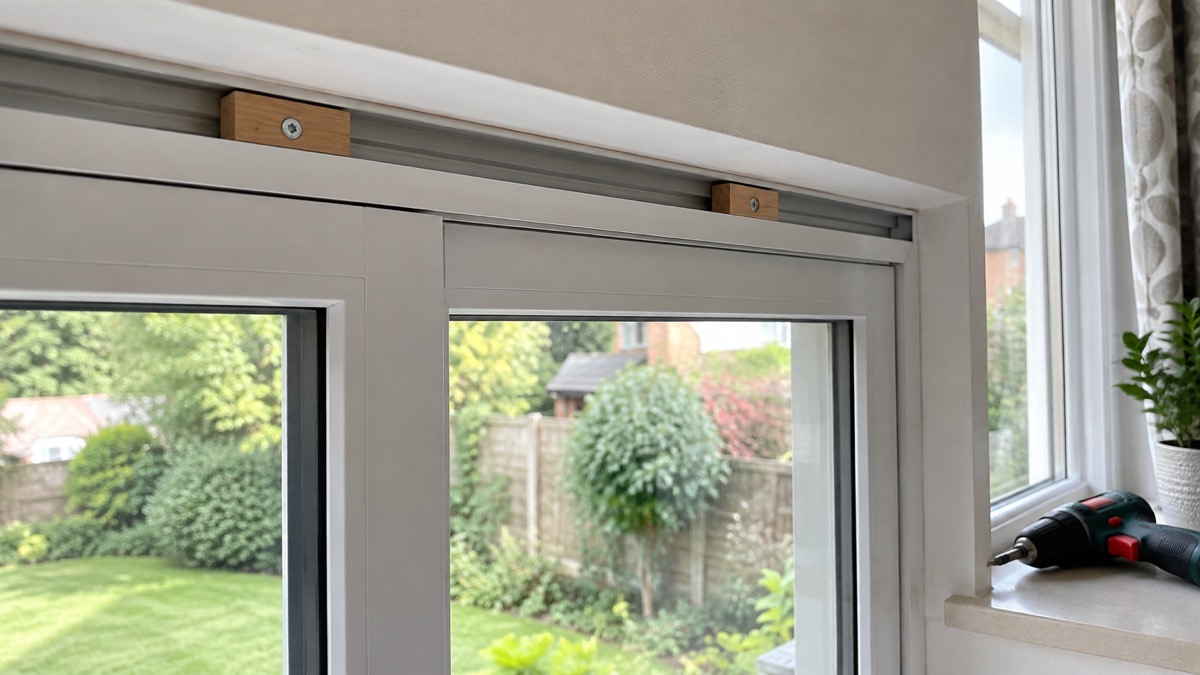
An anti-lift block is a piece of wood screwed into the channel above the opening door. It fills the gap the door would need to rise through, so the door cannot be lifted clear of its runners. The police instruction is specific: if you can lift the door more than six millimetres (1/4 inch), screw wood blocks of a suitable depth into the channel above the opening door to prevent this1.
"Suitable depth" means the block should take up the slack without stopping the door sliding normally. Fit it so the door still runs freely when closed and locked, and check the door afterwards: it should slide without catching and should no longer lift. If you are not confident working at the top of the door, or the door is heavy, ask for help rather than climbing on chairs or stools; the NHS Stay Steady and Safe checklist advises asking for help with repairs or work at height and not climbing on boxes, chairs or unstable stools5.
On older aluminium doors, the better long-term answer is an anti-lift track fitted into the top track, which is the purpose-built version of the same idea2. Blocks are the practical fix where the track is not there and the door otherwise works well.
Adding a secondary lock or security bar
A secondary lock or a security bar gives you a second barrier if the door is attacked at the lock or the frame. The police advice on doors is to double-lock every time you leave the house, because simply shutting the door will not prevent burglaries3. A secondary lock adds to that routine rather than replacing it.
For French doors, the frame is the weak point as much as the lock. A Master Locksmiths Association member can reinforce the frame, often with London and Birmingham bars, and check whether locks and hinges are British Standard approved2. If you are considering a smart lock as a secondary measure, one maker, Nuki, states that its Smart Lock does not impact home insurance coverage, that there is no need to inform the insurance company, and that it enhances the door's security class6. That is the maker's own claim about its own product; check your policy wording yourself.
Whatever you fit, it must not trap you. A fire escape plan should include a second way out if the main door is not safe, such as another door or fire escape, climbing out of a ground floor window, or climbing out of a first-floor window onto a garage roof or extension and getting down safely7. Keep keys where you can reach them in the dark, and check regularly that you can open the doors to stairways or escapes from both sides8.
What to do if your patio door has been forced
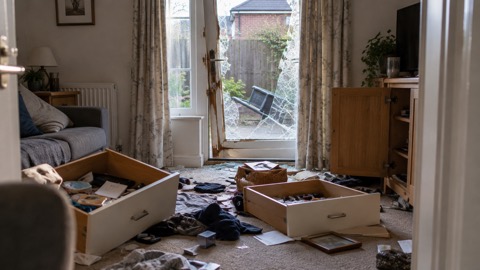
If you come home and find the patio door forced, do not go in if you think someone may still be inside. Get to a safe place and call 999. If you are already inside and discover a break-in in progress, leave by the nearest exit and call 999 from outside.
If the door has been forced but the house is empty, secure the opening as best you can before nightfall and report it to the police. The police in Scotland and Northern Ireland publish their own break-in advice and reporting routes4. For the steps after a break-in, from crime numbers to insurers and repairs, see Coming Home to a Break-In: What to Do First and After a Burglary: Crime Numbers, Insurers, Repairs and Support.
A forced door often leaves the frame or track damaged, and a damaged door may not lock properly. Treat it as insecure until repaired. If the damage happened during a storm, the same applies: secure loose objects such as ladders and garden furniture before strong winds, and close and securely fasten all doors and windows10. Ladders left out can be used to reach upper floors, so lock them to a secure fixture in the shed or garage9.
Where to get help with door security
Start with your police force's crime prevention pages, which set out door and window advice for your area2. In Scotland and Northern Ireland the national force websites carry their own break-in and home security guidance4. For doorstep callers, the police advise using a door chain or bar, checking who is there through a viewer, window or camera, and ignoring the door if you are not sure who it is13.
For the door itself, a locksmith who is a member of the Master Locksmiths Association can check if your front door is secure and what it is made of, reinforce the frame often with London and Birmingham bars, and check whether locks and hinges are British Standard approved2. Ask what the work involves and get it agreed before it starts. Be wary of anyone who turns up uninvited offering door or security work; the police publish advice on rogue traders and doorstep crime13.
If you rent, the police advise changing your locks when you move into a new home if you want to4, but in a rented property speak to your landlord first and check your tenancy agreement. If you have a smart lock or are thinking of one, the maker's own claim about insurance is that it does not affect cover6, but your policy is the document that decides.
For more on doors, locks and standards, see Doors and Locks: Standards, Cylinders and Making Entry Harder and What British Standard Should Your Door Lock Meet?. For the wider picture, start with Home Security: A Household Guide.
Sources (13)
- Securing doors and windows, nidirect, 2024-08-27
- Door security, Avon and Somerset Police, 2026-11-02
- Door and window lock advice, Sussex Police, 2026-11-02
- Break-in and housebreaking, Police Scotland, 2026-11-02
- Stay Steady and Safe home safety checklist, NHS Norfolk and Suffolk Integrated Care Board, 2026
- Nuki Smart Lock Ultra, Nuki, 2026-11-03
- Making a home escape plan, Warwickshire County Council, 2026-10-29
- Plan your escape, Staffordshire Fire and Rescue Service, 2026-10-29
- Garden security, Police Service of Northern Ireland, 2026-11-02
- Storms and gales, Lancashire Prepared, 2026-10-29
- Severe weather, West Yorkshire Prepared, 2026-10-29
- Planning an escape route, Greater Manchester Fire and Rescue Service, 2026-10-29
- Rogue traders and doorstep crime, Police Scotland, 2026-11-02
 Moving Home Locks Checklist
 After a Break-In Checklist
 Holiday Security Checklist
 Fitting an Anti-Snap Cylinder
 British Standard Door Locks
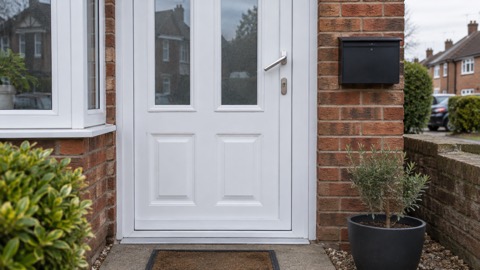 Double Locking a uPVC Door
 Garage to House Door Safety
 Police Preferred Key Safes
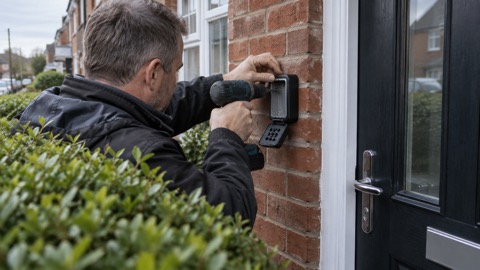 Where to Fit a Key Safe
 Letterbox Guards
 Measuring a Euro Cylinder
 PAS 24 Doors and Windows
 Smart Lock Battery Life
 Smart Locks in a Power Cut
 Smart Locks in Rented Homes