Doors and Locks: Standards, Cylinders and Making Entry Harder
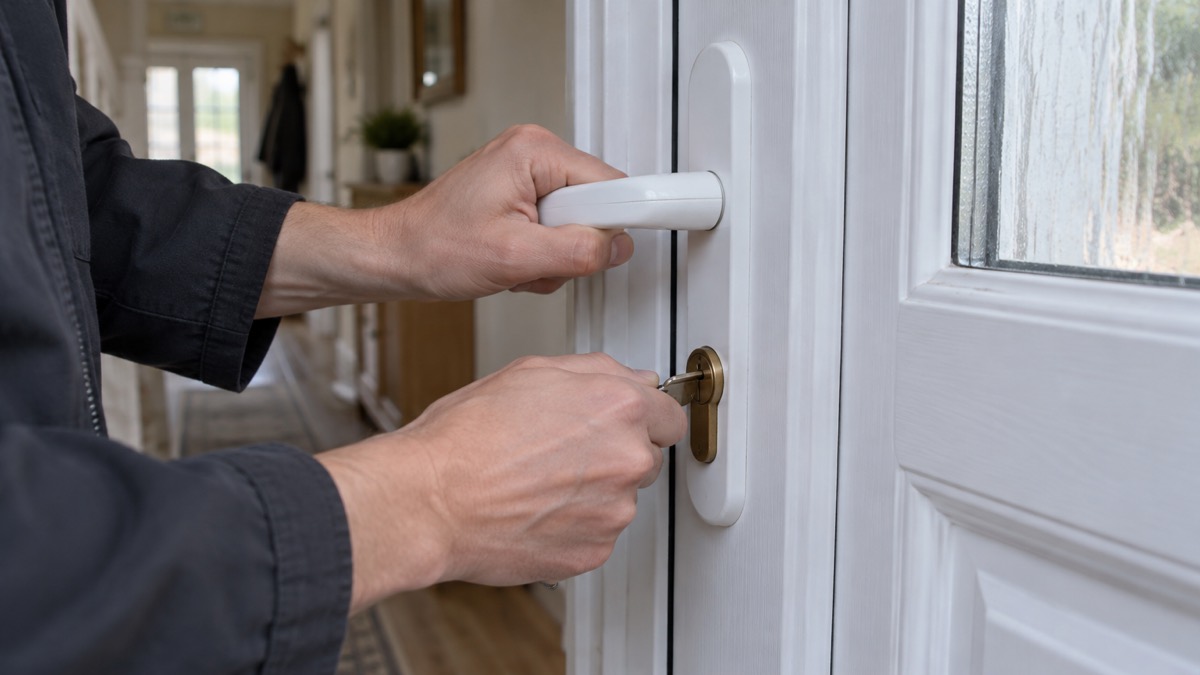
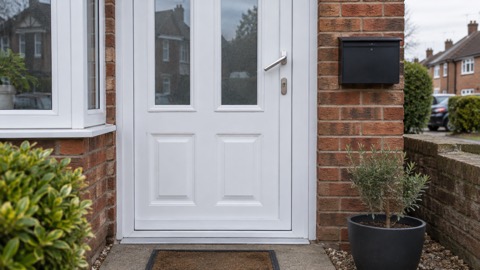
Start with the door you already have: keep its frame and glazing sound, lock it fully every time you leave, and upgrade any euro cylinder that does not meet TS007 with a 3 star rating or SS312, the Sold Secure Diamond standard. On a uPVC multipoint door, lifting the handle alone is not enough: turn and remove the key as well. Sussex Police puts the routine as “lift, lock and remove”.1
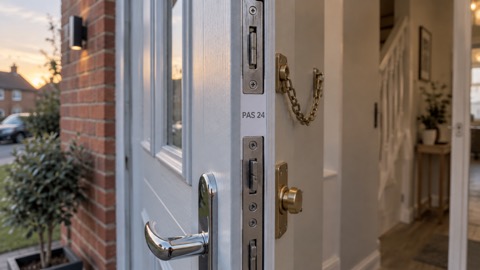
If you are replacing a door, choose a security-accredited product to a standard such as PAS 24:2022. A good lock still depends on the door, frame and fitting around it, while a flat’s front door may also be a fire door that must close by itself.3
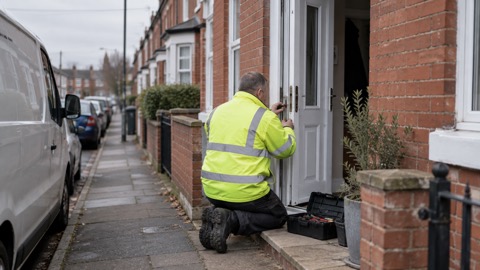
Locked out or a lock has failed
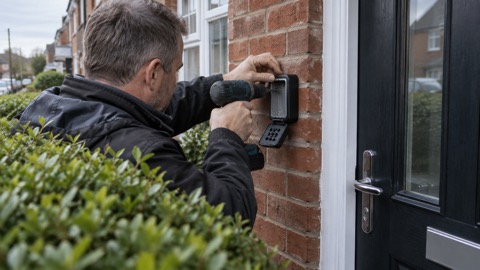
Prepare for a lockout before it happens by deciding who holds a spare and whether a properly approved key safe would help your household. The step-by-step guidance on what to do when you are locked out covers choosing a locksmith, while keys and spare sets and key safes for carers and responders deal with planned access.
If the lock itself has failed, a member of the Master Locksmiths Association can check the door, its material, locks and hinges, and reinforce the frame where needed.3 In a flat, test whether the communal door locks behind you. If it does not, report it to the management agent or landlord so that it can be repaired quickly.5
Do not concentrate on the cylinder while ignoring a damaged frame. nidirect advises having frames that are damaged or pulling away from the wall repaired and securely fitted with strong screws or bolts, because good locks are otherwise ineffective.6
Where finding a key could delay someone leaving, Devon and Somerset Fire and Rescue Service suggests considering a thumb lock so that keys are not required when exiting. This must be considered alongside the door’s security and any fire-door requirements.7
Check the doors you already have
A doors and windows checklist for every home
Work around the property and check the whole opening, not just the lock:
- Door and window condition: Look for deterioration in doors, windows and frames, and check that glass is undamaged. Replacements should meet the latest standards.2
- Window locking: Fit adequate locks to accessible ground-floor and upper-floor windows.2
- Frame fixing: Repair damaged or loose frames and secure them with strong screws or bolts.6
- Front-door identification: A door viewer lets you see who is outside before opening.6
- Alarm routine: Where you have a burglar alarm, use and set it when the home is unoccupied and before bed.2
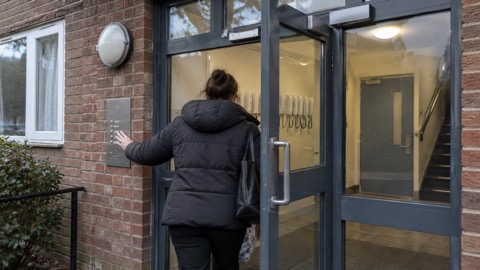
- Shared entrances: Always check that a communal door closes and locks behind you.5
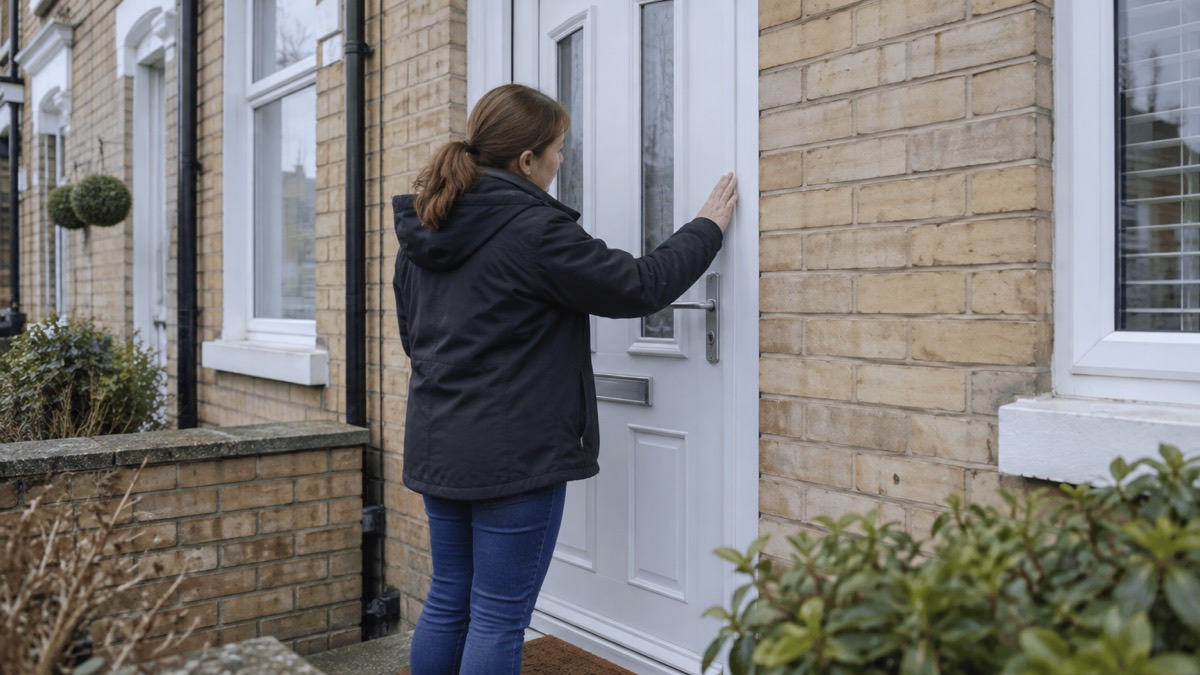
Before answering the front door, the Police Service of Northern Ireland advises making sure the back door is locked. This prevents an unexpected caller from distracting you while another entrance remains open.8
Door standards: PAS 24 and Secured by Design
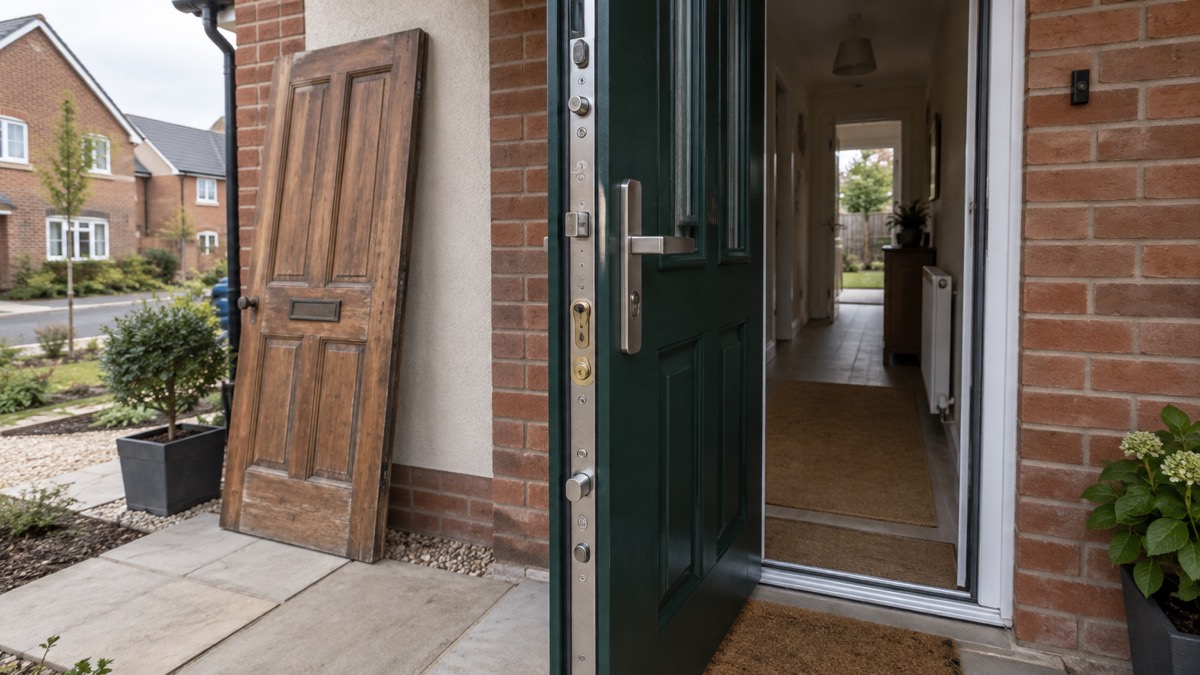
PAS 24 is relevant when choosing a complete replacement door or window. Avon and Somerset Police advises using a security-accredited product to a standard such as PAS 24:2022, and identifies Secured by Design as the body accrediting such door products. Police Scotland similarly describes PAS24 doors and windows as harder to break and advises buying products certified by Secured by Design.3
| What you are choosing | What to look for |
|---|---|
| Replacement door | Security accreditation to a standard such as PAS 24:20223 |
| Replacement windows | PAS 24:2022 products, described by police as tested to British standards and insurance approved10 |
| Additional product assurance | Secured by Design certification9 |
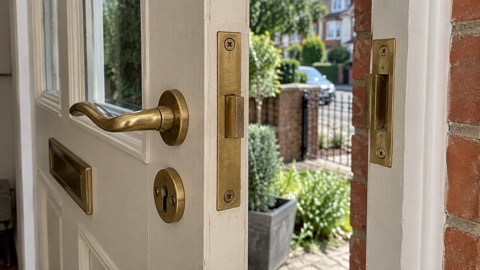
| Existing timber or composite door | British Standard mortice deadlock and automatic deadlocking rim lock, both engaged on leaving3 |
The detailed explanation of what PAS 24 means for doors and windows separates product accreditation from everyday locking. For the lock itself, which British Standard your door lock should meet explains the markings to discuss with a locksmith. Accreditation does not remove the need to repair frames, use every lock provided and check accessible windows.
Euro cylinders and lock snapping
Euro cylinders are used on many multipoint doors, but police guidance distinguishes older cylinders from those meeting current attack-resistance standards. A 3 star TS007 cylinder protects against lock snapping, drilling and bumping. West Yorkshire Police gives SS312, Sold Secure Diamond, as the alternative standard to look for.1
On older aluminium patio, sliding or bi-fold doors, look at whether the cylinder protrudes beyond the frame handle. If it does, Avon and Somerset Police advises asking a Master Locksmiths Association member to fit a shorter, more snap-resistant cylinder.3
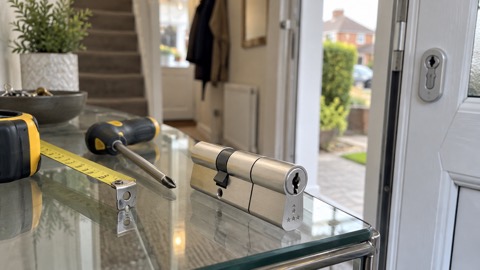
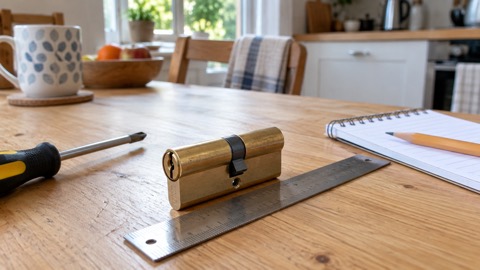
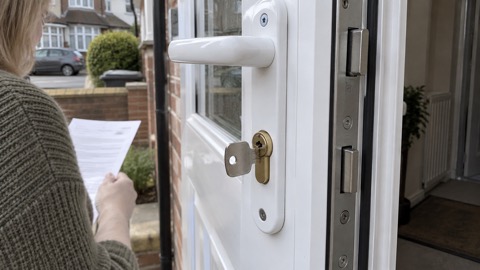
Correct sizing and fitting are part of the upgrade. Follow how to measure a euro cylinder and which way round to fit a 3 star anti-snap cylinder before working on the door. Model-specific information is also available for the ABS Ultimate Series anti-snap cylinder and Ultion ALPS.
Locks for each kind of door
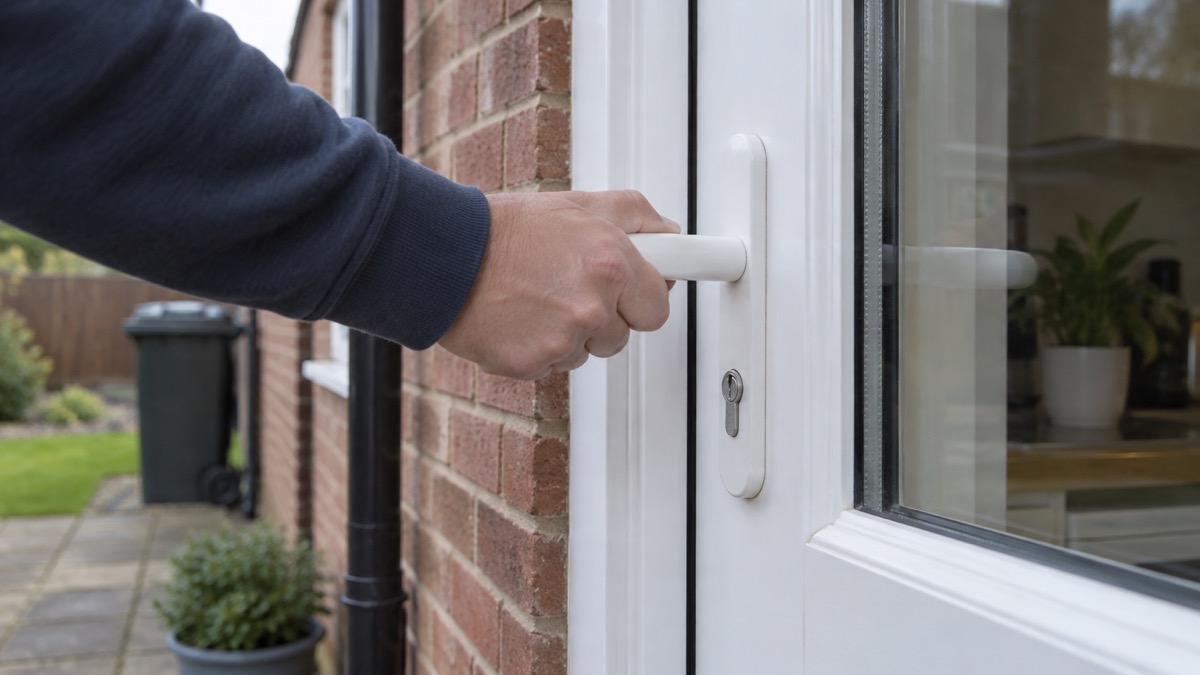
The locking action depends on the door material and mechanism. Use the table to identify what you have, then check that everyone in the household can operate it.
| Door or mechanism | What police guidance says |
|---|---|
| Timber and composite | Usually a British Standard mortice deadlock and an automatic deadlocking rim lock; engage both whenever you leave.3 |
| uPVC multipoint | Tested and certified doors use hooks and latches; lift the handle, turn the key and remove it.1 |
| Aluminium patio, sliding or bi-fold | Modern doors typically need no bulky supporting frames; check for a protruding cylinder.3 |
| Front and back doors generally | PSNI advises fitting mortise locks to all front and back doors.11 |
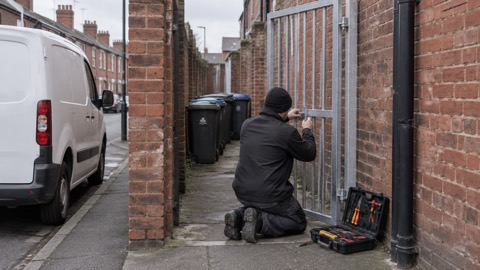
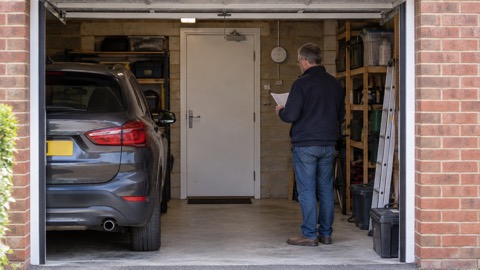
For the multipoint routine, see how to double lock a uPVC door. Do not overlook secondary routes: nidirect warns that an unlocked garage with a connecting door can let a burglar reach and open the inner door without being seen.6 The guidance on the door between your garage and house and terraced houses and rear alleys covers those approaches.
Windows, patio doors and letterboxes
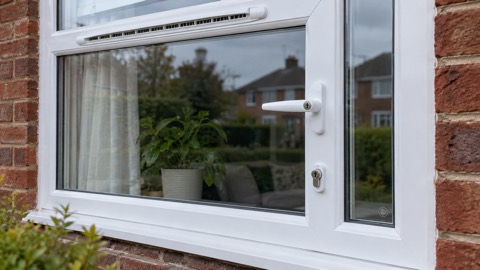
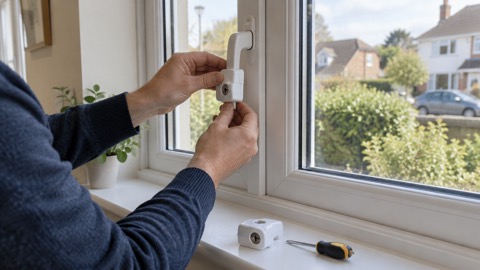
Accessible windows need locks as well as sound frames. Avon and Somerset Police says window locks reduce the chance of burglary by slowing an intruder and making entry more difficult. For casement windows in a high-crime area, or where the opening casement is bigger than one metre, it advises two locks opposite each hinge.10
- Use the household guide to window security and how many locks a window needs to check each opening.
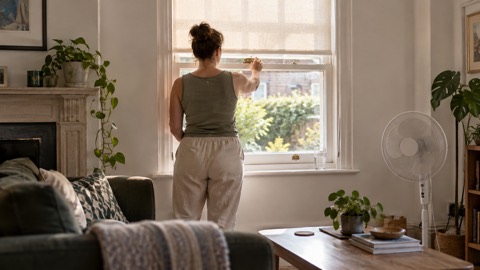
- Consider the separate risks of leaving windows open in hot weather.
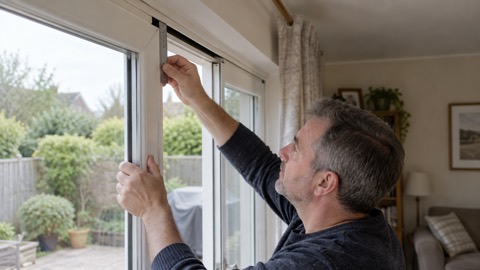
- Check older sliding and bi-fold doors for protruding cylinders, and see stopping a patio door being lifted off its track.3
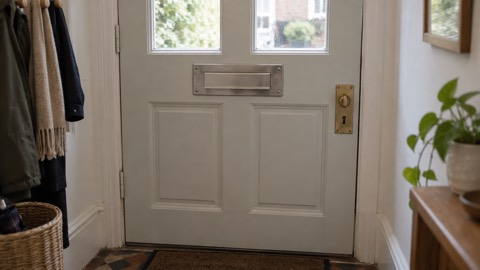
- Keep a letterbox away from the door lock, particularly if keys are left in it: nidirect warns that a burglar could reach through and unlock the door.6
Devon and Somerset Fire and Rescue Service says letterbox locks may provide additional protection against arson. North Wales Fire and Rescue Service also describes the Flaplock as a manually lockable letterbox intended to prevent flammables being deliberately introduced into a property.12 Letterbox guards explains this choice further.
Keys, spares and key safes
Keys must be available for escape without being exposed to someone reaching through a letterbox. Scottish Fire and Rescue Service’s bedtime advice is to keep main door keys to hand, while Devon and Somerset Fire and Rescue Service advises ensuring they are accessible by the front door.4
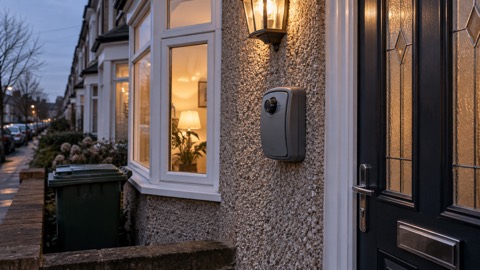
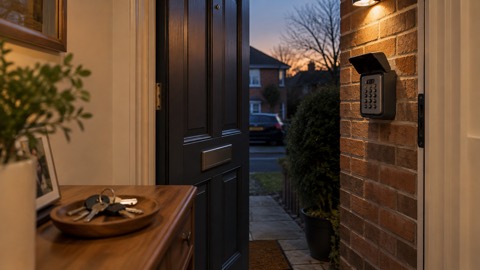
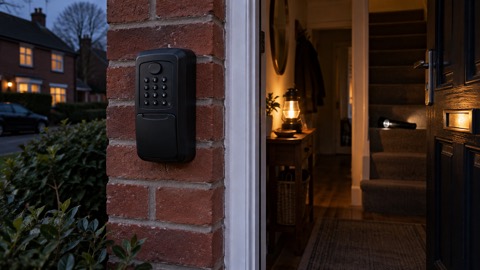
For emergency or caring access, NHS guidance recommends a police-approved key safe meeting British Loss Prevention Standard LPS 1175. It names the C500, P500 and Keyguard Digital XL as examples.14 Read which key safes are police preferred, where to fit a key safe for emergency access and the Keyguard Digital XL key safe page before deciding.
Before a holiday, nidirect advises checking and locking doors, windows, sheds and garages, setting the alarm, using light timers, and asking someone trusted to check the house and bring in bins and post.15 That trusted-person arrangement can also provide a planned spare-key route without leaving a key visible near an entrance.
Smart locks when the power or Wi-Fi fails
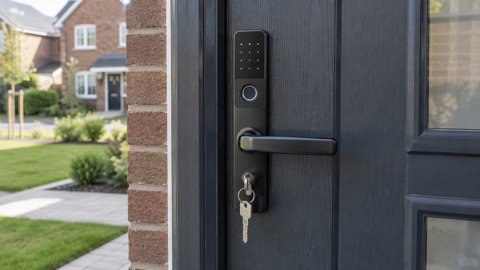
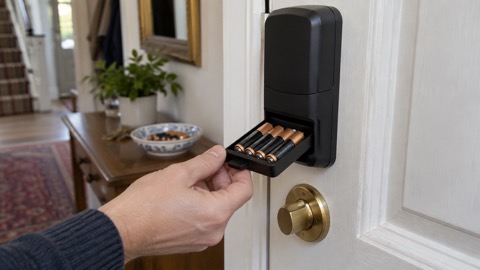
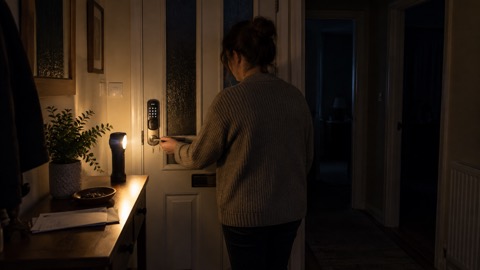
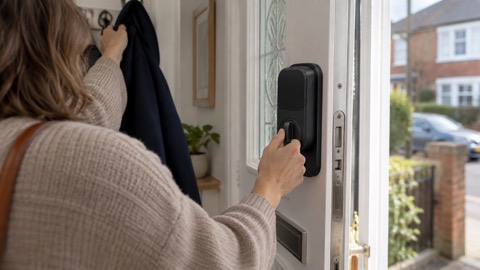
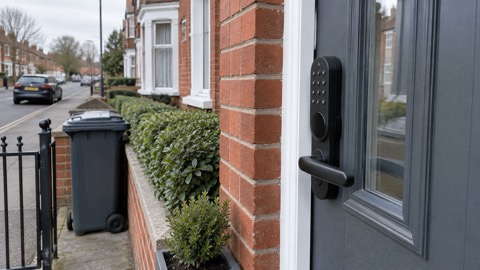
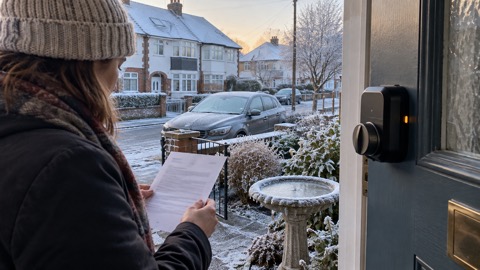
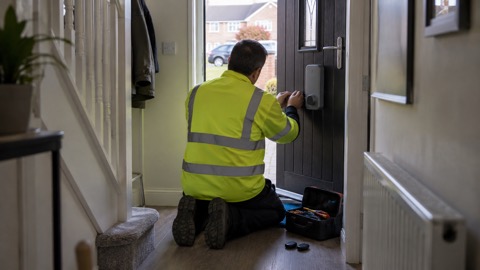
A smart lock does not necessarily stop working when the mains fails. Which? explains that battery-powered models stay locked and their motors continue working during a power cut. Depending on the lock, entry can still be by keypad, fob, fingerprint scanner or a nearby phone using Bluetooth.16
| Situation | What to expect |
|---|---|
| Power cut | The door stays locked and the battery-powered motor still works.16 |
| Wi-Fi failure | Remote unlocking, access logs and voice control may not work.16 |
| Low battery | The app can notify you that the battery is low.16 |
| Insurance | Which? says installation should not void insurance if British Standards are met, but hacking or a stolen password could affect a claim; insurers’ advice is mixed.16 |
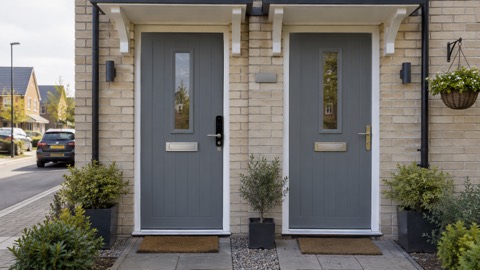
Start with how smart locks work, smart locks in a power cut, smart lock batteries and the choice between a smart lock or traditional key lock.
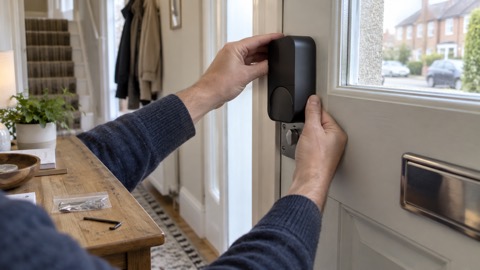
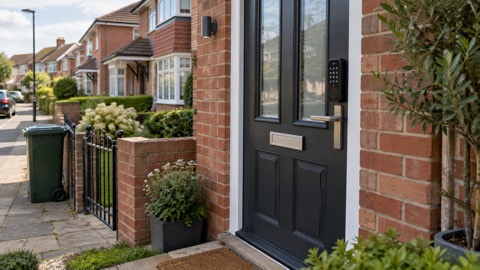
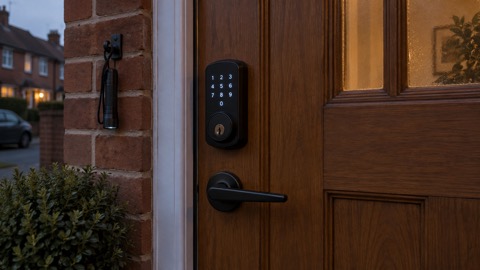
Model details matter. Which? says the Aqara U200 keypad runs on AAA batteries or can be hard-wired, while the Ultion Nuki Smart Lock 2025 is designed for doors with 215mm, 211mm and 122mm handle fixings and escutcheon lock handle fixings.16 Model pages cover the Aqara U200, U200 Lite, U600, Ultion Nuki, Nuki Go, Nuki Pro, Nuki Ultra, SwitchBot Lock Ultra and igloohome Deadbolt 2S.
Flats, rented homes and fire doors
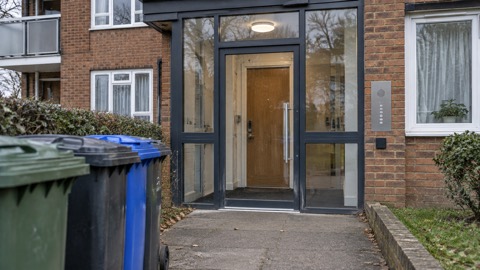
A flat’s security arrangements must preserve fire safety and shared access. Manchester Fire says flat front fire doors have self-closing devices, either at the top of the door or within the frame. Inspection should cover both sides, checking that the door closes on its own and has no damage.17
Do not change the front door without permission. Renters should check with their landlord; owners should check the lease. London Fire Brigade adds that leaseholders may be responsible for ensuring a suitable fire-rated door and all compatible components are fitted.17 The guide to flats and shared entrances covers communal entry, while smart locks in rented and shared homes addresses permission and access.
Sussex Police describes an ideal communal door as robust and security accredited, with a good self-closing arm, magnetic locks top and bottom, and links to the fire alarm and electronic access control.5 The Fire Safety England Regulations introduced legal requirements intended to improve resident safety in blocks of flats.19 If there is a fire in your flat, South Wales Fire and Rescue Service instructs you to call 999.20
Separately, landlords of private residential rental properties in England are legally required to install a carbon monoxide alarm in any room containing a solid-fuel burning appliance.21
Everyday habits that keep doors locked
- Double-lock whenever you leave. Sussex Police warns that simply shutting the door will not prevent burglaries.1
- Lock the garage. This is especially important where it connects to the house.6
- Prepare before a holiday. Lock sheds and garages as well as the house, set the alarm and arrange trusted checks.15
- Control unexpected callers. Police Scotland’s LOCK, STOP and CHECK advice means keeping front and back doors locked, checking through a viewer or window, and admitting callers only with an appointment and confirmed identification.22
If you must leave during an emergency, leaving your home locked when you have to evacuate brings the locking and escape steps together. Wider prevention and what to do afterwards are covered in the household guide to burglary.
Insurance and finding a good locksmith
A Master Locksmiths Association member can check whether your front door is secure, identify its material, reinforce the frame, often with London and Birmingham bars, and check whether locks and hinges are British Standard approved.3 Use that visit to resolve the whole opening: cylinder, frame, hinges, handles and locking routine.
Smart locks need a separate insurance conversation. Which? reports that a lock meeting British Standards should not void home insurance, but insurers’ views differ and some regard smart operation as an enhancement only alongside a robust British Standard mechanical lock. Hacking or a stolen password could affect a claim.16
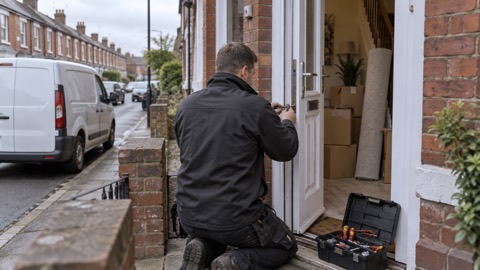
When moving, Police Scotland says you can change the locks if you want to.9 Use the moving into a new home locks and keys checklist to organise that check. Finally, look beyond the door: West Yorkshire Police advises keeping gates closed and locked, maintaining fencing, closing gaps, checking sightlines blocked by high front hedges and ensuring external security lighting works.2
Sources (22)
- Door and window lock advice, Sussex Police, 2026-11-02
- Home security advice, West Yorkshire Police, 2026-11-02
- Door security, Avon and Somerset Police, 2026-11-02
- Bedtime checks, Scottish Fire and Rescue Service, 2024-02-06
- How safe is your flat?, Sussex Police, 2026-11-02
- Securing doors and windows, nidirect, 2024-08-27
- Fire safety for carers, Devon and Somerset Fire and Rescue Service, 2026
- Bogus callers, Police Service of Northern Ireland, 2026-11-02
- Break-in and housebreaking advice, Police Scotland, 2026-11-02
- Window security, Avon and Somerset Police, 2026-11-02
- House security, Police Service of Northern Ireland, 2026-11-02
- Reducing arson risk, Devon and Somerset Fire and Rescue Service, 2026
- Fire safety interventions for carers, North Wales Fire and Rescue Service, 2026-11-02
- Keeping safe and warm at home, Torbay and South Devon NHS Foundation Trust, 2023-11
- Securing your home, nidirect, 2024-01-23
- Do I need a smart door lock?, Which?, 2026-04-15
- Fire doors and why they are important, Greater Manchester Fire and Rescue Service, 2026-10-29
- Fire doors, London Fire Brigade, 2026-10-25
- High-rise fire safety information for residents, Cheshire Fire and Rescue Service, 2024-03-22
- High-rise living, South Wales Fire and Rescue Service, 2026-07-29
- Fire alarms and carbon monoxide detectors, Lincolnshire County Council, 2026-10-29
- Shut out scammers: more information, Police Scotland, 2026-11-02
 Locking Up When Evacuating
 Flats and Shared Entrances
 Key Safes for Carers
 Keys and Spare Sets
 Terraced Houses and Rear Alleys
 Smart Locks
 Windows and Ground-Floor Risks
 Fitting an Anti-Snap Cylinder
 British Standard Door Locks
 Double Locking a uPVC Door
 Garage to House Door Safety
 Police Preferred Key Safes
 Where to Fit a Key Safe
 Letterbox Guards
 Measuring a Euro Cylinder
 PAS 24 Doors and Windows
 Securing Patio Doors
 Smart Lock Battery Life
 Smart Locks in a Power Cut
 Smart Locks in Rented Homes
 Window Lock Numbers
 Open Windows in Hot Weather
 Moving Home Locks Checklist
 Smart Lock vs Key Lock
 ABS Ultimate Series Cylinder
 Aqara Smart Lock U200 Lite
 Aqara Smart Lock U200
 igloohome Deadbolt 2S
 Keyguard Digital XL Key Safe
 Nuki Smart Lock Go
 Nuki Smart Lock Pro
 SwitchBot Lock Ultra
 Ultion ALPS Cylinder
 Ultion Nuki Smart Lock