First Aid at Home: A Household Guide
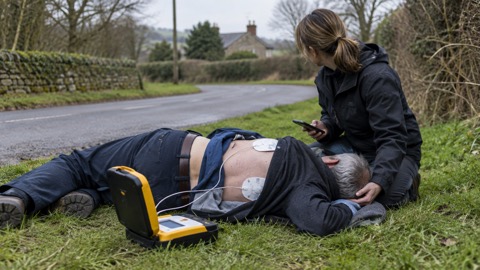
First aid is the immediate treatment given to someone who is injured, stops breathing or needs assistance. Start by checking for danger, then check whether the person responds. Call 999 whenever someone is seriously ill or injured and their life is at risk. If they are unresponsive and not breathing normally, ask for an ambulance, start chest compressions if it is safe and send someone for a defibrillator if one is nearby.1
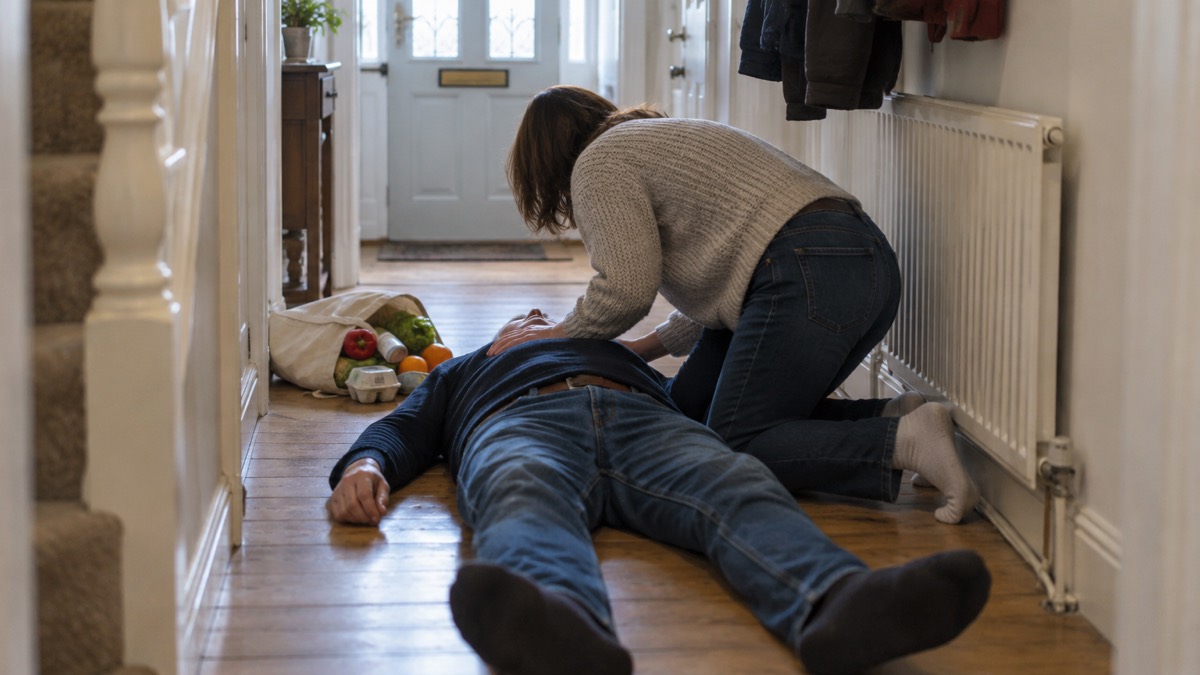
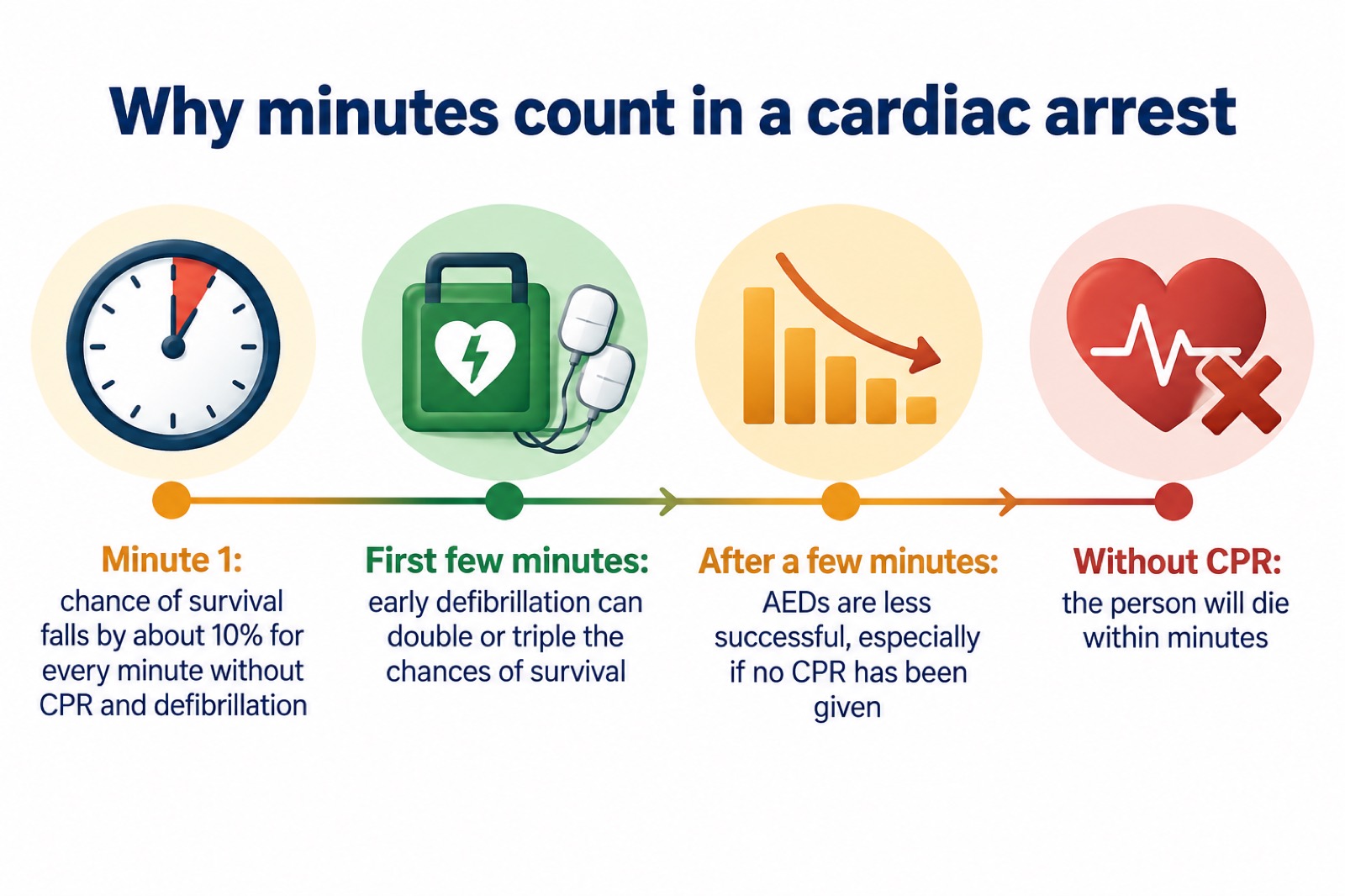
You do not need to diagnose the underlying condition before acting. Severe bleeding, choking, a severe burn, suspected anaphylaxis and loss of consciousness all require prompt action. Early CPR and defibrillation can more than double the chances of survival from an out-of-hospital cardiac arrest, and 80% of cardiac arrests happen within the home.4
What to do first
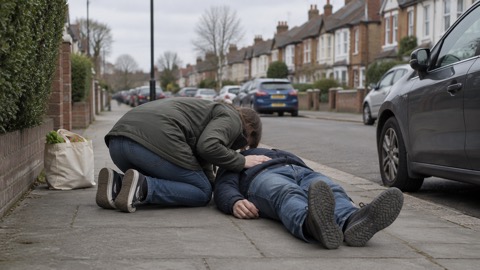
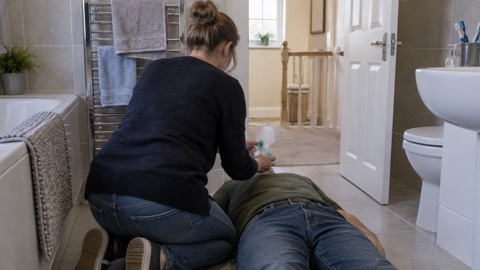
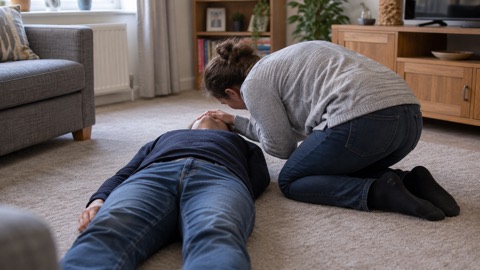
The London Ambulance Service sets out a sequence that keeps the first few moments orderly: danger, response, send for help, airway, breathing and CPR. Check for danger to yourself, the patient and others before approaching. Talk to the person and gently shake their shoulders to check for a response. Call 999 immediately and provide your location. Open the airway by tilting the head back and lifting the chin, then check for normal breathing for up to 10 seconds.3
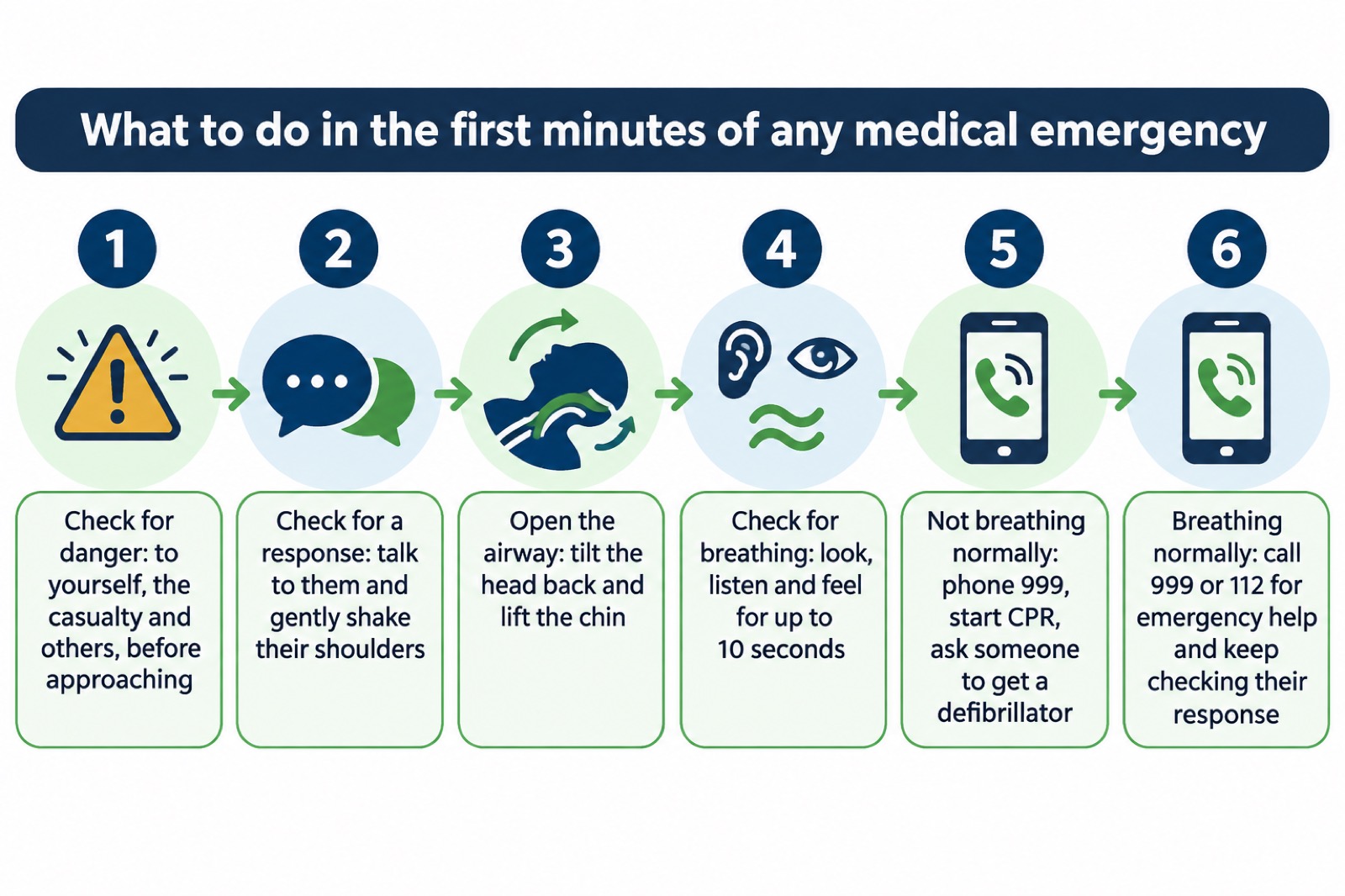
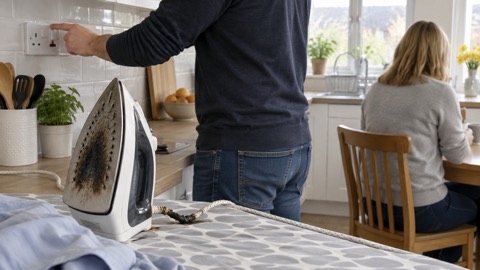
The primary survey explains that sequence in more detail, while checking breathing covers what to look and listen for. Do not become so absorbed in helping that you walk into the same traffic, fire, electricity or other hazard that caused the injury. Scottish Ambulance Service guidance likewise begins with checking for danger before approaching.7
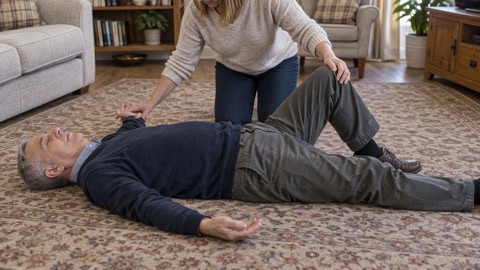
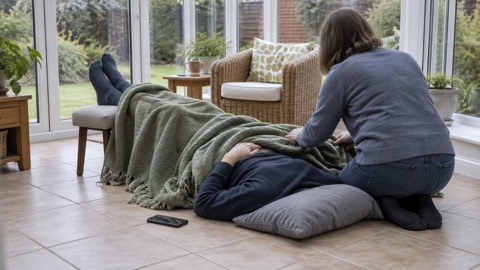
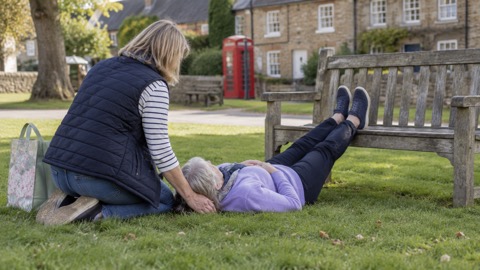
If the person is not breathing normally, move straight to the CPR section below. If they are unconscious but breathing, the recovery position is the relevant next skill. Government guidance for children who lose consciousness or have a fit says to place the child in the recovery position, call 999 immediately and follow the call handler's instructions.8 Special circumstances are covered in the guidance on the recovery position when a spinal injury is suspected.
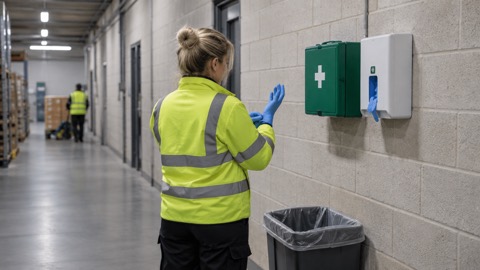
Keep your own protection in mind throughout. The page on protecting yourself when helping covers gloves, masks and needle injuries. Learning the sequence before an emergency matters because it can take time for emergency services to reach an incident; Greater Manchester Combined Authority advises learning first aid so that you can save lives and look after injured people during that interval.9
Calling 999 and what to say
Call 999 in a medical emergency when someone is seriously ill or injured and their life is at risk. South Western Ambulance Service specifically lists loss of consciousness among the circumstances requiring 999. The operator will ask which emergency service you need: in a life-threatening medical emergency, ask for the ambulance service.2 Official guidance also refers to 999 or 112, so both numbers appear in emergency advice.11
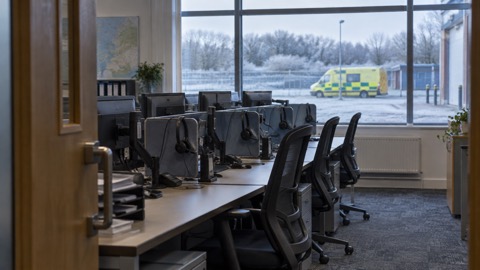
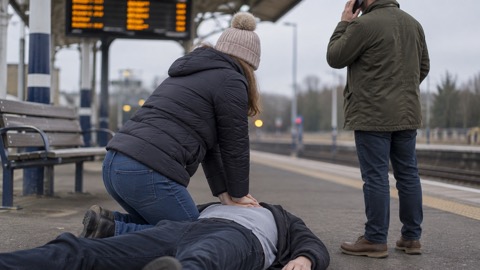
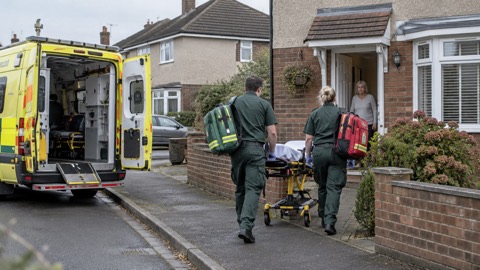
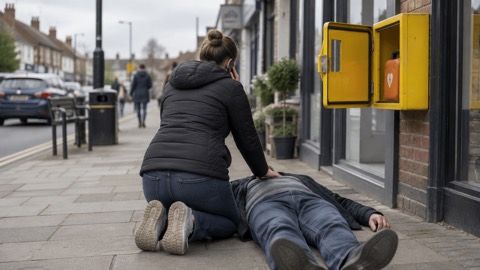
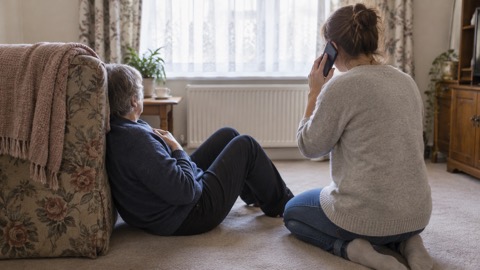
Call first, put the phone on speaker and give your location. This leaves your hands free to follow instructions and begin helping. London Ambulance Service advises calling immediately, starting chest compressions if safe and sending someone else for a defibrillator if one is nearby.11 The information to have ready for the ambulance crew checklist helps a household organise useful details, and how ambulance services prioritise 999 calls explains what happens after the call. For wider communications planning, including emergencySMS and 999 BSL, see staying informed and in touch.
Do not call 999 for a non-emergency, because North East Ambulance Service warns that this could delay help for someone needing urgent assistance.10 For a less severe burn, Northern Burn Care Network advises seeking medical help by calling 111 or visiting a GP; more severe burns require the nearest emergency department or 999.6 NHS 111, urgent treatment centres and minor injury units therefore have a place when first aid is needed but life is not at immediate risk. The health emergencies guide explains that wider urgent-care landscape.
If a landline 999 call is disconnected, official silent-solution guidance says the line may remain connected for 45 seconds after the handset is replaced. If you pick up again during those 45 seconds and the BT operator is concerned for your safety, the call will be connected to police.12
CPR and defibrillators
A cardiac arrest is an electrical problem in the heart that stops it pumping blood around the body and brain. NHS England describes it as the heart suddenly stopping beating effectively enough to supply blood to the major organs. Basic life support must start immediately to improve the chance of survival and reduce brain damage.4
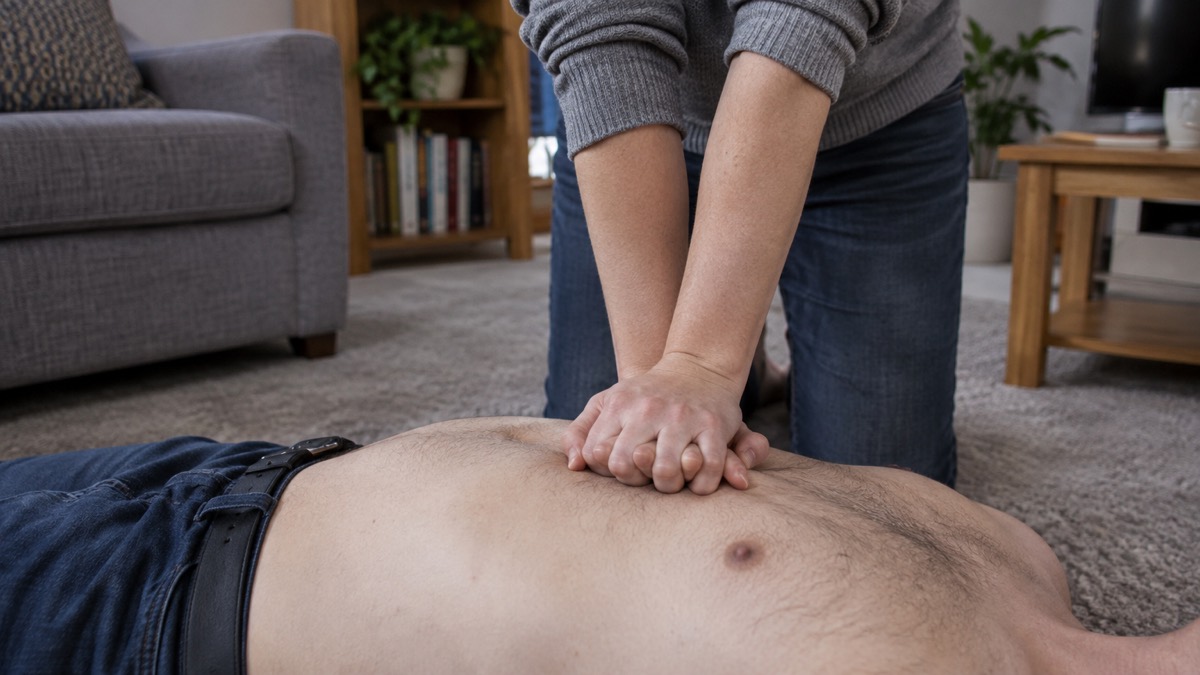
It can happen to anyone, from young children to older adults, and there are usually no obvious warning signs. Someone may lose consciousness and fail to respond, collapse, stop breathing or breathe abnormally. Scottish Ambulance Service warns that occasional gasps are a sign of cardiac arrest, not the person trying to breathe.14 Read more about agonal breathing and the difference between cardiac arrest and heart attack.
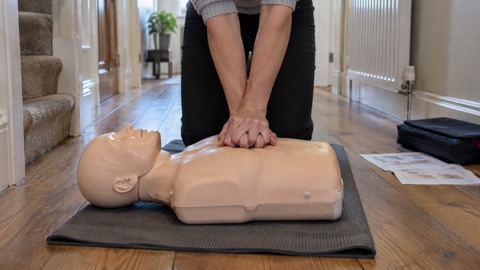
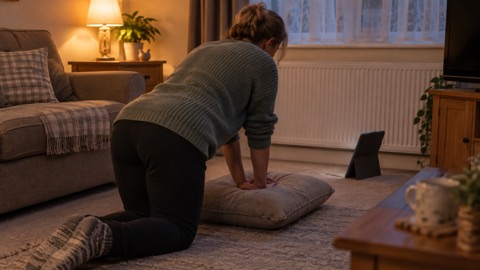
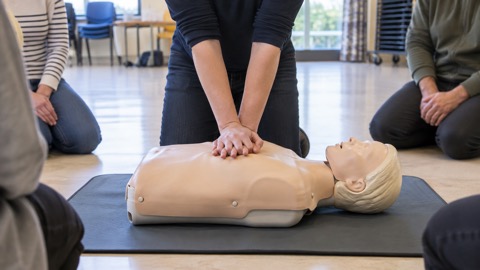
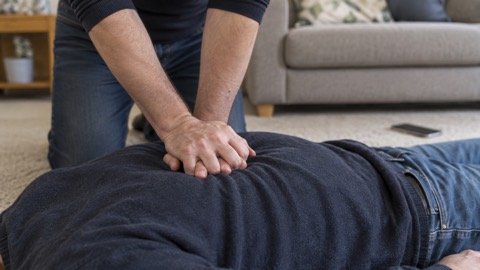
For an adult, London Ambulance Service instructs you to put your hands on the centre of the chest, one on top of the other, keep your arms straight and press down 5 to 6 cm.3 Follow the adult CPR steps, with separate guidance for child CPR and CPR on a baby under one. The supporting pages explain compression rate and depth, rescue breaths or hands-only CPR and what to do if someone starts breathing during CPR.
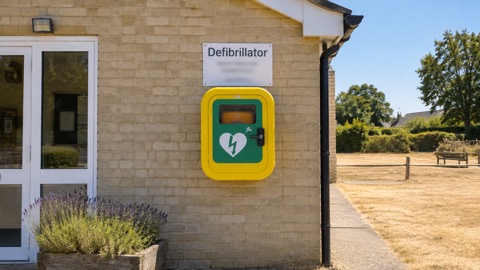
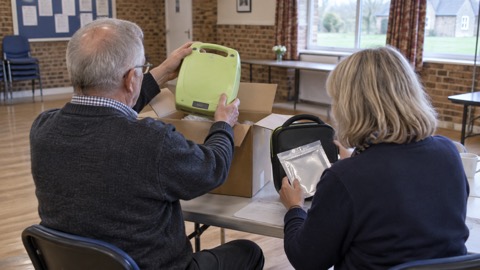
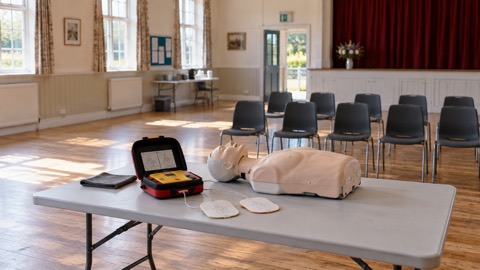
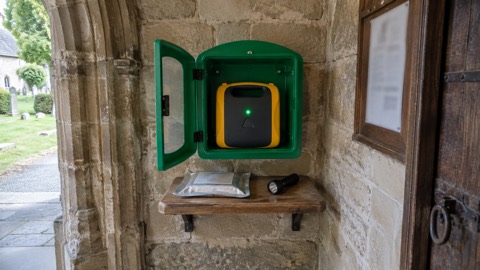
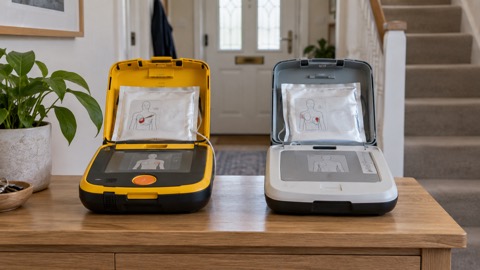
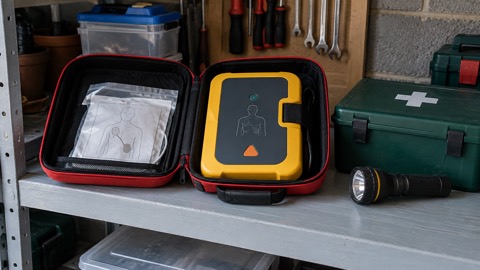
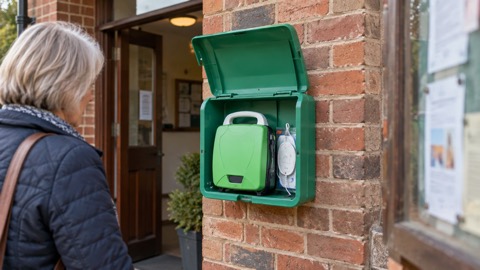
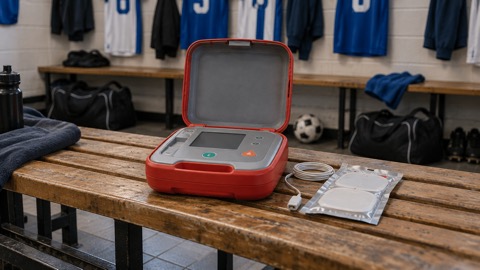
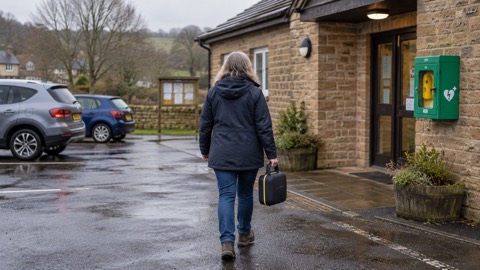
Send someone for a defibrillator if one is nearby.11 A defibrillator, or AED, forms part of the immediate response; practical pages cover using one without training, pad placement, use on a child or baby, finding a public access defibrillator and obtaining a locked cabinet code.
The urgency is stark: without CPR, South Western Ambulance Service says the person will die within minutes, and the chance of survival decreases by 10% for every minute without bystander CPR. North West Ambulance Service reports that fewer than 1 in 10 people in the UK survive a cardiac arrest.4
Severe bleeding and shock
For severe bleeding, call 999. NHS inform warns that uncontrolled severe bleeding can lead to shock and the person may become unresponsive. Apply direct pressure with a dressing or pad. If blood loss continues, NHS inform advises removing the dressing, reapplying direct pressure with a new dressing or pad, and securing it with a bandage once the bleeding is controlled.16
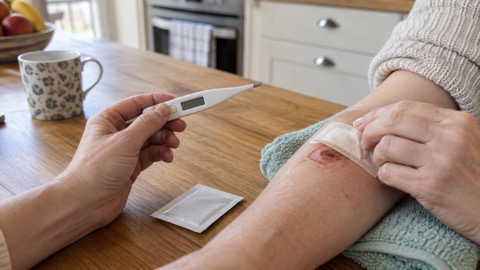
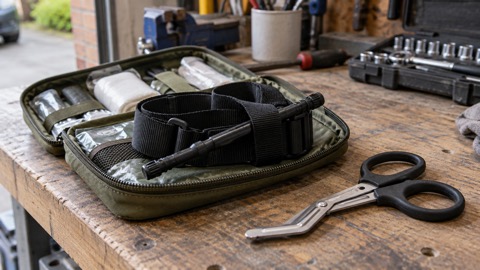
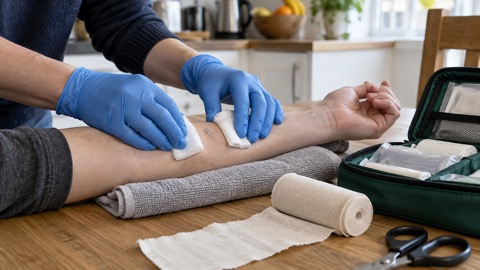
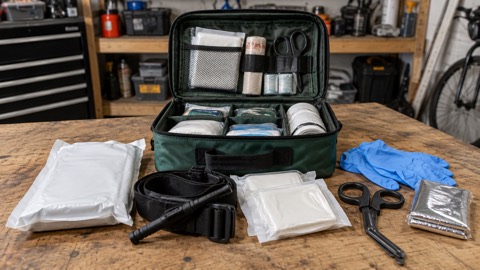
An embedded object changes where you press: NHS instructs, “Do not press directly on the object.”16 The detailed guides cover stopping severe bleeding, an object stuck in a wound and when a tourniquet should be used. For less serious injuries, see cleaning and dressing cuts, grazes and wounds, what dressings and bandages are for and the bleeding control kit checklist.
Shock is not simply fright. Cheshire Fire and Rescue Service lists cold, clammy skin, sweating, rapid, shallow breathing, and weakness or dizziness among its signs, and says to seek help immediately.18 Keep watching the person's responsiveness and breathing while help comes; the shock guide deals with that period in full. Related household guidance covers fainting and nosebleeds.
Choking in adults, children and babies
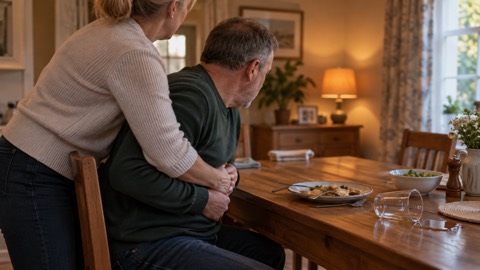
For adults and children over one year old, North West Ambulance Service advises asking the person to cough to clear the blockage. If coughing does not work, stand behind them, lean them forward and give up to five sharp blows between the shoulder blades with the heel of your hand.19
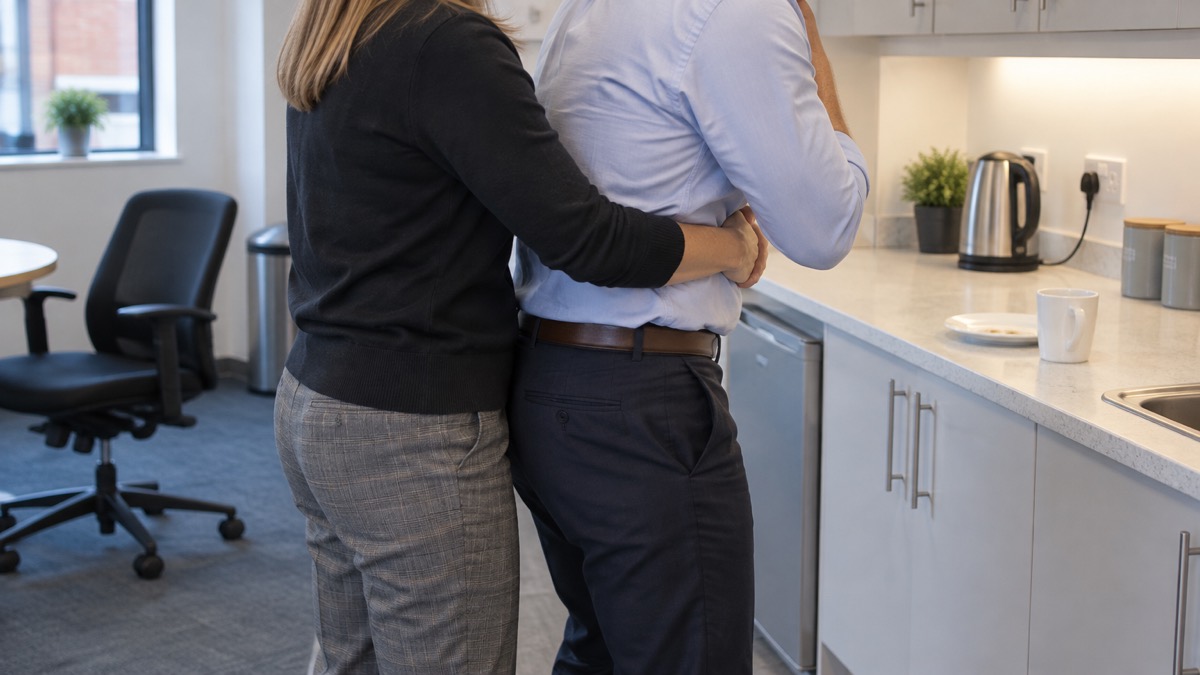
If the blockage has not cleared, clench one fist and place it just above the person's belly button. Put your other hand over the fist and pull sharply inwards and upwards, repeating up to five times. The ambulance leaflet instructs readers to call 999 and ask for an ambulance.19 The full choking guide and the separate advice for a choking child set out the sequence by age.
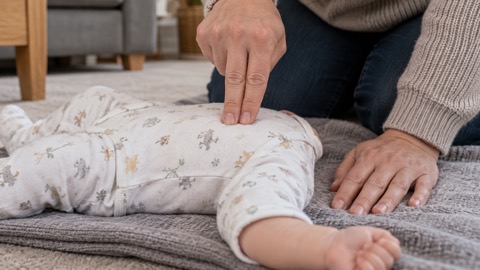
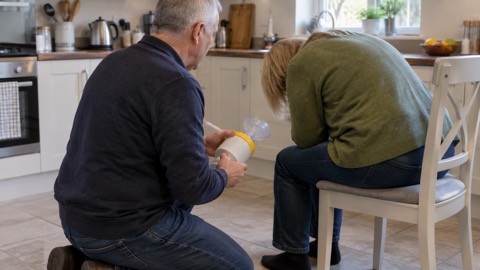
Babies under one need different treatment. If back blows have not cleared the blockage, North West Ambulance Service advises laying the baby face up along your thighs, finding the breastbone and placing two fingers in the middle. Push down on the chest up to five times.5 See what to do if a baby is choking for the baby-specific sequence. Households considering anti-choking equipment can read about the LifeVac anti-choking travel kit without treating it as a substitute for learning the official response.
Heart attack, stroke and seizures
A heart attack and a cardiac arrest are not the same event, but both can require an immediate emergency response. London Ambulance Service advises calling 999 for an ambulance immediately when someone is suffering from either condition, because every minute that emergency life support is delayed reduces the chances of recovery.11 Use the heart attack first aid guide for the signs and actions to take while waiting.
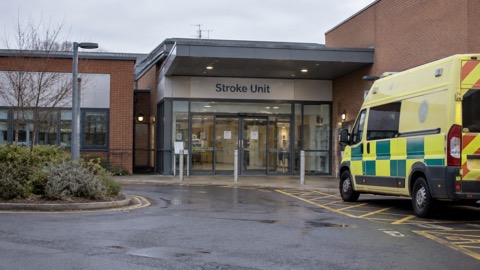
For stroke, the FAST test guide provides the dedicated household checklist. Do not wait for a collapsed person to show every possible sign before calling: loss of consciousness is itself a reason to call 999.2
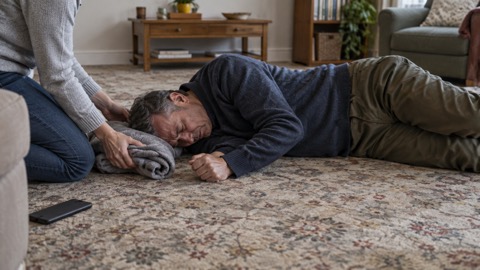
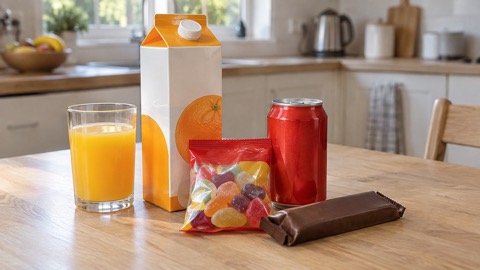
If a child loses consciousness or has a fit, government guidance says to place the child in the recovery position, call 999 immediately and follow the call handler's instructions.8 The seizure guide and the page on febrile seizures in babies and children cover those situations separately. Other sudden illness pages include diabetic emergencies and low blood sugar, asthma attacks and the signs of sepsis.
Burns, broken bones and head injuries
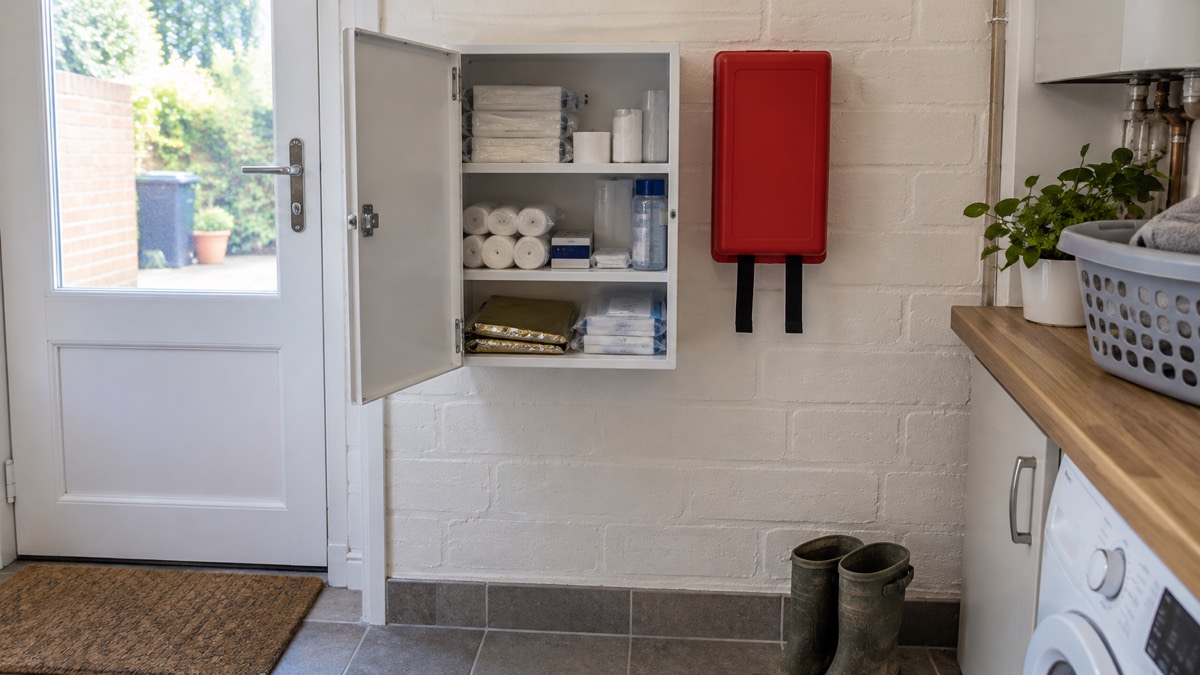
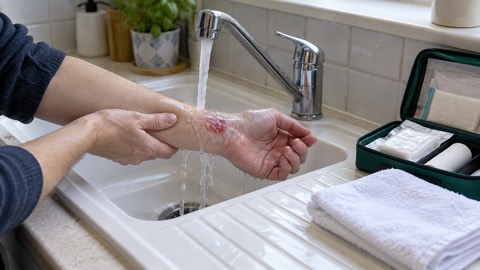
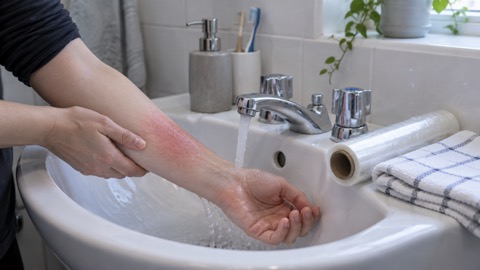
Stop the burning process and remove its cause as soon as possible, without putting yourself at risk of being burnt. Salisbury NHS guidance says flames should be smothered with a blanket or fire blanket. It states that correct first aid applied quickly, within three hours of a burn, can reduce the seriousness of the injury.20
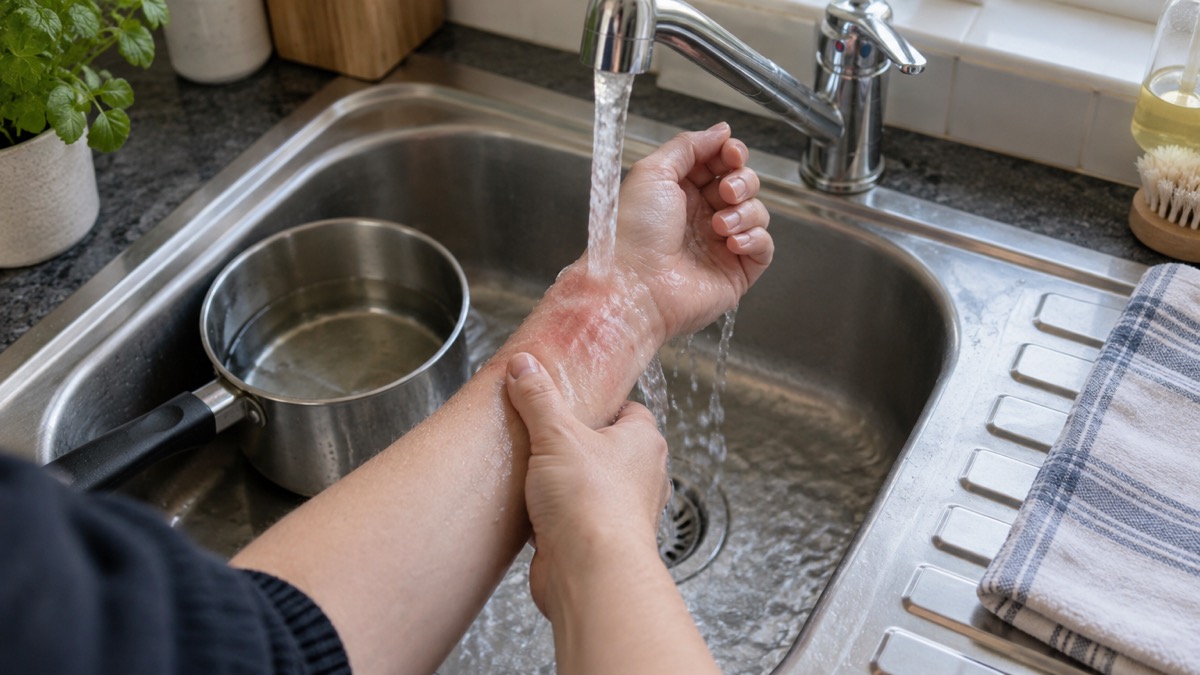
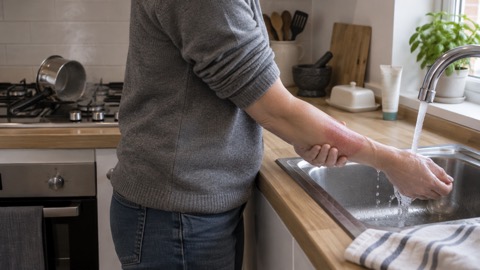
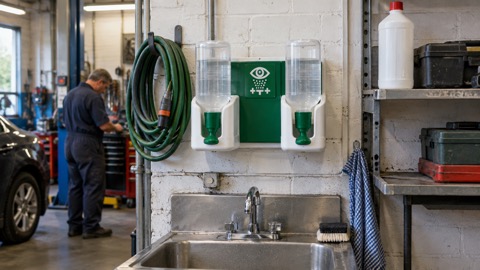
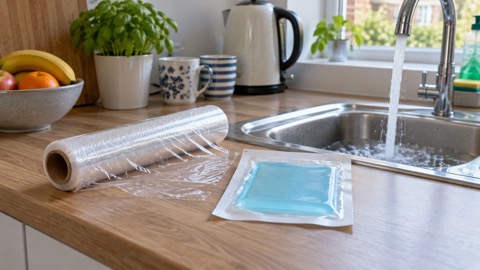
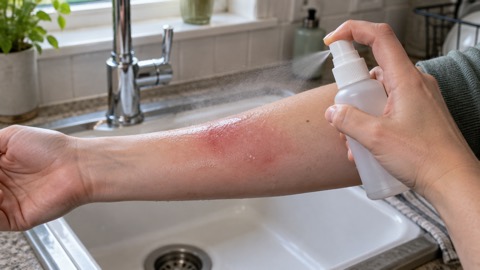
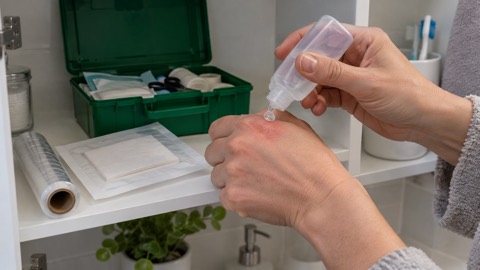
Cooling needs to continue even when water is scarce. Official guidance says to use a cool water compress where supply is limited, changing it frequently over a 20 minute period. NHS child-accident guidance says that, without running water, the burn or scald can be immersed in cold water or another cool fluid such as milk or a cold drink.17 Northern Burn Care Network explicitly says, “Do not use ice.”6 See burns and scalds, why butter or ice should not be used, burn gel or cling film and chemical burns and eye splashes.
Call 111 or visit a GP for medical help with a less severe burn. Attend the nearest emergency department or dial 999 for a more severe injury.6 After a fire, this page is concerned with treating the burn; alarms, extinguishers and escape planning belong in the home emergencies guide.
For a suspected fracture, NHS inform advises the casualty to stay still. Support the joints below and above the injured area with your hands and place padding around the injury for extra support.22 Read more about suspected broken bones, head injuries, sprains and strains, electric shock and eye injuries.
Allergies, poisoning and carbon monoxide
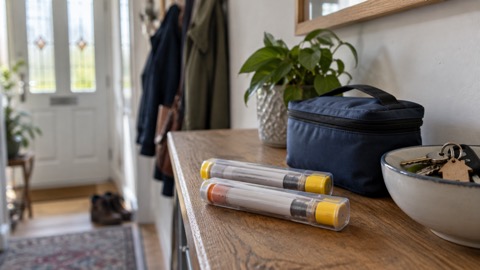
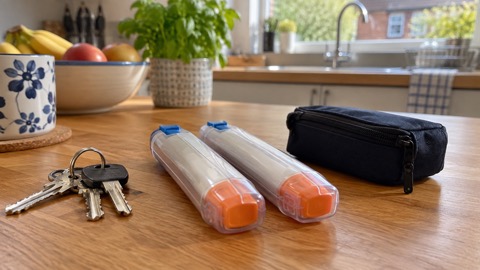
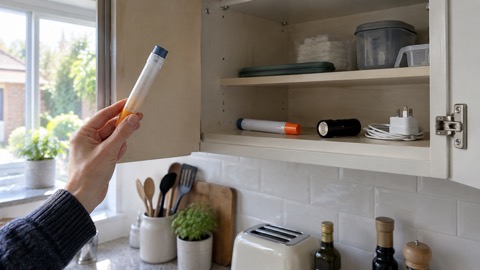
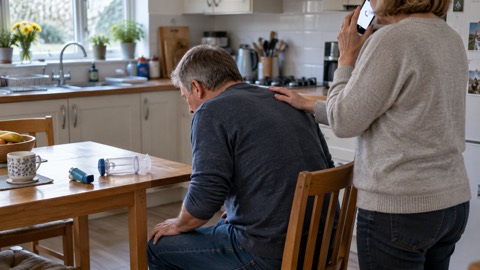
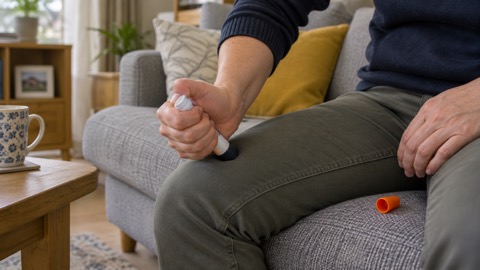
For suspected anaphylaxis, NHS inform gives a clear first step: “Phone 999 and tell the call handler that you think someone has anaphylaxis.”23 The anaphylaxis guide covers the emergency response. Households managing a known allergy can also read about adrenaline auto-injectors, allergy and asthma action plans and what to do with an expired injector. Product-specific instructions are available for EpiPen and Jext.
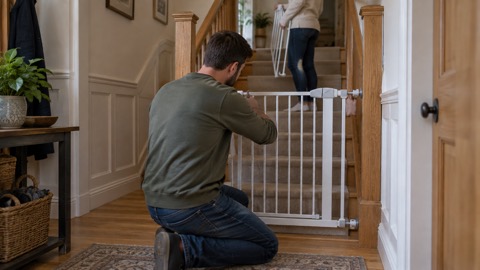
If a child may have swallowed pills or chemicals, use the dedicated child poisoning guidance. Prevention, including safer storage and reducing household falls and burns, is covered in preventing accidents at home.
For carbon monoxide poisoning, official advice is to call the relevant emergency advice line and, if it is urgent, call 999.24 Move straight to emergency help rather than trying to manage a serious exposure at home. Alarm installation, symptoms and the wider household response are covered in fire, carbon monoxide, gas leaks and burst pipes.
Heat, cold and water
For heat exhaustion in a child, government guidance says to move the child to a cool area and encourage them to drink cool water. Cool the child as rapidly as possible: options given include sponging or spraying with cool water, placing cold packs around the neck and armpits, wrapping the child in a cool, wet sheet and assisting cooling with a fan.8 The heatstroke first aid guide explains when heat illness becomes an emergency. Wider prevention and people at risk are covered in the heatwaves guide.
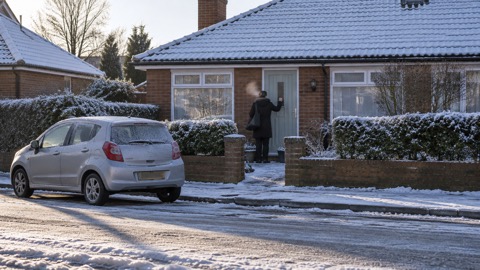
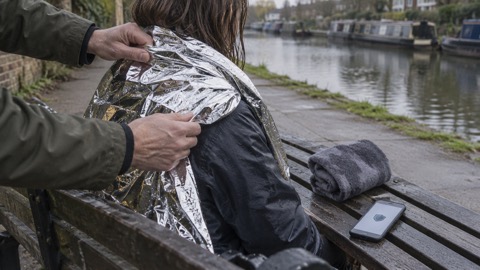
For hypothermia, NHS 111 Wales advises moving the person indoors or somewhere sheltered as quickly as possible.25 See how to treat hypothermia for the first aid response; staying well and avoiding injury in winter conditions is covered in snow and ice.
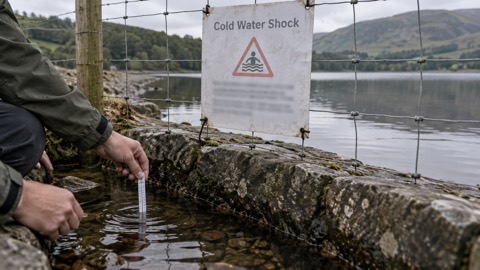
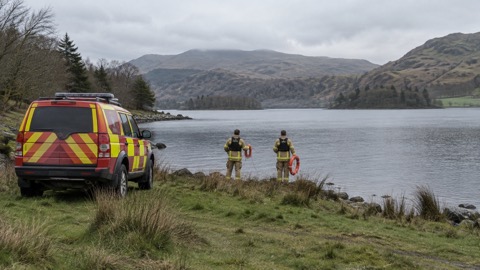
Water emergencies need their own response. Read cold water shock and helping someone in the water and what to do after someone nearly drowns. Do not transfer advice between these situations: cooling heat exhaustion, sheltering someone with hypothermia and responding to a drowning are distinct tasks.
Your first aid kit and courses
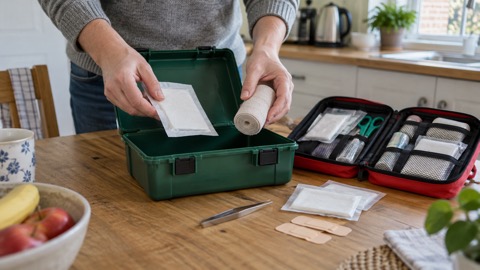
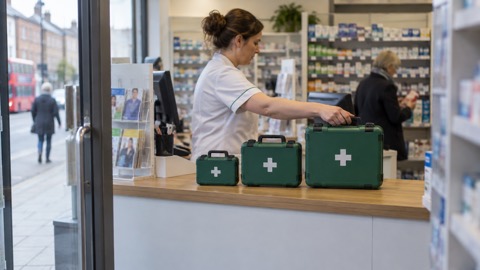
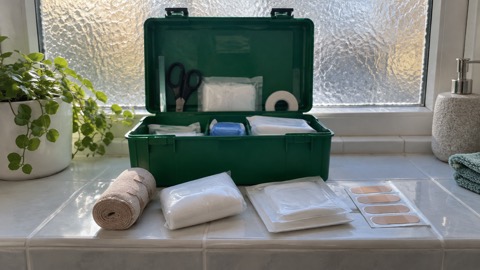
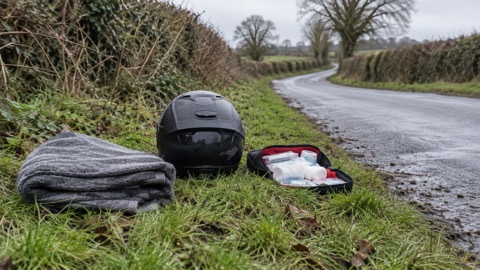
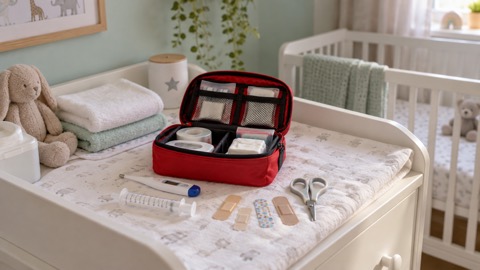
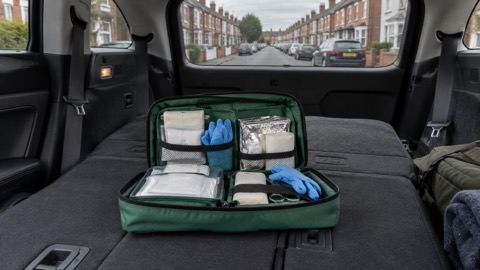
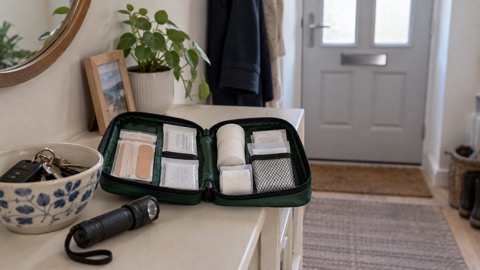
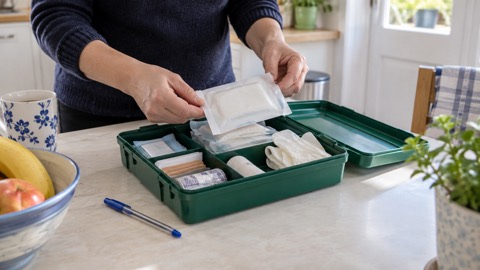
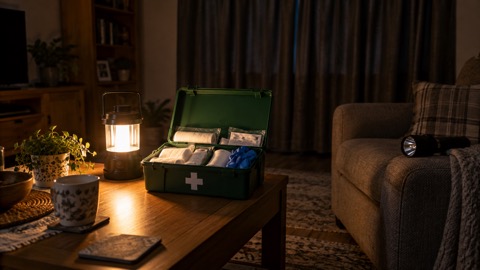
The NHS says you can keep a home or car first aid kit ready by buying a ready-made one or assembling your own in a clean, waterproof box.26 NHS 111 Wales advises buying a green box with a white cross or writing “First Aid” on a homemade box so others know what it is.27 Start with first aid kits for the home, then compare a ready-made kit with building your own.
| Household need | Relevant kit guidance |
|---|---|
| General home supplies | Home kit contents and the British Standard BS 8599 |
| Babies and children | Baby and child kit checklist |
| Travel and road injuries | Car kit checklist |
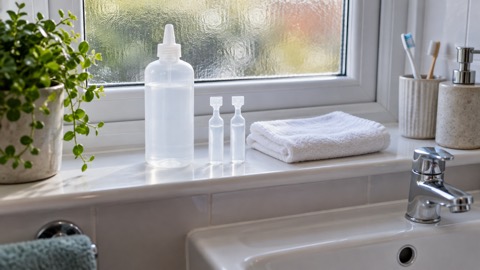
| Eye rinsing | Saline pods or an eyewash bottle |
| Cold treatment | Instant or reusable ice packs |
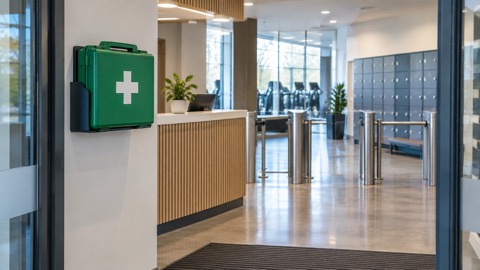
A thermometer and pulse oximeter can sit alongside the injuries kit as household health equipment; their wider use belongs in the health emergencies guide. Keep the injuries kit within your broader household emergency kit, with a separate car kit where needed. Workplace and public-area kits are different: the NHS says their contents should reflect the types of risks people could encounter there.26
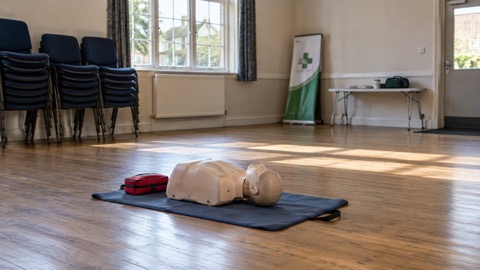
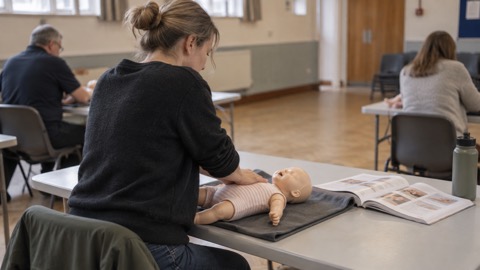
Courses turn supplies into usable skills. The NHS names St John Ambulance, the British Red Cross and local NHS ambulance services as course providers, and says health visitors or children's centres may also run courses.17 Explore first aid course types and providers, learning CPR free online and teaching children to ring 999. St John Ambulance is regulated and monitored by the Care Quality Commission, and its clinical team includes qualified healthcare professionals who check its advice.28 South Western Ambulance Service also runs community CPR and defibrillator training through Restart a Heart events.29
Other help and details to keep ready
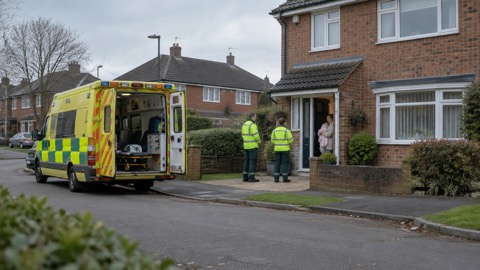
Ambulance clinicians may not be the first trained help to arrive. Community first responders and GoodSAM volunteers can sometimes reach a casualty before the ambulance, so follow the 999 call handler's instructions and accept that local assistance while continuing first aid. The community resilience guide explains how neighbours and local groups fit into an emergency response.
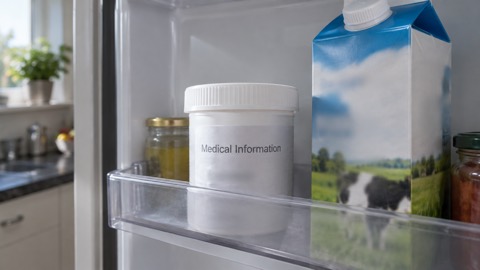
Keep essential medical and contact details where they can be found quickly. Message in a Bottle covers storing medical details where responders look, while the ambulance information checklist helps gather the facts a crew may need. At the scene, give your location promptly and send another person for help or a defibrillator rather than leaving an unresponsive casualty yourself when someone else is available.3
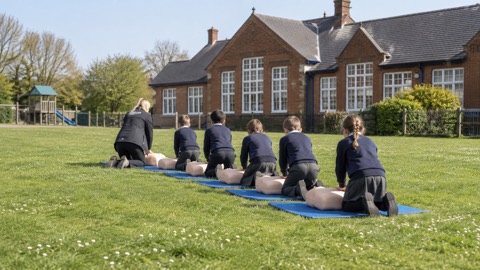
Households with additional needs should plan before an emergency. The extra help guide covers older, disabled and medically dependent households. Children can also learn lifesaving skills: London Ambulance Service reports that early chest compressions and defibrillator use can more than double survival chances, and notes that more than 75 per cent of cardiac arrests happen in the home.30
Finally, human first aid advice does not transfer directly to animals. Use the pets in an emergency guide for household planning and seek veterinary help for an injured pet rather than improvising from human treatment instructions.
Sources (34)
- Basic Life Support, Sheffield Children's NHS Foundation Trust, 24 July 2023
- When to Call 999, South Western Ambulance Service NHS Foundation Trust, 29 October 2026
- Remember These Steps to Learn How to Save a Life, London Ambulance Service NHS Trust, 12 August 2026
- Restart a Heart, South Western Ambulance Service NHS Foundation Trust, 29 October 2026
- First Aid Facts Leaflet, North West Ambulance Service NHS Trust, April 2019
- Burn First Aid, Northern Burn Care Network, 11 March 2022
- Cardiac Arrest Response, Scottish Ambulance Service, 29 October 2026
- Looking After Children Before and During Hot Weather, GOV.UK, 19 December 2024
- Prepare Your Community, Greater Manchester Combined Authority, 29 October 2026
- Calling 999, North East Ambulance Service NHS Foundation Trust, 29 October 2026
- Emergency Heart Care, London Ambulance Service NHS Trust, 30 September 2026
- Silent Solution Guide, Independent Office for Police Conduct, 2023
- Improving Outcomes in Cardiac Arrest, NHS England, 29 October 2026
- Cardiac Arrest, NHS inform, 18 August 2026
- Learn to Save a Life, North West Ambulance Service NHS Trust, 18 June 2024
- Severe Bleeding First Aid, NHS inform, 24 July 2026
- What to Do if Your Child Has an Accident, NHS, 18 December 2025
- Burn Awareness, Cheshire Fire and Rescue Service, 20 May 2026
- Choking First Aid Leaflet, East Sussex Healthcare NHS Trust, November 2025
- Burns Prevention Booklet, Salisbury NHS Foundation Trust, December 2024
- Burn First Aid Guidance, London and South East Burn Network, 2026
- Fracture First Aid, NHS inform, 24 July 2026
- Anaphylaxis First Aid, NHS inform, 24 July 2026
- Weather Warning Information and Advice, nidirect, 24 October 2026
- Hypothermia, NHS 111 Wales, 14 May 2025
- What Should I Keep in My First Aid Kit?, NHS, 25 October 2026
- Newborn Essentials: First Aid, NHS 111 Wales, 19 April 2021
- First Aid, NHS, 25 October 2026
- Restart a Heart Community CPR Training Events, South Western Ambulance Service NHS Foundation Trust, 30 October 2026
- Schoolchildren Given Life-Saving Training, London Ambulance Service NHS Trust, 30 January 2024
- How to do a primary survey, NHS inform, 2026-07-24
- Water safety, Devon and Somerset Fire and Rescue Service, 2026
- AEDs and the community, Northern Ireland Ambulance Service, 2026-10-29
- Public Access Defibrillator Information Pack, South Central Ambulance Service NHS Foundation Trust, 2026-08
 Danger, Response, Airway
 CPR Steps for Adults
 2025 Resuscitation Guidelines
 Defibrillators (AEDs)
 Public Access Defibrillators
 Choosing a Defibrillator
 The Recovery Position
 Choking First Aid
 Cuts, Grazes and Wounds
 Burns and Scalds
 Adrenaline Auto-Injectors
 Sepsis Signs to Act On
 Shock Signs and What to Do
 Fainting
 Sprains, Strains and Ice Packs
 Bites and Stings
 Eye Injuries
 Cold Water Shock
 Protecting Yourself When Helping
 First Aid Kits for the Home
 BS 8599 Kits Explained
 Dressings, Bandages and Plasters
 Preventing Accidents at Home
 Teaching Children First Aid
 First Aid Courses
 Learning CPR Free Online
 Ambulance 999 Response Times
 CPR on a Baby
 CPR on a Child
 Chest Compression Rate and Depth
 Rescue Breaths or Hands-Only CPR
 Checking Breathing
 Agonal Breathing and CPR
 Breathing During CPR
 Recovery Position and Spine
 Cardiac Arrest vs Heart Attack
 Heart Attack First Aid
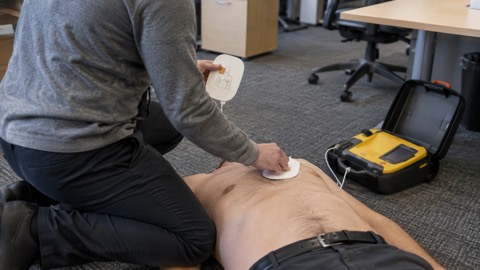 Defibrillator Pad Placement
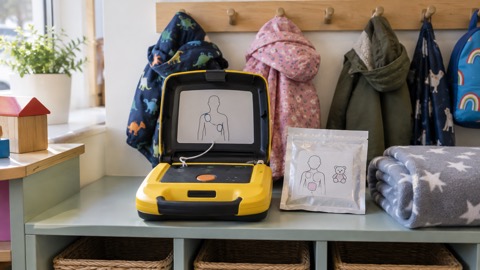 Defibrillator on a Child
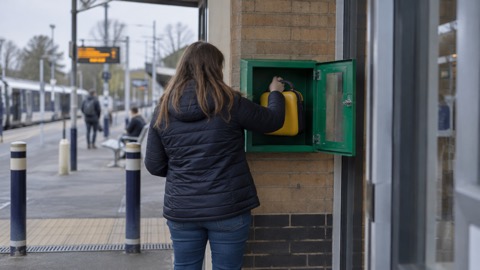 Defibrillator Without Training
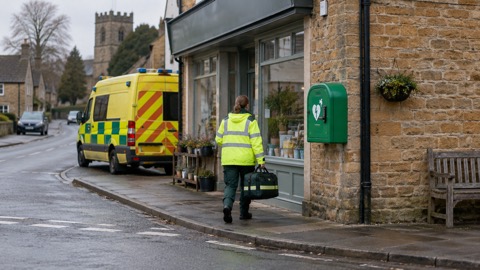 Locked Defibrillator Cabinet
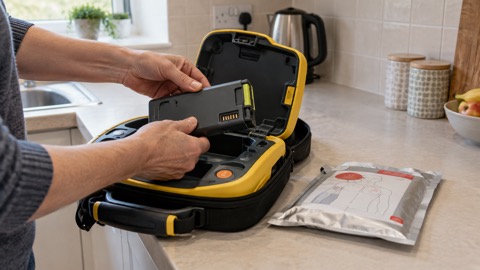 Defibrillator Battery and Pads
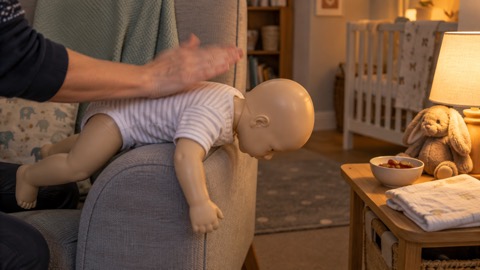 Child Choking First Aid
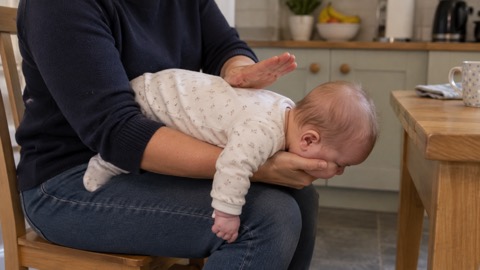 Baby Choking First Aid
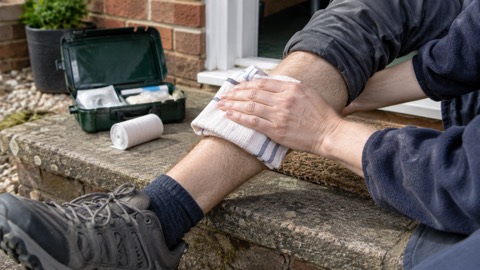 How to Stop Severe Bleeding
 When to Use a Tourniquet
 Object Stuck in a Wound
 Butter or Ice on a Burn
 Chemical Burns and Eye Splashes
 Electric Shock First Aid
 Suspected Anaphylaxis
 Expired Adrenaline Auto-Injector
 Asthma Attack First Aid
 Spotting a Stroke with FAST
 What to Do During a Seizure
 Diabetic Emergency or Hypo
 Treating Hypothermia at Home
 Heatstroke
 Child Swallowed Pills
 Suspected Broken Bone
 Head Injury
 After a Near Drowning
 How to Stop a Nosebleed
 Febrile Seizures in Children
 How to Remove a Splinter
 Baby and Child Kit Checklist
 Bleeding Control Kit Checklist
 Car Kit Checklist
 Defibrillator Guardian Checklist
 Information for Ambulance Crew
 Semi vs Fully Automatic AED
 Indoor or Outdoor Defib Cabinet
 Burn Gel vs Cling Film
 Saline Pods or Eyewash Bottle
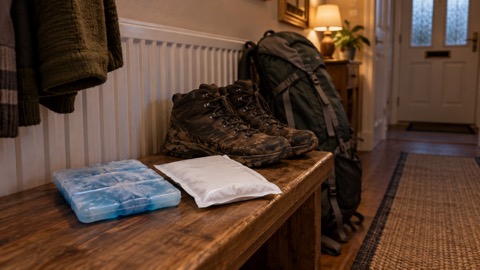 Instant or Reusable Ice Packs
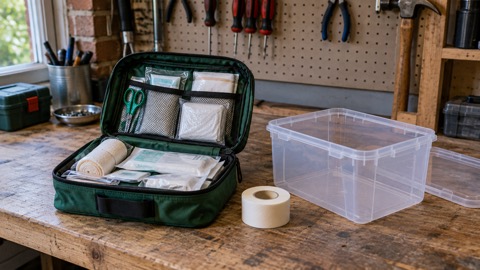 Ready-Made or Homemade Kit
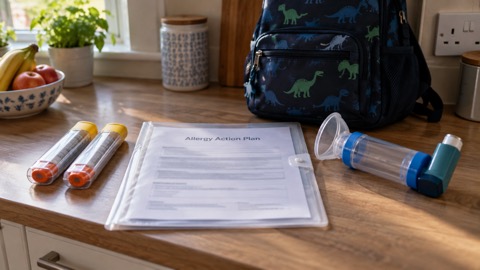 Allergy and Asthma Action Plans
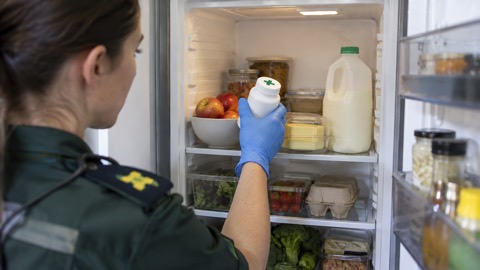 Message in a Bottle
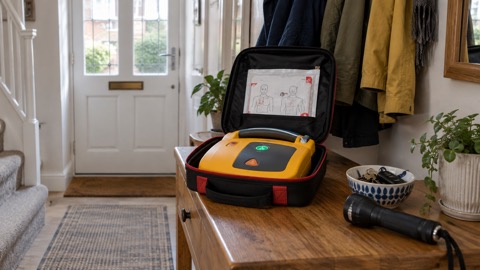 HeartSine samaritan PAD 350P
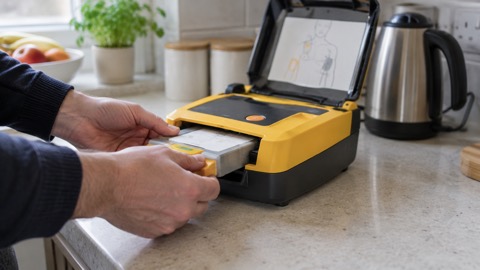 HeartSine Pad-Pak
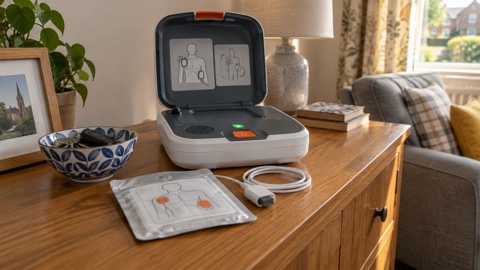 Stryker LIFEPAK CR2
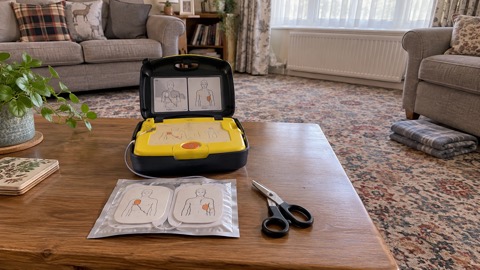 ZOLL AED 3 Defibrillator
 ZOLL AED Plus Defibrillator
 Cardiac Science Powerheart G5
 Philips HeartStart FRx AED
 LifeVac Anti-Choking Travel Kit
 Wallace Cameron Family Kit
 Burnshield Hydrogel Spray 125ml
 Burnshield Hydrogel Gel 50ml
 EpiPen Adrenaline Auto-Injector
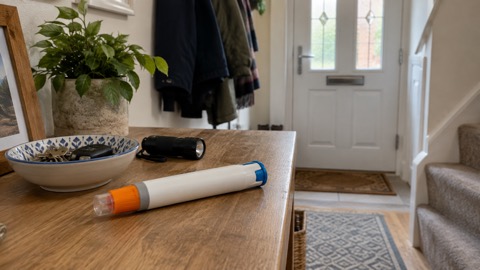 Jext Adrenaline Auto-Injector
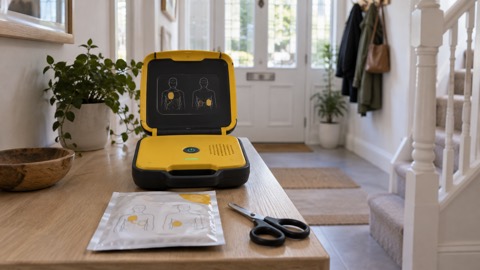 HeartSine samaritan PAD 360P
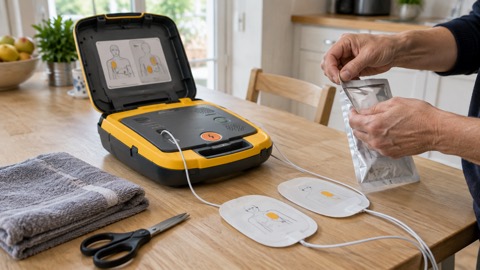 HeartSine samaritan PAD 500P
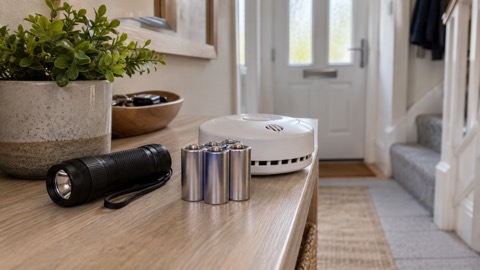 Duracell 123A Lithium Batteries
 Wallace Cameron Small Kit
 Wallace Cameron Medium Kit
 Wallace Cameron Large Kit
 iPAD SP1 Fully Automatic AED
 Mediana A16 Semi-Automatic AED