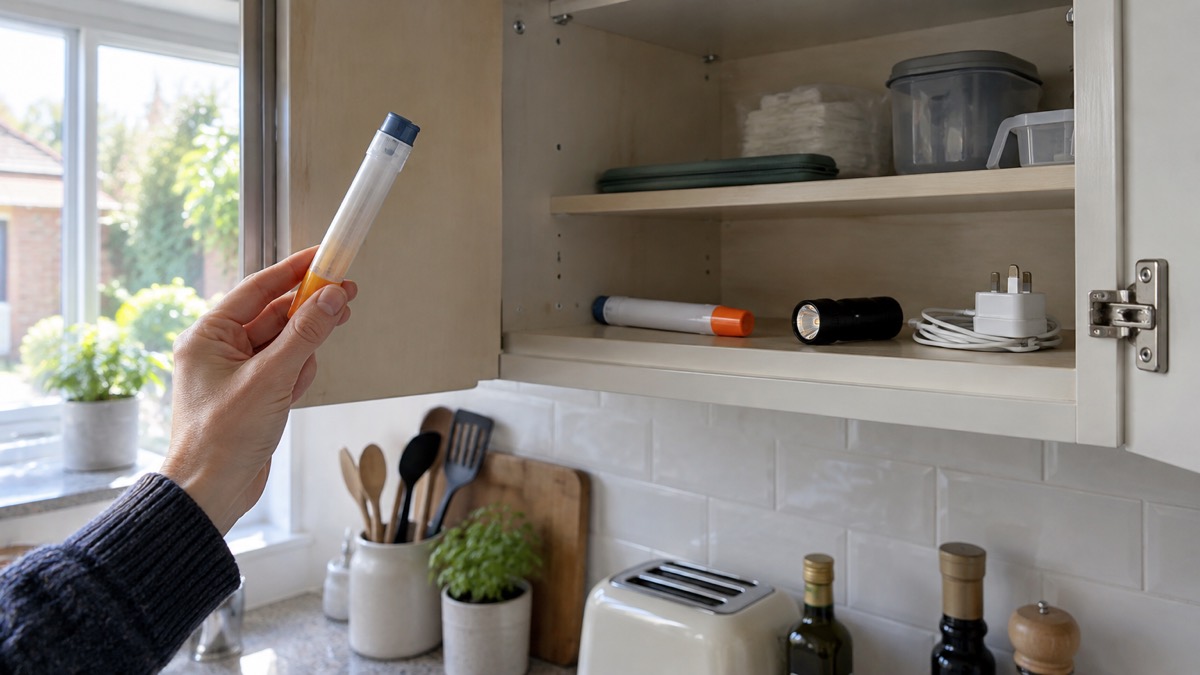
An adrenaline auto-injector is a pre-filled device that delivers adrenaline to treat anaphylaxis, a life-threatening severe allergic reaction1. If yours has passed its expiry date, the advice is simple: replace it immediately, and contact your GP to order a replacement as soon as possible2. The adrenaline in these devices degrades over time and may become less effective after the expiry date, so an out-of-date pen is not a spare you can rely on2.
If you are holding an Emerade pen, the position is different again. All unexpired batches of Emerade 500 micrograms and Emerade 300 micrograms auto-injectors were recalled in a Class 1 Medicines Recall on 9 May 2023 because of the potential for device failure, and no further supplies will be available3. Patients were switched to an alternative brand, EpiPen or Jext3. A separate Class 2 recall covered all unexpired batches of Emerade 150, 300 and 500 microgram auto-injectors in 20194.
The practical answer for most households is to check the date on the pen now, order a replacement before the old one runs out rather than after, keep two pens, and know what to do if you ever have to use one that is out of date. This page sets out each of those steps.
The Emerade recalls: what owners should do
Emerade was withdrawn from the UK market in stages, and anyone who still has one of these pens in a cupboard, a bag or a school office needs to act on the recall notices rather than the expiry date alone.
The most recent and most serious was the Class 1 Medicines Recall of 9 May 2023. Pharmaswiss Česka republika s.r.o. recalled all unexpired batches of Emerade 500 micrograms and Emerade 300 micrograms auto-injectors because of the potential for device failure3. Testing found that a 1-metre free-fall in a vertical orientation resulted in damage to internal components of the auto-injector, leading either to failure to deliver the product or premature activation3. The company stated that future production of both strengths was on hold, and that no further supplies would be available, so patients needed to be switched to an appropriate alternative, EpiPen or Jext3.
The official instruction to patients was specific about timing. Contact your doctor or pharmacist by telephone now to get replacements, and return the Emerade pens to any pharmacy only after you have obtained a total of two equivalent strength adrenaline pens in an alternative brand3. In other words, do not hand back your only working pen before the replacements are in your hand.
The earlier recall, on 28 November 2019, was a Class 2 medicines recall of all unexpired batches of Emerade 150, 300 and 500 microgram auto-injectors4. The company's investigations found an error in one component of the autoinjector believed to cause some pens to fail to activate and deliver adrenaline, and prescribers were told to prescribe adrenaline pens of another brand until the error had been corrected4. At that time there were insufficient supplies of alternative brands in the UK to replace all the Emerade pens held by patients4.
| Recall | Date | Products | Class | What patients were told |
|---|---|---|---|---|
| Class 2 | 28 November 2019 | All unexpired batches of Emerade 150, 300 and 500 micrograms4 | Class 2 | Prescribers to switch to another brand until the error was corrected4 |
| Class 1 | 9 May 2023 | All unexpired batches of Emerade 500 and 300 micrograms3 | Class 1 | Contact your doctor or pharmacist by telephone now; return pens to a pharmacy after obtaining two replacement pens3 |
If a pen has failed to activate, keep it. The official advice was to retain any suspected, un-activated pen for reporting to the MHRA via the Yellow Card scheme and for investigation purposes8.
Keeping a replacement ready before the old one runs out
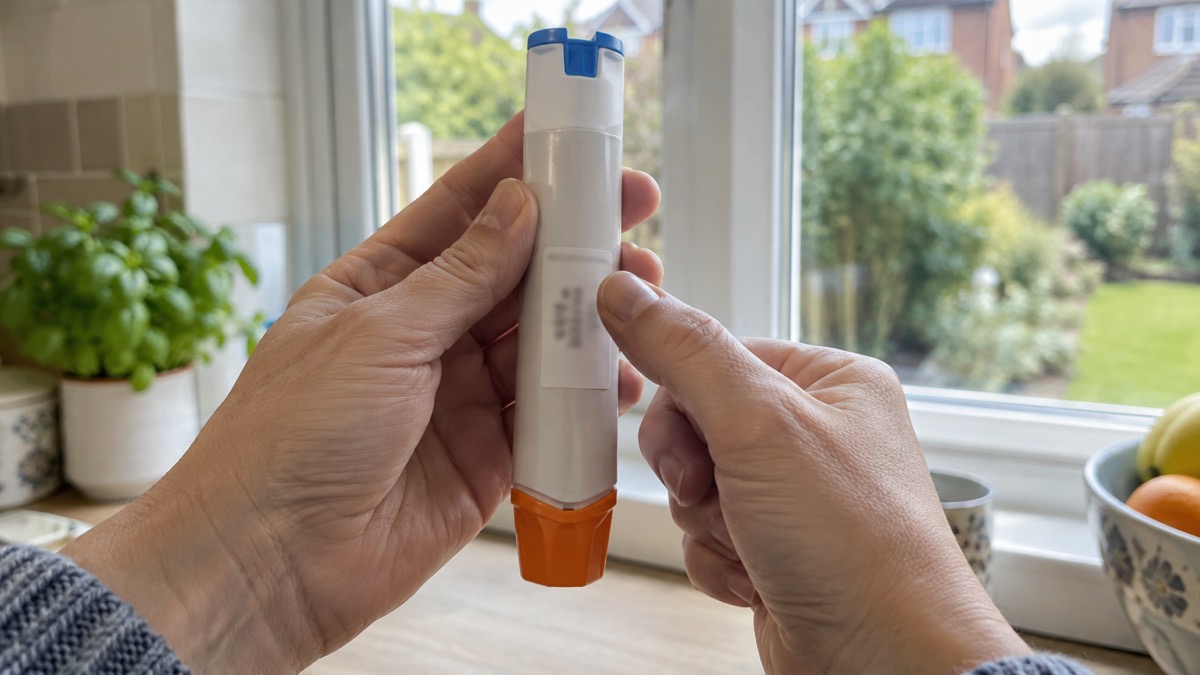
The mistake most households make is waiting for the expiry date to arrive before ordering. The official and independent advice is to work ahead of it.
Anaphylaxis UK is direct: check your expiry dates regularly and get new ones before they expire, and if your auto-injector has already expired, you must replace it immediately3. The reason is that the adrenaline in the device degrades over time and may become less effective after the expiry date3. A pen that is a month out of date is not the same as a pen that is in date, and you will not know how much effectiveness has been lost.
Set two kinds of reminder. The first is a personal one: official guidance is to keep auto-injectors in date and set a reminder or register for an expiry alert service, offered on the manufacturer's website, several weeks before the device is due to expire7. Anaphylaxis UK makes the same point, advising people to sign up to the expiry alert service with their adrenaline device brand9. The second is a household routine: the government's Be Ready checklist suggests setting a reminder every six months to check expiry dates and swap out items that need replacing, or update your kit if your household needs have changed10. A six-monthly check catches the pen you forgot about in the bottom of a school bag.
If you are switched to a different brand, get trained on it. The MHRA advised that it is vital to receive training to ensure you are completely familiar with how the new device works, because each brand of adrenaline auto-injector has a different action8. The government's adrenaline auto-injector safety campaign publishes video guidance on the use of these devices, alongside written materials, for exactly this reason1. Your GP, pharmacist or allergy clinic can show you the device you have been given.
Using an expired pen in an emergency
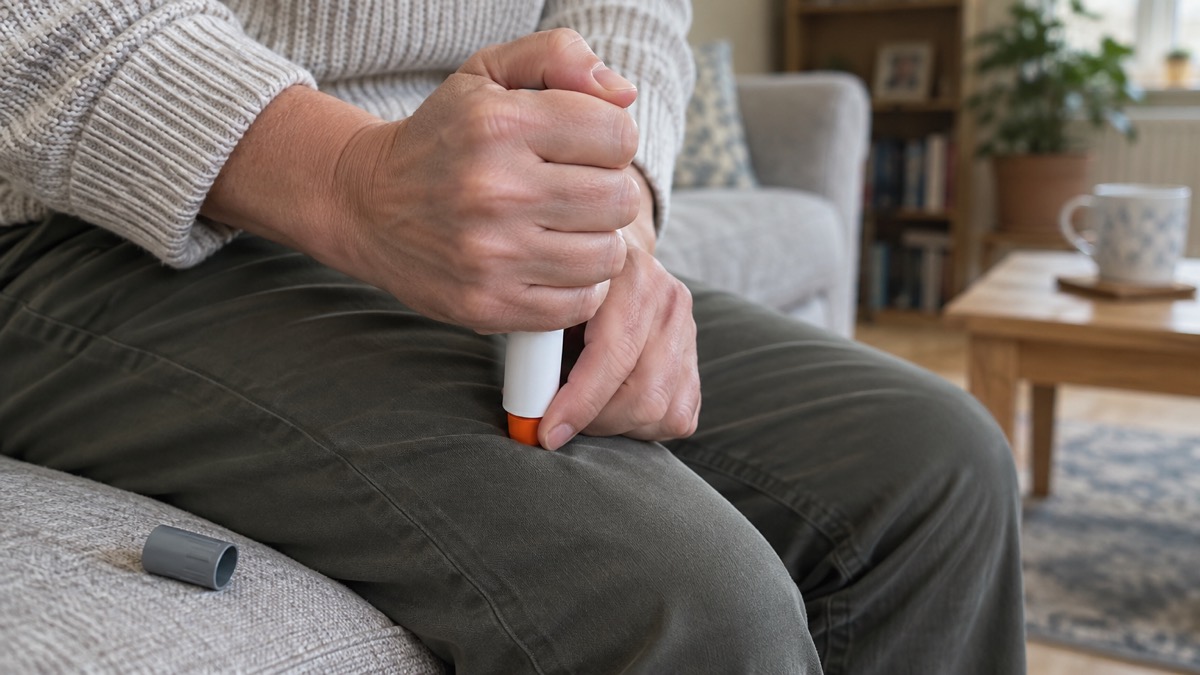
If someone is having anaphylaxis and the only pen to hand is out of date, use it. Adrenaline auto-injectors are for the emergency treatment of anaphylaxis, a life-threatening severe allergic reaction6. The device is designed for emergency treatment, and the guidance on how to use one does not change because of the date on the label.
The steps, from NHS Inform's first aid guidance, are to hold the device with your fist, pull off the safety cap, push the tip firmly against the thigh until it clicks, hold it in place for 3 seconds or as instructed, then remove it and massage the site for 10 seconds5. If the casualty cannot use it themselves and you have been trained, you can do it for them5. Call 999 as well: an adrenaline pen buys time, it does not replace an ambulance.
A second dose may be needed. Repeated doses of adrenaline can be given every 5 minutes if the person does not show any signs of improvement or their symptoms return5. The St John Ambulance guidance gives the same five-minute interval11. This is why carrying two pens matters: one dose may not be enough, and the second pen needs to be with you, not at home.
If the pen does not fire, do not assume you have done it wrong. The official advice for Emerade was that if the pen has not activated despite firm pressure, use the second pen immediately3. An earlier notice advised that if an Emerade pen fails to activate immediately, an additional attempt should be made using an increased force against the injection site4. An activated Emerade pen will have an extended needle cover which extends and locks; if the needle cover has not extended, the pen has not activated3.
Two pens, and where they are kept
The number of pens you carry, and where they are stored when you are not carrying them, are both part of being ready.
Anaphylaxis UK's advice is that it is important to have two devices available6. The official Emerade recall instruction assumed the same: patients were told to obtain a total of two equivalent strength adrenaline pens in an alternative brand before returning the old ones8. Where a patient had been supplied with Emerade 500 microgram pens, EpiPen and Jext in strengths of 300 micrograms (0.3 milligrams) were named as appropriate alternatives, and two 300 microgram pens were suitable replacements for a single Emerade 500 microgram pen8. A study comparing blood levels of adrenaline found no difference between Emerade 500 micrograms and EpiPen 300 micrograms or Jext 300 micrograms pens8.
For children at school, the official advice is precise. If the auto-injectors are not carried by the pupil, they should be kept in a central place in a box marked clearly with the pupil's name, but not locked in a cupboard or an office where access is restricted3. The same principle applies at work: the pen needs to be reachable by the people who might need it, and the people around the person need to know where it is.
Check the device itself as well as the date. Anaphylaxis UK advises checking EpiPen and Jext devices regularly to make sure the liquid is clear and colourless, and replacing the pen if it seems discoloured or contains particles9. That check is worth doing at the same time as the expiry date.
| Where the pen is kept | What good practice looks like |
|---|---|
| Carried by the person | Two pens, in date, with the person at all times6 |
| School | Central place, box marked with the pupil's name, not locked away3 |
| Work | Known location, known to colleagues, reachable in an emergency |
| Home | Checked every six months, expiry alert registered10 |
Getting a replacement and disposing of the old pen
Order the replacement before you need it, and hand the old one back safely.

To get a new pen, contact your GP. Anaphylaxis UK advises that if your auto-injector has already expired, you should get in touch with your GP to order a replacement as soon as possible2. Adrenaline auto-injectors are available on prescription in the UK, such as EpiPen and Jext12. When you collect the new pens, check the expiry dates and the liquid before you leave the pharmacy, and ask for training if the brand has changed3.
To dispose of an expired or unwanted pen, take it to a pharmacy. The official recall instruction was for patients to return Emerade pens to any pharmacy after obtaining their replacements3. A pharmacy can dispose of sharps safely; a household bin cannot, and a pen contains a needle. Do not dismantle the device to see how it works.
If you have used a pen in an emergency, tell the paramedics or the hospital which device and which dose was given, and note the expiry date if you can. Then replace it.
For the wider picture on carrying, storing and using these devices, see Adrenaline Auto-Injectors: Carrying, Using and Storing Them, and for what to do in the first minutes of a reaction, see What to Do if You Suspect Anaphylaxis. An allergy action plan sets out when to use the pen and when to call 999; Allergy and Asthma Action Plans explains what one contains.
Sources (12)
- Adrenaline auto-injectors (AAIs) safety campaign, GOV.UK, 2023-06-19
- AAI expiry dates, Anaphylaxis UK, 2026
- National Patient Safety Alert: Class 1 Medicines Recall, Emerade 500 and 300 micrograms auto-injectors, GOV.UK, 2023-05-09
- Class 2 Medicines Recall: Emerade 150, 300 and 500 microgram solution for injection, GOV.UK, 2019-11-28
- Anaphylaxis first aid, NHS Inform, 2026-07-24
- Anaphylaxis and severe allergic reaction factsheet, Allergy UK, 2025-10-22
- Your quick guide to Adrenaline Auto-Injectors, East Suffolk and North Essex NHS Foundation Trust, 2022-02
- ViewAttachment.aspx, MHRA
- Care and medication, Anaphylaxis UK, 2026
- Get prepared for emergencies, GOV.UK, 2026-10-21
- Anaphylaxis, St John Ambulance, 2025-04-25
- Anaphylaxis signs and symptoms, Anaphylaxis UK, 2026
 Baby and Child Kit Checklist
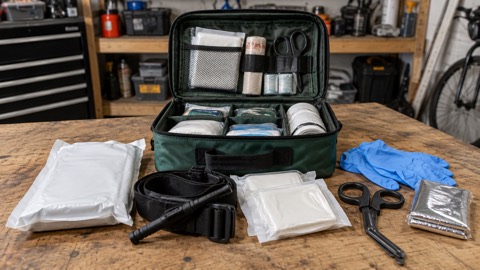 Bleeding Control Kit Checklist
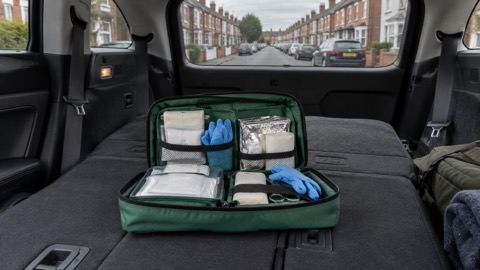 Car Kit Checklist
 CPR on a Baby
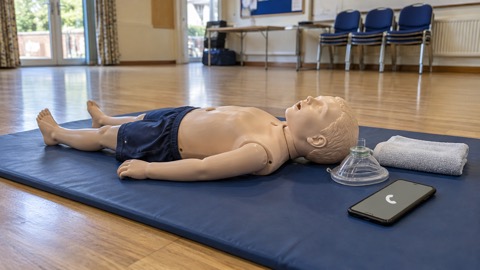 CPR on a Child
 Chest Compression Rate and Depth
 Rescue Breaths or Hands-Only CPR
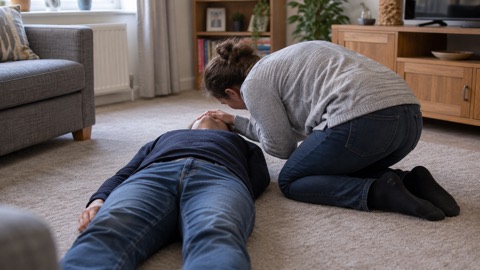 Checking Breathing
 Agonal Breathing and CPR
 Breathing During CPR
 Recovery Position and Spine
 Cardiac Arrest vs Heart Attack
 Heart Attack First Aid
 Defibrillator Pad Placement
 Defibrillator on a Child