EpiPen is one of the adrenaline auto-injectors prescribed in the UK for the emergency treatment of anaphylaxis, a severe and potentially life-threatening allergic reaction. The NHS advises that if someone is having an anaphylactic reaction you use an adrenaline auto-injector, such as an EpiPen, if you have one, and the instructions are printed on the side of the injector1. Adrenaline auto-injectors, sold under the product names EpiPen and Jext, deliver adrenaline by means of an auto-injector device2, and the MHRA confirms that both are safe and effective in the treatment of anaphylaxis3. If you are treated in hospital for anaphylaxis, you should be given two adrenaline auto-injectors, or a prescription for them, before you leave, to keep in case you have another reaction1.
For a household building an emergency plan, an EpiPen is not general kit you can buy: it is a prescription medicine for a named person with a known allergy. What preparedness means here is keeping it usable, knowing where it is, and having it with you when it matters.
The product: EpiPen Adrenaline Auto-Injector 300 micrograms
The EpiPen the site mentions is the EpiPen Adrenaline Auto-Injector 300 micrograms. Alternative brands of adrenaline auto-injector available in the UK, EpiPen and Jext, come in a maximum strength of 300 micrograms8. In an emergency the pen delivers a fixed dose of adrenaline into the outer thigh, and the instructions are on the side of the device1. Hospital treatment for anaphylaxis can include adrenaline given by injection or drip, oxygen, and fluids by drip1, so using the pen is first aid, not a substitute for calling 999.
Keeping it ready: storage at home
Most medicines should be kept below 25°C, stored somewhere cool and dry, out of direct sunlight and away from windowsills4. NHS guidance on storing medicines at home says never remove medicines from their original packets or containers, so keep the pen in its outer carton, which also carries the lot number you would need to check a safety notice7. Store it safely out of reach of children, preferably in a locked cupboard, and in its original packaging with the product information and instructions for use10.
In a heatwave, power cut or evacuation
In hot weather, keep medicines below 25°C or in the refrigerator only where the packaging says so, reading the storage instructions on the pack11. Because an EpiPen must not be refrigerated, a heatwave means moving it to the coolest room of the house. A power cut does not directly threaten it, since it needs no electricity, but a prolonged cut in hot weather can warm a room past 25°C, so check where the pen is stored. When travelling, do not leave medicines in a parked car or a hot bag; use a cool bag if needed6.
If you keep an emergency grab bag, prescribed medication belongs in it: official guidance lists essential and prescribed medication among the items to pack, alongside glasses, phone and charger, keys, first aid kit, torch and radio12, and household plans advise storing items in a bag that is easy to access if you need to leave in a hurry, with everyone in the house knowing where it is kept13. Keep the pen in its carton inside the bag, and check its expiry date as part of your regular kit checks. Damaged, expired or old medicines should be sealed in a clear plastic bag and taken to your local pharmacy for safe disposal9.
Safety notices and supply
Adrenaline auto-injectors have been subject to national safety action, so check the MHRA's drug safety updates for any current notice before you rely on a device. The lot number you need to check any notice is on the end-flap of the box and on the EpiPen itself7. Availability of EpiPen 0.3mg and 0.15mg has been the subject of statements from the Anaphylaxis Campaign7, so if you rely on one, ask your GP or pharmacist about supply when you renew, and do not let your spare run out before the next prescription is due. For wider planning around medicine supplies, see our guides on health emergencies, first aid at home, your emergency kit, heatwaves and extra help for medically dependent households.
Sources (13)
- Anaphylaxis, NHS, 2023-06-21
- Adrenaline auto-injectors (AAIs): new guidance and resources for safe use, MHRA, 2023-06-27
- Adrenaline auto-injectors: attachment, MHRA, 2023-05-09
- Staying well in hot weather, Berkshire Healthcare NHS, 2026-10-29
- AAI safety campaign, UK Government, 2023-10-17
- Weather safety guidance, Oxford Health NHS, 2026-09-18
- Latest statement on availability of EpiPen 0.3mg and 0.15mg adrenaline auto-injectors, Anaphylaxis Campaign, 2020-02-14
- National Patient Safety Alert: recall of Emerade 500 and 300 microgram auto-injectors, MHRA, 2023-05-09
- Storing medicines at home, United Lincolnshire Hospitals NHS, 2026
- Chemical safety at home, nidirect, 2026-04-14
- NHS England, North West » NHS advice to help you stay well in hot weather as amber heat health alert issued for North West, NHS England (North West)
- Step 1: preparation, Essex Prepared, 2026-10-29
- Household Emergency Plan, West Yorkshire Prepared, 2020
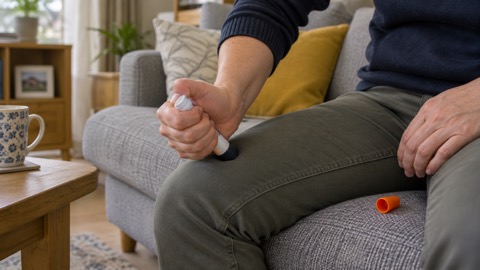 EpiPen Adrenaline Auto-Injector