
Jext is the brand name of an adrenaline auto-injector made by ALK-ABELLO UK, which publishes patient information at www.jext.co.uk1. It is a prescription medicine, not general emergency kit: it is prescribed to people who have had, or are at risk of, anaphylaxis, a severe and potentially fatal allergic reaction that usually develops within minutes of contact with an allergen, and sometimes within seconds2. The product this site mentions is the Jext Adrenaline Auto-Injector 300 micrograms, one of the two auto-injector brands the medicines regulator names alongside EpiPen as safe and effective in the treatment of anaphylaxis3.
For a household getting ready for emergencies, a Jext pen is one of the few pieces of kit that matters most in the first minutes of a specific crisis. It needs no power, works in any weather, and only does its job if it is close at hand, stored correctly and used without hesitation.
What a household should know in an emergency
Anaphylaxis is a time-critical emergency. Official guidance is to use the auto-injector at the first signs of a reaction, then immediately dial 999 and tell the call handler you think someone has anaphylaxis, so the response can be prioritised4. If there is no improvement after the first dose, or the person improves and then deteriorates, give a second auto-injector 5 minutes after the initial dose; NHS guidance in Scotland notes repeated doses can be given every 5 minutes if symptoms persist or return3.
A power cut, flood or storm does not stop a Jext pen working: it is a mechanical injector with no battery or charging. What emergencies do threaten is storage and supply. Heat is the main risk at home, so keep the pen below 25°C, somewhere cool, dry and out of direct sunlight, and away from windowsills; during a heatwave, a car or a sunny room can exceed that6. If your medicines seem to work differently in hot weather, speak to your pharmacist or doctor8.
Supply matters too. Jext was itself part of a national switch: when Emerade 500 microgram and 300 microgram auto-injectors were recalled in 2023 because of the potential for device failure, patients were moved to alternatives including Jext9, and official guidance states a single Jext 300 micrograms pen is a suitable replacement for a single Emerade 500 micrograms pen3. The lesson for any household holding prescription medicine is to keep enough to hand, check expiry dates as part of your household emergency kit routine, and know that recalls of medical devices do happen. If a pen fails or you suspect a fault, report it through the MHRA Yellow Card reporting tool and retain the pen if possible7.
For anything about your own prescription, which strength you need, or how many pens to carry, speak to your doctor or pharmacist11. Wider planning for medicines and health at home is covered in our guides to health emergencies, first aid at home and extra help for medically dependent households.
Sources (11)
- Your quick guide to Adrenaline Auto-Injectors, East Sussex Healthcare NHS Trust, 2022-02
- Anaphylaxis first aid, NHS inform, 2026-07-24
- Recall of Emerade 500 micrograms and 300 micrograms auto-injectors (NatPSA/2023/004/MHRA), Medicines and Healthcare products Regulatory Agency, 2023-05-09
- Adrenaline auto-injector safety campaign, UK Government, 2023-10-17
- Adrenaline auto-injectors (AAIs): new guidance and resources for safe use, Medicines and Healthcare products Regulatory Agency, 2023-06-27
- How to keep cool this summer, Lancashire County Council, 2026-10-29
- Class 2 medicines recall: Emerade 150, 300 and 500 microgram solution for injection (MDR 57-08-19), Medicines and Healthcare products Regulatory Agency, 2019-11-28
- Staying well in hot weather, Berkshire Healthcare NHS Foundation Trust, 2026-10-29
- Recall of Emerade 300 and 500 microgram adrenaline auto-injector devices - Allergy UK incorporating Anaphylaxis UK, Allergy UK incorporating Anaphylaxis UK
- Emerade 500 micrograms auto-injector recall attachment, Medicines and Healthcare products Regulatory Agency, 2023-05-09
- First aid self-help, Aireborough Family Practice, 2026
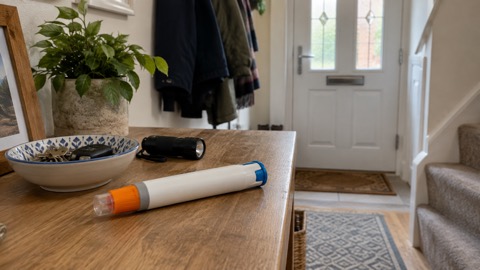 Jext Adrenaline Auto-Injector