
Duracell is one of the battery names most UK households already have in a drawer. The maker sells everyday alkaline batteries in the familiar AAA, AA, C, D and 9V sizes, a rechargeable range, specialty cells for watches, remotes and security fobs, and, beyond batteries, a home energy storage and electric vehicle charger product. For a household putting together an emergency kit, its batteries are the part that keeps torches, radios and small devices working when the power goes, and its rechargeable cells and energy storage products sit on the backup power side of preparedness.
This page sets out what Duracell makes for UK households, what the maker claims for its technologies, its own safety advice on batteries around children, where to buy its products in the UK, and how to reach its consumer care team. It also covers the scam warning Duracell has issued about fake job adverts and personal details, and how to report a scam to the authorities.
What Duracell makes for UK households
Duracell's range for the home falls into four broad groups: everyday alkaline batteries, rechargeable batteries, specialty cells for less common devices, and home energy products. The everyday ranges are the ones most households know. Duracell describes its Simply range as great for many of the devices you use on a daily basis in your home5, and its AAA batteries as an ideal power solution for a broad range of everyday devices such as cameras, TV remotes and many other devices6. The Plus range sits above it: Duracell Plus AAA alkaline batteries are aimed at low and mid-drain devices and everyday devices5, and carry the maker's Power Boost Actives claim of up to 100% extra life7.
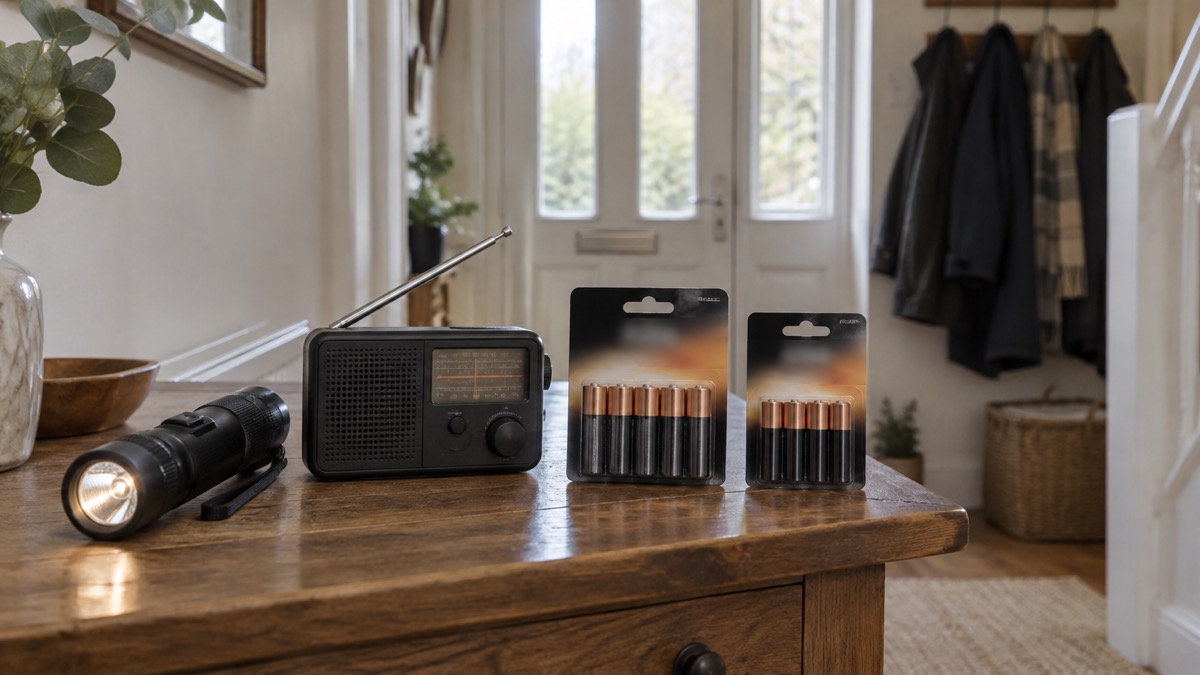
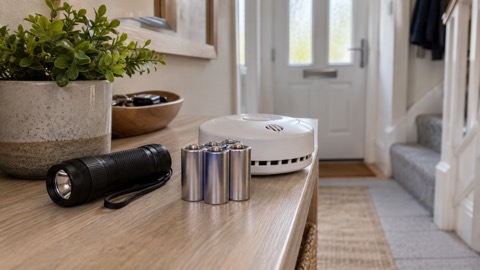
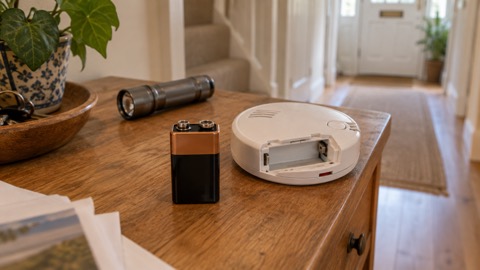
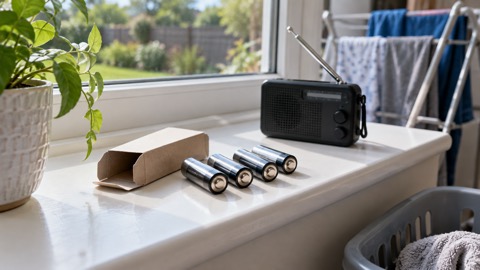
For preparedness, these batteries are the consumable behind two pieces of kit every household should have ready: a torch and a battery-powered or wind-up radio. Both belong in an emergency kit, and both are useless on the night of a power cut without spare cells in the right sizes. If you are building that kit, the guides on emergency lighting and staying informed set out what to keep and how much.
The rechargeable range is aimed at households that want to stop buying disposable cells for high-turnover devices. Duracell Rechargeable AAA batteries come in 900mAh5 and 750mAh6 versions, and the maker states they can be used in any device as long as the battery is the right size, though it recommends consulting your device user manual for compatibility8. The current rechargeable AAA range carries a customer rating of 4.7 out of 5 on the maker's own product pages6.
Beyond batteries, Duracell sells the Energy 5+ Battery and EV Charger, a home energy storage and EV charger product7. A home battery is a bigger commitment than a packet of AAs, and whether one makes sense depends on your household's circumstances; the backup power guide explains the options side by side.
| Range | What it is | What the maker says it suits |
|---|---|---|
| Simply | Alkaline batteries | Many of the devices you use daily in your home5 |
| Plus | Alkaline batteries with Power Boost Actives | Low and mid-drain devices, everyday devices5 |
| Optimum | Alkaline batteries | 200% more Power Boost Actives versus Duracell Plus, proprietary technology6 |
| Rechargeable | NiMH rechargeable cells, e.g. AAA 900mAh and 750mAh | Any device of the right size; consult your device manual5 |
| Energy 5+ | Home energy storage and EV charger | Households with solar or EV charging needs7 |
Duracell describes itself as the number one brand trusted by consumers all over the world, and states that it tests its designs both in a laboratory environment following IEC methodologies and in real life usage studies1. That is the maker speaking about itself, so treat the claim as marketing rather than independent testing.
Alkaline batteries: what is inside them
Duracell's everyday batteries are alkaline cells. The maker states its alkaline batteries are composed primarily of common materials, steel, zinc and manganese, and do not pose a health or environmental risk in normal use or disposal3. In an alkaline cell, the zinc and manganese dioxide react through an alkaline electrolyte to produce current; the steel casing holds the cell together. The practical points for a household follow from this: the cells are dry, sealed and safe to store in a drawer, and they keep for long periods when unused, which is what makes them suitable for an emergency kit.
Two of the maker's own care instructions are worth following. First, remove batteries from devices that will not be used for several months, because worn batteries left in place can damage the device9. If a torch or radio is going into a box for a year, take the cells out and tape them to the outside so you can find them. Second, the maker warns that young children should not play with batteries1, which matters most with the small button and coin cells covered below.
The Chinese characters you may have noticed printed on some Duracell batteries are not a sign of a counterfeit or a different product. The maker states plainly: "The characters indicate that the batteries are mercury-free."3 The same explanation appears across Duracell's help pages10, so if you have seen the marking and wondered, that is all it is.
Power Boost Actives: what the maker claims
Power Boost Actives is Duracell's name for the proprietary technology in its Plus and Optimum alkaline ranges. The maker's claims are specific: Duracell Plus AAA alkaline batteries offer up to 100% extra life with Power Boost Actives7, a claim repeated across the current AAA range6, and Duracell Optimum AAA offers 200% more Power Boost Actives versus Duracell Plus, again described as proprietary technology6. Duracell also states that only Duracell has Power Boost Actives7.
These are the maker's own claims about its own products, made on its own product pages, and the asterisks in the original marketing signal conditions apply. What they mean in practice for a household is a longer running life per battery in the devices the range is aimed at, which for the Plus range means low and mid-drain everyday devices5. For emergency kit, longer life per cell means fewer spares needed for the same runtime, but the difference that matters most in a crisis is having the right sizes in the drawer at all.
Keeping children safe: batteries, button cells and Baby Secure Technology
Battery safety around children is where Duracell's own advice and independent UK guidance come together, and it is the part of this subject worth taking most seriously.
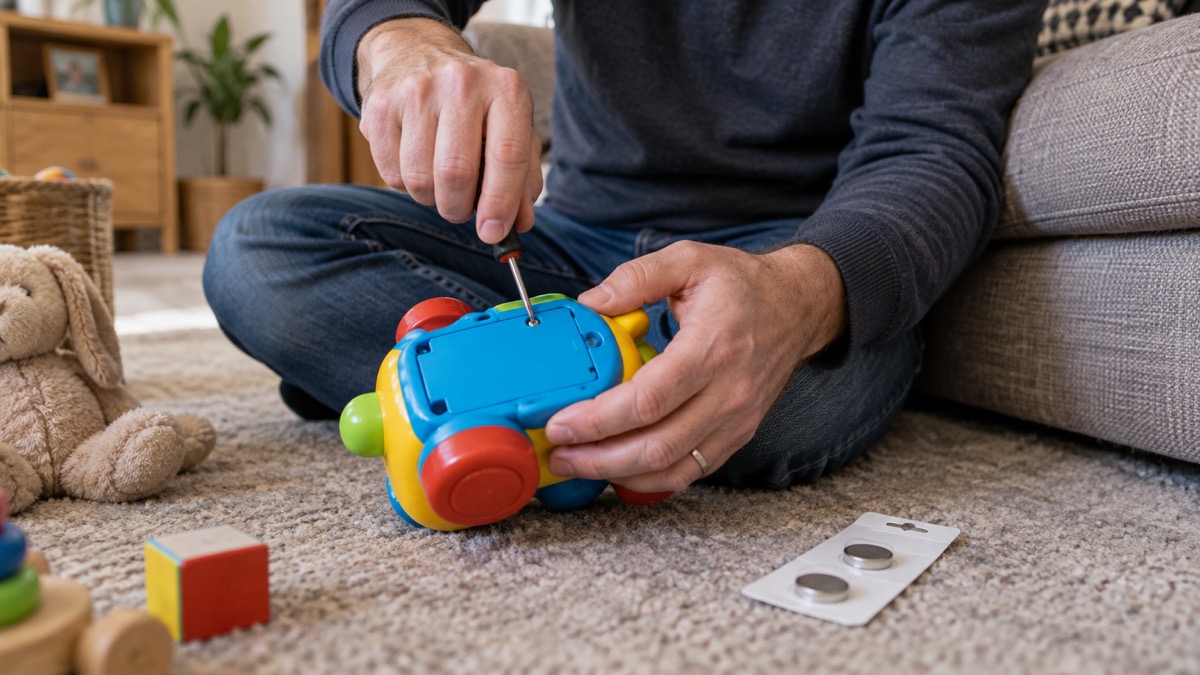
Duracell's product pages for its Plus AA batteries carry the marking "BABY SECURE TECHNOLOGY"7. This is the maker's child protection feature branding on its battery packaging and products. Whatever branding a packet carries, the practical safeguards are the same ones the independent guidance sets out. UK children's toys are covered by safety regulations which require batteries to be enclosed in a secure compartment that cannot easily be opened by a child4, so a toy with a loose or missing battery compartment door should be taken out of use. The Child Accident Prevention Trust adds that quality toys, built to the right standard, that are age-appropriate and used according to the instructions, should be safe for children to play with12.
Electrical Safety First warns that many tech-savvy kids are unknowingly leaving themselves open to serious dangers in their bedrooms, and that parents need to be aware of the risks around charging devices13. Batteries and chargers in children's rooms are worth a periodic check: look for damaged cables, devices charging on soft furnishings, and loose batteries of any size.
On rechargeables specifically, Duracell states there are no safety issues with rechargeable batteries in toys14, and that there are no interference implications from using rechargeable battery brands that are different to the device brand14. So a Duracell rechargeable in a toy made by another manufacturer is, on the maker's advice, fine, provided the compartment is secure and the size is right.
Specialty batteries: the small sizes
Not everything in the house takes AA or AAA. Duracell's Specialty range covers the less common formats: the maker lists sizes J, N, AAAA, MN21, MN11 and MN3015. These cells power watches, key fobs, garage door remotes, thermometers and similar small devices, several of which matter in an emergency, a kitchen thermometer among them.
The Specialty range also carries cross-reference names from other makers, which is useful when replacing a cell. Duracell lists its Specialty Lithium Coin 2016 battery under the Varta name CR2016, the Energizer name ECR2016 and the Panasonic names CR-2016 and CR2016, and its Specialty N battery under the Panasonic name LR115. If a device specifies any of those codes, the Duracell equivalent is the matching Specialty cell. The MN21 is an alkaline cell in the same range15.
Coin cells deserve the child-safety caution above all: Duracell's lithium coin packaging carries an on-pack warning to keep these batteries away from children, and the child-safety measures described in the section above apply to them directly.
Where to buy Duracell in the UK
Duracell's own answer to where its products are sold covers both online and physical shops. The maker states its products are sold right there on Duracell.co.uk, that every product's detail page lists the e-retailers that carry the product, and that its batteries are also found in common stores such as drug stores, markets, department stores, warehouse stores and office supply stores3.
For an emergency kit, the practical advice is to buy from retailers you recognise, either the e-retailers named on the maker's own product pages or well-known high street chains. The scam warning below explains why unsolicited offers of cheap batteries, or any approach asking for personal details in connection with a battery purchase or promotion, should be treated with suspicion.
Scam warning: Duracell will never ask for your personal details
Duracell has issued a clear warning on its help pages, and it is worth knowing verbatim:
"Please be aware that Duracell will never ask for you to share your personal details for any reason."
The maker reports that fake job adverts have appeared on Duracell Spain's Facebook account, and that these are being taken down with Meta's involvement3. The same warning appears across several of its help articles10, which suggests the problem has been persistent enough to warrant repeating.
This fits a pattern official UK guidance describes across the board. The government's Emergency Alerts service states it will never send you emails or ever ask you to provide personal details16, and an Emergency Alert will never request you provide bank details16. The National Cyber Security Centre (NCSC) advises that your bank, or any other official source, will never ask you to supply personal information via email, or call and ask you to confirm your bank account details17. Sussex Police's emergency planning guidance makes the same point and adds that caller ID can be spoofed easily, so do not trust a displayed telephone number18. The rule to hold onto is simple: a real company, including Duracell, will not ask you for personal details out of the blue.
If you encounter a scam, Duracell asks you to inform its consumer centre14. Beyond that, report it to the authorities:
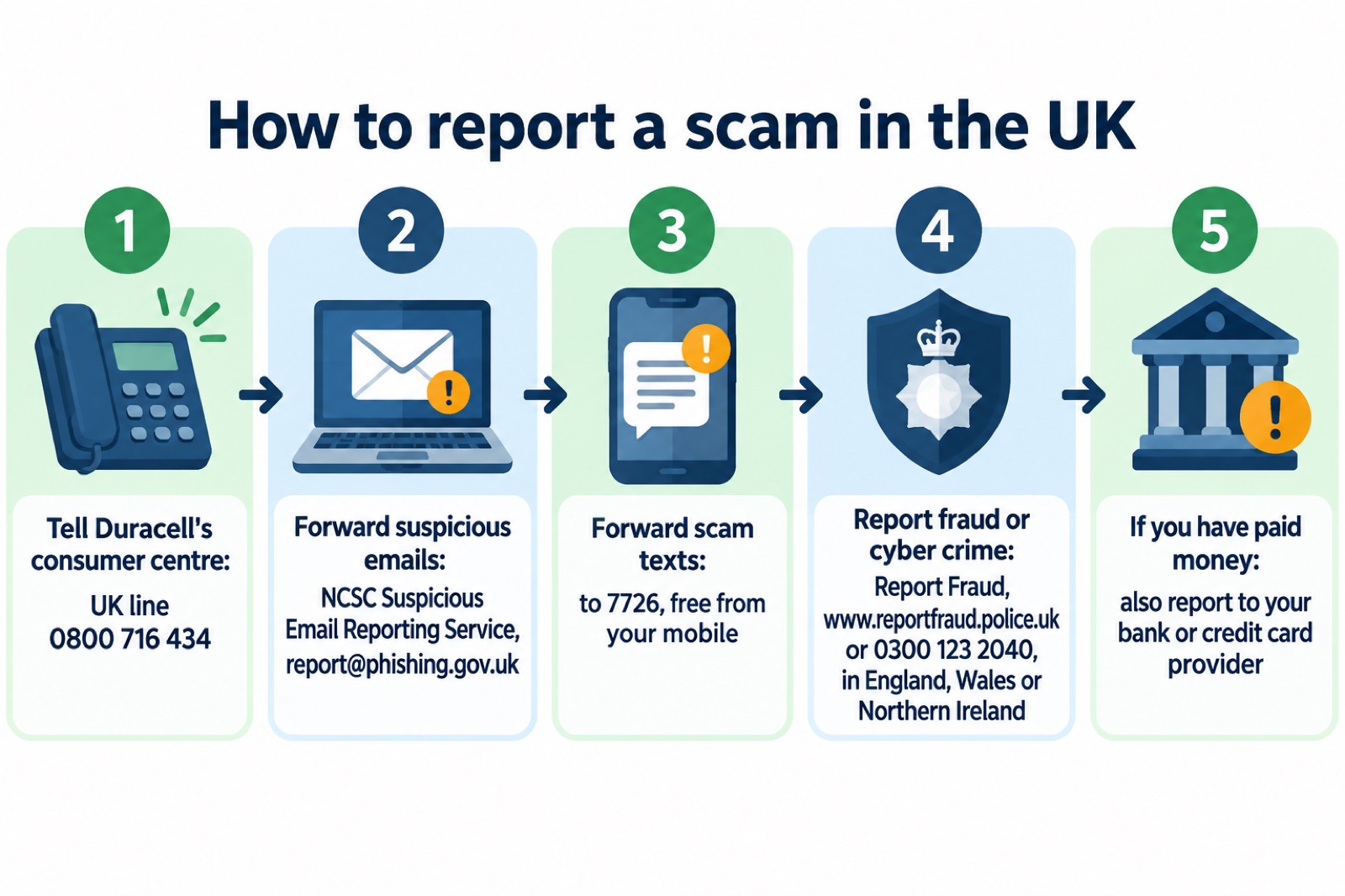
The NCSC states that reporting a suspicious email is free and only takes a minute, and that it reduces the scam emails you receive, makes you a harder target and protects others from cyber crime19. Ofcom adds that if you believe you are the victim of a fraud, you should report it to Report Fraud as soon as possible by calling 0300 123 2040 or visiting www.reportfraud.police.uk21. If a scammer has persuaded you to pay them money, report the call to Report Fraud and your bank or credit card provider22. For sextortion-style scams, the NCSC advises reporting to your local police force by calling 10123.
Support: UK and Ireland consumer care lines
Duracell runs consumer care lines by country. For the United Kingdom the number is 0800 716 4348, and for Ireland it is 1 800 509 1768. The maker also lists lines for South Africa, 0800 9807828, and Israel, 1 800 2255101, though these are not relevant to UK households. If you would rather write than call, Duracell states you can send a message and get an answer within 48 hours1.
For consumer problems that go beyond one maker's products, there are UK-wide services. The Citizens Advice Consumer Service can be called on 0808 223 1133 for further advice or help for a relative24. Consumers resident in England can call the Consumer Advice and Information Phoneline on 0800 098 7950 for advice on available grants25. In Northern Ireland, the Consumer Council can be contacted on 0800 121 6022 or by email at contact@consumercouncil.org.uk26, and the Consumer Council for Northern Ireland also lists a phone line on 028 9025 160027. Helplines NI gives access to more than 30 local helplines providing support, information and advice for consumers across a range of areas28.
If you are arranging help for an older or vulnerable person who has been targeted by a scam, the Age UK helpline is 0800 678 160229, and Carers UK provides a national helpline on 0808 808 777730. The extra help guide covers the wider support available to households that need it.
The Duracell Bunny: a short history
The Duracell Bunny is the maker's advertising character, and Duracell is clear about what he is: a toy who has been brought to life with the power of Duracell, not a real rabbit, and not available for sale8. He began in 1973, when breakthrough advertising was developed to communicate that Duracell alkaline batteries lasted much longer than ordinary and inexpensive zinc carbon batteries1. That claim, longer life than zinc carbon, is the idea the brand has been built on ever since.
The Bunny was silent for his first four and a half decades. In 2019, in the maker's words, "the Duracell Bunny found his voice so that he could pursue his mission to motivate all the devices of the world."2 For a household, none of this changes which batteries to buy, but it explains the pink rabbit on the packet and the drumming in the adverts.
Sources (30)
- Duracell Help: Can I Light a Battery Fire?, Duracell, 2026-10-26
- Duracell Help: Do Batteries Contain Mercury?, Duracell, 2026-10-26
- Duracell Help: What Do the Chinese Letters on Batteries Mean?, Duracell, 2026-10-26
- Be Aware of Button Battery Risks This Christmas, Child Accident Prevention Trust, 2023-03-27
- Duracell Simply AAA Alkaline Batteries, Duracell, 2026-05-25
- Duracell AAA Batteries, Duracell, 2026-10-26
- Duracell Plus AA Alkaline Batteries, Duracell, 2026-05-11
- Duracell Help: Devices That Shouldn't Use Rechargeable Batteries, Duracell, 2026-10-26
- Duracell Help: Removing Batteries from Devices, Duracell, 2026-10-26
- Duracell Help: Can I Recharge Any Battery?, Duracell, 2026-10-26
- Duracell Help: Is It OK to Use Rechargeable Batteries in a Device?, Duracell, 2026-10-26
- Magnets FAQ, Child Accident Prevention Trust, 2025-12-17
- Are There Hidden Dangers Lurking in Your Kids' Bedrooms?, Electrical Safety First, 2026-10-25
- Duracell Help: Rechargeable Batteries, Duracell, 2026-10-26
- Duracell Specialty Alkaline MN21 Batteries, Duracell, 2026-05-25
- Emergency Alerts, GOV.UK, 2026
- Phishing Scams: How to Spot and Report Them, National Cyber Security Centre, 2022-09-05
- Preparing for an Emergency: Be Ready, Stay Safe, Act Now, Sussex Police, 2025-10
- Report a Scam Email, National Cyber Security Centre, 2021-11-26
- Phishing: Respond and Recover, National Cyber Security Centre, 2026
- Coronavirus Scam Calls and Texts, Ofcom, 2022-03-31
- How to recover an infected device | National Cyber Security Centre, National Cyber Security Centre
- Data Breaches Guidance, National Cyber Security Centre, 2021-01-28
- COVID-19 and Scams, Nottinghamshire County Council, 2026-10-29
- Energy Domestic Consumer Advice (England and Wales), Ofgem, 2024-11
- Consumer Guide, Utility Regulator Northern Ireland, 2020
- NI Your Home Energy Checklist, National Energy Action, 2026-09-07
- Get Winter Ready, Phoenix Energy, 2026-10-29
- Neighbour and Vulnerable People Support, South Western Ambulance Service NHS Foundation Trust, 2026-10-29
- Support for Those Who Help Others, Electricity North West, 2026-10-25
 Duracell 123A Lithium Batteries
 Duracell MN1604 9V Alkaline Battery
 Duracell AA MN1500 Alkaline Batteries