Firehawk is a range of smoke, heat and carbon monoxide alarms made for UK homes, and the maker states that it is a trusted supplier to the UK Fire & Rescue Services, supplying over 75% of them with the alarms they fit when protecting the communities they serve1. That matters to a household because it means the alarm on your ceiling may not have been bought in a shop at all: it may have been fitted free by your local fire and rescue service during a home safety visit, and the route to support runs through the service that fitted it.
For a household getting ready for emergencies, alarms are the one piece of kit that has to work when everything else has failed. A fire that starts during a power cut, or a carbon monoxide leak while the heating is running in a storm, gives you minutes to act. Firehawk's smoke and heat alarms carry a sealed battery the maker says lasts 10 years and is not replaceable, so they keep working when the mains does not2. Its carbon monoxide alarms are sealed for life too, offered with 5, 7 and 10 year lifespans depending on the model3.
This page covers what Firehawk makes, how to tell what an alarm is telling you when it beeps, who to contact for support and what the guarantee covers. It does not rank Firehawk against other makers. For the wider household picture, start with Home Emergencies: Fire, Carbon Monoxide, Gas Leaks and Burst Pipes.
What Firehawk makes for a UK household
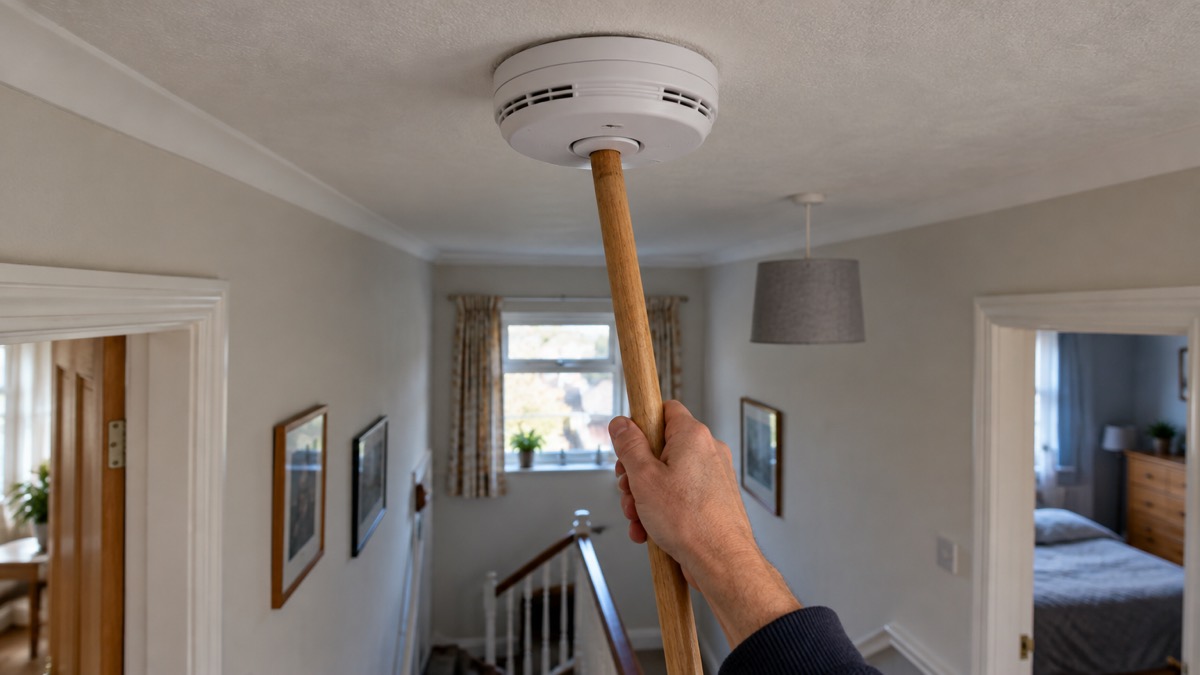
Firehawk's range is built around the two risks that kill people at home quietly: smoke and carbon monoxide. The fire alarms are mains or battery powered, and the maker states that all of them adhere to British Standards (BS 5839-6)6. The carbon monoxide alarms adhere to British (BS EN) standards6, and the CO10-RF model is listed as certified to BS EN 50291-1:2018 and BS EN 50291-2:20195.
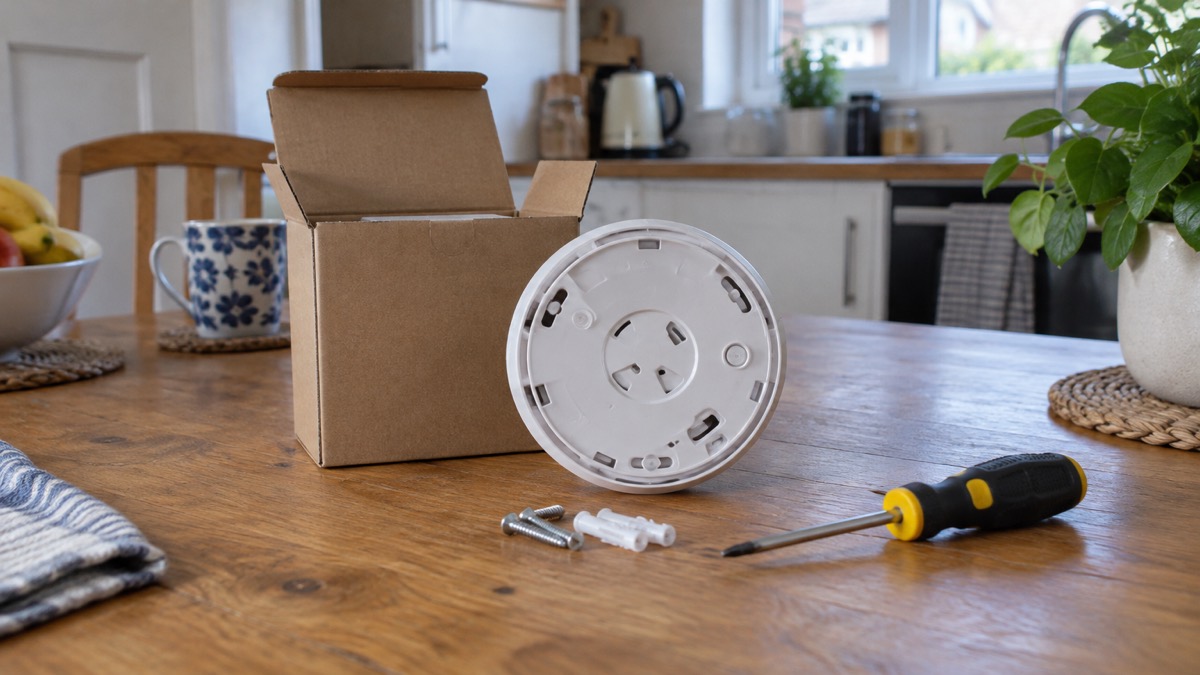
The design choices that matter in an emergency are practical ones. The maker states that installation is easy, with choices of battery powered wireless and fast fix mains alarm bases, and that an adaptor plate is available for other manufacturers' alarms6. That last point is useful if you are replacing an old alarm on an existing base after a failure. Alarms are tamper proof across the range, which the maker says is to ensure continuous uninterrupted protection6, and the smoke and heat alarms have large alarm silence buttons that are easy to operate6.
The RF-Link range lets battery and mains alarms be interlinked within a single dwelling, and the maker states they can integrate with hardwired interlinked mains Firehawk alarm systems1. In a house, interlinking means an alarm in the hall sets off the one in the bedroom, which is what wakes you at night. The CO10-RF carbon monoxide alarm can be radio interlinked with other RF-Link series devices, including Firehawk smoke, heat and carbon monoxide alarms and FHN800HIA control units for hard of hearing5.
Smoke and heat alarms: what they do when the power goes
The two named Firehawk alarms on this site are the Firehawk FHB10-RF Optical Smoke Alarm and the Firehawk FHH10-RF Heat Alarm. A smoke alarm responds to smoke; a heat alarm responds to a rise in temperature and is the usual choice for a kitchen, where cooking smoke would set a smoke alarm off repeatedly. Both are part of the RF-Link series, so they can be interlinked with each other and with the rest of the range1.
The resilience point for a prepping household is the battery. The maker's manual for Firehawk smoke and heat alarms states plainly that the battery will last 10 years and is not replaceable2. That means the alarm does not depend on the mains supply, so a power cut, a tripped circuit or a dead consumer unit does not silence it. It also means the alarm has a fixed service life: when the battery reaches its end, the unit is replaced, not re-battered.
The maker also warns that the life of the alarm can be significantly reduced by adverse environments, incorrect location and lack of maintenance, and that this may invalidate the warranty2. In practice that means keeping alarms out of steamy bathrooms and away from kitchens unless they are heat alarms, and not painting them: the manual says "DO NOT paint the alarm."2. The latest generation incorporates dust compensation, but the maker notes that alarms still need care2.
For the wider question of what to fit and where, see Home Emergencies: Fire, Carbon Monoxide, Gas Leaks and Burst Pipes.
Carbon monoxide alarms: sealed for life, with a choice of lifespan
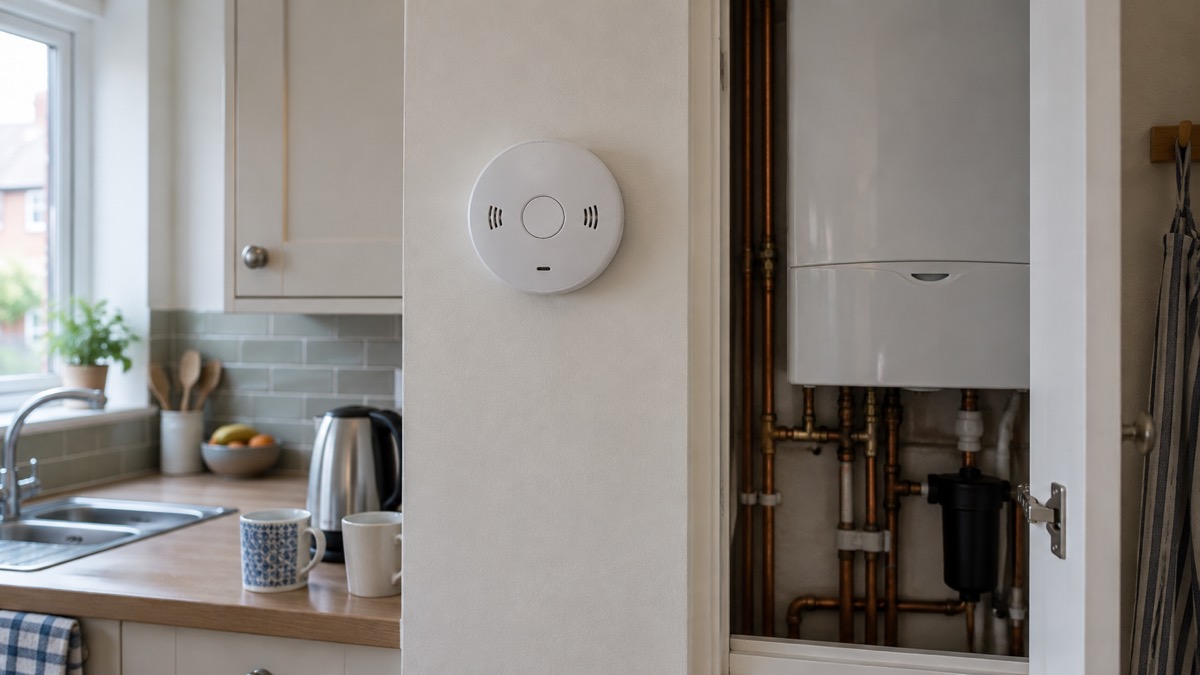
Carbon monoxide is the emergency a household is least likely to notice and most likely to be killed by, which is why the alarm matters more than almost anything else in the kit. Firehawk's carbon monoxide range is fully sealed for life, offered with 5 years (CO5B), 7 years (CO7B) and 10 year (CO7B-10Y) lifespans, plus a digital display version (CO7BD)3. The CO10-RF carries a 10 year warranty, a Data Scan app, automatic sensor test, end of life indicator, alarm silence and a long-life battery5.
The CO10-RF is suitable for use in domestic premises including caravan holiday homes, caravans, motor caravans and boats5. That is worth knowing if your emergency plan involves a caravan as a fallback or if you spend time in one during storm season.
The Firehawk CO range is approved to BS EN50291:2010 + A1:2012 and meets the requirements of Part J of the Building Regulations and the regulations in NI, Wales and Scotland3. If you are fitting an alarm in a rental property or a new extension, that is the standard your installer will be working to.
Alarms fitted by your fire and rescue service
Many Firehawk alarms in UK homes were not bought: they were fitted by a fire and rescue service during a home safety visit. Greater Manchester Fire and Rescue Service publishes the support route for the alarms it fitted, and it is the clearest example of how the arrangement works. If the alarm was fitted by GMFRS and is still covered by guarantee, the service says both suppliers (FireAngel or FireHawk) will post out a replacement alarm to you if the issue cannot be resolved with you over the phone4.
The first step is always the supplier, not the fire service. FireHawk's number for this is freephone 0800 008 6568, and the text number is 07885 831239 if you are unable to call4. FireAngel's line is freephone 0800 141 25614. If you cannot contact the supplier and cannot fit a replacement alarm yourself, GMFRS asks you to call its contact centre on 0800 555 8154.
Other services run their own versions. Staffordshire Fire and Rescue Service gives 0800 141 2561 or technicalsupport@fireangeltech.com for issues with current smoke alarms7. Oxfordshire gives 08000 325999 or fire-cfsteam@oxfordshire.gov.uk for guidance on the best alarm to choose or where to put it8. London Fire Brigade gives freephone 0800 028 4428, email smokealarms@london-fire.gov.uk and text 07860 021 319 for home fire safety visits9. In Northern Ireland, the NIFRS offers over-the-phone fire safety checks through www.nifrs.org or by calling 02892 66422111.
| Nation or service | Support route for a fitted alarm |
|---|---|
| Greater Manchester | FireHawk 0800 008 6568, text 07885 831239; FireAngel 0800 141 2561; GMFRS contact centre 0800 555 8154 |
| Staffordshire | 0800 141 2561 or technicalsupport@fireangeltech.com7 |
| Oxfordshire | 08000 325999 or fire-cfsteam@oxfordshire.gov.uk8 |
| London | 0800 028 4428, smokealarms@london-fire.gov.uk, text 07860 021 3199 |
If your alarm was fitted by a service not listed here, ring that service's home fire safety line and ask which supplier fitted your alarm. The pattern is the same everywhere: the service fits, the supplier supports, and the service steps in only if the supplier cannot help.
Support for GMFRS-fitted alarms: 0800 008 6568
The support line for Firehawk alarms fitted by Greater Manchester Fire and Rescue Service is freephone 0800 008 65684. It is also the technical helpline printed in the Firehawk carbon monoxide manual5. Before you ring, have the alarm in front of you and be ready to describe what it is doing: the pattern of beeps is the single most useful piece of information you can give.
The maker's troubleshooting guide sets out what the sounds mean2:
| What you hear | What it means |
|---|---|
| Repeating series of 3 beeps every 4 seconds with flashing light | Full alarm indicating smoke and fire2 |
| Single beep every minute | Low battery2 |
| Double beep every minute | Fault2 |
| One beep every 11 seconds | Test button jammed2 |
| One beep every minute for a minimum of one month | End of life2 |
If the alarm is sounding the full alarm, do not ring support first. Get out, stay out and call 999. Cheshire Fire and Rescue Service advises that if you cannot escape from a fire, open the window and dial 999, and if you do not have a phone, shout for help12. The maker's own controller page repeats the principle: the fire and rescue service should always be called without delay, no matter how small the fire13.
If you are unable to call: text support
If you cannot use a phone to speak, Firehawk support for GMFRS-fitted alarms accepts a text on 07885 8312394. Use it for the support conversation, not for an emergency. For an emergency, the NHS advises that people with speech or hearing impairment can register to contact 999 by text, and that if you do not receive a confirmation text from the service, you should text again14. Registration is done in advance, so if anyone in your household might need it, set it up now rather than during a fire.
For people who use a textphone, the Text Relay service is reached by dialling 18001 followed by the number you need15. That works for any number, including the Firehawk support line and your utility companies.
It is worth writing both numbers, the voice line and the text line, on the household emergency contact list. West Yorkshire Prepared advises preparing a list of emergency contacts including formal contacts such as utility companies or your local authority, and the contact details of friends and family who could help16. See Extra Help in an Emergency for the wider picture.
Alarms still covered by guarantee
Firehawk's guarantee periods vary by product, and the household needs to know which one applies before ringing support. The FHN600REMOTE alarm remote carries a 1 year warranty17. The FHN600RELAY mains powered relay module carries 6 years18. The CO10-RF carbon monoxide alarm carries 10 years, with free repair or replacement of defective parts, proof of date of purchase required and postage paid to Fireblitz5. The sealed-for-life carbon monoxide range is offered with 5, 7 and 10 year lifespans depending on model3.
The guarantee is not unconditional. The smoke and heat alarm manual states that the life of the alarm can be significantly reduced by adverse environments, incorrect location and lack of maintenance, and that this may invalidate the warranty2. It adds that the life will also be shortened by frequent or extended periods in full alarm, often caused by conditions such as cigarette smoke, steam, aerosol spray and condensation, and that in these circumstances the warranty will be void2. A heat alarm in a kitchen that goes off every time someone boils a pan is therefore not just annoying; it is eating into the alarm's service life.
Keep the date of purchase. For a fire service-fitted alarm, the fitting date is the relevant one, and the service holds the record. If you move into a home with alarms already fitted, ask the seller or landlord when they were installed.
What to have ready before you contact support
A short preparation makes the call quicker and often avoids a visit. Have these to hand:
- The alarm itself, or its model name and the date it was fitted or bought.
- The pattern of beeps, written down if you can, and whether the light is flashing.
- Your address and a phone number you can be reached on.
- Proof of purchase if you bought the alarm yourself, since the CO10-RF guarantee requires it5.
- The name of the service that fitted it, if it was fitted for you.
If you are supporting someone else, Greater Manchester Fire and Rescue Service asks carers to refer the person to GMFRS for a Home Fire Safety Assessment using the Online Home Fire Safety Check tool, or by telephoning 0800 555 815 if there is no internet access, and states that the permission of the person being referred is required19. The same referral route appears in its advice for those providing care and support to smokers21. Age UK's staying safe guidance is a further source of help for older people managing their home safety22.
If the alarm is a carbon monoxide alarm and it has sounded, do not wait for support. The Gas Safe Register helpline on 0800 408 5500 can help you find and check a registered engineer23.
Firehawk certifications: ISO 9001, FIA and British Fire Consortium
Firehawk states that it is ISO 9001 certified, an FIA member and a British Fire Consortium member1. Each of these tells you something different, and none of them is a substitute for the product standard on the box.
ISO 9001 is a quality management certification: it says the company runs a documented quality management system. It does not test an individual alarm. The FIA is the Fire Industry Association, a trade body for the fire protection industry, and membership shows the company belongs to it. The British Fire Consortium is a trade association for fire protection companies, and membership shows the same. For the alarm itself, look at the standards the maker states it meets: BS 5839-6 for the fire alarms6 and BS EN 50291 for the carbon monoxide alarms6. The FHN-THR Mains Powered Controller with Relay lists TUV approvals13.
For comparison, the standard advice on fire extinguishers is to make sure the unit has the Kitemark of British Approvals for Fire Equipment mark16, and fireguards should meet BS8423:2010 +A2:202224. Those are the kind of third-party marks that tell you a product has been independently tested, as distinct from a company-level certification.
Where Firehawk fits a household emergency plan
Alarms are the first line of a household plan, not the whole of it. A power cut is exactly when a candle, a paraffin heater or a back-up generator introduces new fire risk. If you use any of those, see Emergency Lighting at Home: Torches, Lanterns and Candles and Backup Power at Home: A Household Guide for the safety rules that go with them.
The relay and controller products extend the alarm system rather than replace it. The FHN600RELAY is a relay to trigger external devices such as strobe light and sounders, with a push fit wiring connection18. The FHN-THR Mains Powered Controller with Relay is a mains powered controller for the same purpose13. These are installer products: they connect to the mains and to the alarm system, and should be fitted by someone competent to do it.
For the wider kit list, see Emergency Kit: What a UK Household Should Keep Ready and Getting Started: Preparing Your Household for an Emergency. For the fire and carbon monoxide emergencies themselves, see Home Emergencies: Fire, Carbon Monoxide, Gas Leaks and Burst Pipes.
Sources (24)
- Firehawk at FSE 2026, Fireblitz, 2026-04-27
- Firehawk troubleshooting guide, Fireblitz, 2019-01
- About carbon monoxide alarms, CoGDEM, 2024-02-18
- Problem with your smoke or heat alarm, Greater Manchester Fire and Rescue Service, 2026-10-29
- Firehawk carbon monoxide manual, Fireblitz, 2025-06-25
- Why choose Firehawk alarms, Fireblitz, 2026-08-17
- Home fire safety visits, Staffordshire Fire and Rescue Service, 2026-10-29
- Smoke alarms, Oxfordshire County Council, 2026
- Fire safety in the home, Westminster City Council, 2017-01
- Calling 999, Greater Manchester Fire and Rescue Service, 2026-10-29
- NIFRS and DFC agree partnership to provide fire safety advice, Northern Ireland Fire and Rescue Service, 2020-05-15
- In the event of a fire, Cheshire Fire and Rescue Service, 2026-10-13
- Mains powered controller with relay, Fireblitz, 2026-08-27
- Contacting 999 with speech or hearing impairment, East of England Ambulance Service NHS Trust, 2026-10-29
- About Priority Services, United Utilities, 2026-10-28
- Advice for households, West Yorkshire Prepared, 2026-10-29
- Alarm remote for mains smoke and heat alarms, Fireblitz, 2026-10-14
- Mains powered relay module with rechargeable battery back-up, Fireblitz, 2026-08-17
- Additional advice for carers, Greater Manchester Fire and Rescue Service, 2026-10-29
- Additional advice for carers, Greater Manchester Fire and Rescue Service, 2026-10-29
- Additional advice for those providing care and support to smokers, Greater Manchester Fire and Rescue Service, 2026-10-29
- Staying safe, Age UK, 2025-08
- Gas safety - Home owners - HSE, Health and Safety Executive (HSE)
- Fire safety equipment, Devon and Somerset Fire and Rescue Service, 2026
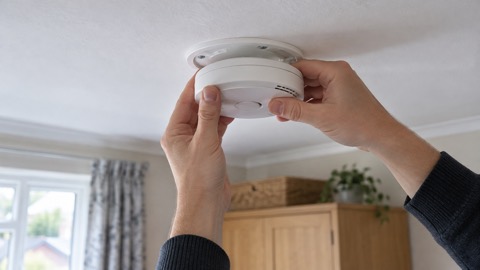 Firehawk FHB10 Optical Smoke Alarm
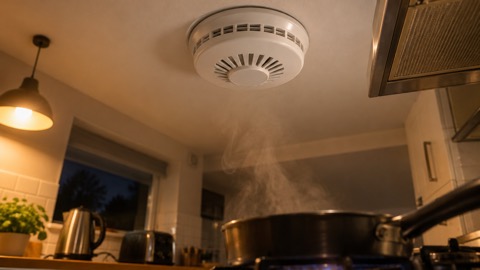 Firehawk FHH10 Heat Alarm
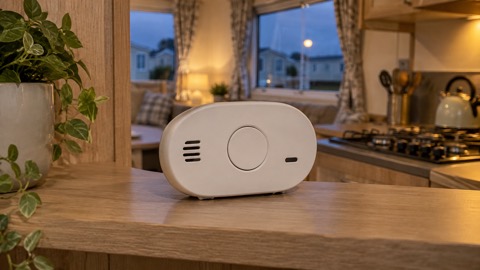 Firehawk CO10-RF Carbon Monoxide Alarm
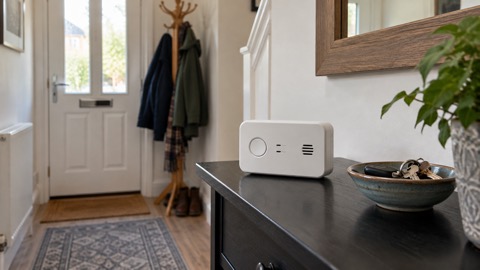 Firehawk CO7B Carbon Monoxide Alarm
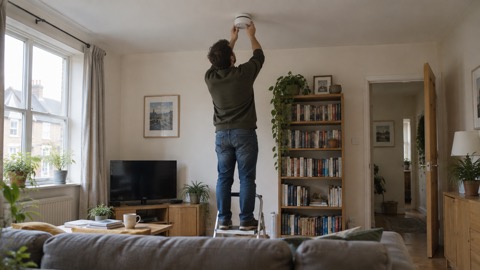 Firehawk FHB10-RF Optical Smoke Alarm
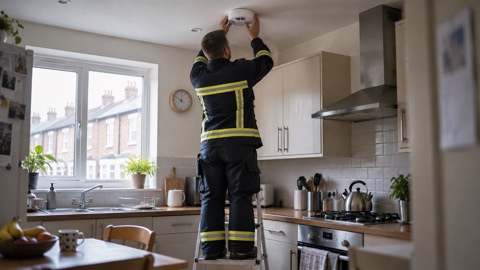 Firehawk FHH10-RF Heat Alarm