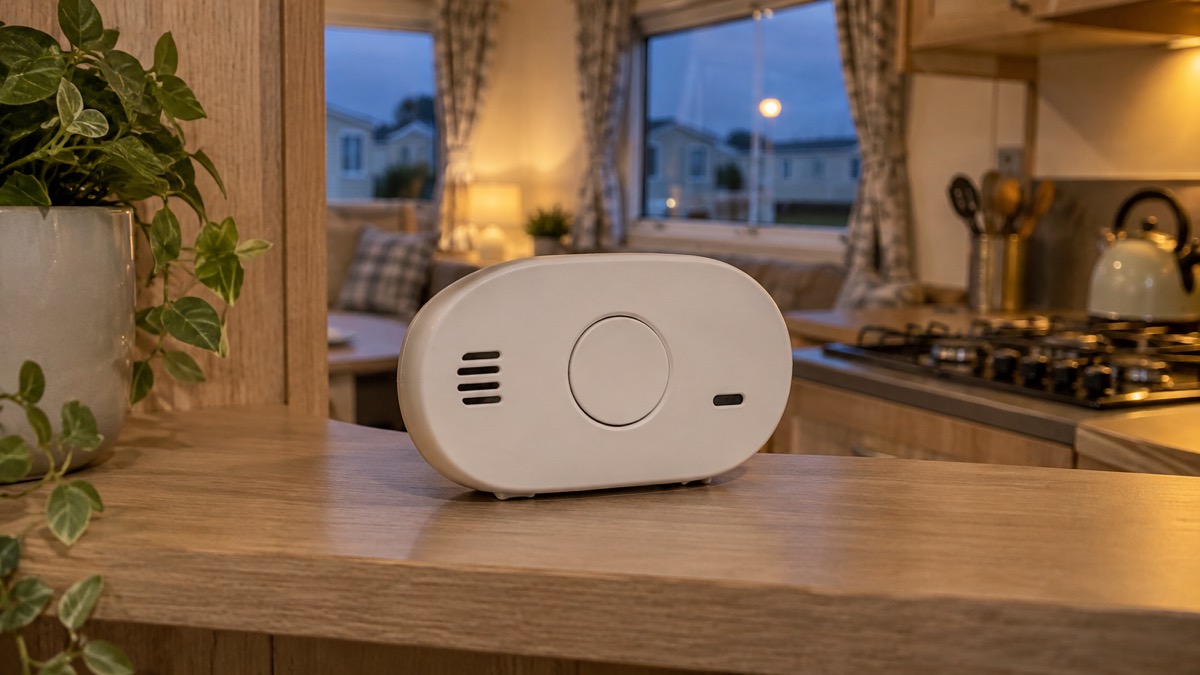
The Firehawk CO10-RF is a battery-operated carbon monoxide alarm with a sealed in 10 year lithium battery, designed to detect carbon monoxide from incomplete combustion in fuel-burning appliances and fireplaces1. It is not a smoke, fire or combustible gas detector, and the maker is clear that it will not fully safeguard individuals from specific medical conditions2. What it does is give a household an audible warning, at 85dB, when carbon monoxide reaches harmful levels, and it is built to last the same 10 years as its warranty1.
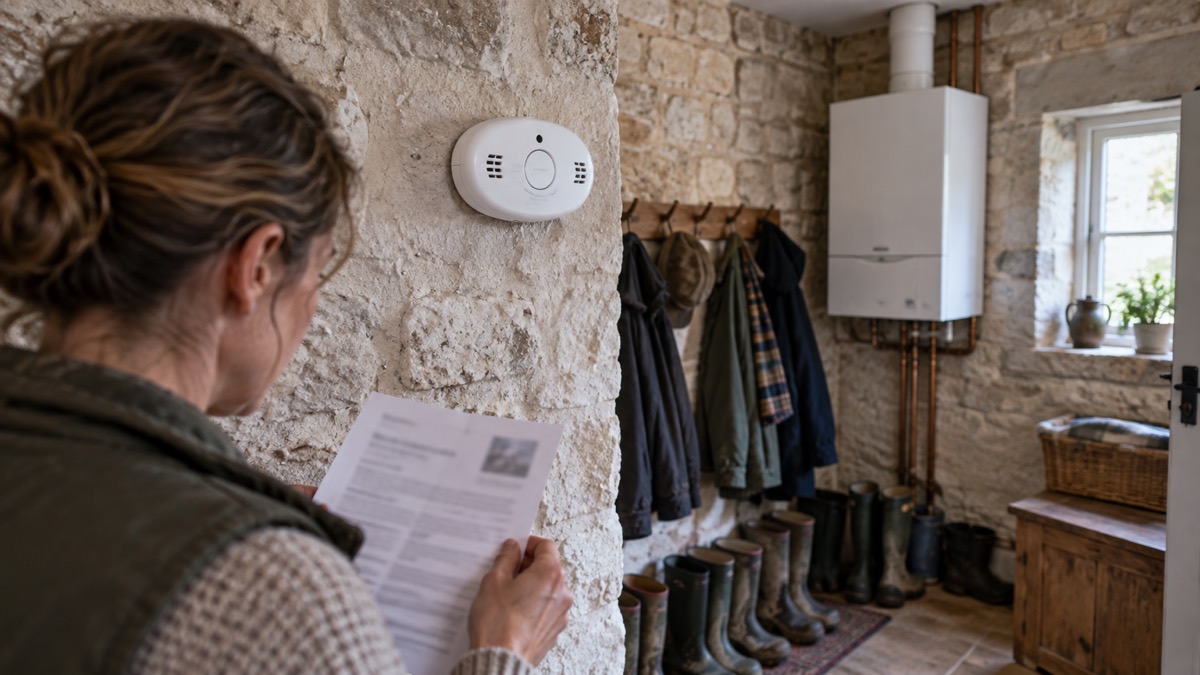
If you own one, the three things to know are these. It alarms with four beeps repeated and a red light when carbon monoxide is present, and you should treat that as a possible emergency rather than a fault2. It should be fitted in the same room as the fuel-burning appliance, at a horizontal distance of between 1 and 3 metres from it, and at least 150 mm from the ceiling if wall mounted2. And it should be tested once a week, with a monthly test using the test button that flashes all three LEDs once, one after another, followed by 4 beeps2.
The CO10-RF is part of the Firehawk RF-Link range, so it can be radio linked to compatible smoke alarms, heat alarms, other CO alarms and a hard of hearing control unit, so that one alarm sounding warns the whole household1. This page sets out what it detects, what its signals mean, where to fit it, how to link it, and how to look after it so it lasts its full life.
What the CO10-RF is and what it detects
The CO10-RF is a plastic-cased carbon monoxide alarm with LED indicators rather than a digital display, and the distributor lists its detection level as from 30ppm3. Inside is a Figaro electro-chemical sensor, which the maker describes as ensuring accuracy and longevity, and the alarm runs an automatic sensor test as part of its routine1. It measures 9 by 5.8 cm on the maker's product page, though the maker's support page gives 100mm high, 65mm wide and 52mm deep, and it weighs 0.148 kg1. The two sets of dimensions come from the same maker and do not match; if size matters for a tight spot, check the alarm itself.
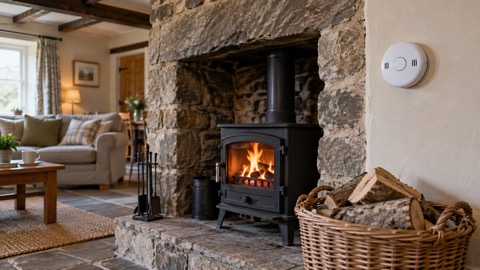
Carbon monoxide is produced by incomplete combustion in fuel-burning appliances and fireplaces, and the CO10-RF is designed to detect it in the rooms where those appliances sit3. It is not a substitute for a smoke alarm or a heat alarm, and the manual states plainly that it is not suitable as a smoke, fire or combustible gas detector2. If you want to know whether a CO alarm can detect a gas leak, the answer is that it cannot: that is a job for a gas safety check and your gas supplier's emergency line, covered in what to do if you smell gas.
The alarm is certified to BS EN 50291-1:2018 and BS EN 50291-2:2019, and carries the KM 573122 mark2. Firehawk states that its CO range is approved to BS EN50291:2010 + A1:2012 and meets the requirements of Part J of the Building Regulations and the regulations in Northern Ireland, Wales and Scotland6. The two standard references differ between the maker's manual and the independent guidance; both are given here as stated. For the wider picture of what these standards mean, see alarm standards.
What the beeps and lights mean
The CO10-RF has three LEDs on the front: Alarm (red), Power (green, flashing once every minute) and Fault (yellow)2. The sounder and lights together tell you what the alarm is doing, and the patterns are worth learning before you need them.
| Signal | What you hear and see | What it means |
|---|---|---|
| Normal running | Green light flashes once every minute | Power on, alarm working2 |
| Test | All three LEDs flash once, one after another, then 4 beeps | Test button pressed, alarm responding2 |
| Carbon monoxide present | 4 beeps repeated and red light shown | Harmful levels of CO detected2 |
| Fault | 2 beeps every minute with red and yellow light shown | Fault signal, alarm needs attention2 |
| Low battery | One beep every minute | Battery warning2 |
| End of life | 3 short beeps every minute | Sensor life ended, alarm needs replacing1 |
The maker's guidance for its CO alarms adds that all lights flashing once with one series of four beeps is the test signal8. The FireAngel Pro Connected range uses a different pattern, three beeps for fire and four for carbon monoxide, which is a reminder that patterns vary between makers and you should read the instructions for the alarm you actually have9.
If the alarm gives two rapid beeps per minute, the maker's support article identifies that as a fault signal7. A fault is not a carbon monoxide reading, but it does mean the alarm may not be protecting you, so it needs sorting promptly. The troubleshooting route is to check the alarm is correctly seated on its base, then follow the maker's support guidance; if the fault persists, contact Firehawk Safety7. For a general guide to why an alarm is beeping, see why is my carbon monoxide alarm beeping.
When the alarm sounds: 4 beeps and a red light
Four beeps repeated with a red light means the alarm has detected carbon monoxide2. This is the moment the alarm exists for, and the response is not to press buttons and go back to bed. Carbon monoxide is colourless and odourless, and the symptoms it causes are easy to mistake for other illnesses; the carbon monoxide poisoning symptoms page sets out what to look for.
The maker's manual gives the alarm's response times at different concentrations, which show how the alarm is designed to give more warning the more carbon monoxide there is2:
| Carbon monoxide level | Must not alarm before | Must alarm before |
|---|---|---|
| 30ppm | 120 minutes | (no upper figure given) |
| 50ppm | 60 minutes | 90 minutes |
| 100ppm | 10 minutes | 40 minutes |
| 300ppm | 3 minutes | (no upper figure given) |
Read that table as the maker's stated performance, not a promise about your exposure. At 50ppm the alarm may stay quiet for up to an hour before sounding, so a slow build-up of carbon monoxide can be present for some time before the alarm reacts. That is why the alarm is a backstop, not a substitute for servicing appliances and keeping vents and flues clear.
The alarm will reactivate if the concentration of carbon monoxide around it is greater than 50ppm, even after you have pressed silence2. That is a safety feature: it will not let you sleep through a rising level. The manual also warns that the alarm should not be tested using heat, smoke or naked flame, as damage will occur2.
Where to fit it: 1 to 3 m from the fuel-burning appliance
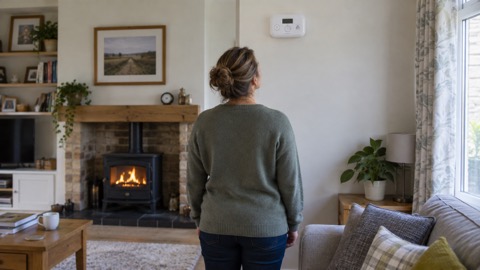
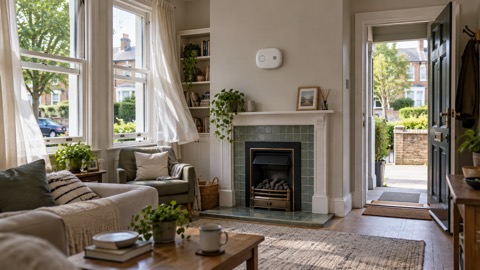
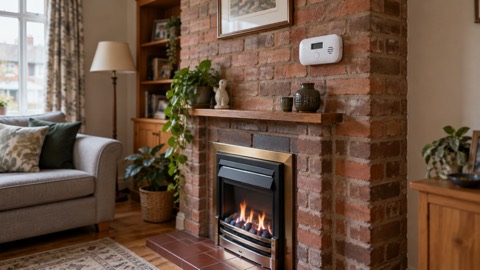
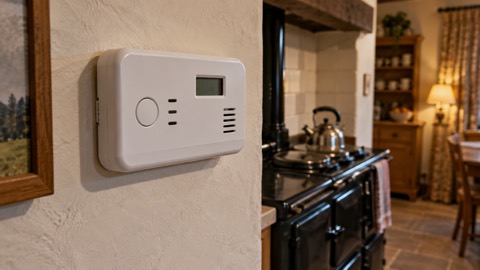
Placement decides whether the alarm works. The maker's manual says that when the alarm is in the same room as a fuel-burning appliance, it should be at a horizontal distance of between 1 m and 3 m from the potential source2. For caravans and boats, the manual gives the same rule in its own words: mount the apparatus at a distance of 1 to 3 m from the nearest edge of the potential source2.
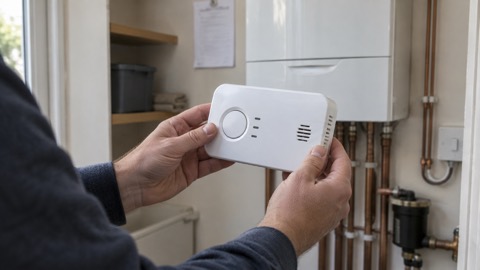
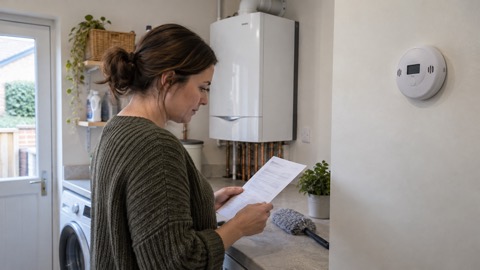
Official guidance agrees on the distance. Scottish Government guidance states that carbon monoxide detectors in the space containing the combustion appliance should be sited between 1m and 3m from the appliance, and not placed in a cupboard or other small enclosed space10. The same guidance, and ScotBorders' governmental guidance, add that if the appliance, primarily a boiler, is in a small space such as a cupboard, the detector should be sited outside the cupboard with a distance of between 1 and 3 metres between appliance and detector11. If the boiler is in an attic, the guidance suggests one detector between 1 and 3 metres from the appliance in the attic and another interlinked detector outside the attic near the hatch12.
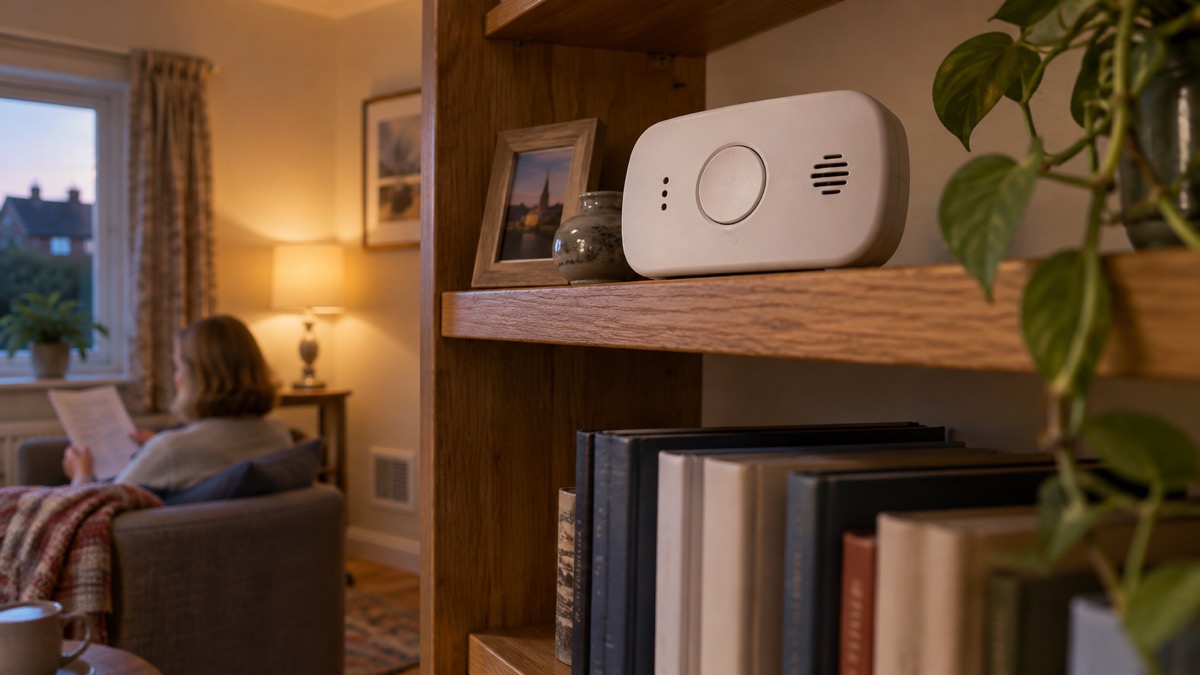
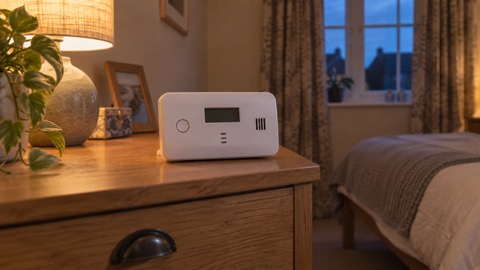
Height matters too. The maker says a wall mounted alarm should be at least 150 mm from the ceiling, and a ceiling mounted alarm at least 300 mm from any wall2. Which? advises fitting a detector high up in the same room as the potential source, around 15cm from the ceiling and at least 1 metre away from boilers, cookers and fires, not directly above a source of heat or steam, with a shelf a suitable position13. The distributor lists the alarm as suitable for mounting at head height or standing at head height, in bedrooms, hallways, kitchens, landings and living rooms3.
The manual lists places the alarm should not go: in an enclosed space such as a cupboard or behind a curtain, where it can be obstructed, above a sink, next to a door or window, next to an extractor fan or air vent, where dirt and dust may block the sensor, in a damp or humid location, or in the immediate vicinity of a cooking appliance2. It should also not run outside -10 to +40 degrees Celsius or 30% to 90% relative humidity2. For a fuller treatment, see where to put a carbon monoxide alarm.
Linking it with other Firehawk RF-Link alarms
The CO10-RF can be radio interlinked with other RF-Link series devices: Firehawk smoke alarms, heat alarms, carbon monoxide alarms and the FHN800HIA control unit for hard of hearing people2. The maker's compatibility list names the FHB10-RF smoke alarm, the FHH10-RF heat alarm, the CO10-RF itself, the FHN600RF RF-Link module for mains alarms and the FHN800HIA hard of hearing alarm1. The point of linking is that a carbon monoxide alarm in a kitchen or garage can raise the alarm in bedrooms, which matters most at night.
There is a discrepancy in the maximum number of devices. The maker's manual states that up to 15 alarms may be paired to the system2, while the distributor's product listing says the alarm can radio-interlink with up to 20 compatible Firehawk RF-LINK devices and gives a maximum of 20 linked devices3. The two documents disagree; if you are planning a large system, check with the maker before buying the last few alarms.
To pair, the maker's guide says to assemble alarms to their radio bases to turn them on; they will beep once and the LED will flash red twice then stop flashing15. The RF-Link series is described by the maker as radio interlinked wireless technology16. If a linked alarm will not sound the others during a test, the maker's support advice is to re-pair to the RF-Link alarm system, and if all attempts fail, contact FireHawk Safety7. For how linking works across brands and systems, see interlinked alarms and wireless or wired interlinked alarms.
If someone in the household is deaf or hard of hearing, the FHN800HIA control unit is the device the maker lists for linking, and the smoke and CO alarms for deaf and hard of hearing people page explains the options.
Using it in a caravan, motorhome or boat
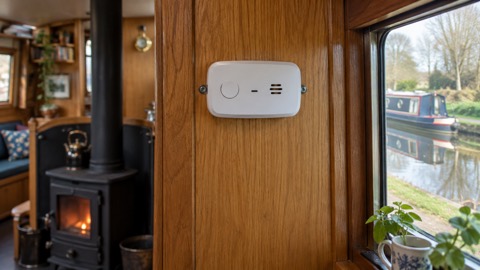
The CO10-RF is one of the few CO alarms the maker explicitly lists for travel. The manual states it is suitable for use in domestic premises including caravan holiday homes, caravans, motor caravans and boats2. The distributor lists its environmental suitability as caravan, camping and boats, home and travel, and describes a versatile mounting system allowing fixed or free-standing installation, with wall fixings included3.
That flexibility suits a caravan or boat, where you may want the alarm fixed for the season and stood on a shelf when moored or pitched. Keep to the same rules as at home: 1 to 3 m from the nearest edge of the fuel-burning appliance, clear of vents, steam and cooking appliances, and within the operating range of -10 to +40 degrees Celsius and 30% to 90% relative humidity2. A sealed 10 year battery means no annual battery change, which is one less thing to remember in a seasonal vehicle1.
The alarm is not a substitute for a smoke alarm in a caravan or boat, and it will not detect gas leaks or combustible gases2. If you keep a caravan or boat, the emergency kit page covers what else is worth carrying.
Testing, silencing and looking after it
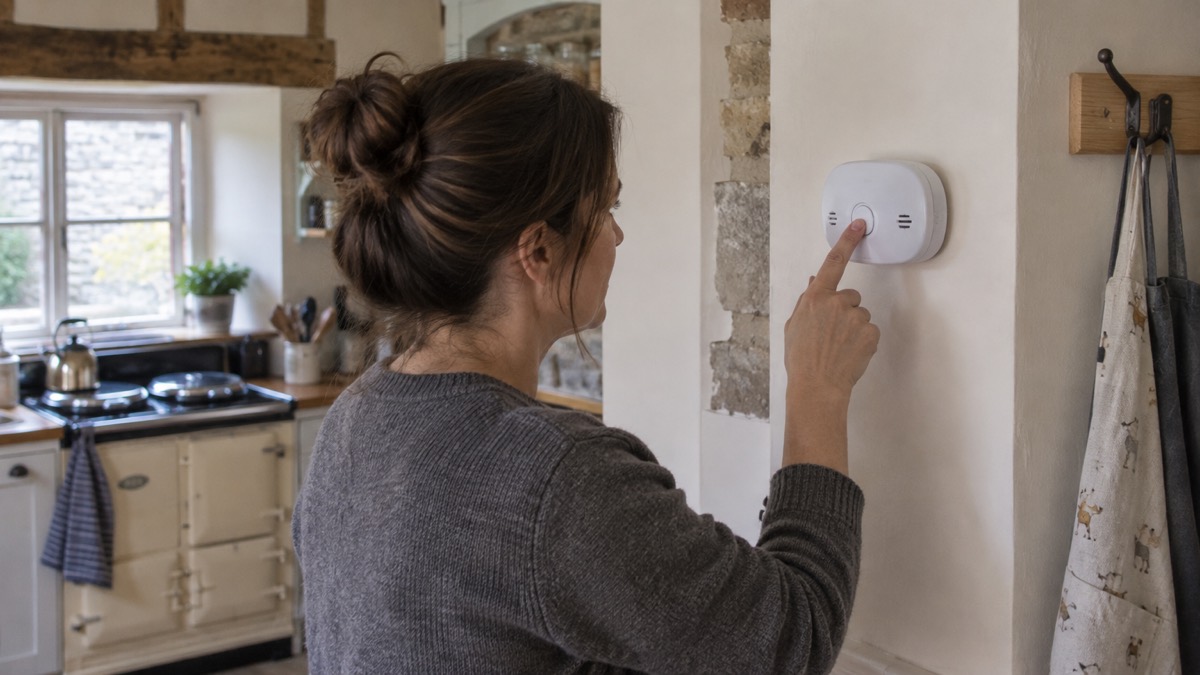
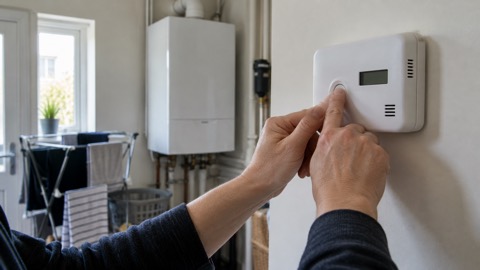
Test the alarm once a week to ensure correct operation, and test it monthly using the test button: it should flash all three LEDs once, one after another, followed by 4 beeps from the sounder2. The manual's test procedure says the alarm should sound three times with a flashing red light then stop, and to allow at least 5 seconds after a successful test before testing the next one2. The distributor describes a combined test and silence button for easy maintenance3.
To silence a nuisance alarm, press the silence button, which pauses the sounder for 10 minutes2. The maker describes the CO Alarm Silence Button as ideal in non-emergency situations1. The alarm reactivates if carbon monoxide around it is greater than 50ppm, and the button has no effect above 300ppm2. The maker also lists a low battery silence of up to 10 hours, which it says maintains continuous protection during sleeping hours, and an end of life warning that can be silenced for up to 10 hours1.
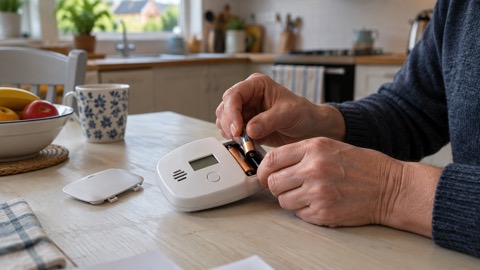
Keep the alarm free of dust: vacuum it every month and ensure the vents are clear, and every six months wipe the outside with a damp cloth2. Do not open the alarm, as there are no user serviceable parts inside, and do not test it with heat, smoke or naked flame2. The alarm's power switches on automatically when it is attached to its mounting base and off when removed1.
Data Scan, support and warranty
The CO10-RF is compatible with the Firehawk Data Scan feature, used through the Firehawk app and set up following the in-app instructions1. The distributor's listing says the feature lets you download the serial number, report date, manufacture date, product life remaining, expiration date, device removals, tests and their last dates, activation counts at pre-alarm and low, medium and high carbon monoxide levels, and battery, device and end-of-life faults3. That record can be useful if you rent out a property or need to show an alarm's history.
The maker lists a 10 year warranty, matching the alarm's 10 year life1. The manual sets out what voids it: if the alarm has been modified, dismantled, contaminated, damaged, neglected or otherwise abused or altered following the instructions, incorrectly sited or installed, or damaged by failure to abide by the instructions2. It adds that substantial periods in alarm will shorten alarm life and no claim will be entertained2. In plain terms, fit it where the manual says, keep it clean, and do not take it apart.
For help, FireHawk offers a freephone support line on 0800 008 6568, with a text option on 07885 831239 if you cannot call, for alarms fitted by Greater Manchester Fire and Rescue Service and still covered by guarantee5. If your alarm was fitted by your local fire and rescue service, ask them first, as their support arrangements may differ.
When to replace it and how to dispose of it
The CO10-RF has a 10 year life, and the maker lists it among its discontinued CO alarms1. Three short beeps every minute indicate the sensor life has ended and the alarm needs replacing1. The end of life warning can be silenced for up to 10 hours, but silencing it does not extend the alarm's protection3.
When you replace it, do not open the old alarm: the maker states there are no user serviceable parts inside2. The distributor lists the alarm as covered by Valpak's WEEE Distributor Take-back Scheme, so ask the retailer where you bought it about taking it back3. For the wider question of when alarms need replacing, see when to replace a smoke, heat or CO alarm.
Rules in Scotland, Wales and Northern Ireland
The distributor lists Northern Ireland legislation from 2024 and Scottish and Welsh legislation from 2022 alongside the CO10-RF3. Firehawk states that its CO range is approved to BS EN50291:2010 + A1:2012 and meets the requirements of Part J of the Building Regulations and the regulations in Northern Ireland, Wales and Scotland6. The manual lists BS EN 50291-1:2018 and BS EN 50291-2:20192.
What that means for a household is that the alarm is built to the standards the devolved regulations refer to, but the rules on where alarms are required differ between nations and between tenures. For the rules in Wales and Northern Ireland, see Wales and Northern Ireland: alarm rules and fire services. If you are unsure what your home requires, check with your local authority or the relevant government guidance for your nation.
Sources (16)
- RF-Link Carbon Monoxide Alarm CO10-RF, Fireblitz, 2026-10-14
- Carbon Monoxide Manual, Fireblitz, 2025-06-25
- 10 Year Battery RF-Link Carbon Monoxide Alarm, Safelincs, 2026-10-29
- FRS Hard of Hearing Alarm, Fireblitz, 2026-08-26
- FRS Support: CO Alarm, Fireblitz, 2024-04-24
- About CO: Alarms, CoGDEM, 2024-02-18
- CO10-RF Troubleshooting, Fireblitz, 2025-03-19
- CO Alarm Lights and Sounds, Fireblitz, 2025-03-19
- Pro Connected Heat Alarm FP1740W2-R, FireAngel, 2026-08-17
- Tolerable Standard Guidance: Satisfactory Fire and Carbon Monoxide Detection, Scottish Government, 2023-06
- Carbon Monoxide Alarms in Private Rented Properties: Guidance, Scottish Government, 2021-02-16
- Carbon Monoxide Detectors: Governmental Guidance, Scottish Borders Council, 2015-06-25
- How We Test Carbon Monoxide Detectors, Which?, 2026-07-14
- Mains Powered Optical Smoke Alarm with Battery Backup, Fireblitz, 2026-08-17
- RF-Link Multiple Control Unit Setup - FireBlitz, FireBlitz
- RF-Link, Fireblitz, 2026-08-17
 FireAngel FA3313 CO Alarm
 FireAngel FA3322 CO Alarm
 FireAngel FA3820 CO Alarm
 FireAngel FA6812 CO Alarm
 FireAngel FA6813 CO Alarm
 FireAngel FA6829S CO Alarm
 FireAngel CW1-PF CO Alarm
 FireAngel W2-CO-10X CO Alarm
 FireAngel FP1820W2-R CO Alarm
 Kidde K7DCO CO Alarm
 Kidde K5DCO CO Alarm
 Kidde K10LLDCO CO Alarm