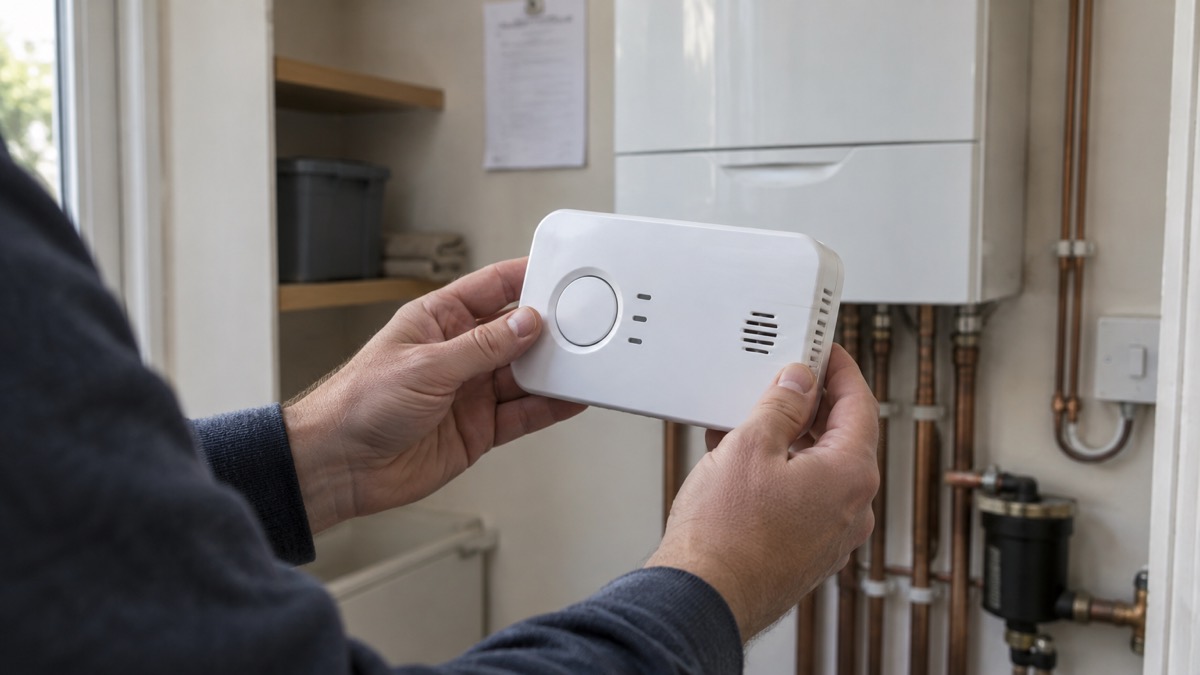
The FireAngel FA3820 is a carbon monoxide alarm with a sealed lithium battery that lasts 10 years, and the whole unit is replaced when that life ends1. It is certified to BS EN 50291-1:2018 and BS EN 50291-2:2019 and independently tested by BSI2. If it sounds a full alarm, treat it as a warning that potentially lethal levels of carbon monoxide may be present: get everyone into fresh air, stop using the appliance, open doors and windows, and call the gas emergency number or your fuel supplier. Do not silence it and go back to bed.
The alarm is designed to give you time. It sounds at 85dB(A) at 3m2, and its response is graded by how much carbon monoxide is present: within 3 minutes at 300ppm or more, between 10 and 40 minutes at 100ppm, and between 60 and 90 minutes at 50ppm3. A separate Ventilate pre-alarm warns of lower levels before the main alarm triggers, so you can open windows and check the appliance1.
This page sets out what the FA3820 does, where to fit it, how to test and silence it, and what to do when it reaches the end of its life. It is one alarm in a wider picture: for the general rules on siting and choosing, see Carbon Monoxide Alarms: What They Do and How to Choose, and for what to do the moment one sounds, What to Do If Your CO Alarm Sounds or You Suspect Carbon Monoxide.
What to do when the FA3820 sounds a full alarm
A full alarm is not a nuisance to be silenced. The maker's manual is blunt about it:
"A loud alarm is a warning that potentially lethal levels of carbon monoxide are present. NEVER IGNORE THIS ALARM, FURTHER EXPOSURE CAN BE FATAL"
The order of actions matters. Get everyone, including pets, out into fresh air first. Open doors and windows as you go. Do not switch lights on or off, strike matches or use anything that could ignite gas. Once outside, do not go back in until the alarm has stopped and the source has been dealt with. Call the gas emergency number for a gas appliance, or your fuel supplier for oil or solid fuel, and do not use the appliance again until it has been checked by a competent engineer.
If anyone has symptoms, seek medical advice. The Health and Safety Executive lists headaches or dizziness, breathlessness, nausea, loss of consciousness, tiredness, pains in the chest or stomach, erratic behaviour and visual problems4. The NHS adds feeling weak, confusion, chest and muscle pain, flushing and loss of vision5. Symptoms can feel like flu or food poisoning but without a temperature, and get worse the longer you are exposed6. For a fuller symptom list, see Carbon Monoxide Poisoning Symptoms.
The FA3820's own manual sets out what different exposure levels do, which helps you understand why the alarm is graded the way it is:
| Level | Effect described by the maker |
|---|---|
| 200ppm | Slight headache, fatigue, dizziness, nausea after 2 to 3 hours3 |
| 400ppm | Frontal headaches within 1 to 2 hours, life threatening after 3 hours3 |
| Extreme exposure | Unconsciousness, convulsions, cardiorespiratory failure, death3 |
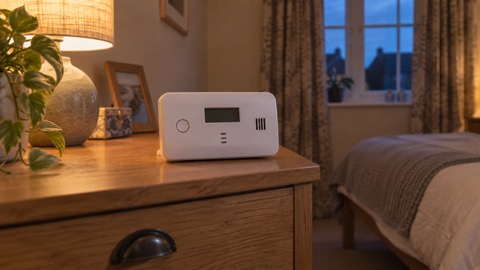
FireAngel FA3820: a sealed 10-year carbon monoxide alarm
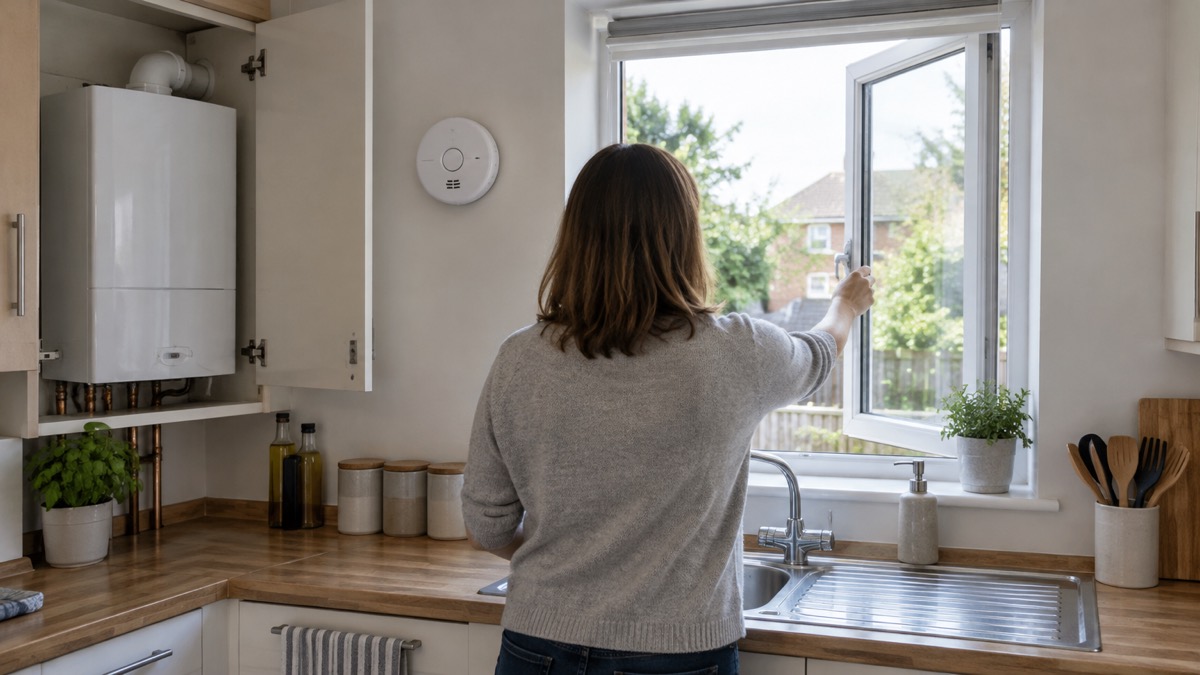
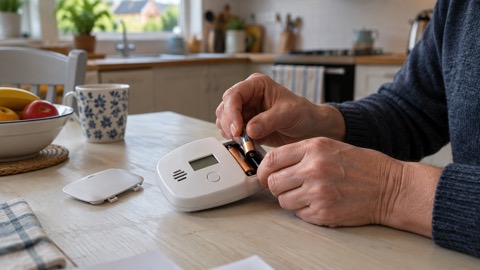
The FA3820-EUX10 is a carbon monoxide alarm with a 10-year sealed lithium battery1. The battery is not replaceable: the maker's datasheet describes it as a sealed for life lithium battery, and the manual says to replace the device after 10 years of operation2. That design removes the commonest cause of a dead alarm, a battery taken out and not replaced, but it also means the unit has a fixed service life from the day it is first powered.
The sensing element is an advanced electrochemical sensor, calibrated and tested in CO gas2. The maker's manual describes the sensor checking every 55 seconds, speeding up to every 12 seconds once carbon monoxide is detected3. The case is fire retardant ABS2. It can be wall mounted or left free standing2.
The FA3820 is one of a family. FireAngel makes a range of carbon monoxide alarms, and the FA3820 sits alongside models such as the FireAngel FA3313 and the FireAngel FA3322. If you are weighing a sealed battery against a replaceable one, Sealed 10-Year or Replaceable Battery Alarms sets out the trade-offs. The maker's own brand page is at FireAngel.
Specifications
| Specification | Figure |
|---|---|
| Product type | CO alarm with 10 year battery2 |
| Sensor | Advanced electrochemical, calibrated and tested in CO gas2 |
| Alarm sound level | 85dB(A) at 3m (minimum)2 |
| Battery | Sealed for life lithium, 10 year life2 |
| Supply voltage | 3V DC2 |
| Dimensions | 125mm wide x 67mm high x 33mm deep2 |
| Weight | 95g2 |
| Operating temperature | -10°C to +40°C2 |
| Operating and storage humidity | 30 to 90% RH, non condensing2 |
| Installation positions | Wall or free standing2 |
| Warranty | 5 years2 |
| Standards | BS EN 50291-1:2018, BS EN 50291-2:2019, BSI tested (certificate KM 551504)2 |
The maker recommends fitting the alarm in a room where the temperature stays between -10°C and 40°C for the earliest warning, and notes that use outside those temperatures will reduce product life3.
How quickly it alarms at different CO levels
Carbon monoxide harms by concentration and time together. A low level over many hours can be as dangerous as a high level over minutes, which is why the FA3820 does not use a single trigger point. The maker's manual gives the response times:
| Carbon monoxide level | Alarm response |
|---|---|
| 300ppm or more | Within 3 minutes3 |
| 100ppm | Between 10 and 40 minutes3 |
| 50ppm | Between 60 and 90 minutes3 |
This graded response is deliberate. It avoids constant false alarms from trivial traces while still catching a slow build-up before it becomes dangerous. The sensor's checking rate speeds up from every 55 seconds to every 12 seconds once carbon monoxide is detected3, so the alarm reacts faster as levels rise.
What this means in practice is that the alarm is not a substitute for your own senses. If you smell gas, or feel unwell in a room with a fuel-burning appliance, act even if the alarm is silent. The FA3820 detects carbon monoxide, not natural gas: for that, see Can a Carbon Monoxide Alarm Detect a Gas Leak? and What to Do If You Smell Gas.
The Ventilate pre-alarm warns of low CO over hours
The FA3820 has a feature the maker calls the Ventilate pre-alarm, a low level monitoring function that alerts you to low carbon monoxide levels before the main alarm triggers, giving you time to open windows and check the appliance1. The product page describes it as a unique pre-alarm and ventilate warning for enhanced CO safety7.
The manual sets out the levels it watches: 10 to 20ppm, 20 to 30ppm and 30ppm and above, over a sustained time period3. The early warning time at the lowest band is 4 hours3. That is the point of the feature: a slow leak from a boiler or a blocked flue may never hit the main alarm threshold quickly, but over hours it can still make a household ill. The pre-alarm gives you a chance to ventilate and get the appliance checked before anyone comes to harm.
Treat a pre-alarm as a prompt, not a nuisance. Open windows, turn off the appliance if you can do so safely, and arrange for a competent engineer to inspect it. Do not assume that because the full alarm has not sounded, there is nothing wrong. The maker's own symptom table shows that even moderate exposure brings a severe throbbing headache, drowsiness, confusion and a fast heart rate3.
Where to fit it: 1m to 3m from the appliance
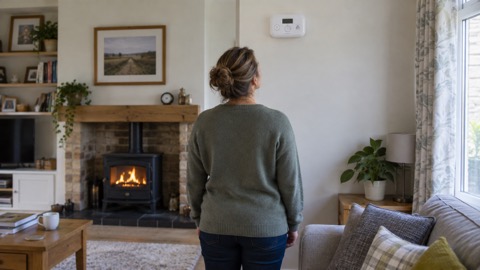
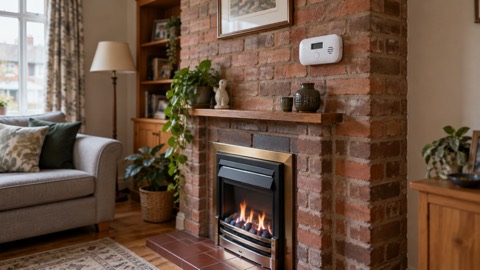
Position decides whether the alarm works. The maker's manual gives a clear rule: fit the alarm at a horizontal distance of between 1m and 3m from the potential source3. Too close and it may be swamped before it can warn you; too far and the carbon monoxide may disperse before it reaches the sensor.
The rest of the siting rules from the manual:
- On a ceiling, keep it at least 300mm from any wall and any ceiling obstruction such as light fittings3.
- On a wall, fit it close to the ceiling, higher than any door or window, and at least 150mm from the ceiling3.
- In a room with a sloped ceiling, put it on the high side3.
- If there is a partition, put it on the same side as the potential source3.
- Do not place it directly above a source of heat or steam3.
The alarm must be installed by a competent person able to install it according to the instructions3. If you are wall mounting, the manual specifies 2 x 3.5mm (No 6) countersunk screws, and notes that screws are not included3. For the wider question of which rooms need an alarm, see Where to Put a Carbon Monoxide Alarm and Do I Need a Carbon Monoxide Alarm?.
Testing, silencing and when it will not stop
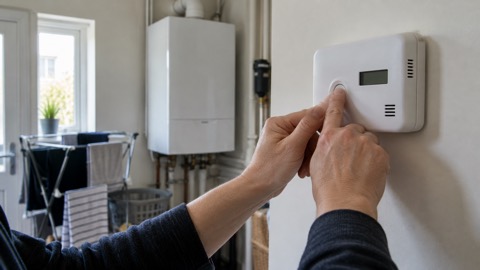
Test the FA3820 at least once a month by pressing the test/hush button. You will hear two loud sequences of four beeps and the LED will flash, confirming the alarm is working1. Vacuum around the unit every six months to keep the sensor vents clear1.
If the alarm sounds and you have ventilated the room, you can silence it temporarily. The sounder stops and enters Silence mode for 5 minutes3. There is also a sleep easy function that silences the alarm for 8 hours while the amber LED continues to flash3. But the maker sets firm limits:
- The alarm will not silence if more than 150ppm has been detected3.
- Silence mode can only be activated once until carbon monoxide returns to negligible levels3.
- You can silence the device a maximum of 10 times3.
- Depending on the level of CO detected, it can take up to 10 minutes to clear the sensor and for the alarm to stop3.
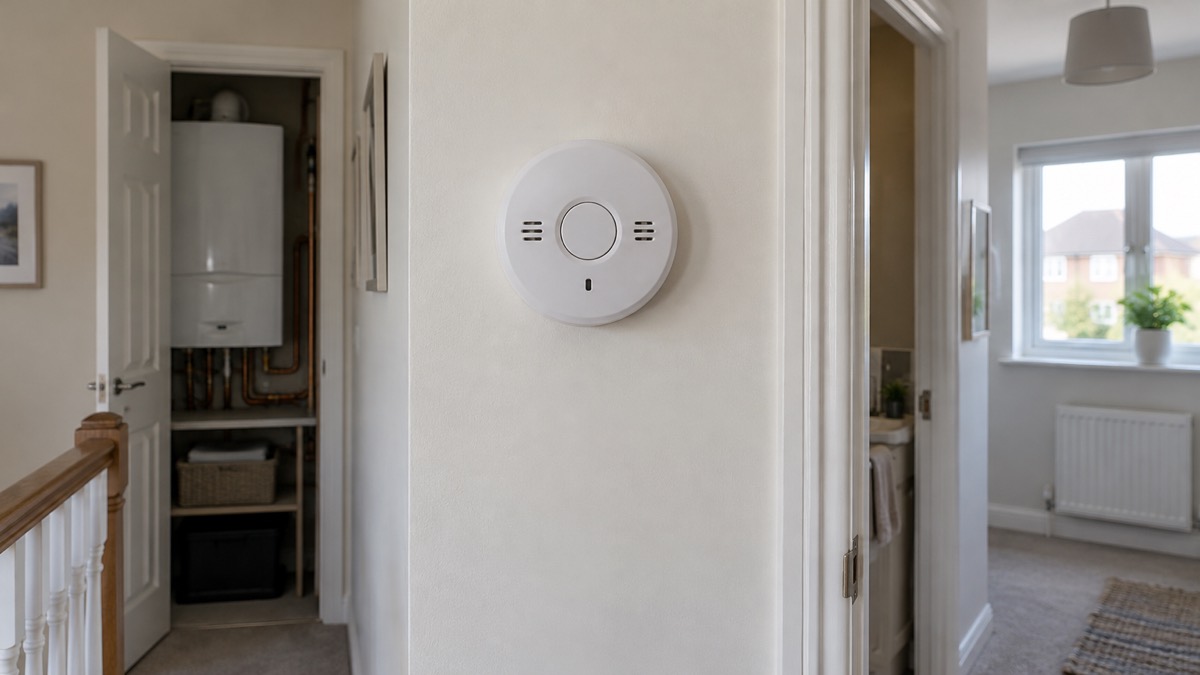
If the alarm beeps when it is not being tested, or fails to sound during a test, the maker advises consulting the manual: the battery could be running low or the alarm could be coming to the end of its life and need replacing9. For a beeping alarm in general, see Why Is My Carbon Monoxide Alarm Beeping?, and for testing routines, How Often to Test Smoke and CO Alarms.
Replace the whole alarm after 10 years
The FA3820 is not repairable and its battery is not replaceable. The maker's manual says simply: replace the alarm every 10 years3. The datasheet describes a 10 year life featuring a 10 year sealed for life lithium battery2. The same rule applies across the family: the FA3820, FA3328 and FA3322 all use a 10 year sealed for life battery and should be replaced after 10 years of operation10.
This mirrors the advice for smoke alarms. Essex Fire and Rescue Service's home fire safety guidance says every ten years, replace the entire smoke alarm11. The principle is the same for carbon monoxide: the sensor degrades over time and cannot be recalibrated by the household.
When you replace it, the FA3820-EUX10 is designed to replace any end-of-life CO-9X alarm and fits in the same location as the old alarm1. That makes a straight swap straightforward if you already have a CO-9X on the wall.
For disposal, the maker's manual is specific: do not attempt to open the alarm and do not burn it3. The sealed lithium battery is inside and is not meant to be removed. Take the whole unit to your local council's household waste recycling centre, which accepts small electrical items, rather than putting it in general rubbish. For the wider replacement timetable across alarm types, see When to Replace a Smoke, Heat or CO Alarm.
Support, warranty and certification
The FA3820 carries a 5 year warranty2. That is shorter than the 10 year battery life, so keep your proof of purchase and note the installation date. FireAngel's customer support specialists are based in the UK and can help with product advice, installation queries and troubleshooting by phone, email or live chat12.
Technical support is on 0330 094 5830, by email at technicalsupport@fireangeltech.com, or online at www.fireangeltech.com/support3. The maker's manuals give the phone line's hours as 9am to 5pm Monday to Friday14. Fire and rescue service customers have a separate freephone number, 0800 141 25613. The maker also offers the manual in large text and other formats on request15.
On certification, the maker states the FA3820 is certified to BS EN 50291-1:2018 and BS EN 50291-2:2019, the British and European standards for carbon monoxide detection, and independently tested by BSI under certificate number KM 5515042. The product page describes BSI Kitemark approval1. For what those standards mean and how they compare with smoke alarm standards, see Alarm Standards: BS 5839-6, BS EN 50291 and System Grades.
Using it in a caravan, motorhome or boat
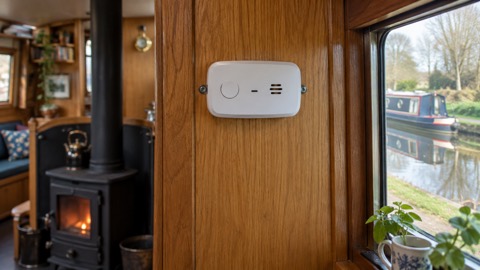
The maker's datasheet lists the FA3820 for use in domestic premises including static and mobile homes, caravans, motor caravans and boats2. That makes it a reasonable choice for a caravan or boat where you want a sealed, maintenance-free alarm. The datasheet notes that markings may vary depending on country2.
Northern Ireland's nidirect guidance warns about carbon monoxide dangers if camping, caravanning or boating, and lists symptoms including headaches, dizziness, breathlessness, nausea and vomiting, exhaustion, drowsiness, lightheadedness, collapse and loss of consciousness16. A working alarm in a confined space matters more, not less.
If you are choosing an alarm for a boat or caravan, check the operating temperature range against where it will live: the FA3820 is rated from -10°C to +40°C2. For the general picture on boats and vehicles, see Carbon Monoxide Alarms: What They Do and How to Choose.
Sources (16)
- FA3820-EUX10 Carbon Monoxide Alarm, FireAngel, 2026-10-28
- FA3820 Data Sheet, FireAngel, 2024-09
- FA3820 EU Manual, FireAngel, 2022-08
- Gas Safety FAQs, Health and Safety Executive, 2026
- Carbon Monoxide Poisoning, NHS, 2025-12-16
- Carbon Monoxide Symptoms, Which?, 2026-07-14
- FA3820-EUX10-T, FireAngel, 2026-08-20
- FireAngel Product FAQs, FireAngel, 2026-10-29
- Maintaining and Testing Your FireAngel Smoke Alarm, FireAngel, 2024-08-27
- FA3313, FA3322, FA3328 and FA3820 EU Manual, FireAngel, 2024-09
- Fire Safety in the Home, Essex Fire and Rescue Service, 2025-02
- Carbon Monoxide Safety, FireAngel, 2026-07-31
- HW1-R Manual, FireAngel, 2024-09
- Combined Manual SP500 to SP540, FireAngel, 2026
- FA8080BW-R-Wifi-3-Gateway-Manual.pdf, FireAngel Safety Technology Limited
- Carbon Monoxide Dangers If Camping, Caravanning or Boating, nidirect, 2026-04-02
 FireAngel FA3313 CO Alarm
 FireAngel FA3322 CO Alarm
 FireAngel FA6812 CO Alarm
 FireAngel FA6813 CO Alarm
 FireAngel FA6829S CO Alarm
 FireAngel CW1-PF CO Alarm
 FireAngel W2-CO-10X CO Alarm
 FireAngel FP1820W2-R CO Alarm
 Kidde K7DCO CO Alarm
 Kidde K5DCO CO Alarm
 Kidde K10LLDCO CO Alarm
 Kidde K10LLCO CO Alarm