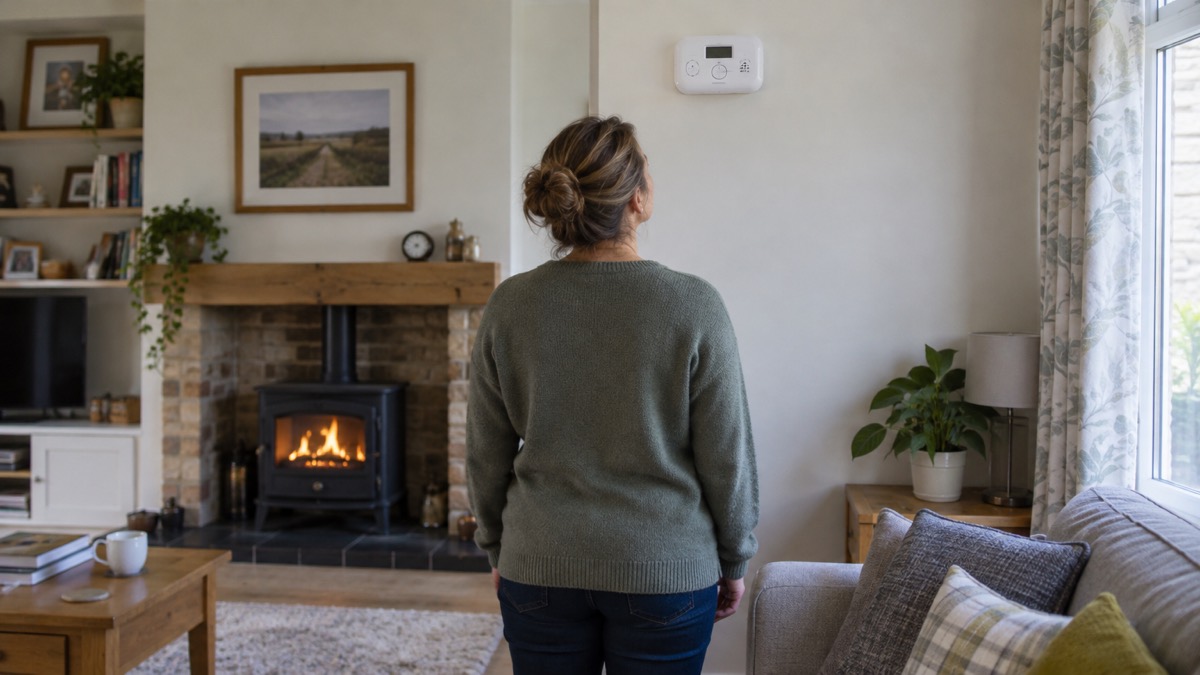
The FireAngel FA3322 is a carbon monoxide alarm with a colour LCD screen that also shows room temperature and humidity, and it doubles as an extreme temperature alarm1. It has a sealed lithium battery that lasts the life of the unit, and the maker says to replace the whole alarm after 10 years3. If you have moved into a home with one on the wall, or you are choosing one for a room with a fuel-burning appliance, the important things to know are what the screen is telling you, how to test it, and what to do when it beeps.
Carbon monoxide is the danger it exists to catch. The FA3322 detects carbon monoxide only: it will not alert you to smoke or fire, so it does not replace a smoke alarm4. The maker's manual is equally clear that a carbon monoxide detector is no substitute for a smoke detector or a combustible gas detector5. Treat it as one layer of protection in the home, alongside smoke alarms and the habits that keep fuel-burning appliances safe.
This page covers what the FA3322 does, how to read its display and signals, how to test it each month, what its extreme temperature and humidity warnings mean, its specifications, and how to get support. It is a guide to one named product, not a comparison, and it gives no prices.
What the FA3322 does: carbon monoxide, temperature and humidity in one unit
The FA3322 is a digital carbon monoxide alarm with an LCD that displays CO levels, temperature and humidity1. The maker describes the screen as colour-coded, showing real-time CO levels in parts per million alongside room temperature and humidity readings1. The datasheet calls it a CO alarm with digital display and a 10 year battery3, and the manual describes it as operating as both a CO alarm and an extreme temperature alarm2.
That combination is the point of the model. A standard carbon monoxide alarm tells you when CO reaches a dangerous level. The FA3322 also gives you a running picture of the room: what the temperature is, how humid it is, and what the CO reading is at any moment. Under normal conditions with no CO present, the CO reading shows zero1. The maker also fits an intelligent sensing algorithm that increases the detection rate as CO levels rise1, and a pre-alarm function that warns you when sustained low-level CO is detected before it reaches dangerous thresholds1.
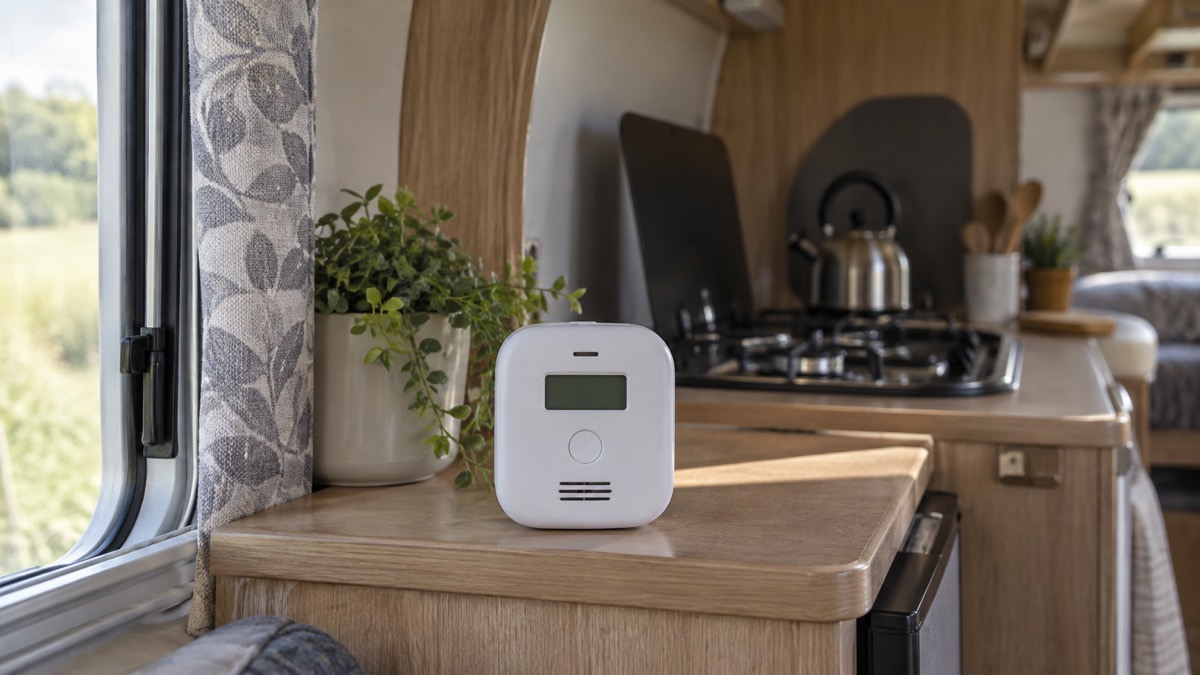
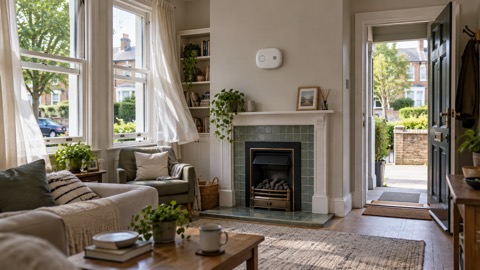
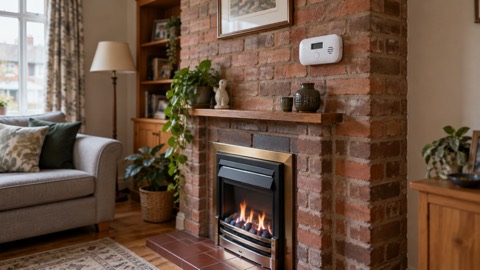
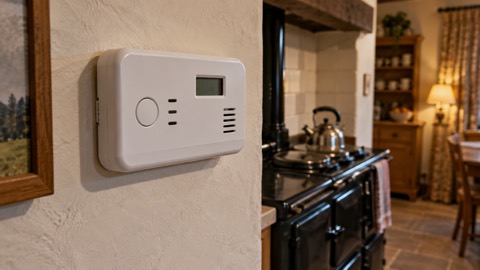
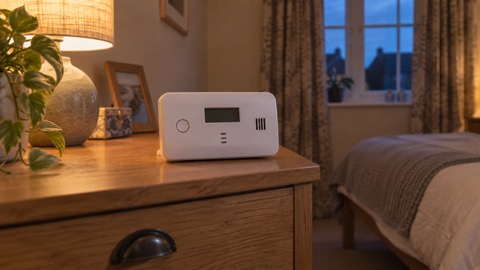
It is built for the ordinary places people live. The datasheet lists it for use in domestic premises including static and mobile homes, caravans, motor caravans and boats3, and the manual says the same5. It can be wall-mounted using the supplied base plate or placed free-standing on a shelf1. If you are wall-mounting, the manual advises fitting it near the ceiling, higher than any door or window and at least 15 cm from the ceiling, using two countersunk screws, which are not included5.
Reading the display and what each signal means
The screen is the part people ask about most, because it shows several things in turn. In normal use the LCD cycles between two standby displays: room temperature and humidity in degrees centigrade, and the current CO level in ppm. Press the test button to switch between them1. During this time the display also shows the peak CO level recorded over the last 4 weeks1.
The signals you are most likely to meet are set out below. The maker's support guidance is the reference for what each one means4.
| Signal | What it means | What to do |
|---|---|---|
| CO reading shows zero | No CO detected under normal conditions1 | Nothing; this is normal |
| Repeated alarm pattern with red LED | CO has been detected1 | Treat as a real CO alarm: see below |
| Red LED flashes twice every 40 seconds, for up to 7 days | CO was present; the 30-day memory has stored the event1 | Check the peak level on screen, then press the test button to clear the memory indicator1 |
| Single chirp | Low battery, though with the sealed 10 year battery this usually means the unit is reaching end of life1 | Check the REPLACE BY date5 |
| Orange flashing screen with 6 warning beeps | Extreme temperature warning5 | See the section on temperature and humidity warnings |
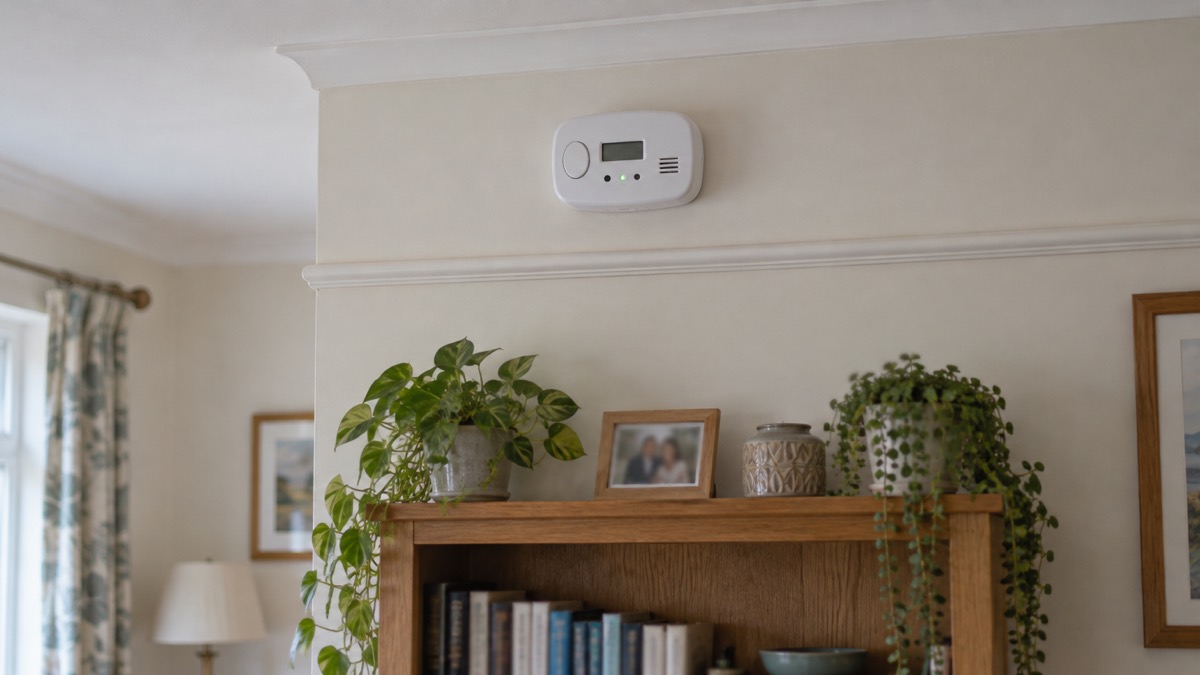
The memory function is worth understanding. The 30-day alarm memory logs previous activations with a flashing red LED for up to 7 days, so you can check whether CO was present while you were out1. The display also shows the peak CO level recorded during the event4. If you come home to a flashing red LED, read the peak level before you clear anything.
If the alarm sounds its CO pattern, do not treat it as a nuisance. The maker's manual says to leave the premises immediately5. Our guide to what to do if your CO alarm sounds or you suspect carbon monoxide sets out the steps in full, and carbon monoxide poisoning symptoms explains what to look for in yourself and others.
Testing once a month: quiet test or full 85dB test
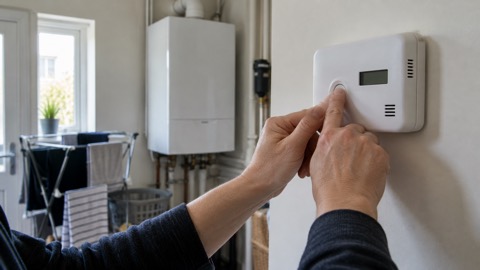
The FA3322 is tested from its button, and the maker asks for a test at least once a month1. There are two ways to do it, and the choice matters if you have a sleeping household or a nervous pet.
- Quiet self-test: press the test button once for a quiet self-test at reduced volume. This lets you check the alarm without the full 85dB volume1.
- Full-volume test: press the test button twice for a full-volume 85dB test1.
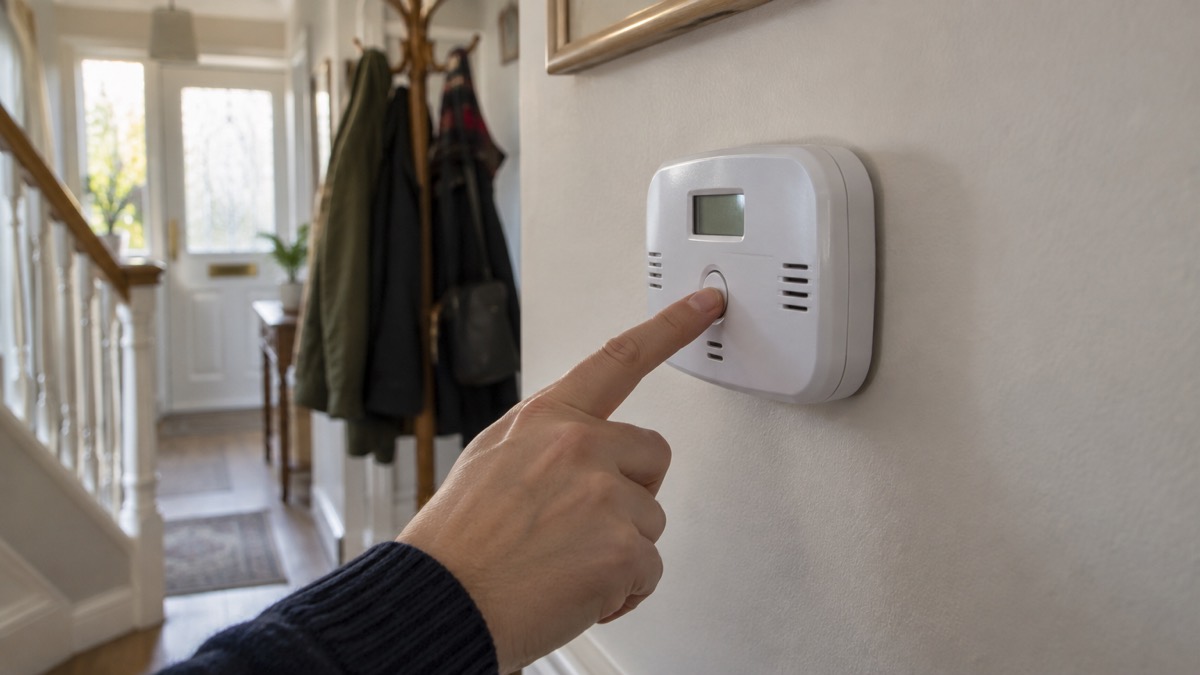
The full test is the one that proves the sounder can do its job. The datasheet gives the alarm sound level as 85dB(A) at 3m minimum3, and the manual gives 85 dB at a distance of 3 m5. That is loud by design: it has to wake people and carry through a closed door. The maker's manual warns that prolonged exposure of your ears to the alarm sounder can affect your hearing5, so do not hold the unit against your ear or run repeated full tests for fun.
The monthly overview is a useful extra. Press the Test button once for a summary of the last month's readings, in order: last temperature, maximum temperature, maximum CO levels, maximum humidity and current CO level. The device emits two sequences of four beeps and also checks its own warning device, sensor, battery and circuit2. That single press gives you both a self-check and a month of history.
If you want the wider picture on how often alarms should be tested and why, our page on how often to test smoke and CO alarms covers the routine for every alarm in the house.
Extreme temperature and humidity warnings
The FA3322 has separate temperature and humidity alarms that warn of prolonged dangerous environmental conditions1. This is the feature that sets it apart from a plain CO alarm, and it is the one most likely to surprise a new owner.
When the unit detects an extreme temperature, the screen flashes orange and the detector sounds a warning signal of 6 beeps5. You can pause the alert for 1 week by pressing the Test button2. Pausing is a temporary measure: it buys you time to deal with the cause, whether that is a heating failure in winter, a room overheating in summer, or a caravan left in extreme cold. Once ambient temperatures are detected again, the device can take up to 3 hours to return to standby mode2.
The environmental limits are set out in the specifications. The FA3322 operates between -10°C and 40°C and at 30 to 90% relative humidity3. The manual gives the same operating temperature range2. The humidity accuracy is ±3%RH typical3. The maker also notes that prolonged exposure to extremely high or low temperatures can reduce the useful life of the battery5, which is worth remembering if the unit lives in an unheated outbuilding or a caravan over winter.
The temperature reading itself is accurate to ±0.5°C typical3, and the manual describes the display as showing the current room temperature within an accuracy of +/- 0.5ºC2. That is good enough to spot a room drifting towards freezing or overheating, which is what the warning is for.
Specifications: sensor, battery, size and certification
The FA3322 is a compact unit with a long service life. The table below gathers the maker's figures.
| Specification | Figure |
|---|---|
| Sensor | Advanced electrochemical, calibrated and tested in CO gas3 |
| Battery | Sealed for life lithium, 10 year life, replace the device after 10 years3 |
| Supply voltage | 3V DC3 |
| Alarm sound level | 85dB(A) at 3m minimum3 |
| Dimensions | 129 mm wide x 76 mm high x 31 mm deep3 |
| Weight | 121g3 |
| Operating temperature | -10°C to 40°C3 |
| Operating humidity | 30 to 90% RH3 |
| Humidity accuracy | ±3%RH typical3 |
| Temperature accuracy | ±0.5°C typical3 |
| Plastic material | Fire retardant ABS3 |
| Warranty | 5 years3 |
On certification, the maker's product page states that the alarm carries BSI Kitemark approval, CE and UKCA marks, and cites BS EN 50291-1:2018 and BS EN 50291-2:20191. A separate maker support article describes the unit as EN 50291-2 certified and IP44 splash resistant, suitable for all domestic settings including caravan holiday homes, caravans, motor caravans and boats4. The two maker documents do not agree on how the certification is described, so check the marking on your own unit if the exact standard matters to you. Our page on alarm standards explains what BS EN 50291 covers.
The datasheet also notes that markings may vary depending on country3. FireAngel is a UK brand established since 1998, with UK based customer support7.
Replacing an old alarm and the CO-9D
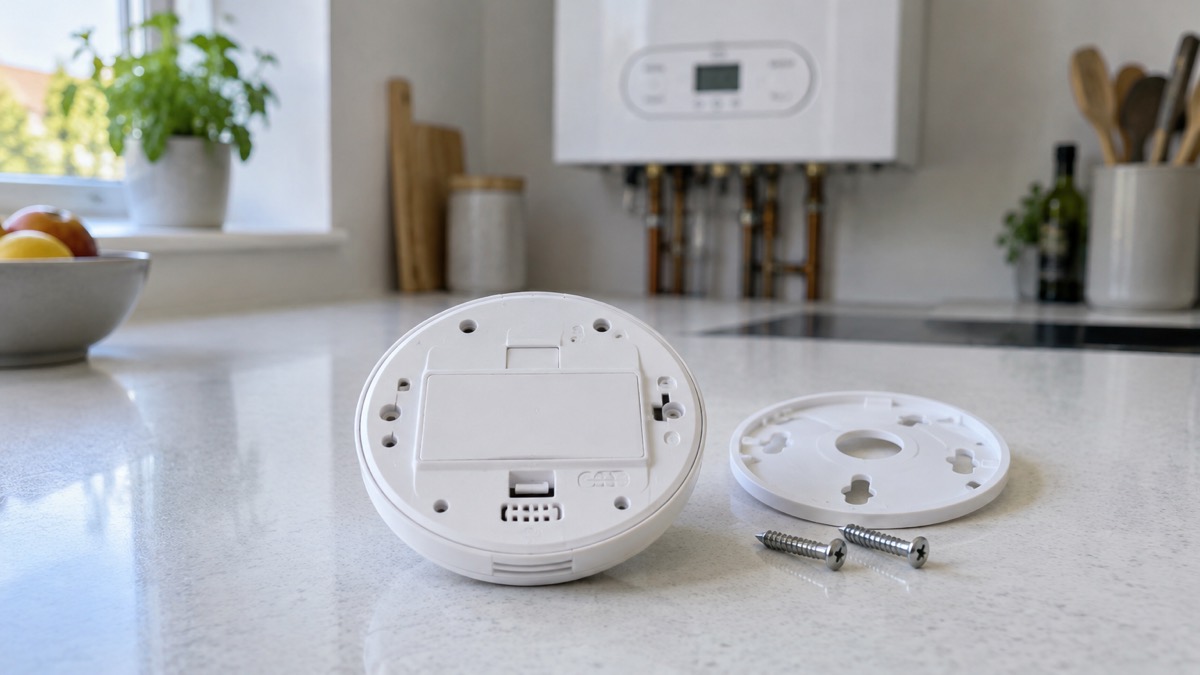
The FA3322 is the maker's replacement for any end-of-life CO-9D alarm1. If you are swapping one out, the routine is the same as for any carbon monoxide alarm: replace it every 10 years, and check the replacement date next to the REPLACE BY marking on the alarm5. The battery is sealed for life and the unit is replaced as a whole after 10 years of operation2.
That sealed battery changes how you read a chirp. A single chirp typically means low battery, but because the FA3322 has a sealed 10 year battery, a chirp usually indicates the unit is reaching end of life and needs replacing1. Check the date before you assume the alarm is simply tired. Our page on when to replace a smoke, heat or CO alarm covers the wider timetable.
If you are choosing between this and a simpler model, our guide to carbon monoxide alarms sets out what they do and how to choose, and where to put a carbon monoxide alarm covers siting. The FA3322 sits in the FireAngel range alongside models such as the FA3313 and the FA3820; the maker's brand page is at FireAngel.
Using it in a caravan, boat or cold room
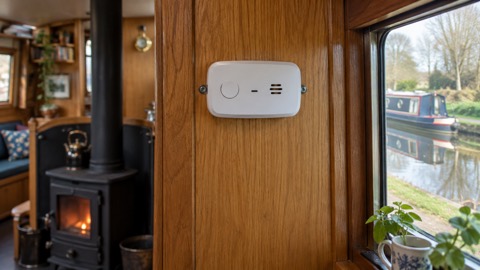
The FA3322 is listed for caravans, motor caravans and boats as well as homes3. That makes it a practical choice for a static caravan or a boat cabin where you want a CO alarm and a temperature reading in one unit. Two limitations matter in those settings.
First, the display. The maker states that LCD performance can be affected by temperatures below 0°C6. The unit is rated to operate down to -10°C3, so the sensor can still work in a cold caravan, but the screen may be sluggish or hard to read. Do not assume a faint display in freezing conditions means the alarm has failed; bring it back to normal room temperature and check it again.
Second, the temperature warning. In a caravan or boat left over winter, the extreme temperature warning may trigger, and you can pause it for 1 week by pressing the Test button2. That is a short reprieve, not a fix. If the unit is in a space that regularly drops below its operating range, the maker's advice that prolonged extreme temperatures can reduce battery life is worth heeding5.
Cleaning, painting and looking after it
The FA3322 needs very little attention, but the maker is specific about what not to do. Do not paint the alarm, and do not use cleaners or solvents5. The manual also says never to open the device and never to burn it5. If you are decorating, take the alarm down or mask around it rather than painting over it, and keep the vents clear of dust and cobwebs.
Beyond that, the routine is the monthly test1, a glance at the display to confirm the CO reading is zero and the temperature and humidity look sensible1, and a check of the REPLACE BY date as the years pass5. If the unit is in a kitchen, keep it away from steam and cooking fumes where you can, and if it is in a room with a fuel-burning appliance, make sure the appliance is serviced and the room is ventilated as the appliance maker intends.
Support, warranty and where to get help
The FA3322 carries a 5 year warranty3. FireAngel's customer support specialists are based in the UK and can help with product advice, installation queries and troubleshooting by phone, email or live chat7. The technical support number given in FireAngel documentation is 0330 094 58308. If your alarm was fitted by Greater Manchester Fire and Rescue Service and is still covered by its guarantee, that service directs you to FireAngel on freephone 0800 141 2561 for support9.
For the wider picture on carbon monoxide in the home, FireAngel's own safety guidance is a starting point7, and the independent CO-Gas Safety charity explains how alarms work and what to look for10. If you need to know whether you are required to have a CO alarm, our page on whether you need a carbon monoxide alarm covers the rules, and Wales and Northern Ireland: alarm rules and fire services sets out where the arrangements differ from England.
If you are building out the rest of your alarm cover, our guides to smoke alarms, heat alarms and interlinked alarms explain how the pieces fit together, and the home emergencies section covers fire, gas leaks and burst pipes.
Sources (10)
- FA3322 Carbon Monoxide Alarm, FireAngel, 2026-10-28
- FA3313, FA3322, FA3328 and FA3820 EU Manual, FireAngel, 2024-09
- FA3322 GEN 5 Data Sheet, FireAngel, 2024-09
- FireAngel Product FAQs, FireAngel, 2026-10-29
- FA3322 EU Manual, FireAngel, 2022-08
- FA3328 EU Manual, FireAngel, 2022-08
- Carbon Monoxide Safety, FireAngel, 2026-07-31
- FS1226-T HT-630 Manual, FireAngel, 2019-05
- Problem with your smoke or heat alarm, Greater Manchester Fire and Rescue Service, 2026-10-29
- About CO Alarms, CO-Gas Safety, 2024-02-18
 FireAngel FA3313 CO Alarm
 FireAngel FA3820 CO Alarm
 FireAngel FA6812 CO Alarm
 FireAngel FA6813 CO Alarm
 FireAngel FA6829S CO Alarm
 FireAngel CW1-PF CO Alarm
 FireAngel W2-CO-10X CO Alarm
 FireAngel FP1820W2-R CO Alarm
 Kidde K7DCO CO Alarm
 Kidde K5DCO CO Alarm
 Kidde K10LLDCO CO Alarm
 Kidde K10LLCO CO Alarm