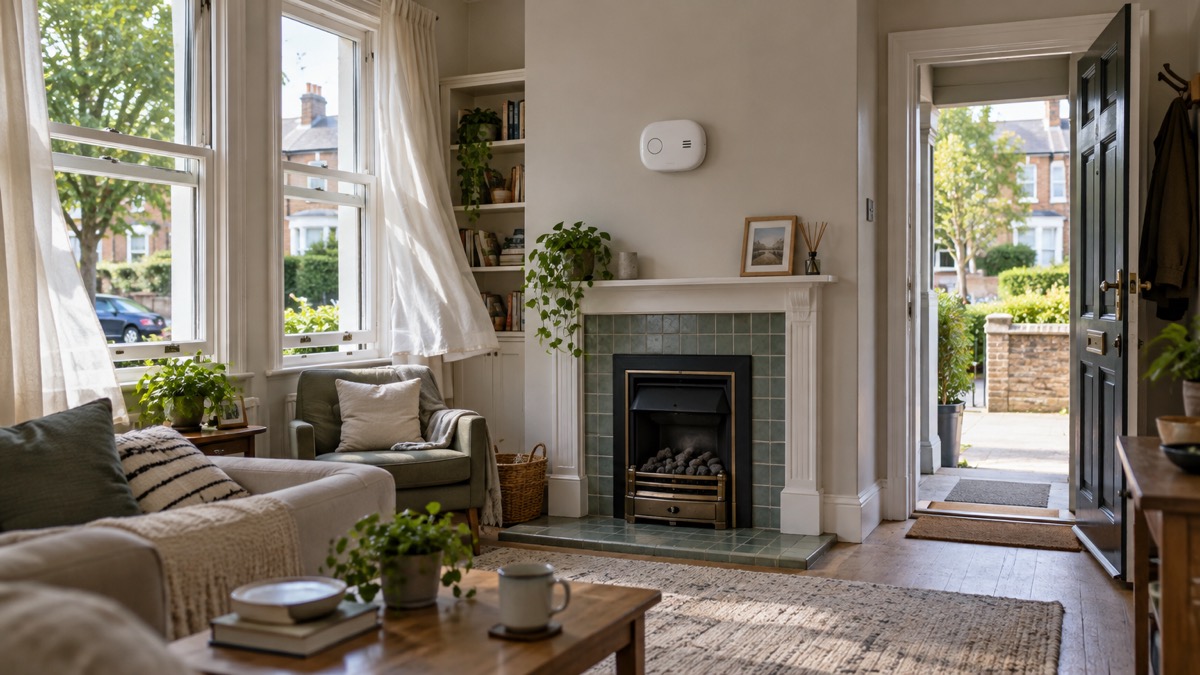
The FireAngel FA6813 is a battery-powered carbon monoxide alarm for the home. It uses an electrochemical sensor to detect carbon monoxide, a gas you cannot see, smell or taste, and it sounds an 85dB alarm at 3m when levels become dangerous1. It runs on two AA alkaline batteries, which the maker says last more than a year under normal conditions, and the sensor is rated for 10 years, after which the whole unit is replaced1.
If you already own one, the important things to know are these. Fit it in the same room as a fuel-burning appliance, at a horizontal distance of between 1m and 3m from the potential source, or on the landing or in a bedroom2. Test it regularly, vacuum it every 3 months, and never paint it or clean it with solvents2. If it sounds, treat it as a warning that potentially lethal levels of carbon monoxide are present and never ignore it2.
If you are thinking of buying one, this page sets out what it detects, what it can and cannot do, how it is powered and how to look after it. It is one of a family of FireAngel alarms, and the maker's own guidance sits alongside official advice from fire and rescue services, the Health and Safety Executive and the NHS on what to do when an alarm sounds.
What the FA6813 is and what it detects
The FA6813 is a standalone carbon monoxide alarm. Its sensor is electrochemical, the technology FireAngel uses across its CO range, and the maker describes it as providing trusted carbon monoxide detection with a clear, loud alarm1. It is designed for domestic premises, and the datasheet lists static and mobile homes, caravans, motor caravans and boats among the places it suits1.
What it detects is carbon monoxide, and only carbon monoxide. The maker's manual is explicit that a carbon monoxide alarm is not a substitute for a smoke alarm or a combustible gas detector2. That matters when you are planning protection for a home: a boiler, gas hob, open fire or wood burner needs a CO alarm nearby, and the same home still needs smoke alarms on each level. Our guide to carbon monoxide alarms explains how CO alarms differ from smoke alarms, and Smoke Alarms: Types and How to Choose One covers the other half of the picture.
One feature worth knowing about is the memory function. The FA6813 records previous alarm activations, and independent testing describes indicators that show whether CO has been detected in the previous 30 days1. If you come home to a quiet alarm but a memory indicator showing an earlier event, that is worth investigating rather than dismissing: it may mean an appliance has produced CO while you were out.
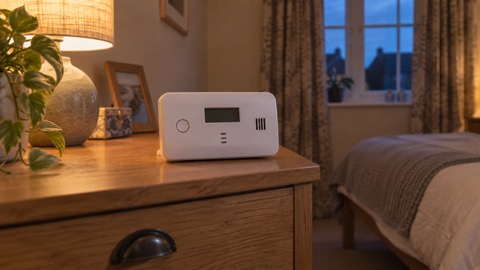
The maker's manual lists the rooms it suits: landing, hallway, bedroom, living room, dining room and kitchen2. It can be wall-mounted or stood free-standing, which helps if you rent and cannot drill, or if you want to move it between a living room and a caravan1.
Specifications: 85dB alarm, electrochemical sensor, 10-year life
The headline figures are straightforward. The alarm sounds at 85dB at 3m, which the datasheet gives as a minimum1. The sensor is electrochemical and rated for 10 years, after which the maker says to replace the unit1. The whole alarm is compact and light: 120mm wide, 73mm high and 35.5mm deep, weighing 146g1.
| Specification | Figure | Source |
|---|---|---|
| Sensor technology | Electrochemical | 1 |
| Alarm sound level | 85dB at 3m (minimum) | 1 |
| Sensor life | 10 years, replace the unit after 10 years | 1 |
| Battery type | 2 x 1.5V DC AA alkaline, replaceable | 1 |
| Battery life | More than 1 year under normal operating conditions | 1 |
| Supply voltage | 3V DC | 1 |
| Operating temperature | -10°C to 40°C | 2 |
| Operating humidity | 25% to 95% RH, non-condensing | 1 |
| Dimensions | 120mm x 73mm x 35.5mm | 1 |
| Weight | 146g | 1 |
| Warranty | 3 years | 1 |
| Standards | EN 50291-1:2018 and EN 50291-2:2019 | 5 |
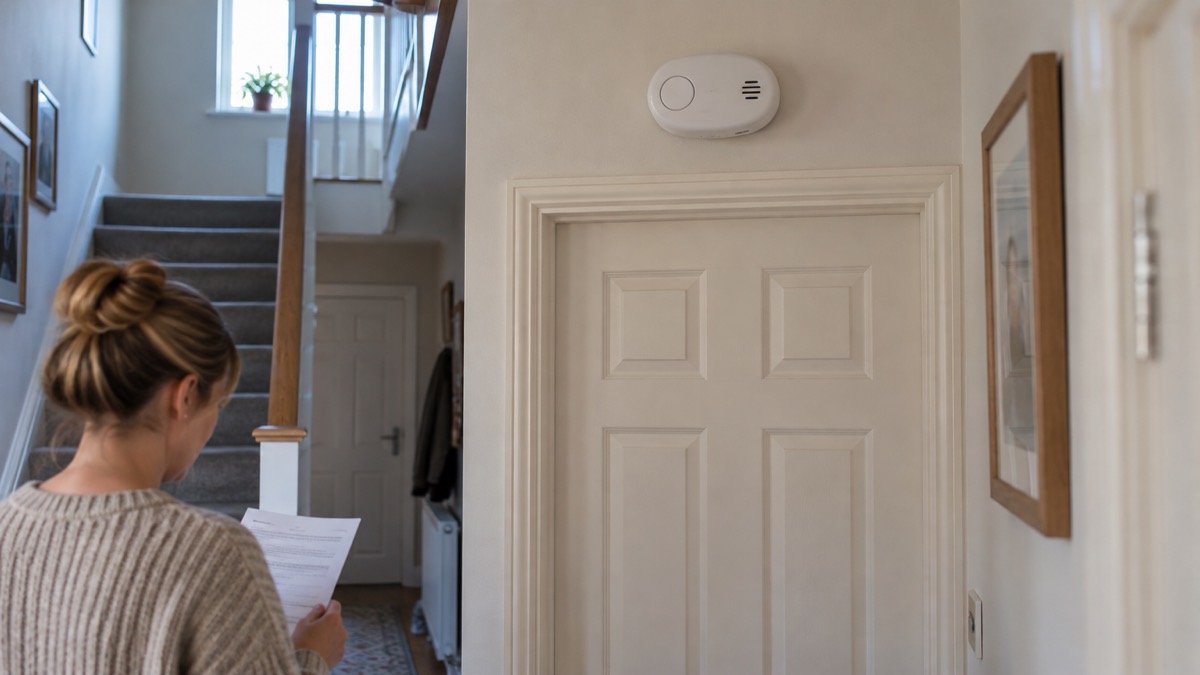
The 10-year sensor life is the figure that decides when you replace it. The maker's manual says to replace the alarm every 10 years and points to the REPLACE BY marking next to the product life on the unit itself2. Our guide to when to replace a smoke, heat or CO alarm covers the wider timetable.
The standards matter too. The maker states that the alarm carries the BSI Kitemark and is independently certified6. The maker's product pages describe a compliant range for England, Wales and Scotland7. For how these standards work and what the parts mean, see Alarm Standards: BS 5839-6, BS EN 50291 and System Grades.
An alarm warns of potentially lethal carbon monoxide: what to do
The maker's manual is blunt about what a sounding alarm means: "A loud alarm is a warning that potentially lethal levels of carbon monoxide are present. NEVER IGNORE THIS ALARM"2. The response is the same whether the alarm is a FireAngel or any other make, and official guidance sets it out in order.
- Open all doors and windows8.
- Stop using and turn off all fuel-burning appliances8.
- Leave the property, leaving doors and windows open8.
- Do not re-enter until the alarm has stopped8.
- Contact your gas or fuel supplier on their emergency number8.
The Gas Safe Register puts it in similar terms: turn off the gas supply, open windows and doors, leave the property and contact your nation's gas emergency helpline9. The maker's own manual adds the same instruction to evacuate the property immediately2.
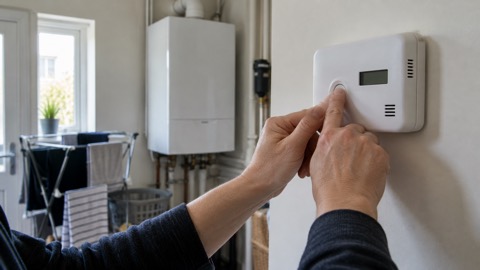
A few practical points help you act quickly. The alarm has a silence mode: pressing the button stops the sounder for 5 minutes, but the maker says it will not silence if more than 150ppm has been detected, and you can silence it a maximum of 10 times2. Silence mode is for investigating a false alarm, not for staying in a room with CO. Depending on the level detected, it can take up to 10 minutes for the sensor to clear and the alarm to stop2, so do not assume a quiet alarm means the danger has passed.
If anyone has symptoms, the NHS advises getting fresh air and seeking medical help10. Our guide to carbon monoxide poisoning symptoms sets out what to look for, and What to Do If Your CO Alarm Sounds or You Suspect Carbon Monoxide walks through the response step by step.
Batteries: AA alkaline, at least one year per set
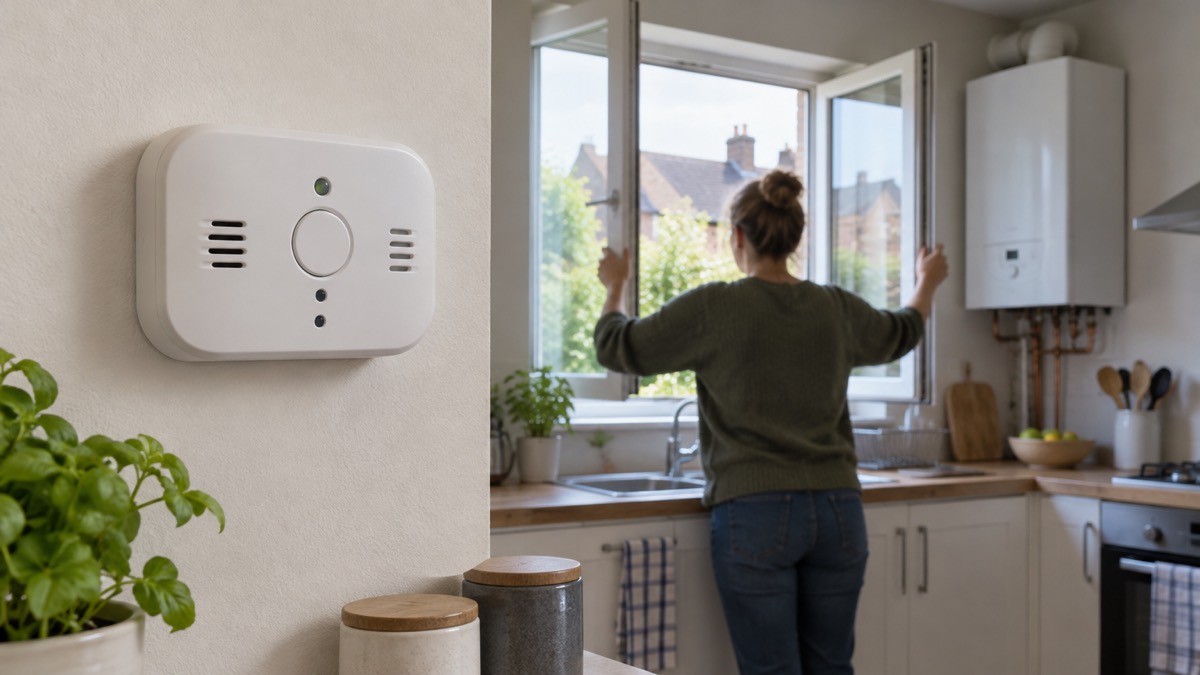
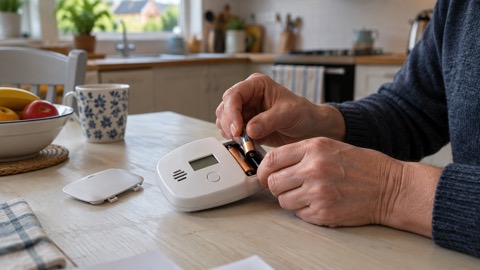
The FA6813 takes two 1.5V AA alkaline batteries, and they are included with the alarm1. The maker's manual names Duracell Plus AA LR6, Energizer Max AA LR6 and Raymax AA LR6 as suitable batteries5. Battery life exceeds one year under normal operating conditions, and the batteries are replaceable1.
There is a discrepancy worth flagging. The datasheet also refers to a "3 year battery service life"1, and the manual carries the same phrase5, while the stated battery life is more than one year1.
Two things shorten battery life. The maker warns that prolonged exposure to extreme high or low temperatures may reduce the life of the batteries2, which is one reason to keep the alarm within its operating range of -10°C to 40°C2. The other is the low battery warning itself: the alarm chirps at night, and the maker says it will silence for 8 hours until the CO level has reduced to below 50ppm5. That is a convenience, not a fix. Replace the batteries promptly rather than relying on the hush.
Maintenance is simple. Vacuum the alarm every 3 months, do not use cleaners or solvents, and do not paint it2. If it starts chirping and you are not sure why, our guide to why your carbon monoxide alarm is beeping separates low battery from other causes.
Where to fit it, and where it will not suit
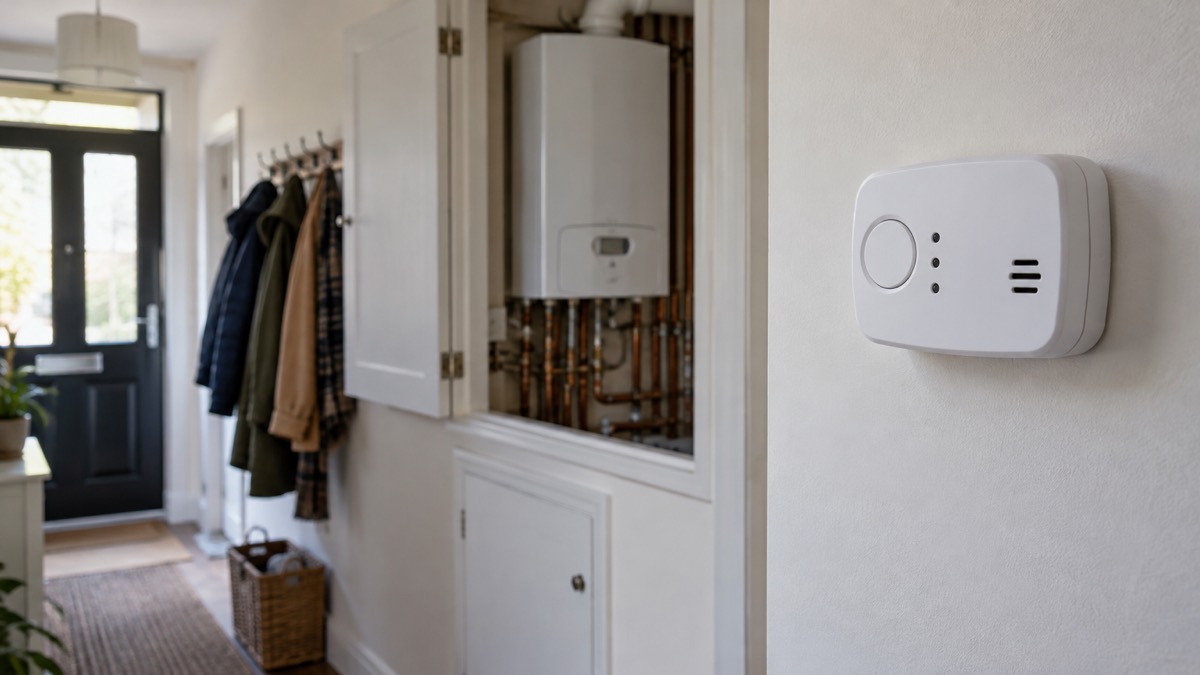
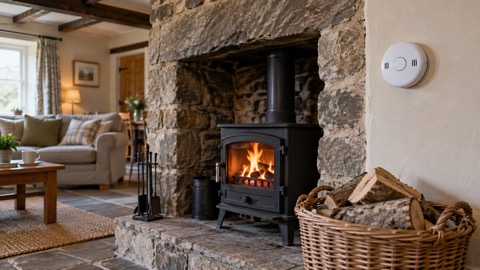
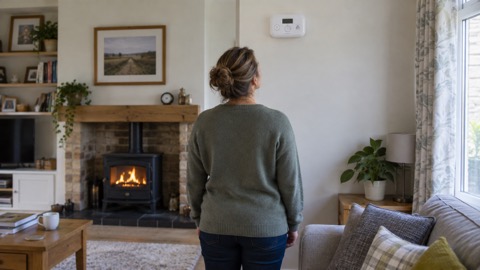
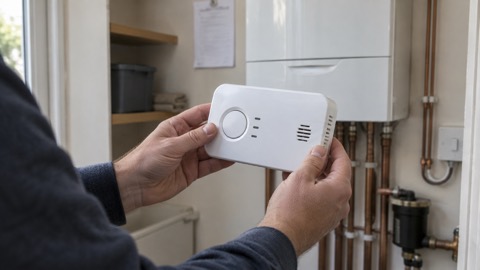
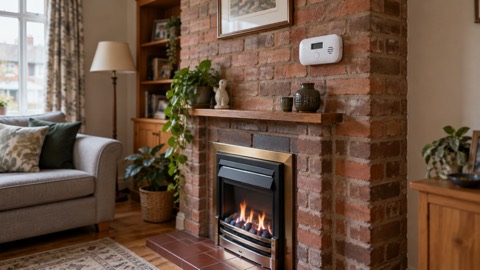
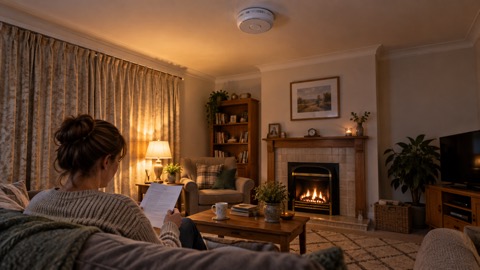
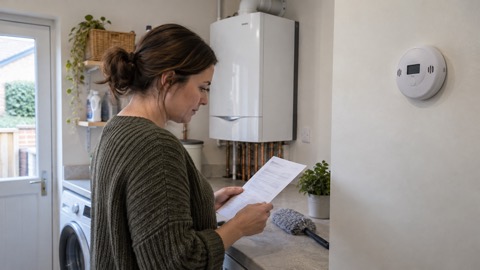
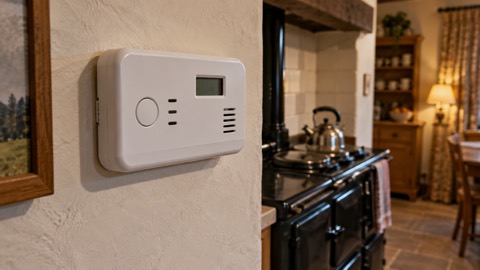
Placement decides whether the alarm works. In the same room as a fuel-burning appliance, the maker says to fit it at a horizontal distance of between 1m and 3m from the potential source, on the same side of any partition as the source, and at the high side of the room if the ceiling slopes2. It suits a landing, hallway, bedroom, living room, dining room and kitchen2.
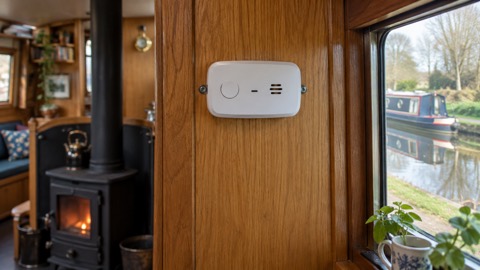
The FA6813 is also listed for caravans, motor caravans and boats1. The Caravan Club says fitment of a carbon monoxide alarm is essential in a caravan, because exposure to this colourless, odourless poisonous gas can be fatal11. If you use one in a caravan, keep it within the operating range and remember that a cold, damp van in winter is harder on batteries.
Where it will not suit is anywhere outside its operating limits. The maker gives -10°C to 40°C and 25% to 95% relative humidity2. A freezing shed, a hot conservatory or a steamy bathroom sits outside that, and the maker warns that extreme temperatures shorten battery life2. The manual also says the alarm must be installed by a competent person able to install it according to the instructions2, which for most households means following the fitting steps carefully or asking someone who can.
Warranty and FireAngel support
The FA6813 carries a 3 year warranty1. FireAngel's customer support specialists are based in the UK and can help with product advice, installation queries and troubleshooting by phone, email or live chat12. The maker's manual also points to online support at www.fireangeltech.com/support2.
FireAngel has been an established UK brand since 1998 and is based in Coventry7. Its wider range includes carbon monoxide alarms, water leak sensors and temperature and humidity sensors7, and the maker describes a compliant range for England, Wales and Scotland7. For alarms fitted by Greater Manchester Fire and Rescue Service and still covered by a guarantee, the fire service gives a freephone support number for FireAngel on 0800 141 256113.
Independent guidance notes that FireAngel alarms can be powered by either a replaceable battery or a sealed for life power pack, and that some models offer a 7 year life guarantee14. The FA6813 is the replaceable battery type with a 3 year warranty1, so do not assume the longer guarantee applies to this model. If you are weighing up battery types, our comparison of sealed 10-year or replaceable battery alarms sets out the trade-offs.
If your alarm is not the FA6813, the FireAngel range includes the FA6812, the FA3313 and the FA3322, and the maker's page is at FireAngel.
Sources (15)
- FA6813 Data Sheet, FireAngel, 2024
- FA6813 Manual, FireAngel, 2024
- Sense CO, FireAngel, 2025
- Unbranded Carbon Monoxide Alarm Review, Which?, 2026
- FA6812 and FA6813 EU Manual, FireAngel, 2025
- FA6813 Carbon Monoxide Alarm, FireAngel, 2026
- Smoke Alarm Guide, FireAngel, 2026
- Smoke Alarms and Carbon Monoxide Detectors, Surrey County Council, 2026
- Carbon Monoxide Alarms, Gas Safe Register, 2026
- Carbon Monoxide Poisoning, NHS, 2025
- Fires, The Caravan Club, 2026
- Carbon Monoxide Safety, FireAngel, 2026
- Problem With Your Smoke or Heat Alarm, Greater Manchester Fire and Rescue Service, 2026
- About CO: Alarms, CO-Gas Safety, 2024
- About CO: Alarms, CO-Gas Safety, 2024
 FireAngel FA3313 CO Alarm
 FireAngel FA3322 CO Alarm
 FireAngel FA3820 CO Alarm
 FireAngel FA6812 CO Alarm
 FireAngel FA6829S CO Alarm
 FireAngel CW1-PF CO Alarm
 FireAngel W2-CO-10X CO Alarm
 FireAngel FP1820W2-R CO Alarm
 Kidde K7DCO CO Alarm
 Kidde K5DCO CO Alarm
 Kidde K10LLDCO CO Alarm
 Kidde K10LLCO CO Alarm