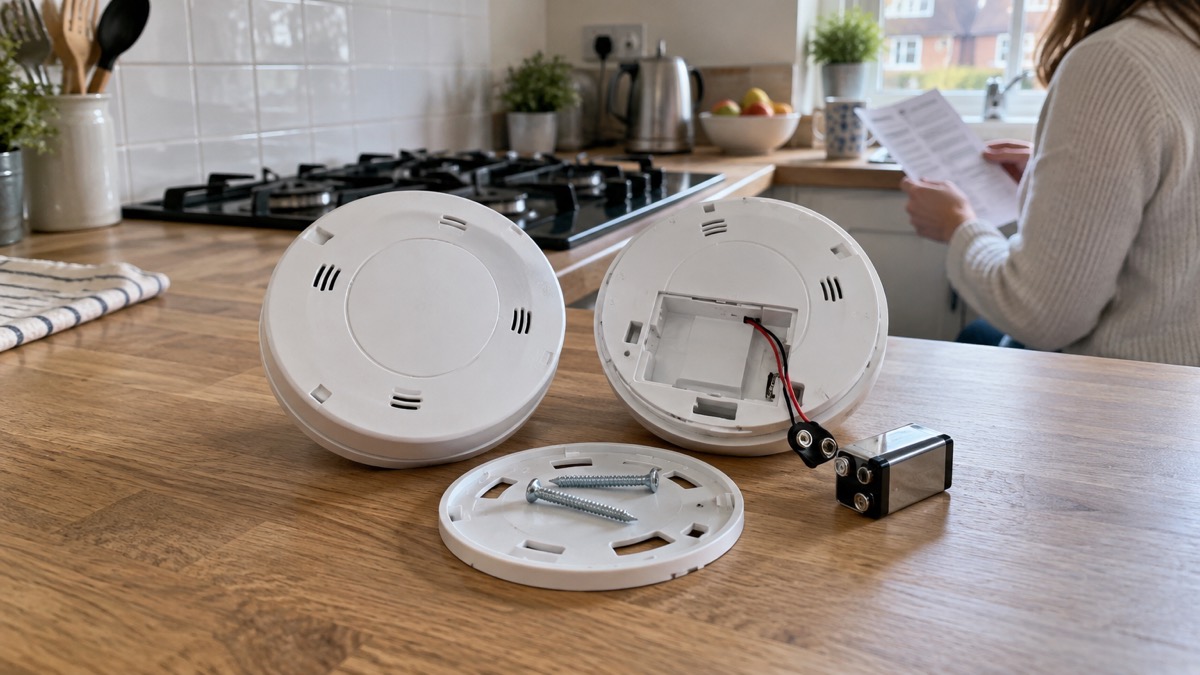
If you are choosing a smoke alarm, fire and rescue services across England are clear that a sealed 10-year battery alarm is the better buy. Lincolnshire Fire and Rescue calls ten-year sealed battery smoke alarms "the best option", noting they cost a little more but save you the cost of replacing batteries1. Staffordshire Fire and Rescue Service says the same and adds one thing to look for: the British Standard Kitemark2. If you already have alarms with replaceable batteries, you do not have to rip them out. They remain acceptable, provided you change the battery every year3.
The difference between the two types is mostly about what they ask of you. A sealed alarm carries a battery that lasts as long as the alarm, so there is nothing to change; when the battery finally dies, the whole unit is replaced4. A replaceable battery alarm is cheaper to buy but needs a fresh battery every year, and the alarm itself still needs replacing at the end of its working life5. Most smoke alarms need replacing after 10 years, so check your warranty and replace your alarm every 10 years6.
This page sets out what each type does, why sealed batteries are preferred, what the rules say for rented homes and for Scotland, and where to get help if an alarm that was fitted for you stops working.
Sealed 10-year alarms: fit it and forget the battery
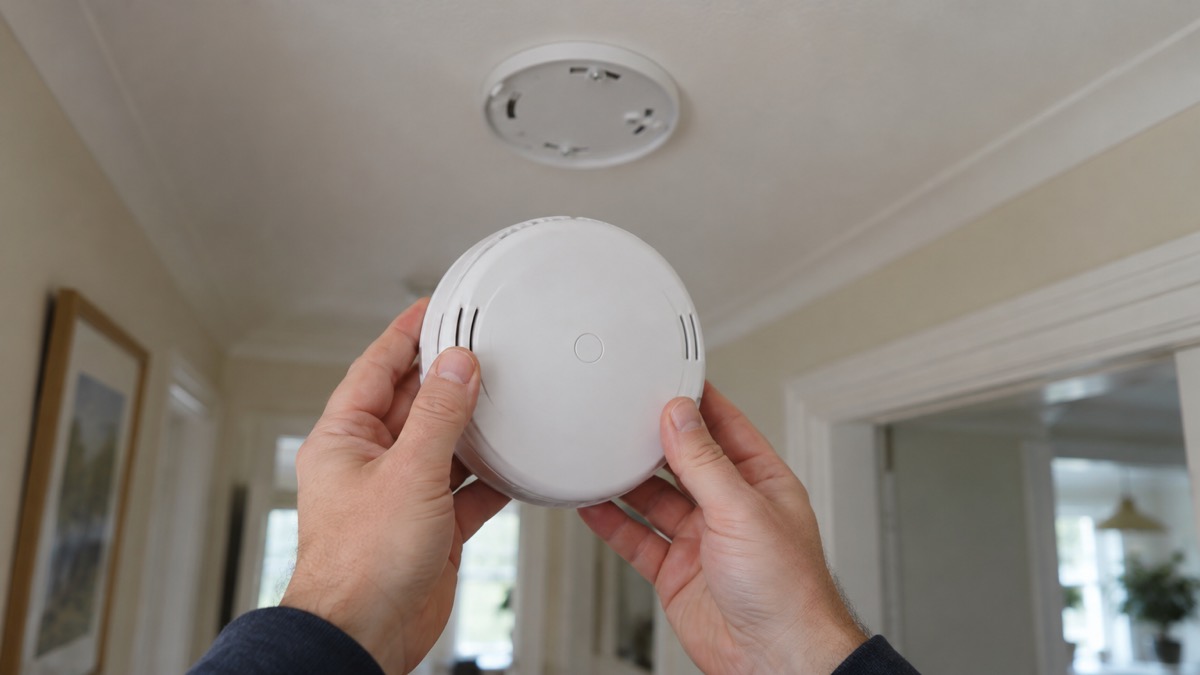
A sealed battery alarm is built around a battery that is not meant to come out. The Scottish Government describes these as having long-life lithium batteries which can last up to 10 years, and notes that you can fit these alarms yourself9. Which? puts it simply: sealed battery alarms have a battery that will last as long as the alarm, so the battery will not need to be replaced10.
That single design decision changes the maintenance routine. Instead of an annual battery change, you test the alarm and listen for its end-of-life signal. When the battery eventually dies, the alarm has reached the end of its useful life and is replaced in its entirety4. Essex County Fire and Rescue Service, which provides alarms to residents, says its smoke alarms have a 10-year battery after which the alarm itself must be changed because the batteries cannot be replaced11.
Sealed alarms are not all identical. Staffordshire Fire and Rescue Service suggests, if possible, fitting an optical multi sensor smoke alarm with a ten-year life span, a sealed battery compartment and a British Standard Kitemark symbol12. The Kitemark is the mark that shows the alarm has been made to a recognised standard, and it is worth looking for on any alarm you buy.
The trade-off is cost and disposal. Sealed alarms cost slightly more up front1, and when the battery goes, the whole unit goes with it rather than just a battery. Against that, you never buy a battery, never forget to change one, and never face an alarm that has been quietly running on a flat cell for months.
Why a sealed battery makes an alarm harder to disable
The main reason fire services prefer sealed batteries is tampering. Manchester Fire and Rescue Service advises that buying an alarm with a sealed battery compartment will help to prevent tampering or removal of the battery13. The National Fire Chiefs Council recommends that the smoke alarm has a sealed battery compartment to prevent tampering or removal of the battery14.
The risk is not hypothetical. Manchester Fire and Rescue Service warns: "Never take the batteries out of your alarm to use in another electrical item. An alarm without batteries cannot warn you if a fire starts."13 A removable battery is a battery that can end up in a TV remote, a toy or a drawer, leaving the alarm silent on the ceiling.
The Scottish Government goes further for the alarms it expects in Scottish homes, stating that sealed, tamper-proof battery units must be used because they are safer than those which allow the user to change the batteries9. It also explains why replaceable batteries are not the answer in that context: the sensors in the alarm degrade over time and so will not be able to detect heat or smoke9. In other words, a fresh battery cannot rescue an old sensor, which is why the whole alarm has a lifespan regardless of the battery inside it.
If you have a sealed alarm, do not try to open it. Westminster City Council's fire safety guidance is blunt: some alarms are fitted with 10 year or long-lasting sealed batteries, and these should not be removed or replaced as doing so will damage the alarms beyond repair15.
Sealed for life batteries in rented homes
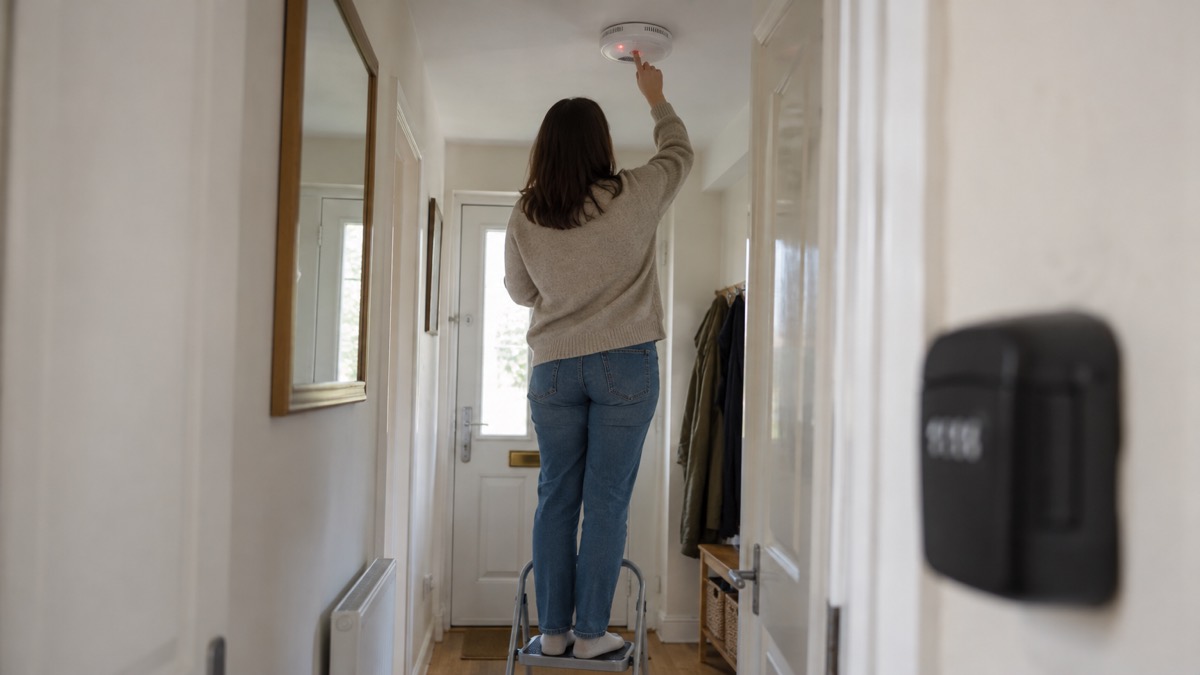
If you rent, the choice of alarm may not be yours, but it is worth knowing what your landlord should be providing. Cherwell District Council's housing standards guidance says that where battery powered alarms are selected, alarms with "sealed for life" batteries rather than alarms with replaceable batteries are the better option7.
That mirrors the advice for owner occupiers, and it matters more in a rental, where the person maintaining the alarm may not be the person living with it. A sealed alarm removes the annual battery change from the tenant's to-do list and reduces the chance of an alarm being disabled because it kept chirping.
Some landlords and housing providers go further and have alarms fitted for residents. Northamptonshire Fire and Rescue Service, for example, can put up FireAngel smoke alarms with a 10 year sealed for life lithium battery during Home Fire Safety Checks where needed16. If you live in social housing or supported accommodation, ask your landlord what is fitted and who is responsible for testing and replacing it.
For the wider picture on alarm types and where they go, see our guides to smoke alarms and battery or mains smoke alarms.
Replaceable battery alarms: what they ask of you
A replaceable battery alarm is the traditional design: a standard unit with a battery you swap out. The batteries need to be replaced every year5. North Yorkshire Fire and Rescue Service puts the annual change plainly: replace the batteries in your smoke alarms every year if it has removable batteries3. Somerset Council gives the same rule with an escape clause: change the battery every year, unless it is a ten-year alarm, or when you need to17.
The annual change is not the only task. When an alarm starts chirping, Manchester Fire and Rescue Service advises checking whether the battery needs replacing, or whether the guarantee on the alarm has expired and you need to replace the whole unit18. That is the moment many people get wrong: a new battery in an alarm that is past its life will silence the chirp without restoring reliable detection.
| What you are choosing | Sealed 10-year alarm | Replaceable battery alarm |
|---|---|---|
| Battery changes | None; battery lasts as long as the alarm10 | Every year3 |
| Up-front cost | Slightly more expensive1 | Lower up-front cost5 |
| Tamper resistance | Sealed compartment helps prevent removal13 | Battery can be removed13 |
| End of life | Whole alarm replaced when battery dies4 | Whole alarm replaced at end of life; battery changed yearly18 |
| Best suited to | Households that want set-and-forget protection1 | Households willing to keep to an annual battery routine5 |
If you keep a replaceable battery alarm, put the annual change in the diary, test weekly, and treat a chirp as a prompt to check both the battery and the alarm's age. Our guide to why your smoke alarm keeps chirping covers the common causes.
Warranties: 7 or 10 years depending on maker and model
The warranty is the maker's promise about how long the alarm should last, and it varies. Most smoke alarms need replacing after 10 years, and Defra's fire safety guidance for vulnerable people advises checking your warranty and replacing your alarm every 10 years6. That ten-year figure is the working assumption for a modern alarm, sealed or not.
Carbon monoxide alarms show the same spread. Kidde says its whole home range is fully certified by BSI to EN50291-Part 1 and guaranteed for 10 years19. FireAngel's CO alarms feature the option of a 7 year life guarantee on some models19. Among Kidde's models, the 10LLCO and 10LLDCO have sealed-in lithium batteries that last the full 10-year life, while the Lifesaver branded 5CO model is guaranteed for 7 years20.
The practical point is to check the box or the manual for the maker's stated life and warranty, and to write the fitting date on the alarm or in your diary. When the warranty period ends, replace the alarm rather than waiting for it to fail. Our guide to when to replace a smoke, heat or CO alarm sets out the signs to look for.
Carbon monoxide alarms and hard-wired alarms
The sealed versus replaceable question applies to carbon monoxide alarms too, with one extra rule in Scotland. The Scottish Government states that if you also need a carbon monoxide alarm and it is battery-operated, it must have a sealed battery for the duration of its lifespan9. Which? advises that if you do not want the hassle of changing batteries, go for an alarm with a sealed battery designed to last the lifetime of the detector10.
Whatever type you have, a carbon monoxide alarm is not a substitute for a smoke alarm. Warwickshire Fire and Rescue Service states that CO alarms are specifically designed to detect carbon monoxide, while smoke alarms are designed to detect smoke and fire, and that they are not a substitute for one another and both types of alarm should be installed in your house21. Test the alarms regularly and replace batteries as needed22.
Hard-wired alarms are a separate case. Many hard-wired smoke alarms also have a back up battery that will need to be replaced when they fail23. Northern Ireland's guidance notes that smoke alarms linked to home mains electrics contain a nine volt back up battery that needs to be changed according to the manufacturer's instructions24. Cheshire Fire and Rescue Service advises that hard-wired alarms should be replaced as per the manufacturer's guidelines and also tested weekly25. The backup battery is what keeps the alarm working in a power cut, so a low-battery warning on a mains alarm should be dealt with promptly.
Where to get help with a fitted alarm
If an alarm was fitted for you by the fire and rescue service and it is not working correctly, contact the service that fitted it. Dorset & Wiltshire Fire and Rescue Service says: "If you have a smoke alarm fitted by us and it's not working correctly, we'll be happy to come and take a look and replace the alarm if necessary."26
If the alarm is still covered by its maker's guarantee, the maker may be able to help. Manchester Fire and Rescue Service lists contact numbers for alarms it has fitted: FireAngel on freephone 0800 141 2561, and FireHawk on freephone 0800 008 6568, or text 07885 831239 if you are unable to call18.
For alarms you bought yourself, the route is the retailer or the maker's support line, using the warranty details in the manual. If you are unsure whether your alarm is working, test it and, if in doubt, replace it. Our guide to testing smoke and CO alarms explains how often and how to do it.
Alarms in Scotland, England, Wales and Northern Ireland
The rules and recommendations differ across the UK, and it is worth knowing which apply where you live.
In Scotland, the interlinked fire alarms standard allows sealed battery operated alarms that you can install yourself, as well as mains wired alarms that required a qualified electrician to install8. The Scottish Government's buying guidance adds that battery-operated carbon monoxide alarms must have a sealed battery for the duration of their lifespan9.
In England, fire and rescue services recommend sealed 10-year battery alarms as the best option, with the British Standard Kitemark where possible2, but replaceable battery alarms remain acceptable if the battery is changed every year3. The National Fire Chiefs Council's position is that a sealed battery compartment helps prevent tampering14.
Wales and Northern Ireland have their own arrangements, including different requirements for rented homes and different fire service guidance. Our guide to Wales and Northern Ireland: alarm rules and fire services sets out what applies there.
| Nation | Sealed battery alarms | Replaceable battery alarms | Key point |
|---|---|---|---|
| Scotland | Allowed; you can fit them yourself8 | Not the preferred route under the interlinked standard9 | CO alarms must have a sealed battery if battery-operated9 |
| England | Recommended as the best option2 | Acceptable with an annual battery change3 | Look for the British Standard Kitemark2 |
| Wales | Check local fire service guidance | Check local fire service guidance | Separate arrangements apply |
| Northern Ireland | Check local guidance | Check local guidance | Check local guidance |
Whichever nation you are in, the same practical routine applies: test weekly, replace the battery every year on alarms with removable batteries, and replace the whole alarm at the end of its life. For the full picture on alarm types, see our guide to smoke alarms: types and how to choose one, and for the wider home fire safety picture, start with home emergencies.
Sources (26)
- Fire alarms and carbon monoxide detectors, Lincolnshire County Council, 2026
- Home fire safety visits, Staffordshire Fire and Rescue Service, 2026
- Smoke and carbon monoxide alarms, North Yorkshire Fire and Rescue Service, 2026
- Smoke alarms, Dorset & Wiltshire Fire and Rescue Service, 2026
- Cost of living leaflet, Greater Manchester Fire and Rescue Service, 2022
- Fire safety in the home, Devon and Somerset Fire and Rescue Service, 2026
- Housing standards, Cherwell District Council, 2026
- Fire alarms standard campaign 2021 evaluation report, Scottish Government, 2022
- Fire and smoke alarms in Scottish homes: where and what to buy, Scottish Government, 2024
- How to install and test carbon monoxide detectors, Which?, 2026
- Fire safety in the home, Essex County Fire and Rescue Service, 2025
- Smoke alarms, Staffordshire Fire and Rescue Service
- Smoke and heat alarms, Greater Manchester Fire and Rescue Service, 2026
- Home detection position statement, National Fire Chiefs Council, 2019
- Fire safety in the home, Westminster City Council, 2017
- Smoke and carbon monoxide alarms, Northamptonshire Fire and Rescue Service, 2026
- Household fire safety, Somerset Council, 2025
- Problem with your smoke or heat alarm, Greater Manchester Fire and Rescue Service, 2026
- Alarms, Co-Gas Safety, 2024
- Alarms, Co-Gas Safety, 2024
- Smoke alarms and CO detectors, Warwickshire County Council, 2026
- Safe home heating, Warwickshire County Council, 2026
- Smoke alarms, Cheshire Fire and Rescue Service, 2026
- Fire safety and prevention, nidirect, 2025
- Safe and well booklet, Cheshire Fire and Rescue Service, 2026
- Problems with smoke alarms, Devon and Somerset Fire and Rescue Service, 2026
 Heat Alarm or Smoke Alarm
 Combined vs Separate Alarms
 Battery or Mains Smoke Alarms
 Wireless or Wired Alarms
 Optical or Ionisation Alarms
 CO2 vs Powder Extinguishers