Growing Your Own Vegetables: Where to Start
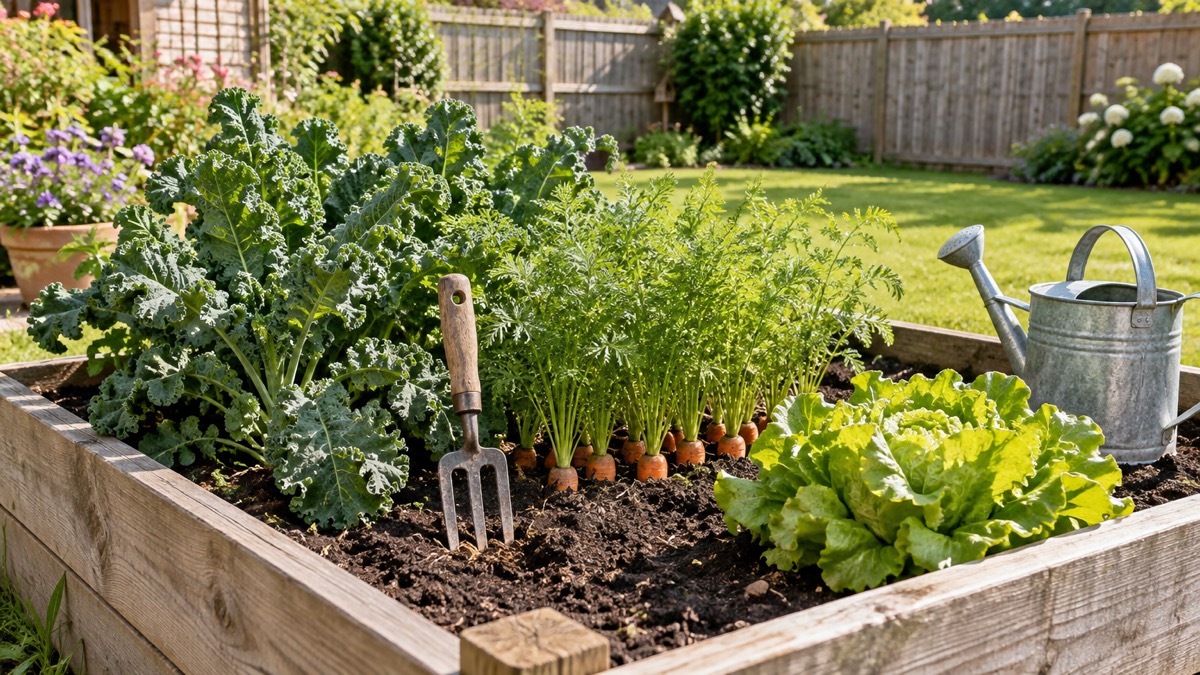
You can grow vegetables in a dedicated plot, among flowerbeds or in a few containers on a patio. Start with crops you like eating and treat up to four different vegetables as a useful beginner limit, adjusting it to your space. Quick salad leaves and radishes give an early result, while potatoes, kale and root crops extend the harvest into later seasons.1
Prepare the ground before planting, use peat-free compost in small containers and sow little and often rather than planting everything at once. Salad leaves sown at weekly intervals through summer can provide fresh leaves for months. For year-round food, combine successive sowings, protection under cover and careful storage: carrots, beetroot, potatoes, onions and garlic can keep for several months when stored correctly.3
What you can grow at home
A productive food garden does not have to be a large rectangular plot. The RHS says vegetables can occupy a separate area, sit within flowerbeds or grow in containers. Choose according to the room you have and the meals your household actually eats. A forest-garden approach applies the same principle to mixed planting: grow what you like, in the quantities you like, and plan across the whole year.1
- Quick leaves and roots: Lettuce, other salad leaves and radishes provide fast harvests; coriander and parsley also get going quickly.4
- Container crops: Potatoes, salad leaves and some fruit can be grown without open ground.3
- Longer-term staples: Carrots, beetroot, potatoes, onions and garlic can be stored after harvest.4
- Layered fruit and vegetables: Apples and pears can form a canopy, gooseberries and redcurrants tolerate partial shade, and leeks, broccoli, potatoes and broad beans can occupy sunny spots.7
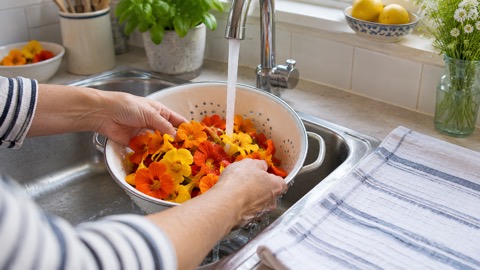
Greenhouse beds can bring outdoor crops such as potatoes and peas forward by several weeks. By July and August, that protected space can be cleared for winter salads and vegetables. If you are considering edible flowers alongside vegetables, check their safety separately rather than assuming every garden flower is food.4
Where to grow: garden, containers or allotment
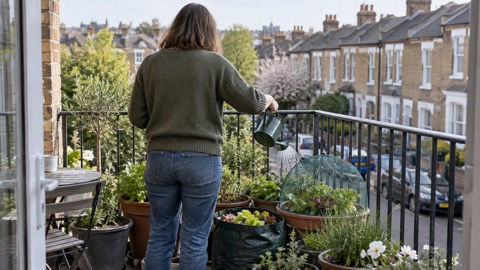
Open ground suits crops that need a permanent or season-long position, but containers make food growing possible on a patio, balcony or windowsill. The RHS lists reused sinks, baths, crates, dustbins and large cooking-oil tins among possible containers, as well as bricks for raised beds. For salad leaves, a yoghurt pot or fruit punnet with holes punched in the bottom works; fill it with peat-free compost.1
| Growing space | What it can support | Key point |
|---|---|---|
| Open soil or flowerbeds | A separate vegetable plot or vegetables mixed into existing beds | Remove weeds and prepare the soil carefully.1 |
| Patio containers | Potatoes, salads and container fruit | Check the crop's planting time and watering needs.3 |
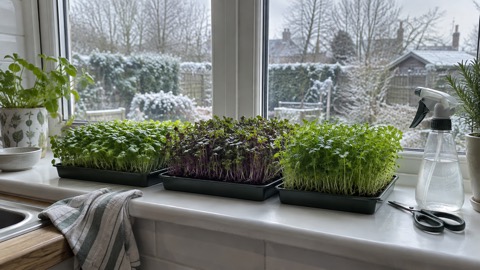
| Indoor windowsill | Salad leaves, cress and microgreens | Use a warm, sunny or bright position and keep compost moist, not soggy.10 |
| Larger shared plot | A wider rotation of seasonal crops | See getting an allotment for tenancy and council arrangements. |
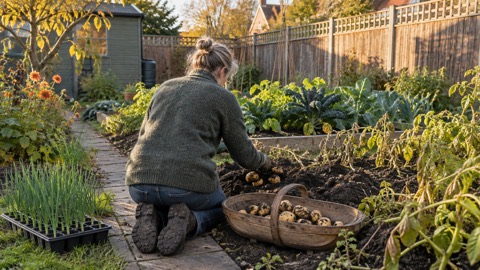
For potatoes, buy seed potatoes from a garden centre or online retailer and check the type and recommended planting time. Earth up the shoots as they grow: this protects early growth from frost and stops new tubers being exposed to light, which can make them green and poisonous.8
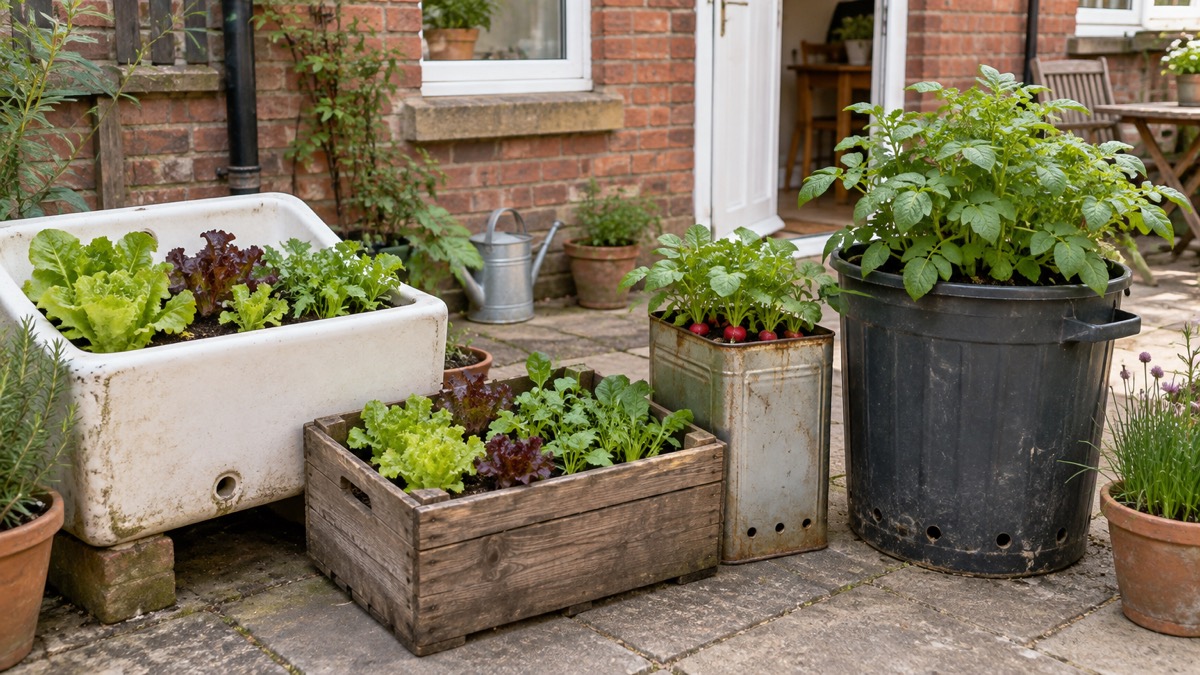
Start with small-space growing if containers are your main option. An allotment offers more ground, but the same rules apply: choose manageable crops, prepare the soil and plan harvests you can use.
Easy crops for your first year
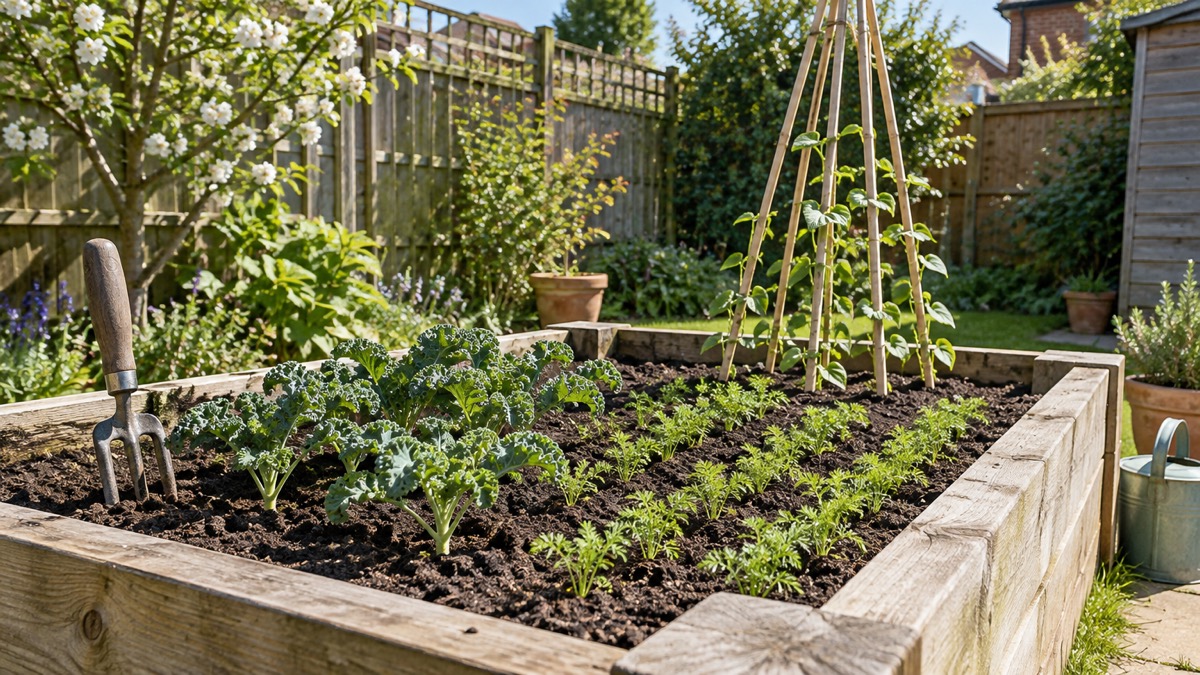
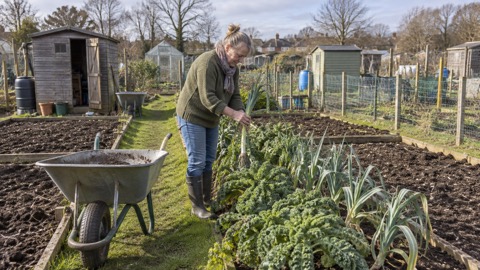
Fast crops help you learn sowing, watering and harvesting without waiting a whole season. Garden Organic identifies chard, cress and spinach as tasty and easy to grow, while its quick-food guidance uses salad leaves and radishes as straightforward starting crops. Kale adds a slower but dependable option: it is hardy, easy to grow and useful well beyond summer.3
| First crop | How to grow and harvest it |
|---|---|
| Salad leaves | Sow in peat-free compost, indoors or outside in season; repeat weekly through summer for a continuing supply.3 |
| Radish | For indoor growing, spread seed roughly to the size you want each radish to become and use a larger pot if the plants need more room.3 |
| Microgreens | Sow familiar vegetable seed densely and harvest very young, once the first true leaves appear.10 |
| Kale | Sow as late as August for leaves through winter and the spring hungry gap.4 |
| Potatoes | Grow in a container, check the seed-potato type and earth up the developing plants.8 |
Microgreens are a method, not a special seed variety. Cress, radish and beetroot seedlings can all be grown this way. Moisten the compost with a watering can fitted with a fine rose before sowing, leaving it damp but not waterlogged, then place the container on a warm, sunny windowsill or in another bright indoor space. Follow the detailed microgreens method when setting up your first tray.10
Preparing the soil and making compost
Good preparation starts by clearing old plant material and weeds. Dig out roots and shoots, shake the soil back onto the bed and compost what you can. Using a fork, push the tines deeply into the ground, then loosen, lift and turn the soil, breaking large lumps with the tines. Carrots do best in medium to light, stone-free soil in a sunny, open site.9
- Clear the bed: Remove old vegetation and the full roots and shoots of weeds.9
- Loosen and turn: Fork the soil deeply and break up large lumps.9
- Add organic matter where needed: Before planting Brussels sprouts, apply a spadeful of well-rotted manure, or two spadefuls of garden compost, per square metre.11
- Finish and protect: In September, prepare planting soil, add compost or soil improver, mulch bare ground or sow green manures.12
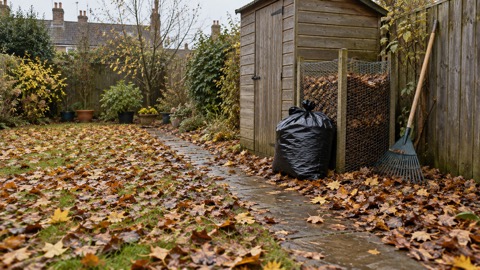
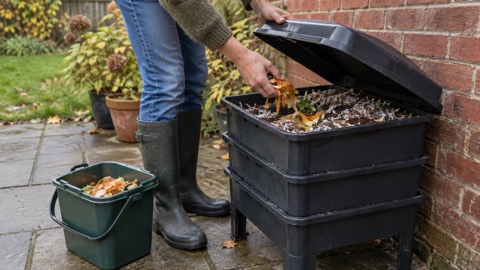
Garden compost is made from rotted plant foliage and stems, fruit and vegetable waste, grass cuttings, cardboard and paper. Cheshire Fire and Rescue Service also lists grass cuttings, leaves and uncooked vegetable waste as materials that composting recycles. Do not use garden compost for seed sowing or rooting cuttings because it contains too many nutrients; its weight also makes it unsuitable for hanging baskets. Mix it with sand, grit, topsoil or leafmould to make potting compost.13
Use the main home composting guide to choose a process, including hot or cold composting, wormery or bokashi and what not to put in a wormery. Separate guidance covers making leafmould and using urine as fertiliser safely.
Sowing through the year
Year-round growing rests on successive sowings, protection that lengthens the season and effective storage. Do not treat spring as the only starting point. January includes garlic and shallots, with onions and celeriac under glass; October and November include broad beans, with hardy peas also sown in October.15
| Month | Plant or sow | Harvest examples |
|---|---|---|
| March | Plant onion sets and early potatoes; sow cabbages, Brussels sprouts, kale, turnips, leeks, onions and parsnips outside | Winter crops, spring cabbage, kale and sprouting broccoli |
| April | Plant potatoes; sow carrots, beetroot, radishes, peas and other listed crops outside; beans, courgettes and sweetcorn under glass | Spring greens, sprouting broccoli, lettuce and spinach |
| July | Make successive sowings of spinach, beetroot, turnips, lettuce, carrots, leeks, broccoli and cabbage | Beans, potatoes, shallots, carrots, beetroot, lettuce and courgettes |
| September | Sow spinach, winter radishes and lettuce successively | Onions, tomatoes, marrows, potatoes, carrots and beans |
All entries in this calendar come from the Centre for Alternative Technology's year-round guide.15
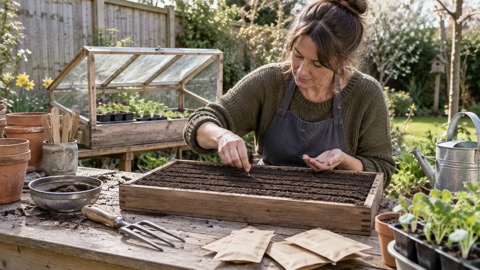
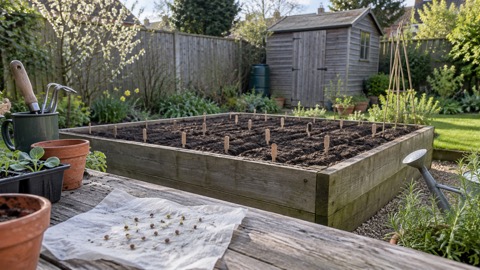
Use monthly sowing and harvesting lists alongside the detailed guide to sowing seeds indoors and outdoors. A seed-sowing equipment checklist and advice on heated or unheated propagators help with indoor starts. Before relying on old packets, consider a seed viability test.
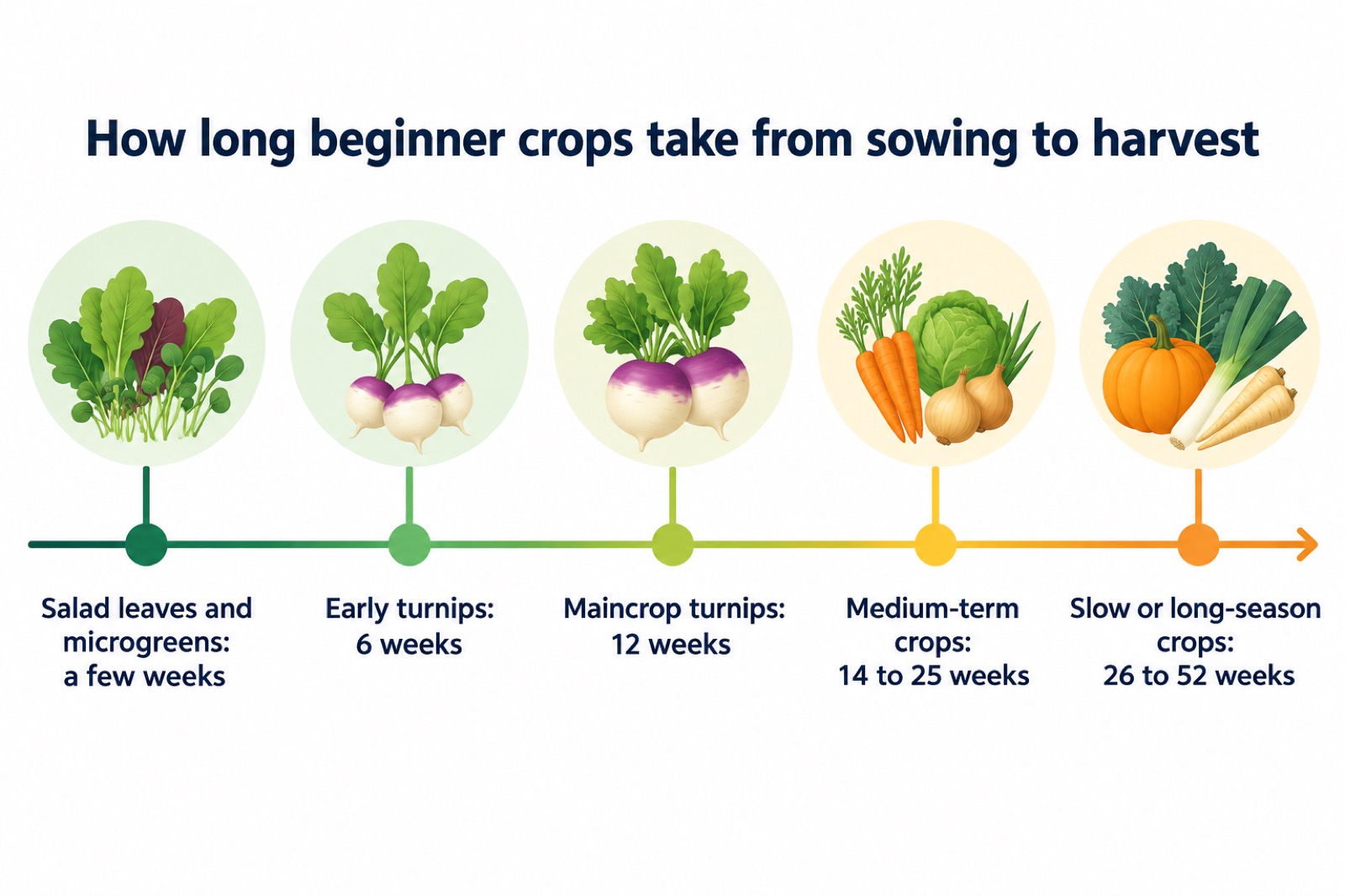
Allow enough time for slower crops: the RHS describes medium-term crops as taking 14 to 25 weeks, or three to six months. Harvesting some vegetables early also spreads supply and can prevent a mid-season glut.5
Growing under cover and indoors
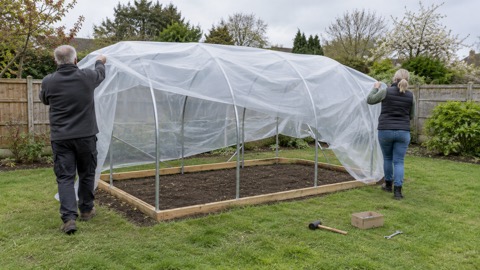
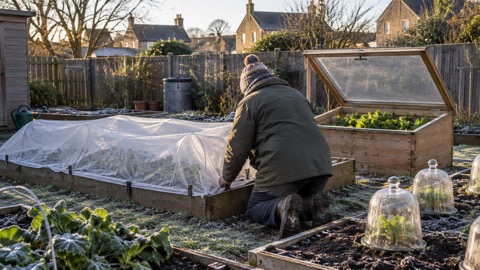
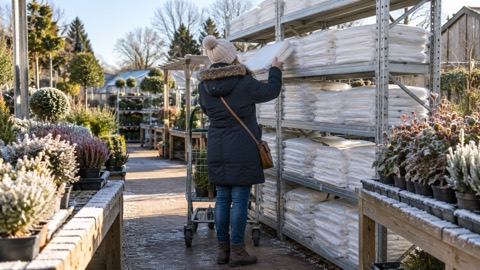
Protection lets you sow earlier, continue later and use winter space more effectively. Potatoes and peas grown in greenhouse beds can be brought forward several weeks, with the space available for winter salads by July and August. Compare polytunnels and greenhouses and the specific choice between a polytunnel or greenhouse before deciding what suits your plot. For less permanent protection, see extending the growing season and how much protection garden fleece gives.4
Indoors, January sowings can include cress, microgreens, mustard, parsley and basil. Keep microgreen compost moist but not soggy while seed germinates, and provide a warm, sunny windowsill or bright indoor position.10
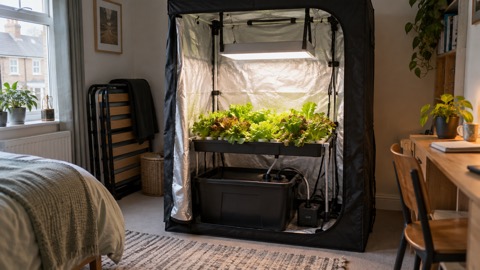
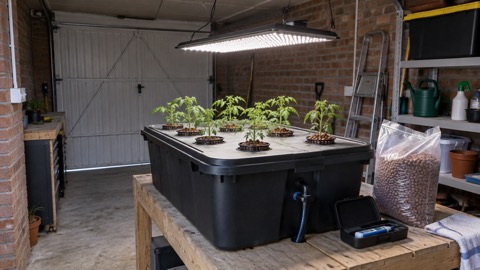
Hydroponics is another under-cover option, using a glasshouse or polytunnel; additional heat and light can extend the season. For the RHS build-your-own system, lift the lid every two days to check root growth and top up water, add more fertiliser every two weeks, and harvest when leaves begin touching neighbouring plants. The main indoor hydroponics guide, its simple system parts list and the AutoPot Tray2Grow system cover the equipment in more detail.17
Watering, weeding and pests
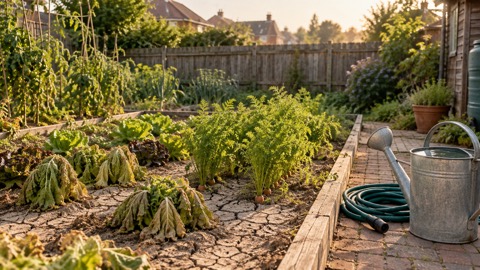
Water according to the plant and its position rather than treating every bed identically. For fruit, the RHS advises watering developing plants during dry weather lasting more than two weeks, especially plants near walls, those on dwarfing rootstocks and trees or bushes planted within the last 12 months. Soak each area thoroughly. Container apple and pear trees need water initially, during dry periods and while fruit is forming.18
- During hot, dry spells: Dorset and Wiltshire Fire and Rescue Service advises maintaining the garden regularly and considering grey wastewater for plants and lawns, helping keep ground damp even if hosepipe limits apply.20
- Near overgrown vegetation: Devon and Somerset Fire and Rescue Service advises having a hosepipe or water easily available and trimming hedges, plants and grass to increase separation from the problem area.21
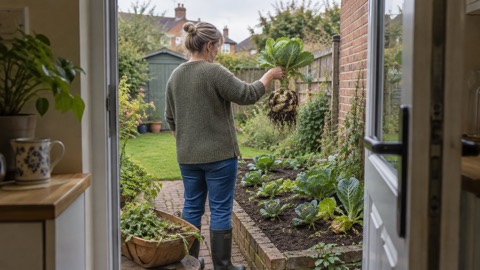
- After flooding: Government food-safety advice says washing and peeling home-grown produce also reduces risk; use the full flooding guidance when floodwater has affected your garden.22
Weeding begins with thorough soil preparation. In a fruit garden, a weed-suppressant membrane can be laid after preparation and plants inserted through it, making weeding and watering easier.9
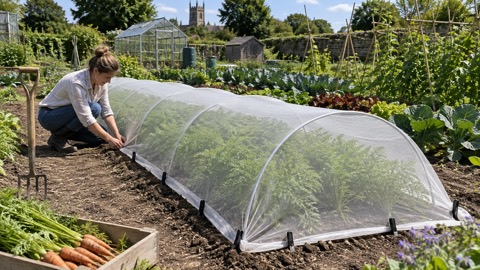
For pests, timing can help. Carrots sown in June for winter use miss the first attack of carrot root fly. Read about carrot-fly protection, wider vegetable pest and disease prevention and what to do about clubroot. In dry conditions, see which vegetables cope best with drought and the household water-harvesting guide.4
Fruit trees, bushes and canes
Fruit rewards planning because trees and bushes occupy their positions for longer than most vegetables. They prefer weed-free, deep, fertile, organic-rich soil. Plant fruit trees and bushes from November to February unless the ground is frozen or waterlogged; November is also a planting month for raspberry canes.12
| Fruit | Position or routine |
|---|---|
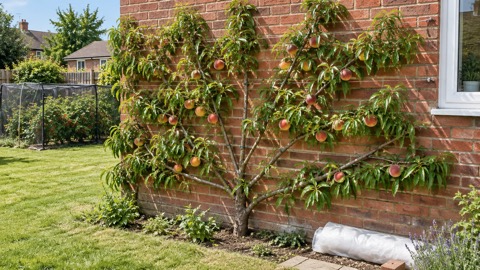
| Apples and pears | Suitable canopy plants in a mixed forest garden; container trees need watering during dry periods and fruit formation.19 |
| Gooseberries and redcurrants | Grow well in partial shade.7 |
| Autumn raspberries | Grow in clumps without training on wires.7 |
| Blackberries, hybrid berries and summer raspberries | In September, cut old canes to ground level after fruiting and tie in new shoots.18 |
| Peaches and citrus | Enjoy sunny summer conditions; container plants can be brought indoors into a light place over winter.19 |
Before planting, check whether a fruit plant needs a pollinator and select for disease resistance, particularly with fruit. Taste unfamiliar varieties before committing space to them. The dedicated guide to growing fruit at home develops these choices for trees, bushes and canes.7
Harvest times and the hungry gap
Early spring has little vegetables or fruit available, and winter challenges many crops. Avoid a summer-only plan by combining late sowings, long-lasting crops and plants that mature at different speeds. Mini-vegetable varieties are ready sooner than full-sized varieties, crop well at close spacing and are particularly useful where northern growing seasons are shorter.4
- Kale: Sow in August for winter leaves and a supply through the spring hungry gap.4
- Asparagus: Give it a permanent position and allow several years before a good harvest; it then fills the gap from late April to early June.4
- Carrots: Sow in June for winter use, also avoiding the first carrot-root-fly attack.4
- Beetroot: A mid-July sowing extends the season.4
Harvesting early can prevent a glut. Garden Organic suggests new potatoes the size of golf balls and slim young broad beans that can be eaten pod and all. Pick green tomatoes before the first frost, then ripen them by hanging the whole vine in a cool, dry place or wrapping individual fruits in paper and storing them in trays.4
Use the guide to avoiding the hungry gap when laying out next year's sowing plan.
Storing, freezing and preserving the harvest
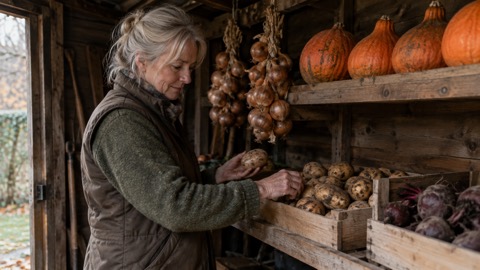
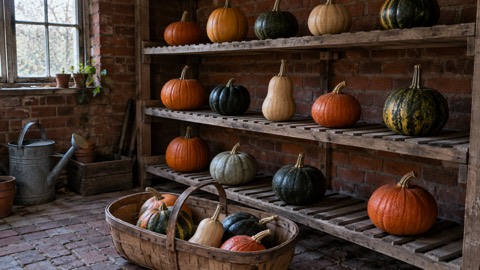
Storage begins with choosing the right crop and handling it carefully. Carrots and beetroot harvested in late autumn can store for several months, as can potatoes, onions and garlic. See storing roots, onions, squashes and apples and the specific guidance on how long pumpkins and squashes keep.4
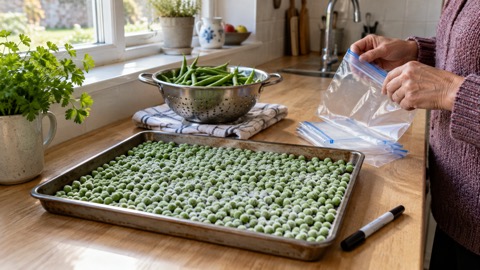
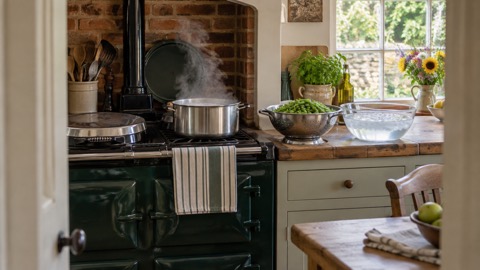
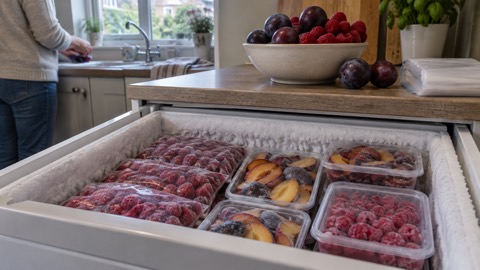
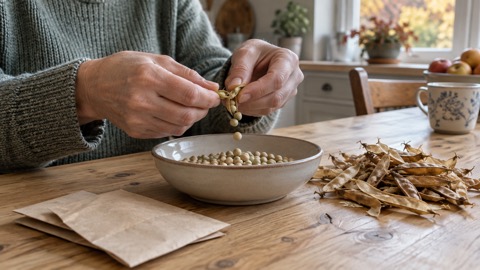
For cauliflower, broccoli, peas, beans and leeks, Garden Organic advises blanching in boiling water before freezing and freezing manageable quantities. Cook tomatoes into sauce first. If French or runner beans outpace your meals, freeze them or leave pods to set seed; once dry, shell the beans and store them in a paper bag. The Food Standards Agency explains that proper chilling, freezing and defrosting help stop harmful bacteria growing.6
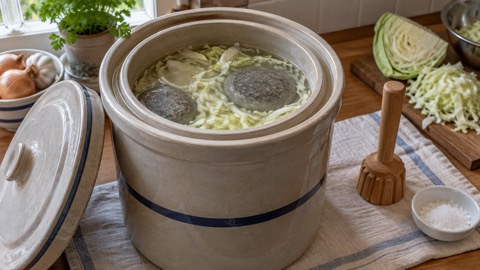
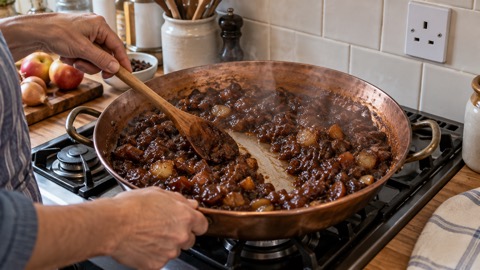
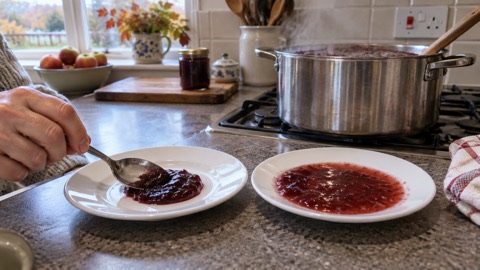
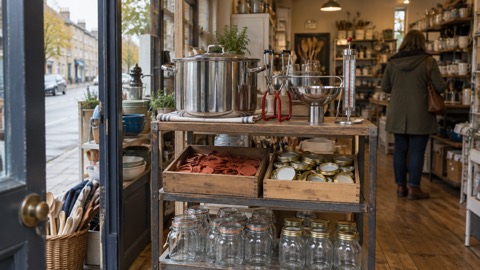
Use the guides to freezing home-grown produce, why vegetables are blanched and freezing fruit without sugar. Other routes include home fermenting, the Kilner fermentation set, a preserving equipment checklist and choosing between a pressure canner or water bath. For particular preserves, follow chutney readiness, pectins for no-sugar jam and whether sweeteners can replace sugar.
Use cooked carrots in soups, stews and curries, and refrigerate them in an airtight container for up to 2 days.25
Saving seed for next year
Saving seed lets varieties adapt to your particular conditions and allows you to note useful characteristics such as pest or disease resistance. Garden Organic points out that amateurs saved seed for thousands of years before large seed companies and modern agriculture. Start with a clear vegetable seed-saving method.26
- Choose suitable parents: Self-pollinating vegetables will most likely produce seed matching the parent plant.27
- Let leafy plants flower: Lettuce, spinach and Swiss chard form flowers on long stalks; collect, dry, sort and save the resulting seed.27
- Allow biennial crops time: Where space permits, leave a leek, onion, carrot or parsnip plant over winter; it flowers the following year, when seed can be saved.27
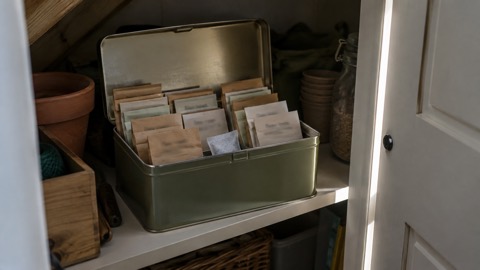
- Keep and check the seed: Follow guidance on keeping varieties pure, storing saved seed and testing whether old seed will grow.
Saving some pods from French or runner beans is also an option when the harvest exceeds what you can eat. Let the pods dry, shell out the beans and keep them in a paper bag.6
Sources (28)
- Growing vegetables in schools, Royal Horticultural Society, 2026
- What shall we grow?, Royal Horticultural Society, 2026
- Quick-growing food, Garden Organic, 2026-10-29
- Vegetables all year round, Garden Organic, 2026-10-29
- Vegetable crop planner, Royal Horticultural Society, 2026
- Harvesting and storing vegetables, Garden Organic, 2026-10-29
- Forest gardening, Centre for Alternative Technology, 2025-06-27
- How to grow potatoes in containers, Royal Horticultural Society, 2026
- Get the soil ready for planting, Royal Horticultural Society, 2026
- Growing microgreens, Royal Horticultural Society, 2026
- How to grow vegetables and herbs, Garden Organic, 2026-10-29
- Month-by-month food growing: autumn term, Royal Horticultural Society, 2026
- Garden compost or potting compost, Garden Organic, 2026-10-29
- Bonfires, burning waste and composting, Cheshire Fire and Rescue Service, 2026-10-14
- Growing year-round, Centre for Alternative Technology, 2025-07-02
- Month-by-month food growing: spring term, Royal Horticultural Society, 2026
- Growing crops with hydroponics, Royal Horticultural Society, 2026
- Fruit gardening calendar, Royal Horticultural Society, 2026
- Growing fruit in containers, Royal Horticultural Society, 2026
- Protecting your garden during hot, dry weather, Dorset and Wiltshire Fire and Rescue Service, 2019-01-23
- Reducing wildfire risk during hot and dry weather, Devon and Somerset Fire and Rescue Service, 2026
- Food safety after a flood, GOV.UK, 2018-01-09
- Planning a fruit garden, Royal Horticultural Society, 2026
- How to chill, freeze and defrost food safely, GOV.UK, 2017-12-18
- Using and storing carrots, Love Food Hate Waste, 2026-11-04
- Why save seed, Garden Organic, 2026-10-29
- Tips on saving your own seeds, Royal Horticultural Society, 2026
- How to grow turnip, Garden Organic, 2026
 Getting an Allotment
 Composting at Home
 Vegetable Pests and Diseases
 Fermenting Vegetables at Home
 Freezing Home-Grown Produce
 Growing Fruit at Home
 Indoor Hydroponics
 Growing Under Cover All Year
 Sowing Seeds
 Storing the Harvest
 Blanching Vegetables
 Carrot Fly Protection
 Knowing When Chutney Is Ready
 Clubroot in Your Soil
 Drought-Resistant Vegetables
 Edible Flowers Safety
 Extending the Growing Season
 Freezing Fruit Without Sugar
 Garden Fleece Frost Protection
 Avoiding the Hungry Gap
 Keeping Varieties Pure for Seed
 Making Leafmould
 Growing Microgreens Indoors
 Pectins for No-Sugar Jam
 Saving Vegetable Seed
 Storing Saved Seed
 Testing Old Seed Viability
 Growing Food in a Small Space
 Storing Pumpkins and Squashes
 Sweeteners in Jam and Pickles
 Urine as Garden Fertiliser
 What Not to Put in a Wormery
 Hydroponic System Parts List
 Year-Round Sowing Calendar
 Preserving Equipment Checklist
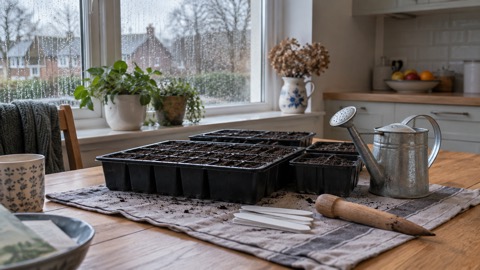 Seed Sowing Equipment Checklist
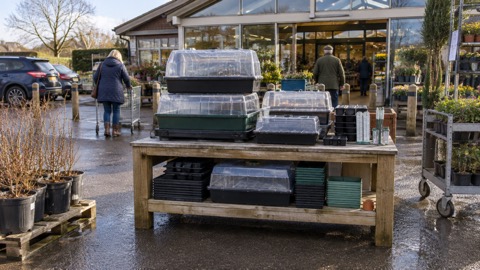 Heated vs Unheated Propagator
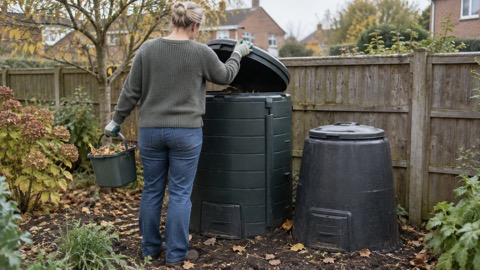 Hot Composter vs Cold Bin
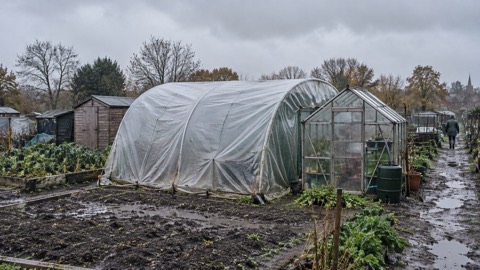 Polytunnel vs Greenhouse
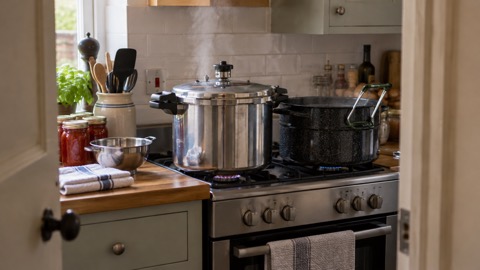 Pressure Canner vs Water Bath
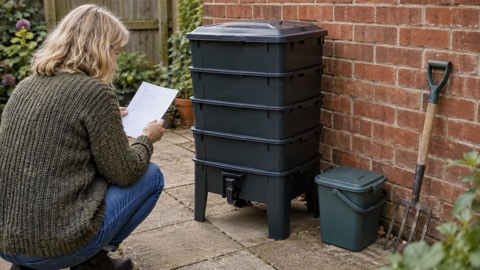 Wormery vs Bokashi Bin
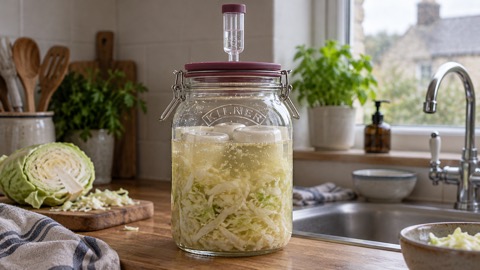 Kilner Fermentation Set