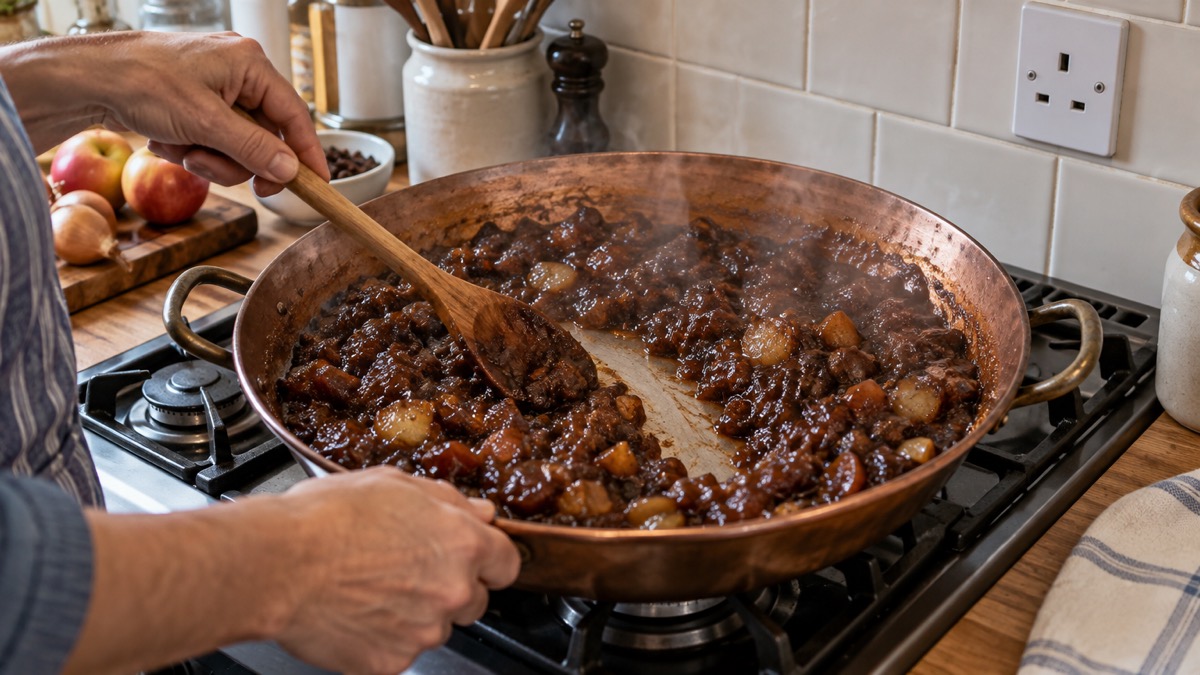
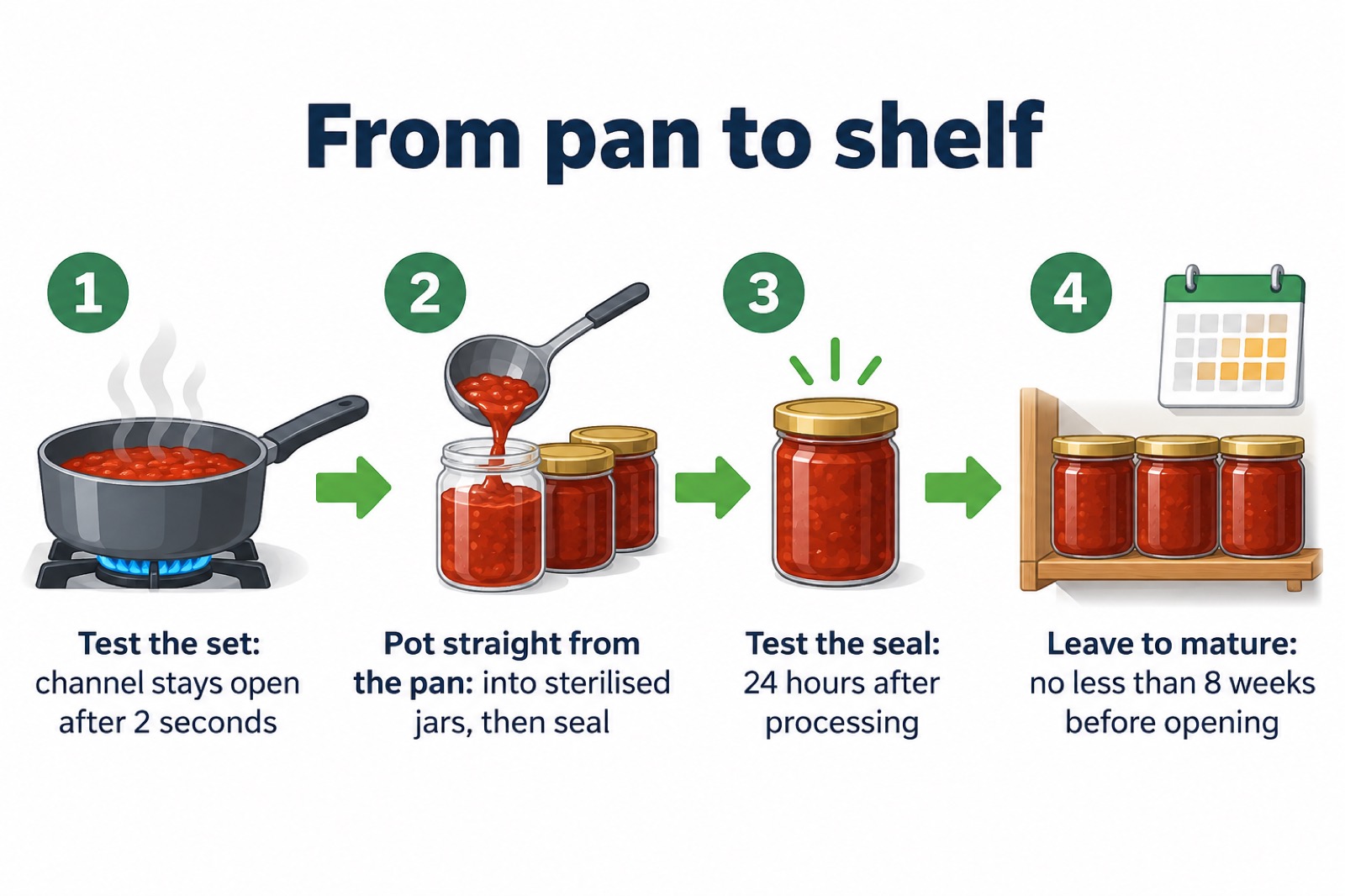
Chutney is ready to bottle when a channel drawn through it with a wooden spoon across the bottom of the pan stays open. The maker's test is simple: drag a clean wooden spoon through the mixture to make a channel deep enough to expose the base of the pan. If the channel fills with liquid straight away, it has not set. If it remains visible, it has reached setting point and can be bottled immediately1. A second version of the same test says the channel should still be visible after 2 seconds2.
Getting to that point takes time. Chutney is a sharp, sweet, rich and highly spiced preserve made from a mix of fruit and vegetables cooked for a long time3. The maker advises allowing at least 2 hours, because chutneys are better when they are not rushed, and says it is essential that they get a long and slow cooking period in a pan that is not covered with a lid2. So the answer to "is it ready?" is usually "not yet": keep it uncovered, keep it moving, and test again.
Once it has set, pot it straight from the pan into sterilised jars and seal4. Then leave it alone: chutney needs at least 8 weeks before opening2, and the maker recommends up to 10 weeks for the flavours to fully develop3. This page covers the test, the bottling and the jars that suit it.
The wooden spoon test: a channel that stays open means it is ready
The channel test is the one to learn first, because it needs nothing but a spoon and the pan you are already using. Take a clean wooden spoon and drag it through the chutney inside the pan to form a channel. The channel needs to be deep enough to expose the base of the pan. If it fills up with liquid straight away, the chutney has not set. If it remains visible, it has reached setting point and can be bottled immediately1. The maker's chutney checklist puts a number on it: if the channel is still visible after 2 seconds, the right consistency has been reached2.
What you are looking for is thickness, not stiffness. Chutney is meant to be a chunky preserve, and the maker's own recipes describe the target as a "nice chunky chutney texture" rather than a smooth set6. A chutney that holds a channel but still has visible pieces of fruit and vegetable is where you want to be. If the mixture looks glossy and thickened, that is the same signal the maker describes for jams, jellies and marmalades, where you continue cooking on a rolling boil until it thickens and gets a glossy sheen, then test the set1.
Two things go wrong at this stage. The first is testing too early, before the mixture has had time to reduce. The second is testing a mixture that is catching on the base, which gives a false reading and a burnt taste. The maker's Christmas Chutney recipe warns to take care towards the end of the cooking time to continue stirring so that the chutney doesn't catch on the bottom of the pan6. Stir right into the corners, and if you smell scorching, take the pan off the heat before you test.
How to run the spoon test across the bottom of the pan
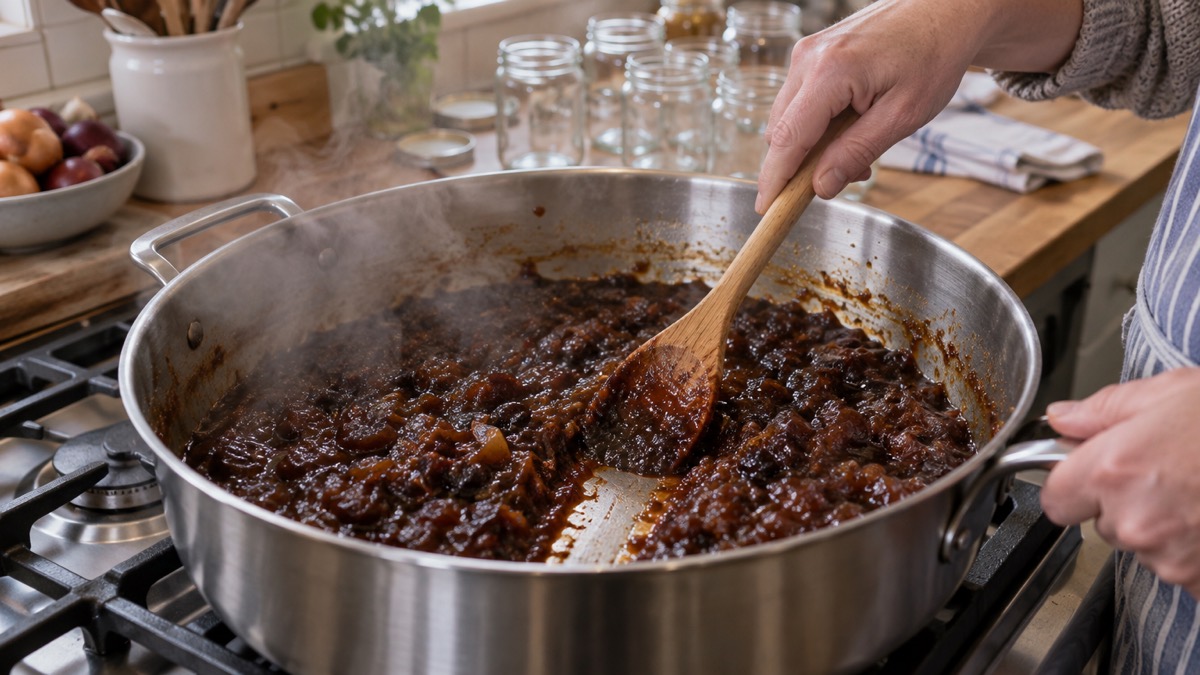
Run the test in the same order every time so that your readings mean something. First, take the pan off the heat. The maker's flake test, written for jams, jellies and marmalades, is explicit about this: remove the pan from the heat using hand protection and place it on a heatproof surface1. The same caution applies to chutney, which is hotter and heavier than jam and can spit. Then draw the spoon slowly across the base, from one side to the other, in one movement. A slow drag gives a clean channel; a quick stir just mixes the liquid back in.
If the channel closes, the preserve has not reached setting point: return it to the heat and boil for a further 1 to 2 minutes, then repeat the test1. Do that in short bursts rather than long stretches, because chutney can go from ready to caught very quickly at the end. The maker's own chutney recipes show how the last stage is timed: the Christmas Chutney is cooked for 30 minutes after the sugar goes in, or until the mixture achieves a nice chunky chutney texture6.
There are two other set tests in the maker's guidance, both written for jams, jellies and marmalades, and both useful as a cross-check if the channel is ambiguous:
- The wrinkle test. Remove the pan from the heat using hand protection, place it on a heatproof surface, and transfer some of the boiling preserve to a cold saucer or plate chilled in the fridge. Allow it to cool, then push it with your forefinger. If it wrinkles, setting point has been reached1.
- The flake test. Stir a clean wooden spoon in the preserve until the head is completely coated, cool it slightly, then hold the spoon vertically over the pan. If the preserve slides down the head and hangs off the end but will not drop back unless shaken firmly, setting point has been reached1.
Bottling into glass jars once the chutney has set
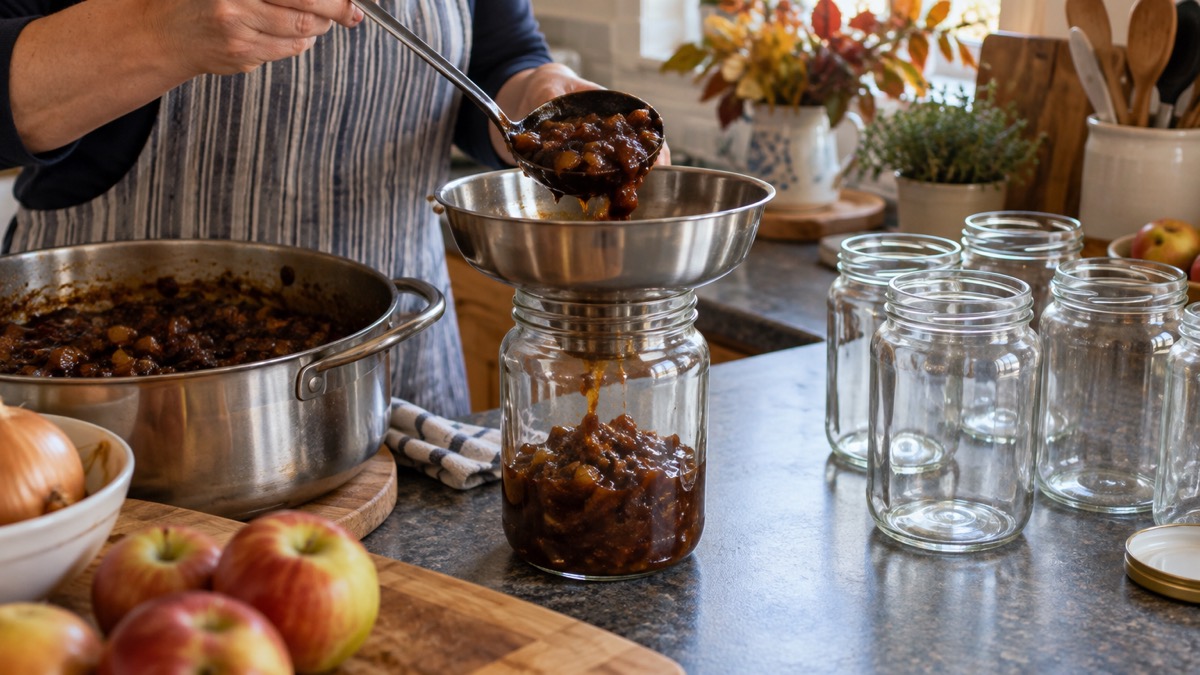
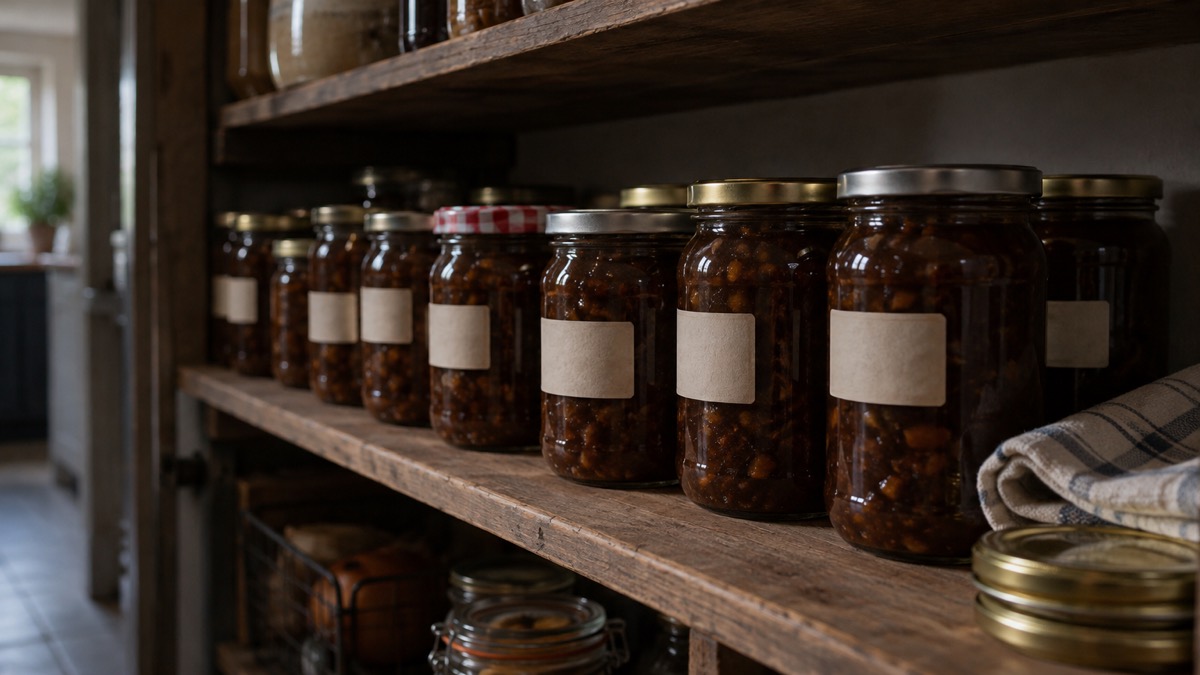
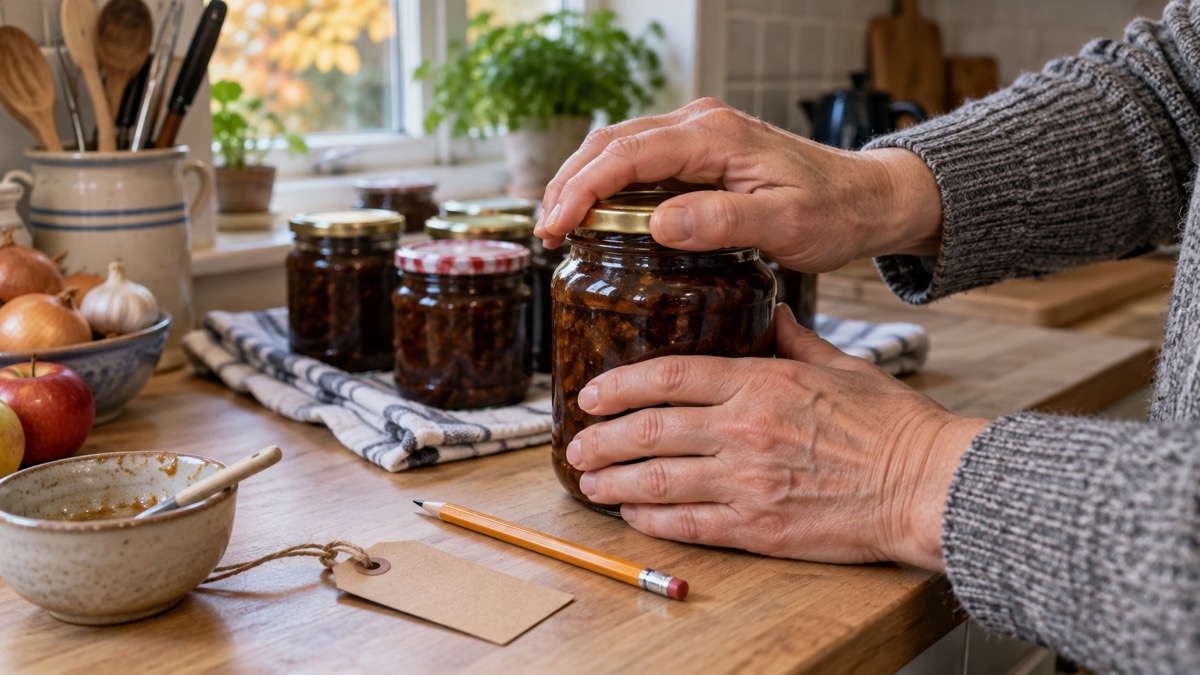
Pot the chutney while it is still hot. The maker's Apple and Cranberry Chutney recipe says to put the chutney into sterilised jars straight from the pan and seal4. The jelly checklist gives the same instruction in stronger terms: once your jelly is made, transfer it to the jars and seal as quickly as possible, do not leave it standing7. Leaving a pan of chutney to cool before potting gives you a thicker mixture that is harder to get into jars and gives a poorer seal.
A wide-mouthed funnel earns its place here. The maker's stainless steel easy fill funnel has a wide opening that prevents spills or wastage and provides stability when decanting warm jams, chutneys and jellies during the preserving process8. Fill to the neck, leaving the headspace the jar is designed for, and wipe the rim before you close it. Work quickly: put the chutney into sterilised jars straight from the pan and seal4, and once a jelly is made, transfer it to the jars and seal as quickly as possible rather than leaving it standing5.
Then check your work. The maker's guidance on chutney when things go wrong is blunt: always make sure a good seal has been achieved by testing 24 hours after processing5. A jar that has not sealed will not keep, so put it in the fridge and use it first rather than storing it on the shelf.
Why glass jars suit chutney storage
Glass is the material the preserving tradition is built on, and the reasons are practical. The maker states that glass is BPA free and does not absorb odours, flavours or stains9. For a preserve as strongly spiced as chutney, that matters: a jar will not carry the flavour of last year's batch into this year's. The maker goes further, saying that glass is made from natural ingredients so no harmful chemicals or toxins can leak into the food10. Glass jars are also made to withstand the high temperatures required in the preserving process11, which is why they can take hot chutney straight from the pan.
The maker's wider ethos is reuse, refill and recycle, and it describes glass as never for single use11. That fits chutney well, because a batch fills several jars and you will want them back. Wash jars before first use, as the maker instructs for its fermentation jars12, and check the seal on every batch.
Chutney also keeps well in glass. The maker gives a recommended shelf life of 6 months for chutney, and says that once opened it should be stored in the fridge and consumed within 2 weeks3. Its guidance for pickles and chutneys together gives a recommended shelf life of 2 years, with the same advice once opened3. The two figures differ, so treat 6 months as the cautious figure for chutney and 2 years as the outer limit the maker gives for pickles and chutneys as a group. Either way, the fridge rule after opening is the one that decides whether a jar is still good.
Choosing jars that suit chutney
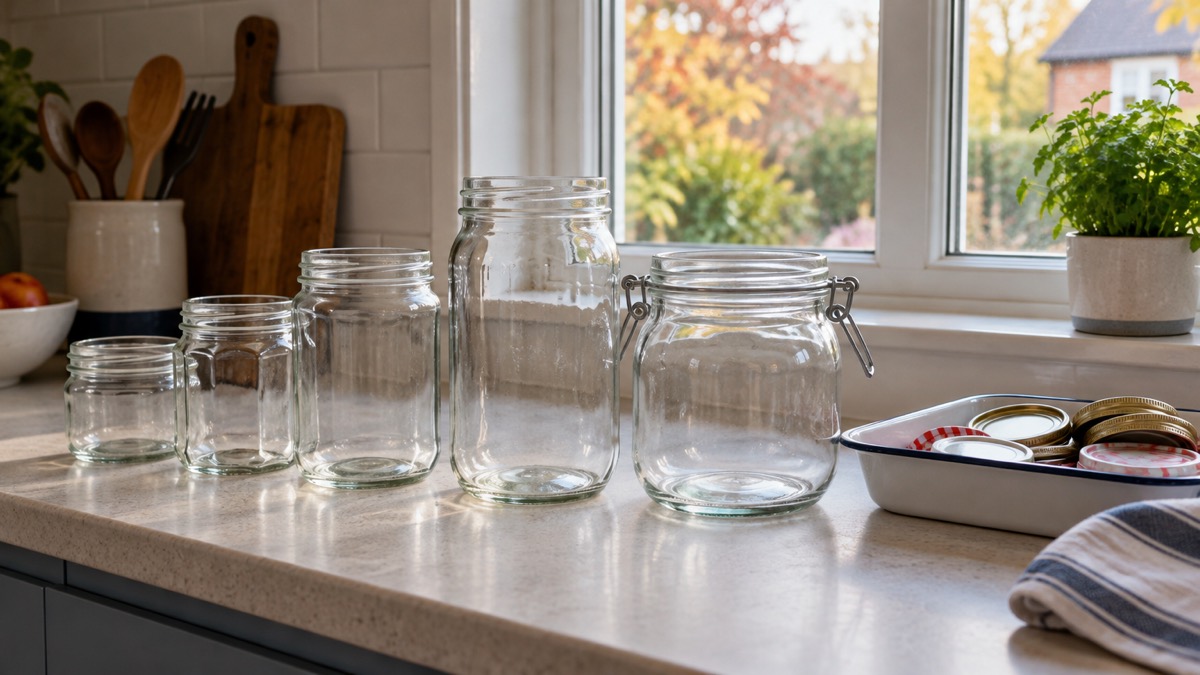
Jars are not one thing. The maker's range runs from small preserve jars to large clip top jars, and the right choice depends on how chunky your chutney is and how you plan to use it. The maker describes each jar by what it is for, which is the most useful guide you can have.
| Jar | What the maker says it suits |
|---|---|
| Tomato Fruit Preserve Jar | Relishes, chutneys and savoury jellies13 |
| Clip Top Round Jar | Preserving jam, chutneys and storing dry foods like tea, coffee and grains14 |
| Clip Top Square Jar | Preserving chutneys, pickled fruits and storing dry foods like rice and lentils15 |
| Preserve Jar | Jams, chutneys and small pickled fruits16 |
| Clip Top Round Jar | Preserving jam, chunky chutneys, pickled vegetables and dry foods17 |
| Facetted Clip Top Jar | Preserving chunky chutneys, whole fruits and dry foods18 |
| Round Twist Top Jar | Jams, jellies, marmalades, chutneys and dried foods19 |
The pattern is straightforward. Smaller jars suit a chutney you will open and finish quickly, and make good gifts. Larger jars suit chunky chutneys and households that get through a jar at a time. Square jars stack more efficiently on a shelf; round jars are easier to fill and clean. Match the jar to what the maker says it suits, and keep the clip top square jar for the chutneys and pickled fruits it is listed for15.
Two accessories make the job safer and tidier. The easy fill funnel has a wide opening that prevents spills or wastage and provides stability when decanting warm jams, chutneys and jellies during the preserving process8. Neither accessory is essential, but anything that steadies the jar reduces the moment when hot preserve is moving between pan and jar, which is where most spills happen.
Getting the texture right, and what to do if it will not set
If your chutney is still too runny after a long cook, the cause is almost always one of three things: not enough time, too much liquid, or a pan with the lid on. The maker is clear that chutneys need a long and slow cooking period in a pan that is not covered with a lid2, and that you should allow at least 2 hours because chutneys are better when they are not rushed2. Put the lid aside, keep the heat low enough that the base does not catch, and stir often.
Some recipes build in a staged cook that helps. The Hearty Onion and Ale Chutney has you remove the pan from the heat, pour in 250ml of the ale, then put it back onto a low heat for 30 minutes20. The Christmas Chutney simmers covered for approximately one hour or until the vegetables are tender, stirring occasionally to avoid the bottom catching, then cooks for 30 minutes more after the sugar6. If you are following a recipe, let its timings run before you start testing; if you are improvising, expect the full 2 hours.
A chutney that has set but looks grainy or has separated is usually a stirring problem rather than a setting problem. Keep the spoon moving across the base throughout, not just at the end. And if a batch really will not thicken, do not keep boiling it indefinitely: over-reduced chutney catches, burns and turns bitter, and no amount of stirring brings it back.
Maturation, shelf life and checking the seal
The wait is part of the method. The maker recommends leaving pickles and chutneys for up to 10 weeks before opening to allow the flavours to fully develop3, and its chutney checklist says no less than 8 weeks2. Label each jar with the date you potted it so you know when it is ready.
Once a jar is open, the clock changes. The maker advises storing chutney in the fridge once opened and consuming it within 2 weeks3. That is a short window for a large jar, which is the practical argument for potting some of a batch in smaller jars.
Before any of that, check the seal. Test 24 hours after processing5. A jar that has failed the test should go in the fridge and be eaten soon rather than stored. Treat the jars as reusable kit rather than single use: glass is BPA free, does not absorb odours, flavours or stains, and is never for single use12, so inspect rims and clips for damage before each season.
A short history of the jar on your shelf
The jar you are filling has a long pedigree. The original Kilner Jar was invented by John Kilner and Co. in England over 180 years ago, and the maker says it is as much loved and successful now as it was then12. The brand dates its heritage to 184221, and describes itself as established and trusted since 184222. That history is not just marketing: it explains why the same clip top and screw top designs have stayed in use, because they work with hot, heavy preserves.
The maker's current range is described as simple solutions for preserving, food preparation, storage and eating on-the-go using high quality materials23. For a household putting up a batch of chutney, the relevant part is the preserving line: jars, funnels and pans made to take the heat of the process11. If you are starting out, the home preserving equipment checklist sets out what is worth having before your first batch, and the self-reliance section covers the wider picture of growing and storing your own food.
Sources (23)
- Setting points, Kilner, 2026
- Checklist for chutneys, Kilner, 2026
- A guide to pickles, Kilner, 2026
- Apple and Cranberry Chutney, Kilner, 2026
- Chutney: when things go wrong, Kilner, 2026
- Kilner Christmas Chutney, Kilner, 2026
- Checklist for jellies, Kilner, 2026
- Stainless Steel Easy Fill Funnel, Kilner, 2026
- Clip Top Square Spice Jar 70ml, Kilner, 2026
- Clip Top Square Jar 2 Litre, Kilner, 2026
- The four spoilers, Kilner, 2026
- 1 Litre Fermentation Set, Kilner, 2026
- Tomato Fruit Preserve Jar 0.4 Litre, Kilner, 2026
- Clip Top Round Jar 0.5 Litre, Kilner, 2026
- Clip Top Square Jar 0.5 Litre, Kilner, 2026
- Preserve Jar 0.5 Litre, Kilner, 2026
- Kilner Round Glass Clip Top Preserving Jar, 1 Litre | Kilner®, Kilner (kilnerjar.co.uk)
- Facetted Clip Top Jar 0.95 Litre, Kilner, 2026
- Round Twist Top Jar 370ml, Kilner, 2026
- Hearty Onion and Ale Chutney Recipe | Kilner®, Kilner (kilnerjar.co.uk)
- 4 Replacement Rubber Seals, Kilner, 2026
- Kilner, Kilner, 2026
- Universal Jar Wooden Lid 0.85L, Kilner, 2026
 Hydroponic System Parts List
 Year-Round Sowing Calendar
 Preserving Equipment Checklist
 Blanching Vegetables
 Carrot Fly Protection
 Clubroot in Your Soil
 Drought-Resistant Vegetables
 Edible Flowers Safety
 Extending the Growing Season
 Freezing Fruit Without Sugar
 Garden Fleece Frost Protection
 Avoiding the Hungry Gap
 Keeping Varieties Pure for Seed
 Making Leafmould
 Growing Microgreens Indoors