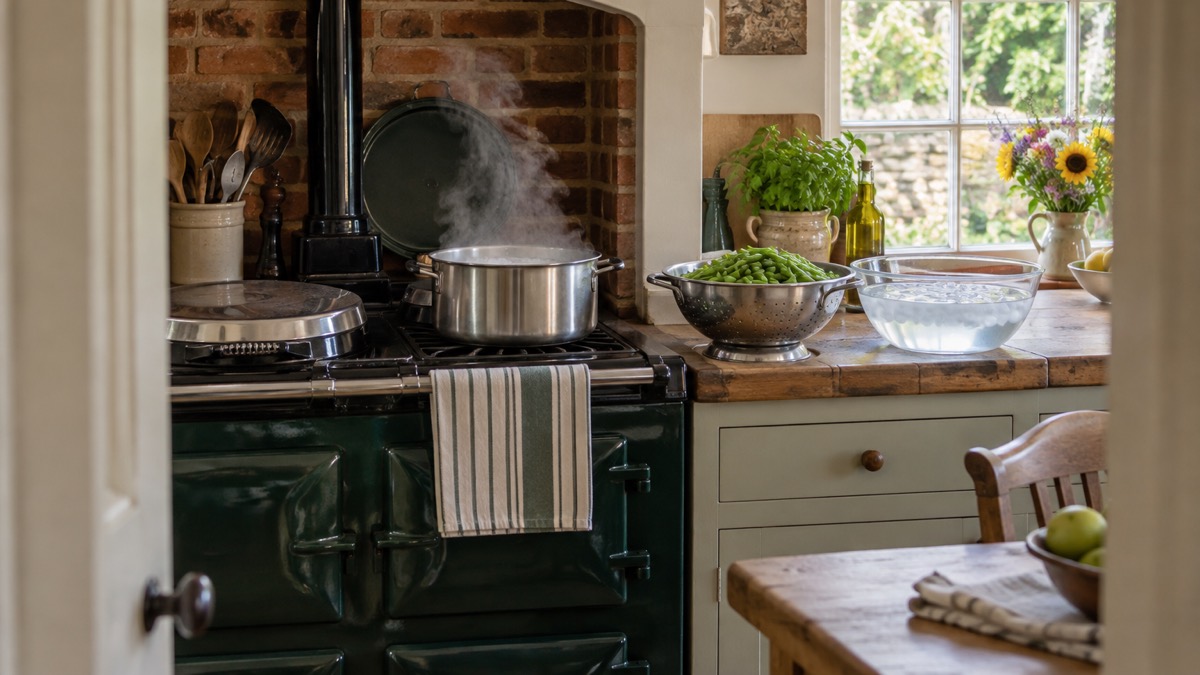
Blanching is the step most households skip when the freezer starts filling up in late summer, and it is the step that decides whether those beans and broccoli taste of themselves in January or of nothing much at all. Blanching means heating or scalding the vegetables in boiling water or steam for a short period of time1. It slows or stops the enzymes that cause loss of flavour, colour and texture, cleans the surface of dirt and organisms, brightens the colour, helps hold on to vitamins and softens the vegetables so they pack more easily1.
The method is short: boil, then cold. Drop prepared vegetables into boiling water for the time the vegetable needs, lift them out, and pour them immediately into a bowl of ice water to stop the cooking2. Drain, dry, bag in portions you will use in one meal, and freeze. Most vegetables should be blanched before freezing unless they will be eaten within three months2. Tomatoes are the exception: they are best cooked into a sauce before freezing3.
This page covers what blanching does and does not do, how to do it safely in an ordinary kitchen, how to portion and store what you freeze, and how to handle a power cut or a boil water notice without losing the lot. It sits alongside the wider guide to freezing home-grown fruit and vegetables, which covers the freezer side of the harvest in more detail.
Blanching stops the enzymes that spoil frozen vegetables
The reason to blanch is enzymes. These are the natural proteins in plant tissue that carry on working after picking, breaking down colour, flavour and texture. In a freezer they do not stop, they only slow down, so an unblanched bean slowly loses the qualities you grew it for. Blanching slows or stops the action of enzymes which cause loss of flavour, colour and texture1. That single sentence is the whole case for the kettle.
The same guidance lists four further benefits, and they are worth knowing because they explain the method. Blanching cleanses the surface of dirt and organisms, brightens the colour, helps retard loss of vitamins, and wilts or softens vegetables making them easier to pack1. The packing point matters more than it sounds: soft, pliable vegetables compress into a bag without crushing, so you fit more into the space you have and the pieces keep their shape.
It is not a sterilising step. Freezing food does not kill some harmful bacteria in food; bacterial growth can be paused at low temperatures but can start again at higher temperatures4. Blanching reduces surface contamination and improves quality, but the safety of what you eat still depends on washing, cooking and keeping the cold chain. Chilling, in official terms, means making sure foods are stored at the correct temperature to prevent growth of harmful bacteria5.
There is a trade-off to accept honestly. Freezing vegetables causes the loss of vitamins E and B62. Blanching helps retard loss of vitamins rather than preventing it1, so frozen home produce is good food, not a perfect copy of the fresh crop. Plan to eat it within the season rather than treating the freezer as a museum.
One supplier puts a time limit on the shortcut: most vegetables should be blanched before freezing unless they will be consumed within three months2. If you are freezing a glut you will eat by Christmas, the quality difference is smaller. If the bags are for next spring, blanch.
What blanching does: flavour, colour, texture and a clean surface
Set the benefits out side by side and the method makes sense.
| What blanching does | Why it matters to the household | Source |
|---|---|---|
| Slows or stops enzymes | Keeps flavour, colour and texture through months of storage | 1 |
| Cleans the surface | Removes dirt and organisms before the food is bagged | 1 |
| Brightens colour | Frozen greens look like food, not like something tired | 1 |
| Helps retard loss of vitamins | Better nutritional value than unblanched produce | 1 |
| Wilts or softens | Vegetables pack more easily and take less space | 1 |
The cleaning benefit needs a caveat, because it is easy to overstate. Blanching cleanses the surface, but it is not a washing step and it does not make dirty produce safe. Official advice is to always wash fruit and vegetables before you eat them to remove any surface dirt or bacteria, and peeling or cooking can also remove these germs5. When washing raw vegetables, avoid cross-contamination by rubbing them in a bowl of fresh water to reduce splashing5. Check the label too, as unless the packaging says it is ready to eat then you must wash, peel or cook them before eating5.
There is a related piece of storage advice that catches people out. Do not wash vegetables before putting them into cold storage; use a brush to remove soil2. Washing before storage adds surface water that encourages spoiling, so brush the soil off for the shed or fridge, then wash properly at the point you blanch or cook.
How to blanch: boiling water, then straight into ice water
The method is the same for almost everything, and the second half is the half people skip.
- Prepare the vegetable. Wash it, then cut it to a size that will freeze and cook evenly. Smaller pieces freeze more quickly2.
- Bring a large pan of water to a rolling boil. If you do not have an induction hob, it is cheaper to boil the water for your vegetables in the kettle, then pour it into the pan6.
- Lower the vegetables in and start timing. Blanching is heating or scalding the vegetables in boiling water or steam for a short period of time1. Work in small batches so the water comes back to the boil quickly.
- Lift them out and plunge them into ice water. Pour the blanched vegetables immediately into the bowl of ice water to stop cooking2.
- Drain and dry thoroughly. Surface water becomes ice and freezer burn.
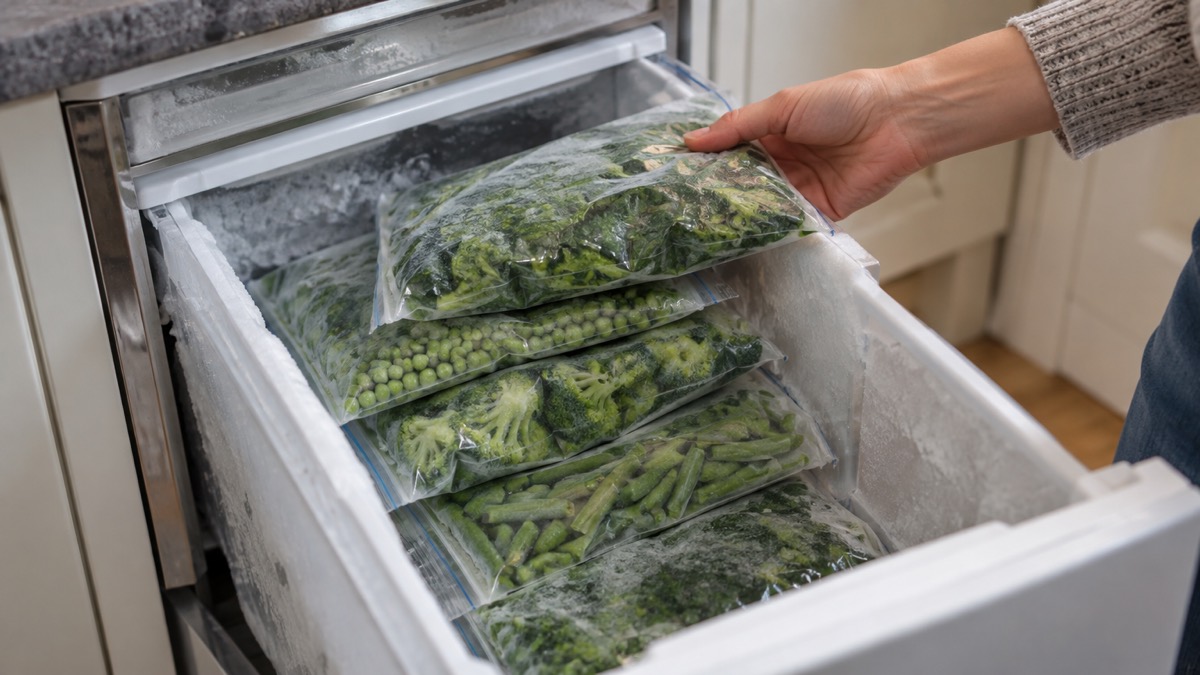
- Spread on a tray to freeze, then bag. Wash and dry the vegetables, cut them up, spread them out in a shallow pan and freeze; once frozen, pour into freezer bags2.
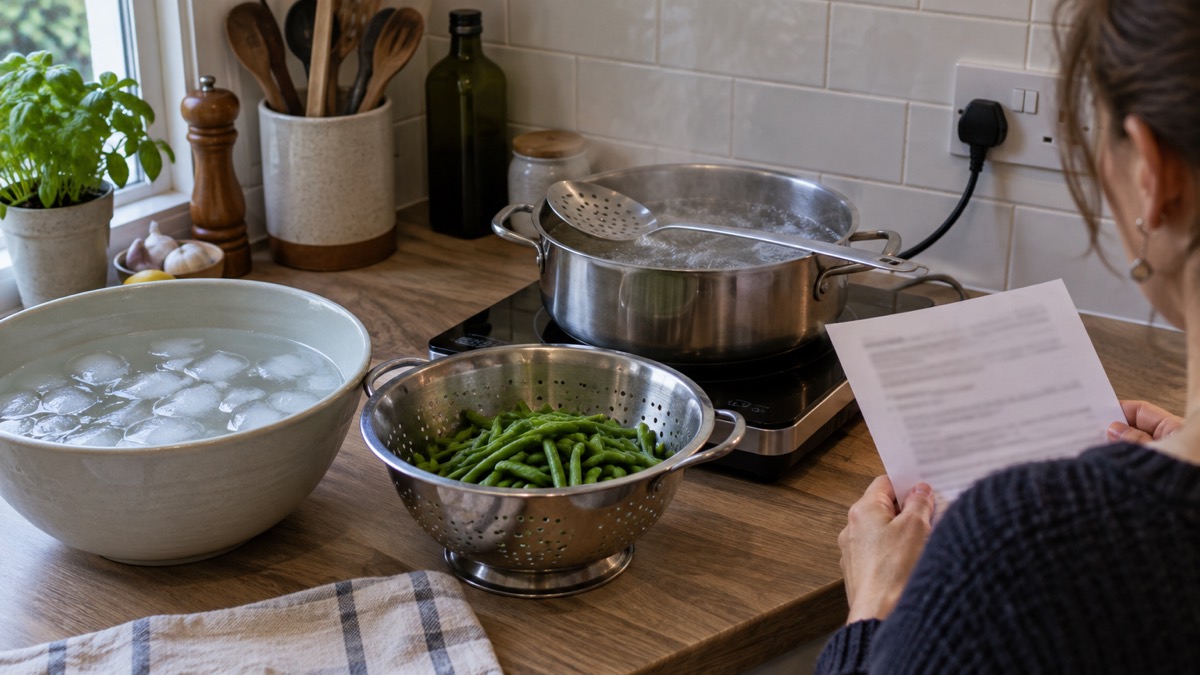
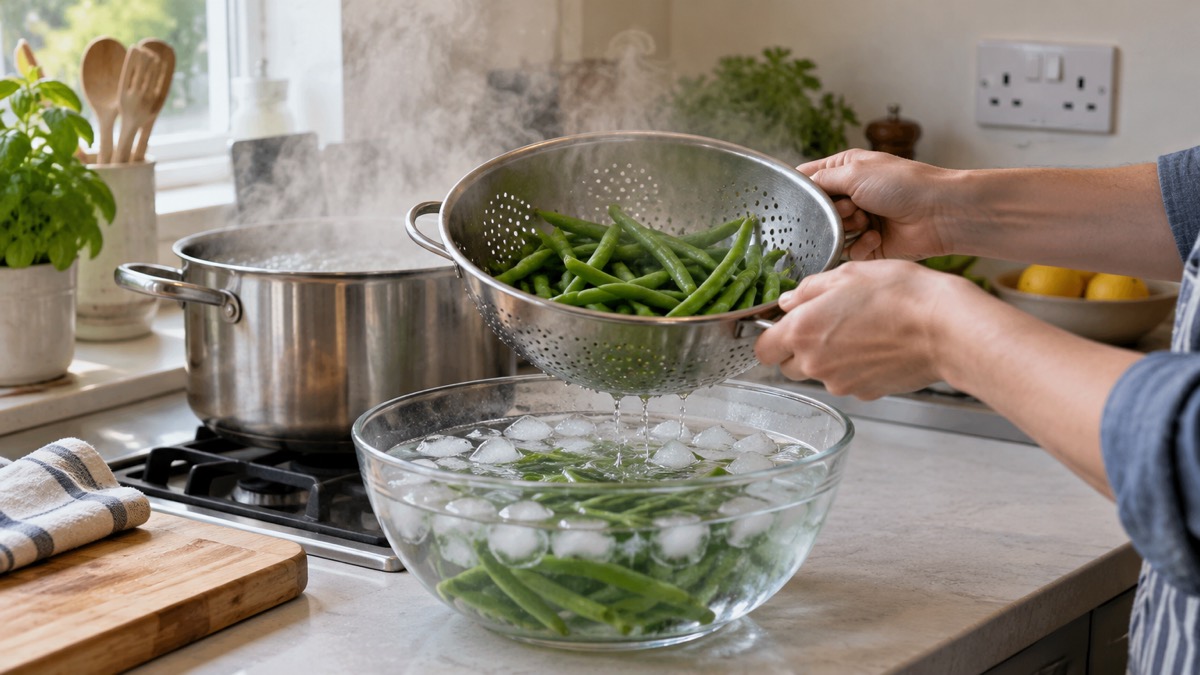
Timings vary by vegetable, so use the guidance for what you are growing. Broccoli is chopped and blanched for three minutes before freezing to retain the flavour7. Broad beans are blanched in boiling water for a couple of minutes, drained and rinsed with very cold water to stop the cooking process, then frozen on an open tray before transferring to a freezer bag8. Leeks are more forgiving: they remain edible even without blanching, whether the term refers to earthing up stems or preparing them for freezing9.
Why the ice water matters
The ice water is not a nicety. Vegetables come out of boiling water still cooking, and the heat inside them carries on softening the tissue for minutes afterwards. Pouring them straight into ice water stops that, which is why the instruction is to do it immediately2. Skip it and you have effectively overcooked the vegetable before it is frozen, so it thaws to a pulp.
The same principle explains why cold matters elsewhere in the kitchen. Chilling means making sure foods are stored at the correct temperature to prevent growth of harmful bacteria5. Freezing pauses bacterial growth rather than ending it4, so a freezer that is not cold enough, or a bag left on the side while you fetch more ice, works against you.
You can make ice water without a freezer full of cubes. Use a pack of frozen vegetables or partly fill a plastic bag using small ice cubes or crushed ice, and wrap the bag in a dry cloth10. A bowl of very cold tap water with a frozen pack in it will do the job.
If your water supply is under a boil water notice, the ice water must be made from water that is safe. If it is recommended that you boil water before use, do this before using it to prepare or cook food, especially when washing fruit and vegetables that are to be eaten raw11. A boil water notice means boiling water before drinking, brushing teeth, making ice cubes, preparing food, cleaning feeding equipment or giving it to pets12. In that situation, boil and cool the water first, then chill it for the ice bath.
Freeze in manageable quantities
The commonest freezer mistake is not bad blanching but bad packing. Gardening guidance is blunt: it is best to blanch in boiling water first and to freeze in manageable quantities3. A two-kilo bag of beans that has to be thawed, partly used and refrozen is a bag that will be thrown away.
Small portions also help on the safety side. Official advice is to only reheat food that has been frozen once, and freezing in smaller portions will help4. Flat bags of a meal-sized portion thaw quickly and evenly, which matters when you are cooking from frozen or defrosting in the fridge.
Packing well pays off in a power cut. If your freezer is not full, group packages so they form an igloo to protect each other, and place them to one side or on a tray so thawing juices will not get on other foods13. A full, tightly packed freezer holds its temperature far longer than a half-empty one, so bags frozen flat and stacked are doing two jobs.
Label as you go: vegetable, date and whether it was blanched. Then rotate, so that what you froze first is eaten first.
Tomatoes are better cooked into a sauce first
Tomatoes do not follow the rule. Gardening guidance says plainly that tomatoes are best cooked into a sauce before freezing3. One supplier goes further, noting that most vegetables, with the exception of tomatoes, can be refrigerated for a short period of time before processing2. Treat the tomato as a sauce ingredient, not a freezer vegetable.
The reason is water. Official advice notes that the extreme cold can affect the quality of foods with a high water content, such as fresh fruit and salad vegetables including cucumber and tomatoes5. Freeze a raw tomato and the cell walls break down, so it collapses on thawing into a watery pulp. Cook it down first and you have a sauce with the water driven off and the flavour concentrated.
Other crops behave differently again. Cooked or parboiled potatoes can be frozen, but raw potatoes generally do not freeze well because freezing can affect their texture14. Cool cooked potatoes before freezing and then place them in an airtight bag or container14. Some food is best cooked from frozen, so follow the manufacturer's instructions on pre-packed foods15.
Keeping it safe: defrosting, reheating and power cuts
Blanching is a quality step; the safety of the meal depends on what happens next. Defrost food, in particular meat and poultry, thoroughly before it is cooked16. Defrost meat thoroughly before cooking, ideally in your fridge5. If you are cooking outdoors, cook food in the oven before finishing it on the barbecue to ensure it is cooked all the way through17.
Clean as you go. Always clean surfaces, utensils, plates and hands thoroughly after they have touched raw or thawing meat to stop bacteria spreading around the kitchen4. Watch out for liquid coming out of defrosting raw meat, as it could spread bacteria to other foods18.
If the power goes, act quickly and honestly. If there has been a power cut, dispose of any food in the fridge or freezer that may have become wet or warm19. If meat, fish or foods containing them have started to get soft, throw them away too18. Do not taste to check.
Some foods carry a specific risk that blanching does not remove. When adding cold-smoked or cured fish to dishes like cooked pasta or scrambled eggs, cook the fish first, as warming it through while preparing the meal will not heat it to a high enough temperature to kill listeria20. Imported frozen berries should be boiled for one minute before eating them or adding them to smoothies, which is particularly important when serving them to vulnerable people15.
Where to get help and further reading
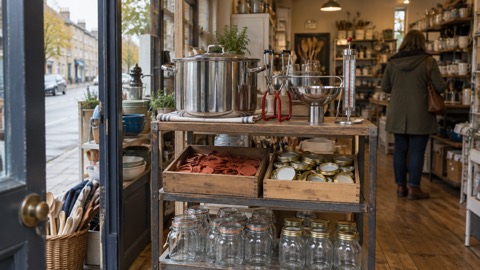
If you are new to preserving a harvest, the home preserving equipment checklist sets out what a kitchen needs before the glut arrives, and storing the harvest covers the crops that keep without a freezer at all. For the freezer itself, freezing home-grown fruit and vegetables goes further on fruit, and is it safe to freeze fruit without sugar? answers the sugar question. If you are planning next year's plot around what freezes well, growing your own vegetables is the place to start.
For power cuts and keeping food cold when the electricity fails, see power cuts and the wider emergency food guide. If your water supply is interrupted or under a notice, water in an emergency explains what to do.
Sources (21)
- How to Can and Freeze, National Center for Home Food Preservation, 2026
- Harvesting and Storage, Harrod Horticultural, 2026
- Harvesting and Storing Vegetables, Garden Organic, 2026
- Chilling, Food Standards Scotland, 2026
- Preparing and Cooking Food Safely, NHS Inform, 2025
- Cooking Safely, Dorset and Wiltshire Fire and Rescue Service, 2024
- Broccoli, Love Food Hate Waste, 2026
- Top of the Crops: Broad Beans, First Tunnels, 2026
- Top of the Crops: Leeks, First Tunnels, 2026
- Cold Compress, St John Ambulance, 2026
- Flooding, Food Standards Scotland, 2026
- Receiving a Boil Water Notice, Drinking Water Inspectorate, 2024
- How Do I Keep Food Safe, NIE Networks, 2026
- Potatoes, Love Food Hate Waste, 2026
- Defrost Food Safety, safefood, 2026
- Infectious Diseases, Northumberland County Council, 2026
- Summer Health, NHS Inform, 2026
- Planned Power Cuts, SSEN Distribution, 2026
- Heatwave, Lancashire Prepared, 2026
- Listeria, Food Standards Scotland, 2026
- What Are Foodborne Viruses, safefood, 2026
 Hydroponic System Parts List
 Year-Round Sowing Calendar
 Preserving Equipment Checklist
 Carrot Fly Protection
 Knowing When Chutney Is Ready
 Clubroot in Your Soil
 Drought-Resistant Vegetables
 Edible Flowers Safety
 Extending the Growing Season
 Freezing Fruit Without Sugar
 Garden Fleece Frost Protection
 Avoiding the Hungry Gap
 Keeping Varieties Pure for Seed
 Making Leafmould
 Growing Microgreens Indoors