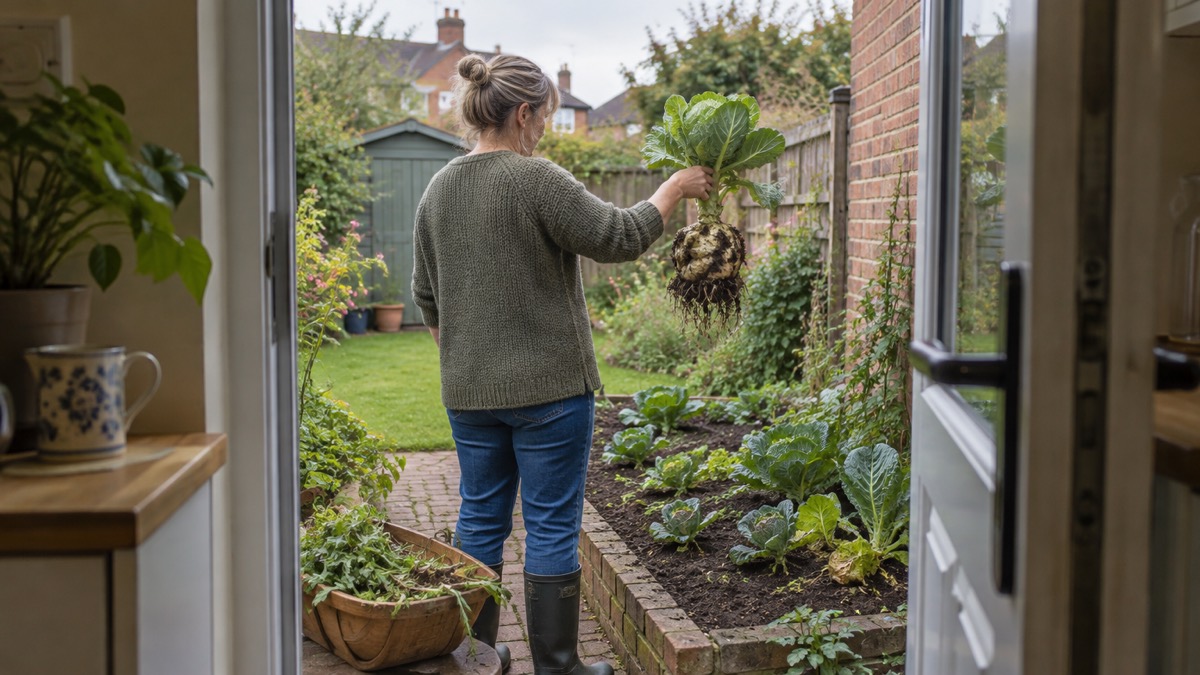
Clubroot is a disease of the roots of cabbages, turnips and their relatives, and the first thing to understand is that there is no chemical cure. There are no chemical controls available to gardeners to treat club root, and once it takes hold it is very difficult to get rid of1. What you can do is recognise it early, stop it spreading to clean ground, and keep growing food around it.
The organism infects roots whenever the soil is moist and warm, so most new infections occur from mid-summer until late autumn1. On acid soils it is more likely, which is why liming is part of the standard advice: lime at 500g per sq m (15oz per sq yd) on acid soils, with lighter dressings of 270g per sq m (8oz per sq yd) in future years1. If you buy in brassica plants, take great care that they come from a guaranteed club root-free source1.
This page sets out what to do now if you suspect it, how to tell it from other root problems, which plants are at risk, how to lime, and how to keep clean beds clean. It is written for a household growing in a garden or on an allotment, not for a commercial grower.
There is no chemical cure, so plan around it
Start with the honest position. Clubroot is an infection of the roots of brassicas and related plants by a soil-dwelling micro-organism related to the slime moulds1. Nothing you can buy as a gardener will kill it in the soil. The advice the RHS gives is described as basically just good garden hygiene and housekeeping1, and that is the whole strategy: slow it down, keep it out of clean beds, and grow what will still crop.
That means the response to finding it is not a treatment plan but a rotation and hygiene plan. Moving plants around the plot gives their specific diseases, such as blight or club root, time to die off2. On an infected plot you rotate away from brassicas for as long as you can manage, and you accept that some beds are now brassica beds and others are not.
It also means being sceptical of anything sold as a cure. The same principle applies to other soil-borne plant problems: where there is no home remedy, the answer is prevention and management rather than a bottle1. Put your effort and money into clean plants, lime where the soil is acid, and keeping soil off clean ground.
How to recognise clubroot
The roots tell you. Clubroot causes massive swelling, distortion and severely retarded growth of the roots1. On turnips it induces root swelling and deformation, accompanied by yellowing and wilting of leaves3. Above ground you may simply see plants that stall, wilt on sunny days and never size up, which is easy to blame on drought or poor soil until you lift one and look.
Lift a suspect plant with a fork and wash the roots gently in a bucket of water so you can see them. Healthy brassica roots are fine and branching; clubroot roots are thickened, club-shaped and distorted. Compare with what you expect: a turnip should have a clean round root, and a cabbage a firm stem and a good root system.
Do not confuse it with other root trouble. Cabbage root fly targets the roots, leading to stunted growth, wilting, and potential plant death, particularly hazardous for seedlings3. The difference is what you find: root fly damage shows as maggots and eaten tissue rather than the swollen, clubbed roots of clubroot. If you are unsure, the safe assumption for hygiene purposes is to treat the plant as infected and keep the soil where it is.
Which plants are at risk
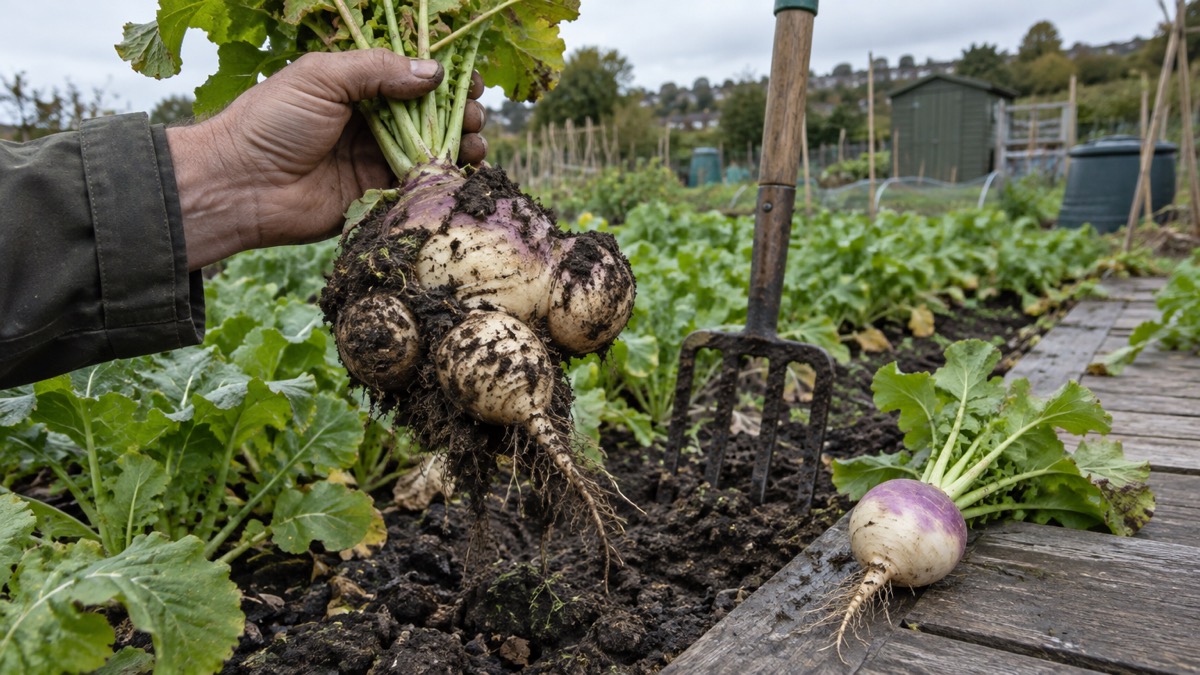
Clubroot affects cabbages, cauliflowers, turnips, swedes, radishes and ornamental relatives such as Cheiranthus (wallflowers), Matthiola (stocks), Aubrieta (aubretia) and cabbage-family weeds such as Capsella bursa-pastoris (shepherd's purse)1. The vegetable list is essentially the brassica family: Brussels sprouts, cabbage, cauliflower, kale, kohl-rabi, oriental greens, radish, swede and turnips2.
That has two consequences for planning. First, your rotation groups need to put all of those together, so that a bed is either "brassicas" or "not brassicas" for the year. Second, the weeds and ornamentals matter: shepherd's purse and wallflowers can keep the organism present in a bed even when you are not growing a crop there, so clear them from affected ground.
| Group | Examples | What to do on infected ground |
|---|---|---|
| Leaf and head brassicas | Cabbage, cauliflower, Brussels sprouts, kale, kohl-rabi | Rotate out of the bed1 |
| Root brassicas | Turnip, swede, radish | Avoid turnips in soil previously afflicted by the disease3 |
| Oriental greens | Oriental greens | Treat as brassicas in the rotation2 |
| Ornamental relatives | Wallflowers, stocks, aubretia | Clear from affected beds1 |
| Weed hosts | Shepherd's purse | Weed out before it sets seed1 |
Liming acid soil: 500g per sq m, then 270g per sq m
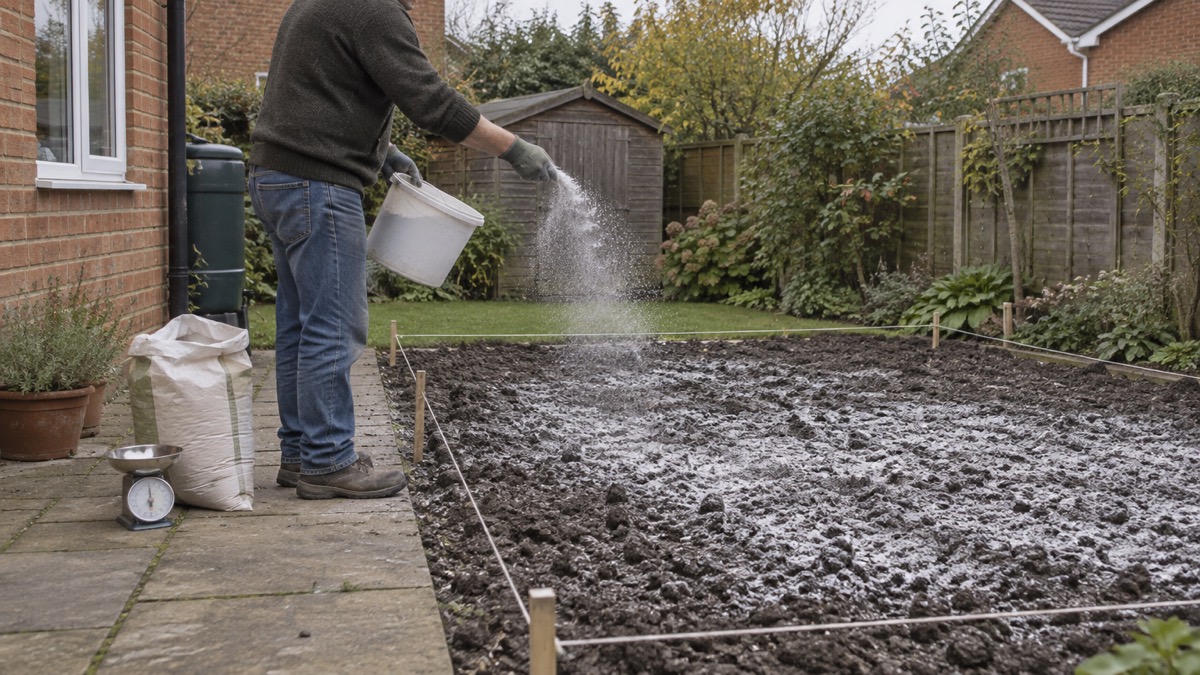
Club root is likely to occur in soils that are too acidic4, so raising the pH is one of the few levers a gardener has. On acid soils, lime at the rate of 500g per sq m (15oz per sq yd), with lighter dressings of 270g per sq m (8oz per sq yd) in future years1. The first figure is the corrective dressing; the second is the maintenance rate for later seasons.
Measure the bed rather than guessing, then work out the area from its length and width. A first dressing at 500g per sq m on acid soils, with lighter dressings of 270g per sq m in future years, means the total depends on the size of the bed you have measured1. Weigh it out and spread it evenly, then work it into the surface. Do not lime beds you have not measured, and do not repeat the heavy rate every year: the later dressings are deliberately lighter.
Liming is not a cure and will not rescue an infected bed on its own. It reduces the likelihood of infection taking hold and is part of the hygiene package alongside rotation and clean plants. If you garden on soil that is already alkaline, liming is not the answer and the other measures carry the weight.
Keeping clubroot out of clean ground
Prevention is where a household can actually win. If you buy in your brassica plants, take great care that they come from a guaranteed club root-free source1. Raising your own from seed avoids the risk that bought plants bring infected soil with them, and if you do save seed, only save seed from healthy looking plants5.
Hygiene carries the rest. Soil moves on boots, tools, wheelbarrows and roots, so clean them between beds and especially when moving from a known infected area to a clean one. Clear affected roots and crop debris rather than digging them back in. Where a grower has had clubroot in the past, planting all brassicas with cabbage collars around the base is given as a way to prevent the disease returning6.
Rotation is the backbone. Keep brassicas on a long cycle so that the organism has time to decline in a bed before susceptible crops return, and use the years in between for crops outside the family. Green manures can be included in crop planning as they can increase soil nutrition, keep weeds down and reduce erosion7, which helps the rest of the rotation work while a brassica bed rests.
- Buy clean: brassica plants only from a guaranteed club root-free source1
- Raise your own: sow seed rather than importing soil on roots, and save seed only from healthy plants5
- Rotate: move crops around the plot so diseases have time to die off2
- Clean tools and boots: soil is how it travels between beds
- Clear debris and weed hosts: do not compost diseased roots into beds you will replant
Growing turnips and other crops on infected soil
You can still grow a great deal. The key decision is what goes where. Turnips are affected, and the advice for them is that prevention involves avoiding turnip cultivation in soil previously afflicted by this disease3. If turnips matter to you, grow them in a clean bed or in containers with fresh growing medium rather than in known infected ground.
Where you do grow brassicas, give them the best conditions you can so they shrug off what they can. Turnips grow best in full sun, in a moist yet free-draining soil or growing medium that is rich in organic matter3. Sow turnip seed 1cm deep in rows 15-20cm apart from March, with outdoor sowing from March to mid April8. Good growth does not prevent infection, but it gives the plant a better chance of cropping before symptoms bite.
For the rest of the plot, use the rotation years for non-brassica crops and keep the garden productive. A crop that fails on clubroot is a gap you can fill: clear the plants, do not replant brassicas in the same spot, and use the space for something outside the family.
Where to get further help
For a household working through this, the most useful next step is to read around the wider subject of prevention rather than chase a cure. Our guide to vegetable pests and diseases covers the general approach to soil-borne problems, and growing your own vegetables sets out how to plan a rotation from scratch. If you are starting or reworking a plot, sowing seeds indoors and outdoors explains raising your own plants, which is the surest way to avoid bringing infection in on bought stock.
If you are taking on an allotment, check the state of the beds before you plant: getting an allotment covers tenancy rules and what a council owes you. For storing what you do manage to grow, storing the harvest explains how to keep roots and heads through the winter.
The RHS is the body whose advice is cited for clubroot management, and the practical summary is hygiene, rotation, lime on acid soils and clean plants1. There is no shortcut beyond that, and a garden managed on those lines will still feed a household.
Sources (8)
- Clubroot problems, Harrod Horticultural, 2026-11-04
- Planning your planting, Garden Organic, 2026-10-29
- Top of the Crops: Turnip, First Tunnels, 2026-01-14
- Top of the Crops: Cauliflower, First Tunnels, 2026-01-14
- Tips on saving your own seeds, RHS, 2026
- Brussel sprouts, Harrod Horticultural, 2026-11-04
- Growing vegetables in schools, RHS, 2026
- How to grow turnip, Garden Organic, 2026-10-29
 Hydroponic System Parts List
 Year-Round Sowing Calendar
 Preserving Equipment Checklist
 Blanching Vegetables
 Carrot Fly Protection
 Knowing When Chutney Is Ready
 Drought-Resistant Vegetables
 Edible Flowers Safety
 Extending the Growing Season
 Freezing Fruit Without Sugar
 Garden Fleece Frost Protection
 Avoiding the Hungry Gap
 Keeping Varieties Pure for Seed
 Making Leafmould
 Growing Microgreens Indoors