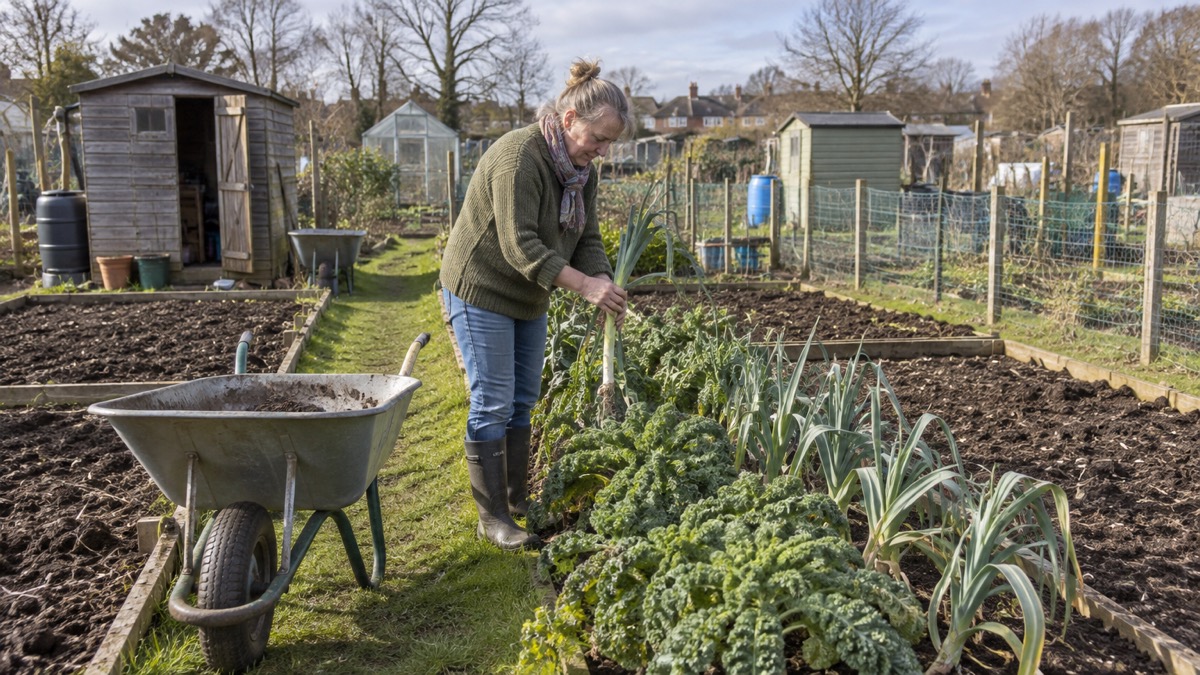
The hungry gap is the stretch of early spring when the vegetable plot has little or nothing ready to eat, just as the winter stores are running down. The growing charity Garden Organic describes it plainly: early spring has little veg or fruit available, and winter is a challenge for many crops1. The gap usually falls from April into June, before the first new-season crops are heavy enough to pick.
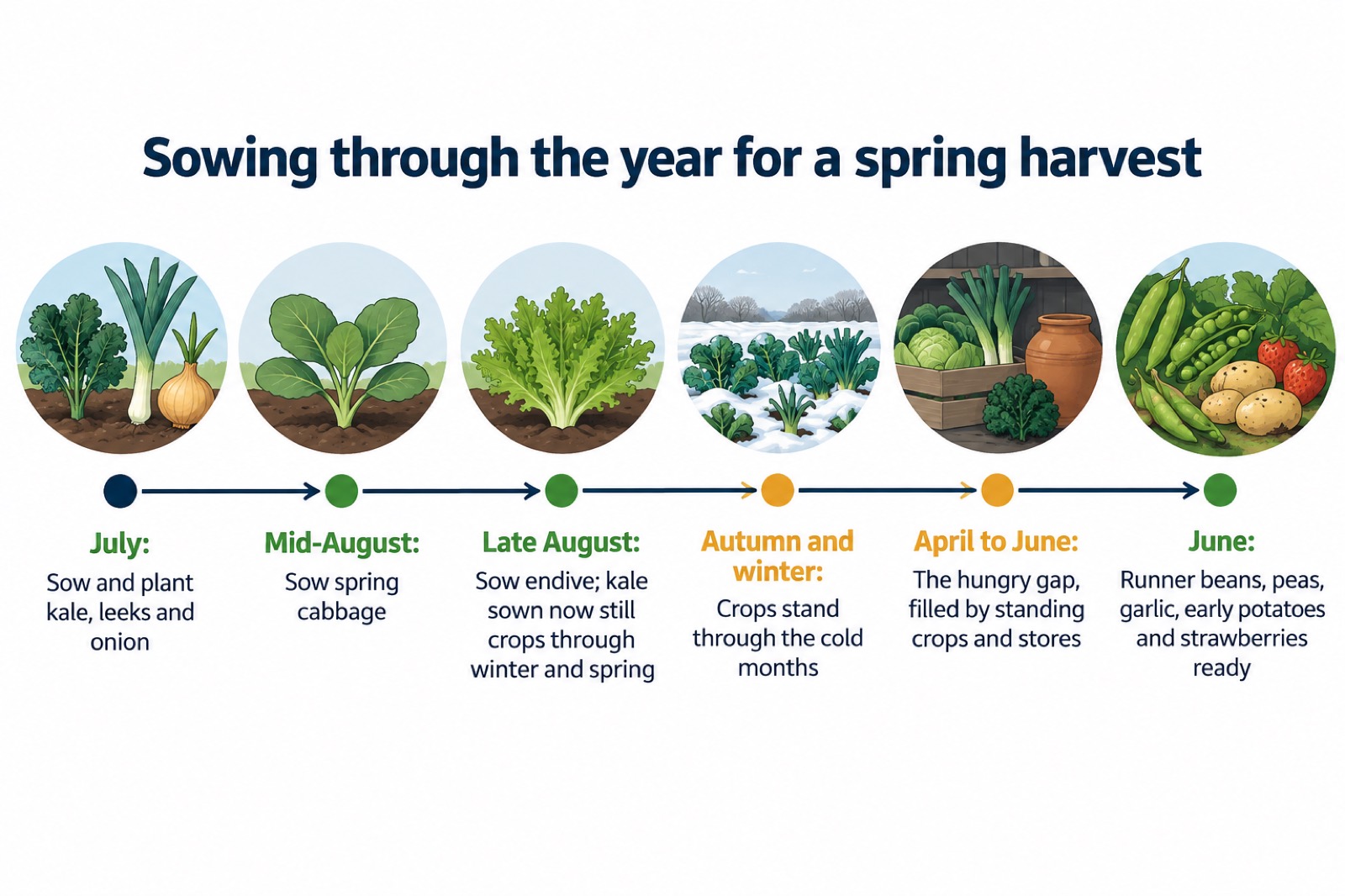
You close it by planning backwards. Sow and plant in late summer and autumn so that crops stand through the winter and start producing in spring: kale sown as late as August will keep you in leaves all through the winter and the spring hungry gap, and spring cabbage sown in mid-August is ready the following spring1. Then store the autumn harvest carefully so roots, potatoes, onions and garlic carry you across the lean weeks1.
The work is mostly in the calendar, not in special kit. Keep sowing, even in mid-summer, because that is the key to having veg through the autumn and winter1. Choose several varieties of the same vegetable that mature at different times, planting early, midseason and late varieties to stagger the harvest2. Plan the sowing so the crops are ready when you need them, the same discipline schools are advised to use so harvests land in term time3.
What the hungry gap is and when it falls
The gap is a calendar problem rather than a soil problem. Through late winter the plot is either bare, waterlogged or holding crops that are not yet ready, and the stored harvest from last year is thinning out. Garden Organic's summary is that early spring has little veg or fruit available, and that winter is a challenge for many crops1. The gap therefore runs from roughly April, when the last roots and greens are used up, to June, when the new season's crops begin to arrive.
June is the turning point. The Royal Horticultural Society's month-by-month guide lists runner beans, peas, garlic, early potatoes and strawberries as crops to harvest in June5. May is still thin by comparison, with broad beans, salad leaves and spinach the main harvest5. That is the shape of the year you are planning around: a light May, a fuller June.
Two things make the gap worse than it needs to be. The first is a glut the previous summer that goes unharvested or unprocessed, so nothing is carried forward. Harvesting veg early can prevent a mid-season glut, and small produce is perfectly good: new potatoes the size of golf balls are delicious, as are slim small broad beans which can be eaten pod and all1. The second is a plan that assumes everything will be ready at once. Choosing several varieties of the same vegetable that mature at different times, with early, midseason and late plantings, spreads the harvest across the weeks when you need it4.
The gap is not the same everywhere. Gardeners with a short growing season, further north, get better results from mini-veg varieties, which are ready to harvest sooner than large size varieties and crop well at close spacing1. If your season is short, plan around quick, small crops rather than large, slow ones.
Crops that fill the gap from April to June
The crops that carry you across the gap fall into three groups: things standing in the ground through winter, things sown in late summer for spring, and quick crops sown in spring itself. Brassicas do most of the heavy lifting. Kale, cabbage, turnips and broccoli will all grow over the winter months1, and kale sown as late as August keeps you in leaves all through the winter and the spring hungry gap1.
| Crop | When to sow or plant | What it gives you | Source |
|---|---|---|---|
| Kale | Sow as late as August | Leaves through winter and the spring gap | 1 |
| Spring cabbage | Mid-August | A spring crop the following year | 1 |
| Endive | Late August | Winter and spring salad | 1 |
| Asparagus | Permanent bed, several years to establish | Spears from late April to early June | 1 |
| Broad beans, salad leaves, spinach | Earlier sowings | Harvest in May | 5 |
Asparagus is the classic gap filler if you can give it a permanent spot: it takes several years before a good harvest, but it is a great hungry gap filler from late April to early June1. Purple sprouting broccoli is one of several broccoli varieties, and broccoli is in season from June to November6. One summer purple sprouting variety is described by its distributor as producing tender purple spears from July to November7, so check the harvest window of the variety you buy rather than assuming all purple sprouting is a spring crop.
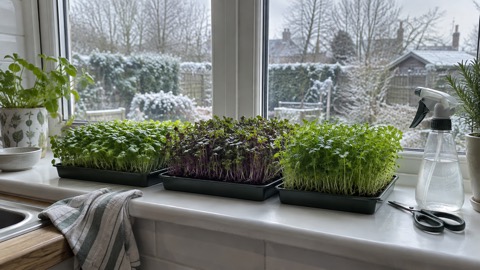
For the weeks before the spring crops are ready, quick salad crops bridge the gap. Lettuce, mustard seeds, oriental salad and rocket will provide you with tasty leaves in just a few weeks and can be grown indoors or on a windowsill8. Most brassicas such as chard, cress and spinach are tasty and easy to grow as microgreens8. These are small harvests, but they keep something fresh on the plate while the main crops come on.
Sowing and planting in late summer and autumn for a spring harvest
The single most useful habit is to keep sowing when the plot already looks full. Garden Organic puts it directly: the key to success in having veg through the autumn and winter is to continue to sow, even in mid-summer1. Sowing in July and August feels late, but it is exactly what stocks the gap.
The RHS summer-term guide lists kale, leeks and onion among the crops to sow and plant in July5. Garden Organic gives late August for endive and mid-August for spring cabbage1. Kale can go in as late as August and still crop through winter and spring1. Work backwards from the month you want to eat, not forwards from the first warm day.
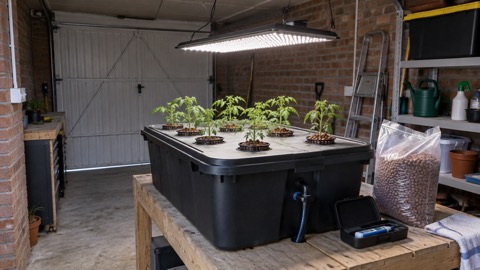
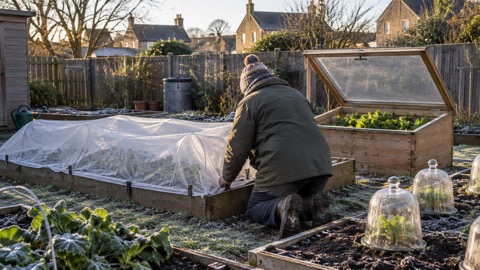
Under cover, the calendar stretches. Hydroponic crops are grown under cover, either in a glasshouse or polytunnel, and the growing season can be extended with extra heat and light9. In a greenhouse bed, outdoor crops such as potatoes and peas can be grown to bring them forward several weeks, and by July and August the space is clear for winter salads and veg1. If you have a polytunnel or greenhouse, see Polytunnels and Greenhouses: Growing Under Cover All Year for how to use the space across the seasons.
Rotation matters too. Deep-rooted plants such as carrots and parsnips open up the soil for more shallow-rooted plants such as salads the following year10, so follow a root crop with a salad crop where you can. Onions, garlic, shallots and leeks form the allium family and are grouped together in planning10. For the wider principles of planning a plot, see Growing Your Own Vegetables: Where to Start and Sowing Seeds Indoors and Outdoors: Timing, Depth and Germination.
Stored crops: making the autumn harvest last into spring
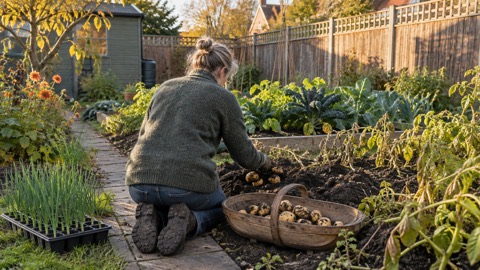
Storing is the other half of the plan. Root veg such as carrots and beetroot can be harvested in late autumn and stored carefully for several months, as can potatoes, onions and garlic1. The purpose is exactly the one Garden Organic gives: storing produce either in times of glut, or to tide you through the winter4. A good autumn store is what you eat in April.
Harvest at the right moment. Harvest onions and shallots when all the leaves have fallen over naturally, and dig out garlic when just the first four or six leaves turn yellow11. Parsnips taste better when harvested after the first frost, and they will store1. Lift roots in dry conditions where you can, and discard any that are damaged before they go into store.
How long a crop takes from sowing to harvest tells you what can realistically be stored and when. The RHS crop planner divides crops into groups by the time they take:
- Medium-term crops: sown or planted in one term to harvest in the next, 14 to 25 weeks (three to six months) later3.
- Slow-growing or long-season crops: sown or planted in one term to harvest in the next term or even the following term3.
Anything in the slow group is a candidate for the store rather than the plate, because it will not be ready until well after the gap has passed. For the detail of clamping, drying and checking stored roots and onions, see Storing the Harvest: Roots, Onions, Squashes and Apples.
Where the plan can fail: hard winters, pests and bolting
The gap plan fails in three predictable ways, and each has a response.
Hard winters. Cold, wet and frozen ground slows or kills overwintering crops, and the weather can also cut you off from the plot. The Met Office's winter advice is to make alternative plans12, and the same applies to the garden: assume some overwintered crops will be lost and sow a little more than you need. If bad weather is forecast, plan ahead and check that you have enough food in case it is harder to leave the house13. Keep a store of long-lasting cupboard essentials such as tinned vegetables, beans, pulses, soup and pasta14 as a backstop, so a failed crop is a disappointment rather than a gap in the kitchen.
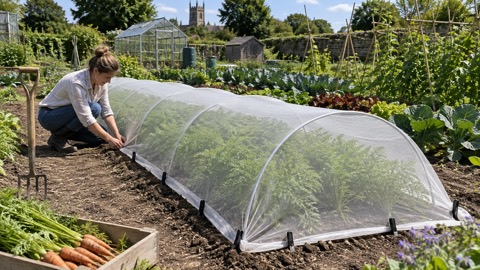
Pests and disease. Overwintering brassicas are exposed for months, and a crop that survives the cold can still be lost to pests. Plan for it: see Vegetable Pests and Diseases: Prevention and Control for prevention and control, and How to Protect Carrots from Carrot Fly where roots are in the ground over winter.
Bolting. Crops that run to seed stop producing leaves. Lettuces, spinach and Swiss chard may have gone to seed, meaning the usually leafy vegetables have formed flowers on the end of a long stalk and then seeds15. Once that happens the leaf harvest is over, though the seed can be collected, dried, sorted and saved to sow next year15. If you have space, leave one leek plant, an onion plant and maybe even a carrot and parsnip plant to over-winter; the next year they will flower and you can save their seeds15. For more on this, see How to Save Seed from Your Own Vegetables.
A fourth risk is simply running out of time and space. Check the crop planner to see whether your chosen vegetables can be sown and harvested in the time and season available16. If the answer is no, choose a quicker variety rather than hoping.
Small gardens, containers and growing under cover
You do not need a full plot to eat through the gap. A container garden can work for people short of space, lacking soil or in temporary accommodation17. Salad leaves are the easiest start: fill your chosen container with a peat-free compost, and if you have no flower pots or seed trays, a yogurt pot or fruit punnet with holes punched in the bottom works perfectly8. Grow them indoors or on a windowsill for the earliest leaves8.
Mini-veg varieties suit small spaces particularly well. They are ready to harvest sooner than a large size variety, which is particularly helpful if you have a short growing season further north, and they crop well at close spacing1. For more on making the most of limited room, see How to Start Growing Food in a Small Space and How to Grow Microgreens Indoors.
Under cover, the options widen. A glasshouse or polytunnel lets you extend the season with extra heat and light9, and greenhouse beds can bring outdoor crops such as potatoes and peas forward several weeks before being cleared for winter salads and veg by July and August1. If you are deciding between structures, see Polytunnel or Greenhouse?.
Freezing and preserving the surplus
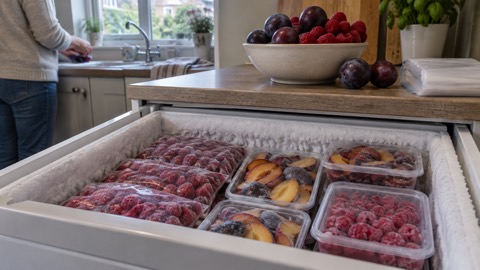
A glut is only useful if you hold on to it. Freezing is the simplest route for many households, and the same freezer that holds the summer surplus carries you towards spring. Keep it stocked with essentials such as bread, and keep long-life milk in the cupboard18. Food safety rules still apply: eat leftovers within 2 days19.
Frozen produce has a second use in the garden year. A pack of frozen vegetables makes a good cold compress: use a pack of frozen vegetables or partly fill a plastic bag using small ice cubes or crushed ice, and wrap the bag in a dry cloth20. That is a small household tip rather than a preserving method, but it is worth knowing when the freezer is full.
For the detail of preparing and blanching before freezing, see Freezing Home-Grown Fruit and Vegetables and Why Blanch Vegetables Before Freezing?. If you want to preserve without relying on the freezer, see Fermenting Vegetables at Home: Sauerkraut, Kimchi and Brines and the Home Preserving Equipment Checklist.
Where to get help and further reading
The hungry gap is a planning problem, and the best help is a calendar and a crop planner. The RHS vegetable crop planner sets out what can be sown and harvested in the time and season available16, and the RHS month-by-month guides list what to sow, plant and harvest each month5. Garden Organic's guide to vegetables all year round is the clearest single account of the gap and how to close it1.
If you are starting from scratch, begin with Growing Your Own Vegetables: Where to Start and the Self-Reliance at Home section. For the wider household picture, including keeping food in the cupboard for emergencies, see Emergency Food: A Household Guide to Stores, Safety and Meals Without Power.
Sources (21)
- Vegetables all year round, Garden Organic, 2026-10-29
- Harvesting & Storage, Harrod Horticultural
- Vegetable crop planner, Royal Horticultural Society, 2026
- Harvesting and storage, Garden Organic, 2026-10-29
- Month by month guide to food growing: summer term, Royal Horticultural Society, 2026
- Broccoli, Love Food Hate Waste, 2026
- Broccoli Sprouting Summer Purple, Premier Seeds Direct, 2026-11-04
- Quick growing food, Garden Organic, 2026-10-29
- Growing crops with hydroponics, Royal Horticultural Society, 2026
- Planning your planting, Garden Organic, 2026-10-29
- Harvesting and storing vegetables, Garden Organic, 2026-10-29
- WeatherReady winter checklist, Met Office, 2026
- Keeping warm and well this winter, GOV.UK, 2026-04-28
- Stay warm and nourished, NHS Norfolk and Suffolk ICB, 2026-10-16
- Tips on saving your own seeds, Royal Horticultural Society, 2026
- What shall we grow?, Royal Horticultural Society, 2026
- The Container Garden, Centre for Alternative Technology, 2025-06-26
- Keeping well in winter, Lancashire County Council, 2026-10-29
- Chilling, Food Standards Scotland, 2026-10-25
- Cold compress, St John Ambulance, 2026-10-28
- Month by month guide to food growing: spring term, Royal Horticultural Society, 2026
 Hydroponic System Parts List
 Year-Round Sowing Calendar
 Preserving Equipment Checklist
 Blanching Vegetables
 Carrot Fly Protection
 Knowing When Chutney Is Ready
 Clubroot in Your Soil
 Drought-Resistant Vegetables
 Edible Flowers Safety
 Extending the Growing Season
 Freezing Fruit Without Sugar
 Garden Fleece Frost Protection
 Keeping Varieties Pure for Seed
 Making Leafmould
 Growing Microgreens Indoors