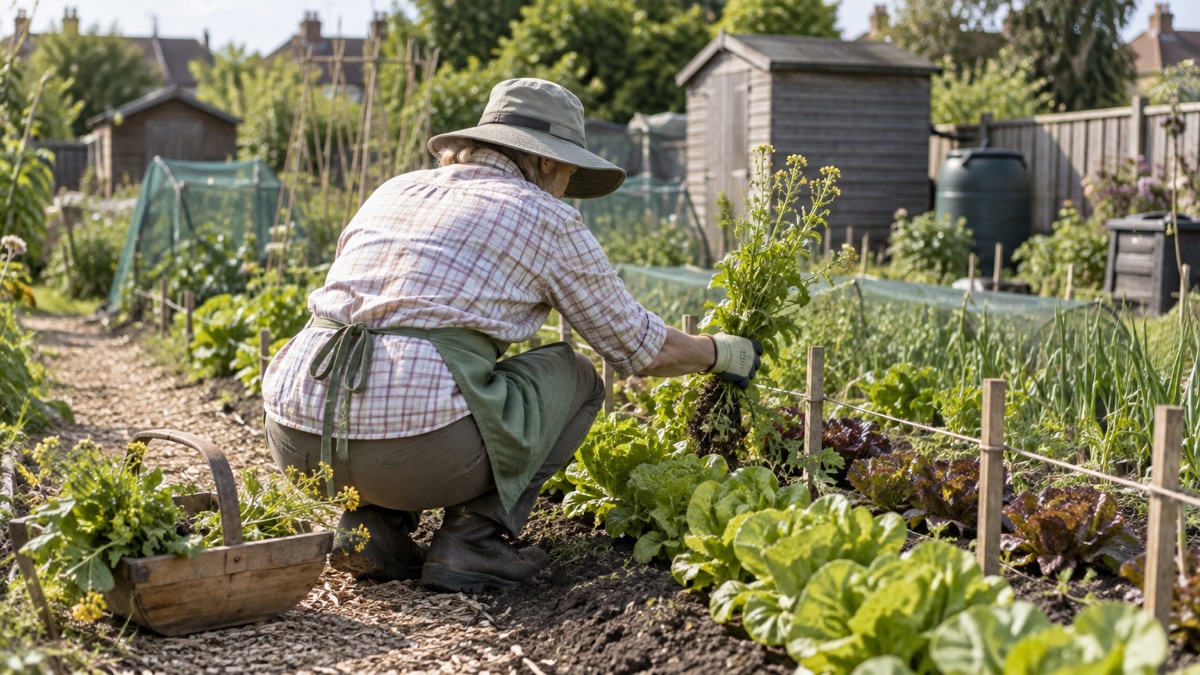
Keeping a vegetable variety pure when you save seed comes down to two rules: remove plants that are not true to type, and stop pollen from a different variety reaching your seed plants1. Everything else on this page is detail hung on those two.
The first decision is what you save from. Save seed from open-pollinated varieties, not F1 hybrids, if you want the next generation to come back like the parent1. The second is how much company your crop keeps. Some vegetables cross readily with their neighbours and need isolating; others, peas among them, barely cross at all and can be saved side by side2.
Get those two things right and the rest is selection and drying. Get them wrong and you can spend a season growing seed that turns out to be a mongrel, or a plant that looks nothing like the packet. This page sets out which crops need what, how far apart, and how many plants you need to keep a variety healthy.
Why save your own seed, and what it asks of you
Saving your own seed each year allows your varieties to adapt to your own specific conditions, and you can note any interesting or useful characteristics, such as pest or disease resistance, as you go5. That is the practical case for it: a variety that has spent several seasons in your soil, selected by you, is a better fit for your garden than one that has only ever known a seed company's field.
The wider case is about choice. Garden Organic points out that uniformity in varieties does not take into account the effect of climatic variations, and that local varieties were more common because they grew well in the areas where they were bred5. It also notes that for many producers the main reasons for growing a particular variety are ease of harvest and ability to travel, rather than flavour5. Saving your own is how a household keeps a variety that suits it rather than the supply chain.
It is not a new idea. Amateurs can save their own seed, as has been done for thousands of years, well before the advent of large seed companies and modern agriculture5. You do not need a supplier's permission or a subscription; you need a variety worth keeping and enough plants to keep it healthy.
That last point is where gardeners come unstuck. A variety kept from a handful of plants narrows its genetic pool, and the effect compounds. For carrots, you really need to save seed from at least 40 good roots to maintain good genetic diversity; with too small a genetic pool you will end up with small, poor quality roots in a very few generations2. Other crops ask for less. Leeks need seed saved from at least 5 plants, staked to stop them falling over6. Broad beans want around 15 plants to maintain a healthy level of genetic diversity7, and spring onions at least 508. Check the number for your crop before you commit a bed to it.
Variability is not a fault to be bred out. Garden Organic describes it as one of the advantages of an open-pollinated variety, because it allows some degree of adaptable resistance to diseases, pests and stress, and lets future breeders select characteristics1. The slight differences between plants in your row are the raw material for next year's selection.
Open-pollinated seed, not F1 hybrids
The single most common reason saved seed disappoints is that it came from an F1 hybrid. Garden Organic's guidance is plain: you will need to save seed from open-pollinated varieties, not F1 hybrids1. A hybrid is bred by crossing two parent lines, and its seed does not reliably reproduce the plant you grew.
This is not an argument against hybrids in the garden. They have real virtues, and the catalogues are honest about them. Thompson & Morgan's growing guides describe hybrid varieties of courgette as often having better disease and pest resistance, while heritage varieties allow seed collection for next year and are more sustainable9. That is the trade in one sentence: resistance and uniformity on one side, seed-saving and adaptability on the other.
Sweetcorn shows the same split. Suttons notes that while older varieties were difficult to grow in the UK, modern F1 varieties are ideally suited to growing in most of the UK10. But open-pollinated sweetcorn still exists and has its own case: Real Seeds describes its Double Standard Bicolour as proper open-pollinated seed, not hybrid, so it is widely adapted and adaptable to future change in climate or soil11. If sweetcorn is the crop you want to save from, that is the kind of variety to start with.
Celery is a further example. Suttons notes that many of the highest quality varieties are F1 hybrids specifically bred for good yields in our climate12. If you want to save celery seed, you are choosing from a smaller pool, and you should expect to look harder for open-pollinated stock.
The practical rule is simple. Decide before you sow which crops you intend to save from, and buy open-pollinated varieties for those. Grow hybrids for the crops where you want their particular strengths and have no intention of saving. Do not try to do both with the same packet.
Preventing cross-pollination
Cross-pollination is the second of the two rules, and for some crops it matters more than roguing. Garden Organic is explicit: with outbreeding vegetables, such as brassicas, runner beans, alliums and beetroots, keeping pollen from different varieties away from each other is more important than roguing out, because crossing widens genetic variability, and rectifying that takes patience and several seasons1.
Different crops need different measures. The table below sets out what the guidance says for the main groups.
| Crop group | What happens | What to do |
|---|---|---|
| Brassicas (broccoli, kale, cabbage, Asian greens) | Cross readily; insect pollinated | For absolute purity, no other flowering brassicas within a mile; in practice fences, trees and tall crops break up insect flight, so problems are limited if immediate neighbours have no flowering crops2. Ensure no other brassicas of the same species are allowed to flower14 |
| Peppers and chillies | All cross with each other | Grow only one variety, or keep insects out with a net cage or by bagging individual flowers13 |
| Pumpkins, squashes, marrows, courgettes | Cross readily with each other | Hand pollinate one or more fruits; usually the only way to keep pure seed on a home scale2 |
| Sweetcorn | Wind pollinated | Keep supersweet varieties away from standard varieties, and be cautious near maize crops or ornamental maize, which can give starchy kernels with diminished flavour10. Sugar-enhanced types should be grown well apart from supersweet types15 |
| Aubergines | Mainly self pollinated but insects can cross them | Grow only one variety if saving seed2 |
| Parsley | Flat and curly leaved types cross; insect pollinated | Grow only one type for seed at a time; harvest seed from individual flowerheads as they dry and turn brown, as it drops when ready2 |
| Basil | Easily cross-pollinated | If growing two varieties together, let only one flower and seed16 |
Where a crop is too valuable to lose to a neighbour's flowering brassica, physical isolation is the answer. For beetroot, chard and leaf beet, Real Seeds gives a method that works on a garden scale: plant at least six plants very close together in a circle with a wooden stake in the middle; as the seed stalks form, growing up to four feet tall, tie them together supported by the stake; then cover the group of flower heads with a shiny paper bag that will withstand rain, or a bag made of agricultural fleece, shaking it from time to time so pollen is distributed inside2.
Distance is the other lever, and it is worth being realistic about it. A mile of clear ground is not a household-scale measure. The practical version is to know what is flowering within insect range of your plot, and to talk to the neighbours whose gardens back onto yours.
Peas rarely cross, so several varieties can be saved together
Peas are the crop that makes seed saving feel easy. Real Seeds states that peas do not in general cross very easily, so you can save seed from several varieties without worry3. Its own guidance is that peas are almost entirely self pollinating, only very occasionally crossing with other plants2.
Garden Organic classes peas and French beans together as inbreeding vegetables that will not cross with each other or cross rarely, though it adds that precautions still need to be taken when saving seed1. So the freedom is real but not absolute: grow your several varieties, keep an eye out for anything odd, and do not assume the same licence extends to their relatives.
It does not. Runner beans are outbreeding and belong with the brassicas and alliums in the group where keeping pollen apart matters more than roguing1. French beans are in the safer group; runner beans are not. If you grow both, treat them differently.
The practical upshot for a household with limited space is that peas are a good first seed-saving crop. You can grow several varieties in the same plot, eat from all of them, and keep seed from each. Peas are almost entirely self pollinating, only very occasionally crossing with other plants17, and they don't in general cross very easily, so you can save seed from several varieties without worry18.
"Peas don't in general cross very easily, so you can save seed from several varieties without worry."
Removing plants that are not true to type
Roguing is the first of the two rules and the one most often skipped. Garden Organic's instruction is to remove markedly different plants as soon as they are spotted, so that they do not contribute to the next generation1. The word to hold onto is "markedly": you are looking for plants that are obviously not the variety, not plants that are merely a little smaller or slower.
What you are selecting for depends on the crop. For corn salad, choose plants that are true to type, healthy and have shown pest resistance, and avoid early bolters18. For brassicas, keep at least six plants for seed, ideally more, and remove any poor specimens or any that are not typical for the variety; these can be eaten so long as you do not allow any flowers to open2.
That last point is worth dwelling on. A plant you have pulled because it is not true to type is still food, provided no flowers have opened. Roguing need not be wasteful.
Selection starts before the seed is even set. Only save seed from healthy looking plants16. A plant carrying disease will pass on more than its genes, and a weak plant selected for convenience rather than quality is how a variety drifts.
There is a second kind of selection, less about purity than about the garden you want. Harrod Horticultural suggests selecting varieties that bear over a long period of time rather than all at once, such as beans19. That is a choice made at the catalogue stage, but it is the same instinct: decide what you want from the plant, then keep the plants that give it.
Handle the plants you keep with care. When lifting root crops other than potatoes for storage, remove excess soil but do not wash or scrub, as this may damage the skin, and remove leaves by twisting them off close to the crown20. The same gentleness applies to seed plants you intend to overwinter.
Keeping the seed you have saved
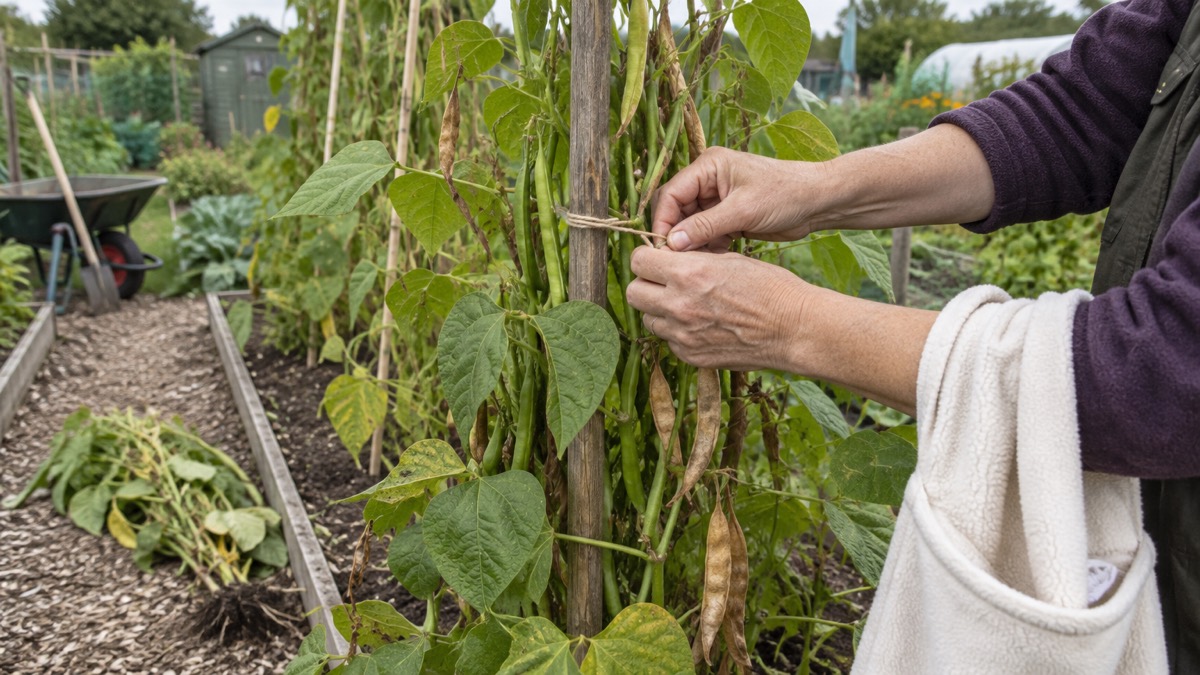
Purity at flowering is only half the job; the seed still has to reach next spring in condition. The two factors that reduce the life of the seed are moisture and warmth4. Store saved seed dry and cool, and label it with the variety and the year.
Drying matters most for wet-processed seed. For tomatoes, water is added and poured off several times to clean them, the seed is rinsed in a sieve and put on a plate to dry21. For peppers, let the fruit reach its final ripe colour, cut it open and flick out the seeds, air dry them, then dry properly for storage13.
If you want to go further into the detail, see how to save seed from your own vegetables and how to store saved seed so it lasts. If you are unsure whether last year's packet is still worth sowing, how to test whether old seeds will still grow sets out the test.
Where to start if you have never saved seed
Start with one crop you actually eat a lot of, and one that is forgiving. Peas are the obvious first choice, given how rarely they cross3. Salad leaves are another: Garden Organic notes that loose leaf lettuces are slow to run to seed, and that cut-and-come-again varieties extend the harvesting period22, which gives you a long window to pick your seed plants.
Buy open-pollinated seed for that crop, grow enough plants to keep the variety healthy, rogue out anything obviously wrong, and dry and store the seed properly. Then do it again next year. That is the whole method.
If you would like to build the rest of the garden around it, growing your own vegetables: where to start covers the basics, and sowing seeds indoors and outdoors covers timing and depth. For the wider picture of household food resilience, the self-reliance section gathers the related guides.
Sources (22)
- Preserving varietal purity, Garden Organic, 2026-10-29
- Seed saving instructions, Real Seeds, 2026
- Soup peas, Real Seeds, 2026
- Seed storage for longer life, Garden Organic, 2026-10-29
- Why save seed, Garden Organic, 2026-10-29
- How to grow leeks, Vital Seeds, 2025-04-29
- How to grow broad beans, Vital Seeds, 2025-04-29
- How to grow spring onions, Vital Seeds, 2025-04-29
- Top of the crops: courgette, Suttons, 2026-01-14
- Top of the crops: sweetcorn, Suttons, 2026-01-14
- Sweetcorn, Real Seeds, 2026
- Top of the crops: celery, Suttons, 2026-01-14
- Sweet peppers, Real Seeds, 2026
- How to grow Asian greens, Vital Seeds, 2025-04-29
- Growing guides, D.T. Brown Seeds, 2026
- Tips on saving your own seeds, RHS, 2026
- Peas, Harrod Horticultural, 2026-11-04
- How to grow corn salad, Vital Seeds, 2026-11-04
- Harvesting and storage, Harrod Horticultural, 2026-11-04
- Harvesting and storing vegetables, Garden Organic, 2026-10-29
- Tomatoes vines, Real Seeds, 2026
- Vegetables all year round, Garden Organic, 2026-10-29
 Hydroponic System Parts List
 Year-Round Sowing Calendar
 Preserving Equipment Checklist
 Blanching Vegetables
 Carrot Fly Protection
 Knowing When Chutney Is Ready
 Clubroot in Your Soil
 Drought-Resistant Vegetables
 Edible Flowers Safety
 Extending the Growing Season
 Freezing Fruit Without Sugar
 Garden Fleece Frost Protection
 Avoiding the Hungry Gap
 Making Leafmould
 Growing Microgreens Indoors