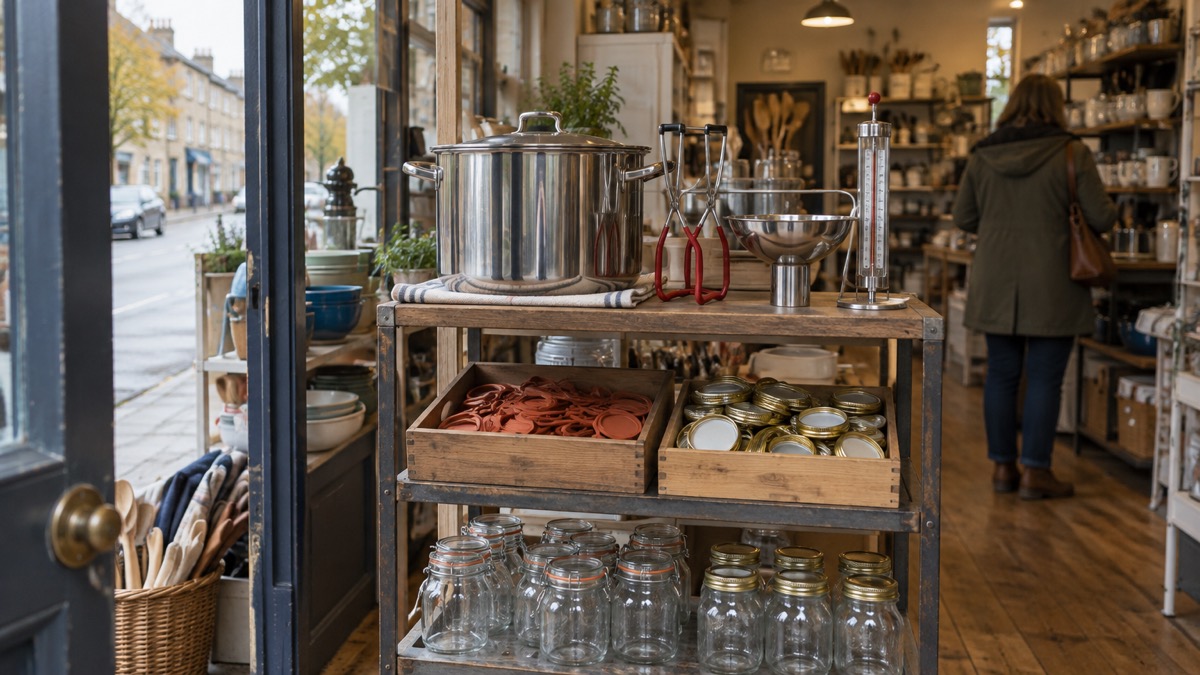
If you are planning to bottle, pickle or jam your own harvest, the kit you need is smaller than most catalogues suggest: jars with sound lids and seals, a pan deep enough to sterilise and process them, tongs for lifting hot jars, and a clean, dry place to keep it all. The Food Standards Agency's consumer advice on home food preservation sets the standard the whole kit serves: wash your hands thoroughly before, during and after preparing food, clean and sanitise work surfaces and equipment, use suitable containers, check jars, lids and containers for damage and discard damaged ones, and sterilise containers when instructed1.
That advice also fixes the limits of what equipment can do for you. No jar or gadget makes a preserve safe on its own. You need reputable instructions followed exactly, including temperatures and processing times, fresh ingredients, and preserved foods labelled, dated and used within their recommended shelf life, with stored foods checked regularly for spoilage1. The kit exists to let you follow those instructions properly, not to replace them.
This checklist sets out what to gather, what each item does for the household, how to check and reuse jars between batches, and how to store the kit so it is ready when the fruit comes in. It also covers the containers you will want beyond preserving, because a household that stores food and water needs both.
The preserving equipment checklist
Work through this list before your first batch. Each item earns its place by what it lets you do safely, and the citation shows where the advice comes from.
Glass jars keep food without absorbing odours, flavours or stains
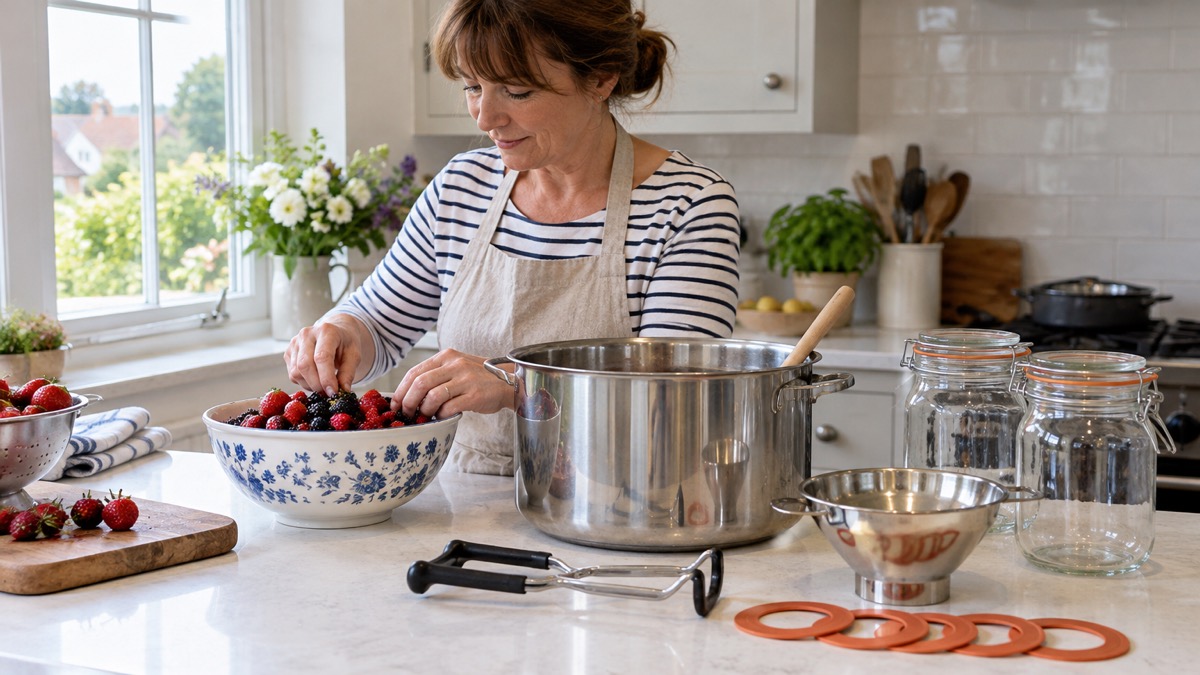
Glass is the default material for preserves for a practical reason the maker states plainly: glass is BPA free and does not absorb odours, flavours or stains, and no harmful chemicals or toxins can leak into the food2. For a household putting up jam, chutney or pickles, that matters twice over. A jar that holds on to the smell of last year's pickled onions will taint this year's jam, and a material that stains takes on the colour of beetroot or blackberry and never comes clean.
The maker's clip top jar uses a high grade stainless steel clip system2. That is the mechanism that holds the lid down against the rubber seal. It is worth understanding because it is the part that fails first: a clip that has lost its spring, or a seal that has hardened or perished, will not hold the lid tight. This is why the Food Standards Agency's advice to check jars, lids and containers for damage and discard damaged ones is not box ticking1. A damaged seal is the difference between a preserve that keeps and one that spoils quietly on the shelf.
Glass also suits pantry storage. The maker describes its Clip Top Jar as the perfect size for preserving jam and chutneys and for storing dry foods like tea, coffee and grains2. The same jar that holds a batch of chutney can hold rice, lentils or coffee, and glass lets you see what is inside without opening it.
Reusing and refilling jars between batches
Reusing jars is sensible and the official advice supports it, provided you check them. The Food Standards Agency's list is short and worth memorising: check jars, lids and containers for damage and discard damaged ones, sterilise containers when instructed, and make sure equipment and containers are clean before use1. Run a finger round the rim of every jar before it goes back into service. A chip on the sealing surface will stop the lid sitting flat.
Between batches, the kit needs the same care as the jars. Wash and dry jars thoroughly, check seals and clips, and set aside any jar whose lid no longer fits snugly. The maker's clip top jars use a high grade stainless steel clip system2.
There is a second kind of refilling worth planning for: the household store. A preserving kit sits naturally alongside the food and water you keep for disruptions. Official guidance for a home emergency kit suggests non-perishable food that does not need cooking, plus a tin opener, ready-made baby formula and pet food if needed8. Greater Manchester's advice is to store bottled water and non-perishable tinned food such as ready-to-eat tinned meat, fruit or vegetables, with a tin opener9. Your jars and containers are what keep those stores organised and protected.
If you are preserving a glut, think about what you will actually eat and in what quantity. Small jars for pickles and larger jars for jam and dry stores match the maker's recommendations2, and labelling and dating each jar means you can rotate stock and use the oldest first, as the Food Standards Agency advises1.
Storing your preserving kit so it is ready to use
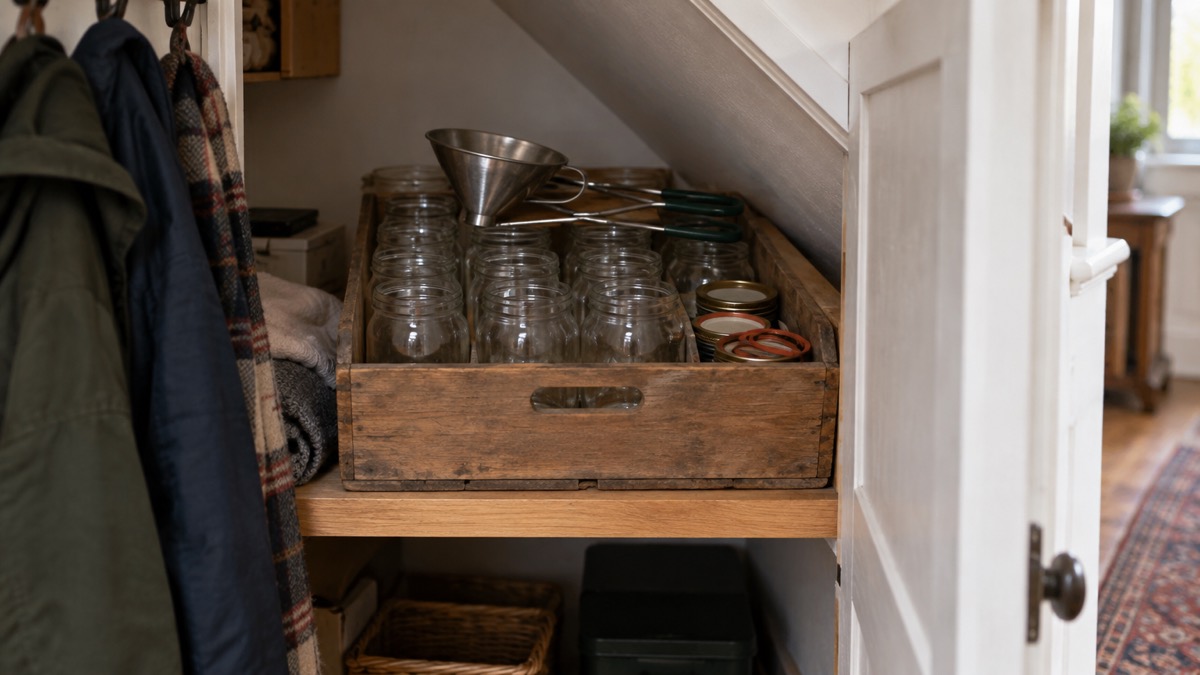
A kit that lives in three cupboards and a shed is a kit you will not use. Official emergency supplies guidance suggests using plastic boxes or backpacks to keep supplies together, in a designated place that all household members know7. The same approach works for preserving equipment: one box for jars and seals, one for the pan and tongs, and a shelf for labels and clean cloths.
Keep the kit dry. Damp is the enemy of seals and of the stainless steel clips, and a jar stored in a cold shed can pick up smells. A cupboard indoors, away from direct heat, is better than an outbuilding.
The kit should also be stored where you can reach it quickly, because preserving often happens at short notice when a crop ripens all at once. Wiltshire Council's advice on emergency kits is to store the kit near an exit to your home, such as by the front door or under the stairs, so it can be easily grabbed10. For preserving equipment the principle is the same: put it where you will see it and use it.
Glass or plastic? Choosing containers for food and water
The right container depends on what goes in it, and official advice draws the line clearly. For water, store it in plastic containers such as soft drink bottles, and avoid containers that will decompose or break, such as milk cartons or glass bottles4. The Public Health Agency in Northern Ireland makes the same point: bottles and containers used to collect water should be clean and suitable for containing drinking water11. A glass jar of water in an emergency kit is a breakage waiting to happen.
For food, glass has the advantages the maker describes: it does not absorb odours, flavours or stains2. For leftovers and everyday storage, Food Standards Scotland advises opting for clean, sealable and reusable containers instead of cling film where you can, to cut down on plastic waste12. That can be glass or plastic, as long as it seals.
| What you are storing | Best container | Why | Source |
|---|---|---|---|
| Jam, chutney, pickles | Glass clip top jars with sound seals | Glass is BPA free and does not absorb odours, flavours or stains | 2 |
| Small pickles, garlic, red onions | Wide Mouth Preserve Jars | Maker recommends them for smaller fruits and vegetables | 3 |
| Dry foods: tea, coffee, grains | Glass clip top jar | Maker recommends this jar for dry stores | 2 |
| Drinking water | Plastic bottles, clean and suitable for drinking water | Official advice: avoid glass bottles, which can break | 4 |
| Leftovers | Clean, sealable, reusable containers | Food Standards Scotland advice to cut plastic waste | 12 |
| Pet food | Airtight, waterproof container | Official pet emergency guidance | 6 |
There is one more use for plastic containers worth knowing. Official advice for disabled people and carers suggests placing medication in a waterproof container, for example a plastic food container, if you can13. Hospital guidance on storing medicines at home says to keep them away from water drips and possible food contamination, ideally in a clean, dry plastic container14. A spare plastic box from the preserving kit does that job well.
Keeping the kit clean and the food safe
The equipment only works if it is clean. The Food Standards Agency's advice is to wash hands thoroughly before, during and after preparing food, clean and sanitise work surfaces and equipment, use fresh ingredients, and regularly check stored foods for spoilage1. Build those steps into every batch: clean the pan and tongs, sanitise the worktop, wash the jars, then fill and seal.
If your home has been flooded, the rules for containers change. Food in water-resistant packaging such as metal cans, sealed pouches and tetra packs can be kept if it is not damaged, but the outside of the packaging needs cleaning and sanitising first to avoid cross-contamination15. The same principle applies to jars and containers that have been in flood water: clean and sanitise before use, and discard anything damaged.
For households storing food for disruptions, the same discipline applies. Label and date preserved foods, use them within their recommended shelf life, and check stored foods regularly for spoilage1. A jar that looks, smells or tastes wrong should go, not be kept on the shelf in hope.
Where the preserving kit fits in a household emergency store
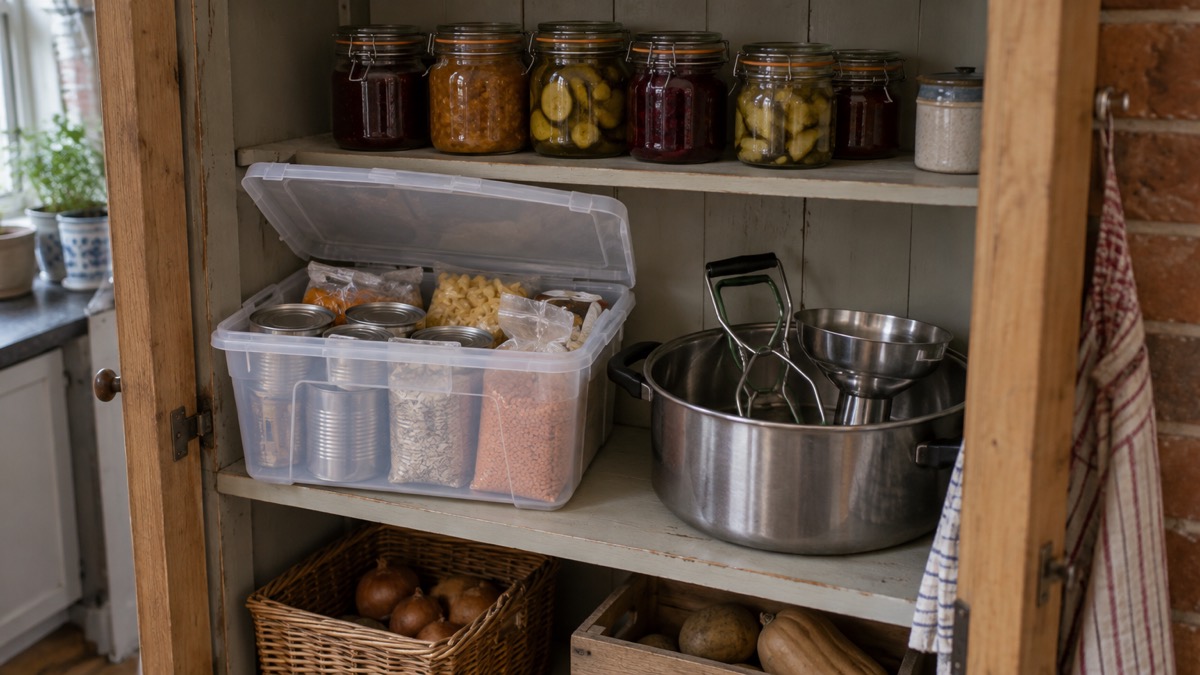
Preserving equipment is part of a wider store, and the official emergency guidance shows how the pieces fit. A home emergency kit for up to seven days of disruption includes non-perishable food, a can and bottle opener, bottled water, water purification tablets, and containers for water16. Pembrokeshire's flood kit advice lists bottled water and non-perishable foods, baby food and baby care items, and copies of home insurance documents17. Lancashire's emergency pack advice includes basic cutlery and a tin opener18.
Your jars and containers are what make those stores usable: they keep dry goods airtight, protect food from damp, and let you see what you have. The Food Standards Agency's preservation advice and the emergency kit advice point the same way: suitable containers, checked for damage, clean before use, labelled and dated1.
Sources (18)
- Consumer advice for food preservation at home, GOV.UK, 2026-10-26
- Kilner Round Glass Clip Top Preserving Jar, Kilner, 2026-11-04
- Checklist for pickles, Kilner, 2026-11-04
- Create a flood pack, Bradford Council, 2026-10-29
- TPS22 Litre Pressure Canning Starter Kit | Love Jars UK, Love Jars UK (lovejars.co.uk)
- Emergency grab bags | Buckinghamshire Council, Buckinghamshire Council
- Emergency supplies kit, Denbighshire County Council
- Power cuts, BEREADY, 2026-10-21
- Loss of essential services, Greater Manchester Combined Authority, 2026-10-29
- Pet emergency kit, Wiltshire Council, 2026-10-29
- Water safety, Public Health Agency, 2013-06-04
- Food storage, Food Standards Scotland, 2026-10-25
- Advice for disabled persons and carers, BEREADY, 2026-10-20
- Storing medicines at home, United Lincolnshire Hospitals NHS Trust, 2026
- Food safety after a flood: consumer advice, GOV.UK, 2018-01-09
- Emergency kits and grab bags, Central Bedfordshire Council, 2026
- Flooding checklist for residents, Perth and Kinross Council, 2024-08-01
- Emergency pack, Lancashire Prepared, 2026-10-29
 Hydroponic System Parts List
 Year-Round Sowing Calendar
 Seed Sowing Equipment Checklist