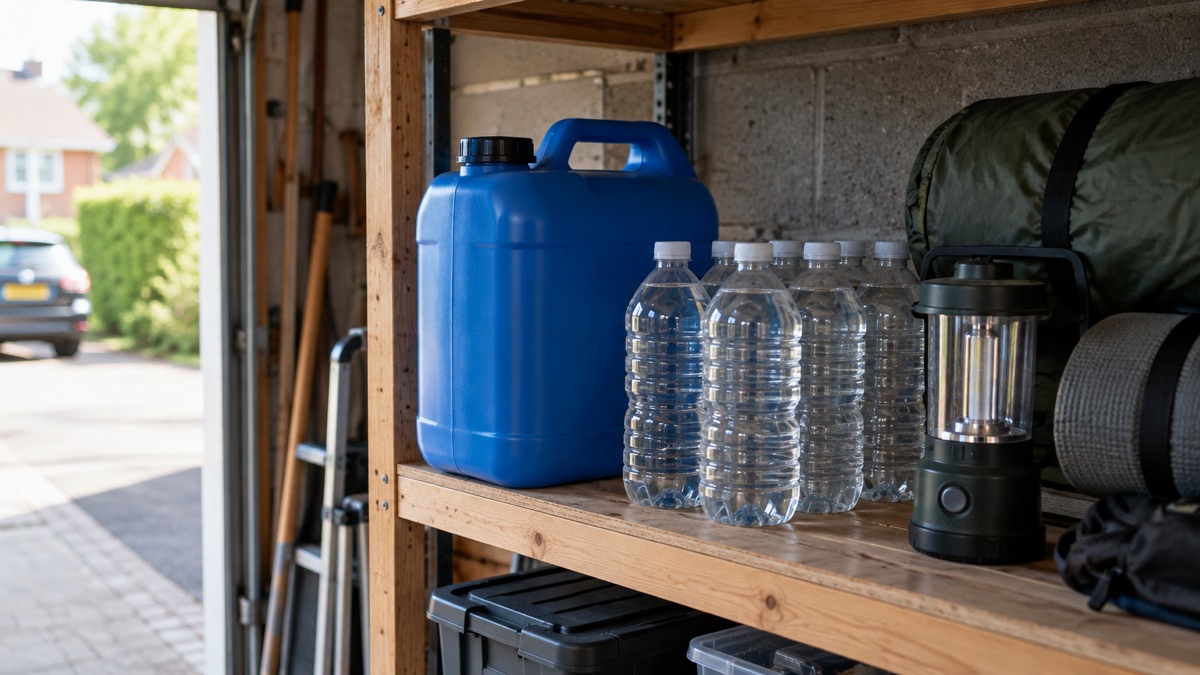
Storing water for an emergency comes down to two decisions: how much to store, and what to store it in. The national Be Ready checklist advises bottled water for 3 days, at 3 litres per person per day for drinking, with more needed for other tasks such as cooking and washing1. For containers, the safest starting point for most households is simple: store water in plastic containers such as soft drink bottles, and avoid containers that will decompose or break, such as milk cartons or glass bottles2. Beyond that, purpose-made jerrycans, carriers and tanks give you larger reserves, and this page explains how to tell the safe ones from the ones that must never hold drinking water.
The container matters as much as the water. A tank designed for drinking water is made from material that does not taint the water it holds, and the Drinking Water Inspectorate advises that drinking water from a storage tank is safe to use if the tank is properly designed, correctly installed and kept in good condition3. A tank or container made for rainwater, chemicals or fuel is not designed for that job, and using it for drinking water can put your household at risk. The sections below cover what to store, what an outage actually looks like, how to choose containers by material and approval, and how sizes, colours and designs fit different homes.
Water for drinking and sanitation: what to store
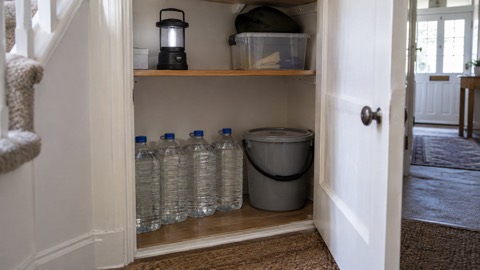
Every UK emergency kit list puts water near the top. One council emergency kit list gives water for drinking and sanitation as a core item7. Nottinghamshire Council advises having a supply of bottled water, ready to eat food and a tin opener in your home8, and Dumfries and Galloway Council suggests keeping your household emergency pack in a waterproof container or bag in an easily accessible place9. The common thread is that water is stored, sealed and reachable, not scattered around the house.
The quantity to aim for comes from the national checklist: bottled water for 3 days, at 3 litres per person per day for drinking, with more needed for cooking and washing1. Work out what that means for your household and add for the people and animals who need more. Greater Manchester's resilience guidance notes that additional water might be needed to make up baby formula, for medical devices and for pets4. For pets, Wiltshire and Swindon Prepared's pet kit advice is a couple of bottles of water and a bowl to keep it in10.
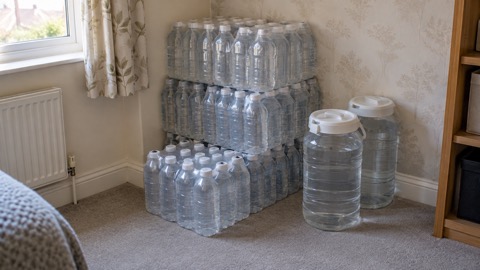
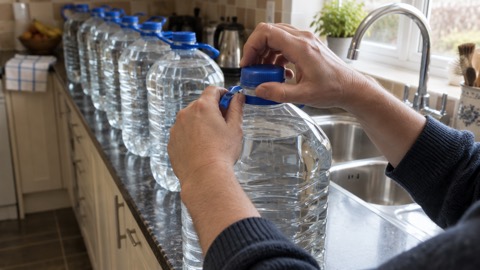
What you store it in matters from the start. Bradford Council's flood pack guidance is direct: store water in plastic containers such as soft drink bottles, and avoid using containers that will decompose or break, such as milk cartons or glass bottles2. Milk cartons decompose because they are not built for long-term storage, and glass bottles break exactly when you need them most. Soft drink bottles are a good household option because they are designed to hold fluids safely, they seal, and they are easy to rotate: buy bottled water, drink it in normal life and replace it.
There are also fluids you may already have. The government's water outage guidance points out that there are other fluids which are safe to drink, including soft and fizzy drinks that can be stored in a cupboard11. Those count towards your drinking reserve, though not towards cooking or washing. For the fuller picture on quantities, see How Much Drinking Water to Store per Person, and for keeping tap water safely, Storing Tap Water Safely at Home.
What a drinking water outage looks like: 51 hours without supply at Shotton Mill
It helps to know what you are preparing for. Interruptions to water supply occur for many reasons, ranging from scheduled maintenance to burst water mains12, and they are usually over quickly with minimal impact, though longer water supply outages occasionally happen11. Surrey's emergency planning guidance puts it plainly: loss can last a few minutes or much longer13. So the container you choose has to cover both the short interruption and the rare long one.
The rare long one is real. The Drinking Water Inspectorate's report on drinking water in Wales records that the potable supply to Shotton Mill was lost from 14:00 on 14 August 2025 until 20:00 on 16 August 2025, a total interruption of 51 hours, after a burst on a Dŵr Cymru Welsh Water main, with Do Not Drink advice issued5. Fifty-one hours is more than two days without safe tap water, and it followed a single upstream failure. That is the scale of gap a household store has to bridge.
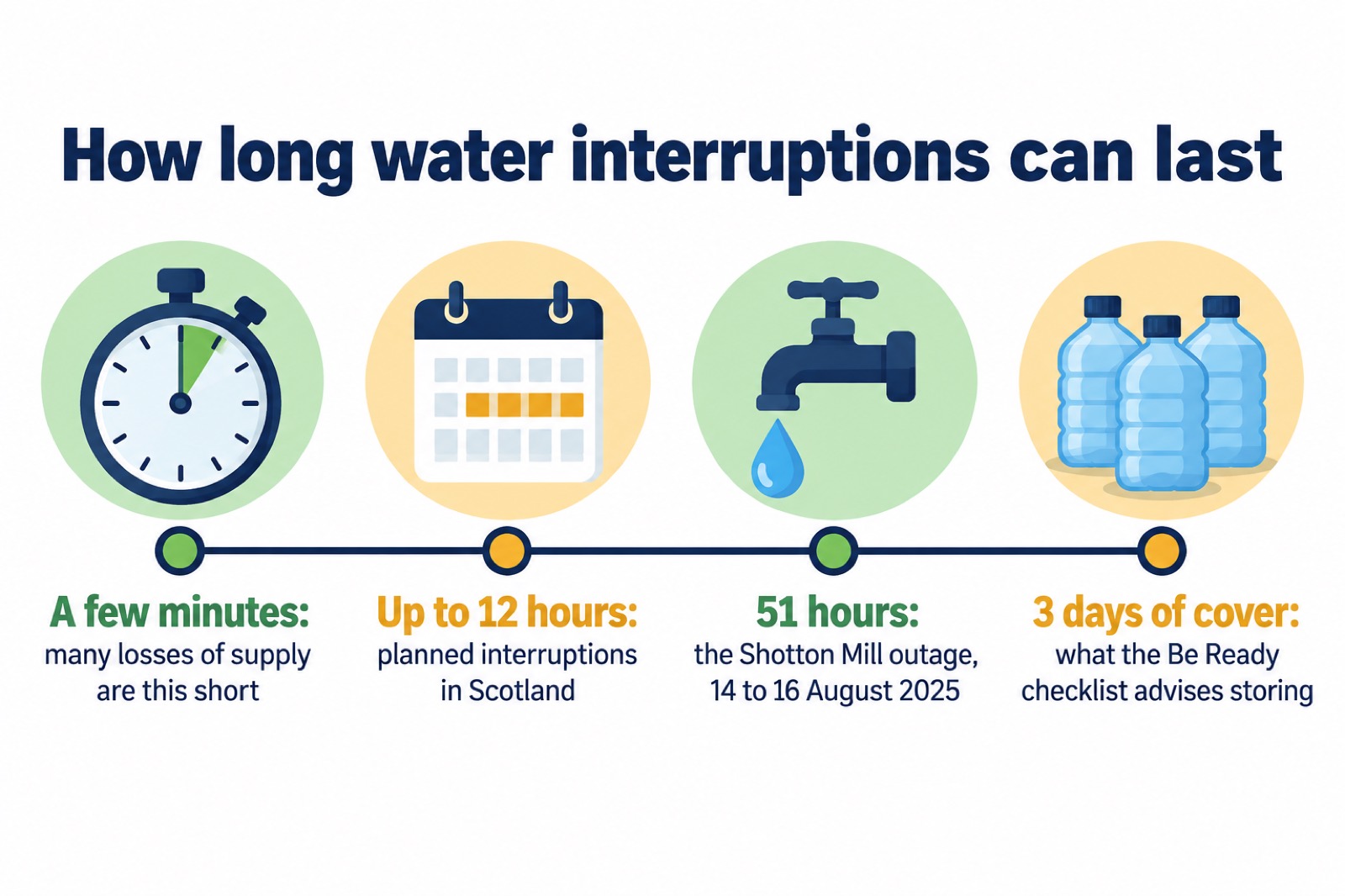
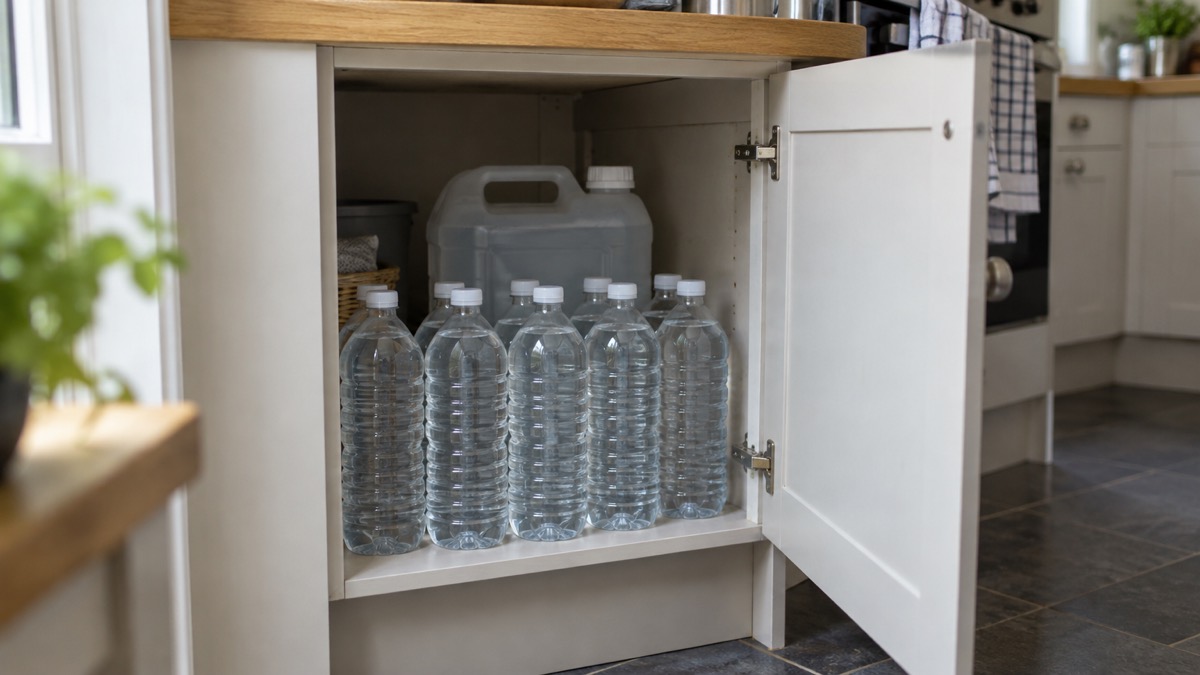
Planned work is easier to prepare for. Scottish Water states that planned water supply interruptions can last for up to 12 hours, and that you will receive a blue Interruption to Supply notice card at least 48 hours in advance6. Its advice for a planned interruption is to ensure all your taps are turned off and to store enough water in containers for drinking, cooking, washing and flushing toilets while the supply is off6. So even a planned half-day outage needs containers for more than drinking: a flushing toilet and basic washing use far more water than a kettle.
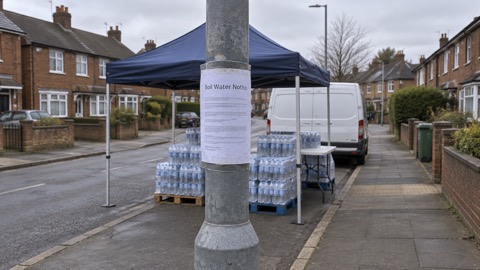
During an outage, the government's guidance is to use alternative water supplies such as bottled water solely for drinking, washing your hands and food preparation12. Water companies have their own arrangements: Surrey's guidance describes bottled water held for customers during planned interruptions and incident response, bottled water available for collection from stockpiles and for doorstep delivery, static tanks and mobile bowsers for major incidents, emergency tankers to fill static tanks and bowsers, and other options including standpipes, over-ground mains and emergency drought orders14. See Bottled Supplies, Tankers and Bowsers From Your Water Company for how that help reaches you, and How Water Companies Respond to a Major Incident for what happens behind the scenes.
Containers safe for drinking water
The rule that decides everything else: a container is safe for drinking water if it was made for drinking water. The Drinking Water Inspectorate advises that if your drinking water comes from a storage tank, it will be safe to use if the tank is properly designed, correctly installed and kept in good condition3. The same body notes that nowadays tanks are constructed of plastic (polyethylene) and are unlikely to cause problems provided they are designed for drinking water purposes and have a close-fitting cover3. Design, installation, condition and a close-fitting cover: those four things are what separate a safe store from a hazard.
For household-scale storage, the options form a ladder:
| Container | What it is for | Who it suits |
|---|---|---|
| Soft drink bottles and shop-bought bottled water | Drinking and food preparation | Every household; the simplest store to put by2 |
| Purpose-made jerrycans and carriers | Drinking and washing reserves you fill yourself | Households wanting more than bottles, or a supply for the car7 |
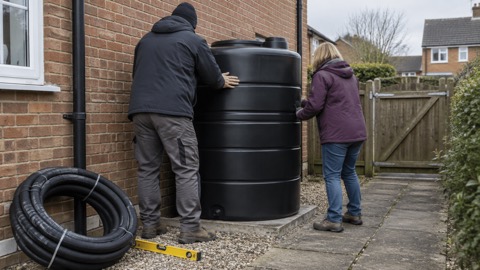
| Small potable tanks (from 150 litres) | A fixed reserve in a garage or outbuilding | Households with space who want a larger buffer15 |
| Large potable tanks (up to 30,000 litres) | Bulk drinking water storage | Smallholdings, community buildings and private supplies16 |
Two habits keep any of these safe. First, rotate: the Inspectorate's guidance on private supply storage says a tank should hold a volume sufficient to accommodate peak demand and the maximum period of interruption of supply, but must not be so large that water is allowed to remain static for lengthy periods17. A household store works the same way in miniature: buy, use, replace. Second, maintain: the Inspectorate advises checking the instructions supplied with the tank, as these should contain details of how to maintain and clean the tank3.
Never reuse a container that held something else. The Inspectorate's guidance on oil, fuel and other hydrocarbons warns that containers such as jerry cans or paint pots can be knocked over or be spilt through careless use, and advises storing chemical containers in suitable areas with adequate bunding and disposing of any chemicals no longer needed through the correct disposal methods18. A jerrycan that has held petrol or weedkiller is not a water container, however well you rinse it. If your water ever smells of petrol or oil, see What to Do If Your Water Smells of Petrol or Oil.
For households with babies or young children, the container question is sharper still. Northern Ireland's guidance on keeping children safe during a flood advises using tanker or bottled water for formula milk if drinking water is interrupted or contaminated, and if the drinking water is unsafe, not using it to wash children19. Sealed bottled water is the container you can trust in that situation. See Babies and Formula Feeds When the Supply Is Off or Unsafe.
WRAS approved polymer: why it matters
When a tank or container is described as WRAS approved, it means the material has been assessed for contact with drinking water. One maker explains that WRAS approved polymer ensures that water suppliers producing and distributing drinking water only use products that do not cause any detrimental effects on the safety or quality of the drinking water16. In plain terms: the plastic has been tested so it does not leach anything harmful or unpleasant into the water it holds.
The same principle appears in official guidance on rainwater harvesting. The Drinking Water Inspectorate advises that approved materials (WRAS or permitted under regulation 5) should be used to prevent the contamination of rainwater during runoff and collection20. So approval is not a marketing badge: it is the mechanism by which materials that touch water are checked, and it applies across storage, not just to drinking water tanks.
For a household choosing containers, WRAS approval (or an equivalent food-grade or drinking-water specification) is the thing to look for on any container you will fill with water you intend to drink. A maker's potable tank page states that this includes the plastic not tainting the water that it is holding21. That single property, no tainting, is what you are buying when you pay for a purpose-made potable container rather than reusing something from the shed.
Approval also connects to the fittings around the tank, not just the shell. A tank can be made of approved polymer and still be let down by an unsuitable tap, hose or connector. WRAS approval exists so that water suppliers producing and distributing drinking water only use products that do not cause any detrimental effects on the safety or quality of the drinking water3. For the wider picture on standards and claims, see Filter Claims and Certification: NSF Standards and Log Reduction.
Potable or non-potable: telling the tanks apart
Tanks are sold as potable (safe for drinking) or non-potable (not for drinking), and the difference is not about quality tiers: it is about purpose. One maker states that non-potable tanks are designed for the storage of non-drinking water and for everyday uses across many different applications21. Its 720 litre vertical non-potable tank, for example, provides water storage for many purposes where either mains water is not required or not available, in process and industrial storage applications21.
That is genuinely useful in an emergency, but only for the right jobs. Water from a non-potable tank can serve for flushing a toilet, washing down floors or soaking outdoor areas. It must not be used for drinking, washing hands, food preparation or washing children. The government's outage guidance is to use alternative water supplies such as bottled water solely for drinking, washing your hands and food preparation while there is no mains supply12, and Northern Ireland's flood guidance adds that if the drinking water is unsafe, you should not use it to wash children19.
How to tell them apart when buying:
- Look for the word "potable" in the product name or description, and for WRAS approval of the polymer16.
- Check the stated use. Non-potable pages say so plainly, describing uses where mains water is not required21.
- Read the maintenance instructions. The Inspectorate advises checking the instructions supplied with the tank for how to maintain and clean it3.
- Keep them separate once bought. Label non-potable tanks clearly so no one in the household mistakes them in a stressful moment.
There is a middle case worth knowing about. The Inspectorate's guidance on private supplies says storage may take the form of a small covered reservoir, providing sufficient head to supply more than one property, or a suitably positioned storage tank, for instance in the roof space of the property, from which water flows under gravity to the taps17. On a private supply, the storage tank is part of the drinking water system, and it also serves to provide a reserve of drinking water to cater for fluctuations in demand, time out for planned maintenance or any problems17. If you are on a private supply, see Private Supplies: Wells, Boreholes and Springs.
Sizes from 150 to 100,000 litres
Size is the most practical decision after material, and the range available is enormous. Above ground rainwater harvesting storage tanks run from 150 litres for home and garden irrigation to a 30,000 litre agricultural or industrial tank15. Underground rainwater tanks are available from 180 litres to 10,000 litres15. At the top of the scale, purpose-made potable drinking water tanks include a 30,000 litre vertical WRAS approved model16, and at the bottom, a few soft drink bottles on a shelf2.
To put household needs in context, the Drinking Water Inspectorate notes that for cold water storage tanks, 250 litres is quite sufficient for most homes, because the water in the tank is frequently replenished with fresh water3. That figure is about a loft cistern feeding the plumbing, but it is a useful anchor: a few hundred litres is a serious household reserve, and anything larger needs a reason and a plan to keep the water fresh17.
| Scale | Typical size | What it is for |
|---|---|---|
| Shelf store | Bottles and jerrycans | Drinking and food preparation for days1 |
| Household tank | Around 250 litres | A frequently replenished household reserve3 |
| Above ground tank | 150 to 30,000 litres | Home and garden irrigation through to agricultural and industrial use15 |
| Underground tank | 180 to 10,000 litres | Hidden storage, typically rainwater harvesting15 |
| Water company tanker | 5,000 to 30,000 litres | Refilling static tanks and bowsers in major incidents22 |
The largest figures belong to the water companies, not to households. United Utilities describes its water tankers as vehicles fitted with large tanks for transporting water, with capacities ranging from 5,000 litres in smaller trucks to 30,000 litres in larger tankers22. Those tankers exist to fill static tanks and bowsers during major incidents14, which is one reason a household does not need to aim for tanker-scale storage: the system is built to bring bulk water to your area, and your own store only has to bridge the first hours or days. See How Water Companies Respond to a Major Incident.
When choosing a size, weigh two things against each other. Too little, and you run out during an outage like Shotton Mill's 51 hours5. Too much, and water stands unused, which the Inspectorate's private supply guidance warns against: a tank must not be so large that water is allowed to remain static for lengthy periods17. For most households, a three-day drinking store in bottles1, plus a modest container for washing and flushing, sits in the sensible middle.
Colour choices: black, boat blue or natural
Colour is the least important choice on this page, but it is one you will be asked to make, and it has a small practical edge. Potable drinking water tanks are commonly available in black, boat blue or natural colour for water for human consumption21. Rainwater harvesting tanks come in a similar range: one maker lists its 75,000 litre tank in black, boat blue, dark green or natural colour, its 60,000 litre tank in black, boat blue or dark green, and its 90,000 litre tank in black, boat blue, dark green or natural15.
The practical considerations are simple. A natural or lighter tank shows the water level more easily, which helps you check and rotate your store. Makers offer the same tanks in black, boat blue, dark green or natural, so the choice comes down to where the tank will sit: black and dark green disappear against most backgrounds, boat blue is a common choice where tanks are visible near boats and marinas, and natural suits indoor or discreet placements.
What colour does not tell you is whether the tank is safe for drinking water. A black tank can be potable or non-potable; the same is true of boat blue and natural. The words "potable" and "WRAS approved" in the product description are what carry the safety meaning, and the colour is finish only. If a seller offers the same tank in several colours, treat the choice as purely cosmetic.
Where a mains-connected tank needs fluid category 5 protection
There is one technical point that changes what you buy if you plan to connect a tank to the mains. One maker states that in many installations, potable drinking water tanks which are connected to the mains water supply will need to be fluid category 5 approved16. Fluid category 5 is the highest level of backflow risk in the UK's water fittings scheme, and it applies where there is a serious risk that water in the tank could flow back and contaminate the public supply.
For a household, the practical meaning is this: a tank that is filled from a tap and also connected to your plumbing is not just a container, it is a water fitting, and it may need an air gap or other fluid category 5 protection so that tank water can never siphon back into the mains. The maker's own product page raises this requirement for mains-connected potable tanks16, so raise it with your supplier and, if in doubt, with your water company before installing.
The alternative that avoids the issue entirely is to fill the tank and keep it standalone, drawing water from its tap rather than plumbing it in. A tank that is not connected to the mains does not create a backflow path into the mains, so the fluid category 5 approval that applies to mains-connected installations does not arise. If you are weighing a fixed tank against bottles, see Storage Tank or Bottled Supplies?, and for the tanks themselves, Household Storage Tanks for Drinking Supplies.
Underground tanks, loft tanks and what you already have
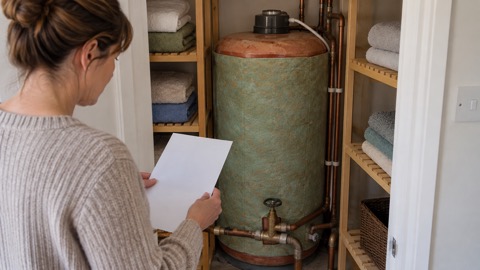
Some storage is already built into your home. Wiltshire and Swindon Prepared notes that some houses have a cold-water tank located in the loft, which will allow you some water for a short period in an outage, and advises using it only for critical purposes23. That loft tank is part of your emergency reserve whether you bought it or not, though its water is for critical uses rather than drinking unless you know the tank's condition. See Usable Supplies Already in Your Pipes, Cistern and Cylinder for what else your plumbing holds.
Underground tanks are a different proposition. They are sold mainly for rainwater harvesting, from 180 litres to 10,000 litres15, and they hide the storage entirely: one council flood scheme in Argyll describes new pipelines leading into a storage tank built underneath a public square, safely storing water and allowing it to slowly discharge, hidden underground once finished24. That is community-scale engineering, but the same principle applies at home: an underground tank saves surface space and keeps water cool, at the cost of harder inspection and cleaning.
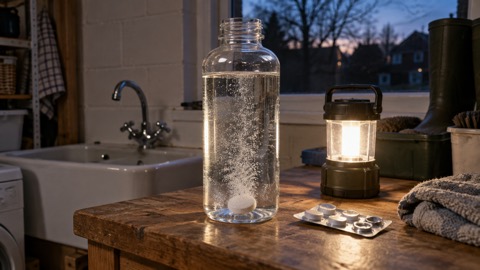
If you are considering an underground tank, apply the same tests as above. Check that it is designed for the water you intend to store in it, that it is installed to the maker's instructions, and that you can access it for the maintenance the Inspectorate advises3. For rainwater use, remember that harvested rainwater is not drinking water, and the Inspectorate's guidance on protecting a private supply recommends approved materials to prevent contamination during collection20. If you want to make collected water safe to drink, that is a treatment question: start at How to Make Water Safe to Drink in an Emergency.
Getting help, and getting it early
A store of water is your first line, but you are not on your own after that. Water companies hold bottled water for customers during planned interruptions and incident response, make bottled water available for collection from stockpiles and for doorstep delivery, deploy static tanks and mobile bowsers for major incidents, and run emergency tankers to fill static tanks and bowsers14. In Scotland, planned interruptions come with at least 48 hours' notice on a blue Interruption to Supply card6, which is your window to fill every container you own.
If you or someone in your household needs water delivered rather than collected, say so early: doorstep delivery is part of the companies' arrangements14, and households with medical needs should plan around them, as additional water may be needed for medical devices4. See How to Get Bottled Water Delivered If You Are Vulnerable and Home Dialysis and Medical Needs During an Interruption. For the whole picture of preparing your household, start at Water in an Emergency: A Household Guide or the Home Drinking Supply Storage Checklist.
Sources (24)
- Be Ready Checklist, UK government Be Ready campaign, 2026
- Create a flood pack, Bradford Council, 2026
- Water storage tanks and cisterns, Drinking Water Inspectorate, 2026
- Loss of essential services, Greater Manchester Combined Authority, 2026
- Learning from events, Drinking Water 2025 report for Wales, Drinking Water Inspectorate, 2025
- Water supply FAQs, Scottish Water, 2026
- Get help and advice in an emergency, Lincolnshire Council, 2026
- Preparing for an emergency, Nottinghamshire Council, 2026
- Create a household emergency lifesaving plan, Dumfries and Galloway Council, 2026
- Your pets, Wiltshire and Swindon Prepared, 2026
- Water supply interruptions or outages, UK government Prepare campaign, 2026
- Water supply interruptions or outages, UK government Be Ready campaign, 2026
- Prepare for emergencies: risks, Surrey County Council, 2026
- Power, gas and water: what if they fail, Surrey County Council, 2025
- Rainwater harvesting tanks, Enduramaxx, 2026
- 30,000 Litre WRAS Approved Potable Water Tank, Enduramaxx, 2026
- Water storage, private supply networks, Drinking Water Inspectorate, 2025
- Oil, fuel and other hydrocarbons, Drinking Water Inspectorate, 2026
- Keeping children safe during a flood, nidirect, 2025
- Protecting your private water supply, Drinking Water Inspectorate, 2026
- 720 Litre Vertical Tank, Non-Potable, Enduramaxx, 2026
- Water tankers, United Utilities, 2026
- Failure of water infrastructure or loss of drinking water, Wiltshire and Swindon Prepared, 2026
- Campbeltown flood protection scheme, Argyll and Bute Council, 2026
 Supply Interruption Checklist
 Boil Notice Checklist
 Drinking Supply Checklist
 How Much Water to Store
 Storing Tap Water Safely
 Household Storage Tanks
 Water Already in Your Pipes
 Making Water Safe to Drink
 Boiling Water to Kill Germs
 Purification Tablets
 Emergency Filter Types
 What Water Filters Remove
 Gravity Filters Explained
 Hand Pump Filters
 Filter Bottles and Straw Filters