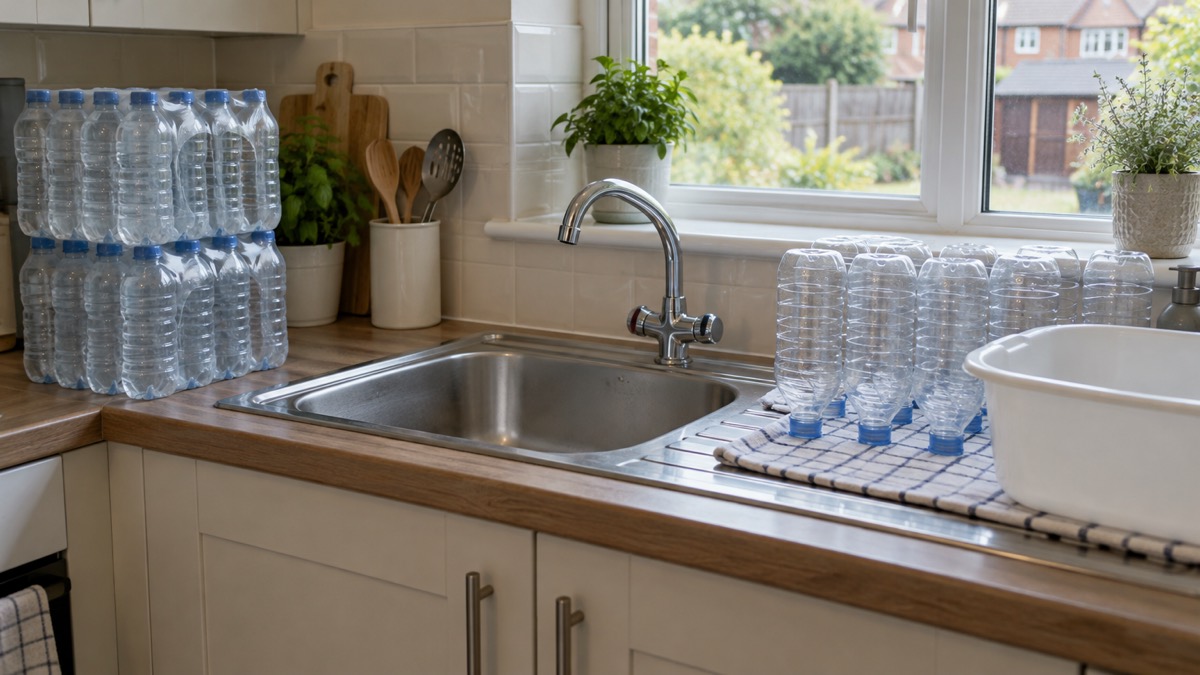
When your water supply fails, your water company has a duty to step in. If the whole area has lost supply, your water supplier has a duty to provide alternative water sources, which may include bottled water, stand-pipes or water tankers1. The planning standard companies work to is at least 10 litres per person per day for the first 24 hours of an interruption, rising to 20 litres per person per day if the event goes on longer2. In practice that alternative supply reaches you in one of three ways: bottled water stations you travel to, home deliveries to households that need them most, and tankers or bowsers parked in your street.
Most interruptions are over quickly with minimal impact, but longer water supply outages occasionally happen, and when they do the first hours are about information as much as water3. During an interruption, check your water company's website for service in your area and for where you can collect alternative water4. Ofwat, the water regulator, provides information on what communication you should expect from your company during an interruption3.
This page explains each form of alternative supply, who gets priority, what can go wrong, and how much you should keep at home so that a late delivery is an inconvenience rather than a crisis.
What your water company provides when the taps stop
Interruptions to water supply, usually called outages, happen for many reasons, ranging from scheduled maintenance to burst water mains3. When the supply fails across an area, responsibility for providing alternative water sits with your water company. It is your local water company's responsibility to provide alternative supplies should the main supply be contaminated7, and if the whole area has lost supply, your supplier has a duty to provide alternative water sources such as bottled water, stand-pipes or water tankers1.
What that looks like on the ground varies with the size of the incident. Water providers either keep households in supply or make alternative arrangements, such as water distribution points where people collect bottled water at a designated local area8. Companies maintain plans for water supply incidents covering alternative water supplies and the prioritisation of vulnerable customers, and those plans are regularly exercised and tested9. In Wales, the same expectation applies: water companies maintain and test incident plans that cover alternative supplies and how vulnerable customers are prioritised9.
Your job in those first hours is to find out what is happening and what is being organised:
- Check your water company's website for service in your area and whether you can pick up alternative sources of water4.
- Look for incident updates from the company, which should tell you where stations, bowsers or tankers are being deployed3.
- If you are on the Priority Services Register, expect the company to arrange supplies for you, and contact them if nothing has arrived3.
- Report the problem if it appears unreported, using the company's incident line or website8.
Ofwat provides information on what communication you should expect from your water company in the case of an interruption to supply, so if the updates are not coming, that is the standard against which the company is measured3. For more on how a major incident unfolds behind the scenes, see how water companies respond to a major incident, and for checking whether your area is affected, see how to check if there is an outage in your area.
How much alternative water companies must provide
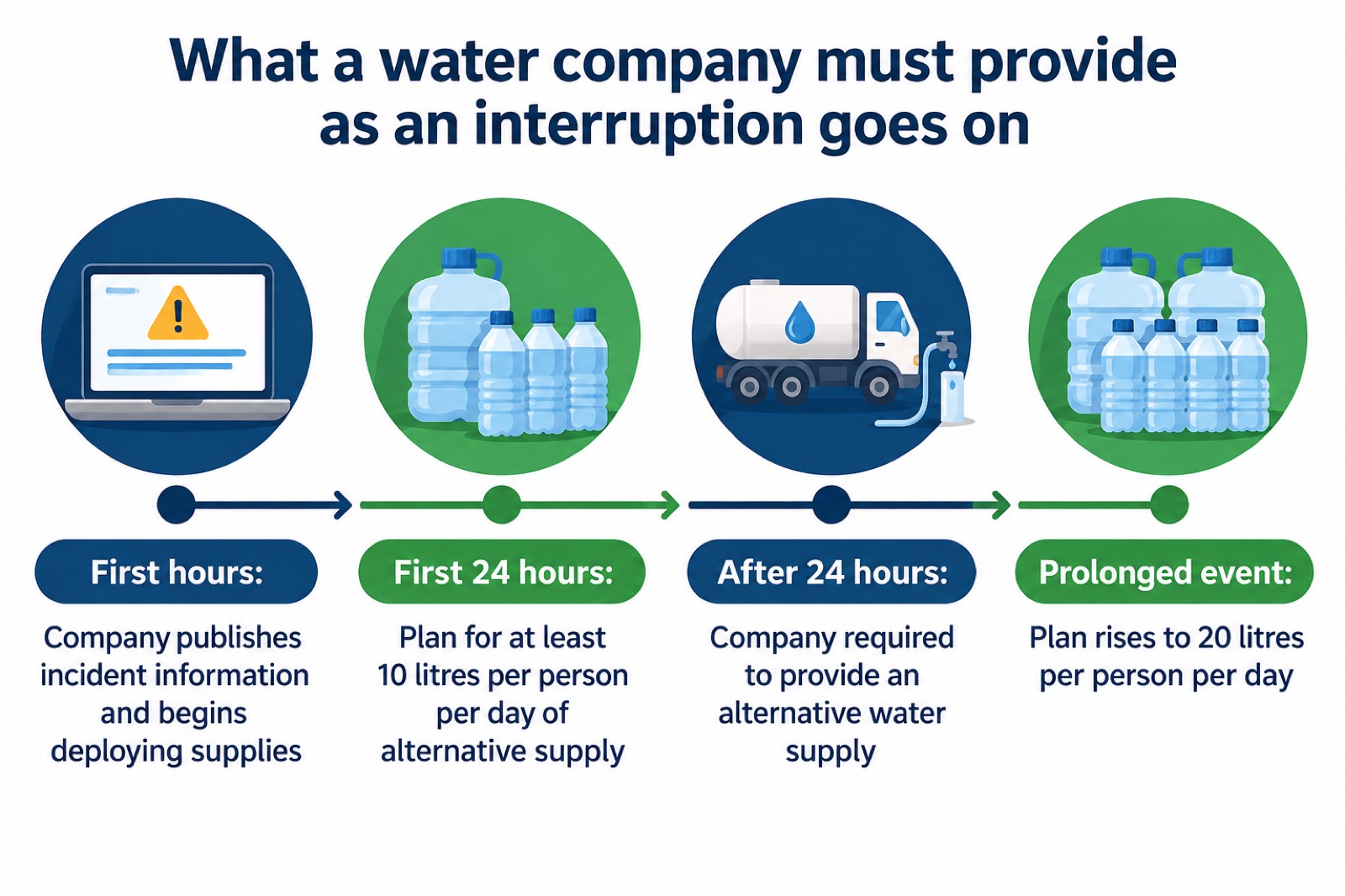
The planning figure every household should know is this: public water companies are required to plan to supply their customers with alternative supplies of at least 10 litres per person per day for the first 24 hours, and for a prolonged event, 20 litres per person per day2. The same figures appear in the Drinking Water Inspectorate's guidance on alternative supplies, which sets them as the standard companies plan against10. That amount is for drinking, washing your hands and food preparation, not for flushing toilets, washing clothes or bathing, which is why companies also point households to other ways to cope with a loss of supply.
There is also a timing rule. If the interruption lasts for more than 24 hours, the company is required to provide an alternative water supply5. Before that point, companies will usually still act, especially for vulnerable customers, but the 24-hour mark is where the formal obligation bites.
Two limits are worth knowing. First, water companies may not always be able to provide an emergency supply of water in bowsers or in bottles, for example if they have their own ongoing emergency such as a burst main6. Second, these duties apply to public water supplies. If you are on a private supply, such as a well, borehole or spring, the position is different: where a contingency plan is not in place, there is no obligation on the local authority or water company to provide an alternative supply, except where the local authority considers the circumstances pose a danger to life or human health6. Where circumstances do pose a danger to life or human health, the local authority has powers to require the water company to provide an alternative supply, such as bottled water, at a cost to those the supply is provided to11. If you are on a private supply, see private supplies: wells, boreholes and springs.
Bottled water stations, and getting there without a car
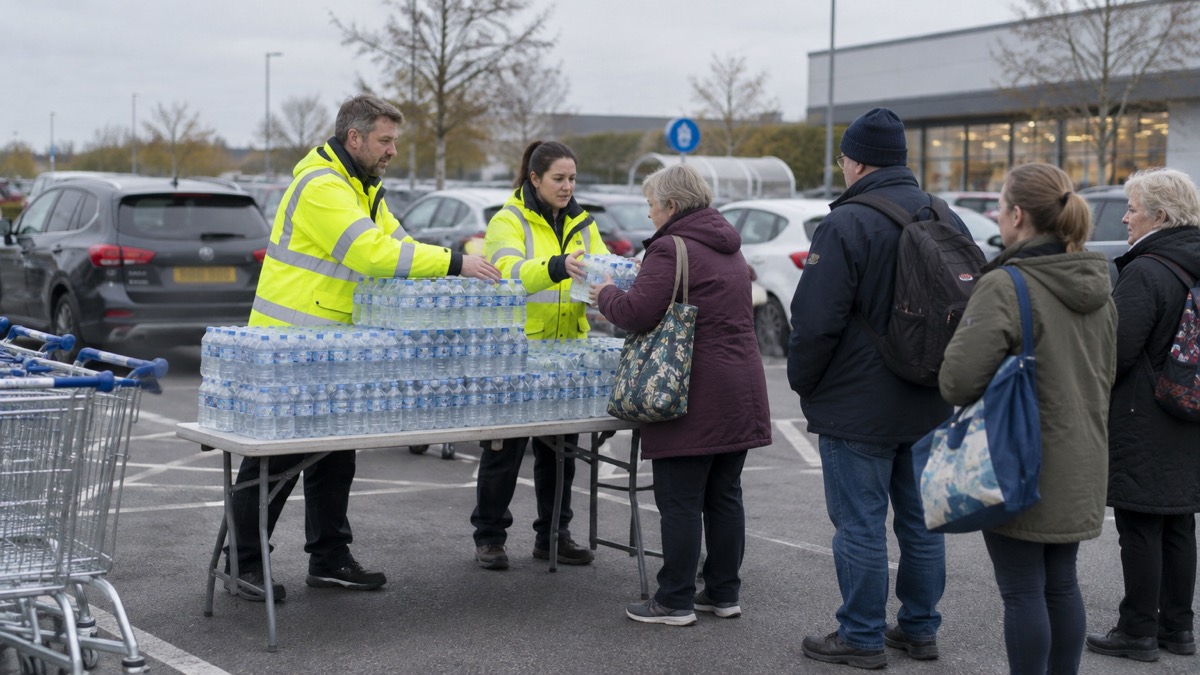
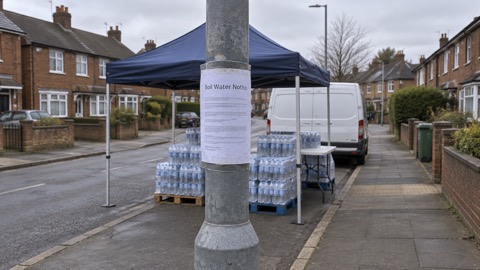
When a company cannot maintain a piped supply to all its customers, it sets up bottled water stations where individuals can collect water12. These are distribution points at a designated local area: you travel there, queue, and collect bottled water to take home8. In a real incident, Thames Water's response to a burst water main at Purton and Royal Wootton Bassett followed exactly this pattern, with bottled water stations set up for collection alongside deliveries to properties on the Priority Services Register12.
Finding your nearest station is a matter of checking the company's website during the incident, which should show service in your area and where alternative water can be picked up3. For more detail, see where bottled water stations are set up.
Getting there is the practical problem for many households. A pack of bottled water is heavy, and if you have no car, or no one at home who can carry it, a station two miles away may as well be twenty. Plan for this before an incident:
- If you cannot drive, arrange now with a neighbour or family member that you would travel together to a station during an outage.
- Check whether your company's Priority Services Register applies to you, since registered customers can have supplies delivered instead of collecting them3.
- Take only what you can carry safely, and ask staff or others at the station for help lifting packs.
- A clean, lidded container or a wheeled shopping trolley makes carrying smaller amounts far easier.
Surrey County Council's guidance on the register gives examples of the support it brings, including access to bottled water during a water supply interruption, priority assistance, and tailored support if there is a power or gas outage13.
Home deliveries for Priority Services customers
The Priority Services Register is how your water company knows you need additional support, including when there is an interruption to your supply4. Being on the register means you can receive additional support from your water, gas and electricity suppliers during emergencies or service disruptions13. For water specifically, if you are on the register, your water company will arrange alternative supplies for you during an outage3.
Joining is straightforward. Find out who your water supplier is and ring them; they will add you to the Priority Services Register8. You can also sign up via thepsr.co.uk if you are eligible14. Eligibility covers households that need extra help, and the support offered may include access to bottled water during a water supply interruption, priority assistance, and tailored support if there is a power or gas outage13.
Who actually gets deliveries first during an incident is set out in companies' prioritisation plans. In the Thames Water case study of a burst water main, deliveries were prioritised in tiers, with the second tier covering customers living with a chronic or serious illness, mobility impaired, living with dementia, blind, aged over 90, and/or recovering from hospital treatment12. If you or someone in your household falls into any of those groups, being on the register before an incident is what puts you into that queue.
For more on eligibility and the delivery process, see how to get bottled water delivered if you are vulnerable and extra help in an emergency.
Deliveries can be late, irregular or missed
The honest picture is that alternative supplies do not always arrive on time. Water companies may not always be able to provide an emergency supply of water in bowsers or in bottles, for example if they have their own ongoing emergency such as a burst main6. After the 2018 freeze-thaw incident, the regulator's report recommended that companies develop or update their plans regarding the provision, deployment and delivery of alternative water supplies, for example bottled water or water bowsers, together with local partners and emergency services15. Ofwat also identified four companies as needing detailed scrutiny because of substantial concerns with their handling of that incident and because of the volume of customers left without supply for more than four hours during the incident period15.
What this means for your household is planning for a gap. The formal obligation to provide an alternative supply bites after 24 hours5, and most interruptions are over quickly with minimal impact3, but a widespread event can stretch logistics badly. Practical steps:
- Keep your own stock of water at home, sized on the same basis companies plan to: at least 10 litres per person per day for the first 24 hours2.
- Use bottled water solely for drinking, washing your hands and food preparation while there is no mains supply3.
- If a promised delivery has not arrived and someone in the household has a medical need, contact the company again and say so plainly.
For households with medical dependencies, such as home dialysis, see home dialysis and medical needs during an interruption.
Tankers and bowsers: what they keep running
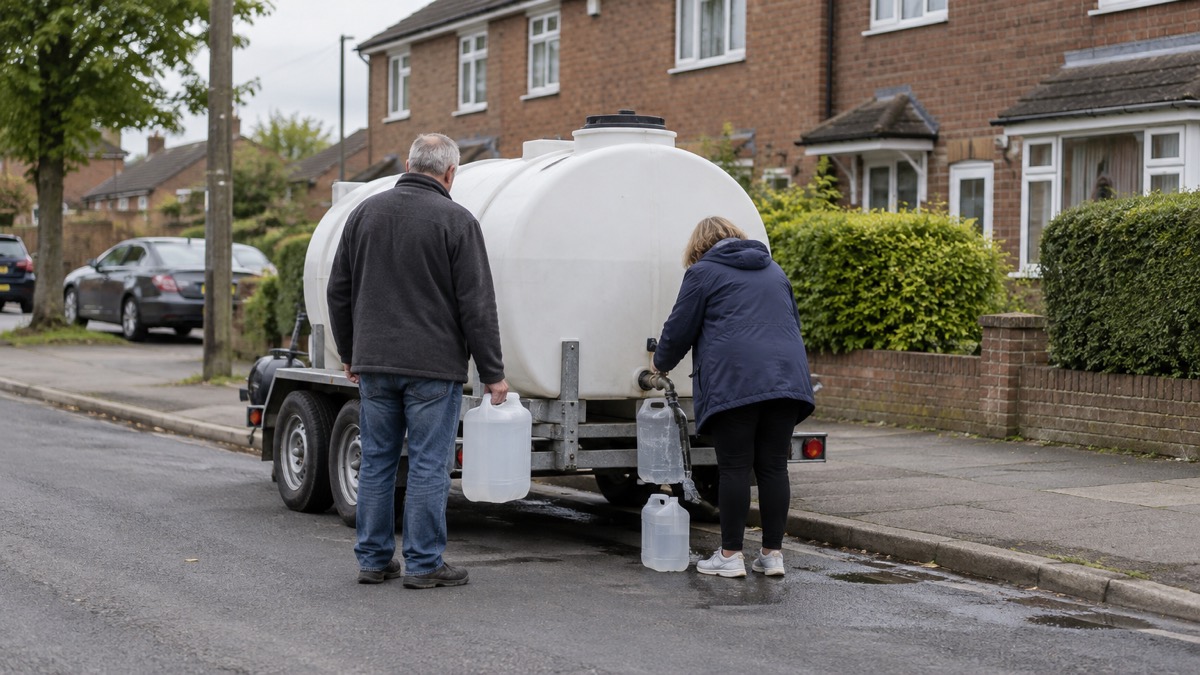
Beyond bottles, companies use two other tools. You may be given bottled water or have water tankers or bowsers parked near your home for you to collect water from16. A bowser is a mobile tank, parked in the street, that you draw water from with your own containers. A tanker does a different job: it pumps water directly into the mains to keep the piped supply flowing while a repair or rezoning is underway. Local authority guidance on alternative supplies gives bottled water and water supplied in tanks or bowsers as the standard examples17.
In Scotland, the arrangement is similar: when there are issues relating to sufficiency or quantity with public water supplies, Scottish Water takes steps to ensure supplies, including providing bottled water or bowsers18. In a severe incident, tankers may also be deployed to critical sites first; during the 2018 freeze-thaw event, precautionary tankers were provided to hospitals in the areas confirmed to be without 24 hour storage15.
| Method | What it is | What you do | Who it suits |
|---|---|---|---|
| Bottled water station | Distribution point at a designated local area8 | Travel there and collect packs | Households able to travel and carry |
| Home delivery | Bottled water brought to your door | Be on the Priority Services Register3 | Registered customers, prioritised by need12 |
| Bowser | Tank parked near your home16 | Take containers and draw water | Households near the bowser site |
| Tanker into the mains | Pumping to maintain the piped supply | Nothing; supply may continue or return | Whole streets, and critical sites such as hospitals15 |
Tankers working overnight can be noisy, because pumping and repairs often continue around the clock until supply is restored. That noise is the response working. If it is severe or prolonged, contact your water company, which has a duty to keep customers informed during the incident19.
Aerated or discoloured water after tankers pump into the mains
When the supply comes back, or while tankers are pumping into the mains, your tap water may look different. Burst mains or increases in demand can cause mains deposits to enter the water supply, which shows up as discoloured water20. Water can also appear cloudy or milky from air trapped in the pipes. For what each appearance means, see why is my tap water cloudy or milky? and brown or discoloured tap water.
The official advice is consistent across the UK nations. Try running the cold tap nearest to your stopcock, which is usually under your kitchen sink, for a while to see if it clears the discolouration, and contact your water provider if problems continue4. Greater Manchester's guidance gives the same instruction: run the cold tap nearest to your stopcock for a while, and contact your water company if you continue to have problems with your water supply21. After a flood, contact your water company if tap water is discoloured or tastes bad22.
The Greater London Authority adds a caution for the period straight after an emergency: check with your water supply company before drinking or using water to make baby formula or brush your teeth, as it may be contaminated23. If you have a baby on formula feeds, see babies and formula feeds when the supply is off or unsafe, and for the full sequence of steps when supply returns, see what to do when your supply comes back on and how to clear an air lock after the supply returns.
Keeping your own stock before supplies arrive
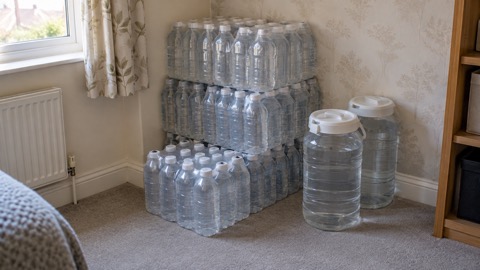
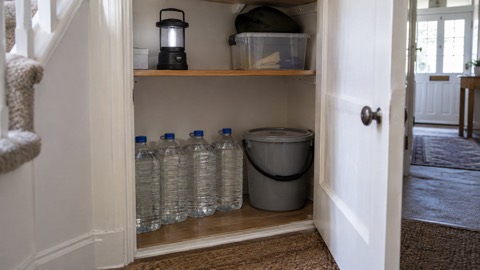
The strongest lesson from every incident is the same: households with their own small stock cope far better than households waiting for the first delivery. Plan on the companies' own standard of at least 10 litres per person per day for the first 24 hours, and 20 litres per person per day for a prolonged event2. For how to build that store, see how much drinking water to store per person and storing tap water safely at home.
While the supply is off, use alternative water supplies such as bottled water solely for drinking, washing your hands and food preparation3. That discipline is what makes a limited stock last. Guidance for private supply users, whose situation is more urgent because no company duty applies to them, sets a pattern any household can copy: reduce current usage to conserve the supply, and think ahead about where you could access drinking water should the supply cease18. Natural Resources Wales advises that if water levels are very low, you should take action to seek an alternative supply, speak to neighbours, ensure containers used to transfer water are cleaned and disinfected to prevent contamination, and find out if there is a nearby mains supply to connect to7. Somerset Council's guidance is blunt about private supplies: every supply owner and user should have a contingency plan for an alternative supply in cases of emergency24.
A practical household checklist:
- Store at least 10 litres per person per day for the first 24 hours, and plan for 20 litres per person per day if the outage is prolonged2.
- Find your stop tap now, so you can turn your water off in an emergency25.
- Know who your water supplier is and how to contact them, including their incident line8.
- If you are eligible, join the Priority Services Register before an incident, not during one26.
- Reduce non-essential water use the moment supply fails or is warned about, to conserve what you have18.
For the full kit list, see the supply interruption checklist and containers and jerrycans for drinking supplies. If you need to make collected or stored water safe to drink, see how to make water safe to drink in an emergency.
Compensation and where to get help
On money: all companies are required under licence conditions to pay compensation to customers where essential household water supplies are interrupted as a result of restrictions authorised by emergency drought orders27. For interruptions from other causes, such as burst mains, the position varies, and the place to start is your water company, with Ofwat's guidance on what communication you should expect during an interruption as the standard to hold them to3. For who oversees the sector, see who checks drinking supplies: DWI, Ofwat, CCW and DWQR.
Where to get help, in order:
- Your water company, for incident information, station locations, deliveries and supply problems4.
- The Priority Services Register, for additional support during emergencies or service disruptions, covering water, gas and electricity13.
- Ofwat, for what communication you should expect from your company during an interruption3.
- Your local authority, if you are on a private supply and circumstances pose a danger to life or human health, since it has powers to require an alternative supply11.
Sources (27)
- Are You Ready booklet, Culham Parish Council, 2025-09
- Managing insufficiency of private water supplies, Drinking Water Inspectorate, 2025-12-15
- Water supply interruptions or outages, Be Ready campaign
- Flooding and drinking water, Drinking Water Inspectorate
- Southern Water household code of practice, Ofwat, 2022-11
- Managing insufficiency of private water supplies (installations), Drinking Water Inspectorate, 2025-12-15
- Drought planning and management, Natural Resources Wales
- Failure of water infrastructure or loss of drinking water, Wiltshire and Swindon Prepared
- Resilience and risks in Wales, Welsh Government
- Alternative supplies for private water supplies, Drinking Water Inspectorate, 2017-11
- Drought: how it is managed in England, GOV.UK
- Spotlight on Thames Water: prioritising support for those who need it most, Wiltshire and Swindon Prepared
- Wellbeing and safety, Surrey County Council
- Water supply interruptions or outages - Be Ready, prepare.campaign.gov.uk (UK Government Be Ready campaign)
- Thaw report, Ofwat, 2018-06
- Weather and health, Public Health Wales
- Private water supplies drought guidance, Drinking Water Inspectorate
- Loss of supply for private water supply users, Argyll and Bute Council
- Emergency Guide, South Staffs Water
- Dealing with drinking water problems, nidirect, 2026-10-06
- Loss of essential services, Greater Manchester Combined Authority
- Flooding advice, Mid and West Wales Fire and Rescue Service
- London resilience, Greater London Authority
- Private water supplies, Somerset Council
- Snow, ice and winter ready advice, Cumberland Council
- What happens during an incident | Help | Thames Water, Thames Water
- Drought, Ofwat
 Supply Interruption Checklist
 Boil Notice Checklist
 Drinking Supply Checklist
 How Much Water to Store
 Storing Tap Water Safely
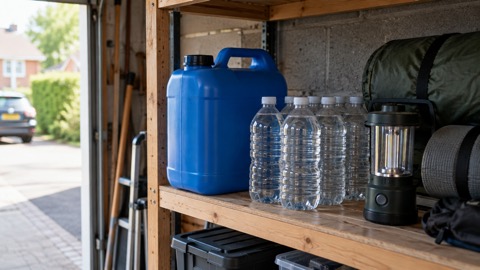 Containers and Jerrycans
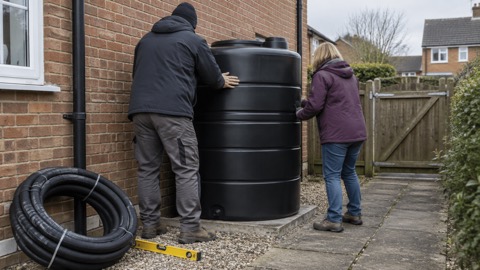 Household Storage Tanks
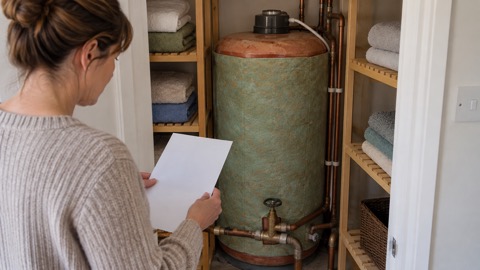 Water Already in Your Pipes
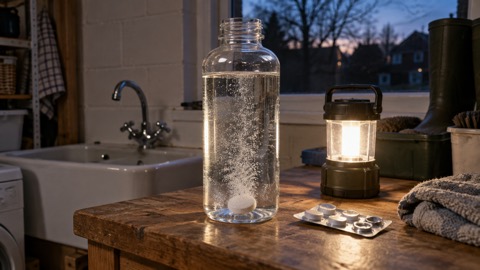 Making Water Safe to Drink
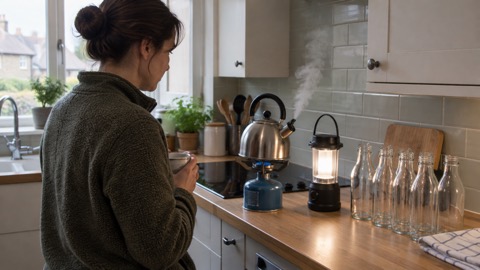 Boiling Water to Kill Germs
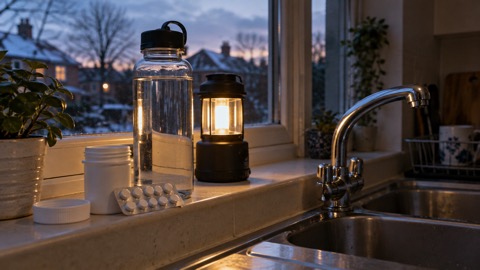 Purification Tablets
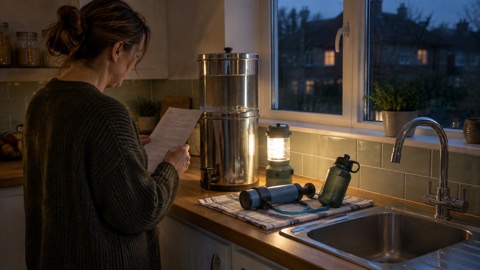 Emergency Filter Types
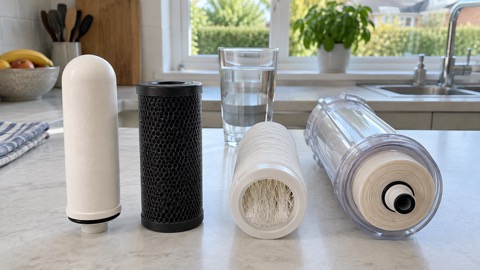 What Water Filters Remove
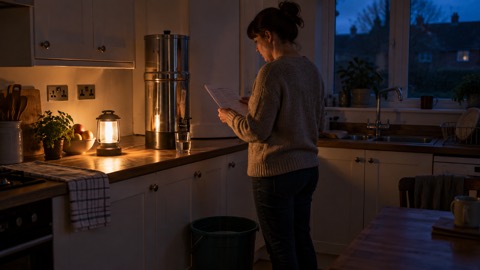 Gravity Filters Explained
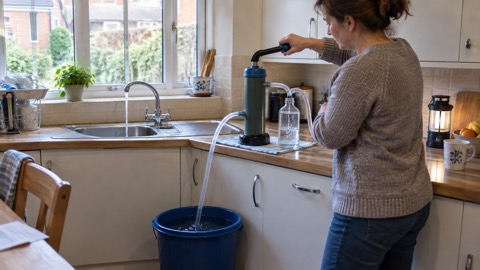 Hand Pump Filters