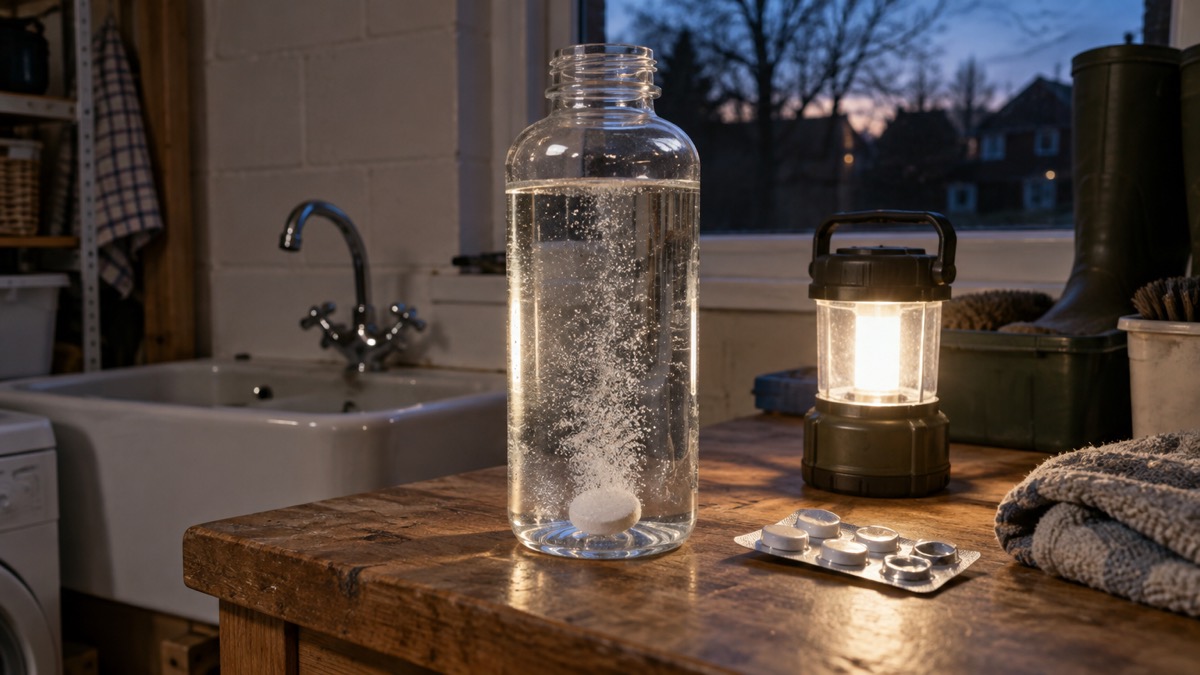
If your water supply is interrupted, restricted or made unsafe, you have a small number of reliable ways to make water safe to drink. The government's emergency advice is straightforward: boiling water, or adding water purification tablets to alternative sources of water, can help make it safer to drink in an emergency1. Purification tablets are widely available online, as well as from pharmacies and outdoor and camping retailers, so they are something you can get in advance and keep in a drawer1.
Which method to use depends on what is wrong with the water. Boiling and tablets deal with germs. Filters deal with particles, cloudiness and taste, and some remove bacteria as well. Ultraviolet (UV) treatment kills germs but needs electricity and clear water to work. None of these removes harmful chemicals: as official flood recovery guidance puts it, "boiling water kills pathogenic bacteria, viruses and parasites, but does not remove harmful chemicals"2. When chemical contamination is suspected, an alternate source of water must be provided3, and that usually means bottled water.
This page explains each method, what it does and does not do, and when bought bottled water is the only safe choice. For how much water to keep stored, see How Much Drinking Water to Store per Person; for keeping stored tap water safe, see Storing Tap Water Safely at Home.
Put purification tablets in your emergency kit
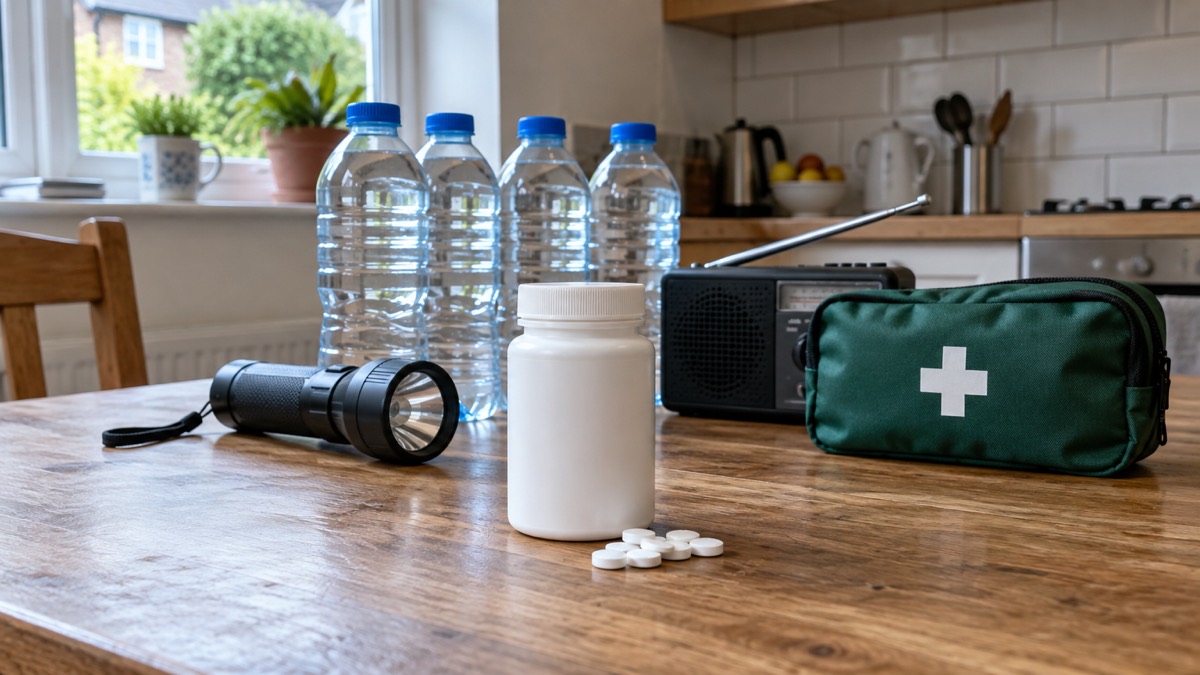
Local authority emergency advice across the UK is consistent: your household emergency kit should include water purification tablets5, alongside water for drinking and sanitation5. Lincolnshire's emergency advice lists both the tablets and drinkable water in plastic bottles for pets5. Nottinghamshire's kit list adds sanitary items and toiletries6, and Northern Ireland's flood kit advice includes essential medicines7.
The reason tablets earn their place is that they work when nothing else does. If the mains supply is off and you are collecting water from an alternative source, boiling or adding water purification tablets to that water can help make it safer to drink1. Boiling needs a heat source and a container; tablets need nothing but the water and a few minutes of patience, which makes them the fallback for situations where you have lost gas or electricity as well as water.
Two cautions apply. First, always follow the instructions on the product label, because the tablets come in different strengths1. Second, plan your stored quantities around everyone in the household: additional water might be needed for pets, to make baby formula and for medical devices8. If someone in your home relies on home dialysis, read Home Dialysis and Medical Needs During an Interruption.
A basic kit list for a water emergency:
- Water purification tablets, in date and in their original packaging5
- Water for drinking and sanitation5
- Drinkable water in plastic bottles for pets5
- Essential medicines7
- Sanitary items and toiletries6
- Extra water allowance for pets, baby formula and medical devices8
For a fuller list, see the Supply Interruption Checklist and the main Emergency Kit guide. For detail on the different tablet types, see Purification Tablets: Chlorine, Chlorine Dioxide and Silver.
How chlorine makes water safe to drink
Chlorine is the workhorse of drinking water safety. The Drinking Water Quality Regulator for Scotland explains that chlorine is added to the water to disinfect it and keep it safe to drink, and that it "has been proven to be the simplest and most effective means of disinfecting water"4. It has been used in the UK for 100 years4, and the amount added is tightly controlled by Scottish Water4.
The same is true across Britain. In England and Wales, it is a regulatory requirement for water companies to disinfect their water and hold a residual chlorine concentration within the network of pipes9. That residual is what keeps water safe on its journey from the treatment works to your tap: a small amount of chlorine stays in the water so that germs cannot regrow in the pipes.
Private supplies are the exception. Most mains water in Scotland, the water supplied to most properties by Scottish Water, is treated by the addition of chlorine to kill potentially harmful bacteria, but private water supplies are not usually treated in this way10. If you draw your water from a well, borehole or spring, disinfection is your responsibility, and the lack of a faint chlorine or bleach-like odour is itself a clue that a supply is private rather than mains10. See Private Supplies: Wells, Boreholes and Springs for what that involves.
Chlorine has been used to treat drinking water in the UK for 100 years4, and it is not unusual for a slight taste or smell of chlorine to be noticeable in drinking water4. The dose is what matters: the same chemical that keeps a mains network safe is tightly controlled by the water company from the treatment works right through to your taps. That is why the instructions on any purification product matter.
Chlorine is harmless in drinking-water amounts, but use it carefully
The key fact, stated plainly by the Drinking Water Quality Regulator for Scotland: chlorine "has to be used carefully, but it is harmless when used in the very small amounts found in drinking water"4. Dŵr Cymru Welsh Water says the same for Wales: chlorine in drinking water is not harmful because such low levels are added11. A slight smell or taste of chlorine in drinking water is not unusual, and it is harmless12.
That reassurance has limits, and they are worth knowing:
- It applies to drinking-water amounts only. Chlorine is used in higher concentrations to disinfect swimming pools4, and those concentrations are not for drinking.
- It does not apply to unsafe supplies. If the drinking water has been declared unsafe, do not use it to wash children; use tanker or bottled water instead13.
- It does not extend to infants' bathing. If the water company has advised the domestic supply is unsafe for drinking, it is also inadvisable to use it for bathing infants, as they may ingest some during bathing; bottled water is a safe alternative, and baby wipes can be used for hand cleansing and washing infants2.
- It does not mean chlorine fixes everything. Boiling kills pathogens but does not remove harmful chemicals2, so if a well or spring has been covered by floodwater, ring the local authority for advice, and while waiting or in doubt, assume the water is unsafe and source an alternative supply2.
For private supplies, the maintenance side matters too. Where chlorination is used to disinfect the supply, controls should be in place to maintain the required levels of chlorine at all times, especially over weekends14. A chlorinated private supply that is not checked can drift out of range, which is why regular sampling matters; see Who Checks Drinking Supplies: DWI, Ofwat, CCW and DWQR.
Letting the chlorine taste and smell fade before you drink
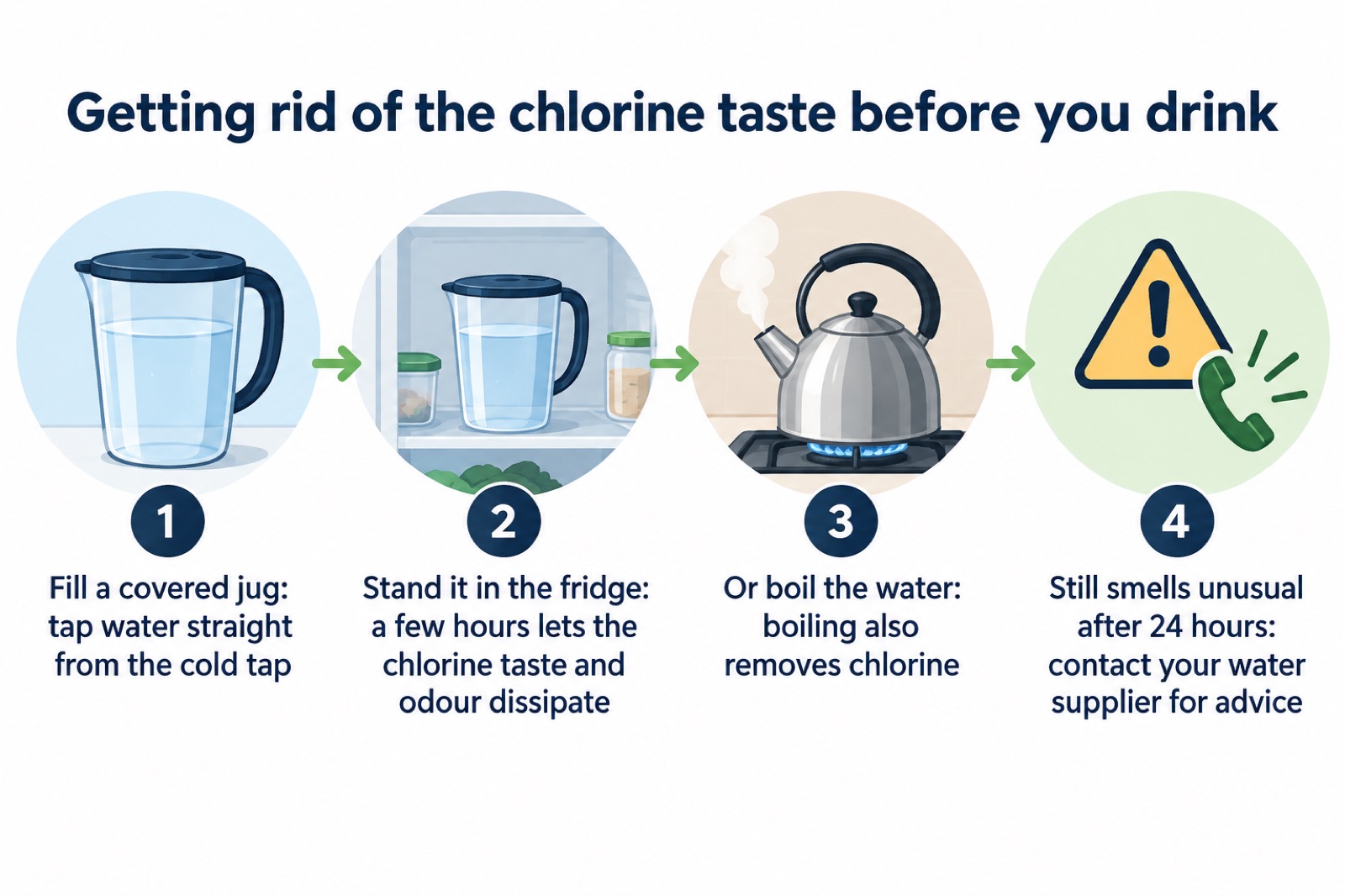
If the chlorine taste puts you off your water, there is a simple, safe fix. The Drinking Water Quality Regulator for Scotland advises placing a covered jug of water in the fridge before drinking, which allows the chlorine to disperse4. Northern Ireland's guidance agrees: chlorine taste and odours should dissipate if the water is left to stand in the fridge for a few hours, and boiling the water will also remove chlorine15.
A few points of detail help:
- Cover the jug. The advice is specifically a covered jug in the fridge4, which keeps the water from picking up fridge odours while the chlorine disperses.
- Give it a few hours. Standing in the fridge for a few hours is the stated timescale15.
- Boiling works too. If you are boiling the water anyway, that removes the chlorine15.
- Cloudy water can make the taste stronger. White, cloudy or milky water is of absolutely no health concern, though it can make the taste of chlorine more noticeable16. See Why Is My Tap Water Cloudy or Milky?.
When to act rather than just wait: contact your water supplier for further advice if cloudiness does not clear, or there is an unusual smell or taste, or it persists beyond 24 hours17. Normal chlorine levels should be kept low enough not to be noticeable, so a sudden strong smell is worth reporting18. For everyday taste questions, see Why Does My Tap Water Taste or Smell Different?.
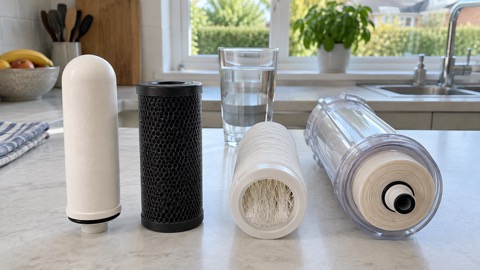
Filter jugs and in-line filters: what each one does
Household water filters come in two forms, as Dŵr Cymru Welsh Water explains: an "in-line" filter, usually fitted under the kitchen sink by a plumber, or a jug filter11. Both are everyday items rather than emergency kit, but they behave differently, and knowing which you have matters when a supply problem starts.
| Jug filter | In-line filter | |
|---|---|---|
| Where it sits | In the fridge or on the worktop | Under the kitchen sink, fitted by a plumber11 |
| What it is for | Taste and personal preference | Taste and personal preference |
| Do you need one? | No, purely personal choice11 | No, purely personal choice11 |
| Everyday care | Wash the jug with hot soapy water regularly, but not the filter itself11 | Maintain in accordance with the manufacturer's instructions4 |
The honest answer to "do I need a filter?" is no. Welsh Water's guidance is blunt: "No, because the water is treated to the highest standards"11. Mains water in the UK is disinfected and monitored to statutory standards, so a filter is a matter of taste, not safety. Some domestic filters remove chlorine, and if you choose to use one, it is important to maintain it in accordance with the manufacturer's instructions to keep it safe to use4.
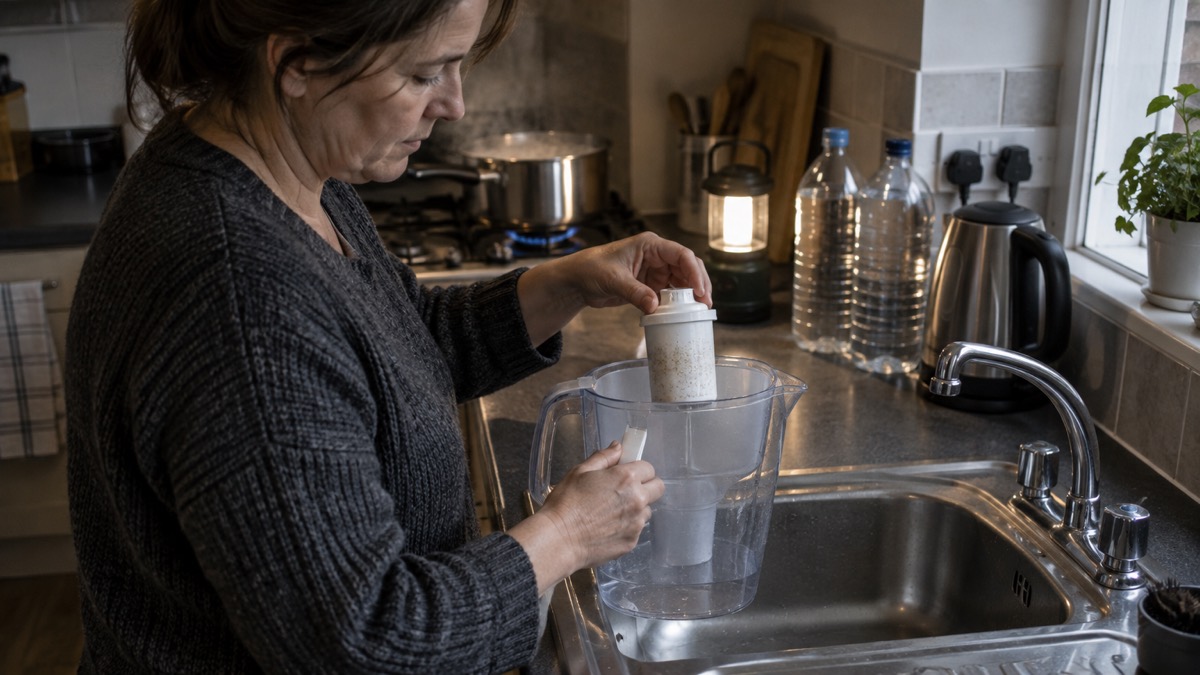
Two habits keep a jug filter working properly. Run your cold tap for a minute or two before using a jug filter11, which draws freshly supplied water rather than water that has stood in the household pipes. And wash the filter jug with hot soapy water on a regular basis, but not the filter itself11, because a damp cartridge does not want soap in it.
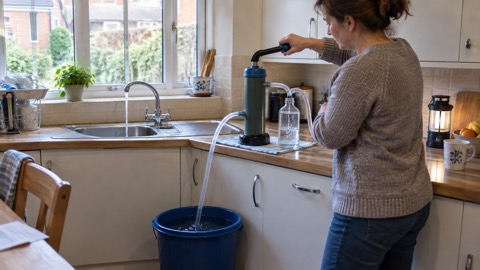
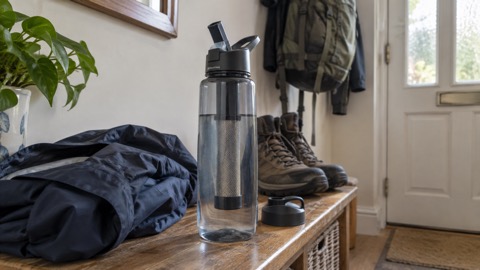
In an emergency, filters have a genuine role, but a narrower one than people assume. If a private water source has been contaminated, the usual treatment processes may not provide adequate treatment, particularly if the water is coloured or cloudy, and the water may need to be filtered and boiled before use19. Filtering first, then boiling, deals with the particles and the germs in turn. For the emergency-specific types, see Emergency Filters: Gravity, Pump, Bottle and Straw Types and What Each Filter Type Removes.
When a filter becomes a risk
A filter that is not looked after can make water worse, not better. The Drinking Water Quality Regulator for Scotland's guidance on filter candles is clear: if they are not cleaned frequently and replaced when required, the water quality is reduced, and any cracks or damage reduce effectiveness and can lead to impurities leaching back and harmful bacterial growth20.
The same guidance adds a subtler danger. A filter should remove bacteria, but bacteria can regrow or re-contaminate the water downstream of the filter, so disinfection is needed downstream of the filter20. In plain terms, a filter is not the last word: water that has passed through a filter candle still needs disinfecting afterwards if the source is suspect, which is why the filter-then-boil order in flood guidance19 is the right order.
Practical care points from the official guidance:
- Clean the filter frequently and replace it when required20
- Check for cracks or damage, which reduce effectiveness and allow impurities to leach back20
- Wash your hands after cleaning or replacing the filter, as filters can collect microbes20
- If you are immunocompromised, get someone else to replace filters if possible20
- Watch for tiny black particles after filtering: this could be a sign of a fault, and the filter may need replacing11
After a flood, filter care becomes part of the wider clean-up. Replace any filters, and clean and disinfect tap screens, aerators and flow regulators before running the tap for a few minutes19. Any tap submerged in contaminated floodwater should be cleaned using a bleach solution and run for 30 seconds before the water is used21. For the full routine, see Looking After a Filter: Priming, Cleaning, Cartridges and Frost and What to Do When Your Supply Comes Back On.
UV treatment: powerful against germs, dependent on power and clear water
Ultraviolet disinfection is common on private supplies. Somerset Council's guidance for private supply owners lists ultraviolet (UV) filters among the treatments used to remove bacteria such as E. coli, alongside filters for nitrates and other chemicals22. UV light kills germs as water passes past the lamp, without adding anything to the water, which is why it appeals to households on wells and springs.
Its limits are equally well documented in official guidance:
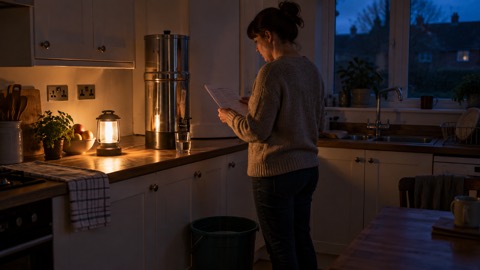
- It needs electricity. Unlike gravity filter candles, which require no electricity because the water is filtered under gravity20, a UV unit stops working the moment the power stops. In a power cut, a UV-treated private supply loses its disinfection.
- It needs clear water. Water must be subjected to sufficient preliminary treatment to achieve turbidity readings of less than 1 NTU before disinfection23. Cloudy or coloured water shields germs from the UV light, so a pre-filter comes first.
- It needs maintenance. UV treatment should be regularly checked to ensure it is operating correctly, and the pre-filter replaced as required, depending on the quality of the source water14. After a flood, check that the quartz sleeve is clean and the bulb is operational and has been renewed within the previous year or as the manufacturer's handbook requires19.
- It must be the right unit. Ensure any UV disinfection treatment is designed for drinking water, and maintain availability and continuity of spare parts such as UV bulbs in accordance with the manufacturer's instructions23.
The overarching warning comes from Argyll and Bute Council: even having treatment, such as filters, UV disinfection or chlorination, is no guarantee of safe water unless the treatment is adequately designed to cope with the raw water quality and flow rate, and systems must be carefully and regularly maintained according to the manufacturer's instructions24. A UV unit sized for one flow rate can be overwhelmed by another; a pre-filter that has clogged can let turbid water through. If you are buying or moving to a property with a private supply, ask whether there is any water treatment within the property, such as filters or UV disinfection units, and whether it is appropriate and effective25.
For the small handheld versions, see UV Purifier Pens: How They Work and Their Limits. For the certification claims to look for on any treatment unit, see Filter Claims and Certification.
When your supply is interrupted or restricted
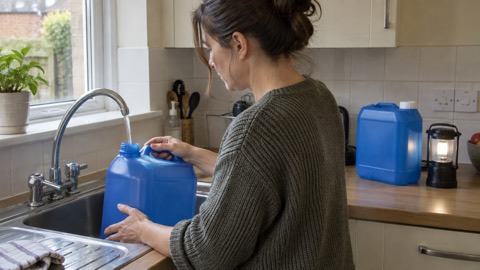
When the mains supply is off, the government's advice is to use alternative water supplies, such as bottled water, solely for drinking, washing your hands and food preparation1. Ration what you have to those three uses: drinking, hand washing and food preparation are what keeps a household healthy, and everything else can wait or use lower-grade water.
Before an emergency, know where your stop taps are. The London Fire Brigade advises that in an emergency you should be ready to turn off your gas supply, turn off your water supply and turn off your electricity supply, if possible26. Birmingham City Council's preparedness advice is to plan for situations where your electricity, gas or water supply is cut off27. A burst pipe or a flooded street is not the moment to hunt for a stop tap you have never touched.
During and after the incident, a few checks protect you:
- Discoloured water: check with your water supply company before drinking it or using water to make baby formula or brush your teeth, as it may be contaminated28.
- After a flood: only return to evacuated buildings if told it is safe, avoid electricity sources, and get an approved service engineer to check your gas, electricity and water before turning them back on29. Beware of contaminated water and sharp objects in lying floodwater, and take extra care with candles and open fires29.
- Cleaning up: use rubber gloves when cleaning up30, sterilise all affected cooking utensils by boiling or by using suitable sterilisers30, and use sterilising tablets or fluids, following the manufacturer's instructions, to clean bowls, buckets and other containers31.
- Chemical contamination: if you believe the supply may be contaminated by any chemical contamination, an alternate source of water must be provided3. No household treatment removes chemicals reliably2, so bottled or tanker water is the answer.
For babies, the rules are specific. Ready-made or ready-to-feed formula is the safest option in an emergency, as you may not be able to boil water or sterilise bottles1. Use tanker or bottled water for formula milk if drinking water is interrupted or contaminated13. If you have no gas or electricity for boiling, use unboiled bottled water (table, spring or mineral water) to make a baby feed, but you must give the feed to the baby immediately13. Note that the NHS recommends you do not use bottled water for making formula feed in normal times, because it is not sterile and may contain too much salt (sodium) or sulphate31; the emergency instruction above is the exception, and immediate feeding is what makes it safe. Full detail is at Babies and Formula Feeds When the Supply Is Off or Unsafe.
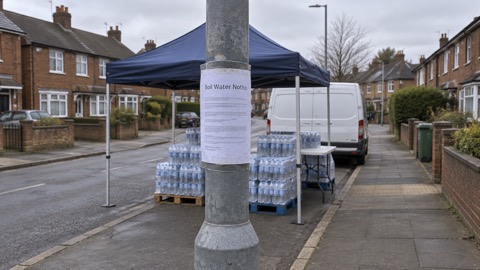
For where bottled water and tankers come from, see Bottled Supplies, Tankers and Bowsers From Your Water Company and Where Are Bottled Water Stations Set Up?. If you or someone in your household needs priority help, ask your water company about its Priority Services Register, covered in Extra Help in an Emergency.
Choosing between the methods
The methods on this page do different jobs, and in a real emergency you may need more than one. This table sets out what each does, what it needs, and what it cannot do.
| Method | What it does | What it needs | What it does not do |
|---|---|---|---|
| Boiling | Kills pathogenic bacteria, viruses and parasites2 | A heat source, container and fuel | Does not remove harmful chemicals2 |
| Purification tablets | Make alternative sources safer to drink1 | The tablets, and the label instructions followed1 | Do not remove chemicals or particles |
| Filter (jug, in-line, candle) | Removes particles and chlorine; candles remove bacteria4 | Regular cleaning and cartridge replacement20 | Does not disinfect downstream; bacteria can regrow after the filter20 |
| UV treatment | Removes bacteria such as E. coli22 | Electricity, pre-filtered water below 1 NTU turbidity14, maintained bulb and sleeve19 | Does not remove chemicals; stops in a power cut |
| Bottled or tanker water | A safe alternative supply1 | Nothing at home | The only option when chemicals are suspected3 |
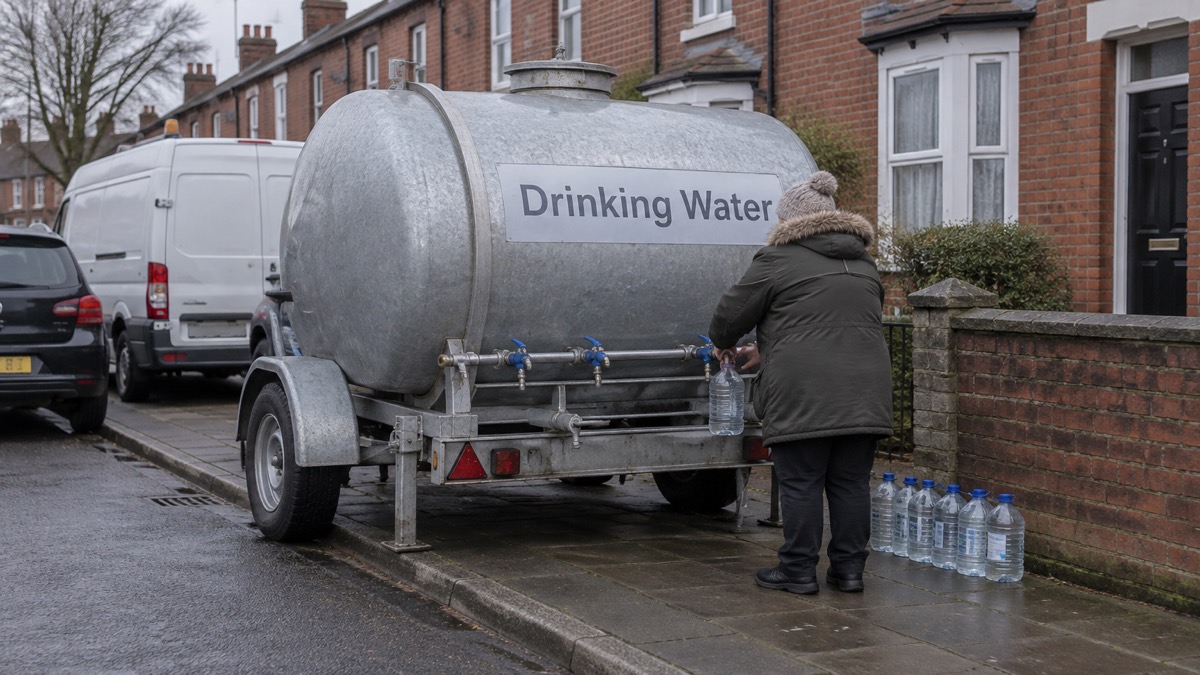
The pattern to take away: filter first if the water is coloured or cloudy19, then boil or disinfect to kill germs1, and switch entirely to bottled or tanker water if chemical contamination is suspected3 or the water company has told you not to use the supply. For the detailed how-to on each, see Boiling to Kill Germs: How to Do It Properly, Purification Tablets and the main Water in an Emergency guide.
Sources (31)
- Water supply interruptions or outages, Prepare (UK government campaign), 2026-10-12
- How to recover from flooding, UK Health Security Agency (gov.uk), 2023-12-19
- Flooding advice for properties using a private water supply, Shropshire Council, 2026-10-29
- Chlorine: drinking water quality FAQs, Drinking Water Quality Regulator for Scotland, 2026-10-28
- Get help and advice in an emergency, Lincolnshire County Council, 2026-10-29
- Preparing for an emergency, Nottinghamshire County Council, 2026-10-29
- Preparing for a flood, nidirect (Northern Ireland government), 2025-09-11
- Preparing for emergencies, North Hertfordshire District Council, 2015-01-12
- Chlorine in drinking water, Drinking Water Inspectorate, 2024-08-13
- Private water supplies at your property, Argyll and Bute Council, 2026
- Water quality in the home, Dŵr Cymru Welsh Water, 2026-10-28
- Taste and smell: drinking water quality FAQs, Drinking Water Quality Regulator for Scotland, 2026-10-28
- Keeping children safe during a flood, nidirect (Northern Ireland government), 2025-12-09
- Private water supplies: treatment and maintenance, Scottish Borders Council, 2026-10-29
- Dealing with drinking water problems, nidirect (Northern Ireland government), 2026-10-06
- White, cloudy or milky water: drinking water quality FAQs, Drinking Water Quality Regulator for Scotland, 2026-10-28
- White or cloudy water, Drinking Water Inspectorate, 2026
- Taste and odour in drinking water, Drinking Water Inspectorate, 2024-08-13
- Private water supplies after floods or storms, Argyll and Bute Council, 2026
- Technical guidance to treatment: water filter candles, Drinking Water Quality Regulator for Scotland, 2026-10-28
- Information about specific safety concerns, Northumberland County Council, 2026-05-21
- Private water supplies, Somerset Council, 2026-08-12
- Protecting your private water supply, Drinking Water Inspectorate, 2026-10-28
- Private water supplies: water sampling, Argyll and Bute Council, 2026
- Buying a dwelling with a private water supply, Drinking Water Inspectorate, 2026-10-28
- My street is flooding, London Fire Brigade, 2026-10-25
- Are you ready?, Birmingham City Council, 2026-05-06
- Emergency advice for London, Greater London Authority, 2026-10-26
- Flooding: keeping safe, Cornwall Fire and Rescue Service, 2026-10-29
- Be prepared: flood advice, Lancaster City Council, 2026-10-26
- Weather and health, Public Health Wales, 2026-07-16
 Supply Interruption Checklist
 Boil Notice Checklist
 Drinking Supply Checklist
 How Much Water to Store
 Storing Tap Water Safely
 Containers and Jerrycans
 Household Storage Tanks
 Water Already in Your Pipes
 Boiling Water to Kill Germs
 Purification Tablets
 Emergency Filter Types
 What Water Filters Remove
 Gravity Filters Explained
 Hand Pump Filters
 Filter Bottles and Straw Filters