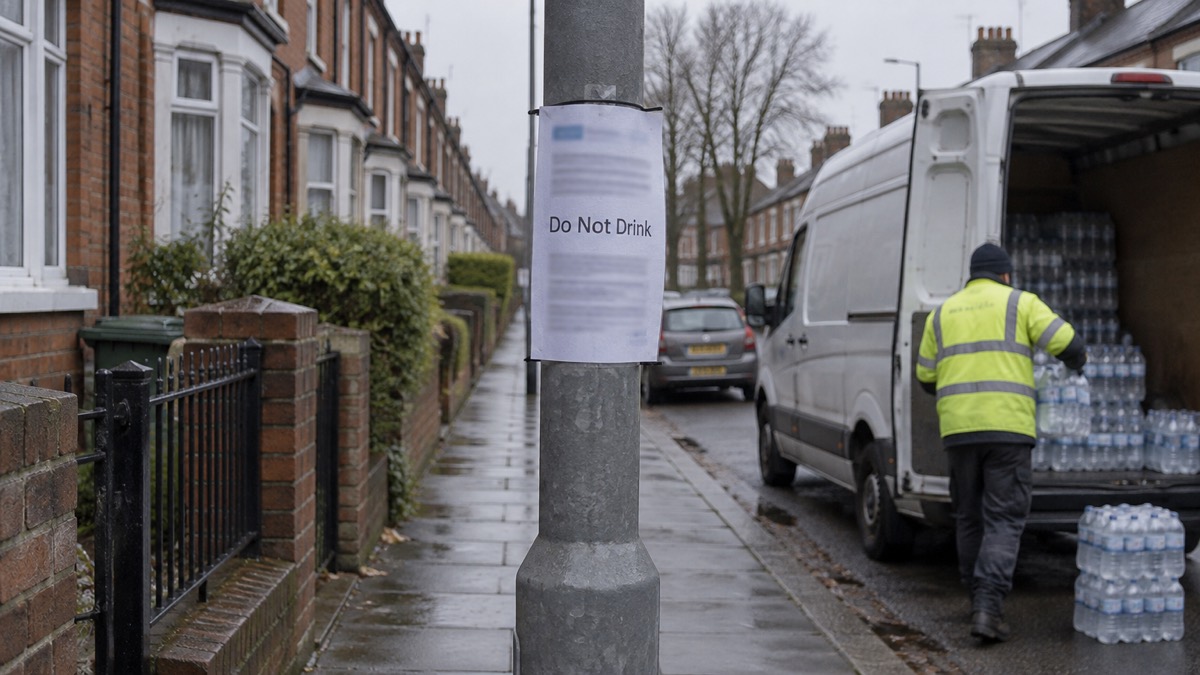
When a water company tells you not to drink your tap water, or not to use it at all, it is because the water may be unsafe for some or all household purposes. Water suppliers send three kinds of water notice for different circumstances: "Boil tap water before use" for drinking and food preparation, "Do not drink your tap water", and "Do not use your tap water"1. Each notice asks something different of your household, and mixing them up matters, because the steps that make water safe under one notice do nothing under another.
The most important thing to know is simple: follow the exact wording of the notice you are given. A boil notice means the water might contain bacteria, viruses or parasites which could be harmful to your health, and boiling it to a rolling boil deals with that2. A do not drink or do not use notice is not a boil notice with a stricter name. It is issued for different circumstances1, and under it you should drink bottled water or an alternative supply provided by your water company or water provider2. This page explains what each notice covers, how you will hear about one, why they are issued, what real incidents have looked like, and who to contact.
The three notices and what each one tells you to do
Water suppliers send three kinds of water notice for different circumstances1. They sit on a ladder of restriction: each one removes more uses of your tap water than the one before.
| Notice | What it tells you | What it is about |
|---|---|---|
| Boil tap water before use | Boil water for drinking and food preparation before using it | The water might contain bacteria, viruses or parasites which could be harmful to your health2 |
| Do not drink your tap water | Do not drink the water, even boiled, unless the notice says otherwise | A problem that boiling may not address; the notice is issued for different circumstances than a boil notice1 |
| Do not use your tap water | Do not use the water for the purposes the notice lists | The most restrictive notice, covering uses beyond drinking1 |
Under a boil notice, the instruction is precise: boil your water until it reaches a rolling boil, then remove it from the heat and allow it to cool naturally2. Our guide to boiling water to kill germs covers the practical steps, and the page on what to do if you get a boil water notice goes through that notice in full.
Under the two stricter notices, the instruction changes. Where a notice tells you to cease using the water, drink bottled water or an alternative supply provided by your water company or water provider2. Real notices spell out which uses are restricted: in one case study, a notice specified short-term restrictions of use covering drinking, cleaning teeth, food preparation including ice cubes and salads, cooking, preparing babies' feeds, washing open wounds and disinfecting feeding equipment5. That list gives you a realistic picture of how far a restriction can reach: not just what you drink, but what goes in your mouth, on your food and on broken skin.
If your household is affected, our water in an emergency guide sets out the wider picture, including how much drinking water to store per person and bottled supplies, tankers and bowsers from your water company.
Why boiling is the answer under one notice and not the others
Boiling is a treatment for germs. A boil notice is issued because the water in your tap might contain bacteria, viruses or parasites which could be harmful to your health, and heat kills them2. That is why the instruction under that notice is to boil, and only to boil.
A do not drink or do not use notice is issued for different circumstances1. Because the three notices exist for different problems, a stricter notice is not an invitation to boil harder: it is a signal that the restriction is the remedy. The safe course under a do not drink or do not use notice is the one the notice itself gives: drink bottled water or an alternative supply provided by your water company or water provider2. Southern Water's standing advice to customers who believe their water has become unfit to drink is to contact the company immediately and not to drink the water until they have spoken to it4, and the same caution applies throughout an incident: use the alternative supply until the body that issued the notice lifts it.
One example shows why the distinction matters in practice. In January 2024, a Do Not Use notice was issued at approximately 19:15 on 18 January 2024 in Marleigh, alongside a Do Not Drink notice, and the majority of residents adhered to both, though occasional slip-ups were noted6. Independent Water Networks Limited had not confirmed the cause at the time of the research6. Where the problem is not a germ that boiling can kill, boiling is not the remedy, and the notice tells households not to use or not to drink the water instead.
How you will hear about a notice in your area
The first check is your local water company's website. Guidance on the failure of water infrastructure advises you to look at your local water company's website and search on your postcode to see notifications of what is going on in your area3. Companies also contact affected households directly during incidents, and our page on how your water company will contact you in an incident explains the channels to expect. To check whether your supply is affected right now, see how to check if there is an outage in your area.
Two pieces of preparation make any water notice easier to live through. First, know whose water you are on: guidance on turning your water off begins with knowing your water supply7, because the company you contact and the website you search depend on it. Second, know where your stopcock is in case you need to turn off the water, as Highland Council advises its tenants8. A stopcock you can find in the dark is worth more than one you have to hunt for.
If you are on a private supply, the picture is different, and the next sections cover it. In Northern Ireland, the contacts also differ: for drinking water problems you should contact the Drinking Water Inspectorate for Northern Ireland or the Environmental Health department of your local council9.
Why notices are issued
For mains supplies, the trigger is usually practical rather than alarming. A boil water notice is usually issued due to weather emergencies or engineering works2. The systems that keep drinking water safe are monitored continuously, but on rare occasions the systems can fail2, and a notice is the response when checks show the water may not be safe.
For private supplies, the triggers are set out in regulation and local authority practice. If a sample fails a test, you will be told what went wrong, you may need to boil the water or stop using it, you will get advice on how to fix the issue, and you may receive a legal notice requiring improvements10. Somerset Council describes its role the same way: if the supply does not meet the required standard set out in regulations, it will investigate and may require improvements to be made11. In the Scottish Borders, when a sample fails, an Environmental Health Officer will issue appropriate advice to every person who manages the supply12.
The underlying law gives local authorities the tools. Section 80 of the Water Industry Act 1991 gives local authorities discretionary powers to serve a notice on one or more relevant persons when a private supply is failing, has failed or is likely to fail to provide a sufficient supply of wholesome water13. Where a supply is deemed a potential or actual danger to human health, a relevant person is liable to be served a notice under regulation 18 of the private water supplies regulations in England, or regulation 20 in Wales14. An improvement notice will explain why the water is unsafe, what actions are needed and how long you have to fix it10.
Chemical failures have their own route. Supplies affected by lead or arsenic are cases where a notice should be displayed informing users of the issue15, which is why a notice at a tap or outlet, not just a letter, is sometimes the way you find out.
What a do not drink notice looks like in practice
Real incidents show how these notices reach households and what follows. In Marleigh in January 2024, a Do Not Use notice was issued at approximately 19:15 on 18 January 2024, together with a Do Not Drink notice6. The majority of residents adhered to both notices, though occasional slip-ups were noted, and compliance with the Do Not Use notice waned amongst some participants over time6. Independent Water Networks Limited had not confirmed the cause at the time of the research6. The episode shows both what a notice asks of a household and how hard it can be to keep it up day after day.
Three practical lessons come out of these events. First, notices are posted physically as well as communicated remotely: notices displayed at all outlets were part of one company's response6, so a sign at a kitchen tap or a communal outlet may be how you learn of a restriction. Second, an alternative drinking supply is part of the response: bottled water was provided as an alternative drinking supply in one incident6, and households that need delivered supplies should see how to get bottled water delivered if you are vulnerable. Third, restrictions can last weeks, not hours: properties in the Llangollen case were still on restrictions into the following month6, so treat a notice as a state to live with rather than a single bad day.
The detail of what a notice restricts can be extensive. In a case study involving a private water supply at a salad growing nursery, the notice specified short-term restrictions of use covering drinking, cleaning teeth, food preparation including ice cubes and salads, cooking, preparing babies' feeds, washing open wounds and disinfecting feeding equipment5. Notice, in that list, how far beyond drinking a restriction reaches: ice cubes, salads, wound washing and feeding equipment all count as uses of the water.
Enforcement does not always work as it should, which is worth knowing if you are on a private supply. In one case study examined by the Drinking Water Inspectorate, the local authority did not serve any notices to address the deficiencies identified during the risk assessment process, and the notice that was served did not contain any long-term measures for the estate owner, who operated the supply, to investigate the cause or undertake remedial works16. The Inspectorate reminds local authorities that notices served due to the presence of faecal indicators should include steps to remediate against the source of the contamination, and not just stipulate that the water be boiled before consumption16. If you are the person named on a notice, you have a right of appeal: representations or objections are submitted to the local authority and passed to the Chief Inspector of the Drinking Water Inspectorate, who must confirm the notice either with or without modifications13.
Families with young children
The restricted-uses list from a real notice shows where a notice bites hardest in a household with a baby: preparing babies' feeds and disinfecting feeding equipment are both named restrictions5. Formula feeds and sterilising both depend on water you can trust, and neither can simply be skipped. Our guide to babies and formula feeds when the supply is off or unsafe goes through the practical options, including using bottled water correctly for feeds.
Food preparation is restricted in its widest sense in real notices: ice cubes and salads are named alongside cooking and drinking5. That means no ice from the freezer tray filled from the tap, no rinsing salad, and no water in the pan unless the notice allows it. If the notice is a boil notice rather than a do not drink notice, the scald warning in the section above matters doubly with small children in the house: use a kettle rather than pots and pans, and turn pan handles inwards1.
Households that include people who need reminders or support to keep drinking should plan for that too. Assistive technology available to some households includes a hydration monitor to remind people to drink17, and if a notice has cut off the usual source of drinking water, that kind of support has to work alongside an alternative supply. Our page on extra help in an emergency covers the wider options for older, disabled and medically dependent households, including home dialysis and medical needs during an interruption.
Who issues the notice and who to contact
The body that issues the notice depends on where your water comes from. The water company issues the notice to the consumers in the affected area2. If you receive water from a private water supply, the notice will come from your local authority2. Our guide to private supplies, wells, boreholes and springs covers that world in full, and the page on who checks drinking supplies explains the roles of the regulators behind these decisions.
For a mains supply, the practical contacts are these:
- Check your area: search your local water company's website by postcode to see current notifications3
- Report a problem: if you believe your water has become unfit to drink, contact your water company immediately; Southern Water's household code of practice gives the number 0330 303 0368, available 24 hours a day, and advises customers not to drink the water until they have spoken to the company4
- Northern Ireland: contact the Drinking Water Inspectorate for Northern Ireland or the Environmental Health department of your local council9
- Private supply: contact your local authority, whose Environmental Health Officer issues advice when a sample fails12
One point from Southern Water's code of practice is worth knowing as an example of how companies work: the company will contact you 24 hours before investigating regulatory compliance or monitoring water quality, and gives seven days' notice in all other cases4. That is notice of a visit, not of a restriction, but it is a reminder that water companies operate to written codes of practice, and you can ask yours for its own.
Do I get compensation for a water notice?
Compensation for water notices is not something this page can settle for you, because it depends on your water company's guaranteed standards and the circumstances of the incident. What you can do is contact your water company immediately, as Southern Water's code of practice instructs customers who believe their water has become unfit to drink4, and ask about its complaints and compensation process. Every company has a household code of practice covering how it will communicate with you4, and the regulators page explains who oversees companies' conduct and where to take a complaint that is not resolved.
When a notice is lifted
A notice is lifted by the body that issued it: your water company for a mains supply, your local authority for a private supply. Until that confirmation comes, the restriction stands. Southern Water's advice captures the principle: do not drink the water until you have spoken to the company4. Apply the same rule at the end of an incident as at the start.
Wait for the lifting notice through the same channels that brought you the original one: the company website searched by postcode3, and direct contact from the company. When the notice is lifted, follow any instructions the company gives before returning to normal use, and see our guide on what to do when your supply comes back on. If the notice was on a private supply, the local authority will confirm it is lifted, and in the meantime the improvement framework still applies: the notice will have explained what actions are needed and how long you have to fix it10.
Sources (17)
- How to recover from flooding, UK Government, 2023-12-19
- Receiving a boil water notice, Drinking Water Inspectorate, 2024-05-16
- Failure of water infrastructure or loss of drinking water, Wiltshire and Swindon Prepared, 2026-10-25
- Southern Water household code of practice, Ofwat, 2022-11
- Change of supply for long-term remediation, Drinking Water Inspectorate, 2018
- Learning from events, Chief Inspector's report for drinking water in Wales, Drinking Water Inspectorate, 2025
- Turn water off, Wiltshire and Swindon Prepared, 2026-10-25
- Keeping your home safe and secure, The Highland Council, 2026-09-09
- Dealing with drinking water problems, nidirect, 2026-10-06
- Types of private water supply, Cumberland Council, 2026
- Private water supplies, Somerset Council, 2026-08-12
- Private water supplies, Scottish Borders Council, 2026-10-29
- Managing insufficiency of private water supplies, Drinking Water Inspectorate, 2025-12-15
- Buying a dwelling with a private water supply, Drinking Water Inspectorate, 2026-10-28
- Private water supplies, Argyll and Bute Council, 2026
- Faecal contamination of a supply, Drinking Water Inspectorate, 2022-07-11
- Assistive technology, Warwickshire County Council, 2026-10-29
 Supply Interruption Checklist
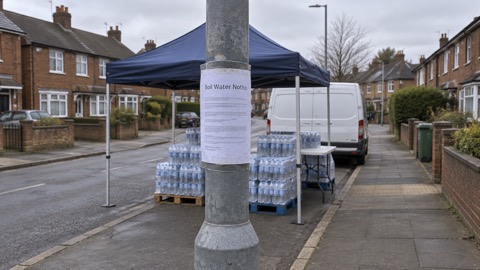 Boil Notice Checklist
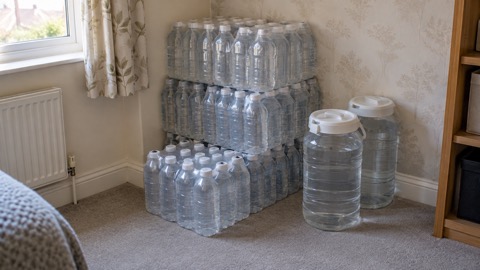 Drinking Supply Checklist
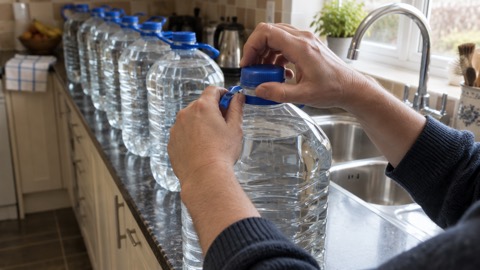 How Much Water to Store
 Storing Tap Water Safely
 Containers and Jerrycans
 Household Storage Tanks
 Water Already in Your Pipes
 Making Water Safe to Drink
 Boiling Water to Kill Germs
 Purification Tablets
 Emergency Filter Types
 What Water Filters Remove
 Gravity Filters Explained
 Hand Pump Filters