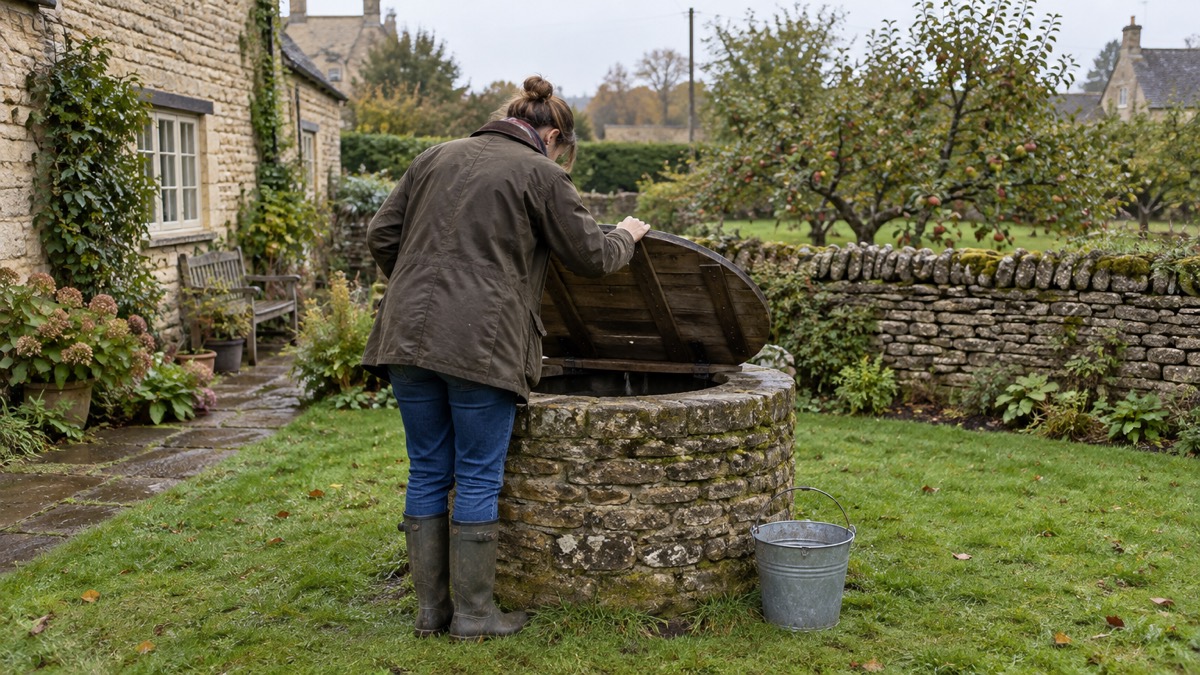
If your tap water comes from a well, borehole, spring, stream or loch rather than from a water company, you are on a private water supply. Around 3% of the Scottish population drinks from one, and many more people meet them in holiday cottages and campsites in remote areas1. A private water supply might serve one property, or many properties through a network of pipes and reservoirs2.
The single most important thing to know is this: contaminated private water may smell, taste and look completely normal, so you may not be able to tell whether it is safe3. Unlike mains water, most private supplies are not chlorinated, so there is no chlorine smell to reassure you4. Councils test private supplies for bacteria, chemicals and metals5, and the local authority is the regulator and your first point of contact for any concern2.
What counts as a private water supply
A private water supply is any water supply that is not provided by a water utility company6. In Scotland the definition is supplies not provided by Scottish Water9. The source could be a spring, a well, a borehole, a river, a stream or a pond6; in Wales the list includes lakes, and some supplies combine several sources or collect rainwater10.
A supply might serve one property, or many properties through a network of pipes and reservoirs6. One case study examined by the Inspectorate covered a supply serving 34 domestic dwellings, drawn from two spring collection chambers piped for 2km into a large brick built Victorian underground reservoir11. Another served 13 dwellings, some of them rented, with water collected in open troughs in pastureland grazed by cattle and sheep12. The scale of the supply matters, because it determines who checks it and how often.
The law requires that all water intended for human consumption must be wholesome and must not constitute a danger to human health13. "Domestic purposes" means drinking, washing, bathing and showering, laundry, toilet flushing and central heating14. A supply is treated as insufficient if it fails to provide enough water for all of those purposes7.
Contaminated water can look, smell and taste normal
This is the point every private supply household should take to heart. Councils in several areas give the same warning: you may not be able to tell whether your water is safe, because contaminated water may smell, taste and look normal3. Most private supplies are not chlorinated, so the absence of a chlorine smell, which mains water usually has, tells you nothing about safety15.
That does not mean changes mean nothing. Your tap water should not smell and should be clear; if it is not, contact your local council16. If your water has changed colour, or has a taste or smell, contact your local authority for advice17. If water is discoloured, cloudy or smells, check with the supplier before drinking it, using it for baby formula or brushing teeth, as it may be contaminated18. One specific warning deserves immediate action: if you notice a fuel or petrol type taste or odour in your drinking water, contact your water company or council immediately, as hydrocarbons can be dangerous to your health, and notify the environmental health team if you suspect a fuel or chemical spill on your property19.
Testing is the only reliable check. Councils test private water supplies for bacteria, chemicals and metals5. Bacterial contamination tends to cause acute illness; chemical contaminants are more likely to lead to long term health effects3. Waterborne infections such as Campylobacter, E. coli O157, Cryptosporidium and Giardia can produce acute gastrointestinal symptoms, including sickness and diarrhoea15. If you think your supply may be affecting your health, contact your GP, who can provide containers for a stool sample, and contact the council water team, who can arrange to take a water sample if appropriate15.
Who checks your supply: regulated, shared and single dwelling supplies
The regulator for private supplies is your local authority, with functions set out in sections 77 to 85 of the Water Industry Act 19917. In Scotland, private water supplies are regulated by local authorities too20. But how much checking you get depends on the type of supply you have.
In Scotland there are two types: larger supplies, or those with a commercial activity, are Regulated supplies, while smaller supplies serving only domestic properties are Exempt supplies, and the legislation relating to each is different1. In England and Wales the dividing lines work differently. A supply serving more than 50 people, or used for commercial purposes, is classed as a regulated supply; supplies for owner occupied homes alone are not regulated21. Commercial use includes food businesses, holiday accommodation, visitor attractions, campsites, workplaces and rented homes21.
Any private supply used for domestic purposes that serves two or more dwellings or other properties must be risk assessed every five years and regularly tested in accordance with the regulatory requirements14. Risk assessments are usually done every five years, and are undertaken by professionals who identify vulnerabilities in the supply and advise on how best to protect the source from contamination5. The frequency of testing depends on the supply type14.
| Type of supply | Risk assessment and testing |
|---|---|
| Serves two or more dwellings, or any commercial use (including rented homes and holiday lets) | Risk assessed every five years and tested by the local authority14 |
| Single owner occupied dwelling | No mandatory risk assessment or testing, unless requested by the owner or occupier, or the council believes there is a risk to health14 |
| Single dwelling rented to tenants in Wales | Risk assessment and testing required14 |
| Single dwelling rented to tenants in England | Required if it meets the criteria in the guidance on regulation 914 |
Responsibility for fixing problems sits with the owner or occupier of the home, or anyone else with ownership or control over the source17. For shared supplies, the responsibility lies with the users of the supply or any third party who provides or manages it by contract22. The Drinking Water Inspectorate advises that the relevant persons on shared and community supplies establish agreements, preferably written and legally binding, setting out clear accountabilities for running the supply, including costs and contingency arrangements7. Local authorities should require contingency plans for insufficiency as part of their risk assessments and five yearly reviews7.
Keeping the source safe: manure, runoff and the intake
Protecting the source is the first line of defence, and it is largely common sense and regular inspection. Cornwall Council describes the approach as protecting the source, backed up by secondary treatment such as filtration and disinfection13.
The risks to look for are animal waste, fertiliser or pesticide runoff, high mineral levels such as iron or manganese, low or high pH, and changes in water colour21. Check that the water being collected is not contaminated by discharges from a septic tank, slurry spreading, or nearby sources of pollution such as pesticide or oil storage3. Prevent the storage or spreading of manure within 50 metres of the water source8. Divert rainwater runoff so it does not flow into your supply, for example with a small ditch leading away from it3.
A practical inspection checklist:
- Protect the source with watertight covers to stop surface water entering, particularly after heavy rain23
- Fence out animals, and check neighbouring farmers are aware of the supply23
- Check that pipework from the source is in good condition, does not leak, and is protected from damage by weather, animals or farm machinery3
- For rainwater harvesting, remove or avoid roof mounted aerials and overhanging trees in the collection area, discourage birds from perching there, and consider diverting the first flush of rainwater to waste8
- Somerset Council expects that a suitable treatment system will be installed and maintained on all supplies6
A water safety plan is the formal way to put this on a footing. In one case study, a plan completed in August 2013 detailed weekly checks, annual servicing, alternative supply arrangements and instructions on using diversion valves to isolate a contaminated source from the reservoir11. When faecal contamination was found, the emergency response included diverting the spring to waste through the overflow and blocking the pipework to the reservoir to prevent more contaminated water entering the supply11. That supply was treated with UV treatment and pH correction before distribution11, the kind of combined treatment a specialist can design for your supply.
Wells and springs after flooding or heavy rain
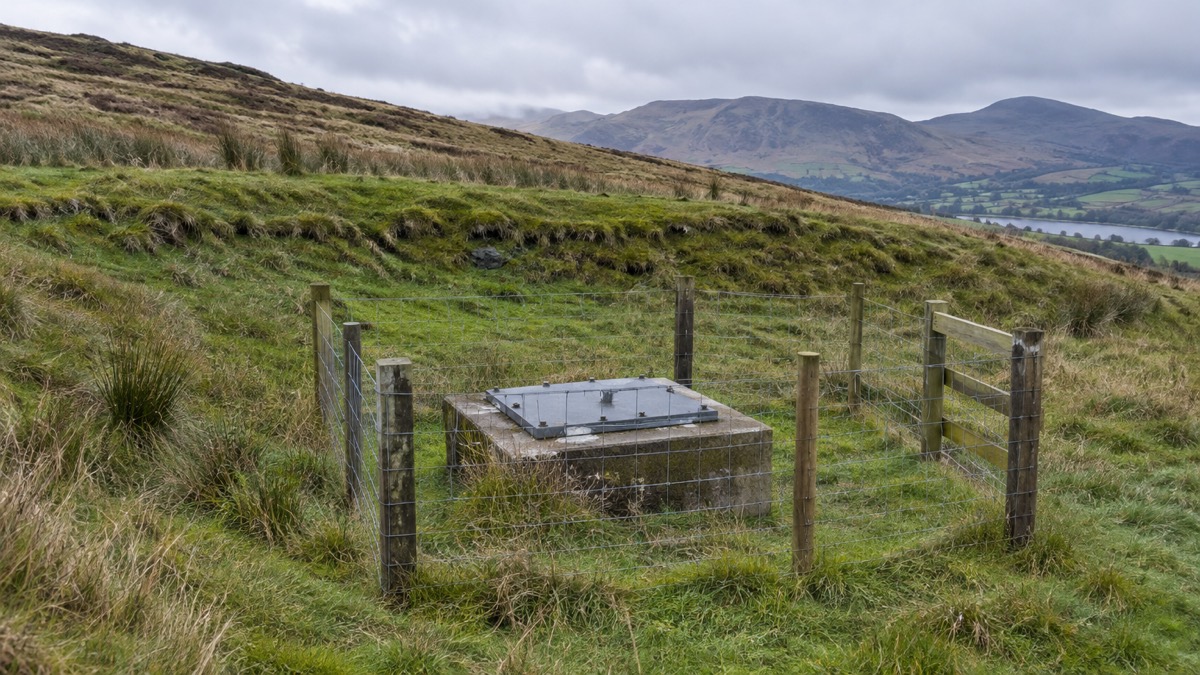
Flooding is the moment a private supply is most likely to become dangerous, because floodwater can contain sewage and harmful microorganisms. Private water supplies may be contaminated with floodwater after storms and may not be suitable for drinking24.
The advice from councils that deal with floods regularly is clear. Do not use the water supply if the tank or connecting pipework has been damaged, or where floodwater has been in contact with taps or connections inside or outside the home24. Ensure you have adequate supplies of safe drinking water, such as bottled water or mains water from friends or relatives, until your supply has been restored24. If it is safe to do so, check the distribution system for damage or ingress, and seal manhole covers on boreholes and wells to prevent ingress from surface water or vermin25.
What to do in order after floodwater has reached your supply:
- Stop using the supply for drinking and cooking if floodwater has covered it, or if the water has become discoloured or changed in taste or smell25
- Keep bottled or mains water from friends and relatives on hand for drinking until the supply is restored and confirmed safe24
- If safe, check the distribution system for damage or ingress, and seal manhole covers on boreholes and wells25
- Contact your council's environmental health team, who can sample the water and advise on any disinfection needed2
- Do not resume drinking until the council confirms the supply is safe24
Heavy rain alone can also cause sudden contamination. A scoping review published by Public Health Wales in October 2023 found that many private supplies fail water quality limits and that heavy rainfall is linked to sudden increases in contamination26. So treat any storm, not just an actual flood, as a reason to watch your water quality closely. Our pages on flooding and on how to make water safe to drink in an emergency cover the wider steps.
When the well runs dry: drought and freezing weather
Insufficiency, in the language of the regulations, means a supply that fails to provide enough water for human consumption, including all domestic purposes7. It happens more often than you might think. Somerset Council reports that each summer it gets calls from private supply users whose springs, wells or boreholes have dried up, sometimes for many months6.
The causes are wider than drought. Supplies fail during periods of drought or severe cold weather, when the source dries up or freezes, but also because of undetected leaks, pipe bursts, pump failures, blocked filters, or a person with control of the supply permanently disconnecting other users23. In Wales, prolonged low rainfall can push groundwater levels exceptionally low, causing spring sources to dry up or pumps to run dry10. Prolonged dry weather can bring reduced water levels in springs, wells, boreholes and streams, lower pressure and flow rates, complete loss of supply in some cases, and changes in water quality due to lower water volumes13. Houses on private supplies may be more vulnerable to drought because they often rely on small sources that can dry up quickly27.
Drought brings a quality risk as well as a quantity risk: private supplies can become contaminated when water levels are low, which could make someone who drinks the water unwell27. First steps when a supply fails are likely to include reducing current usage to conserve what remains, and considering where you could access drinking water should the supply cease22.
Practical steps before and during a dry spell:
- Regularly monitor water levels in your well or borehole, or check spring flows10
- If water levels are very low, take action to seek an alternative supply, and speak to neighbours to find out if they have water or know of a nearby mains supply10
- Ensure containers used to transfer water are cleaned and disinfected to prevent contamination10
- Find out whether there is a nearby mains supply you could connect to10
- If picking up water for yourself, pick a bottle up for a vulnerable neighbour who cannot reach a distribution point28
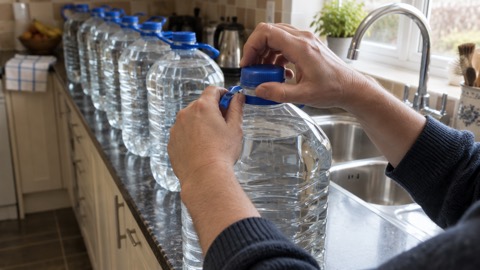
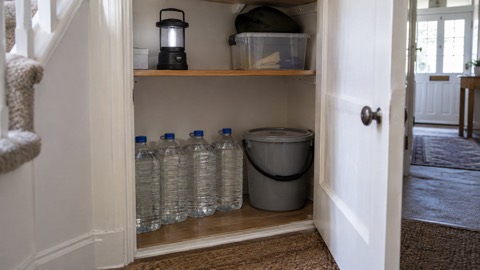
Where circumstances pose a danger to life or human health, the local authority has powers to require the water company to provide an alternative supply, such as bottled water, with costs recoverable from the relevant persons7. That is a backstop, not a plan: keep your own stored drinking water ready.
Where a pump must never run
Natural Resources Wales gives one piece of pump advice that saves households an expensive repair: ensure your pump is positioned below the water level. A pump can be damaged if it is trying to pump in a dry well or borehole, and it can be costly to replace, so consider lowering the pump if possible10. During drought, when levels fall, a pump that was safely submerged in spring can be left running dry, so check its position as levels drop.
Lead pipes: no safe level for children and pregnant women
Lead deserves its own warning. The regulatory standard for lead in drinking water is 10 µg/L, and local authorities must investigate the cause when lead is suspected or detected above that level2. But the more important point is that infants, including unborn babies, and children are particularly at risk, because lead can have an adverse impact on mental development and may be a factor in behavioural problems. In adults it may impair kidney, heart and circulatory health. Lead can build up in the body, and health professionals recommend exposure is minimised as far as possible2.
Lead gets into private supplies in several ways. Before 1970, lead pipework was commonly used in domestic distribution systems and to connect properties to an incoming supply, and lead solder has continued to be used in drinking water systems2. Naturally occurring lead, or historical lead mining in the supply's catchment, can also contaminate the source itself2. Mains supplies are protected by phosphate dosing, which reduces lead dissolving into the water, but that dosing is highly unlikely to be equipped in private supply networks2. In Scotland, lead supply pipes can result in high lead levels in the drinking water supply30.
Testing has gaps you should know about. For small shared supplies under 10 cubic metres per day, lead is only tested where it is considered a risk2. Consumers on supplies serving a single dwelling in isolation are not subject to mandatory risk assessments or testing for lead2. When samplers do test, they take a "first draw" sample before other samples, which enhances the likelihood of flagging the presence of lead2. Local authorities must take account of any potential or actual lead risk as part of a regulatory risk assessment, reviewed every five years; this applies to all shared, public and commercial supplies, and in Wales also to all supplies provided as part of a tenancy agreement2.
If lead is found, the local authority is compelled to use its enforcement powers to require a suitable remedy where the cause is the distribution system within premises where water is made available to the public, or is not due to the distribution system within a domestic premise2. Anyone who is a relevant person under section 80 of the Water Industry Act 1991 could potentially be served an enforcement notice to remediate a lead risk2. Relevant persons on shared supplies are advised to establish local agreements, preferably legally binding, to prevent disputes over pipe ownership and costs delaying remediation2. One case study of a supply serving 13 dwellings considered options including a connection to the public mains supply12.
Where to get help: your council's environmental health team
Your local authority is the regulator for private supplies and should be the first point of contact for any concern, or to have a supply checked for lead2. If you have a private supply, report any problems to your council's environmental health department16. In Northern Ireland, contact the Drinking Water Inspectorate for Northern Ireland or your local council's Environmental Health department, and the council will normally lift a sample, when asked, from a supply serving a single private home31.
What environmental health teams do:
- Offer advice on improving and maintaining private supplies, and take enforcement action where necessary30
- Carry out risk assessments that identify vulnerabilities and advise on protecting the source13
- Sample water where appropriate, including when illness is suspected15
- Register supplies: all private water supplies must be registered with the council, and the register may be shared with other public bodies such as SEPA32
- In Cornwall, you can complete an online survey or download a form to tell the council about a new supply or changes to an existing one13
If you are buying a property served by a private supply, be aware of what you are taking on: the regulations, the testing regime and the single dwelling exemptions described above all apply from the day you own it14. And if a neighbour who controls a shared supply threatens disconnection, contact the council early. Under section 80 of the Water Industry Act 1991, local authorities have discretionary powers to serve a notice on relevant persons when a supply is failing, has failed or is likely to fail to provide a sufficient supply of wholesome water7. But the council's powers are directed at ensuring the supply is well maintained, not at requiring a private individual to continue supplying water to others indefinitely or resolving private law disputes6. A written agreement between users, made before any dispute, is the protection that actually works7.
In Scotland, the Scottish Government provides advice and information for owners and users of private supplies through its mygov.scot site10, and funds local councils to deliver the private water supply grant scheme, offering non means tested grants of up to £800 per property toward improvement works33. The grant can assist in the provision of increased storage where adequate treatment already exists and insufficiency is a regular issue22. For drought, the Scottish Government's guidance on staying safe during a drought covers private supplies27, and in England drought management guidance notes that abstraction licence holders can sign up to water abstraction alerts by email29. If you plan to abstract more than 20 cubic metres per day, check Environment Agency guidance on abstraction licences6.
Sources (33)
- Private water supplies, Drinking Water Quality Regulator for Scotland, 2026
- Lead in private water supplies, Drinking Water Inspectorate, 2026
- Private water supplies, Scottish Borders Council, 2026
- Private Water Supplies - Your Property | Argyll and Bute Council, Argyll and Bute Council
- Types of private water supply, Cumberland Council, 2026
- Private water supplies, Somerset Council, 2026
- Managing insufficiency of private water supplies, Drinking Water Inspectorate, 2025
- Protecting your private water supply, Drinking Water Inspectorate, 2026
- Private Water Supplies, DWQR
- Drought planning and management, Natural Resources Wales, 2026
- Water safety plan approach to improving the safety of a private supply, Drinking Water Inspectorate, 2022
- Lead in drinking water: the overlooked health risk in small domestic private supplies, Drinking Water Inspectorate, 2011
- Private water supplies, Cornwall Council, 2026
- Buying a dwelling with a private water supply, Drinking Water Inspectorate, 2026
- Private water supplies: water sampling, Argyll and Bute Council, 2026
- Check your drinking water quality, GOV.UK, 2026
- Weather and health, Public Health Wales, 2026
- Prepare yourself, Greater Manchester Combined Authority, 2026
- Oil, fuel and other hydrocarbons, Drinking Water Inspectorate, 2026
- Owners and users of private water supplies, Drinking Water Quality Regulator for Scotland, 2026
- What is a private water supply - Private water supplies - Highland Council, Highland Council
- Loss of supply for private water supply users, Argyll and Bute Council, 2026
- Private water supplies, Argyll and Bute Council, 2026
- Private water supplies after floods or storms, Argyll and Bute Council, 2026
- Flooding advice for properties using a private water supply, Shropshire Council, 2026
- Private water supplies: an agile scope of the literature - Public Health Wales, Public Health Wales
- How to stay safe during a drought, NHS inform Scotland, 2026
- Failure of water infrastructure or loss of drinking water, Wiltshire and Swindon Prepared, 2026
- Drought: how it is managed in England, GOV.UK, 2026
- Public health and housing, Argyll and Bute Council, 2026
- Dealing with drinking water problems, nidirect, 2026
- Private Water Supplies | Argyll and Bute Council, Argyll and Bute Council
- Private water supplies policy, Scottish Government, 2026
 Supply Interruption Checklist
 Boil Notice Checklist
 Drinking Supply Checklist
 How Much Water to Store
 Storing Tap Water Safely
 Containers and Jerrycans
 Household Storage Tanks
 Water Already in Your Pipes
 Making Water Safe to Drink
 Boiling Water to Kill Germs
 Purification Tablets
 Emergency Filter Types
 What Water Filters Remove
 Gravity Filters Explained
 Hand Pump Filters